



NOD2
NOD2 (nucleotide-binding oligomerization domain-containing protein 2) is a cytosolic pattern-recognition receptor of the NLR family that detects muramyl dipeptide (MDP) derived from bacterial peptidoglycan and functions as a central regulator of innate immune surveillance[1][2]. Upon MDP recognition, NOD2 undergoes conformational activation and recruits RIPK2/RIP2 through CARD-CARD interactions, initiating signaling cascades that activate NF-κB and MAPK pathways and drive transcriptional programs involved in antimicrobial and inflammatory responses[3][1]. Mechanistically, RIPK2-dependent signaling promotes downstream kinase activation and cytokine production, linking microbial sensing to host defense and immune homeostasis[3][4]. In disease contexts, NOD2 genetic variants represent major susceptibility factors for Crohn’s disease, and impaired responsiveness to bacterial peptidoglycan has been associated with altered intestinal immune regulation and chronic inflammation[1][2][5][6]. NOD2 is also connected to autophagy-related pathways and mucosal barrier function, highlighting its broader role in intestinal immune maintenance[3][7]. Compared with the related isoform NOD1, NOD2 exhibits distinct ligand specificity by recognizing MDP, whereas NOD1 preferentially detects different peptidoglycan-derived motifs, resulting in partially overlapping but non-identical innate immune functions[2]. For experimental applications, MDP remains the prototypical NOD2 agonist and is widely used to activate NOD2 signaling in cellular and animal models, while pharmacological inhibition of the downstream kinase RIPK2 has emerged as a valuable strategy for investigating NOD2-driven inflammatory mechanisms and therapeutic modulation of inflammatory bowel disease pathways[4][8][9].
References:
- [1]. Kiros M, et al. Trends in HIV-1 pretreatment drug resistance and HIV-1 variant dynamics among antiretroviral therapy-naive Ethiopians from 2003 to 2018: a pooled sequence analysis. Virol J. 2023 Oct 25;20(1):243. [Content Brief]
- [2]. Rabezanahary H, et al. Live virus neutralizing antibodies against pre and post Omicron strains in food and retail workers in Québec, Canada. Heliyon. 2024 May 21;10(10):e31026. [Content Brief]
- [3]. Peter EK, et al. A Hybrid Hamiltonian for the Accelerated Sampling along Experimental Restraints. Int J Mol Sci. 2019 Jan 16;20(2):370. [Content Brief]
- [4]. Honjo H, et al. RIPK2 as a New Therapeutic Target in Inflammatory Bowel Diseases. Front Pharmacol. 2021 Apr 14;12:650403. [Content Brief]
- [5]. Shoenfeld Y. Video Q&A: what is ASIA? An interview with Yehuda Shoenfeld. BMC Med. 2013 May 1;11:118. doi: 10.1186/1741-7015-11-118. PMID: 23635355; PMCID: PMC3662178. et al. Video Q&A: what is ASIA? An interview with Yehuda Shoenfeld. BMC Med. 2013 May 1;11:118. [Content Brief]
- [6]. Kuan AS, et al. Risk of ischemic stroke in patients with ovarian cancer: a nationwide population-based study. BMC Med. 2014 Mar 25;12:53. [Content Brief]
- [7]. Swaminathan A, et al. Faecal Myeloperoxidase as a Biomarker of Endoscopic Activity in Inflammatory Bowel Disease. J Crohns Colitis. 2022 Dec 5;16(12):1862-1873. [Content Brief]
- [8]. Thomas CD, et al. Effectiveness of Clopidogrel vs Alternative P2Y12 Inhibitors Based on the ABCD-GENE Score. J Am Coll Cardiol. 2024 Apr 16;83(15):1370-1381. [Content Brief]
- [9]. Rivoal M, et al. New potent RIPK2 inhibitors as a promising therapeutic avenue for colitis through the blockade of NOD inflammatory pathways. J Med Chem. 2024;67(19):17407-17428.
-
NOD2 Related Products (15)
Related Products (15)

- 1
-
Mifamurtide
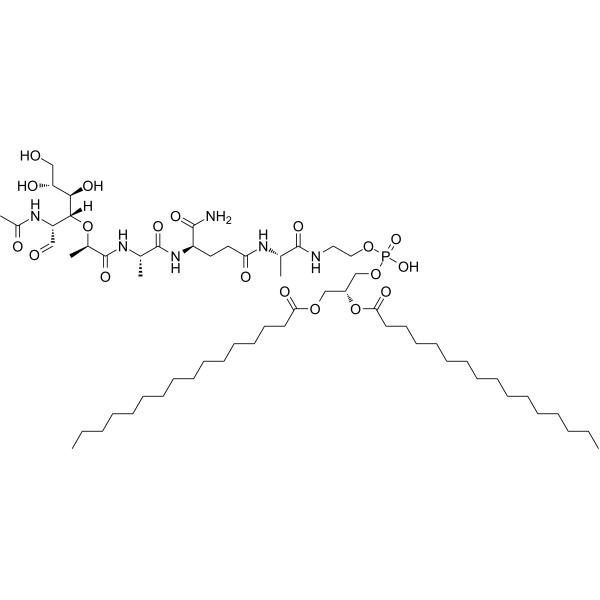 0 ImagesSynonyms: MTP-PE; L-MTP-PE; CGP 19835Mifamurtide (MTP-PE), an analog of the muramyl dipeptide (MDP), is a nonspecific immunomodulator by stimulating the immune response activating macrophages and monocytes. Mifamurtide is a specific ligand for NOD2 and acts as an insulin sensitizer. Mifamurtide has potential for use in rare disease and osteosarcoma research.
-
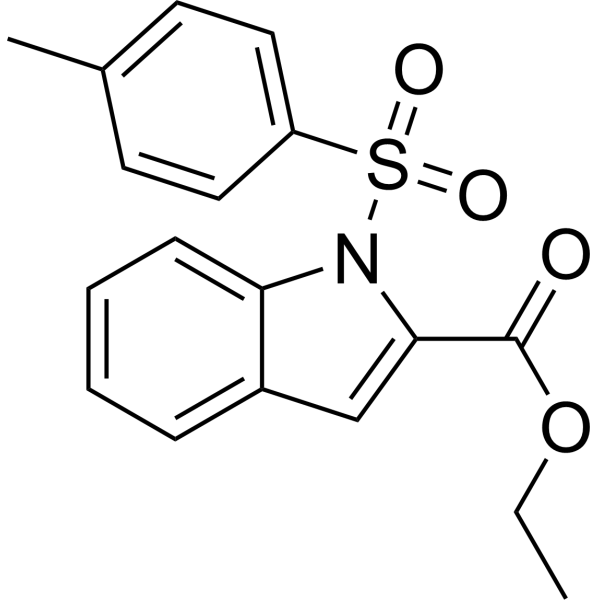
NOD2 antagonist 1
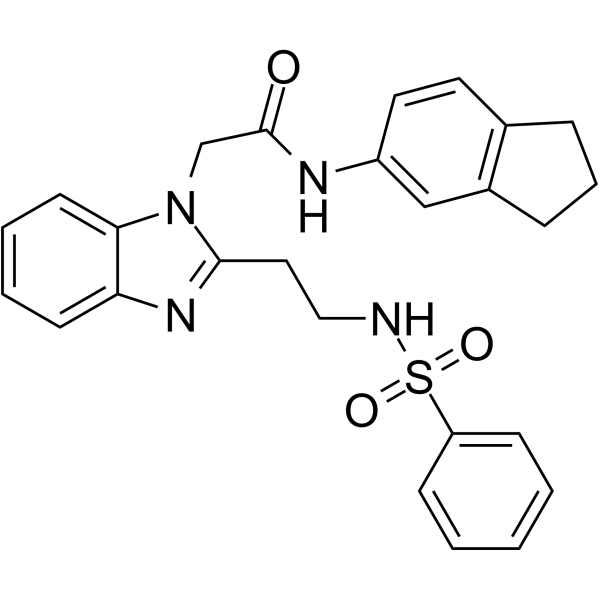 0 ImagesNOD2 antagonist 1 is a selective NOD2 antagonist with an IC50 of 5.23 μM. NOD2 antagonist 1 acts directly on the NOD2 protein, downregulates the secretion of pro-inflammatory cytokines such as IL-8 and TNF-α, and inhibits the synergistic cross-response of inflammation mediated by NOD2 and TLR4. NOD2 antagonist 1 can be used in studies related to immunity and inflammation.
-
Mifamurtide sodium
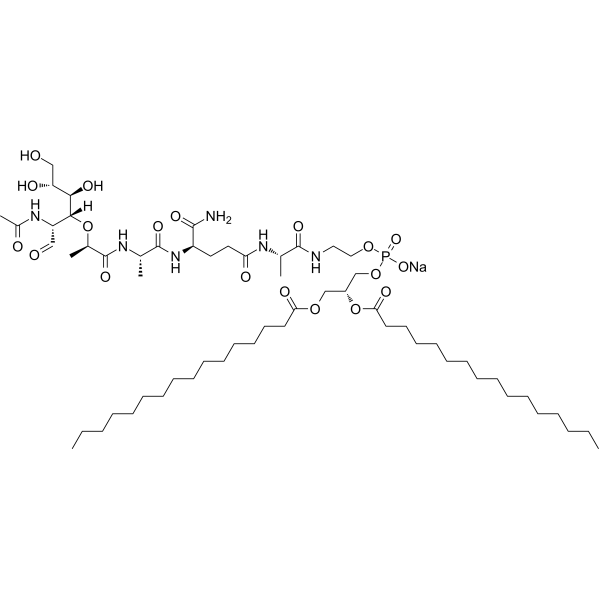 0 ImagesSynonyms: MTP-PE sodium; L-MTP-PE sodium; CGP 19835 sodiumMifamurtide sodium (MTP-PE sodium), an analog of the muramyl dipeptide (MDP), is a nonspecific immunomodulator by stimulating the immune response activating macrophages and monocytes. Mifamurtide sodium is a specific ligand for NOD2 and acts as an insulin sensitizer. Mifamurtide sodium has potential for use in rare disease and osteosarcoma research.
-
Mifamurtide TFA
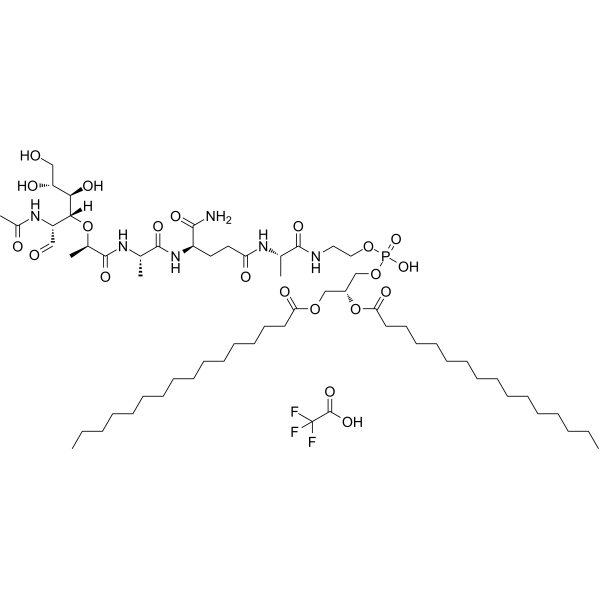 0 ImagesCat. No.: HY-13682CPurity: 98.0%Synonyms: MTP-PE TFA; L-MTP-PE TFA; CGP 19835 TFAMifamurtide TFA (MTP-PE TFA), an analog of the muramyl dipeptide (MDP), is a nonspecific immunomodulator by stimulating the immune response activating macrophages and monocytes. Mifamurtide TFA is a specific ligand for NOD2 and acts as an insulin sensitizer. Mifamurtide TFA has potential for use in rare disease and osteosarcoma research.
-
CSLP43
 0 ImagesCat. No.: HY-123925CAS No.: 2244988-80-3CSLP43 is a selective RIPK2 and XIAP inhibitor with an IC50 of 19.9 nM against human RIPK2. CSLP43 binds to the ATP-binding pocket of RIPK2 and disrupts the interaction between RIPK2 and the BIR2 domain of XIAP or cIAP1. CSLP43 inhibits RIPK2 ubiquitination, NOD1-dependent inflammatory signaling pathways, NOD2-dependent inflammatory signaling pathways, as well as NF-κB activation associated with NOD agonists. CSLP43 is selective for the NOD1/NOD2 signaling pathway and does not inhibit the kinase activity of RIPK1 or RIPK3. CSLP43 is applicable to research related to Crohn's disease, Blau syndrome, early-onset sarcoidosis and early-onset inflammatory bowel disease.

-
NOD1/2-IN-1
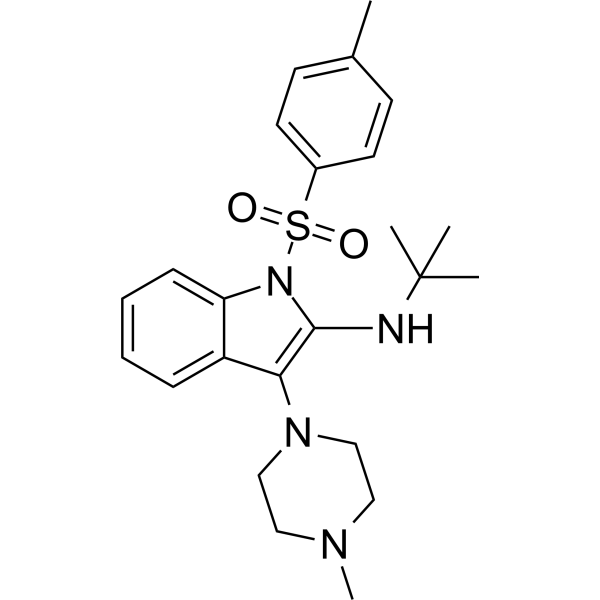
 0 ImagesCat. No.: HY-168024NOD1/2-IN-1 (Compound 18) is a potent RIPK2 inhibitor with an IC50 value of 1.4 nM, as determined by the ADP-Glo assay. NOD1/2-IN-1 blocks the production of pro-inflammatory cytokines by inhibiting the NOD1/NOD2 pathways, with IC50 values of 18 nM and 170 nM for NOD1 and NOD2, respectively, thereby reducing inflammatory responses. NOD1/2-IN-1 can be used in studies related to colitis.
-
TLR7 agonist 27
 0 ImagesCat. No.: HY-168159TLR7 agonist 27 (compound 24) is a potent TLR7 agonist with an EC50 of 238.1 nM. TLR7 agonist 27 shows weak agonistic activity against NOD2 (nucleotide-binding oligomerization domain 2) (EC50 of 6.2 μM). TLR7 agonist 27 is a potent immunostimulant, and can be used as a vaccine adjuvant and/or immunotherapeutic.
-
NOD2 agonist 3
 0 ImagesCat. No.: HY-168158CAS No.: 2289702-58-3NOD2 agonist 3 (Compound 5) is a potent NOD2 agonist, with an EC50 of 111.45 nM. NOD2 agonist 3 shows immunopotentiating effects.
-
NOD2 agonist 4
 0 ImagesCat. No.: HY-179009NOD2 agonist 4 (Compound 12b) is a potent NOD2 agonist with an EC50 of 44.1 nM. NOD2 agonist 4 induces cytokine production (MCP-1, IL-6 and IL-8) in peripheral blood mononuclear cells (PBMCs), both alone and in combination with Lipopolysaccharide (LPS) (HY-D1056). NOD2 agonist 4 can be used for the studies of NOD2-targeted immunomodulator or vaccine adjuvant.
-
NOD1/2 antagonist-1
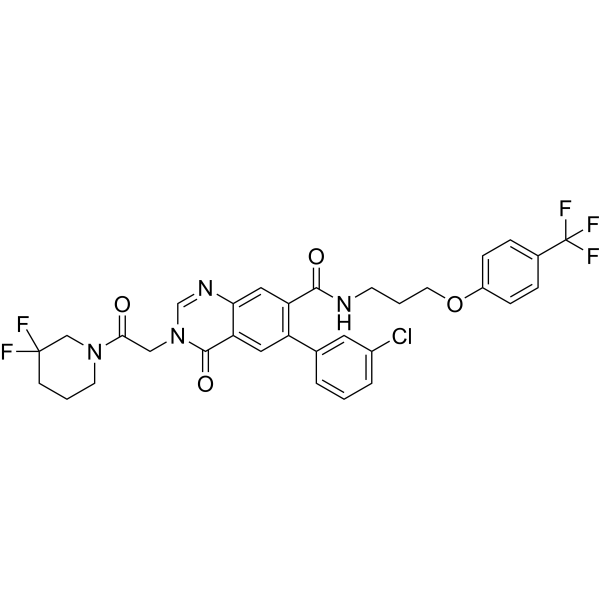 0 ImagesCat. No.: HY-146034CAS No.: 2704623-69-6NOD1/2 antagonist-1 (compound 36b) is a potent NOD1/2 (nucleotide-binding oligomerization domain-like receptor 1/2) dual antagonist, with IC50 values of 1.13 (NOD1) and 0.77 μM (NOD2), respectively. NOD1/2 antagonist-1 has a acceptable T1/2 (67.6 min). NOD1/2 antagonist-1 (compound 36b) can improve the antitumor efficacy of Paclitaxel (PTX).
-
NOD1/2 antagonist-2
 0 ImagesCat. No.: HY-101927CAS No.: 2101736-25-6

- 1



