



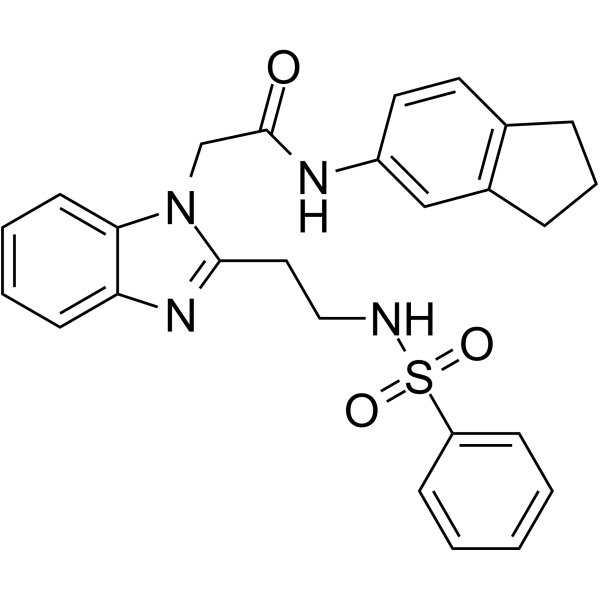
NOD2 antagonist 1

Based on 1 Customer Validation
For research use only. We do not sell to patients.
- Purity : 99.57%
- CAS No.: 2411441-54-6
- Formula: C26H26N4O3S
- Molecular Weight:474.57
-
Storage:Powder -20°C, 3 years , 4°C, 2 years ; In solvent -80°C, 6 months , -20°C, 1 month

To place orders, for customer services and technical support, please contact: MedChemExpress USA
Tel: 609-228-6898 E-mail: [email protected] [email protected]


-
 Biological Activity
-
Chemical Information
-
Solvent & Solubility
- Protocols
- Purity & Documentation
- References
-
 Help & FAQs


-
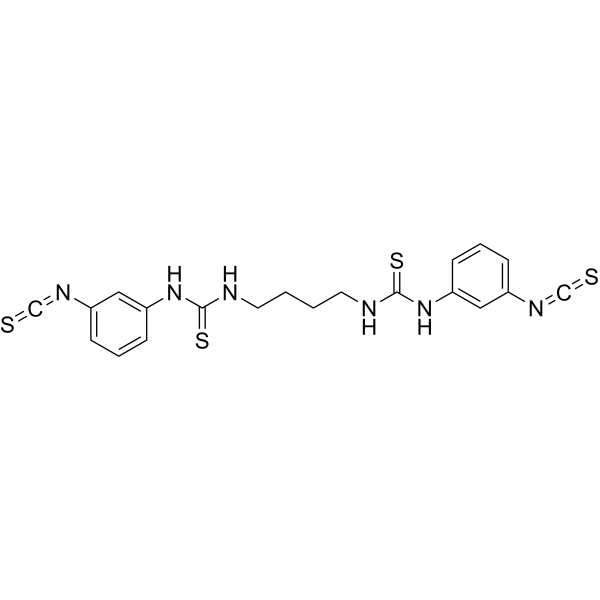
HY-13104
MRS 2578Apoptosis Inducer -
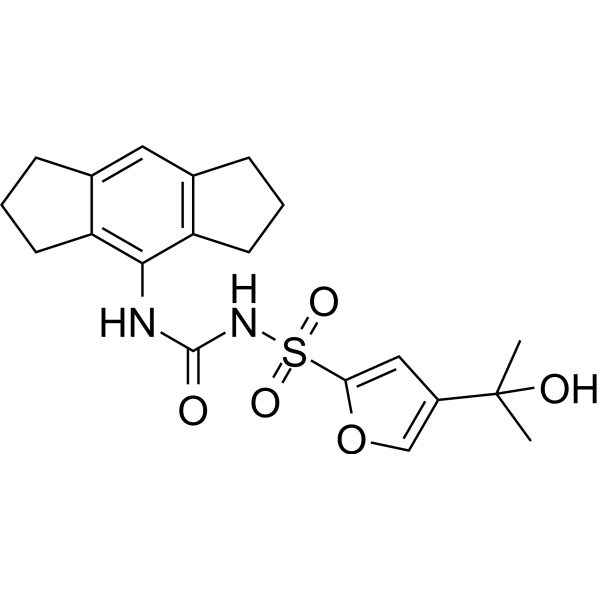
HY-12815
MCC950NLRP3 Inhibitor -
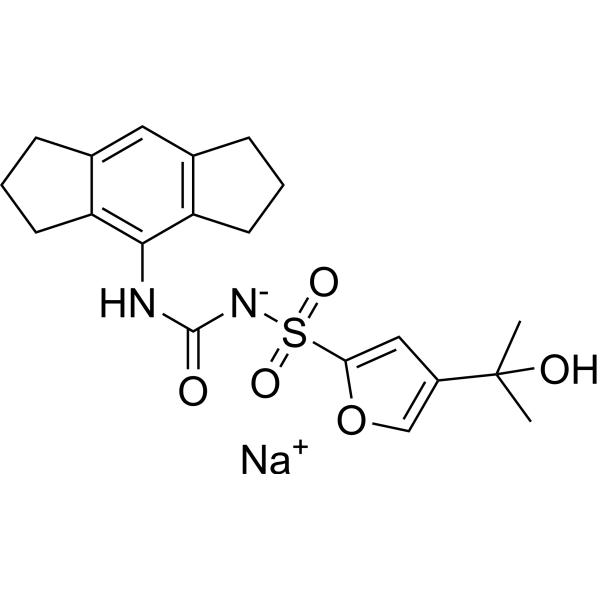
HY-12815A
MCC950 sodiumNLRP3 Inhibitor -
HY-17629
DapansutrileNLRP3 Inhibitor -
HY-103666
CY-09NLRP3 Inhibitor -
HY-139396
BMS-986299NLRP3 Agonist -
HY-18639
Nodinitib-1NOD-like Receptor (NLR) Inhibitor -
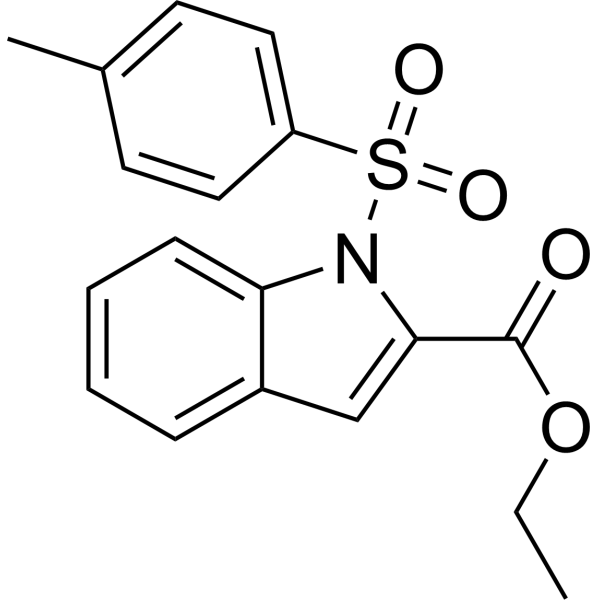
HY-100691
NOD-IN-1NLR Inhibitor -
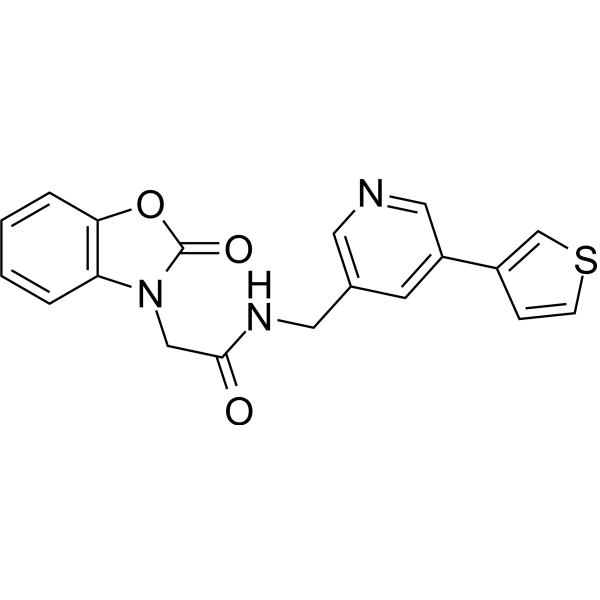
HY-150206
NLRP3-IN-13NLRP3 Inhibitor -
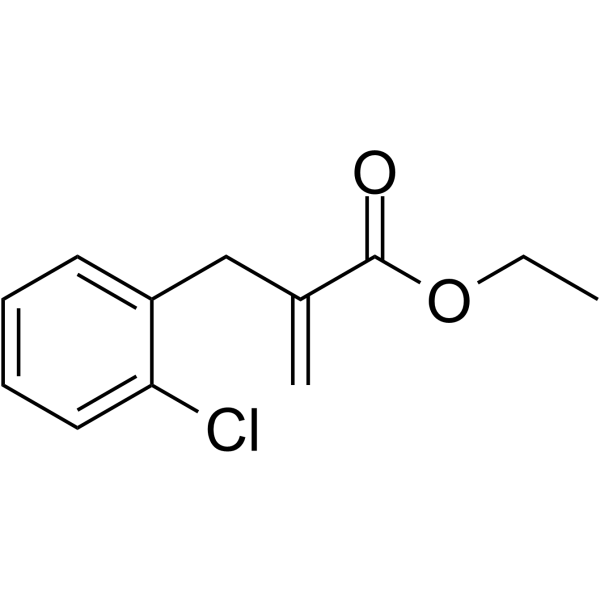
HY-101868
INF39NLRP3 Inhibitor -
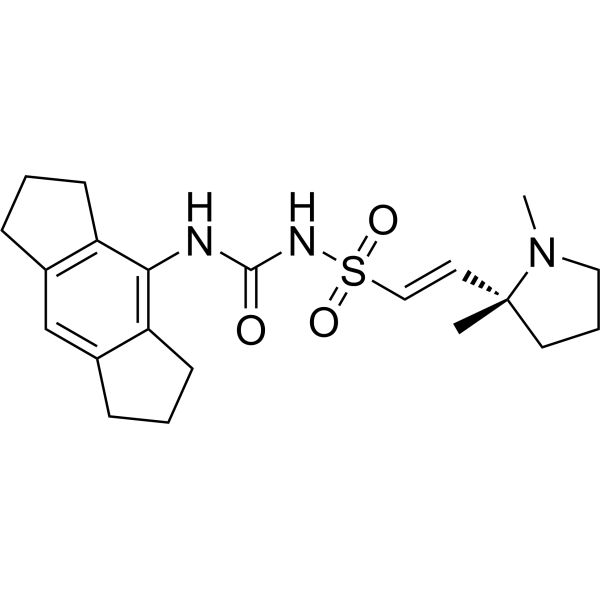
HY-156647
UsnoflastNLRP3 Inhibitor -
HY-120007
JC124NLRP3 Inhibitor


Biological Activity
Description
IC50 & Target
[1]|
NOD2 5.23 μM (IC50) |
NOD1 28.2 μM (IC50) |
IL-6 |
IL-8 |
IL-10 |
TNF-α |
In Vitro
NOD2 antagonist 1 (compound 32) (0.3125-20 μM; 1 h preincubation before 18 h agonist stimulation) potently and moderately selectively inhibits NOD2-mediated NF-κB transcriptional activity in HEK-Blue NOD2 cells with an IC50 of 5.23 μM, and inhibits NOD1-mediated activity in HEK-Blue NOD1 cells with an IC50 of 28.2 μM[1].
NOD2 antagonist 1 (20 μM; 18 h) is non-cytotoxic to NOD2 and NOD1 cells[1].
NOD2 antagonist 1 (20 μM; 1 h preincubation before 20 h agonist stimulation) significantly inhibits MDP-induced IL-8 release in THP-1 cells at 20 μM, and moderately reduces C12-iE-DAP-induced IL-8 release in the same cell line[1].
NOD2 antagonist 1 (20 μM; 1 h preincubation before 20 h dual agonist stimulation) potently blocks NOD2/TLR4 cross-talk-induced TNF-α release in THP-1 cells at 20 μM, and only weakly inhibits NOD1/TLR4 cross-talk-induced TNF-α release in the same cell line[1].
NOD2 antagonist 1 (20 μM; 1 h preincubation before 18 h agonist stimulation) inhibits NOD2-mediated IL-6, IL-10, and TNF-α release in human primary PBMCs at 20 μM, without affecting T lymphocyte-derived cytokine release[1].
MedChemExpress (MCE) has not independently confirmed the accuracy of these methods. They are for reference only. Further protocols information, click here.
-
Cell Line:human leukemia monocytic THP-1 cells
-
Concentration:20 μM
-
Incubation Time:1 h preincubation before 20 h agonist stimulation
-
Result:Significantly suppressed MDP-induced IL-8 release in THP-1 cells, with inhibitory activity similar to the positive control GSK669.
Reduced C12-iE-DAP-induced IL-8 release, though to a lesser extent than the positive control noditinib-1.
-
Cell Line:human leukemia monocytic THP-1 cells
-
Concentration:20 μM
-
Incubation Time:1 h preincubation before 20 h dual agonist stimulation
-
Result:Markedly suppressed TNF-α release from THP-1 cells stimulated with MDP plus LPS, reducing levels to those induced by LPS alone.
Only slightly decreased TNF-α release from cells stimulated with C12-iE-DAP plus LPS.


Chemical Information
-
CAS No. 2411441-54-6
-
Appearance Solid
-
Molecular Weight 474.57
-
Formula C26H26N4O3S
-
Color White to off-white
-
SMILES
O=C(NC1=CC2=C(CCC2)C=C1)CN3C4=CC=CC=C4N=C3CCNS(=O)(C5=CC=CC=C5)=O
-
Shipping
Room temperature in continental US; may vary elsewhere.
-
Storage
Powder -20°C 3 years 4°C 2 years In solvent -80°C 6 months -20°C 1 month


Solvent & Solubility
In Vitro:
DMSO : 35.71 mg/mL (75.25 mM; ultrasonic and warming and heat to 60°C; Hygroscopic DMSO has a significant impact on the solubility of product, please use newly opened DMSO)
Please refer to the solubility information to select the appropriate solvent. Once prepared, please aliquot and store the solution to prevent product inactivation from repeated freeze-thaw cycles.
Storage method and period of stock solution: -80°C, 6 months; -20°C, 1 month. When stored at -80°C, please use it within 6 months. When stored at -20°C, please use it within 1 month.
Please refer to the solubility information to select the appropriate solvent. Once prepared, please aliquot and store the solution to prevent product inactivation from repeated freeze-thaw cycles.
Storage method and period of stock solution: -80°C, 6 months; -20°C, 1 month. When stored at -80°C, please use it within 6 months. When stored at -20°C, please use it within 1 month.
Concentration (start) × Volume (start) = Concentration (final) × Volume (final)

Protocols
-
Cell Cytotoxicity Assay
Cytotoxicity assays are usually based on the assessment of cell membrane damage, which can also be indirectly detected by measuring cell viability. Detection methods include MTT assay, CKK-8 assay, LDH assay and ATP assay, etc.
-
LPS-Induced Endotoxemia/Systemic Inflammation
Lipopolysaccharide (LPS)-induced endotoxemia is a widely used in vivo model of acute systemic inflammation in which LPS, a Gram-negative bacterial endotoxin, activates innate immune signaling primarily through TLR4, leading to rapid and transient induction of pro-inflammatory cytokines such as TNF-α, IL-6, and IL-1β in circulation and tissues. This cytokine surge is commonly used as a measurable readout of systemic inflammatory activation and immune dysregulation, and is typically assessed within hours after intraperitoneal LPS administration in mouse models of endotoxemia. The model captures key features of systemic inflammatory response syndrome, including cytokine release, immune cell activation, and downstream tissue responses, and has been used to evaluate anti-inflammatory interventions such as cytokine modulation, lipid mediators, and immune cell-targeting therapies.
-
Research Protocol for Inflammation-related Diseases
The NLRP3 inflammasome is a cytosolic innate immune signaling platform that integrates priming signals and danger-signal activation to promote caspase-1 activation, maturation of IL-1β and IL-18, and gasdermin D-mediated pyroptotic cell death. The core experimental logic is to determine whether inflammatory disease phenotypes are driven by increased NLRP3 expression, ASC-containing inflammasome assembly, caspase-1 cleavage, GSDMD cleavage, and extracellular release of IL-1β/IL-18 rather than by nonspecific cell injury alone. The pathway is strongly linked to inflammation-related disease phenotypes because monosodium urate crystals activate NALP3/NLRP3 inflammasome signaling in gout-like crystal inflammation, cholesterol crystals activate NLRP3 inflammasomes in atherogenesis models, and DSS-induced intestinal inflammation has been reported to involve NLRP3 inflammasome activity. However, experimental colitis studies also show context-dependent protective effects of NLRP3 inflammasome co


Purity & Documentation
-
Data Sheet (280 KB)
-
SDS (251 KB)
- English - EN (251 KB)
- Français - FR (251 KB)
- Deutsch - DE (251 KB)
- Norwegian - NO (251 KB)
- Español - ES (251 KB)
- Swedish - SV (251 KB)
- Italian - IT (251 KB)
- Korean - KR (251 KB)
- Portuguese - PT (251 KB)
-
Handling Instructions (2659 KB)
References


Complete Stock Solution Preparation Table
Please refer to the solubility information to select the appropriate solvent. Once prepared, please aliquot and store the solution to prevent product inactivation from repeated freeze-thaw cycles.
Storage method and period of stock solution: -80°C, 6 months; -20°C, 1 month. When stored at -80°C, please use it within 6 months. When stored at -20°C, please use it within 1 month.
| Optional Solvent | Concentration Solvent Mass | 1 mg | 5 mg | 10 mg | 25 mg |
|---|---|---|---|---|---|
| DMSO | 1 mM | 2.1072 mL | 10.5359 mL | 21.0717 mL | 52.6793 mL |
| 5 mM | 0.4214 mL | 2.1072 mL | 4.2143 mL | 10.5359 mL | |
| 10 mM | 0.2107 mL | 1.0536 mL | 2.1072 mL | 5.2679 mL | |
| 15 mM | 0.1405 mL | 0.7024 mL | 1.4048 mL | 3.5120 mL | |
| 20 mM | 0.1054 mL | 0.5268 mL | 1.0536 mL | 2.6340 mL | |
| 25 mM | 0.0843 mL | 0.4214 mL | 0.8429 mL | 2.1072 mL | |
| 30 mM | 0.0702 mL | 0.3512 mL | 0.7024 mL | 1.7560 mL | |
| 40 mM | 0.0527 mL | 0.2634 mL | 0.5268 mL | 1.3170 mL | |
| 50 mM | 0.0421 mL | 0.2107 mL | 0.4214 mL | 1.0536 mL | |
| 60 mM | 0.0351 mL | 0.1756 mL | 0.3512 mL | 0.8780 mL |


NOD2 antagonist 1 Related Classifications
HY-147506 Related Classifications
 Powered by Bioz