



Phospholipase
Phospholipase is a member of a very complex group of enzymes that break down phospholipids into fatty acids and other compounds. Phospholipases are defined by the enzymatic reaction they catalyze. The classes are phospholipase A, which has members A1 and A2; phospholipase B, which can carry out the reactions of both A1 and A2; phospholipase C; and phospholipase D.
Phospholipase A2 (PLA2) catalyses the hydrolysis of the sn-2 position of glycerophospholipids to yield fatty acids and lysophospholipids. Phospholipase C (PLC) converts phosphatidylinositol 4,5-bisphosphate (PIP2) to inositol 1,4,5-trisphosphate (IP3) and diacylglycerol (DAG). DAG and IP3 each control diverse cellular processes and are also substrates for synthesis of other important signaling molecules. PLC is thus central to many important interlocking regulatory networks. Phospholipase D (PLD) is an essential enzyme responsible for the production of the lipid second messenger phosphatidic acid (PA), which is involved in fundamental cellular processes, including membrane trafficking, actin cytoskeleton remodeling, cell proliferation and cell survival.
Phospholipase Isoform Specific Products
All Product Categories
-
Phospholipase Related Products (338)
Related Products (338)

-
Antibodies (9)
-
Phospholipase Isoform Comparison
-
(S)-Albuterol hydrochloride
 0 ImagesCat. No.: HY-137311CAS No.: 50293-91-9(S)-Albuterol hydrochloride is a muscarinic receptor and phospholipase C activator. (S)-Albuterol hydrochloride increases intracellular free calcium in airway smooth muscle.
-
DPTIP-prodrug 18
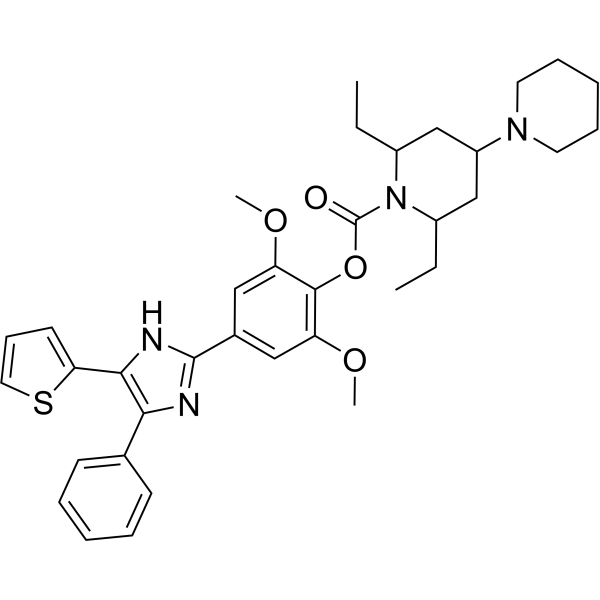 0 ImagesCat. No.: HY-149025CAS No.: 2881068-33-1Synonyms: P18DPTIP-proagent 18 (P18) is a orally active and brain-penetrable proagent of DPTIP (HY-131002). DPTIP-proagent 18 is a potent nSMase2 inhibitor. DPTIP-proagent 18 significantly inhibits IL-1β-induced EV (extracellular vesicle) release by inhibition of nSMase2 (neutral sphingomyelinase-2) activity. DPTIP-proagent 18 can be used for brain injury research.
-
Lp-PLA2-IN-9
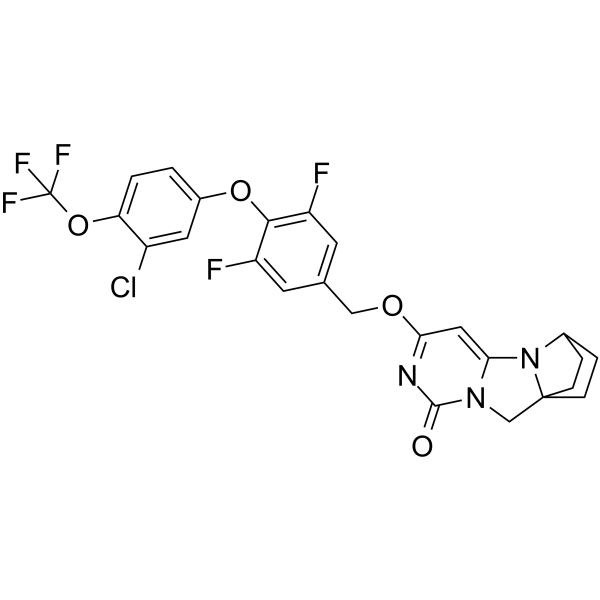 0 ImagesCat. No.: HY-142777CAS No.: 2637485-12-0Lp-PLA2-IN-9 (compound 17), a tetracyclic pyrimidinone compound, is a potent Lp-PLA2 inhibitor with a pIC50 of 10.1 for rhLp-PLA2. Lp-PLA2-IN-9 has the potential for neurodegenerative related diseases research.
-
Magnesium sulfate heptahydrate, for molecular biology
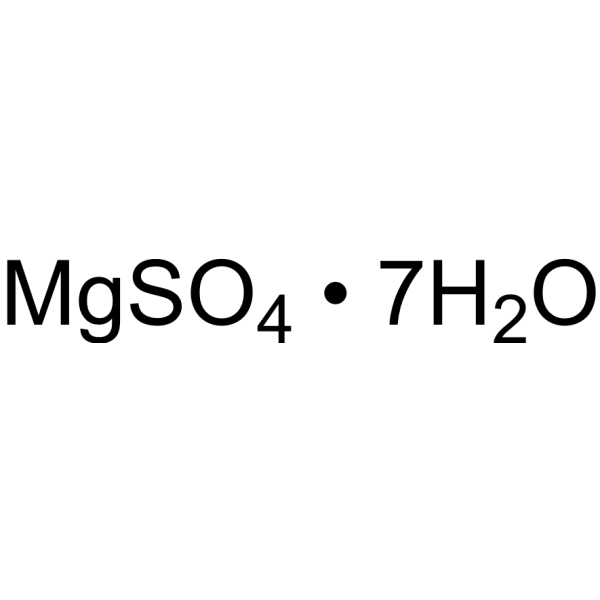 0 ImagesCat. No.: HY-W094477DCAS No.: 10034-99-8Synonyms: Epsom salts, for molecular biologyMagnesium sulfate heptahydrate (for molecular biology) is a molecular biology-grade form of Magnesium sulfate (HY-Y1267). Magnesium sulfate is a calcium antagonist and a potent L-type calcium channel inhibitor, as well as a uterine contraction inhibitor. Magnesium sulfate has anti-inflammatory, anticonvulsant, vasodilatory, and neuroprotective effects. Magnesium sulfate can be used in research on diseases such as preeclampsia/eclampsia.
-
CDIBA
 0 ImagesCat. No.: HY-128061CAS No.: 479422-22-5CDIBA is a cytosolic phospholipase A2 (cPLA2) inhibitor. CDIBA inhibits the activation of cPLA2 in rat diaphragm tissue. CDIBA reduces the level of mitochondrial reactive oxygen species in rat diaphragm tissue after prolonged mechanical ventilation. CDIBA attenuates protein degradation, muscle atrophy and decreased muscle strength in the diaphragm of rats after prolonged mechanical ventilation. CDIBA can be used in studies related to ventilator-induced diaphragmatic dysfunction.
-
Ikshusterol 3-O-glucoside
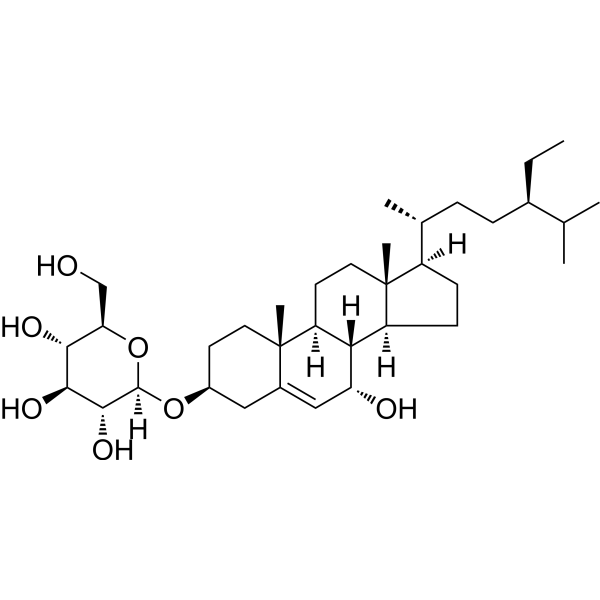 0 ImagesCat. No.: HY-N4016CAS No.: 112137-81-2Ikshusterol 3-O-glucoside is a phytochemical that inhibits PLA2 from snake venoms.
-
D-myo-Inositol 1,4,5-trisphosphate sodium salt
 0 ImagesD-myo-inositol 1,4,5-trisphosphate sodium salt is a widely distributed intracellular second messenger. D-myo-inositol 1,4,5-trisphosphate sodium salt acts as a potent agonist of the Ins (1,4,5) P3 receptor with an EC50 of 0.12 μM and inhibits bovine PLC-δ1, with an IC50 of 5.4 μM for binding and an IC50 of 12.4 μM for hydrolysis. D-myo-inositol 1,4,5-trisphosphate sodium saltis metabolized into Ins (1,4) P2 and Ins (1,3,4,5) P4. D-myo-inositol 1,4,5-trisphosphate sodium salt mediates various cellular processes, including growth, development, fertilization, secretion, contraction and neuromodulation. D-myo-inositol 1,4,5-trisphosphate sodium salt inhibits PIP2 hydrolysis and Ca2+-ATPase activity. D-myo-inositol 1,4,5-trisphosphate sodium salt is used for cardiac preconditioning, exerts cardioprotective effects and mimics ischemic preconditioning. D-myo-inositol 1,4,5-trisphosphate sodium salt is applied in studies related to intracellular calcium and phosphoinositol signaling pathways.
-
Parameritannin A-1
 0 ImagesCat. No.: HY-N16481CAS No.: 347406-26-2Parameritannin A-1 is a tetrameric proanthocyanidin (PAC) that can be isolated from the bark of Parameria laevigata Moldenke (Apocynaceae). Parameritannin A-1 is a COX-2 inhibitor. Parameritannin A-1 also inhibits the activity of phospholipase A2 (PLA2).

-
BAY-163
 0 ImagesCat. No.: HY-184012CAS No.: 3134928-97-2BAY-163 is a tertiary urea derivative and inactive negative control probe for BAY-439 (HY-178123). BAY-163 does not inhibit phospholipase A2 group V (PLA2-G5) activity in immune cells. BAY-163 can be used for research on endometriosis.
-
Melittin-13C18,15N3 TFA
 0 ImagesCat. No.: HY-P0233ASMelittin-13C18,15N3 TFA is the 15N- and 13C-labeled Melittin TFA (HY-P0233A). Melittin TFA is a PLA2 activator, stimulates the activity of the low molecular weight PLA2, while it does not the increase activity of the high molecular weight PLA2.
-
Lp-PLA2-IN-17
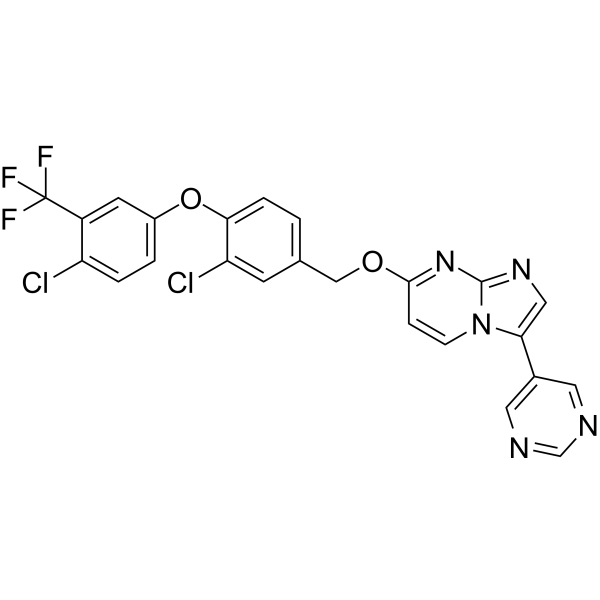 0 ImagesCat. No.: HY-160637CAS No.: 1818842-74-8Lp-PLA2-IN-17 (Compound 39) is an inhibitor of Lp-PLA2. Lp-PLA2-IN-17 can be used to study disorders involving the hydrolysis of oxidized lipids into two inflammatory substances with the participation of Lp-PLA2.
-
M119
 0 ImagesCat. No.: HY-177218CAS No.: 500533-94-8Synonyms: NSC 119910M119 (NSC 119910) is a Gβγ subunit and PLCβ3 inhibitor with selective activity toward μ-opioid receptor-related pathways. M119 selectively inhibits Gβγ-dependent PLCβ3 activation, reduces inositol phosphate production, and enhances μ-opioid receptor-mediated antinociception. M119 attenuates acute μ-opioid receptor agonist-induced antinociceptive tolerance and physical dependence in mice. M119 can be used for pain-related research.
-
AX048
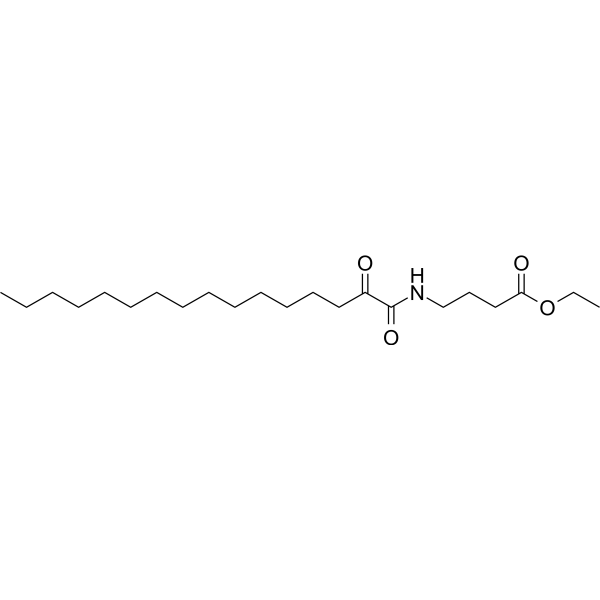 0 ImagesCat. No.: HY-112738CAS No.: 873079-69-7AX048 is an inhibitor for calcium-dependent phospholipase A2 cPLA2 with a XI(50) of 0.022 mole fraction and reveals an antihyperalgesic efficacy.
-
BMS-229724
 0 ImagesCat. No.: HY-120621CAS No.: 221914-85-8BMS-229724 is an orally active and tight-binding cytosolic phospholipase A2 (cPLA2) inhibitor with an IC50 of 2.8 μM. BMS-229724 can inhibit the production of arachidonic acid and eicosanoids in U937 cells, neutrophils, platelets, and other cells. BMS-229724 has anti-inflammatory activity and can be used in the research of diseases such as skin inflammation.
-
WAY-196025
 0 ImagesCat. No.: HY-119094CAS No.: 540523-42-0WAY-196025 is a selective and orally active indole cytosolic phospholipase A2 alpha (cPLA2α) inhibitor with an IC50 of 0.01μM and a Kd of 0.013 μM. WAY-196025 can inhibit the production of prostaglandins (such as PGE2) and leukotrienes (such as LTB4), and reduce the release of inflammatory mediators. WAY-196025 can be used for the researches of inflammation and immunology, such as asthma.
-
Plipastatin B1
 0 ImagesCat. No.: HY-113560CAS No.: 103955-73-3Plipastatin B1 is a lipopeptide antibiotic, an inhibitor of phospholipase A2 (PLA2), which has antifungal activity.
-
Cacospongionolide B
 0 ImagesCat. No.: HY-N21818CAS No.: 172854-76-1Cacospongionolide B is an orally active sesterterpene compound that can be isolated from Fasciospongia cavernosa. Cacospongionolide B is a secreted phospholipase A2 (sPLA2) inhibitor with an IC50 of 4.3 μM. Cacospongionolide B exhibits antibacterial activity. Cacospongionolide B downregulates the expression of iNOS, COX-2 and TNF-α by inhibiting NF-κB nuclear translocation and its DNA binding, and simultaneously selectively and irreversibly inhibits sPLA2 enzymatic activity. Cacospongionolide B can be used in studies related to bacterial infection and adjuvant arthritis.
-
Lp-PLA2-IN-10
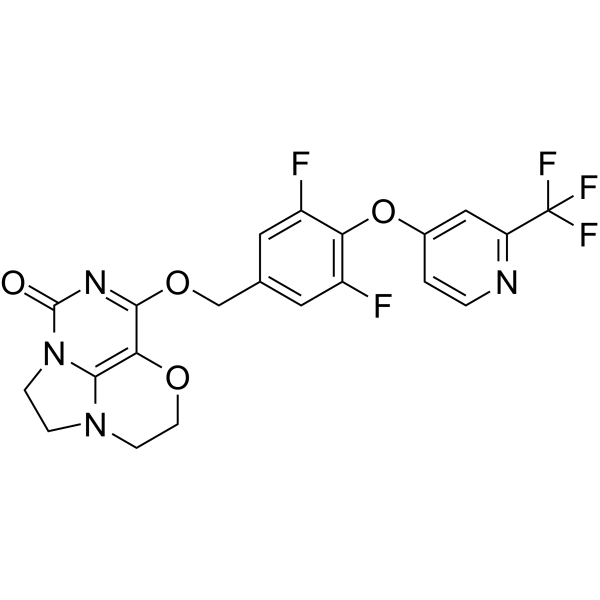 0 ImagesCat. No.: HY-142778CAS No.: 2756855-45-3Lp-PLA2-IN-10 is a potent inhibitor of lipoprotein-associated phospholipase A2 (Lp-PLA2). Lp-PLA2 previously known as platelet- activating factor acetylhydrolase (PAF-AH), is a phospholipase A2 enzyme involved in hydrolysis of lipoprotein lipids or phospholipids. Lp-PLA2-IN-10 has the potential for the research of neurodegenerative-related diseases such as Alzheimer's disease (AD), glaucoma, age-related macular degeneration (AMD), or cardiovascular diseases including atherosclerosis (extracted from patent WO2022001881A1, compound 4).
-
Varespladib-d7
 0 ImagesCat. No.: HY-13402SCAS No.: 1360701-64-9Synonyms: LY315920-d7Varespladib-d7 (LY315920-d7) is a deuterated labeled Varespladib (HY-13402). Varespladib is a potent and selective group IIA, secretory phospholipase A2 (sPLA2) inhibitor with an IC50 of 9 nM. Varespladib exhibits the significant inhibitory effect on sPLA2 activity in serum from various species including rat, rabbit, guinea pig and human with IC50s of 8.1 nM, 5.0 nM, 3.2 nM and 6.2 nM, respectively.




