



PSB 0474
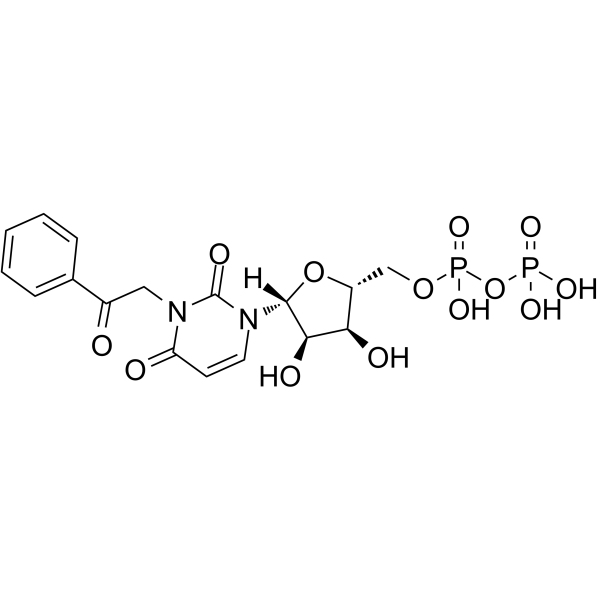
PSB 0474 (3-phenacyl-UDP) is a UDP (HY-113359) analog and selective P2Y6 receptor agonist, with an EC50 value of 70 nM for the hP2Y6 receptor. PSB 0474 activates Phospholipase C-coupled receptors to increase intracellular inositol phosphate levels. PSB 0474 enhances NO release by upregulating inducible iNOS and induces Apoptosis. PSB 0474 increases micturition frequency in urine of anesthetized rats, without altering bladder contraction amplitude/duration or causing urothelial damage. PSB 0474 can be used in studies related to chronic brain inflammation.
商品は「研究用試薬」です。人や動物の医療用・臨床診断用・食品用の製品ではありません。
研究用途以外に使用した場合、当社は一切の責任を負いかねます。
- CAS 番号: 917567-60-3
- 分子式: C17H20N2O13P2
- 分子量:522.29
-
保管条件:
Please store the product under the recommended conditions in the Certificate of Analysis.

To place orders, for customer services and technical support, please contact: MedChemExpress USA
Tel: 609-228-6898 E-mail: [email protected] [email protected]


-
 生物活性
生物活性
-
化学情報
- プロトコル
- 純度とドキュメンテーション
- 参考文献
-
 Help & FAQs


-
HY-10064
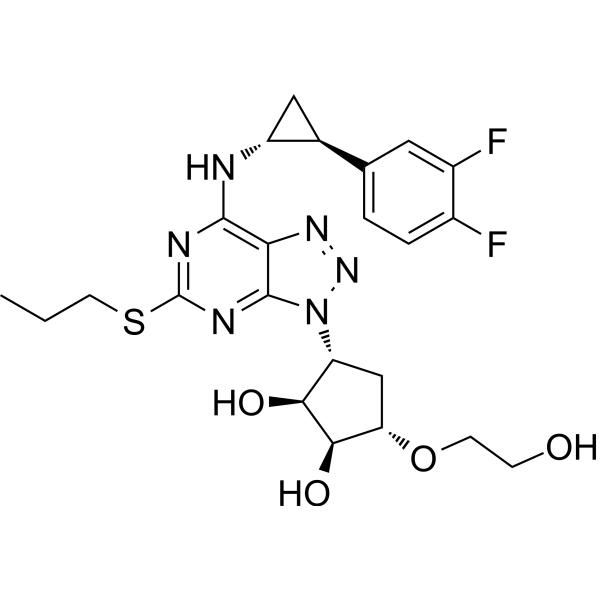
TicagrelorP2Y12 Antagonist -
HY-W010832
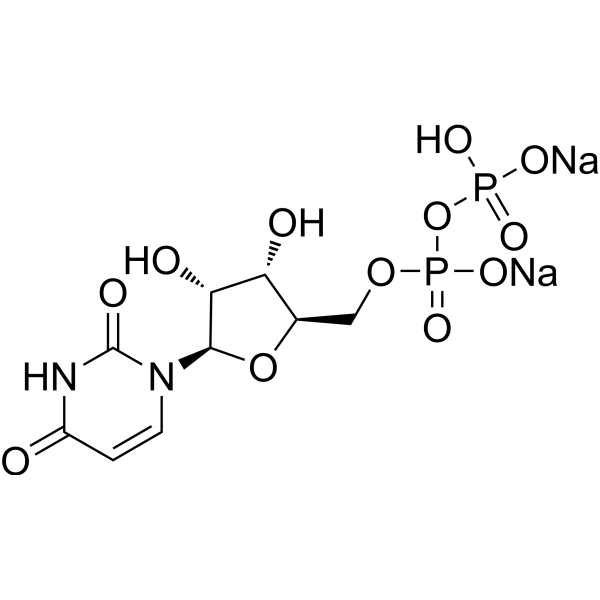
Uridine-5'-diphosphate disodium saltNucleotide -
HY-108658
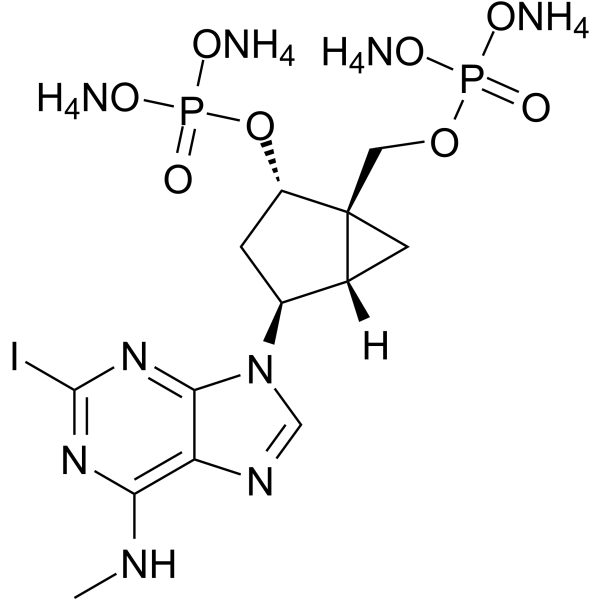
MRS2500 tetraammoniumP2Y1 Receptor Antagonist -
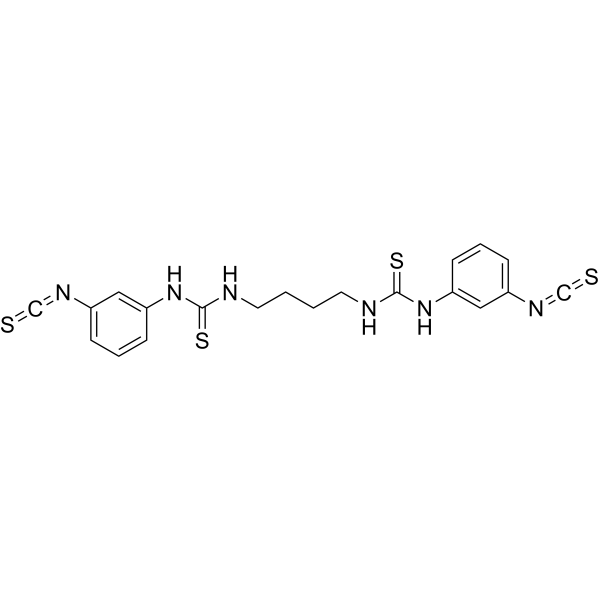
HY-13104
MRS 2578Apoptosis Inducer -
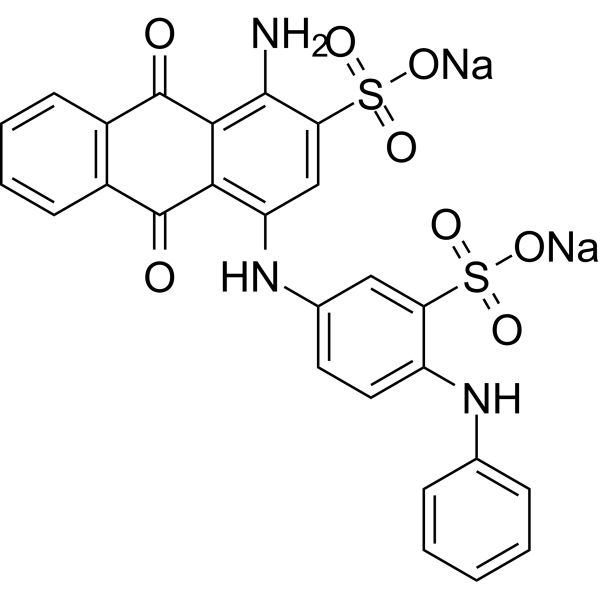
HY-108660
PSB-0739P2Y12 Receptor Antagonist -
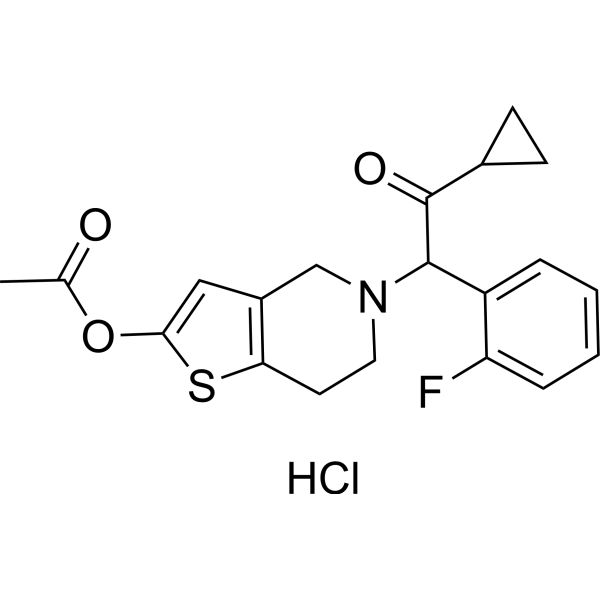
HY-15284A
Prasugrel hydrochlorideP2Y12 Receptor Antagonist -
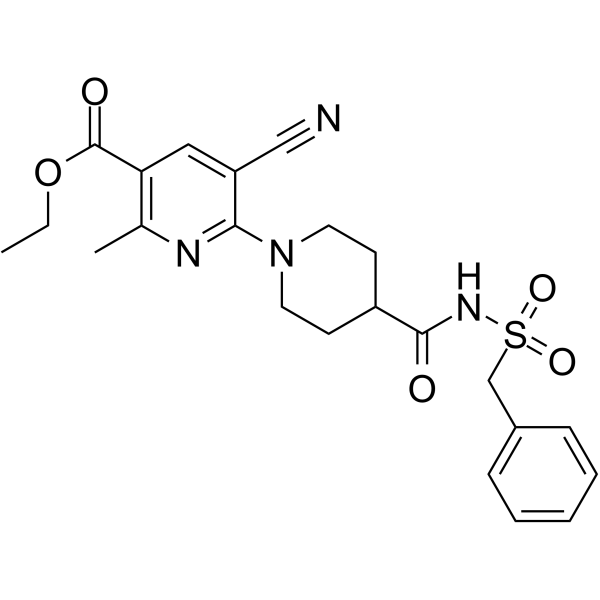
HY-15799
AZD1283P2Y12 Receptor Antagonist -

HY-W010832R
Uridine-5'-diphosphate disodium salt (Standard)Reference Standard -

HY-10064R
Ticagrelor (Standard)P2Y12 Antagonist -
HY-108656
MRS2365P2Y1 receptor/[35S]GTPγS binding/β-arrestin 2 recruitment Agonist -
HY-15283
ClopidogrelAntiplatelet Agent -
HY-108661
NF546P2Y11 Agonist


生物活性
製品説明
|
P2Y6 Receptor 70 nM (EC50) |
PLC |
iNOS |
体外実験
PSB 0474 (1-100 µM; 10 min) acts as a weak agonist of the hP2Y2 receptor expressed in 1321N1 astrocytoma cells, with an estimated EC50 of approximately 40000 nM[1].
PSB 0474 (100 µM; 10 min) is a very weak agonist of the hP2Y4 receptor expressed in 1321N1 astrocytoma cells, with an EC50 >100000 nM[1].
PSB 0474 (10 min) is a potent full agonist of the hP2Y6 receptor expressed in 1321N1 astrocytoma cells, with an EC50 of 70 nM, and shows approximately 500-fold higher selectivity for the P2Y6 receptor over the P2Y2 and P2Y4 receptors[1].
PSB 0474 (0.01-10 μM; 48 h) potently inhibits microglial proliferation by activating microglial P2Y6 receptors coupled to the Gq-PLC-PKC signaling pathway[2].
PSB 0474 (10 μM; 48 h) increases nitric oxide release to 199% by activating microglial P2Y6 receptors coupled to the PLC-PKC pathway, and iNOS is upregulated exclusively in microglia[2].
PSB 0474 (10 μM; 48 h) selectively induces apoptosis in astrocytes without affecting the viability of microglia[2].
MedChemExpress (MCE) has not independently confirmed the accuracy of these methods. They are for reference only.
-
Cell Line:microglial
-
Concentration:0.01-10 μM
-
Incubation Time:48 h
-
Result:Inhibited microglial proliferation with a maximum inhibition rate of 43%.
体内実験
MedChemExpress (MCE) has not independently confirmed the accuracy of these methods. They are for reference only.
-
Animal Model:Wistar rats (male, 300-450 g, urethane-anaesthetized)[3]
-
Dosage:100 nM
-
Administration:intravesical infusion
-
Result:Decreased intercontraction interval, increasing voiding frequency to a similar extent as 100 μM UDP.
Did not significantly affect amplitude or duration of voiding bladder contractions.
Increased ATP levels in voided cystometry fluid by more than threefold (from ~10 nM to ~37 nM).
Caused no significant change in LDH activity in voided fluid.


化学情報
-
CAS 番号 917567-60-3
-
分子量 522.29
-
分子式 C17H20N2O13P2
-
SMILES
O[C@H]([C@@H]1O)[C@@](N(C=CC2=O)C(N2CC(C3=CC=CC=C3)=O)=O)([H])O[C@@H]1CO[P](O[P](O)(O)=O)(O)=O
-
輸送条件
Room temperature in continental US; may vary elsewhere.
-
保管条件
Please store the product under the recommended conditions in the Certificate of Analysis.


純度とドキュメンテーション
参考文献
[1]. El-Tayeb A, et al. Synthesis and structure-activity relationships of uracil nucleotide derivatives and analogues as agonists at human P2Y2, P2Y4, and P2Y6 receptors. J Med Chem. 2006;49(24):7076-7087. [Content Brief]
[2]. Quintas C, et al. Microglia P2Y₆ receptors mediate nitric oxide release and astrocyte apoptosis. J Neuroinflammation. 2014;11:141. Published 2014 Sep 3. [Content Brief]
[3]. Carneiro I, et al. Activation of P2Y6 receptors increases the voiding frequency in anaesthetized rats by releasing ATP from the bladder urothelium. Br J Pharmacol. 2014;171(14):3404-3419. [Content Brief]

Calculators
濃度 (開始) × 体積 (開始) = 濃度 (終了) × 体積 (終了)


PSB 0474 関連分類
HY-108654 関連分類
 Powered by Bioz