



Phospholipase C
Phospholipase C (PLC) hydrolyzes PI(4,5)P2 to generate IP3 and DAG, positioning PLC as a central enzyme in phosphoinositide metabolism and intracellular signal transduction[1]. Mechanistically, IP3 regulates intracellular Ca2+ release, while DAG supports protein kinase C activation, linking receptor stimulation to calcium signaling, proliferation, differentiation, and motility[1][2]. In mammals, PLC enzymes form structurally defined isozyme classes with shared catalytic activity but distinct activation mechanisms and physiological functions[1][3]. Compared with PLCβ, which couples strongly to G-protein-coupled receptor signaling, PLCγ functions downstream of receptor and non-receptor tyrosine kinases and contains γ-specific regulatory domains that support isoform-specific signaling[4]. Disease-focused studies link PLCγ dysfunction to immune disorders and cancer, while PLCγ2 mutations connect immune dysregulation, malignancy, and neurodegeneration models[4][5]. For experimental applications, U73122 has been widely used to probe PLC-dependent signaling, but purified-enzyme studies showed direct PLC activation by U73122, so inhibitor-based experiments require careful controls[6][7].
References:
- [1]. Kadamur G, et al. Mammalian phospholipase C. Annu Rev Physiol. 2013;75:127-54. [Content Brief]
- [2]. Kanemaru K, et al. Activation Mechanisms and Diverse Functions of Mammalian Phospholipase C. Biomolecules. 2023 May 31;13(6):915. [Content Brief]
- [3]. Nakamura Y, et al. Regulation and physiological functions of mammalian phospholipase C. J Biochem. 2017 Apr 1;161(4):315-321. [Content Brief]
- [4]. Koss H, et al. Dysfunction of phospholipase Cγ in immune disorders and cancer. Trends Biochem Sci. 2014 Dec;39(12):603-11. [Content Brief]
- [5]. Jackson JT, et al. The role of PLCγ2 in immunological disorders, cancer, and neurodegeneration. J Biol Chem. 2021 Aug;297(2):100905. [Content Brief]
- [6]. Bleasdale JE, et al. Selective inhibition of receptor-coupled phospholipase C-dependent processes in human platelets and polymorphonuclear neutrophils. J Pharmacol Exp Ther. 1990 Nov;255(2):756-68. [Content Brief]
- [7]. Klein RR, et al. Direct activation of human phospholipase C by its well known inhibitor u73122. J Biol Chem. 2011 Apr 8;286(14):12407-16. [Content Brief]
-
Phospholipase C Related Products (15)
Related Products (15)

- 1
-
pTH (1-34) amide (human)
 0 ImagesPTH (1-34) amide human is a type 1 PTH/PTHrP receptor agonist. PTH (1-34) amide human activates adenylate cyclase and phospholipase C pathways, thereby mediating mineral ion homeostasis and bone metabolism regulation. PTH (1-34) amide human increases serum calcium, decreases serum phosphorus, regulates renal excretion, while inducing the inhibition of endogenous PTH (1-84) and the increase of 1,25-dihydroxyvitamin D2 and bone resorption. PTH (1-34) amide human stimulates phosphatidylcholine hydrolysis via phospholipase D mediation, and its hypercalcemic effect is inhibited by human PTH-(7-84). PTH (1-34) amide human can be used in the research of diseases related to humoral hypercalcemia of malignancy.
-
PF-04217903
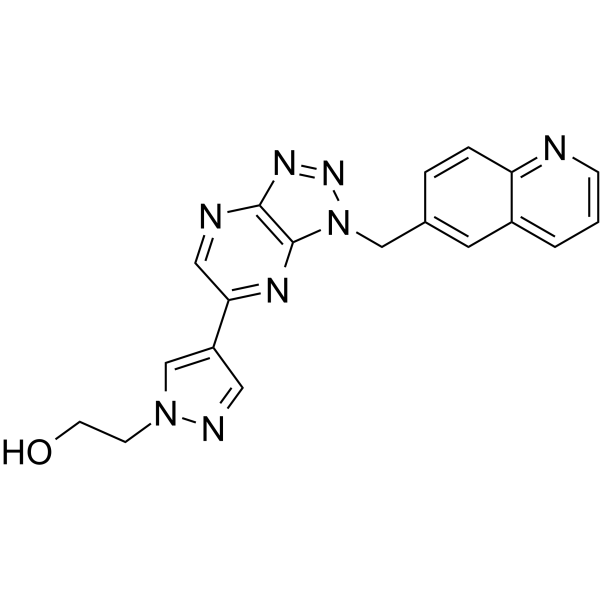 0 ImagesPF-04217903 is an orally active, highly selective ATP-competitive c-Met kinase inhibitor with a Ki value of 4.8 nM and a Kd value of 4.5 nM. PF-04217903 blocks c-Met and HGF signaling pathways, inhibits MET phosphorylation, and blocks downstream MAPK, PI3K/AKT and PLCγ1 pathways. PF-04217903 suppresses tumor proliferation, survival, migration, invasion, angiogenesis and metastasis, induces apoptosis, and enhances efferocytosis, Annexin A1 expression and resolution of inflammation. PF-04217903 retains activity against several c-Met mutants (M1131T, V1220I, H1094R). PF-04217903 increases the incidence of subarachnoid hemorrhage and reduces survival rate without altering aneurysm formation, and also prevents lymph node metastasis induced by VEGF inhibition. PF-04217903 is applicable to research related to tumors (pancreas, stomach, lung, brain, colon, breast, kidney, melanoma, etc.), intracranial aneurysms and inflammatory diseases (gouty arthritis, neutrophilic pleuritis).
-
PF-04217903 mesylate
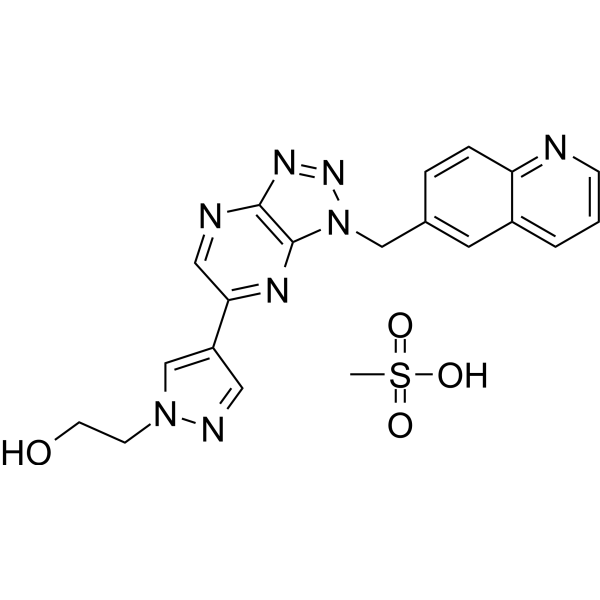 0 ImagesPF-04217903 mesylate is an orally active, highly selective ATP-competitive c-Met kinase inhibitor with a Ki value of 4.8 nM and a Kd value of 4.5 nM. PF-04217903 mesylate blocks c-Met and HGF signaling pathways, inhibits MET phosphorylation, and blocks downstream MAPK, PI3K/AKT and PLCγ1 pathways. PF-04217903 mesylate suppresses tumor proliferation, survival, migration, invasion, angiogenesis and metastasis, induces apoptosis, and enhances efferocytosis, Annexin A1 expression and resolution of inflammation. PF-04217903 mesylate retains activity against several c-Met mutants (M1131T, V1220I, H1094R). PF-04217903 mesylate increases the incidence of subarachnoid hemorrhage and reduces survival rate without altering aneurysm formation, and also prevents lymph node metastasis induced by VEGF inhibition. PF-04217903 mesylate is applicable to research related to tumors (pancreas, stomach, lung, brain, colon, breast, kidney, melanoma, etc.), intracranial aneurysms and inflammatory diseases (gouty arthritis, neutrophilic pleuritis).
-
Phospholipase C
 0 ImagesPhospholipase C (PLCs) is a class of phospholipases. Phospholipase C participates in cellular signaling and regulation by virtue of its ability to hydrolyze membrane phospholipids into di-acyl-glycerol (DAG) and inositol triphosphate (IP3), which further causes the activation of other signaling pathways involved in various processes, including immune response.
-
Anti-CD3 Antibody (UCHT-1)
 0 ImagesCat. No.: HY-P991842Anti-CD3 Antibody (UCHT-1) is an antibody targeting CD3. Anti-CD3 Antibody (UCHT-1) activates the phospholipase C and phosphatidylinositol 3-kinase (PI3K) signaling pathways, elevates intracellular calcium levels, regulates the T3 epitope, and triggers T lymphocyte proliferation. Anti-CD3 Antibody (UCHT-1) also inhibits lymphocyte proliferation, abolishes IL-2 production, and blocks the expression of IL-2 receptors. Anti-CD3 Antibody (UCHT-1) is applicable to research related to graft-versus-host disease, acute myeloid leukemia, and B-cell acute lymphoblastic leukemia.
-
Ranakinin
 0 ImagesCat. No.: HY-P2139CAS No.: 139446-71-2Ranakinin is a NK1R agonist. Ranakinin inhibits the binding of selective NK1 radioligands to NK1 receptors. Ranakinin activates phospholipase C (Phospholipase C), thereby enhancing polyphosphoinositide hydrolysis. Ranakinin stimulates inositol phosphate production and reduces membrane polyphosphoinositide levels. Ranakinin stimulates corticosterone and aldosterone secretion.
-
M119
 0 ImagesCat. No.: HY-177218CAS No.: 500533-94-8Synonyms: NSC 119910M119 (NSC 119910) is a Gβγ subunit and PLCβ3 inhibitor with selective activity toward μ-opioid receptor-related pathways. M119 selectively inhibits Gβγ-dependent PLCβ3 activation, reduces inositol phosphate production, and enhances μ-opioid receptor-mediated antinociception. M119 attenuates acute μ-opioid receptor agonist-induced antinociceptive tolerance and physical dependence in mice. M119 can be used for pain-related research.
-
U 84569
 0 ImagesCat. No.: HY-182452CAS No.: 130736-25-3U 84569 is a potent low-Km cAMP-dependent Phosphodiesterase inhibitor, with an IC50 value of 300 nM in platelet cytosol. By inhibiting phosphodiesterase and elevating cAMP levels, U 84569 indirectly blocks receptor-mediated Phospholipase C activation, thereby inhibiting platelet aggregation.
-
p-Nitrophenyl phosphorylcholine
 0 ImagesSynonyms: 4-Nitrophenylphosphorylcholine; 4-Nitrophenylphosphorylcholine; O-(4-Nitrophenylphosphoryl)cholinep-Nitrophenyl phosphorylcholine (4-Nitrophenylphosphorylcholine) is a chromogenic Phospholipase C substrate. Phospholipase C hydrolyzes p-Nitrophenyl phosphorylcholine to release p-nitrophenol, a yellow chromophore. p-Nitrophenyl phosphorylcholine is used to determine the phospholipase C production of Pseudomonas aeruginosa. It also applies to studies related to Pseudomonas aeruginosa infection.
-
PF-04217903 phenolsulfonate
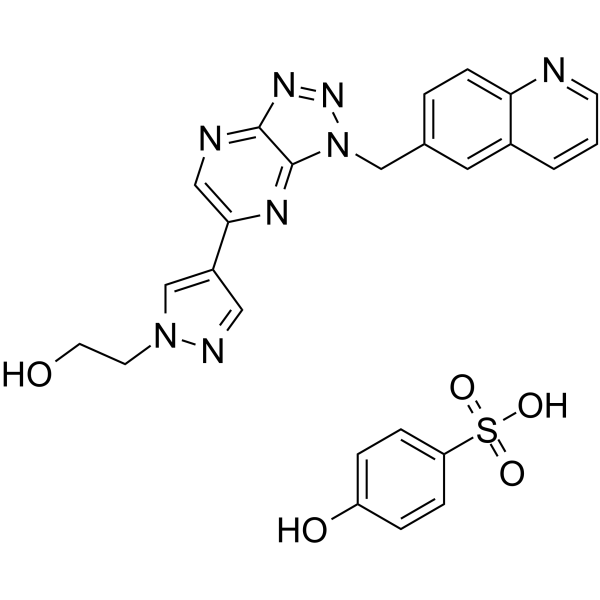 0 ImagesCat. No.: HY-12017BCAS No.: 1159490-85-3PF-04217903 phenolsulfonate is an orally active, highly selective ATP-competitive c-Met kinase inhibitor with a Ki value of 4.8 nM and a Kd value of 4.5 nM. PF-04217903 phenolsulfonate blocks c-Met and HGF signaling pathways, inhibits MET phosphorylation, and blocks downstream MAPK, PI3K/AKT and PLCγ1 pathways. PF-04217903 phenolsulfonate suppresses tumor proliferation, survival, migration, invasion, angiogenesis and metastasis, induces apoptosis, and enhances efferocytosis, Annexin A1 expression and resolution of inflammation. PF-04217903 phenolsulfonate retains activity against several c-Met mutants (M1131T, V1220I, H1094R). PF-04217903 phenolsulfonate increases the incidence of subarachnoid hemorrhage and reduces survival rate without altering aneurysm formation, and also prevents lymph node metastasis induced by VEGF inhibition. PF-04217903 phenolsulfonate is applicable to research related to tumors (pancreas, stomach, lung, brain, colon, breast, kidney, melanoma, etc.), intracranial aneurysms and inflammatory diseases (gouty arthritis, neutrophilic pleuritis).
-
ASM-IN-2
 0 ImagesCat. No.: HY-162613CAS No.: 2305789-66-4ASM-IN-2 (Compound 46) is a potent ASM inhibitor with an IC50 value of 0.87 μM, displaying good drug-like properties. ASM-IN-2 involves in multiple antidepressant mechanisms of actionin, which are associated with a decline of ceramide. It demostrates remarkable antidepressant effects in the CUMS-induced mouse, which is promising for research in the field of antidepressant drugs.
-
PSB 0474
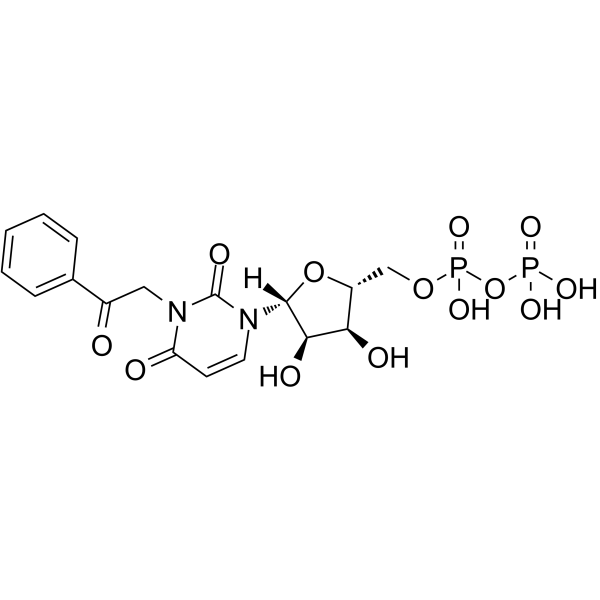 0 ImagesCat. No.: HY-108654CAS No.: 917567-60-3PSB 0474 (3-phenacyl-UDP) is a UDP (HY-113359) analog and selective P2Y6 receptor agonist, with an EC50 value of 70 nM for the hP2Y6 receptor. PSB 0474 activates Phospholipase C-coupled receptors to increase intracellular inositol phosphate levels. PSB 0474 enhances NO release by upregulating inducible iNOS and induces Apoptosis. PSB 0474 increases micturition frequency in urine of anesthetized rats, without altering bladder contraction amplitude/duration or causing urothelial damage. PSB 0474 can be used in studies related to chronic brain inflammation.
-
SHP1-IN-2
 0 ImagesCat. No.: HY-186140SHP1‑IN‑2 is a selective and orally active SHP1 inhibitor. SHP1‑IN‑2 covalently binds to Cys480 of SHP1. SHP1‑IN‑2 elicits potent antitumor immunity and suppresses syngeneic tumor growth. SHP1‑IN‑2 blocks tumor progression in a svngeneic cancer model by activating natural killer cells and cytotoxic CD8+ T cells, along with reduced T cel l. SHP1‑IN‑2 can be used for cancer‑related research.
-
PF-04217903 phosphate
 0 ImagesCat. No.: HY-12017CCAS No.: 1159490-83-1PF-04217903 phosphate is an orally active, highly selective ATP-competitive c-Met kinase inhibitor with a Ki value of 4.8 nM and a Kd value of 4.5 nM. PF-04217903 phosphate blocks c-Met and HGF signaling pathways, inhibits MET phosphorylation, and blocks downstream MAPK, PI3K/AKT and PLCγ1 pathways. PF-04217903 phosphate suppresses tumor proliferation, survival, migration, invasion, angiogenesis and metastasis, induces apoptosis, and enhances efferocytosis, Annexin A1 expression and resolution of inflammation. PF-04217903 phosphate retains activity against several c-Met mutants (M1131T, V1220I, H1094R). PF-04217903 phosphate increases the incidence of subarachnoid hemorrhage and reduces survival rate without altering aneurysm formation, and also prevents lymph node metastasis induced by VEGF inhibition. PF-04217903 phosphate is applicable to research related to tumors (pancreas, stomach, lung, brain, colon, breast, kidney, melanoma, etc.), intracranial aneurysms and inflammatory diseases (gouty arthritis, neutrophilic pleuritis).
-
BAPTA tetracesium
 0 ImagesCat. No.: HY-W778574CAS No.: 480436-84-8BAPTA tetracesium is a selective and cell-impermeant chelator for calcium. BAPTA tetracesium has high selectivity against magnesium and calcium. BAPTA tetracesium can also inhibit phospholipase C activity independently of their role as Ca2+ chelators.
- 1



