



Exosomes
Exosomes are nanoscale extracellular vesicles, typically ranging in diameter from approximately 40 to 160 nm; originating from the endosomal pathway, they mediate intercellular communication by transferring proteins, lipids, DNA, mRNA, microRNA, and other bioactive substances between donor and recipient cells. Exosomes possess a unique combination of attributes-including natural targeting capabilities, low immunogenicity, biocompatibility, a long circulatory half-life, and the ability to traverse biological barriers (including the blood-brain barrier)-making them a highly attractive platform for applications in cancer therapy, regenerative medicine, disease diagnosis, and drug delivery. Mechanistically, tumor-derived exosomes regulate tumor progression through intercellular signaling; by delivering oncogenic miRNAs, proteins, and signaling mediators to stromal and immune cells, they promote angiogenesis, epithelial-mesenchymal transition (EMT), immune evasion, tumor metastasis, and the formation of a pre-metastatic niche. Furthermore, exosomes can induce and exacerbate chemotherapy resistance by shielding tumor cells from cytotoxic drugs and by transferring drug-resistance traits to neighboring cells.
In the field of drug development, engineered exosomes are being utilized as nanocarriers for the delivery of chemotherapeutic agents, siRNAs, miRNAs, lncRNAs, CRISPR payloads, and immunomodulators. In disease models involving breast cancer, lung cancer, glioma, colorectal cancer, and hepatocellular carcinoma, this strategy has effectively reduced systemic toxicity while simultaneously enhancing tumor-targeting specificity. Moreover, exosomes are being applied in tissue repair, the modulation of inflammatory diseases, the treatment of neurodegenerative disorders, and precision diagnostics based on "liquid biopsy" technologies; the biomarkers carried within circulating exosomes facilitate the early screening of diseases and the real-time monitoring of therapeutic efficacy.
In the field of drug development, engineered exosomes are being utilized as nanocarriers for the delivery of chemotherapeutic agents, siRNAs, miRNAs, lncRNAs, CRISPR payloads, and immunomodulators. In disease models involving breast cancer, lung cancer, glioma, colorectal cancer, and hepatocellular carcinoma, this strategy has effectively reduced systemic toxicity while simultaneously enhancing tumor-targeting specificity. Moreover, exosomes are being applied in tissue repair, the modulation of inflammatory diseases, the treatment of neurodegenerative disorders, and precision diagnostics based on "liquid biopsy" technologies; the biomarkers carried within circulating exosomes facilitate the early screening of diseases and the real-time monitoring of therapeutic efficacy.
References:
- [1]. Exosome Overview. Medicine and Dentistry. Sciencedirect.
- [2]. Chen Q, et al. Exosomes as Novel Delivery Systems for Application in Traditional Chinese Medicine. Molecules. 2022 Nov 12;27(22):7789. [Content Brief]
- [3]. Nafar S, et al. Exosome as a target for cancer treatment. J Investig Med. 2022 Jun;70(5):1212-1218. [Content Brief]
- [4]. Petersen D, et al. Binding and intracellular transport of 25-hydroxycholesterol by Niemann-Pick C2 protein. Biochim Biophys Acta Biomembr. 2020 Feb 1;1862(2):183063. [Content Brief]
- [5]. Basyoni AE, et al. Harnessing exosomes for targeted drug delivery systems to combat brain cancer. Cancer Cell Int. 2025 Apr 15;25(1):150. [Content Brief]
- [6]. Aghebati-Maleki A, et al. Implications of exosomes as diagnostic and therapeutic strategies in cancer. J Cell Physiol. 2019 Dec;234(12):21694-21706. [Content Brief]
- [7]. Mousavi S, et al. Tumor-derived exosomes: Potential biomarkers and therapeutic target in the treatment of colorectal cancer. J Cell Physiol. 2019 Aug;234(8):12422-12432. [Content Brief]
- [8]. Panigrahi AR, et al. Exosomes: Insights and therapeutic applications in cancer. Transl Oncol. 2022 Jul;21:101439. [Content Brief]
- [9]. Mirgh D,et al. Landscape of exosomes to modified exosomes: a state of the art in cancer therapy. RSC Adv. 2024 Sep 26;14(42):30807-30829. [Content Brief]
- [10]. Xiao Q, Tan M, Yan G, Peng L. Revolutionizing lung cancer treatment: harnessing exosomes as early diagnostic biomarkers, therapeutics and nano-delivery platforms. J Nanobiotechnology. 2025 Mar 21;23(1):232. [Content Brief]
- [11]. Sarkar S, et al. Exosomes in Hepatocellular Carcinoma: A Comprehensive Review of Current Research and Future Directions. J Cell Mol Med. 2025 Jul;29(14):e70723. [Content Brief]
- [12]. Luo X, et al. Mechanistic Insights into the Anti-Glioma Effects of Exosome-Like Nanoparticles Derived from Garcinia Mangostana L.: A Metabolomics, Network Pharmacology, and Experimental Study. Int J Nanomedicine. 2025 Apr 27;20:5407-5427. [Content Brief]
- [13]. Feng P, et al. The Roles of Exosomes in Anti-Cancer Drugs. Cancer Med. 2025 May;14(9):e70897. [Content Brief]
- [14]. Zhao B, et al Exosome-like nanoparticles derived from fruits, vegetables, and herbs: innovative strategies of therapeutic and drug delivery. Theranostics. 2024 Aug 1;14(12):4598-4621. [Content Brief]
All Product Categories
-
Exosomes Related Products (67)
Related Products (67)

-
4-Oxo-2-Nonenal Alkyne
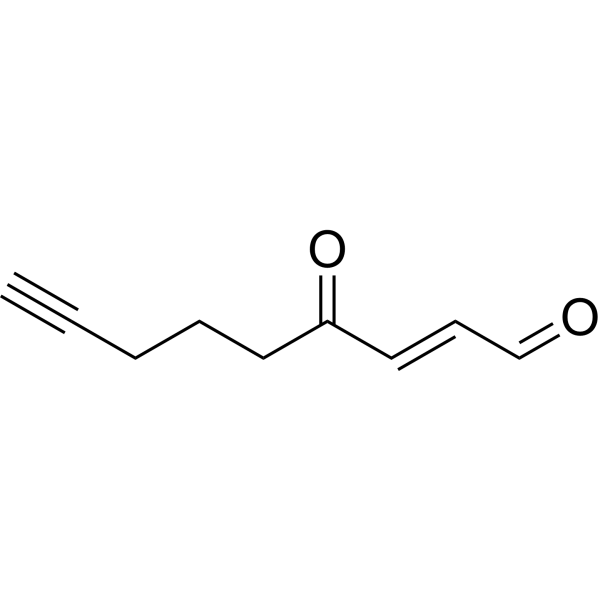 0 ImagesSynonyms: (2E)-4-Oxo-2-nonen-8-ynal; alkynyl-4-ONE
-
CP05
 0 ImagesCat. No.: HY-P11174CAS No.: 1824650-30-7
-
Dexamethasone-d3-1
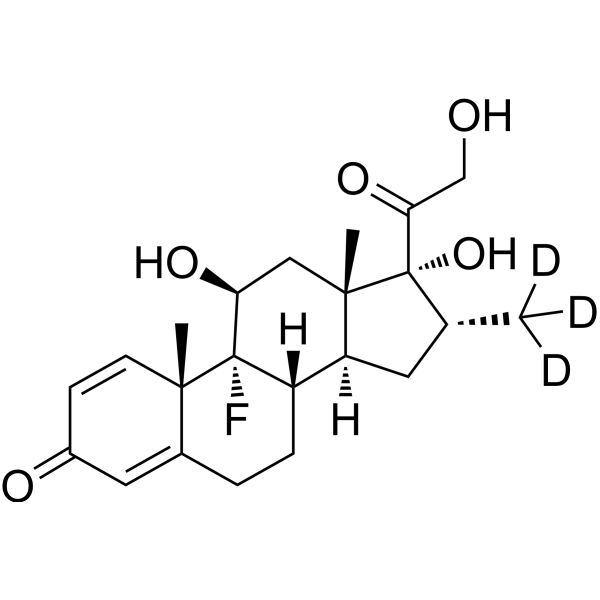 0 ImagesCat. No.: HY-14648S5Purity: 98.02%Synonyms: Hexadecadrol-d3-1; Prednisolone F-d3-1Dexamethasone-d3-1 (Hexadecadrol-d3-1; Prednisolone F-d3-1) is a deuterium labeled Dexamethasone (HY-14648). Dexamethasone (Hexadecadrol) is a glucocorticoid receptor agonist. Dexamethasone also significantly decreases CD11b, CD18, and CD62L expression on neutrophils, and CD11b and CD18 expression on monocytes. Dexamethasone is highly effective in the control of COVID-19 infection. Dexamethasone inhibits production of exosomes containing inflammatory microRNA-155 in lipopolysaccharide-induced macrophage inflammatory responses.
-
5-Fluorouracil-13C,15N2
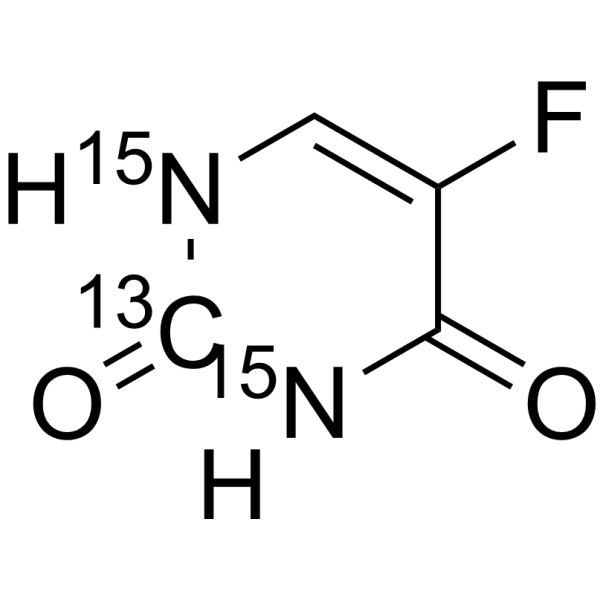 0 ImagesCat. No.: HY-90006S1CAS No.: 1189423-58-2Synonyms: 5-FU-13C,15N25-Fluorouracil-13C,15N2 is the 13C and 15N labeled 5-Fluorouracil. 5-Fluorouracil (5-FU) is an analogue of uracil and a potent antitumor agent. 5-Fluorouracil affects pyrimidine synthesis by inhibiting thymidylate synthetase thus depleting intracellular dTTP pools. 5-Fluorouracil induces apoptosis and can be used as a chemical sensitizer. 5-Fluorouracil also inhibits HIV.
-
Shikonin (Standard)
 0 ImagesSynonyms: C.I. 75535 (Standard); Isoarnebin 4 (Standard)Shikonin (Standard) is the analytical standard of Shikonin. This product is intended for research and analytical applications. Shikonin is a major component of a Chinese herbal medicine named zicao. Shikonin is a potent TMEM16A chloride channel inhibitor with an IC50 of 6.5 μM. Shikonin is a specific pyruvate kinase M2 (PKM2) inhibitor and can also inhibit TNF-α and NF-κB pathway. Shikonin decreases exosome secretion through the inhibition of glycolysis. Shikonin inhibits AIM2 inflammasome activation.
-
Heart-homing peptide
 0 ImagesCat. No.: HY-P10641CAS No.: 876460-72-9Heart-homing peptide is a heart-targeting peptide with the sequence CRPPR that mediates cardiac endothelial targeting and accumulates in cardiac tissues. Heart-homing peptide mediates the translocation of liposomal and exosomal cargos across cardiac endothelium into interstitial tissues, enhances the accumulation of exosomes in the heart, and inhibits the GP130-STAT3/ERK1/2/AKT pathway. Heart-homing peptide accumulates at sites of ischemia/reperfusion, myocardial infarction and hypertrophy in mice. Heart-homing peptide can be used for the research of cardiovascular diseases.
-
(R)-Lansoprazole-d4
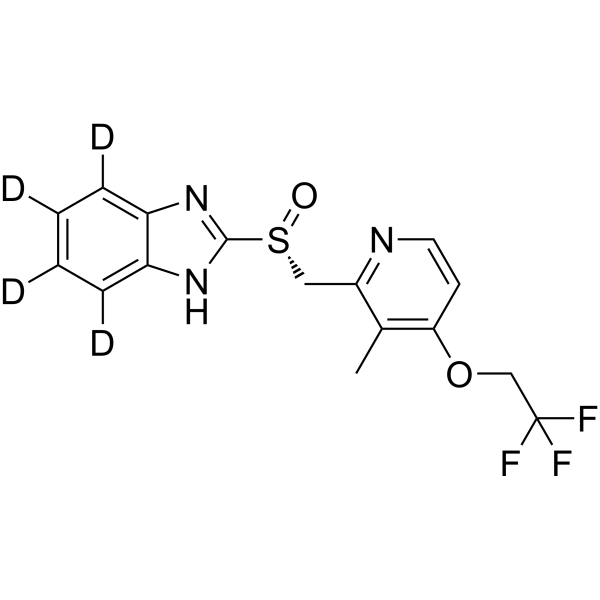 0 ImagesCat. No.: HY-13662BSPurity: 99.13%Synonyms: Dexlansoprazole-d4(R)-Lansoprazole-d4 is deuterium labeled (R)-Lansoprazole. (R)-Lansoprazole is the R enantiomer of Lansoprazole, Lansoprazole (AG 1749) is an orally active proton pump inhibitor which prevents the stomach from producing acid. Lansoprazole (AG 1749) is a potent brain penetrant neutral sphingomyelinase (N-SMase) inhibitor (exosome inhibitor).
-
GPLGVRGC
 0 ImagesGPLGVRGC is a cysteine-tagged variant of GPLGVRG (HY-P11800). GPLGVRGC is hydrolyzable by MMP13. GPLGVRGC mediates the disassembly of micelle-exosome systems, enhances chondrocyte endocytosis, and promotes responsive system uptake. GPLGVRGC confers targeted delivery and responsive release properties to micelle-exosome systems. GPLGVRGC is applicable to the research of osteoarthritis.
-
DSPE-PEG2000-WLSEAGPVVTVRALRGTGSW
 0 ImagesCat. No.: HY-177204DSPE-PEG2000-WLSEAGPVVTVRALRGTGSW is a polypeptide targeting tenascin-X (Tenascin-X) that can be conjugated with liposomes and exosomes. DSPE-PEG2000-WLSEAGPVVTVRALRGTGSW specifically binds to Tenascin-X on the surface of cardiomyocytes, mediates receptor-dependent uptake of nanocarriers, enhances targeted drug delivery of cargo to cardiomyocytes, and increases drug accumulation in cardiac tissue. DSPE-PEG2000-WLSEAGPVVTVRALRGTGSW protects cardiomyocytes treated with LPS, alleviates oxidative stress, repairs mitochondrial function, inhibits ferroptosis and apoptosis, and downregulates the secretion of pro-inflammatory cytokines at the same time. DSPE-PEG2000-WLSEAGPVVTVRALRGTGSW improves cardiac injury and pathological morphology in mice with sepsis-induced cardiomyopathy, restores GPX4 expression, and promotes the internalization of cardiomyocyte-derived exosomes, making it suitable for related research on sepsis-induced cardiomyopathy, myocardial ischemia-reperfusion injury, and other conditions.
-
MMA-NODAGA
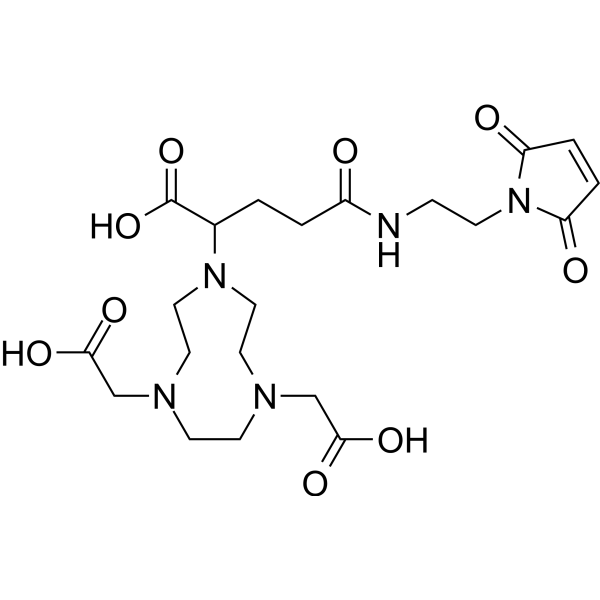 0 ImagesCat. No.: HY-160607CAS No.: 1440903-11-6MMA-NODAGA is a chelator for site-specific labeling of targeting proteins containing unpaired cysteine. MMA-NODAGA can be used to conjugate with exosome and 64Cu in image with positron emission tomography (PET).
-
Lansoprazole sodium
 0 ImagesSynonyms: AG-1749 sodiumLansoprazole sodium (AG 1749 sodium) is an orally active proton pump inhibitor which prevents the stomach from producing acid. Lansoprazole sodium (AG 1749 sodium) is a potent brain penetrant neutral sphingomyelinase (N-SMase) inhibitor (exosome inhibitor).
-
Dexamethasone-d4
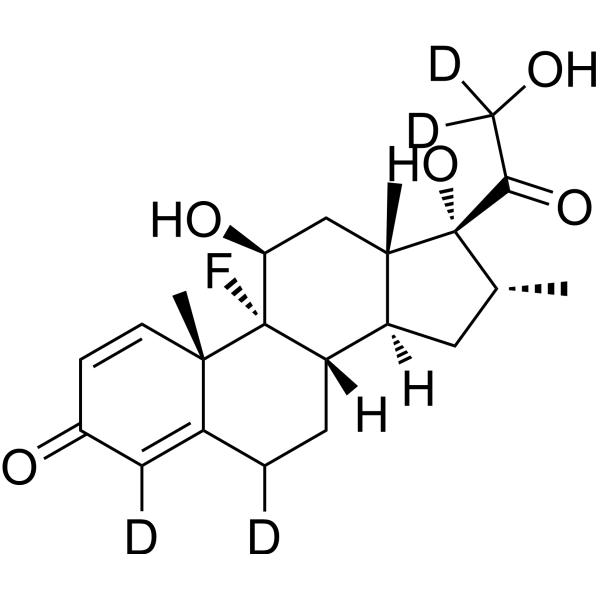 0 ImagesCat. No.: HY-14648S2CAS No.: 2305607-27-4Synonyms: Hexadecadrol-d4; Prednisolone F-d4Dexamethasone-d4 is deuterium labeled Dexamethasone. Dexamethasone (Hexadecadrol) is a glucocorticoid receptor agonist. Dexamethasone also significantly decreases CD11b, CD18, and CD62L expression on neutrophils, and CD11b and CD18 expression on monocytes. Dexamethasone is highly effective in the control of COVID-19 infection. Dexamethasone inhibits production of exosomes containing inflammatory microRNA-155 in lipopolysaccharide-induced macrophage inflammatory responses.
-
AM9928
 0 ImagesCat. No.: HY-182639CAS No.: 1869033-49-7AM9928 is a monoacylglycerol lipase (MAGL) inhibitor with IC50 and Ki values of 8.9 nM and 7.3 nM, respectively. AM9928 blocks the adhesion and migration of triple-negative breast cancer (TNBC) cells, and inhibits the secretion of IL-6, IL-8 and VEGF-A by TNBC cells. AM9928 suppresses the activation of human brain microvascular endothelial cells (HBMECs) induced by TNBC-derived exosomes, and reduces the secretion of IL-8 and VEGF-A by HBMECs. AM9928 attenuates changes in blood-brain barrier permeability, inhibits tumor growth in the mammary fat pad, and reduces brain colonization of TNBC. AM9928 can be used in studies related to triple-negative breast cancer.
-
Lansoprazole (Standard)
 0 ImagesSynonyms: AG-1749 (Standard)Lansoprazole (Standard) is the analytical standard of Lansoprazole. This product is intended for research and analytical applications. Lansoprazole (AG 1749) is an orally active proton pump inhibitor which prevents the stomach from producing acid. Lansoprazole (AG 1749) is a potent brain penetrant neutral sphingomyelinase (N-SMase) inhibitor (exosome inhibitor).
-
18:0,18:1 PS sodium (Standard)
 0 ImagesCat. No.: HY-148978RCAS No.: 321883-23-2Resorantel (Standard) is the analytical standard of Resorantel. This product is intended for research and analytical applications. 18:0,18:1 PS sodium is the dominant phosphatidylserine subtype in cells, exosomes and HIV particles. It is abundant in the brain and is essential for maintaining membrane structure, lipid raft organization and intracellular trafficking. 18:0,18:1 PS sodium mediates interleaflet membrane coupling through cholesterol-dependent interactions with very long-chain sphingolipids, and can induce the clustering of glycosylphosphatidylinositol-anchored proteins. In addition, clusters formed by the binding of 18:0,18:1 PS sodium to cholesterol not only facilitate the proper distribution of cholesterol in lipid bilayers, but also effectively protect cholesterol from oxidative damage.
-
PD-1/PD-L1-IN-40
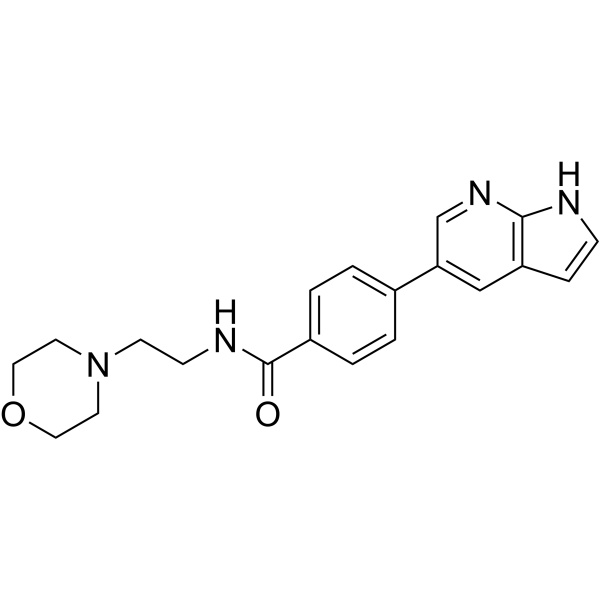 0 ImagesCat. No.: HY-157811PD-1/PD-L1-IN-40 (Compound EP16) is a PD-1/PD-L1 inhibitor. PD-1/PD-L1-IN-40 inhibits the generation of exosomal PD-L1 with IC50 = 0.108 μM. PD-1/PD-L1-IN-40 can serve as a leading compound for exosomal PD-L1 abrogation. PD-1/PD-L1-IN-40 can be used for the research of cancer.
-
Calcium influx inducer compound 634
 0 ImagesCat. No.: HY-169819CAS No.: 882291-37-4Calcium influx inducer compound 634 is a calcium influx inducer. Calcium influx inducer compound 634 (10 µM) enhances the release of extracellular vesicles (EVs) from mouse bone marrow-derived dendritic cells (mBMDCs). Calcium influx inducer compound 634 (10 µM) also increases the levels of CD86 and CD80 on the surface of mBMDCs, an effect that can be blocked by the calcium release-activated calcium channel inhibitor YM-58483 (HY-100831).
-
5-Fluorouracil-13C4,15N2
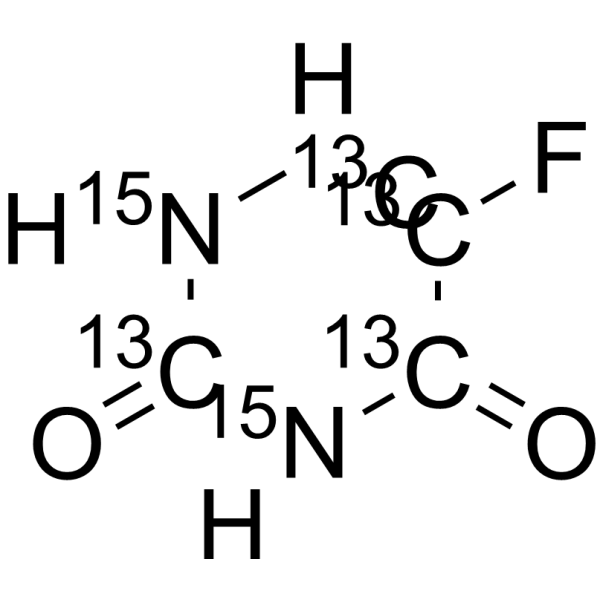 0 ImagesCat. No.: HY-90006S3CAS No.: 202407-03-2Synonyms: 5-FU-13C4,15N25-Fluorouracil-13C4,15N2 is the 13C and 15N labeled 5-Fluorouracil. 5-Fluorouracil (5-FU) is an analogue of uracil and a potent antitumor agent. 5-Fluorouracil affects pyrimidine synthesis by inhibiting thymidylate synthetase thus depleting intracellular dTTP pools. 5-Fluorouracil induces apoptosis and can be used as a chemical sensitizer. 5-Fluorouracil also inhibits HIV.
-
BV2
 0 ImagesCat. No.: HY-P11741BV2 is a delivery peptide that binds to BVES, with a Ka of 2.03 μM for the BVES target. BV2 specifically binds to the extracellular domain of BVES, achieving muscle homing and cellular internalization via caveolae-mediated endocytosis. When BV2 is modified on the surface of exosomes by PMO, it enhances dystrophin restoration in the peripheral muscles and myocardium of dystrophin-deficient mice. BV2 is applicable to research related to Duchenne muscular dystrophy and muscle atrophy.
-
WLSEAGPVVTVRALRGTGSW TFA
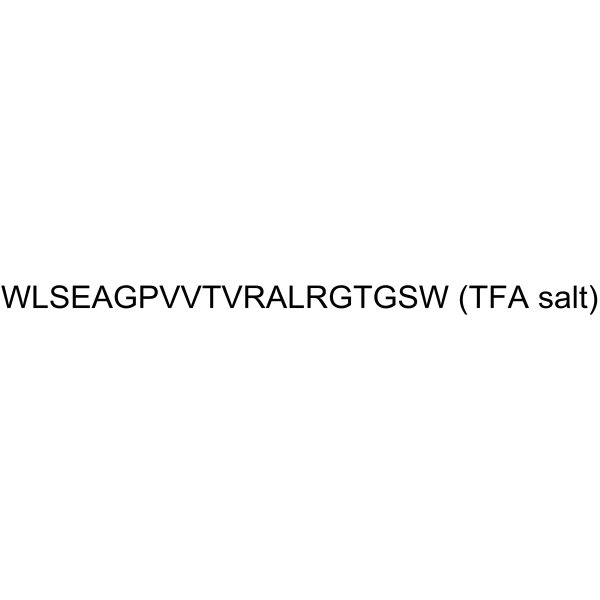 0 ImagesCat. No.: HY-P3436AWLSEAGPVVTVRALRGTGSW TFA is a cardiomyocyte-targeting peptide that specifically recognizes tenascin X on the surface of cardiomyocytes. WLSEAGPVVTVRALRGTGSW TFA can serve as a targeting ligand to conjugate with various therapeutic carriers (drugs, genes, exosomes, nanoparticles, etc.) for research on cardiovascular diseases (such as myocardial infarction, heart failure).



