



Monensin
Based on 45 publication(s) in Google Scholar
Monensin (Monensin A), an orally active antibiotic, is an ionophore that mediates Na+/H+ exchange. Monensin is a potent Wnt signaling inhibitor. Monensin causes a marked enlargement of the multivesicular bodies (MVBs) and regulates exosome secretion. Monensin can be used for bacterial, fungal, and parasitic infections research, and shows anticancer effects.
For research use only. We do not sell to patients.
- Purity : 98.07%
- CAS No.: 17090-79-8
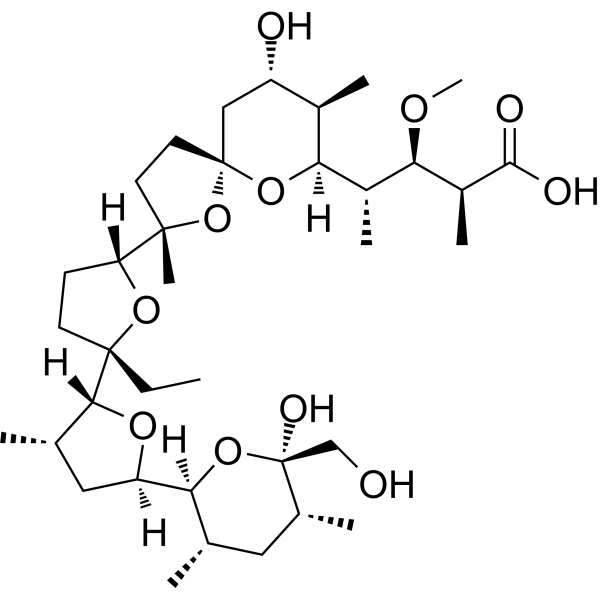
- Formula: C36H62O11
- Molecular Weight:670.87
-
Storage:Powder -20°C, 3 years , 4°C, 2 years ; In solvent -80°C, 6 months , -20°C, 1 month

To place orders, for customer services and technical support, please contact: MedChemExpress USA
Tel: 609-228-6898 E-mail: [email protected] [email protected]


-
 Biological Activity
-
Chemical Information
-
Solvent & Solubility
- Purity & Documentation
- References
-
 Help & FAQs


Publications Citing Use of MedChemExpress (MCE) Monensin
More- Signal Transduct Target Ther. 2024 Dec 30;9(1):367. [Abstract]
- Signal Transduct Target Ther. 2023 Jul 17;8(1):273. [Abstract]
- Nat Methods. 2024 Feb;21(2):259-266. [Abstract]
- Cell Host Microbe. 2025 Jan 8;33(1):119-136.e11. [Abstract]
- Autophagy. 2026 May 28:1-24. [Abstract]
- Autophagy. 2025 Dec 8. [Abstract]
- Nat Commun. 2025 Jul 18;16(1):6621. [Abstract]
- Nat Commun. 2025 Mar 10;16(1):2368. [Abstract]
- Nat Commun. 2022 Jul 22;13(1):4255. [Abstract]
- Neuron. 2026 Mar 4;114(5):868-883.e7. [Abstract]
- Redox Biol. 2022 Oct:56:102456. [Abstract]
- J Nanobiotechnology. 2025 Jul 3;23(1):483. [Abstract]
- Theranostics. 2025 May 25;15(13):6329-6346. [Abstract]
- J Exp Clin Cancer Res. 2021 Jan 6;40(1):16. [Abstract]
- Adv Sci (Weinh). 2026 May 26:e15158. [Abstract]
- Cell Death Dis. 2025 Apr 15;16(1):301. [Abstract]
- Small. 2021 Dec;17(50):e2103984. [Abstract]
- J Exp Med. 2023 Mar 6;220(3):e20221316. [Abstract]
- Adv Healthc Mater. 2025 Sep;14(25):e2500507. [Abstract]
- Adv Healthc Mater. 2025 Jan;14(3):e2402976. [Abstract]
- Acta Pharmacol Sin. 2026 Apr 8. [Abstract]
- Proc Natl Acad Sci U S A. 2025 Jul 15;122(28):e2501347122. [Abstract]
- EMBO Mol Med. 2026 Aug;18(8):3200-3225.
- Cancer Immunol Res. 2026 May 4;14(5):875-891. [Abstract]
- Int J Pharm X. 2026 May 3:11:100556. [Abstract]
- Cell Rep. 2025 Apr 2;44(4):115489. [Abstract]
- Talanta. 2025 Oct 1:293:128128. [Abstract]
- Biochem Pharmacol. 2024 Jan:219:115957. [Abstract]
- Oncoimmunology. 2023 Apr 19;12(1):2204015. [Abstract]
- Front Microbiol. 2020 Apr 30:11:790. [Abstract]
- Int Immunopharmacol. 2023 Sep 1;124(Pt A):110865. [Abstract]
- AAPS PharmSciTech. 2023 Feb 15;24(2):69. [Abstract]
- Sci Rep. 2025 Apr 10;15(1):12278. [Abstract]
- Eur J Med Res. 2025 May 12;30(1):378. [Abstract]
- J Inflamm Res. 2025 Dec 10:18:17253-17269. [Abstract]
- Clin Immunol. 2023 Mar:248:109217. [Abstract]
- Clin Exp Immunol. 2024 Mar 12;216(1):68-79. [Abstract]
- Exp Cell Res. 2026 Aug 1;461(1):115103. [Abstract]
- Int J Parasitol Drugs Drug Resist. 2023 Aug:22:44-51. [Abstract]
- SSRN. 2026 Aug 26.
- SSRN. 2025 Sep 30.
- bioRxiv. 2024 Jul 27:2024.07.25.605164. [Abstract]
- bioRxiv. 2023 Sep 12:2023.09.09.557001. [Abstract]
- Research Square Preprint. 2023 Aug 31.
- bioRxiv. 2023 Jun 25.
 Customer Validation & Images

-
Cell Imaging/Staining
-
Cell Imaging/Staining
-
Cell Migration/Invasion Assay
-
WB
-
RT-PCR
All Antibiotic Isoforms
MoreAll Parasite Isoforms
More

Biological Activity
Description
Cellular Effect
|
Cell Line

|
Type | Value | Description | References |
|---|---|---|---|---|
| BALB/3T3 | IC50 |
20.89 μM
Compound: MON
|
Cytotoxicity against mouse BALB/3T3 cells
Cytotoxicity against mouse BALB/3T3 cells
|
[PMID: 26338363] |
| Hepatocyte | IC50 |
<0.001 nM
Compound: Monensin
|
Antimicrobial activity against Plasmodium falciparum NF54 schizonts in mammalian hepatocytes after 96 hrs
Antimicrobial activity against Plasmodium falciparum NF54 schizonts in mammalian hepatocytes after 96 hrs
|
[PMID: 18212104] |
| Hepatocyte | IC50 |
<0.001 nM
Compound: Monensin
|
Antimicrobial activity against Plasmodium yoelii 265 liver infected in mammalian hepatocytes after 48 hrs
Antimicrobial activity against Plasmodium yoelii 265 liver infected in mammalian hepatocytes after 48 hrs
|
[PMID: 18212104] |
| LoVo | IC50 |
1.09 μM
Compound: MON
|
Antiproliferative activity against human LoVo cells
Antiproliferative activity against human LoVo cells
|
[PMID: 26338363] |
| MV4-11 | IC50 |
0.09 μM
Compound: MON
|
Antiproliferative activity against human MV4-11 cells
Antiproliferative activity against human MV4-11 cells
|
[PMID: 26338363] |
In Vitro
Monensin (1-5 μM; 48 h) results in a marked decrease in viability in a dose-dependent manner[1].
Monensin (1-5 μM; 24 h) shows a statistically significant induction of apoptosis[1].
Monensin (0.1-1 μM; 24 h) inhibits pEGFR and its downstream targets pAKT and pERK[1].
MedChemExpress (MCE) has not independently confirmed the accuracy of these methods. They are for reference only.
-
Cell Line:SCC9, SCC25, and GM-38 cell lines
-
Concentration:1-5 μM
-
Incubation Time:48 h
-
Result:Resulted in a marked decrease in viability in a dose-dependent manner.
-
Cell Line:SCC25 cells
-
Concentration:1 μM, or 5 μM
-
Incubation Time:24 hours
-
Result:Induced a potent apoptotic response.
-
Cell Line:SCC9 and SCC25 cells
-
Concentration:0.1 μM, or 1 μM
-
Incubation Time:24 hours
-
Result:Induced approximately a 50% inhibition of EGF-treated SCC9 cells with respect to pEGFR and its downstream targets pAKT and pERK.
In Vivo
MedChemExpress (MCE) has not independently confirmed the accuracy of these methods. They are for reference only.
-
Animal Model:Multiple intestinal neoplasia (Min) mice (four-week-old) [2]
-
Dosage:10 mg/kg
-
Administration:Orally application; daily; for 6 weeks
-
Result:Suppressed progression of the intestinal tumors without any sign of toxicity on normal mucosa.


Chemical Information
-
CAS No. 17090-79-8
-
Appearance Solid
-
Molecular Weight 670.87
-
Formula C36H62O11
-
Color White to light yellow
-
SMILES
C[C@]1([C@]2([H])O[C@@](CC2)([C@]3([H])O[C@]([C@@]4([H])O[C@](O)([C@@H](C[C@@H]4C)C)CO)([H])C[C@@H]3C)CC)O[C@@]5(CC1)O[C@]([C@@H]([C@H](C5)O)C)([H])[C@@H](C)[C@@H](OC)[C@H](C)C(O)=O
-
Synonyms
Monensin A
-
Structure Classification
-
Initial Source
Streptomyces spp.
-
Shipping
Room temperature in continental US; may vary elsewhere.
-
Storage
Powder -20°C 3 years 4°C 2 years In solvent -80°C 6 months -20°C 1 month


Publications (45)
-
Journal Impact Factor
-
Most Recent
-
Signal Transduct Target Ther
2024 Dec 30;9(1):367. PMID: 39737965
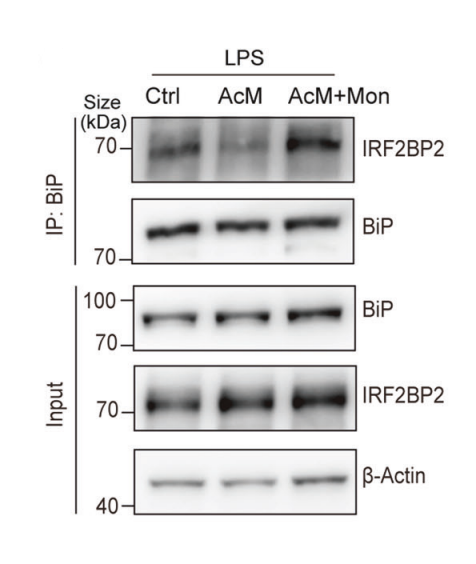
Monensin purchased from MedChemExpress. Usage Cited in: Signal Transduct Target Ther. 2024 Dec 30;9(1):367. [Abstract]
Cellular BiP-IRF2BP2 interactions shown by Western blot analysis of co-immunoprecipitation in MG132-pretreated (5 μM, 0.5 h) Raw264.7 cells which were treated with acidized medium (AcM) or with AcM plus Monensin (0.1 μM) in the presence of LPS and MG132 (0.5 μM) for 6 h.
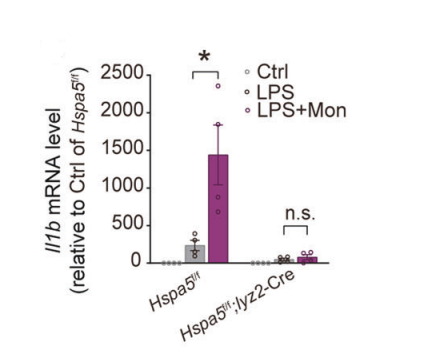
Monensin purchased from MedChemExpress. Usage Cited in: Signal Transduct Target Ther. 2024 Dec 30;9(1):367. [Abstract]
Il1b expressions in BMDMs isolated from Hspa5f/f or Hspa5f/f; Lyz2-Cre mice treated with or without Monensin (1 μM), under stimulation of LPS for 24 h.
-
Signal Transduct Target Ther
Incorporation of a Toll-like receptor 2/6 agonist potentiates mRNA vaccines against cancer and infectious diseases. [Abstract]2023 Jul 17;8(1):273. PMID: 37455272 -
Nat Methods
SEVtras delineates small extracellular vesicles at droplet resolution from single-cell transcriptomes. [Abstract]2024 Feb;21(2):259-266. PMID: 38049696 -
Cell Host Microbe
The intestinal fungus Aspergillus tubingensis promotes polycystic ovary syndrome through a secondary metabolite. [Abstract]2025 Jan 8;33(1):119-136.e11. PMID: 39788092 -
Autophagy
High-fat diet exacerbates experimental colitis by inhibiting lysosomal function via the STAT3-TFEB Axis. [Abstract]2026 May 28:1-24. PMID: 42165414 -
Autophagy
Trans-Golgi network-associated noncanonical autophagy depends on the V-ATPase-ATG16L1 axis and mediates IL1B secretion. [Abstract]2025 Dec 8. PMID: 41361996 -
Nat Commun
2025 Jul 18;16(1):6621. PMID: 40681515
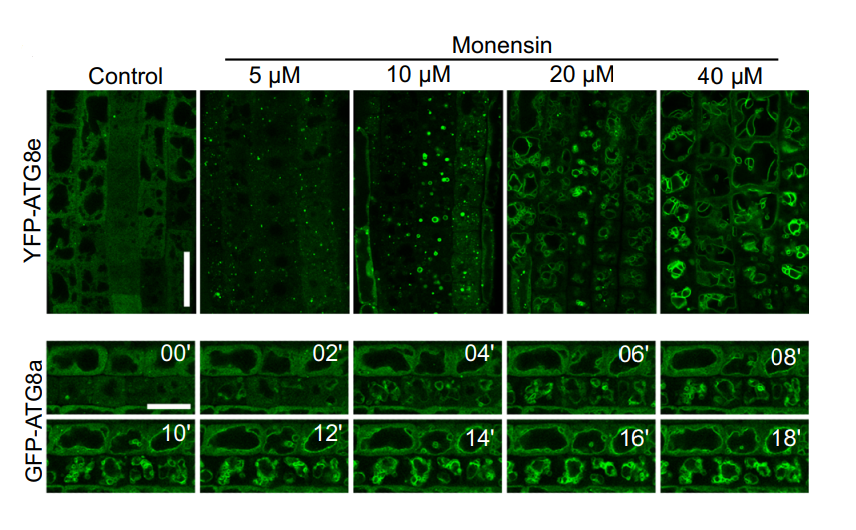
Monensin purchased from MedChemExpress. Usage Cited in: Nat Commun. 2025 Jul 18;16(1):6621. [Abstract]
The impact of different concentrations of monensin on the subcellular localization of YFP-ATG8e. 5-day-old YFP-ATG8e transgenic seedlings were treated with different concentrations of Monensin (5-40 μM; 1 h) in 1/2MS liquid medium, followed by confocal microscopy observation.
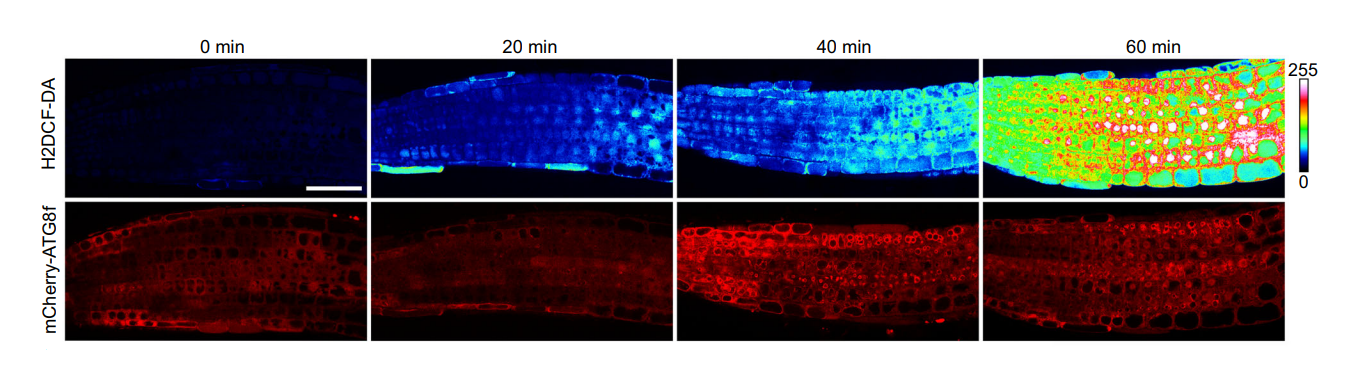
Monensin purchased from MedChemExpress. Usage Cited in: Nat Commun. 2025 Jul 18;16(1):6621. [Abstract]
Detection of ROS generation after monensin treatment. 5-day-old mCherry-ATG8f seedlings were subjected to Monensin (20 μM; 1 h) treatment. The ROS-sensitive dye H2DCFDA (1 μM) was incubated 10 min prior to confocal imaging. The images were shown with LUT pseudocolor scale.
-
Nat Commun
Berberine-inspired ionizable lipid for self-structure stabilization and brain targeting delivery of nucleic acid therapeutics. [Abstract]2025 Mar 10;16(1):2368. PMID: 40064874 -
Nat Commun
Calcium/calmodulin-dependent protein kinase IV promotes imiquimod-induced psoriatic inflammation via macrophages and keratinocytes in mice. [Abstract]2022 Jul 22;13(1):4255. PMID: 35869084 -
Neuron
2026 Mar 4;114(5):868-883.e7. PMID: 41558486 -
Redox Biol
Role of redox-sensitive catalytic interaction with ADAM10 in mutant-selective extracellular shedding of prion protein. [Abstract]2022 Oct:56:102456. PMID: 36041363 -
J Nanobiotechnology
Targeting heptad repeats and fusion peptide: nanoparticle vaccine elicits mucosal immune response against SARS-CoV-2 variants. [Abstract]2025 Jul 3;23(1):483. PMID: 40611257 -
Theranostics
2025 May 25;15(13):6329-6346. PMID: 40521193 -
J Exp Clin Cancer Res
Selective exosome exclusion of miR-375 by glioma cells promotes glioma progression by activating the CTGF-EGFR pathway. [Abstract]2021 Jan 6;40(1):16. PMID: 33407703 -
Adv Sci (Weinh)
Genome-Wide CRISPR Screen Identifies a microRNA Orchestrating Pleiotropic Resistance to Targeted Therapy and T Cell Immunity in Melanoma. [Abstract]2026 May 26:e15158. PMID: 42189126 -
Cell Death Dis
FTO controls CD8+ T cell survival and effector response by modulating m6A methylation of Fas. [Abstract]2025 Apr 15;16(1):301. PMID: 40234389 -
Small
Cell-Derived Biogenetic Gold Nanoparticles for Sensitizing Radiotherapy and Boosting Immune Response against Cancer. [Abstract]2021 Dec;17(50):e2103984. PMID: 34723421 -
J Exp Med
Repurposing a tricyclic antidepressant in tumor and metabolism disease treatment through fatty acid uptake inhibition. [Abstract]2023 Mar 6;220(3):e20221316. PMID: 36520461 -
Adv Healthc Mater
Lipoprotein-Based Nanocatalyst Enables Targeted Treatment of APAP-Induced Liver Injury via Enhanced Macropinocytosis. [Abstract]2025 Sep;14(25):e2500507. PMID: 40411876 -
Adv Healthc Mater
Self-Assembled Nanoparticles with Well-Defined Oligosaccharide Promote Osteogenesis by Regulating Golgi Stress Response. [Abstract]2025 Jan;14(3):e2402976. PMID: 39618007 -
Acta Pharmacol Sin
Alkalization of the intracellular pH reprograms TNF-α signaling from inflammatory NF-κB activation to tumoricidal RIP kinase-dependent necroptosis in cancer cells. [Abstract]2026 Apr 8. PMID: 41951772 -
Proc Natl Acad Sci U S A
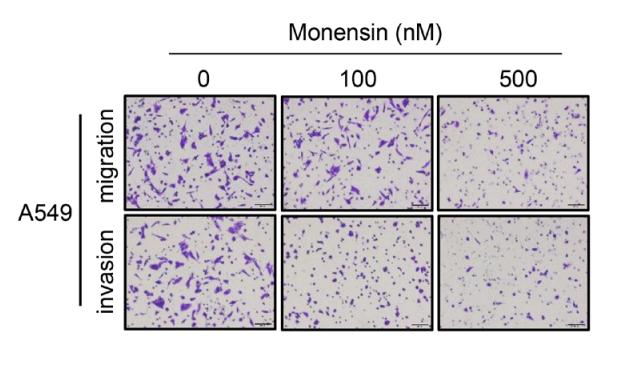
Monensin suppresses EMT-driven cancer cell motility by inducing Golgi pH-dependent exocytosis of GOLIM4. [Abstract]2025 Jul 15;122(28):e2501347122. PMID: 40632561
Monensin purchased from MedChemExpress. Usage Cited in: Proc Natl Acad Sci U S A. 2025 Jul 15;122(28):e2501347122. [Abstract]
Boyden chamber transwell assays on mesenchymal NSCLC cells treated with indicated doses of Monensin (100-500 nM; 24 h). Migrated and invaded cells were quantified.
-
-
Cancer Immunol Res
CLK1 Promotes Myeloid-Derived Suppressor Cell Trafficking and Reprograms the Tumor Microenvironment by Activating Hippo/YAP Signaling in Colorectal Cancer. [Abstract]2026 May 4;14(5):875-891. PMID: 41686262 -
Int J Pharm X
A reduction-sensitive lipophilic dihydroartemisinin prodrug in a self-microemulsifying drug delivery system for treating breast cancer lung metastasis via intestinal lymphatic transport. [Abstract]2026 May 3:11:100556. PMID: 42110369 -
Cell Rep
LAMP2A-mediated neuronal hyperexcitability by enhancing NKAβ1 degradation underlies depression-induced allodynia. [Abstract]2025 Apr 2;44(4):115489. PMID: 40178973 -
Talanta
Fluorescence-activated cell sorting-based efficient screening of monensin monoclonal antibodies and applications in lateral flow immunoassay. [Abstract]2025 Oct 1:293:128128. PMID: 40222095 -
Biochem Pharmacol
2024 Jan:219:115957. PMID: 38049007 -
Oncoimmunology
CARD9 deficiency promotes pancreatic cancer growth by blocking dendritic cell maturation via SLC6A8-mediated creatine transport. [Abstract]2023 Apr 19;12(1):2204015. PMID: 37089447 -
Front Microbiol
Autophagy Participates in Lysosomal Vacuolation-Mediated Cell Death in RGNNV-Infected Cells. [Abstract]2020 Apr 30:11:790. PMID: 32425913 -
Int Immunopharmacol
Tespa1 deficiency reduces the antitumour immune response by decreasing CD8+T cell activity in a mouse Lewis lung cancer model. [Abstract]2023 Sep 1;124(Pt A):110865. PMID: 37660596 -
AAPS PharmSciTech
Transcellular Transport Behavior of the Intact Polymeric Mixed Micelles with Different Polymeric Ratios. [Abstract]2023 Feb 15;24(2):69. PMID: 36792796 -
Sci Rep
ARL8B regulates lysosomal function and predicts poor prognosis in hepatocellular carcinoma. [Abstract]2025 Apr 10;15(1):12278. PMID: 40210693 -
Eur J Med Res
Invisible appliance promotes bone reconstruction via modulating the periodontal immune microenvironment. [Abstract]2025 May 12;30(1):378. PMID: 40350478 -
J Inflamm Res
Interleukin-27 and Interleukin-2 Cooperatively Regulate CD4⁺ T Cell Subsets and Immune Imbalance in Coronary Artery Disease. [Abstract]2025 Dec 10:18:17253-17269. PMID: 41399529 -
Clin Immunol
The combination of gemcitabine and ginsenoside Rh2 enhances the immune function of dendritic cells against pancreatic cancer via the CARD9-BCL10-MALT1 / NF-κB pathway. [Abstract]2023 Mar:248:109217. PMID: 36581220 -
Clin Exp Immunol
FGL1 in plasma extracellular vesicles is correlated with clinical stage of lung adenocarcinoma and anti-PD-L1 response. [Abstract]2024 Mar 12;216(1):68-79. PMID: 38146642 -
Exp Cell Res
2026 Aug 1;461(1):115103. PMID: 42276196 -
Int J Parasitol Drugs Drug Resist
2023 Aug:22:44-51. PMID: 37247559 -
-
-
bioRxiv
Interpretable representation learning for 3D multi-piece intracellular structures using point clouds. [Abstract]2024 Jul 27:2024.07.25.605164. PMID: 39091871 -
bioRxiv
Multiplexed single-cell lineage tracing of mitotic kinesin inhibitor resistance in glioblastoma. [Abstract]2023 Sep 12:2023.09.09.557001. PMID: 37745469 -
-


Solvent & Solubility
In Vitro:
DMSO : 100 mg/mL (149.06 mM; Need ultrasonic; Hygroscopic DMSO has a significant impact on the solubility of product, please use newly opened DMSO)
Please refer to the solubility information to select the appropriate solvent. Once prepared, please aliquot and store the solution to prevent product inactivation from repeated freeze-thaw cycles.
Storage method and period of stock solution: -80°C, 6 months; -20°C, 1 month. When stored at -80°C, please use it within 6 months. When stored at -20°C, please use it within 1 month.
Please refer to the solubility information to select the appropriate solvent. Once prepared, please aliquot and store the solution to prevent product inactivation from repeated freeze-thaw cycles.
Storage method and period of stock solution: -80°C, 6 months; -20°C, 1 month. When stored at -80°C, please use it within 6 months. When stored at -20°C, please use it within 1 month.
Concentration (start) × Volume (start) = Concentration (final) × Volume (final)
In Vivo:
Select the appropriate dissolution method based on your experimental animal and administration route.
- For the following dissolution methods, please ensure to first prepare a clear stock solution using an In Vitro approach and then sequentially add co-solvents:
- To ensure reliable experimental results, the clarified stock solution can be appropriately stored based on storage conditions. As for the working solution for In Vivo experiments, it is recommended to prepare freshly and use it on the same day.
- The percentages shown for the solvents indicate their volumetric ratio in the final prepared solution. If precipitation or phase separation occurs during preparation, heat and/or sonication can be used to aid dissolution.
In Vivo Dissolution Calculator
Please enter the basic information of animal experiments:
-
-
-
-
Recommended: Prepare an additional quantity of animals to account for potential losses during experiments.
Please enter your animal formula composition:
-
%DMSO +
Recommended: Keep the proportion of DMSO in working solution below 2% if your animal is weak.
-
%+
-
+%Tween-80 + +
-
%Saline +
The co-solvents required include: DMSO, . All of co-solvents are available by MedChemExpress (MCE). , Tween 80. All of co-solvents are available by MedChemExpress (MCE).
Working solution concentration: 0.22 mg/mL
Method for preparing stock solution: mg drug dissolved in μL DMSO. Stock solution concentration: mg/mL.
1. Take μL DMSO stock solution;
2. Add μL .
μL , mix evenly;
3. Then add μL Tween 80, mix evenly;
4. Then add μL
Please ensure that the stock solution in the first step is dissolved to a clear state, and add co-solvents in sequence. You can use ultrasonic heating (ultrasonic cleaner, recommended frequency 20-40 kHz), vortexing, etc. to assist dissolution.


Purity & Documentation
-
Data Sheet (288 KB)
-
SDS (254 KB)
- English - EN (254 KB)
- Français - FR (254 KB)
- Deutsch - DE (254 KB)
- Norwegian - NO (254 KB)
- Español - ES (254 KB)
- Swedish - SV (254 KB)
- Italian - IT (254 KB)
- Korean - KR (254 KB)
- Portuguese - PT (254 KB)
-
Handling Instructions (2659 KB)
References
[1]. Dayekh K, et al. Monensin inhibits epidermal growth factor receptor trafficking and activation: synergistic cytotoxicity in combination with EGFR inhibitors. Mol Cancer Ther. 2014 Nov;13(11):2559-71. [Content Brief]
[2]. Tumova L, et al. Monensin inhibits canonical Wnt signaling in human colorectal cancer cells and suppresses tumor growth in multiple intestinal neoplasia mice. Mol Cancer Ther. 2014 Apr;13(4):812-22. [Content Brief]
[3]. Youhua Huang, et al. Autophagy Participates in Lysosomal Vacuolation-Mediated Cell Death in RGNNV-Infected Cells. Front Microbiol. 2020 Apr 30:11:790. [Content Brief]
[4]. Ariel Savina, et al. Rab11 promotes docking and fusion of multivesicular bodies in a calcium-dependent manner. Traffic. 2005 Feb;6(2):131-43. [Content Brief]


Complete Stock Solution Preparation Table
Please refer to the solubility information to select the appropriate solvent. Once prepared, please aliquot and store the solution to prevent product inactivation from repeated freeze-thaw cycles.
Storage method and period of stock solution: -80°C, 6 months; -20°C, 1 month. When stored at -80°C, please use it within 6 months. When stored at -20°C, please use it within 1 month.
| Optional Solvent | Concentration Solvent Mass | 1 mg | 5 mg | 10 mg | 25 mg |
|---|---|---|---|---|---|
| DMSO | 1 mM | 1.4906 mL | 7.4530 mL | 14.9060 mL | 37.2650 mL |
| 5 mM | 0.2981 mL | 1.4906 mL | 2.9812 mL | 7.4530 mL | |
| 10 mM | 0.1491 mL | 0.7453 mL | 1.4906 mL | 3.7265 mL | |
| 15 mM | 0.0994 mL | 0.4969 mL | 0.9937 mL | 2.4843 mL | |
| 20 mM | 0.0745 mL | 0.3727 mL | 0.7453 mL | 1.8633 mL | |
| 25 mM | 0.0596 mL | 0.2981 mL | 0.5962 mL | 1.4906 mL | |
| 30 mM | 0.0497 mL | 0.2484 mL | 0.4969 mL | 1.2422 mL | |
| 40 mM | 0.0373 mL | 0.1863 mL | 0.3727 mL | 0.9316 mL | |
| 50 mM | 0.0298 mL | 0.1491 mL | 0.2981 mL | 0.7453 mL | |
| 60 mM | 0.0248 mL | 0.1242 mL | 0.2484 mL | 0.6211 mL | |
| 80 mM | 0.0186 mL | 0.0932 mL | 0.1863 mL | 0.4658 mL | |
| 100 mM | 0.0149 mL | 0.0745 mL | 0.1491 mL | 0.3727 mL |


Monensin Related Classifications
HY-N4302 Related Classifications
 Powered by Bioz