



Isotope-Labeled Compounds
Isotope-labeled compounds are chemical substances in which some atoms in their molecules are replaced by isotope atoms. The range of stable isotope products can cover from gases to complex molecules. Isotope-labeled compounds could provide a site-specific investigation of structures, making molecules easily detectable by mass spectrometry and NMR, and maintaining the physico-chemical properties of the target molecule at the same time.
MCE isotope-labeled compounds are all stable isotope-labeled compounds and are non-radioactive labeled substances. MCE isotope-labeled compounds are unique tools for identifying and understanding biological and chemical processes. Stable isotope-labeled products are now getting more and more popular among scientists. The scope of application is gradually penetrating into various scientific fields, such as life sciences, food and medicine, agriculture, environment, geology, etc. Stable isotope-labeled compounds have a wide range of applications in the Life Science areas, such as Metabolomics, Proteomics, Clinical studies, Deuterium drugs, etc.
All Product Categories
-
Isotope-Labeled Compounds Related Products (11126)
Related Products (11126)

-
Tetrahydrofolic acid-d4
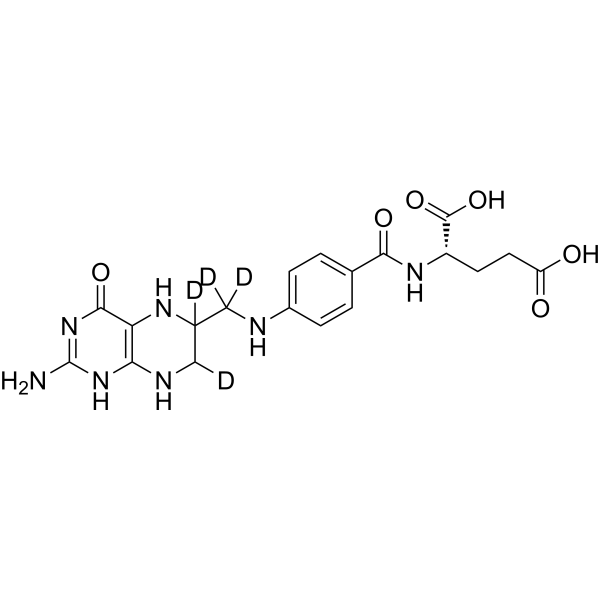 0 ImagesCat. No.: HY-14520SCAS No.: 1356841-72-9Tetrahydrofolic acid-d4 is the deuterium labeled Tetrahydrofolic acid. Tetrahydrofolic acid (L-5,6,7,8-Tetrahydrofolic acid) is the biologically active vitamin B9 folate derivative. Tetrahydrofolic acid is a donor of one-carbon groups for amino acids, nucleic acids, and lipids. Tetrahydrofolic acid serves as an acceptor of free formaldehyde, producing 5,10-methylenetetrahydrofolate-Tetrahydrofolic acid.
-
5-Methyl-2'-deoxycytidine-d3
 0 ImagesSynonyms: 5-Methyldeoxycytidine-d35-Methyl-2'-deoxycytidine-d3 (5-Methyldeoxycytidine-d3) is the deuterium labeled Methyl-2'-deoxycytidine (HY-W012078). 5-Methyl-2'-deoxycytidine (5mdC) is an endogenous substrate of DNA methyltransferases (such as mammalian 5-C-MTase) and binds to DNA dependent on the formation of DNA stem-loop structures. 5-Methyl-2'-deoxycytidine guides de novo DNA methylation by acting as a methylation mark and activates the methylation of adjacent CpG sites in single-stranded DNA through cis action. 5-Methyl-2'-deoxycytidine regulates DNA methylation patterns by recruiting methyltransferases to specific chromatin regions, affecting chromatin condensation and gene expression. Its distribution in plant cells is related to cell proliferation and differentiation stages. The methylation level of 5-Methyl-2'-deoxycytidine is low in proliferating cells and high in differentiated cells.
-
2-Bromo-9,9-dimethylfluorene-d7
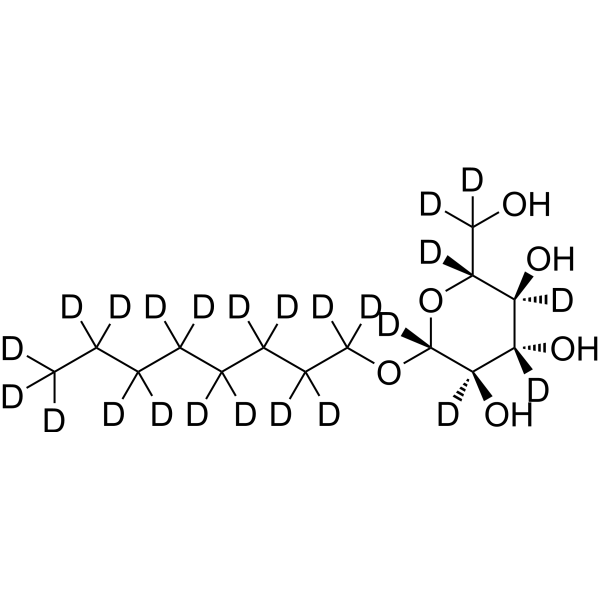
 0 ImagesCat. No.: HY-W003603SCAS No.: 2778350-02-82-Bromo-9,9-dimethylfluorene-d7 is the deuterium labeled 2-Bromo-9,9-dimethylfluorene.
-
Oleoylethanolamide-d4
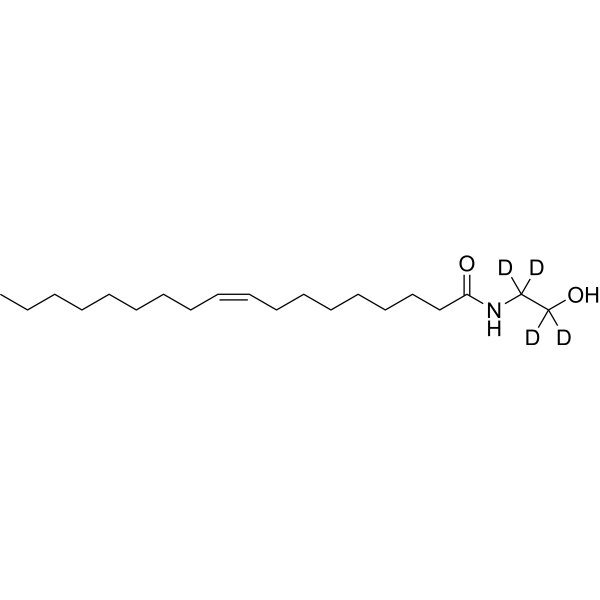 0 ImagesCat. No.: HY-107542SCAS No.: 946524-36-3Synonyms: N-Oleoylethanolamide-d4; Oleamide MEA-d4; Oleic acid monoethanolamide-d4Oleoylethanolamide-d4 is the deuterium labeled Oleoylethanolamide. Oleoylethanolamide is a high affinity endogenous PPAR-α agonist, which plays an important role in the treatment of obesity and arteriosclerosis.
-
Adipic acid-d10
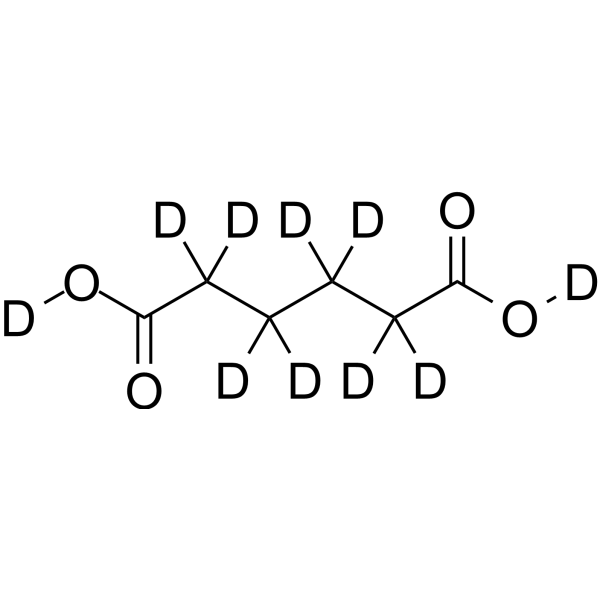 0 ImagesSynonyms: Hexanedioic acid-d10Adipic acid-d10 (Hexanedioic acid-d10) is the deuterium labeled Adipic acid (HY-W017522). Adipic acid (Hexanedioic acid) is an orally active compound with anti-HSV-1 activity. Adipic acid has low toxicity and can be used as a food additive and a gelling agent. Adipic acid can also be used in the synthesis of lubricants, artificial resins, plastics, etc.
-
UDP-α-D-Galactose-13C disodium
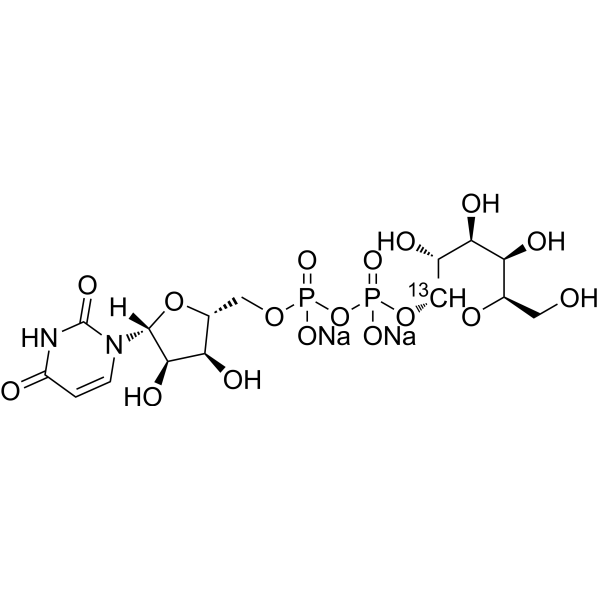 0 ImagesCat. No.: HY-114364SPurity: 98.0%UDP-α-D-Galactose-13C disodium is the 13C labeled UDP-α-D-Galactose disodium. UDP-Galactose disodium is a monosaccharide and a key glycosyl donor molecule in cells that participates in nucleotide sugar metabolism. UDP-Galactose disodium is the natural agonist of the P2Y14 receptor coupled to Gi proteins in the immune system (IC50 = 0.67 μM, hP2Y14). UDP-Galactose disodium can be used to study cell signal transduction and substance metabolism.
-
5-Hydroxy Omeprazole-d3
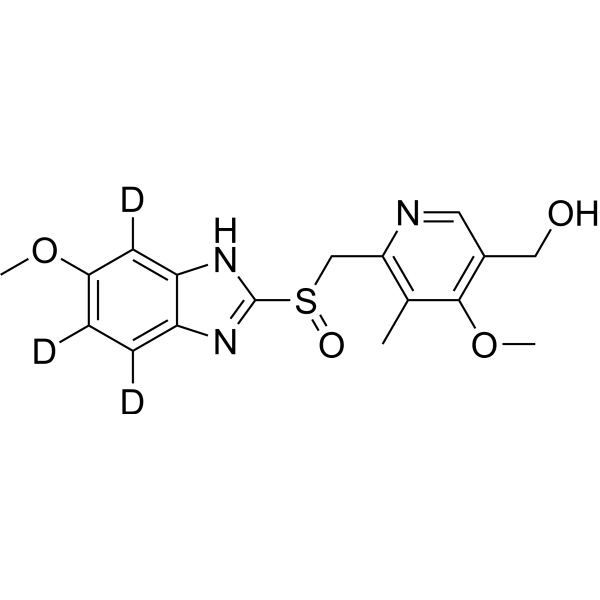 0 Images5-Hydroxy Omeprazole-d3 is deuterium labeled 5-Hydroxyomeprazole.
-
L-Cystine-13C6,15N2
 0 ImagesL-Cystine-13C6,15N2 is the 13C- and 15N-labeled L-Cystine (HY-N0394). L-Cystine is an orally active extracellular form of L-Cysteine (HY-Y0337), occurring in proteins of plants and animals. L-Cystine elevates Nrf2 protein expression and activates Nrf2 transcription factor. L-cystine reduces ROS generation and protects against oxidant- or Doxorubicin (HY-15142A)-induced apoptosis. L-Cystine combined with L-theanine (HY-15121) enhances the production of antigen-specific IgG by increasing glutathione (GSH) levels and T helper 2 (Th2) mediated responses in mice. L-Cystine is promising for research of cystinuria and kidney stones.
-
Modafinil acid-d5
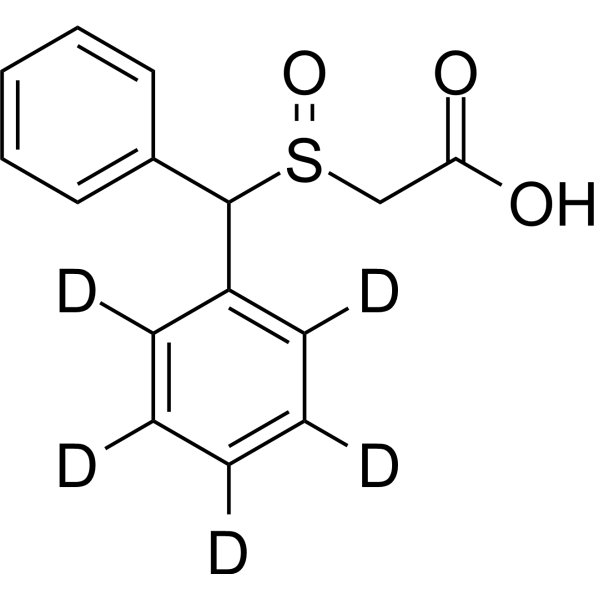 0 ImagesSynonyms: CRL-40467-d5Modafinil acid-d5 (CRL-40467-d5) is deuterium labeled Modafinil acid (HY-W103882). Modafinil acid is the metabolite of Modafinil.
-
2-Ketoglutaric acid-13C
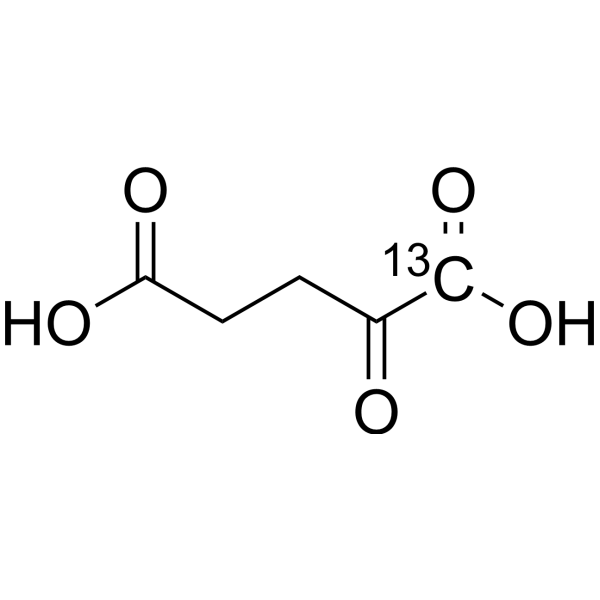 0 ImagesCat. No.: HY-W013636S3CAS No.: 108395-15-9Synonyms: Alpha-Ketoglutaric acid-13C2-Ketoglutaric acid-13C (Alpha-Ketoglutaric acid-13C) is a 13C labeled 2-Ketoglutaric acid (HY-W013636). 2-Ketoglutaric acid (Alpha-Ketoglutaric acid) is an intermediate in the production of ATP or GTP in the Krebs cycle. 2-Ketoglutaric acid also acts as the major carbon skeleton for nitrogen-assimilatory reactions. 2-Ketoglutaric acid is a reversible inhibitor of tyrosinase (IC50=15 mM).
-
Tristearin-d105
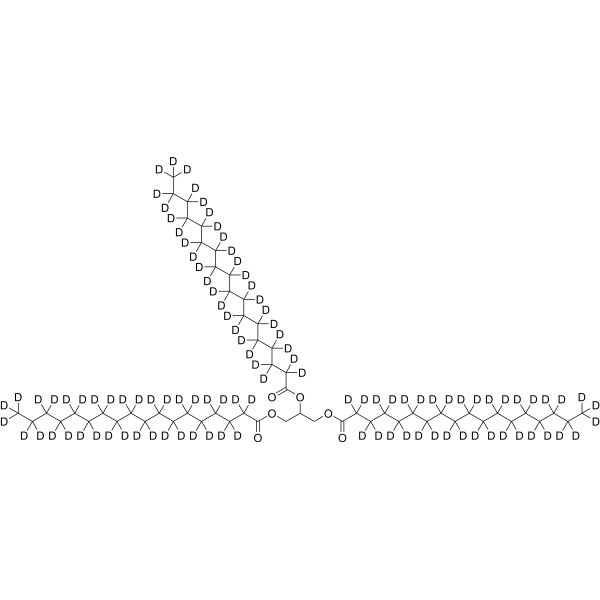 0 ImagesSynonyms: Glycerol tristearate-d105Tristearin-d105 is the deuterium labeled Tristearin (HY-127035). Tristearin is a triglyceride derived from three units of stearic acid.
-
17β-Estradiol-3-β-D-glucuronide-d3 sodium
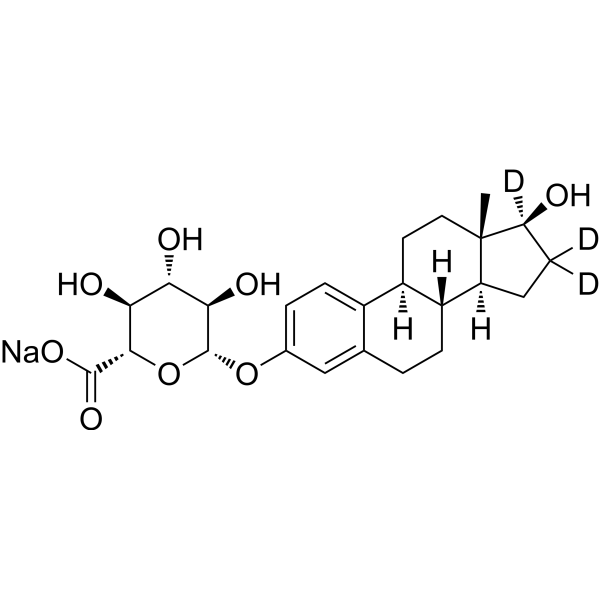 0 ImagesCat. No.: HY-132723ASPurity: 98.19%17β-Estradiol-3-β-D-glucuronide-d3 (sodium) is the deuterium labeled 17β-Estradiol-3-β-D-glucuronide.
-
9-Nitroanthracene-d9
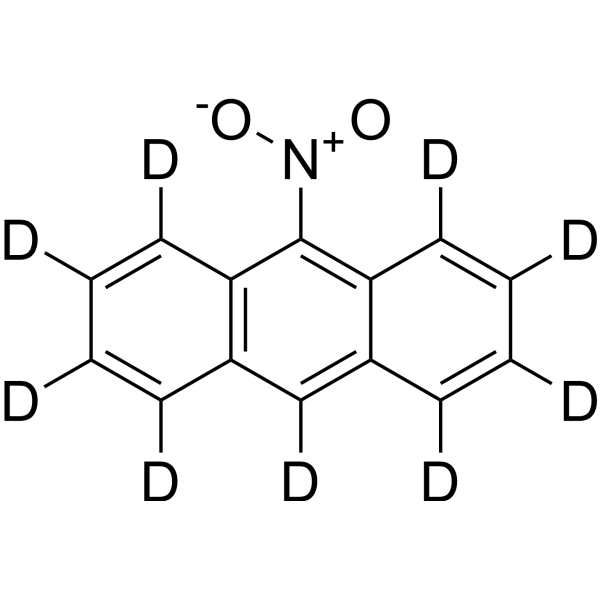 0 Images9-Nitroanthracene-d9 is the deuterium labeled 9-Nitroanthracene.
-
Xanomeline-d3
 0 ImagesSynonyms: LY-246708-d3Xanomeline-d3 (LY-246708-d3) is deuterium labeled Xanomeline. Xanomeline, as an effective and selective muscarinic type 1 and type 4 (M1/M4) receptor agonist, increases neuronal excitability. Xanomeline can be used for the research of neurological disorders, such as schizophrenia.
-
1,25-Dihydroxyvitamin D3 sulfate-d6 sodium
 0 ImagesCat. No.: HY-203708S11,25-Dihydroxyvitamin D3 sulfate-d6 sodium is the deuterium labeled 1,25-Dihydroxyvitamin D3 sulfate sodium.
-
N-Nitroso-3-azabicyclo[3.3.0]octane-d4
![N-Nitroso-3-azabicyclo[3.3.0]octane-d4](https://file.medchemexpress.com/product_pic/hy-143812s.gif "Click to View N-Nitroso-3-azabicyclo[3.3.0]octane-d4 Product Detail") 0 ImagesCat. No.: HY-143812SCAS No.: 1346604-35-0N-Nitroso-3-azabicyclo[3.3.0]octane-d4 is the deuterium labeled N-Nitroso-3-azabicyclo[3.3.0]octane.
0 ImagesCat. No.: HY-143812SCAS No.: 1346604-35-0N-Nitroso-3-azabicyclo[3.3.0]octane-d4 is the deuterium labeled N-Nitroso-3-azabicyclo[3.3.0]octane.
-
N2-Lauroyl-L-glutamine-d23
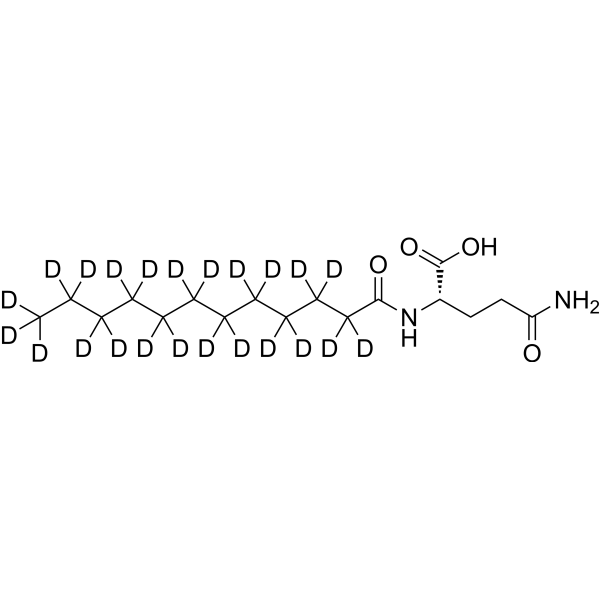 0 ImagesCat. No.: HY-132836SCAS No.: 1795786-88-7N2-Lauroyl-L-glutamine-d23 is the deuterium labeled N2-Lauroyl-L-glutamine.
-
2-Iodo-N-phenylacetamide-13C6
 0 ImagesSynonyms: N-phenyliodoacetamide-13C62-Iodo-N-phenylacetamide-13C6 (N-phenyliodoacetamide-13C6) is the 13C labeled 2-Iodo-N-phenylacetamide.



