



mAChR
Muscarinic acetylcholine receptor
mAChRs (muscarinic acetylcholine receptors) are acetylcholine receptors that form G protein-receptor complexes in the cell membranes of certainneurons and other cells. They play several roles, including acting as the main end-receptor stimulated by acetylcholine released from postganglionic fibersin the parasympathetic nervous system. mAChRs are named as such because they are more sensitive to muscarine than to nicotine. Their counterparts are nicotinic acetylcholine receptors (nAChRs), receptor ion channels that are also important in the autonomic nervous system. Many drugs and other substances (for example pilocarpineand scopolamine) manipulate these two distinct receptors by acting as selective agonists or antagonists. Acetylcholine (ACh) is a neurotransmitter found extensively in the brain and the autonomic ganglia.
mAChR Isoform Specific Products
All Product Categories
-
mAChR Inhibitors
(114)
View all products
-
mAChR Agonists
(146)
View all products
-
mAChR Antagonists
(319)
View all products
-
mAChR Activators
(20)
View all products
-
mAChR Modulators
(48)
View all products
-
mAChR Inducer
(1)
View all products
-
mAChR Controls
(9)
View all products
-
mAChR Ligands
(8)
View all products
-
mAChR Related Products (718)
Related Products (718)

-
Antibodies (2)
-
mAChR Isoform Comparison
-
Dihexyverine hydrochloride
 0 ImagesDihexyverine hydrochloride is a compound belonging to the amino alcohol ester class. Dihexyverine hydrochloride possesses anticholinergic, smooth muscle relaxant, antihistaminic, and antiemetic effects. Dihexyverine hydrochloride can also shorten the duration of labor. Dihexyverine hydrochloride can be used in research related to gastrointestinal spasms, obstetrics, and other fields.
-
M1 mAChR modulator-1
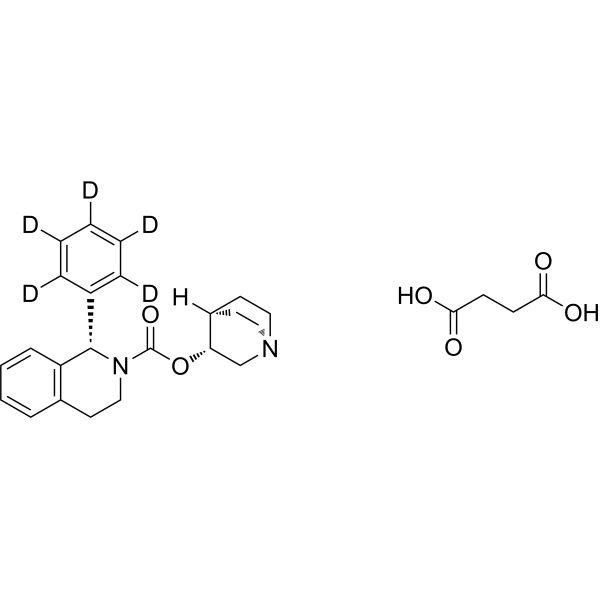
 0 ImagesCat. No.: HY-177498CAS No.: 2247999-07-9
-
Procyclidine-d5
 0 ImagesCat. No.: HY-B1487S1Synonyms: Tricyclamol-d5; (±)-Procyclidine-d5Procyclidine-d5 (Tricyclamol-d5) is deuterium labeled Procyclidine (hydrochloride). Procyclidine (Tricyclamol, (±)-Procyclidine) hydrochloride , an anticholinergic agent, is a muscarinic receptor antagonist that also has the properties of an N-methyl-D-aspartate (NMDA) antagonist. Procyclidine hydrochloride can be used in studies of Parkinson's disease and related psychiatric disorders such as Soman-induced epilepsy.
-
Benztropine-d3 mesylate
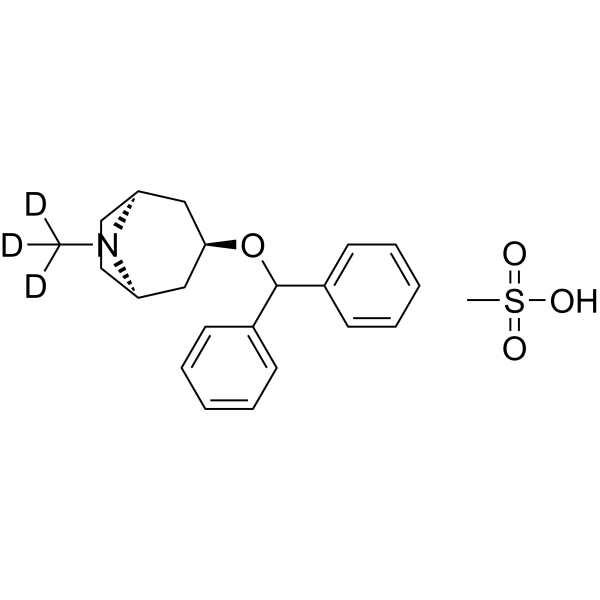 0 ImagesCat. No.: HY-B0520AS1CAS No.: 202529-16-6Benztropine-d3 (mesylate) is the deuterium labeled Benztropine mesylate. Benztropine mesylate (Benzatropine mesylate) is an orally active centrally acting anticholinergic agent that can be used for Parkinson's disease research. Benztropine mesylate is an anti-histamine agent and a dopamine re-uptake inhibitor. Benztropine mesylate is also a human D2 dopamine receptor allosteric antagonist. Benztropine mesylate also has anti-CSCs (cancer stem cells) effects.
-
Anagyrine hydrochloride
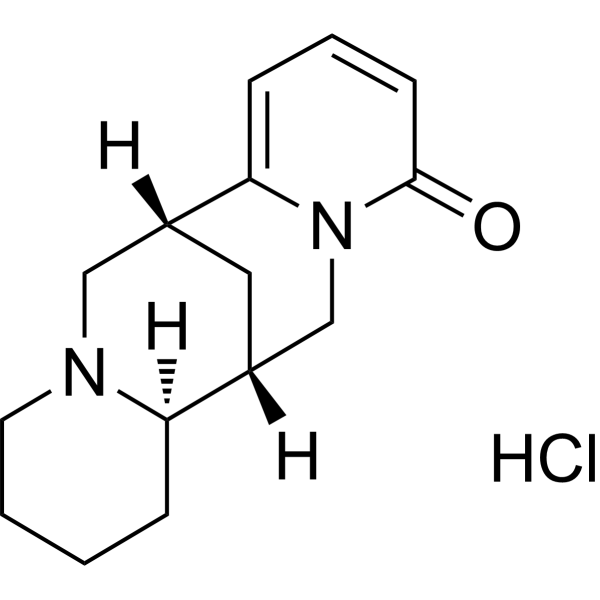 0 ImagesCat. No.: HY-121027ACAS No.: 74195-83-8Synonyms: (-)-Anagyrine hydrochloride; Monolupine hydrochloride; Rhombinine hydrochlorideAnagyrine ((-)-Anagyrine) hydrochloride is a quinolizidine alkaloid that has been found in Lupinus albus. Anagyrine hydrochloride binds to muscarinic and nicotinic acetylcholine receptors with IC50 values of 132 and 2096 µM respectively. Anagyrine hydrochloride is a potent and effective desensitizer of nAChR, and Anagyrine hydrochloride can directly, without metabolism, desensitize nAChR.
-
Antidepressant agent 6
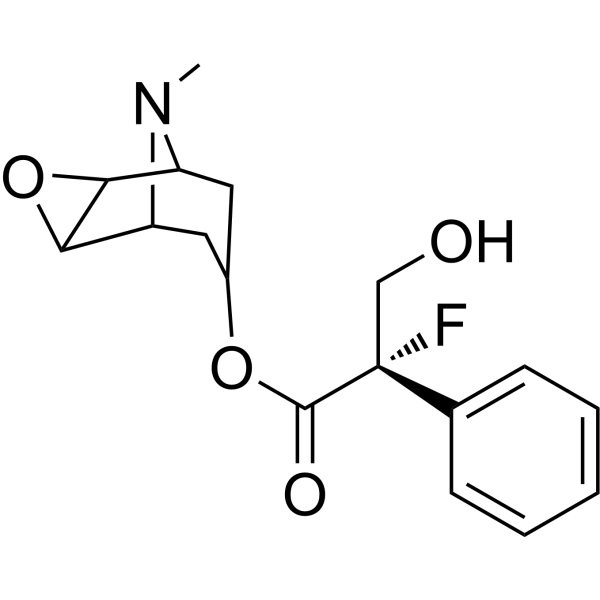 0 ImagesCat. No.: HY-157792CAS No.: 3031428-01-7Antidepressant agent 6 (S-3a) is a lead compound with potent and sustained antidepressant effects. Antidepressant agent 6 (S-3a) displays high cognitive safety margin.Antidepressant agent 6 (S-3a) antagonizes M1 receptors and elevates BDNF levels, suggesting its potential as an antidepressant for further exploration.
-
YM-58790 free base
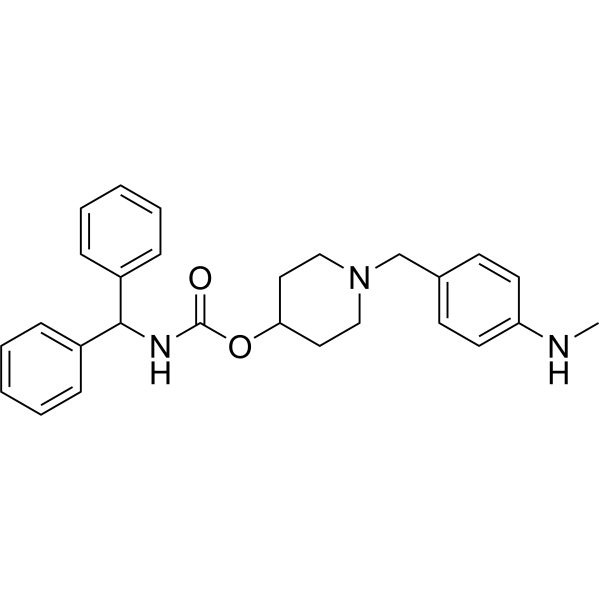 0 ImagesCat. No.: HY-101679ACAS No.: 168830-70-4YM-58790 free base is a potent antagonist of mAChR. YM-58790 free base binds M1, M2, M3 with Ki values of 28 nM, 260 nM, and 15 nM. YM-58790 free base exhibits potent inhibitory activity on bladder pressuer in reflexly-evoked rhythmic contraction in rats.
-
Homatropine hydrochloride (Standard)
 0 ImagesCat. No.: HY-W354753RCAS No.: 637-21-8Homatropine (hydrochloride) (Standard) is the analytical standard of Homatropine (hydrochloride). This product is intended for research and analytical applications. Homatropine hydrochloride is an orally active anticholinergic agent that rapidly dilates pupils and has cycloplegic effects. Homatropine hydrochloride also has antitussive activity. Homatropine hydrochloride can be used in research on eye diseases and coughs.
-
Tiotropium-d3 bromide
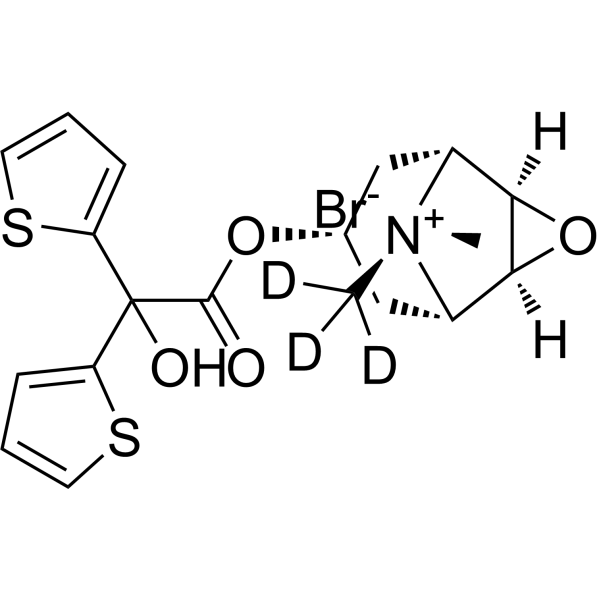 0 ImagesCat. No.: HY-17360SCAS No.: 1127226-56-5Synonyms: BA679 BR-d3Tiotropium-d3 (bromide) is the deuterium labeled Tiotropium (Bromide). Tiotropium bromide (BA-679 BR) is a long-acting anticholinergic bronchodilator. Tiotropium bromide blocks the action of acetylcholine at muscarinic M1, M2, and M3 receptors, prevents bronchoconstriction, and dilates bronchial airways. Tiotropium bromide is applicable to research related to chronic obstructive pulmonary disease and asthma.
-
Peimisine (Standard)
 0 ImagesSynonyms: Ebeiensine (Standard)Peimisine (Standard) is the analytical standard of Peimisine. This product is intended for research and analytical applications. Peimisine (Ebeiensine) is a muscarinic M receptor antagonist and angiotensin converting enzyme (ACE) inhibitor. Peimisine shows anti-tumor, anti-inflammatory, antihypertensive activities. Peimisine can induce apoptosis and be used in cough and asthma research.
-
Arecaidine-propargyl ester tosylate
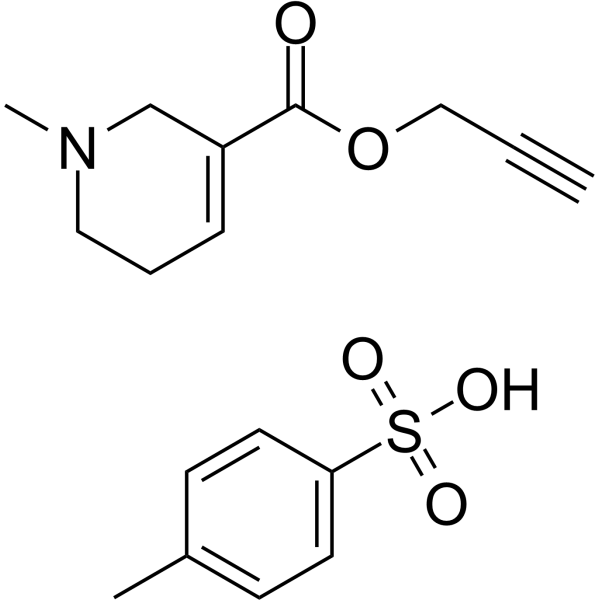 0 ImagesCat. No.: HY-100916CAS No.: 147202-94-6Arecaidine-propargyl ester tosylate is a potent muscarinic receptor (mAChR) agonist.
-
Muscarinic M3 receptor antagonist-1
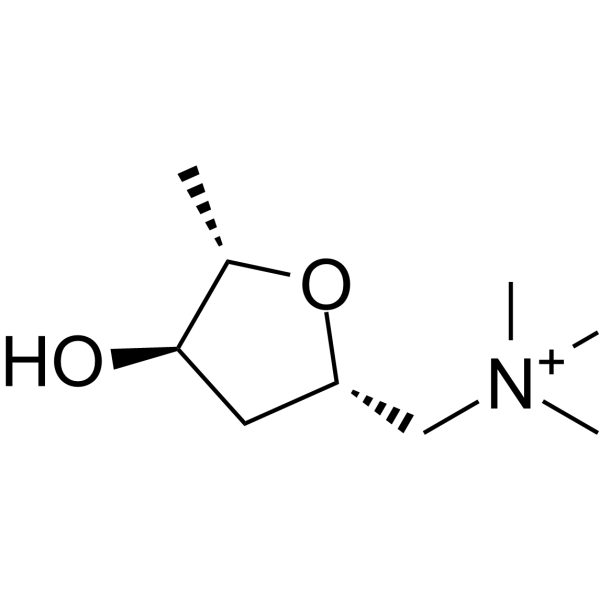
 0 ImagesCat. No.: HY-177309CAS No.: 886490-58-0Muscarinic M3 receptor antagonist-1 (Example 4) is a muscarinic acetylcholine receptor M3 antagonist. Muscarinic M3 receptor antagonist-1 can be used to study inflammatory and obstructive airway diseases.
-
Scopolamine butylbromide (Standard)
 0 ImagesSynonyms: Hyoscine butylbromide (Standard); (-)-Scopolamine butylbromide (Standard); Butylscopolamine bromide (Standard)Scopolamine butylbromide (Standard) is the analytical standard of Scopolamine butylbromide (HY-N0340). This product is intended for research and analytical applications. Scopolamine butylbromide (Hyoscine butylbromide) is an orally active anticholinergic agent and spasmolytic. Scopolamine butylbromide binds with high affinity to rat cardiac M2 (Ki 83 nmol/L), hM2 (Ki 233 nmol/L), rat intestinal M3 (Ki 290 nmol/L) and hM3 (Ki 643 nmol/L) muscarinic receptors. Scopolamine butylbromide exerts a dose-dependent antagonistic effect on Carbachol-induced gastrointestinal smooth muscle spasm. Scopolamine butylbromide can be used for the research of abdominal colic and pain associated with gastrointestinal spasm, functional abdominal pain, chronic gastropathy and gastric ulcer.

-
Quifenadine
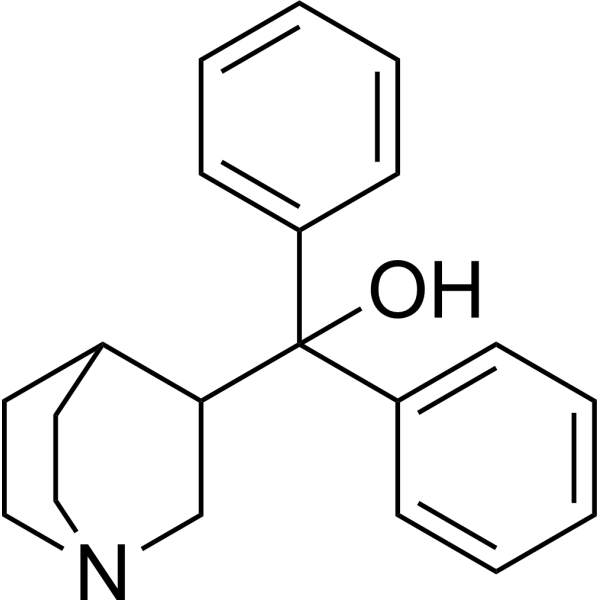 0 ImagesCat. No.: HY-122761CAS No.: 10447-39-9Quifenadine (Compound 3a), the hydroxyl-(diphenyl)methyl quinuclidine derivative, is a M3 receptor antagonist with an IC50 value > 1000 nM. Quifenadine can be used for the research of neurological disease.
-
Clozapine N-oxide-d8
 0 ImagesCat. No.: HY-W748582Clozapine N-oxide-d8 is the deuterium labeled Clozapine N-oxide (HY-17366). Clozapine N-oxide is a major metabolite of Clozapine and a human muscarinic designer receptors (DREADDs) agonist. Clozapine N-oxide activates the DREADD receptor hM3Dq and hM4Di. Clozapine N-oxide can't cross the blood-brain barrier. Clozapine is a potent dopamine antagonist and also a potent and selective muscarinic M4 receptor (EC50=11 nM) agonist.
-
Homatropine hydrochloride
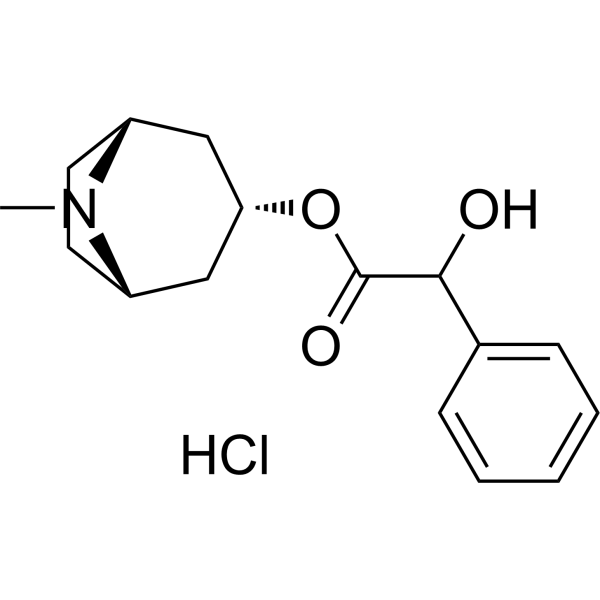 0 ImagesCat. No.: HY-W354753CAS No.: 637-21-8Homatropine hydrochloride is an orally active anticholinergic agent that rapidly dilates pupils and has cycloplegic effects. Homatropine hydrochloride also has antitussive activity. Homatropine hydrochloride can be used in research on eye diseases and coughs.
-
Clemastine fumarate (Standard)
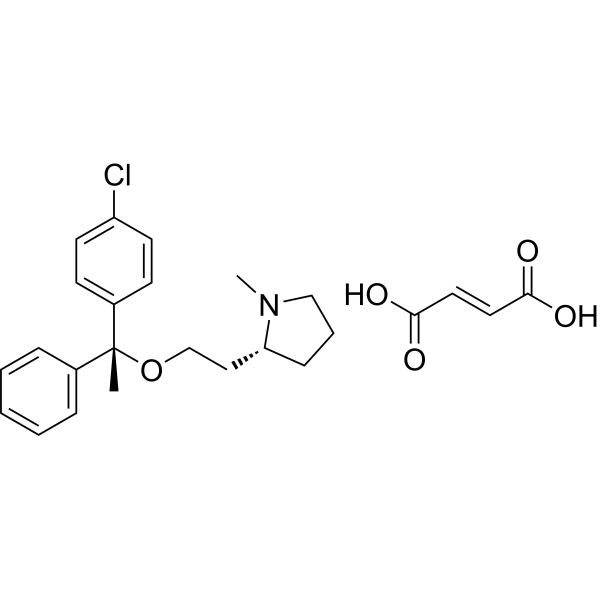 0 ImagesSynonyms: HS-592 fumarate (Standard); Meclastine fumarate (Standard)Clemastine (HS-592; Meclastine) fumarate (Standard) is the analytical standard of Clemastine fumarate. This product is intended for research and analytical applications. Clemastine fumarate is an orally active, blood-brain barrier-permeable H1 histamine receptor (H1 histamine receptor) antagonist with potent antiallergic effects. Clemastine fumarate also antagonizes muscarinic acetylcholine receptors (mAChR), particularly the M1 and M4 subtypes. In addition to antihistamine effects, Clemastine fumarate exhibits multiple pharmacological activities, especially in promoting central nervous system remyelination, activating autophagy and pyroptosis, exerting anti-apoptotic and neuroprotective effects, and suppressing inflammation .




