



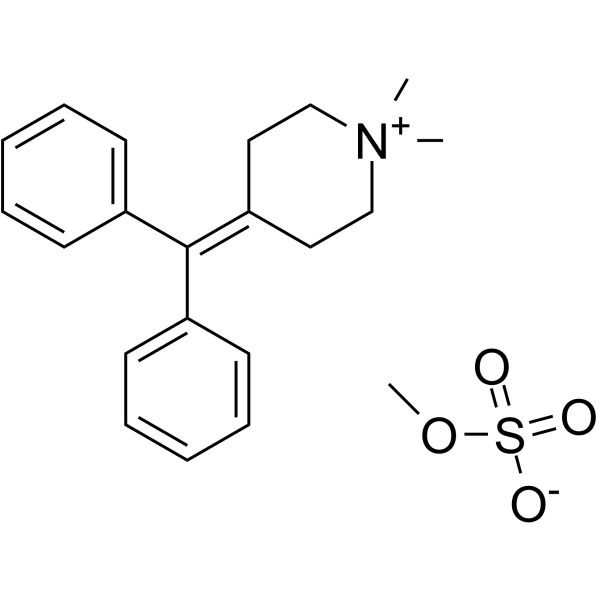
Diphenmanil methylsulfate (Standard)
Diphenmanil (methylsulfate) (Standard) is the analytical standard of Diphenmanil (methylsulfate). This product is intended for research and analytical applications. 0
For research use only. We do not sell to patients.
- Purity : 98%
- CAS No.: 62-97-5
- Formula: C21H27NO4S
- Molecular Weight:389.51
-
Storage:
Please store the product under the recommended conditions in the Certificate of Analysis.


To place orders, for customer services and technical support, please contact: MedChemExpress USA
Tel: 609-228-6898 E-mail: [email protected] [email protected]


-
 Product Information
-
Chemical Information
- Purity & Documentation
-
 Help & FAQs


-
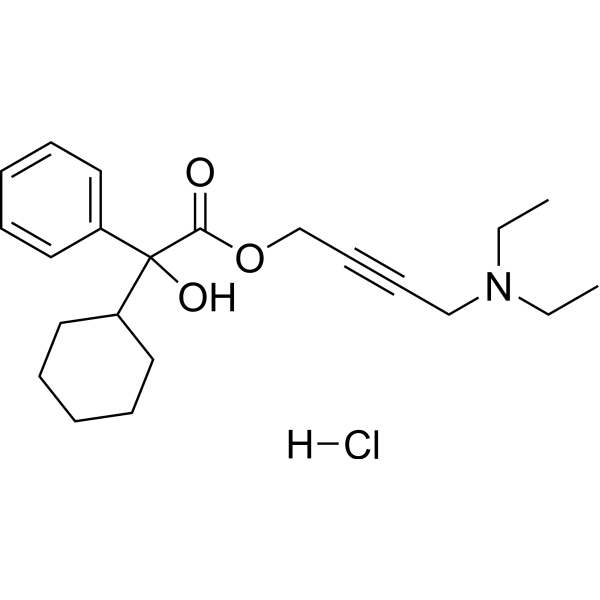
HY-B0267A
Oxybutynin chloride -
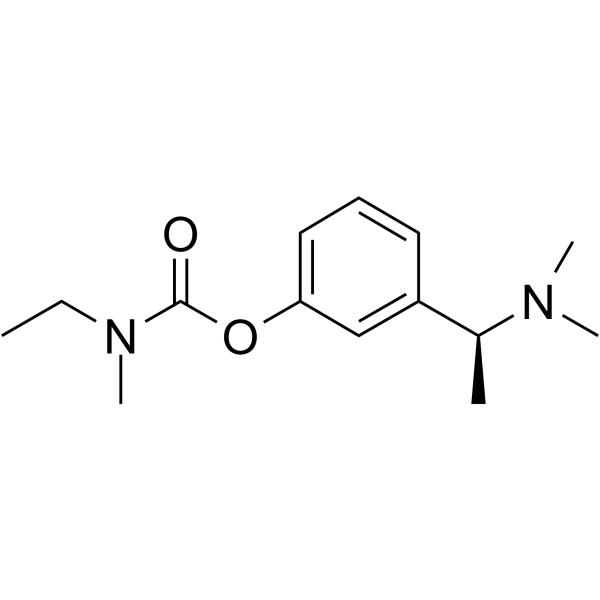
HY-17368
Rivastigmine -
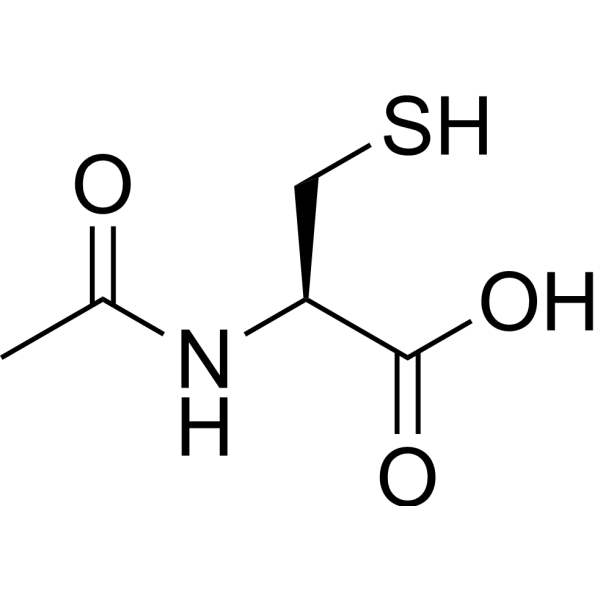
HY-B0215
Acetylcysteine -
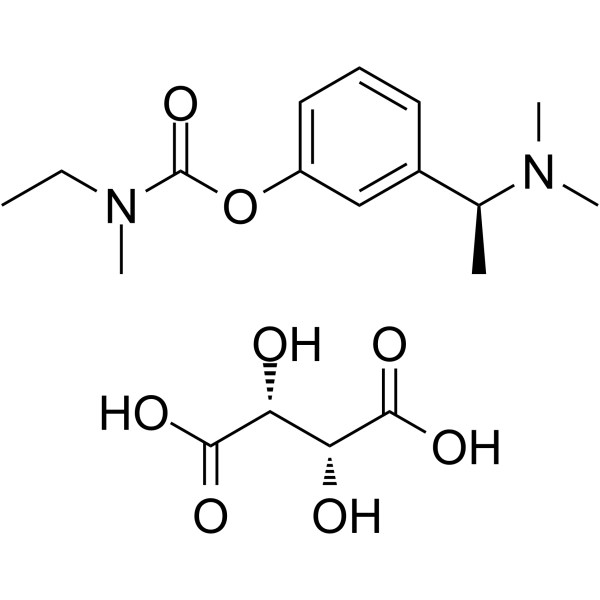
HY-11017
Rivastigmine tartrate -
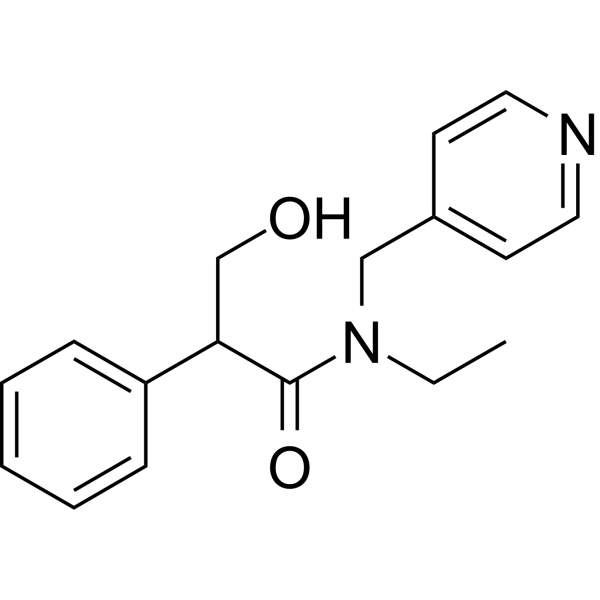
HY-B0321
Tropicamide -
HY-16171
Diphenmanil methylsulfate -
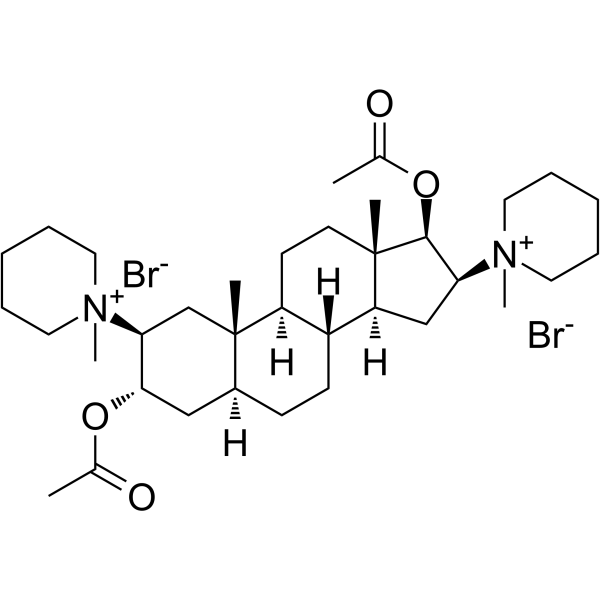
HY-B0429
Pancuronium dibromide -

HY-17368R
Rivastigmine (Standard) -
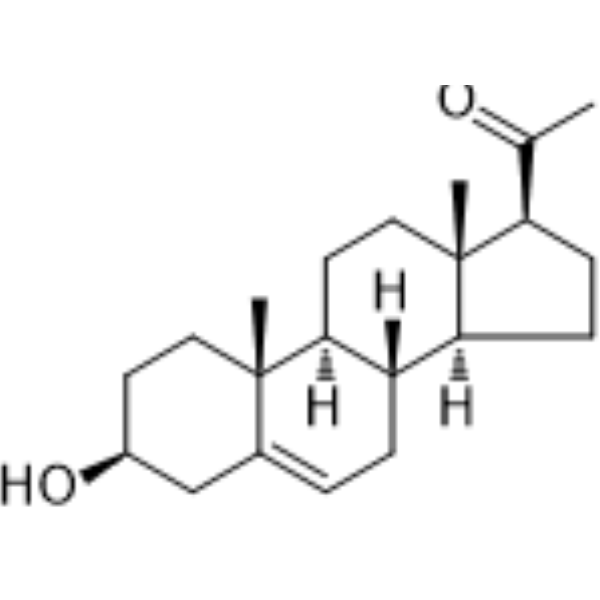
HY-B0151
Pregnenolone -
HY-B0267
Oxybutynin -
HY-B0569
Hexamethonium Bromide -
HY-76299
Galanthamine


Product Information
Information
Application
The compound is the grade of analytical standard, which is the reference standard supplied assay. It is commonly used in qualitative, quantitative and methodological research experiments in HPLC, GC and MS.


Chemical Information
-
CAS No. 62-97-5
-
Molecular Weight 389.51
-
Formula C21H27NO4S
-
SMILES
[O-]S(=O)(OC)=O.C[N+]1(C)CC/C(CC1)=C(C2=CC=CC=C2)\C3=CC=CC=C3
-
Synonyms
Diphemanil mesylate (Standard)
-
Shipping
Room temperature in continental US; may vary elsewhere.
-
Storage
Please store the product under the recommended conditions in the Certificate of Analysis.


Purity & Documentation
References
[1]. Küng M, Diamond L. Effect of inhaled diphemanil methylsulfate, a parasympatholytic agent, on histamine induced bronchoconstriction in asymptomatic asthmatics. Ann Allergy. 1984 Jan;52(1):22-5. [Content Brief]
[2]. Vidal AM, Rey E, Pons G et al. Pharmacokinetics of diphemanil methylsulphate in healthy subjects. Eur J Clin Pharmacol. 1992;42(6):689-91. [Content Brief]
[3]. Vidal AM, Chéron G, Rey E et al. Pharmacokinetics of diphemanil methylsulphate in infants. Eur J Clin Pharmacol. 1993;45(1):89-91. [Content Brief]
[4]. Chéron G, Vidal AM, Rey E et al. [Pharmacokinetics of diphemanil methylsulfate in infants]. Arch Pediatr. 1994 Jan;1(1):33-7. [Content Brief]
[5]. Adamantidis M, Dumotier B, Caron J, Dupuis B. [Electrophysiologic effects and arrhythmogenic potential of diphemanil methylsulfate on rabbit purkinje fibers. Correlations with clinical observations of QT prolongation in pediatrics]. Arch Mal Coeur Vaiss. 1998 Dec;91(12):1487-94. [Content Brief]

Calculators
Concentration (start) × Volume (start) = Concentration (final) × Volume (final)


Diphenmanil methylsulfate (Standard) Related Classifications
HY-16171R Related Classifications
 Powered by Bioz