



mAChR
Muscarinic acetylcholine receptor
mAChRs (muscarinic acetylcholine receptors) are acetylcholine receptors that form G protein-receptor complexes in the cell membranes of certainneurons and other cells. They play several roles, including acting as the main end-receptor stimulated by acetylcholine released from postganglionic fibersin the parasympathetic nervous system. mAChRs are named as such because they are more sensitive to muscarine than to nicotine. Their counterparts are nicotinic acetylcholine receptors (nAChRs), receptor ion channels that are also important in the autonomic nervous system. Many drugs and other substances (for example pilocarpineand scopolamine) manipulate these two distinct receptors by acting as selective agonists or antagonists. Acetylcholine (ACh) is a neurotransmitter found extensively in the brain and the autonomic ganglia.
mAChR Isoform Specific Products
All Product Categories
-
mAChR Inhibitors
(115)
View all products
-
mAChR Agonists
(151)
View all products
-
mAChR Antagonists
(325)
View all products
-
mAChR Activators
(20)
View all products
-
mAChR Modulators
(48)
View all products
-
mAChR Inducer
(1)
View all products
-
mAChR Controls
(9)
View all products
-
mAChR Ligands
(10)
View all products
-
mAChR Related Products (731)
Related Products (731)

-
Antibodies (2)
-
mAChR Isoform Comparison
-
Olanzapine-d15
 0 ImagesCat. No.: HY-14541S3CAS No.: 1252611-25-8Synonyms: LY170053-d15Olanzapine-d15 (LY170053-d15) is the deuterium labeled Olanzapine (HY-14541). Olanzapine (LY170053) is a selective, orally active monoaminergic antagonist with high affinity binding to serotonin H1, 5HT2A/2C, 5HT3, 5HT6 (Ki = 7, 4, 11, 57, and 5 nM, respectively), dopamine D1-4 (Ki = 11 to 31 nM), muscarinic M1-5 (Ki = 1.9-25 nM), and adrenergic α1 receptor (Ki = 19 nM). Olanzapine is an atypical antipsychotic.
-
UH-AH 37
 0 ImagesCat. No.: HY-120682CAS No.: 120382-14-1UH-AH 37 is a muscarinic (mAChR) antagonist. UH-AH 37 exhibits a higher potency in inhibiting muscarinic responses in intestinal tissue than cardiac tissue.
-
Homatropine
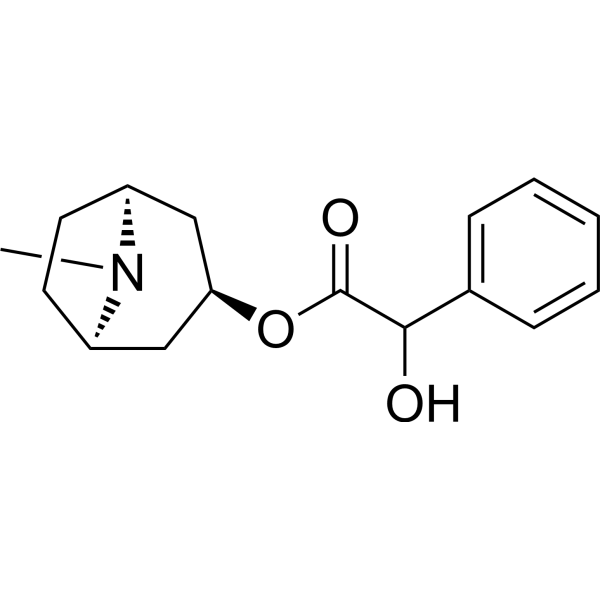 0 ImagesHomatropine is an orally active muscarinic acetylcholine receptor antagonist and can be used as an anticholinergic agent.
-
VU6008677
 0 ImagesCat. No.: HY-162662CAS No.: 2170550-99-7VU6008677 is a positive allosteric modulator (PAM) for M4, with EC50 of 120 nM for hM4. VU6008677 inhibits cytochrome P450, exhibits good pharmacokinetic characteristics in rats.
-
Flutropium bromide
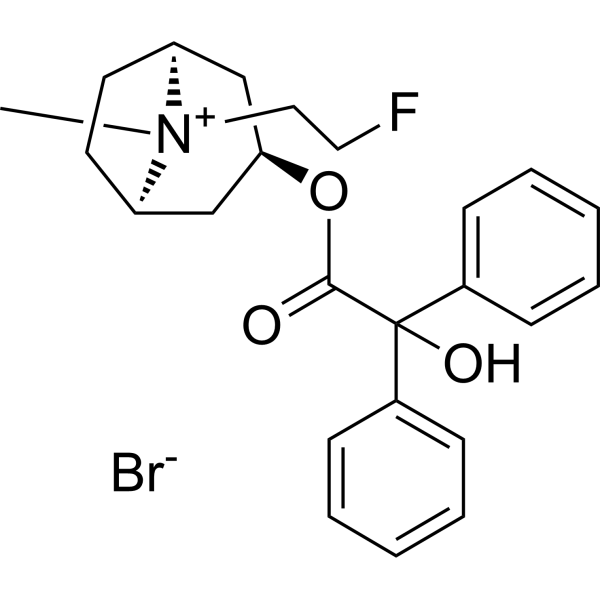 0 ImagesCat. No.: HY-106564ACAS No.: 63516-07-4Synonyms: Ba 598Br; FlubronFlutropium bromide (Ba 598Br) is a organic bromide salt of flutropium. Flutropium bromide shows an anticholinergic effect. Flutropium bromide effectively suppresses spasms and it can be used for the research of asthma and chronic obstructive pulmonary disease.
-
CHF-6550
 0 ImagesCat. No.: HY-163702CAS No.: 3052116-62-5CHF-6550 is an antagonist for muscarinic M3 receptor and an agonist for β2 adrenoceptor (MABA), with pKi of 9.3 and 10.6, respectively. CHF-6550 exhibits good hepatocyte clearance in rat models and good pharmacokinetic characteristics in guinea pigs.
-
Anisodine
 0 ImagesCat. No.: HY-127022CAS No.: 52646-92-1Synonyms: Daturamine; α-HydroxyscopolamineAnisodine (Daturamine) is a neuroprotective compound that reduces exacerbated M1, M2, M4, and M5 receptor expression in brain tissues under hypoxia/reoxygenation conditions. Anisodine inhibits calcium ion influx and reactive oxygen species (ROS)levels. Anisodine leads to decreased aspartate levels during hypoxia.
-
Epibatidine
 0 ImagesCat. No.: HY-169742CAS No.: 140111-52-0Epibatidine is a nicotinic acetylcholine receptor (nAChR) agonist, with an IC50 of 70 pM, a Ki of 43 pM for rat nAChR, a Kd range of 1.5-60 nM for human α7 nAChR, a Kd of 15 nM for rat α4β2 nAChR, and a Kd of 0.5 μM for rat α3β4 nAChR. Epibatidine selectively activates central nAChRs and binds to muscarinic acetylcholine receptors (mAChR). It is used in research on pain, Alzheimer's disease, Parkinson's disease, and schizophrenia-related pain.
-
SM-21 maleate
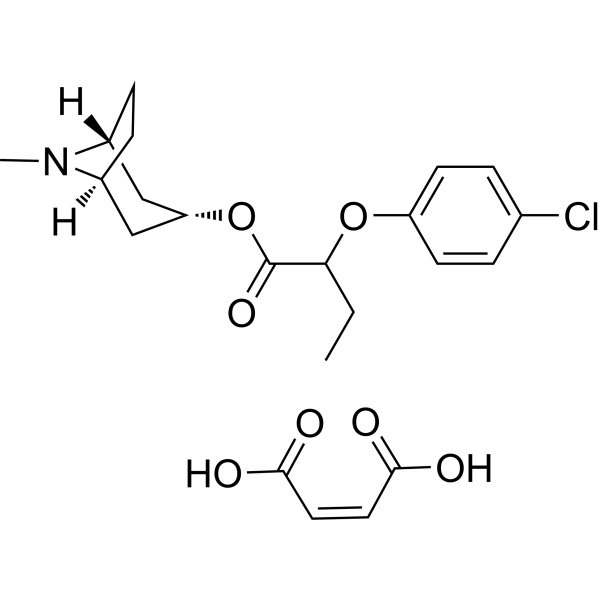 0 ImagesCat. No.: HY-101197CAS No.: 155059-42-0SM 21 maleate, 2-phenoxyalkanoic acid ester, binds to central muscarinic recrptor with affinity of 0.174 μM.
-
p-F-HHSiD
 0 ImagesCat. No.: HY-137388CAS No.: 116679-83-5Synonyms: p-Fluorohexahydrosiladifenidolp-F-HHSiD (p-Fluorohexahydrosiladifenidol) is a potent and selective M3 mAChR antagonist. p-F-HHSiD has antagonistic effects on other subtypes of the M receptor and the alpha1-adrenoceptor. p-F-HHSiD can be used for the researches of cancer, metabolic, neurological and cardiovascular disease such as, colon cancer, Alzheimer’s disease and diabetes.
-
Darifenacin hydrobromide (Standard)
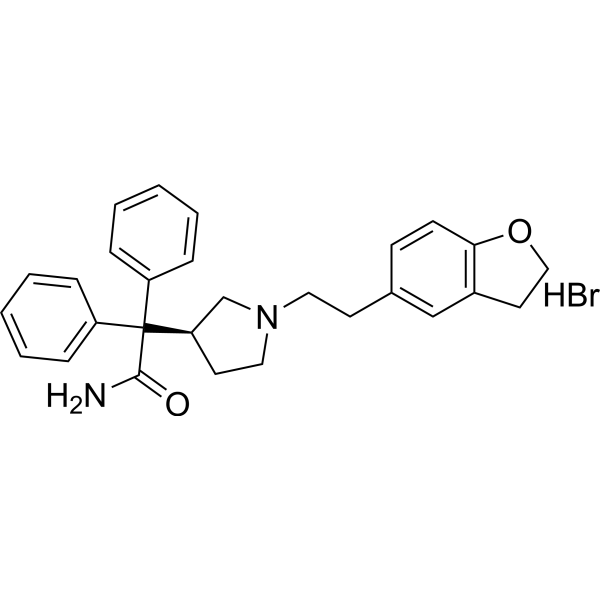 0 ImagesSynonyms: UK-88525 hydrobromide (Standard)Darifenacin (hydrobromide) (Standard) is the analytical standard of Darifenacin (hydrobromide). This product is intended for research and analytical applications. Darifenacin (hydrobromide) is a selective and orally active M3 muscarinic receptor (M3R) antagonist with a pKi of 8.9. Darifenacin (hydrobromide) binds >20-fold more specifically to M3R than to other muscarinic receptors. Darifenacin (hydrobromide) can be used in the study of urinary incontinence and other symptoms of overactive bladder. Darifenacin (hydrobromide) inhibits tumor growth in colorectal cancer cells and has anti-tumor effects.
-
TAAR1 agonist 2
 0 ImagesCat. No.: HY-W909173CAS No.: 1804128-38-8TAAR1 agonist 2 (compound 30) is a full agonist of trace amine-associated receptor 1 (TAAR1) (pEC50=7.5). TAAR1 agonist 2 also exhibits agonist activity at H1 receptors and activates several members of the muscarinic acetylcholine receptor family, such as the M2 receptor (pEC50=5). TAAR1 agonist 2 can be used in the study of neuropsychiatric diseases.
-
Cyclobuxine D
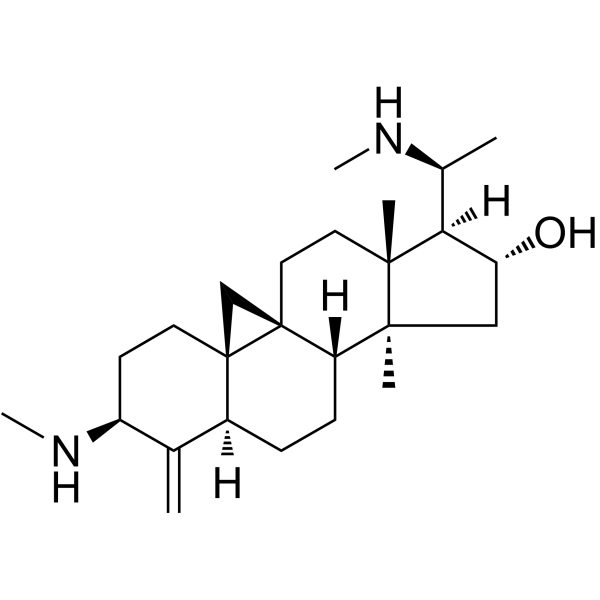 0 ImagesCyclobuxine D is a steroidal alkaloid extracted from Buxus microphylla. Cyclobuxine D has a significant bradycardic effect in the rat heart and an inhibitory action on acetylcholine and Ba++−induced contraction of the longitudinal muscle isolated from the rabbit jejunum.
-
Tolterodine-d14 hydrochloride
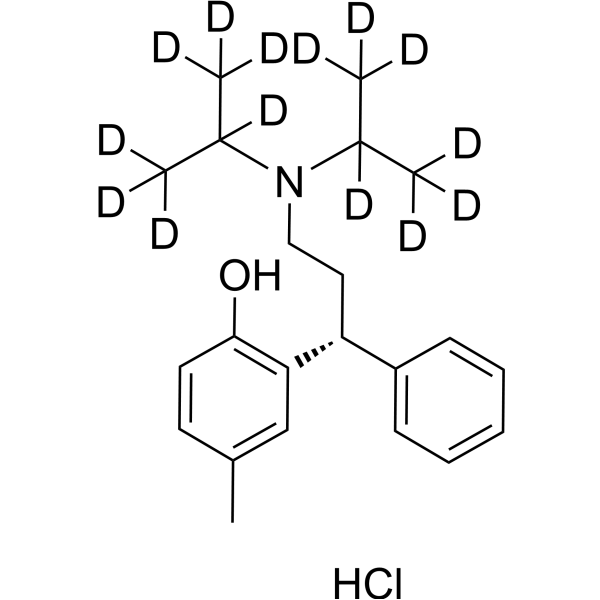 0 ImagesSynonyms: (R)-(+)-Tolterodine-d14 hydrochloride; (+)-Tolterodine-d14 hydrochloride; (R)-Tolterodine-d14 hydrochloride; PNU-200583-d14 hydrochlorideTolterodine-d14 (hydrochloride) is the deuterium labeled Tolterodine hydrochloride. Tolterodine ((R)-(+)-Tolterodine) is a mAChR inhibitor and substrate for cytochrome P450 enzymes. Tolterodine competitively binds acetylcholine, reduces sympathetic excitation, and inhibits involuntary bladder muscle contraction. Tolterodine restores the Nrf2/NF-κB signaling pathway, mediates protection against inflammatory response and ferroptosis. Tolterodine ameliorates LPS (HY-D1056)-induced reactive oxygen species production and lipid oxidation. Tolterodine can be used for the research of urinary tract infections and overactive bladder.
-
Navafenterol saccharinate
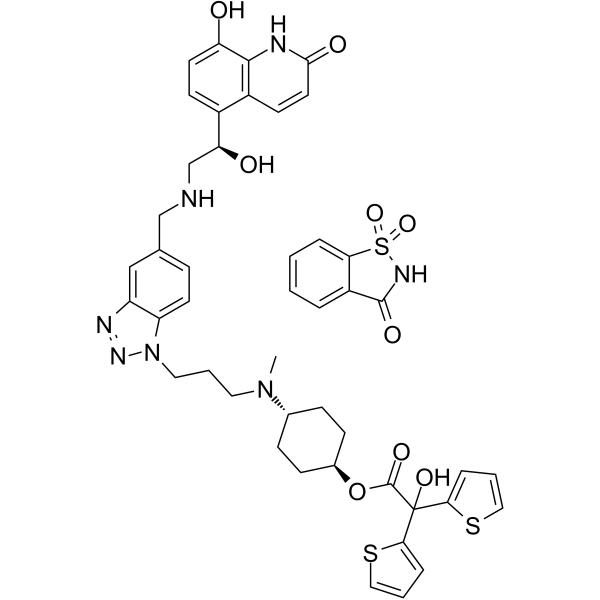 0 ImagesCat. No.: HY-120802ACAS No.: 1648550-37-1Synonyms: AZD-8871 saccharinate; LAS191351 saccharinateNavafenterol (AZD-8871) saccharinate is an inhaled dual-acting, potent, selective, and long-lasting M3-antagonist/β2-agonist (MABA) with long-lasting effects and favorable safety profile. The pIC50 is 9.5 for human M3 receptor, and the pEC50 is 9.5 for β2-adrenoceptor. Navafenterol saccharinate can be used for the research of chronic obstructive pulmonary disease (COPD). Bronchoprotective and antisialagogue effects. Favorable cardiovascular profile.
-
Pirenzepine-d11
 0 ImagesCat. No.: HY-17037ASSynonyms: LS 519 free base-d11; Pirenzepin-d11; Gastrozepin-d11Pirenzepine-d11 (LS 519 (free base)-d11; Pirenzepin-d11; Gastrozepin-d11) is the deuterium labeled Pirenzepine (HY-17037A). Pirenzepine (LS 519 free base) is a selective M1 mAChR (muscarinic acetylcholine receptor) antagonist. Pirenzepine reduces gastric acid secretion and reduces muscle spasm, can be used in peptic ulcers research. Pirenzepine shows anti-proliferative activity to cancer cells.
-
rel-Biperiden-d5
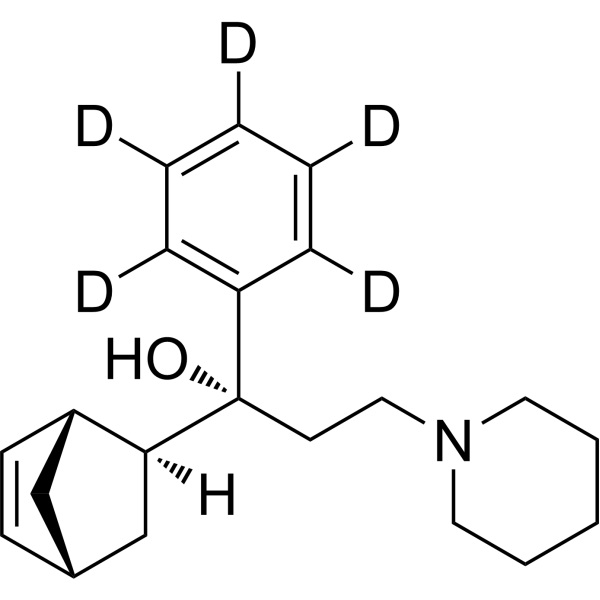 0 ImagesCat. No.: HY-13204S1rel-Biperiden-d5 is deuterium labeled Biperiden (hydrochloride).
-
Muscarinic M1 receptor agonist-1
 0 ImagesCat. No.: HY-177410CAS No.: 1803346-97-5Muscarinic M1 receptor agonist-1 (Ex.1-21) is a Muscarinic M1 receptor agonist. Muscarinic M1 receptor agonist-1 can be used in the research of psychiatric disorders such as schizophrenia.
-
N-Desmethyl xanomeline
 0 ImagesCat. No.: HY-181425CAS No.: 131986-96-4N-Desmethyl xanomeline is a pharmacologically active metabolite of Xanomeline (HY-105182). N-Desmethyl xanomeline binds to muscarinic, serotonergic, histaminergic and dopaminergic receptors. N-Desmethyl xanomeline can be used for the research of schizophrenia.
-
Methoctramine
 0 ImagesCat. No.: HY-116294CAS No.: 104807-40-1




