



Mitosis
Cellular mitosis is a highly regulated and complex process involving the synergistic action of multiple proteins and molecular mechanisms. The process of mitosis is usually related to tubulin, and mitotic inhibitors can disrupt the polymerization and depolymerization of tubulin, so that chromosomes cannot be properly separated, leading to apoptosis.
All Product Categories
-
Mitosis Related Products (126)
Related Products (126)

-
Guanosine triphosphate-d14 dilithium
 0 ImagesCat. No.: HY-150773S1Synonyms: GTP-d14 dilithiumGuanosine triphosphate-d14 dilithium (GTP-d14 dilithium) is the deuterated-labeled Guanosine triphosphate (HY-113225). Guanosine triphosphate (GTP) is a critical nucleotide and regulator of cellular metabolism. Guanosine triphosphate promotes ribosomal DNA localization, pre-rRNA transcription and ribosome biogenesis by binding to RNA polymerase I and GPN proteins (GPN1/3). Guanosine triphosphate links MYC-dependent ribosome biogenesis to nucleotide sufficiency, acts as a metabolic gatekeeper supporting protein synthesis, DNA/RNA synthesis and cellular signal transduction, while also participating in the physiological activities of pancreatic β-cells and serving as an oxidative substrate for reactive oxygen species. In small cell lung cancer with high MYC expression, Guanosine triphosphate accumulates through the IMPDH-driven synthetic pathway, thereby affecting apoptosis and mitotic processes. Guanosine triphosphate is used in the research of small cell lung cancer, hepatoblastoma and cellular metabolism.
-
(S)-Monastrol
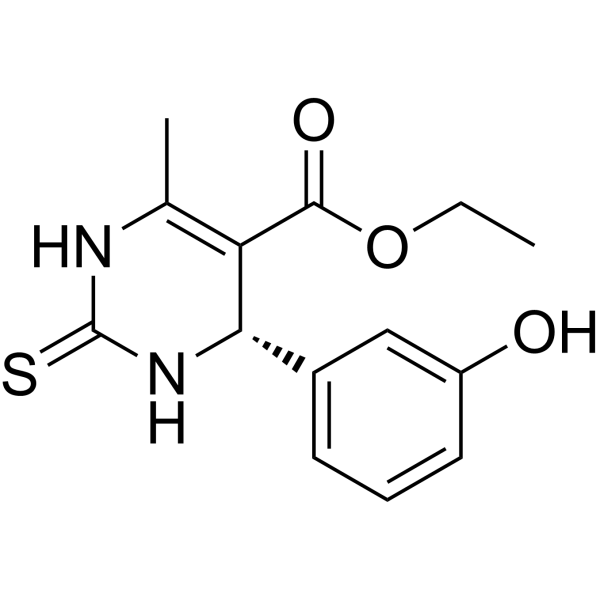 0 ImagesCat. No.: HY-101071CAS No.: 254753-54-3Synonyms: (+)-Monastrol
-
Estramustine phosphate
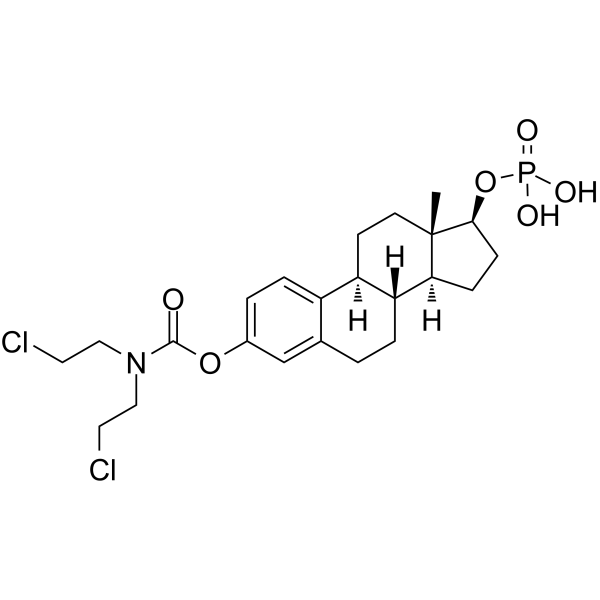 0 ImagesEstramustine phosphate, an estradiol analog, is an orally active antimicrotubule chemotherapy agent. Estramustine phosphate depolymerises microtubules by binding to microtubule associated proteins (MAPs) and/or to tubulin. Estramustine phosphate can interfere mitosis, trigger cell death and induce apoptosis, which can be used for the research of cancer like prostate cancer.
-
Mps-BAY1
 0 ImagesCat. No.: HY-164501CAS No.: 1309593-24-5Mps-BAY1 is an MPS1 inhibitor with anticancer activity. Mps-BAY1 inhibits cell proliferation and induces apoptosis by activating mitotic catastrophe in cancer cells, generating global aneuploidy and polyploidy. Mps-BAY1 can be used in the study of colorectal cancer and cervical cancer.
-
(E)-MS0019266
 0 ImagesCat. No.: HY-129727CAS No.: 21945-37-9(E)-MS0019266 is a potent inhibitor of DNA damage repair. (E)-MS0019266 inhibits ribonucleotide reductase by generating reactive oxygen species. (E)-MS0019266 also reduces expression of genes related to cell cycle arrest and mitosis, including polo-like kinase 1, kinesin family member 20a, cyclin B1 and aurora kinase A. (E)-MS0019266 is promising for research of inhibitors of ribonucleotide reductase and polo-like kinase 1.
-
EAPB0503
 0 ImagesCat. No.: HY-171184CAS No.: 1140627-77-5EAPB0503 is a quinoline compound with anti-tumor activity, showing strong cytotoxicity against melanoma cells in vitro (IC50=200 nM). EAPB0503 can induce specific cell cycle arrest in mitosis of CML cells and directly activate apoptosis, leading to an increase in the G0 cell population, disruption of mitochondrial membrane potential, PARP cleavage, and DNA fragmentation. EAPB0503 also reduces the levels of BCR-ABL protein .
-
Harmol hydrochloride
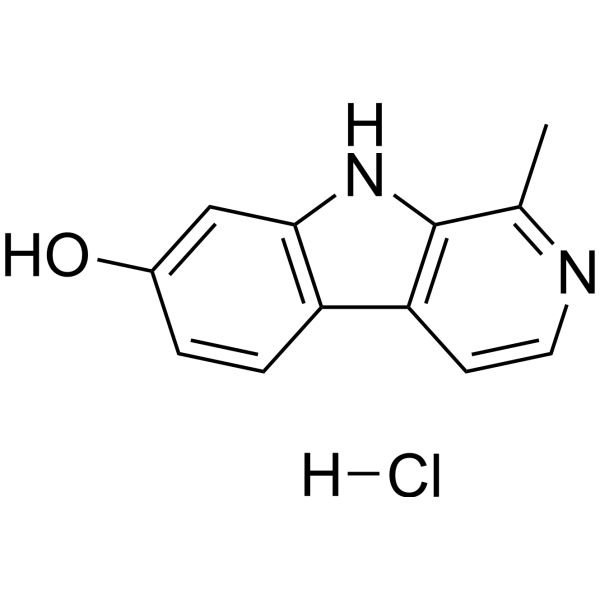 0 ImagesCat. No.: HY-107811ACAS No.: 40580-83-4Harmol hydrochloride is an orally active β-carboline alkaloid. Harmol hydrochloride is a TFEB activator and monoamine oxidase inhibitor. Harmol hydrochloride can induce cell mitosis, Autophagy and Apoptosis. Harmol hydrochloride promotes the degradation of α-synuclein by regulating the autophagy-lysosomal pathway. Harmol hydrochloride has anti-tumor, anti-depressant and anti-aging activities. Harmol hydrochloride improves motor impairment in a mouse Parkinson's disease model.
-
TopBP1-IN-4
 0 ImagesCat. No.: HY-189210ATopBP1-IN-4 is a TopBP1 inhibitor, with an IC50 value of 2.47 to 3.8 nM against the TopBP1 BRCT7/8 domain. TopBP1-IN-4 selectively disrupts BRCT7/8-dependent oncogenic protein-protein interactions, does not interfere with other BRCT domain-mediated functions of TopBP1, and has no effect on DNA replication. TopBP1-IN-4 restores E2F1-mediated Apoptosis in cells. TopBP1-IN-4 induces mitotic catastrophe in cells. TopBP1-IN-4 overcomes Osimertinib (HY-15772) resistance in EGFR-mutant non-small cell lung cancer models. TopBP1-IN-4 can be used in studies related to triple-negative breast cancer, ovarian cancer, non-small cell lung cancer, and acute myeloid leukemia.
-
PDGFR Y1021 peptide (non-phosphorylation)
 0 ImagesCat. No.: HY-P10119CAS No.: 205173-94-0
-
ALB-109564 hydrochloride
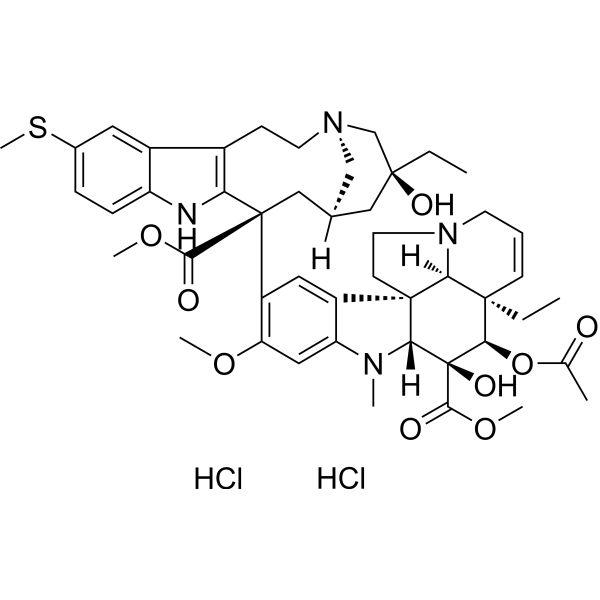 0 ImagesCat. No.: HY-16036ACAS No.: 1300114-12-8Synonyms: 12'-Methylthiovinblastine hydrochloride
-
Cemadotin hydrochloride
 0 ImagesCat. No.: HY-13589ACAS No.: 172837-41-1Synonyms: LU103793 hydrochlorideCemadotin (LU103793) hydrochloride is a water-soluble synthetic analogue of Dolastatin 15 (HY-P1126) that inhibits cell proliferation in vitro and the growth of tumor xenografts in mice. Cemadotin hydrochloride blocks cells at mitosis, and exhibits Ki value of 1 μM for inhibiting tubulin. Cemadotin hydrochloride can be used to research anticancer.
-
GW837016X
 0 ImagesCat. No.: HY-129288CAS No.: 833473-68-0Synonyms: NEU-391GW837016X (NEU-391) is an orally active ErbB-2 kinase covalent inhibitor. GW837016X also is a potent antitrypanosome agent. GW837016X inhibits mitosis and cytokinesis.
-
S-72
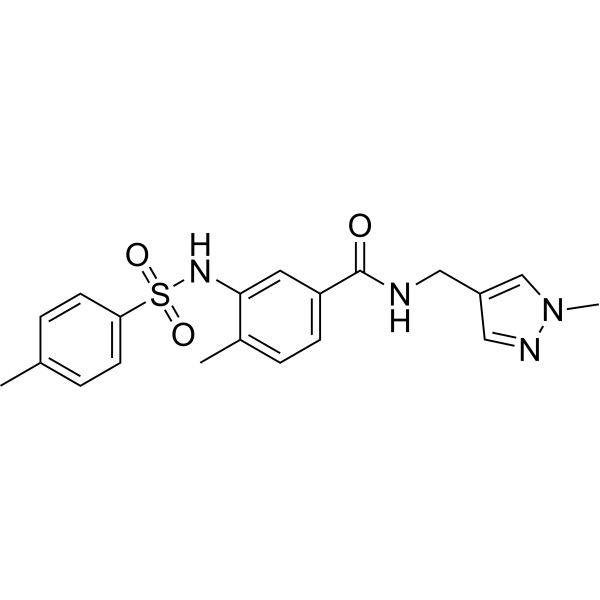 0 ImagesCat. No.: HY-156958CAS No.: 2446799-14-8
-
Tubulin polymerization-IN-93
 0 ImagesCat. No.: HY-184760CAS No.: 3022872-60-9Tubulin polymerization-IN-93 is a β-tubulin polymerization inhibitor. Tubulin polymerization-IN-93 disrupts the microtubule network structure. Tubulin polymerization-IN-93 activates the spindle assembly checkpoint and promotes Mitotic catastrophe. Tubulin polymerization-IN-93 activates the mitochondrial Apoptotic pathway. Tubulin polymerization-IN-93 exhibits anticancer activity against acute myeloid leukemia.
-
4-Isopropyl-1-methylcyclohexanol
 0 ImagesCat. No.: HY-W308414CAS No.: 21129-27-14-Isopropyl-1-methylcyclohexanol is a terpenoid component. 4-Isopropyl-1-methylcyclohexanol can be isolated from extracts of peppermint (Mentha × piperita). 4-Isopropyl-1-methylcyclohexanol reduces the level of mitotic nuclei, exhibits no antibacterial activity against bacteria, and shows no antiviral activity against respiratory syncytial virus.
-
Vincristine-d6 sulfate
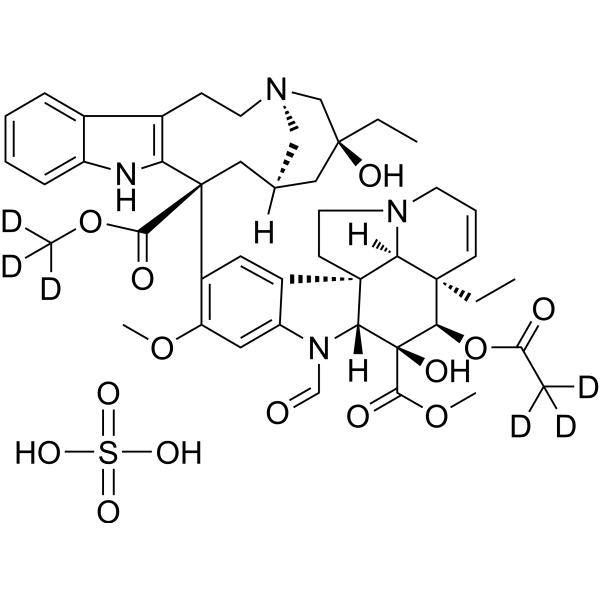 0 ImagesCat. No.: HY-N0488S2Synonyms: Leurocristine-d6 sulfate; NSC-67574-d6 sulfate; 22-Oxovincaleukoblastine-d6 sulfateVincristine-d6 (sulfate) is the deuterium labeled Vincristine sulfate. Vincristine sulfate (Leurocristine; NSC-67574; 22-Oxovincaleukoblastine) is a microtubule inhibitor that disrupts microtubule polymerization by binding to β-tubulin (with a Ki of 85 nM in bovine), arrests the cell cycle and induces apoptosis. Vincristine sulfate inhibits cell replication, tumor blood flow and the proliferation of various cancer cells, while triggering effects such as oxidative stress, inflammation, calcium overload, epithelial-mesenchymal transition and peripheral neuropathic pain. Vincristine sulfate upregulates the expression of various transporters and nuclear receptors, and enriches gastric cancer stem-like cells. Vincristine sulfate is used in research related to various tumors including acute lymphoblastic leukemia, lymphoma, melanoma, gastric cancer, solid tumors and sarcomas.
-
Tubulozole
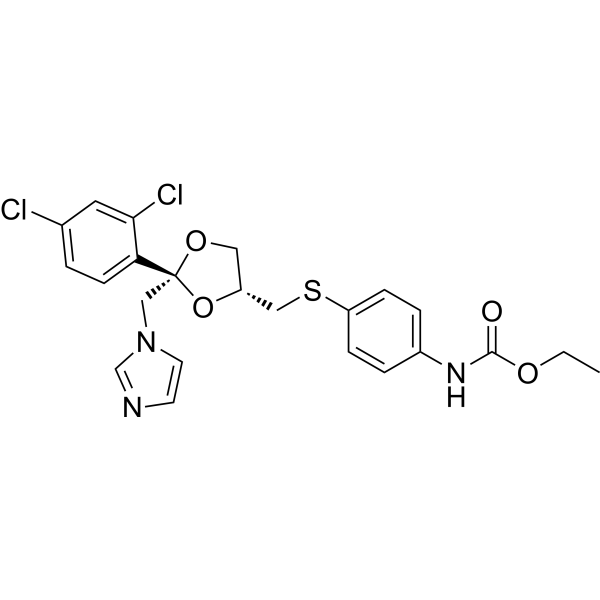 0 ImagesCat. No.: HY-119169CAS No.: 84697-22-3Synonyms: R 46846Tubulozole (R 46846) is an orally active inhibitor of tubulin polymerization with an ID50 of 0.34 μM. Tubulozole induces activation of the Chk1 kinase and phosphorylation of ERK1/2, which is required for microtubule formation. Tubulozole arrests Mitosis at the metaphase stage. Tubulozole causes cells to accumulate in the radiosensitive mitotic phase of the cell cycle. Tubulozole exerts anticancer activity against colon cancer. Tubulozole produces a radiosensitizing effect in mouse tumor models and enhances the tumor growth delay effect when combined with γ-ray irradiation. Tubulozole is used in studies related to colon cancer, fascioliasis, MO4 fibrosarcoma, and Lewis lung carcinoma.
-
MPI-0441138
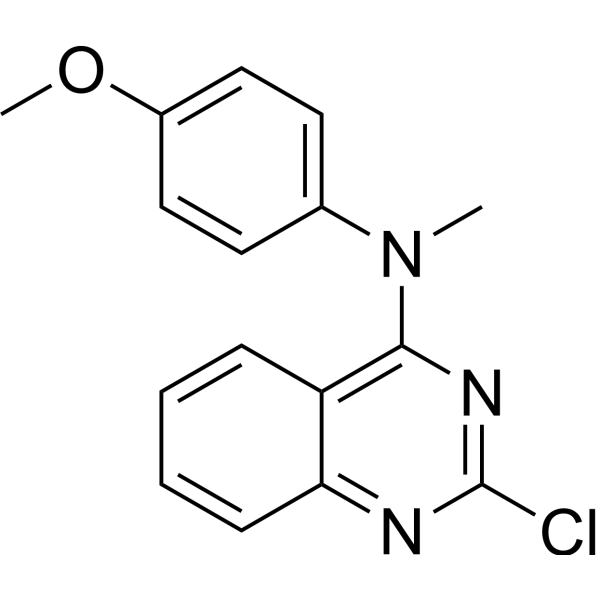 0 ImagesCat. No.: HY-129715CAS No.: 827030-33-1

-
DIM-C-pPhtBu
 0 ImagesCat. No.: HY-169581CAS No.: 94944-80-6



