



Mitosis Inducer
- 1
-
Concanavalin A
 0 ImagesCat. No.: HY-P2149CAS No.: 11028-71-0
Concanavalin A can be coupled to agarose to form Concanavalin A (agarose) (HY-P2149A). Concanavalin A (ConA) is a selective, competitive binding agent that targets specific carbohydrate structures containing glucose and mannose; it acts as a mitogen and exhibits varying degrees of cytotoxicity, hepatotoxicity, and teratogenicity. Concanavalin A is also utilized for in vivo blood glucose monitoring in the context of diabetes.
-
1-Oleoyl lysophosphatidic acid sodium
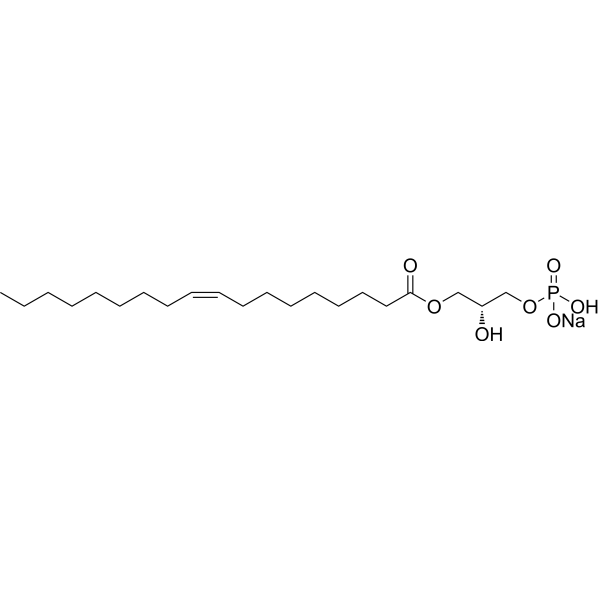 0 ImagesSynonyms: 1-Oleoyl-sn-glycero-3-phosphate sodium; 1-Oleoyl-LPA sodium
1-Oleoyl lysophosphatidic acid (1-Oleoyl-sn-glycero-3-phosphate) sodium, a potent bioactive phospholipid, is a LPA receptor activator. 1-Oleoyl lysophosphatidic acid sodium can promote mitosis by inducing DNA synthesis. 1-Oleoyl lysophosphatidic acid sodium is also involved in normal and pathological emotional responses, including anxiety and depression.
-
Harmol
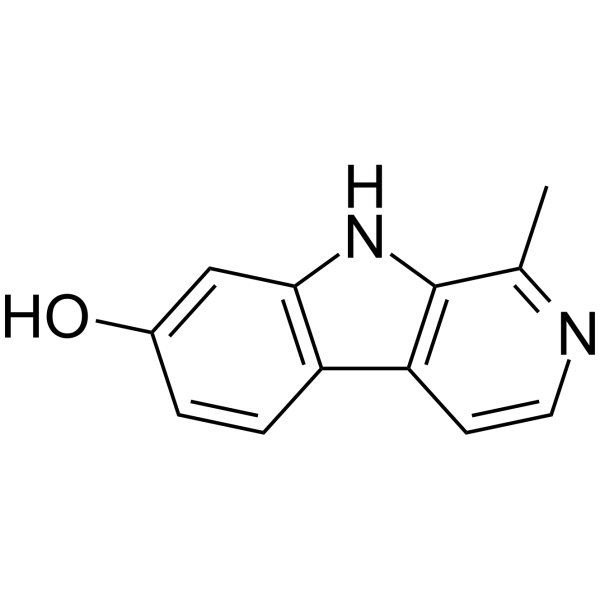 0 Images
Harmol is an orally active β-carboline alkaloid. Harmol is a TFEB activator and monoamine oxidase inhibitor. Harmol can induce cell mitosis, Autophagy and Apoptosis. Harmol promotes the degradation of α-synuclein by regulating the autophagy-lysosomal pathway. Harmol has anti-tumor, anti-depressant and anti-aging activities. Harmol improves motor impairment in a mouse Parkinson's disease model.
-
1,4-Dichlorobenzene
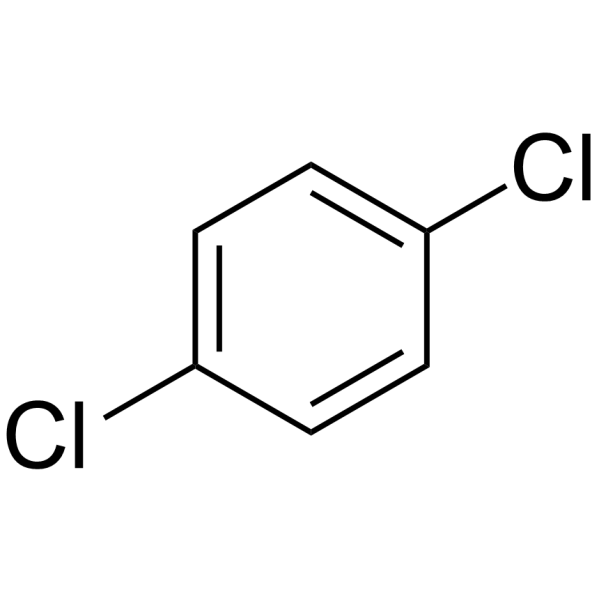 0 Images
1,4-Dichlorobenzene is a non-genotoxic, orally active mitogenic/tumor-promoting carcinogen that is also widely used as a dye, resin intermediate, and deodorant, moth repellent/insecticide. 1,4-Dichlorobenzene induces liver tumors in mice and promotes the growth of spontaneous precancerous lesions, but shows no liver tumor-inducing activity in F344 rats. Exposure to 1,4-dichlorobenzene leads to elevated leukocyte counts, serum alanine aminotransferase, and blood urea nitrogen levels. Due to the hepatotoxic characteristics, 1,4-Dichlorobenzene is applicable to liver cancer-related research.
-
Concanavalin A (agarose)
 0 ImagesCat. No.: HY-P2149ACAS No.: 11028-71-0
Concanavalin A (agarose) is composed of Concanavalin A (HY-P2149) conjugated with agarose. Concanavalin A (ConA) is a selective competitive binder targeting the specific carbohydrate structures of glucose and mannose, inducing mitosis, and exhibiting certain cytotoxicity, hepatotoxicity, and teratogenicity. Concanav in A (agarose) can be used for in vivo blood glucose monitoring in diabetes, and for "fishing out" specific glycoproteins or removing sugar impurities from complex samples.
-
Harmol hydrochloride
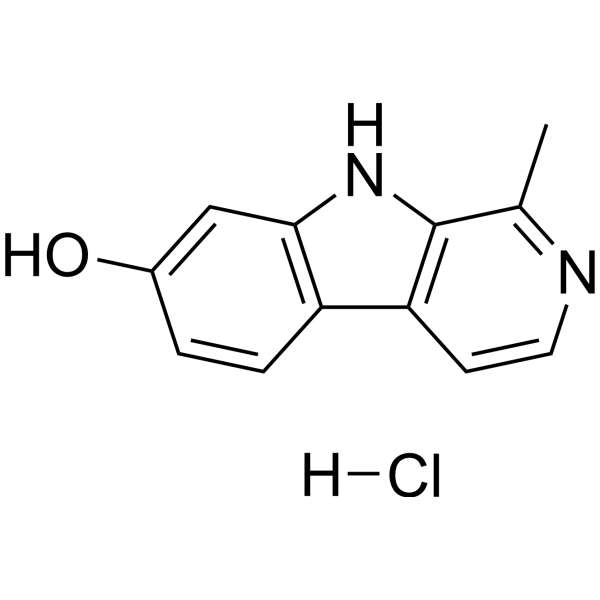 0 ImagesCat. No.: HY-107811ACAS No.: 40580-83-4
Harmol hydrochloride is an orally active β-carboline alkaloid. Harmol hydrochloride is a TFEB activator and monoamine oxidase inhibitor. Harmol hydrochloride can induce cell mitosis, Autophagy and Apoptosis. Harmol hydrochloride promotes the degradation of α-synuclein by regulating the autophagy-lysosomal pathway. Harmol hydrochloride has anti-tumor, anti-depressant and anti-aging activities. Harmol hydrochloride improves motor impairment in a mouse Parkinson's disease model.
-
DIM-C-pPhtBu
 0 ImagesCat. No.: HY-169581CAS No.: 94944-80-6
-
Phytolacca americana Lectin
 0 ImagesCat. No.: HY-NP187Synonyms: PWM
Phytolacca americana Lectin (PWM) is an acidic monomeric glycoprotein specific to N-acetylglucosamine and a B cell-specific stimulator. Phytolacca americana Lectin acts as a mitogen to induce cell mitosis. Phytolacca americana Lectin sensitizes B cells to Toll-like receptor stimulation, enabling their activation by immunostimulatory DNA. When used in combination with copurified microbial Toll-like receptor ligands, Phytolacca americana Lectin triggers B cell proliferation and immunoglobulin secretion.
-
PDGFR Y1021 peptide (phosphorylation)
 0 ImagesCat. No.: HY-P10270CAS No.: 147428-10-2
PDGFR Y1021 peptide (phosphorylation) is the phosphorylated fragment of platelet-derived growth factor receptor (PDGFR). PDGFR Y1021 peptide (phosphorylation) supports association of PLCγ to PDGFR through PLCγSH2 domains, and thus promotes the production of inositol phosphates and mitogenic response.
-
Harmol (Standard)
 0 Images
Harmol (Standard) is the analytical standard of Harmol (HY-107811). This product is intended for research and analytical applications. Harmol hydrochloride is an orally active β-carboline alkaloid. Harmol hydrochloride is a TFEB activator and monoamine oxidase inhibitor. Harmol can induce cell mitosis, Autophagy and Apoptosis. Harmol promotes the degradation of α-synuclein by regulating the autophagy-lysosomal pathway. Harmol has anti-tumor, anti-depressant and anti-aging activities. Harmol improves motor impairment in a mouse Parkinson's disease model.
-
1-Oleoyl lysophosphatidic acid sodium (Standard)
 0 ImagesCat. No.: HY-107614RCAS No.: 325465-93-8Synonyms: 1-Oleoyl-sn-glycero-3-phosphate sodium (Standard); 1-Oleoyl-LPA sodium (Standard)
1-Oleoyl lysophosphatidic acid sodium (Standard) is the analytical standard of 1-Oleoyl lysophosphatidic acid (sodium) (HY-107614). This product is intended for research and analytical applications. 1-Oleoyl lysophosphatidic acid (1-Oleoyl-sn-glycero-3-phosphate) sodium, a potent bioactive phospholipid, is a LPA receptor activator. 1-Oleoyl lysophosphatidic acid sodium can promote mitosis by inducing DNA synthesis. 1-Oleoyl lysophosphatidic acid sodium is also involved in normal and pathological emotional responses, including anxiety and depression.
- 1



