NADPH Oxidase
NOX
NADPH-oxidase (NOX) is a highly regulated dynamic complex comprising membrane and cytosolic proteins and is the major source of nonmitochondrial cellular reactive oxygen species (ROS). The ROS generated by NADPH oxidases have crucial roles in various physiological processes, including innate immunity, modulation of redox-dependent signalling cascades, and as cofactors in the production of hormones.
NOX enzymes are a family of transmembrane proteins comprising seven members (NOX1-NOX5 and DUOX1 and DUOX2), each with a specific tissue distribution and activation mechanism. They catalyze the reduction of molecular oxygen to superoxide anion, which in turn reacts quickly to generate other ROS, such as hydrogen peroxide. Although basic NOX activity is crucial for normal physiology, overshooting activity of NOX enzymes leads to disease. NADPH oxidases are increasingly recognized as interesting drug targets.
NADPH Oxidase Isoform Specific Products
All Product Categories
-
NADPH Oxidase Related Products (95)
Related Products (95)

-
Antibodies (3)
-
NADPH Oxidase Isoform Comparison
-
(Rac)-Nebivolol-d2,15N
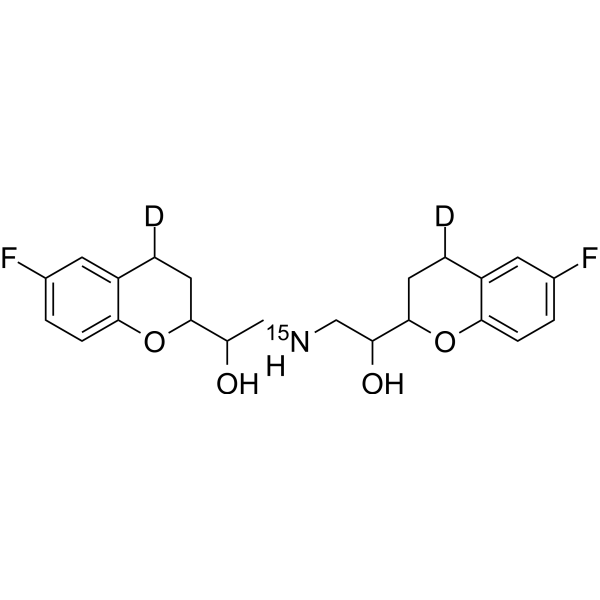 0 ImagesCat. No.: HY-B0203BS2Synonyms: (Rac)-R 065824-d2,15N(Rac)-Nebivolol-d2,15N is 15N and deuterated labeled (Rac)-Nebivolol (HY-B0203B). (Rac)-Nebivolol ((Rac)-R 065824) is a racemic isomer of Nebivolol. Nebivolol is a selective β1-adrenergic receptor antagonist with an IC50 value of 0.8 nM. Nebivolol can prevent up-regulation of Nox2/NADPH oxidase and lipoperoxidation in the early stages of ethanol-induced cardiac toxicity. Vasodilatory activity.
-
NOX5-IN-2
 0 ImagesCat. No.: HY-174818NOX5-IN-2 (Compound 17) is a selective NADPH oxidase 5 (NOX5) inhibitor with an IC50s of 0.70 μM. NOX5-IN-2 significantly inhibits NOX5-dependent production of ROS in freestyle293 cells (EC50: 1.8 μM). NOX5-IN-2 can be used for NOXs related diseases research, such as cardiovascular, cancer and neuroinflammation.
-
NOX2-IN-2
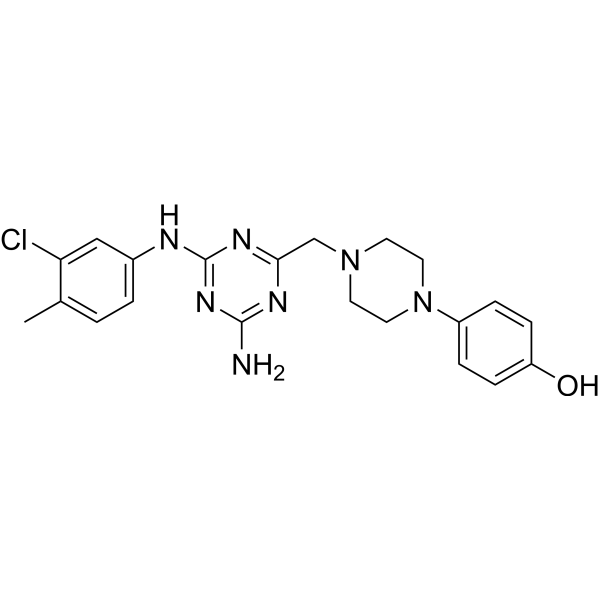
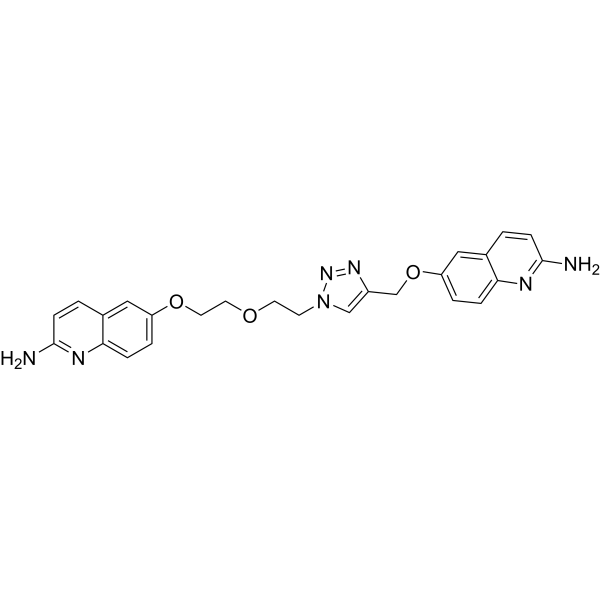 0 ImagesCat. No.: HY-156425CAS No.: 2648709-79-7
-
NOX4-IN-1
 0 ImagesCat. No.: HY-170540NOX4-IN-1 (Compound 14m) is the inhibitor for NADPH oxidase 4 (NOX4), and blocks the generation of ROS. NOX4-IN-1 inhibits TGF-β1/Smad signaling pathway, decreases the expression of fibrosis-related proteins. NOX4-IN-1 inhibits the cell migration of NRK-49F.
-
Orazipone
 0 ImagesCat. No.: HY-106981CAS No.: 137109-78-5Synonyms: OR 1384Orazipone (OR 1384) is a small molecule immunomodulator with strong anti-inflammatory properties. Orazipone exerts its immunomodulatory effect by forming reversible thiol complexes, which bind to intracellular signaling proteins and the thiol groups of glutathione. Orazipone exhibits potent anti-eosinophilic activity by inducing apoptosis. Orazipone inhibits activation of inflammatory transcription factors NF-kB and STAT 1 and decreases inducible iNOS expression and NO production in response to inflammatory stimuli. Orazipone reduces NADPH oxidase activity and thereby decreases ROS production. Orazipone has a protective effect in intestinal radiation injury.
-
AMPAR modulator-12
 0 ImagesCat. No.: HY-183101CAS No.: 2163787-60-6AMPAR modulator-12 is a blood-brain barrier-permeable AMPAR positive allosteric modulator. AMPAR modulator-12 reduces NOX-1 expression, enhances AMPAR-mediated currents, promotes excitatory postsynaptic transmission and restores AMPAR function. AMPAR modulator-12 enhances excitatory and inhibitory synaptic transmission, reduces burst firing in the lateral habenula after withdrawal, and produces rapid and sustained antidepressant-like effects. AMPAR modulator-12 is applicable for the research of depression.
-
7-O-Galloyl-D-sedoheptulose
 0 ImagesCat. No.: HY-N16527CAS No.: 233690-85-27-O-Galloyl-D-sedoheptulose is an orally effective polyphenolic compound. 7-O-Galloyl-D-sedoheptulose lowers the serum levels of glucose, leptin, insulin, C-peptide, resistin, TNF-α, IL-6, and increases the serum level of adiponectin. 7-O-Galloyl-D-sedoheptulose significantly reduces the levels of ROS and lipid peroxidation products (TBARS) by down-regulating the protein expression of NADPH oxidase subunit Nox-4 and p22phox. 7-O-Galloyl-D-sedoheptulose down-regulates NF-κB and related pro-inflammatory factors (COX-2, iNOS), inhibits the phosphorylation of JNK and the activity of its downstream AP-1. 7-O-Galloyl-D-sedoheptulose reduces the expression of TGF-β1 and fibronectin, indicating its potential in anti-tissue fibrosis. 7-O-Galloyl-D-sedoheptulose can be used for the study of type 2 diabetes and its hepatic and pancreatic complications.


-
GLX481372
 0 ImagesGLX481372 is a NADPH Oxidase (NOX) inhibitor. GLX481372 potently inhibits NOX4/5 activities with IC50 values of 0.68 and 0.57 μM. GLX481372 also has weak inhibitory activity against NOX1, NOX2, and NOX3, with IC50 values of 7, 16 and 3.2 μM respectively. GLX481372 can inhibit ROS production. GLX481372 can be used for the researches of inflammation, cardiovascular and metabolic disease, such as diabetes.
-
AL-1
 0 ImagesCat. No.: HY-114809CAS No.: 126455-04-7AL-1 is a potent O2- generation inhibitor (IC50 = 7.6 μM) through the inhibition of leukocytic NADPH oxidase. AL-1 inhibits 12-O-Tetradecanoylphorbol-13-acetate (TPA)-induced H2O2 production. AL-1 reduces tumor incidence in ICR mouse skin. AL-1 can be used for research on oxidative stress-related diseases including cancer.
-
Noxa B BH3
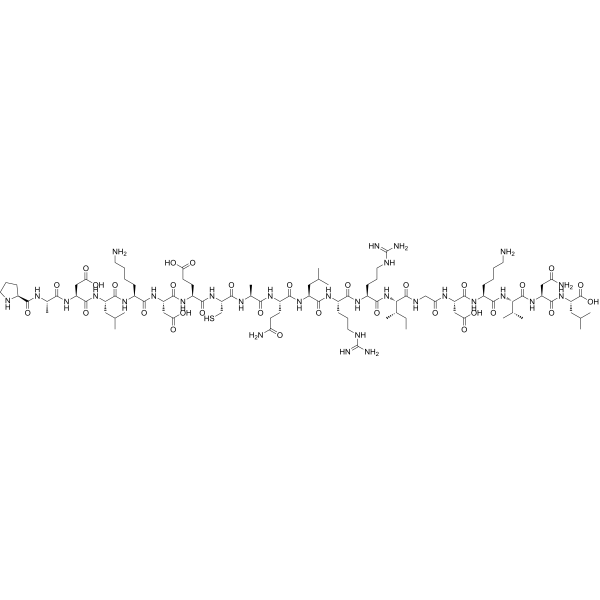 0 ImagesCat. No.: HY-P5330CAS No.: 505070-10-0Noxa B BH3 is a biological active peptide. (BH3 domain of Noxa protein)
-
Azacyclonol hydrochloride
 0 ImagesAzacyclonol (γ-pipradol) hydrochloride is a compound with promising anticancer activity, showing effectiveness in inhibiting NOX-derived ROS in A549 human lung cancer cells. Azacyclonol hydrochloride exhibits enhanced proliferation inhibition against androgen-refractory cancer cell lines, specifically DU145 and PC-3. Azacyclonol hydrochloride demonstrates antitumor activity in DU145-xenografted chorioallantoic membrane tumor models. Azacyclonol hydrochloride also acts as a ligand for the M3 muscarinic acetylcholine receptor, which is overexpressed in ARPC. Azacyclonol hydrochloride effectively blocks carbachol-induced proliferation and NOX activity in DU145 cells. Azacyclonol hydrochloride can also be utilized for the treatment of chronic schizophrenia.
-
TSR-011-isomer
 0 ImagesCat. No.: HY-117806CAS No.: 1388225-79-3TSR-011-isomer is an isomer of Belizatinib (HY-17603), a ALK inhibitor with an IC50 of 6 nM. TSR-011-isomer acts as a substrate for metabolic hydrolysis and NADPH-dependent metabolism. TSR-011-isomer undergoes enzymatic hydrolysis in mouse plasma and NADPH-dependent metabolism in mouse liver microsomes, thereby supporting clearance processes. TSR-011-isomer can be used in studies related to ALK-driven cancers.
-
CBR1-IN-3
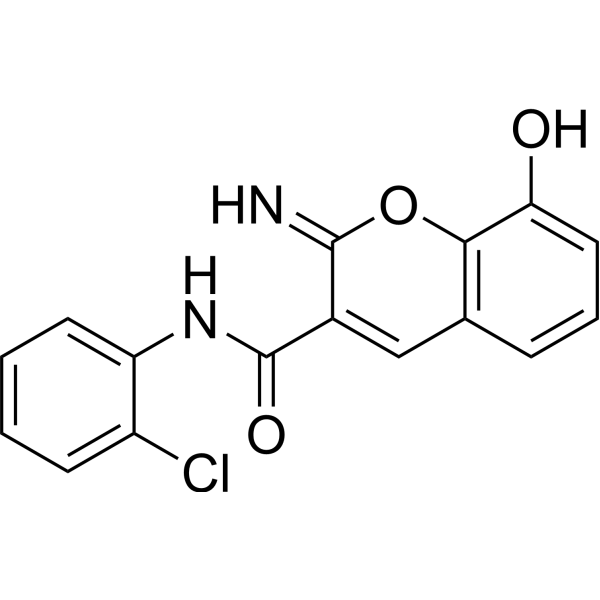 0 ImagesCat. No.: HY-157445CAS No.: 891101-69-2CBR1-IN-3 (compound 13h) is a potent inhibitor of carbonyl reductase 1 (CBR1), with IC50 value of 0.034 μM.
-
sgp91 ds-tat Peptide 2, scrambled
 0 ImagesCat. No.: HY-P1908sgp91 ds-tat Peptide 2, scrambled is a scrambled sequence of NADPH oxidase inhibitor gp91 ds-tat peptide.
-
Diapocynin
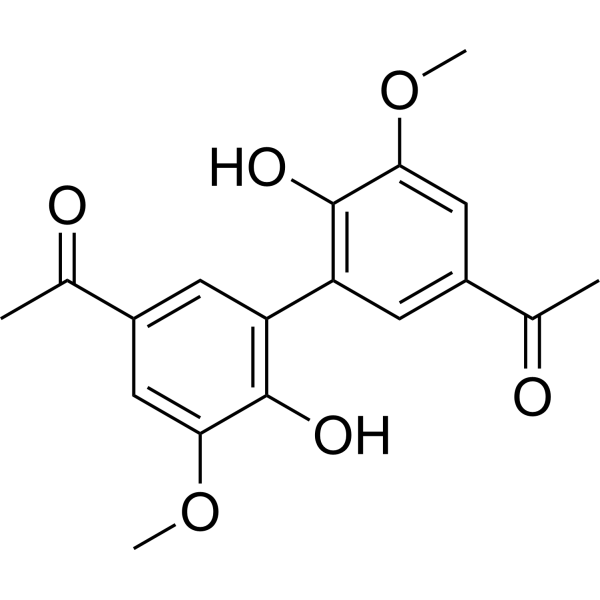 0 ImagesSynonyms: DehydrodiacetovanilloneDiapocynin (Dehydrodiacetovanillone), a dimeric derivative of Apocynin, is an orally active NADPH oxidase inhibitor. Diapocynin has anti-inflammatory, neuroprotection and antioxidant activities.