



PSMA
Prostate-specific membrane antigen
PSMA is a transmembrane protein that anchores to the cell membrane through its transmembrane region and is mainly expressed in prostate epithelial cells but also exists in other tissues. PSMA exhibits glutamate-preferring carboxypeptidase activity that hydrolyzes polyglutamylated folic acid to release folic acid monomers. PSMA mediates the endocytosis on the cell surface. PSMA acts as an angiogenesis marker in cancer cells. PSMA can be used as a diagnostic marker for prostate cancer, and for detection of invasiveness and metastatic ability of the tumor[1].
All Product Categories
-
PSMA Produits associés (93)
Produits associés (93)

-
Anticorps (1)
-
HYNIC-iPSMA TFA
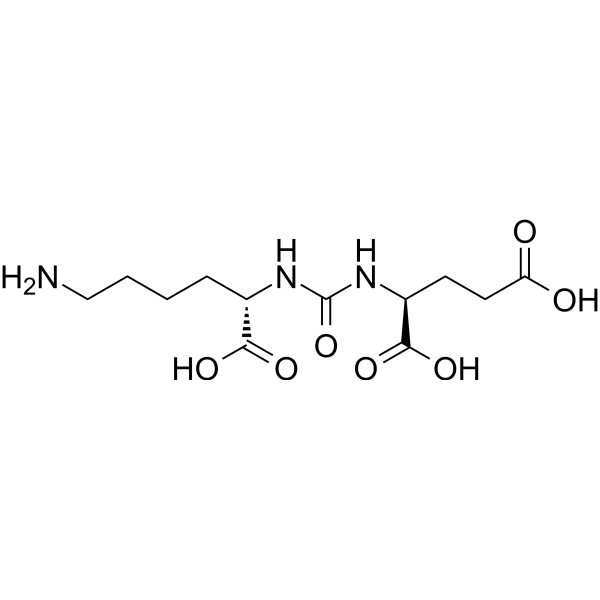
 0 ImagesHYNIC-iPSMA TFA is a PSMA-targeted ligand for tumor molecular imaging, with a Ki value of 3.11 nM. HYNIC-iPSMA TFA consists of two components: HYNIC (6-hydrazinonicotinamide) and iPSMA (Inhibitor of Prostate-Specific Membrane Antigen). HYNIC serves as a chelating moiety to link radionuclides to the targeting molecule; iPSMA is a specific inhibitor that targets Prostate-Specific Membrane Antigen (PSMA). 68Ga-labeled iPSMA is used for prostate cancer detection via PET imaging, while the further developed 99mTc-EDDA/HYNIC-iPSMA TFA exhibits excellent specificity and sensitivity. HYNIC-iPSMA TFA can be used for the synthesis and research of radionuclide-conjugated drugs (RDC).
-
Anti-FOLH1/PSMA Antibody (J591)
 0 ImagesCat. No.: HY-P991359Pureté: ≥99.0%Synonyms: MEDI3726 antibody; ADCT-401 antibodyAnti-FOLH1/PSMA Antibody (J591) (MEDI3726 antibody) is a human monoclonal antibody (mAb) targeting FOLH1/PSMA. Anti-FOLH1/PSMA Antibody (J591) can be used in Prostate cancer research.
-
Ancelvotide Guraxetan
 0 ImagesSynonyms: PNT2001; LY4181530; PSMA-62
-
EC1169
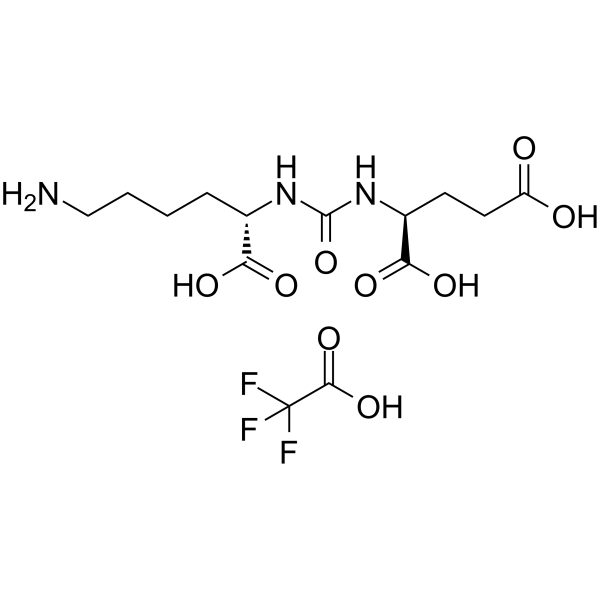
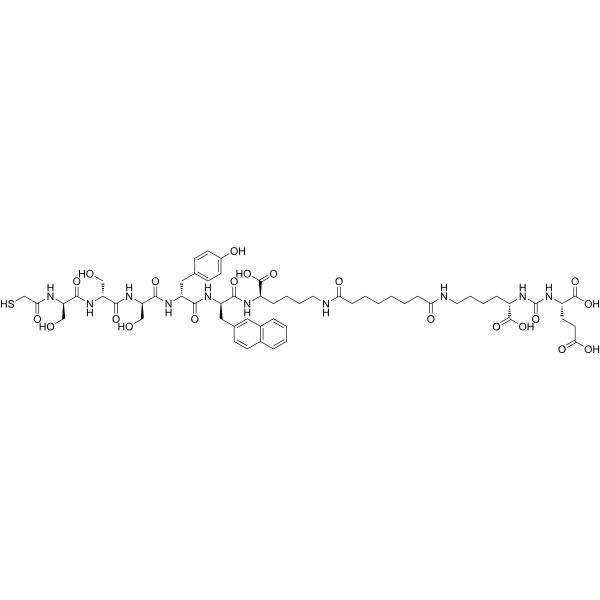
 0 ImagesEC1169 is a cytotoxic maytansinoid conjugate that specifically binds to prostate-specific membrane antigen (PSMA). EC1169 precisely delivers the maytansinoid B hydrazide payload to PSMA-positive cells to exert antitumor activity. EC1169 only inhibits the growth of PSMA-positive cells but has no effect on PSMA-negative cells, and enables complete recovery in mice bearing PSMA-positive tumors. EC1169 exhibits safety with no body weight loss or major organ damage induced. EC1169 is used in studies of prostate cancer and other PSMA-expressing malignancies.
-
PSMA-D5
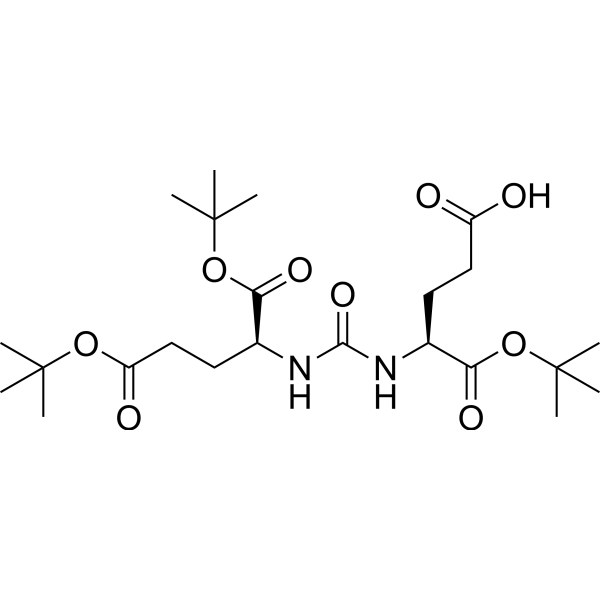
 0 ImagesPSMA-D5 has a binding affinity for PSMA with a Ki of 0.21 nM and can be used for PSMA tracing after radiolabeling. PSMA-D5 ([68Ga]-labeled) contains a DOTA chelator, allowing convenient labeling with therapeutic radionuclides such as 177Lu and 225Ac. PSMA-D5 ([68Ga]-labeled) shows excellent pharmacokinetic properties, exhibiting remarkable tumor uptake in 22Rv1 tumors. PSMA-D5 can be used for the synthesis/research of Radionuclide-Drug Conjugates (RDCs).
-
PSMA targeting peptide TFA
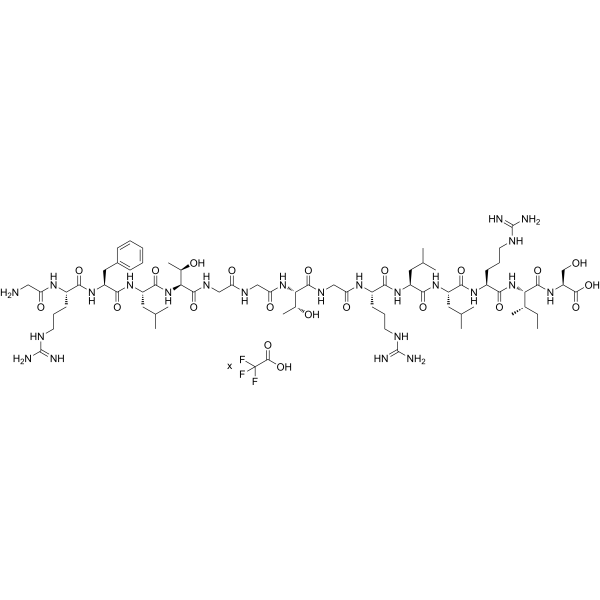 0 ImagesCat. No.: HY-P10055APureté: 98.54%Synonyms: PSMA-1 TFA
-
Zopocianine
 0 ImagesSynonyms: OTL-0078; OTL78Zopocianine (OTL-0078; OTL78) is a near-infrared optical probe targeting PSMA. Zopocianine binds to PSMA on the surface of PSMA-expressing cells, enters cells via receptor-mediated endocytosis, and accumulates in acidic endosomes. Zopocianine selectively accumulates in PSMA-positive cancer tissues and enables the detection of small tumors, primary prostate tumors, and locoregional metastases. Zopocianine helps achieve negative tumor surgical margins during fluorescence-guided surgery. Zopocianine is applicable to research related to prostate cancer.
-
DOTA-PSMA-EB-01
 0 ImagesCat. No.: HY-158266Synonyms: LNC1003DOTA-PSMA-EB-01 (Compound LNC1003) is a specific inhibitor of PSMA (IC50= 10.77 nM).DOTA-PSMA-EB-01 enhances the uptake and retention time of 177Lu in tumors. DOTA-PSMA-EB-01 can be used for the synthesis/research of Radionuclide-Drug Conjugates (RDCs).
-
MIP-1095 TFA
 0 ImagesCat. No.: HY-123733APureté: 99.76%Synonyms: RPS-001 TFAMIP-1095 TFA (RPS-001 TFA) is a PSMA inhibitor with a Ki value of 0.24 nM. MIP-1095 TFA binds to PSMA with high affinity and can be internalized into PSMA-expressing cancer cells. When radiolabeled with 123I, 124I or 131I, MIP-1095 TFA enables SPECT/CT imaging, PET/CT imaging or targeted radiation delivery, respectively. 131I-MIP-1095 TFA can alter serum PSA levels and relieve bone pain. MIP-1095 TFA can be used in research related to metastatic castration-resistant prostate cancer.
-
PSMA binder-2
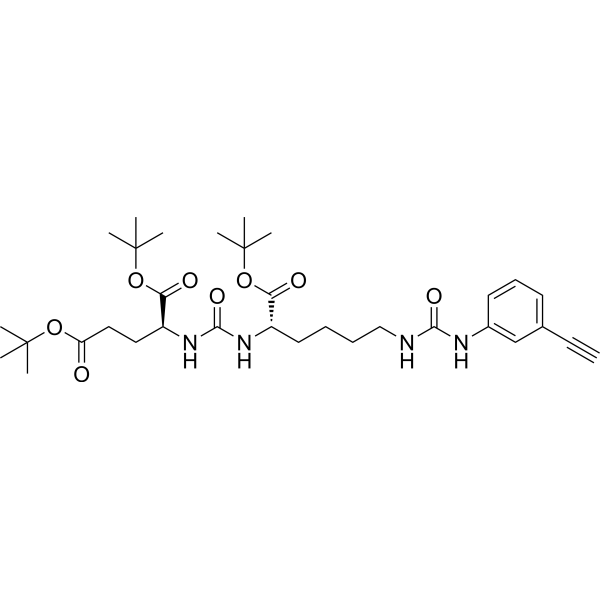 0 ImagesCat. No.: HY-158125CAS No.: 2149567-00-8PSMA binder-2 is a ligand for PSMA and can be used to synthesize Ac-PSMA-trillium. Ac-PSMA-trillium is a suitable PSMA-targeting compound with improved PSMA binding properties and pharmacokinetic properties. PSMA ligands have different biological applications after being modified with different radioactive isotopes. If labeled with 111In, it can be used as DOTA chelating agent and imaging agent. Or labeled with 225Ac as a Macropa chelator for targeted radionuclide therapy (TRT) in the study of metastatic castration-resistant prostate cancer (mCRPC).
-
EB-PSMA-617
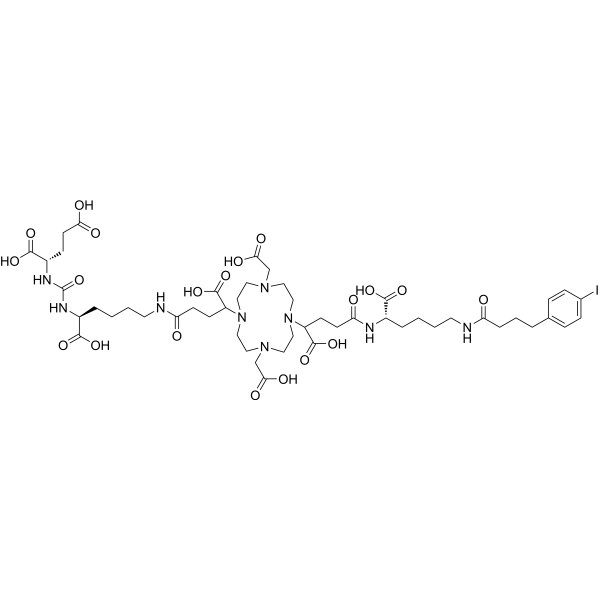
 0 ImagesCat. No.: HY-163683CAS No.: 2375590-67-1EB-PSMA-617 is a modified form of PSMA-617 that has enhanced pharmacokinetic properties by conjugating it to Evans Blue (EB) to extend its circulation half-life to improve prostate tumor uptake and radiotherapy efficacy. In preclinical studies using PC3-PIP-loaded mice, EB-PSMA-617 demonstrated prolonged blood half-life, increased accumulation in PSMA-positive tumors, and successful tumor elimination with lower radioactivity.

-
PSMA targeting peptide
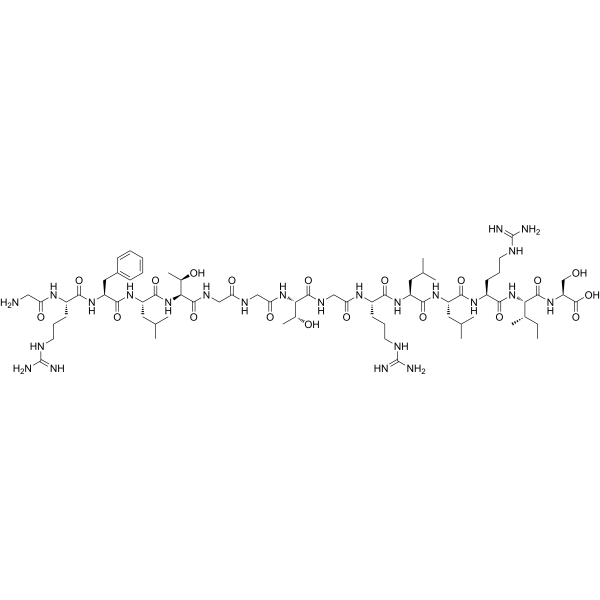 0 ImagesCat. No.: HY-P10055CAS No.: 2042750-71-8Synonyms: PSMA-1PSMA-1 is a PSMA targeting peptide (GRFLTGGTGRLLRIS) and can be used for for targeted delivery of glucose-regulated protein (GRP)-silencing siRNAs in PCa cells. PSMA-1 is selected and polyarginine sequences R6 or R9 were added at the C terminus to generate the CTPs. FITC labeling of the peptide with an aminohexanoic acid (Ahx) linker at the N terminus produced FITC-PSMA-1,to track PSMA binding on PCa cells.

-
CBP-1018
 0 ImagesCBP-1018 is a PDC (peptide-drug conjugate) formed by conjugating Monomethyl auristatin E (HY-15162) to a dual-targeting ligand of FLOR1/PSMA (prostate-specific membrane antigen) via a linker (HY-78738). CBP-1018 binds to FLOR1 and prostate-specific membrane antigen (PSMA). CBP-1018 is applicable to the research of solid tumors and metastatic castration-resistant prostate cancer.




