



PSMA targeting peptide
Based on 1 publication(s) in Google Scholar
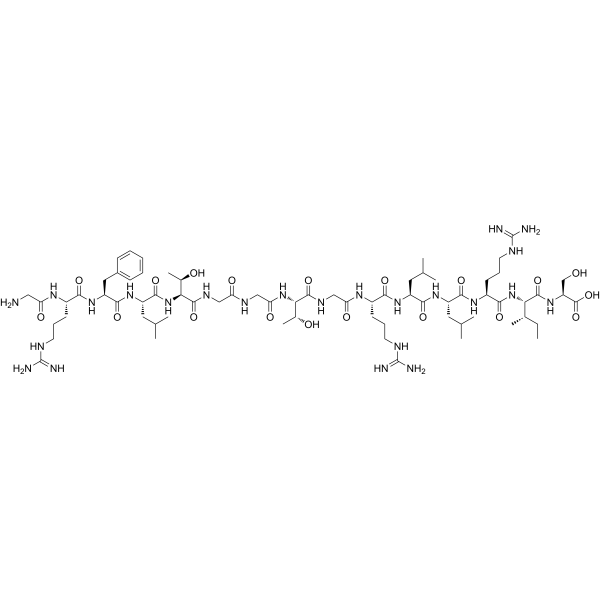
PSMA targeting peptide (PSMA-1) is a PSMA-binding peptide that selectively binds to the PSMA receptor on prostate cancer cells and acts as a peptide-based siRNA delivery system by complexing and releasing siRNA. PSMA targeting peptide can be used in research on prostate cancer.
Para uso exclusivo en investigación. No vendemos a pacientes.
- No. CAS: 2042750-71-8
- Fòrmula: C70H122N24O19
- Peso molecular:1603.87
-
Almacenamiento:
Please store the product under the recommended conditions in the Certificate of Analysis.

To place orders, for customer services and technical support, please contact: MedChemExpress USA
Tel: 609-228-6898 E-mail: [email protected] [email protected]


-
 Actividad biológica
-
Chemical Information
- Protocolo
- Pureza y Documentación
- Referencias
-
 Help & FAQs


Publications Citing Use of MedChemExpress (MCE) PSMA targeting peptide
More

Actividad biológica
Descripciòn
IC50 & Target
IC50: PSMA[1]
In Vitro
PSMA-1-R6 (5 min; 1 week), when complexed with siRNA, formed large, polydisperse aggregated particles with an average size 200-300 nm larger than that of the siRNA:Trans-IT X2 control complexes[1].
PSMA-1-R6 peptide (625 pmol; 48 h) failed to mediate functional siRNA delivery and GRP78 knockdown at both mRNA and protein levels in both LNCaP and PC3 cell lines[1].
MedChemExpress (MCE) has not independently confirmed the accuracy of these methods. They are for reference only.


Chemical Information
-
No. CAS 2042750-71-8
-
Peso molecular 1603.87
-
Fòrmula C70H122N24O19
-
Synonyms
PSMA-1
-
Sequence
Gly-Arg-Phe-Leu-Thr-Gly-Gly-Thr-Gly-Arg-Leu-Leu-Arg-Ile-Ser
-
Sequence Shortening
GRFLTGGTGRLLRIS
-
Envío
Room temperature in continental US; may vary elsewhere.
-
Almacenamiento
Please store the product under the recommended conditions in the Certificate of Analysis.


Publications (1)
-
Journal Impact Factor
-
Most Recent
-
J Control Release
Targeting polyamine metabolism induces oxidative/carbonyl stress to reinvigorate antitumor immunity in prostate cancer. [Abstract]2025 Sep 30;388(Pt 1):114283. PMID: 41038348


Pureza y Documentación
Referencias

Calculators
Concentration (start) × Volume (start) = Concentration (final) × Volume (final)


PSMA targeting peptide Related Classifications
HY-P10055 Related Classifications
 Powered by Bioz