



TrxR Inhibitor
- 1
- 2
-
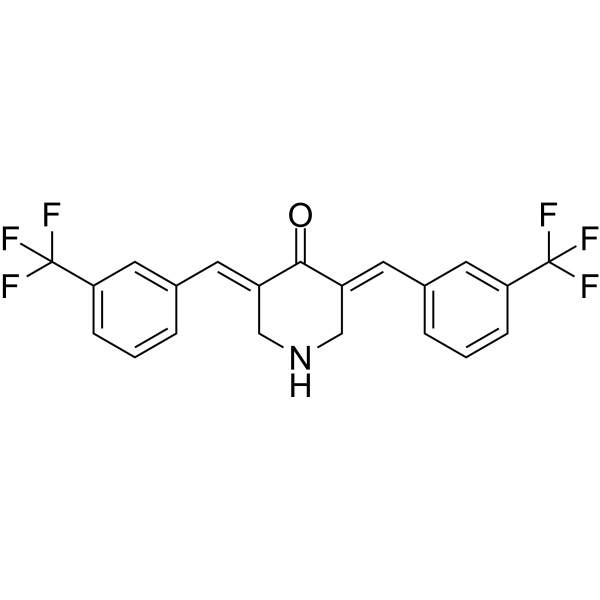
ROS-generating agent 1
 0 Images
ROS-generating agent 1 is a selective ROS-generating agent. ROS-generating agent 1 inhibits TrxR activity and expression in cancer cells. ROS-generating agent 1 induces ROS-dependent apoptosis and ferroptosis in cancer cells. ROS-generating agent 1 selectively kills lung cancer cells and inhibits the growth of cancer cell xenograft tumors in nude mice. ROS-generating agent 1 can be used for the research of non-small cell lung cancer.
-
Nitrovin hydrochloride
 0 Images
Nitrovin hydrochloride is an antibacterial growth promoter. Nitrovin hydrochloride induces ROS-mediated non-apoptotic and apoptotic-like cell death by targeting TrxR1. Nitrovin hydrochloride has anticancer activity, with IC50 values of 1.31-6.60 μM for tumor and normal cells.
-
Necroptosis inducer 1
 0 ImagesCat. No.: HY-181718
Necroptosis inducer 1 is a necroptosis inducer. Necroptosis inducer 1 inhibits the activity of thioredoxin reductase (TrxR), elevates intracellular ROS levels, triggers ROS-mediated necroptosis, and induces necroptosis-dependent immunogenic cell death. Necroptosis inducer 1 inhibits tumor growth, remodels the tumor immune microenvironment, and exerts a synergistic effect with anti-PD-1 in animal models. Necroptosis inducer 1 is applicable to the research of colon cancer.
-
TrxR-IN-9
 0 ImagesCat. No.: HY-181825
TrxR-IN-9 is a thioredoxin reductase (TrxR) inhibitor with an IC50 of 0.26 μM. TrxR-IN-9 disrupts cellular redox balance. TrxR-IN-9 induces S-phase cell cycle arrest, promotes apoptosis and exhibits antiproliferative activity across cancer cells. TrxR-IN-9 exerts effects via synergistic nitric oxide (NO) and reactive oxygen species (ROS) action. TrxR-IN-9 can be used for the research of breast cancer, gastric cancer, colorectal cancer, liver cancer.
-
TrxR-IN-2
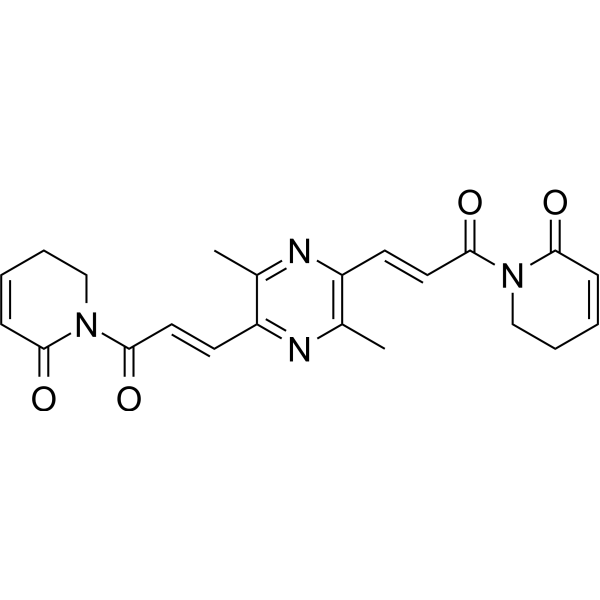 0 ImagesCat. No.: HY-132972CAS No.: 2866261-50-7
TrxR-IN-2 is a thioredoxin reductase (TrxR) inhibitor. TrxR-IN-2 increases reactive oxidative species (ROS) levels and decreases mitochondrial transmembrane potential levels. TrxR-IN-2 triggers DNA damage via H2AX regulation, and induces autophagy via LC3, beclin-1, and p62 regulation. TrxR-IN-2 can be used for the research of drug-resistant hepatocellular carcinoma[1].
-
Nitrovin
 0 ImagesCat. No.: HY-W504391CAS No.: 804-36-4Synonyms: Difurazon
Nitrovin (Difurazon) is a thioredoxin reductase 1 (TrxR1) inhibitor with both antibacterial and anticancer activities. Nitrovin interacts with TrxR1 to generate reactive oxygen species (ROS), which in turn induces cytoplasmic vacuolization, activates MAPK and inhibits Alix. Nitrovin induces paraptosis-like non-apoptotic cell death, thereby exerting significant cytotoxicity against cancer cells. Nitrovin can be used in the research of heart disease and glioblastoma multiforme.
-
BGC4
 0 ImagesCat. No.: HY-172115
BGC4 is a biphenyl-based gold(III) complex. BGC4 inhibits human recombinant thioredoxin reductase (TrxR) with an IC50 of 10.7 μM, exhibits cytotoxicity (IC50 for MDA-MB-231 is 5.4 μM), and induces apoptosis. BGC4 exhibits antitumor efficacy in mouse models.
-
As-CA11
 0 ImagesCat. No.: HY-179712
As-CA11 is a Thioredoxin reductase (TrxR) inhibitor with an IC50 of 18.7 nM. As-CA11 can induce cancer cells apoptosis and ROS production. As-CA11 can reduce the level of reduced Trx and increase the level of oxidized Trx. As-CA11 demonstrates anti-tumor activity in the 4T1 tumor-bearing mouse model.
-
TrxR1-IN-1
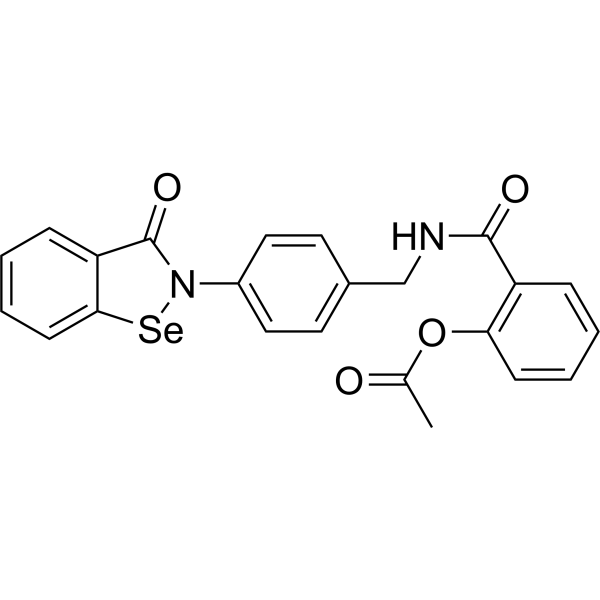 0 ImagesCat. No.: HY-149390CAS No.: 3052303-04-2
TrxR1-IN-1 (Compound 5j) is a TrxR1 inhibitor (IC50: 8.8 μM). TrxR1-IN-1 has anticancer activity, with IC50s of MCF-7 (1.5 μM), HeLa (1.7 μM), BGC-823 (2.4 μM), SW-480 (2.8 μM), A549 (2.1 μM). TrxR1-IN-1 has antioxidant activity, and scavenges DPPH radical.
-
CS47
 0 ImagesCat. No.: HY-175806CAS No.: 1372792-51-2
CS47 is a Thioredoxin Reductase 1 (TRXR1) inhibitor and ferroptosis inducer. CS47 binds non-covalently to sites between the FAD and NADPH pockets of TRXR1. CS47 drives glutathione depletion, lipid reactive oxygen species accumulation, HMOX1-dependent iron overload, and selective cytotoxicity in lung cancer cells. CS47 can be used for the research of lung cancer.
-
TrxR-IN-6
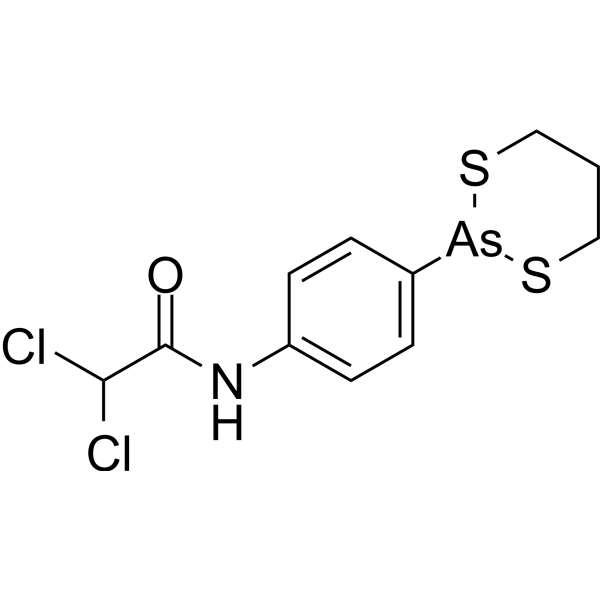 0 ImagesCat. No.: HY-157158CAS No.: 3032446-53-7
TrxR-IN-6 is a thioredoxin reductase (TrxR) inhibitor. TrxR-IN-6 induces reactive oxygen species (ROS) accumulation and cell apoptosis. TrxR-IN-6 induces mitochondrial dysfunction, endoplasmic reticulum stress and DNA damage. TrxR-IN-6 can be used for the research of breast cancer, leukemia.
-
TrxR-IN-4
 0 ImagesCat. No.: HY-146350CAS No.: 2414906-32-2
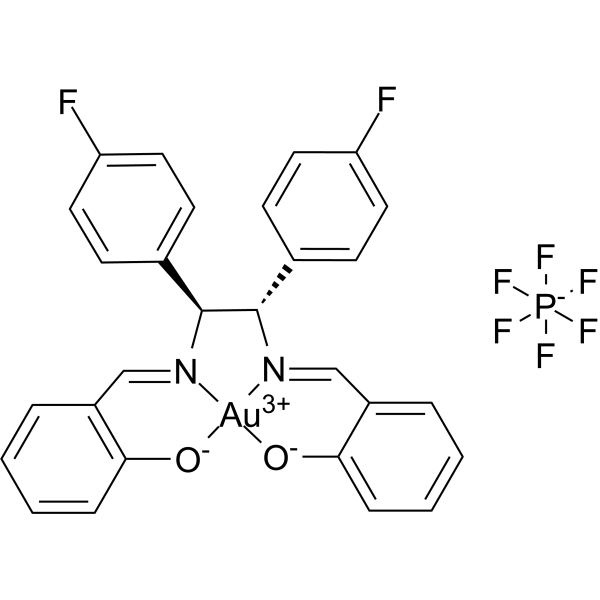
TrxR-IN-4 is a thioredoxin reductase (TrxR) inhibitor with a rat IC50 of 0.37 μM. TrxR-IN-4 inhibits TrxR activity, elevates reactive oxygen species (ROS) and induces apoptosis. TrxR-IN-4 mediates endoplasmic reticulum stress and induces mitochondrial dysfunction. TrxR-IN-4 can be used for the research of hepatocellular carcinoma.
-
TrxR-IN-7
 0 ImagesCat. No.: HY-172086
TrxR-IN-7 is a thioredoxin reductase (TrxR) inhibitor with an IC50 of 3.5 μM. TrxR-IN-7 induces reactive oxygen species (ROS) generation and apoptosis in tumor cells. TrxR-IN-7 can be used for the research of liver cancer and breast cancer.

-
LW-216
 0 ImagesCat. No.: HY-163724CAS No.: 2146090-18-6
-
FEACYP
 0 ImagesCat. No.: HY-161811
FEACYP is a thioredoxin reductase (TrxR) inhibitor. FEACYP inhibits thioredoxin reductase activity, induces ROS by increasing basal cellular hydrogen peroxide production, suppresses tumor growth, exerts cytotoxicity against human cancer cells, and exhibits antiproliferative activity in human pancreatic cancer 3D spheroids. FEACYP can be used in the research of ovarian cancer, colon cancer, pancreatic cancer, and lung cancer.
-
TrxR/EGFR-IN-1
 0 ImagesCat. No.: HY-168492CAS No.: 3038386-42-1
TrxR/EGFR-IN-1 (Compound L1Au2) is a TrxR/EGFR inhibitor. TrxR/EGFR-IN-1 is active against both Gefitinib (HY-50895)-sensitive and resistant lung cancers, effectively inhibiting tumor proliferation and promoting apoptosis. TrxR/EGFR-IN-1 promotes the degradation of GPX4 protein through autophagolysosomal and proteasomal pathways, leading to ferroptosis. In addition, TrxR/EGFR-IN-1 can induce endoplasmic reticulum stress and trigger immunogenic cell death. TrxR/EGFR-IN-1 can be used for the research of Gefitinib (HY-50895)-resistant lung cancer.
-
TrxR-IN-8
 0 ImagesCat. No.: HY-173403CAS No.: 2857180-28-8
TrxR-IN-8 (Compound 6f) is a selective TrxR inhibitor (IC50: 10.2 μM). TrxR-IN-8 induces apoptosis through oxidative stress by stimulating the production of reactive oxygen species (ROS), reducing intracellular thiols, and lowering the glutathione/glutathione ratio. TrxR-IN-8 exhibits significant cytotoxicity against non-small cell lung cancer (NSCLC) cells.
-
Photosensitizer-6
 0 ImagesCat. No.: HY-162958CAS No.: 3052251-17-6
Photosensitizer-6 (Compound 4) is a gold (I) complex and exhibits inhibitory activity against TrxR. Photosensitizer-6 induces apoptosis in 4T1 cell, targets and eradicates tumors through chemo-phototherapy and immunogenic cell death under light exposure. Photosensitizer-6 can be used for tumor imaging.
-
DDHF20
 0 ImagesCat. No.: HY-159883
DDHF20 is an antimicrobial agent against Staphylococcus aureus, targeting and inhibiting its thioredoxin reductase (TrxR). It acts as a competitive inhibitor for the NADPH binding site. DDHF20 is expected to be used in research related to antimicrobial infections caused by Staphylococcus aureus.
- 1
- 2



