



Castration-Resistant Prostate Cancer
-
Castration-Resistant Prostate Cancer (52)

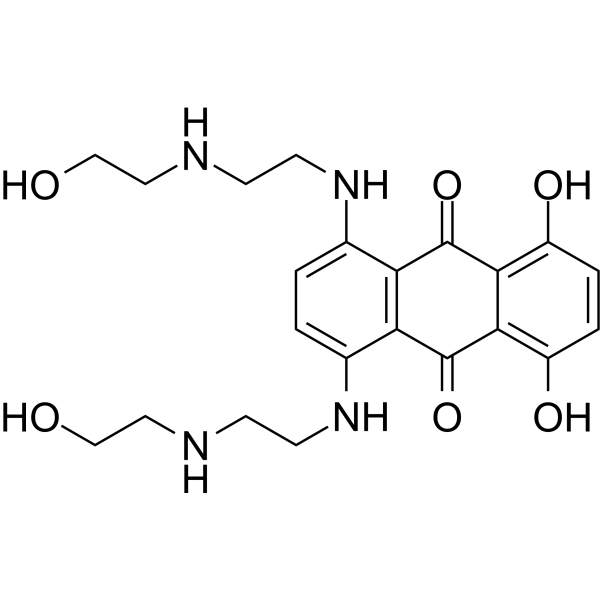
- Formula: C22H28N4O6
- Molecular Weight: 444.48
Mitoxantrone is a potent topoisomerase II inhibitor. Mitoxantrone also inhibits protein kinase C (PKC) activity with an IC50 of 8.5 μM. Mitoxantrone induces apoptosis of B-CLL (B-chronic lymphocytic leukaemia) cells. Mitoxantrone shows antitumor activity. Mitoxantrone also has anti-orthopoxvirus activity with EC50s of 0.25 μM and and 0.8 μM for cowpox and monkeypox, respectively.
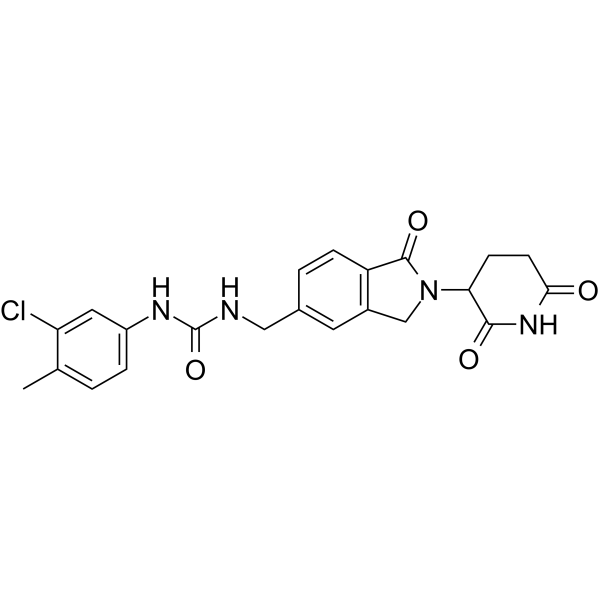
- Formula: C22H21ClN4O4
- Molecular Weight: 440.88
CC-885, a cereblon (CRBN) modulator, acts as a molecular glue degrader targeting GSPT1 with a Kd of 350 nM. CC-885 binds to CRBN to alter the substrate specificity of the CRL4 E3 ligase, promoting the ubiquitination and proteasomal degradation of GSPT1, BNIP3L, PLK1, CDK4, IKZF1/3, GSPT2, WIZ, CHD7, GOLM1, CK1α and ETS1. CC-885 induces apoptosis, cell cycle arrest, transcriptional downregulation and antiproliferation in cancer cells. CC-885 is applicable to research related to relapsed/refractory acute myeloid leukemia, MYC-driven tumors, metastatic castration-resistant prostate cancer, multiple myeloma, hepatocellular carcinoma, glioblastoma, VHL-deficient clear cell renal cell carcinoma and non-small cell lung cancer.
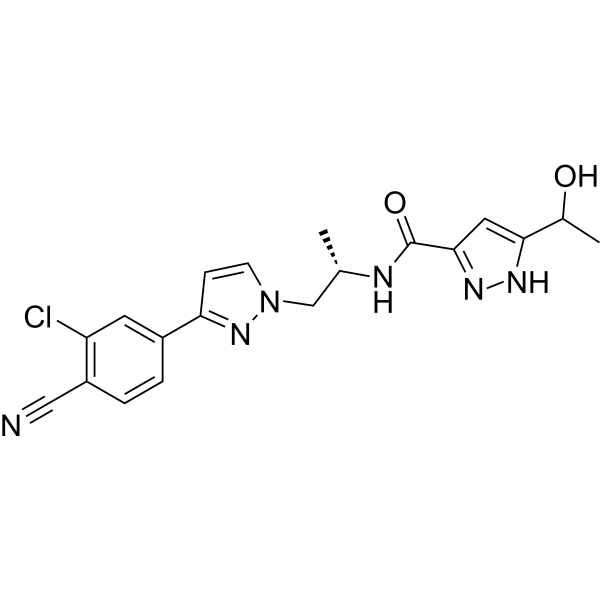
- Formula: C19H19ClN6O2
- Molecular Weight: 398.85
Darolutamide (ODM-201) is an orally active competitive androgen receptor (AR) antagonist. Darolutamide has a Ki of 11 nM for rat wild-type AR (wtAR) and IC50 of 26 nM for human wild-type AR (hAR)-mediated transcriptional activation. Darolutamide inhibits testosterone-induced AR nuclear translocation and transcriptional activation. Darolutamide exerts selective effects on AR-positive cells by inhibiting AR-dependent signaling pathways, and its active metabolite retains full antagonistic activity against AR mutants. Darolutamide can be used for the research of prostate cancer, including androgen receptor-dependent prostate cancer.
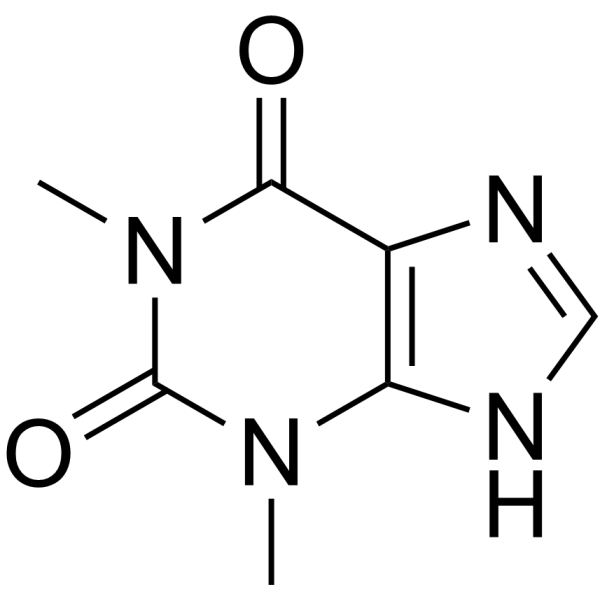
- Formula: C7H8N4O2
- Molecular Weight: 180.17
Theophylline (1,3-Dimethylxanthine) is a potent phosphodiesterase (PDE) inhibitor, adenosine receptor antagonist, and histone deacetylase (HDAC) activator. Theophylline (1,3-Dimethylxanthine) inhibits PDE3 activity to relax airway smooth muscle. Theophylline (1,3-Dimethylxanthine) has anti-inflammatory activity by increase IL-10 and inhibit NF-κB into the nucleus. Theophylline (1,3-Dimethylxanthine) induces apoptosis. Theophylline (1,3-Dimethylxanthine) can be used for asthma and chronic obstructive pulmonary disease (COPD) research.
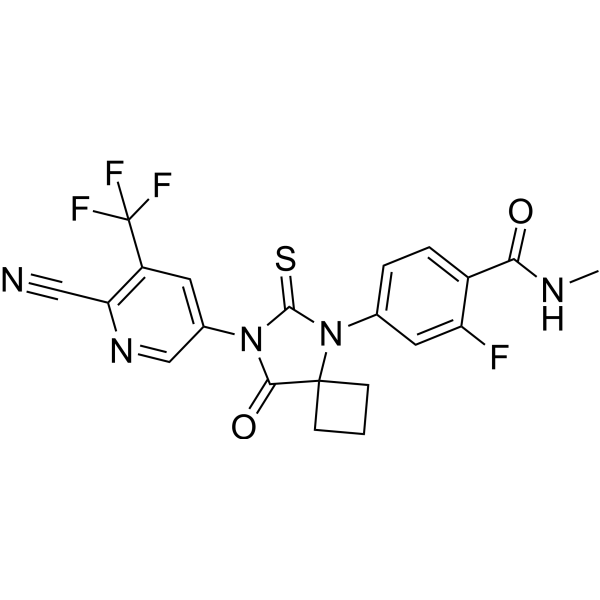
- Formula: C21H15F4N5O2S
- Molecular Weight: 477.43
Apalutamide (ARN-509) is a potent and competitive androgen receptor (AR) antagonist, binding AR with an IC50 of 16 nM.
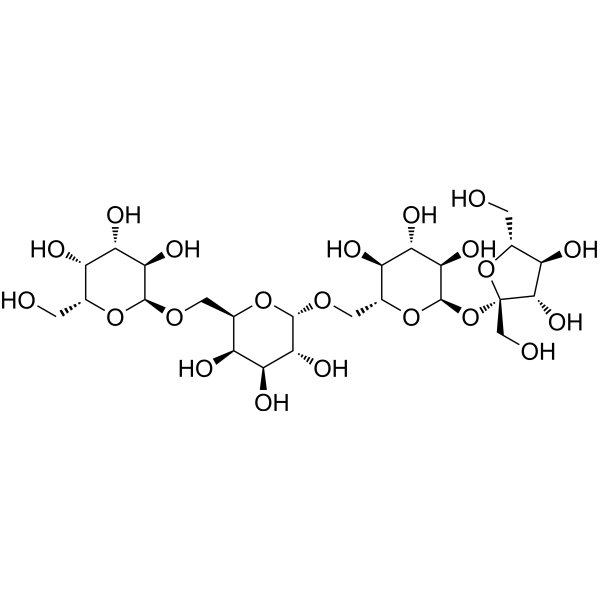
- Formula: C24H42O21
- Molecular Weight: 666.58
Stachyose, a kind of oligosaccharides, act as a hypoglycemic agent.
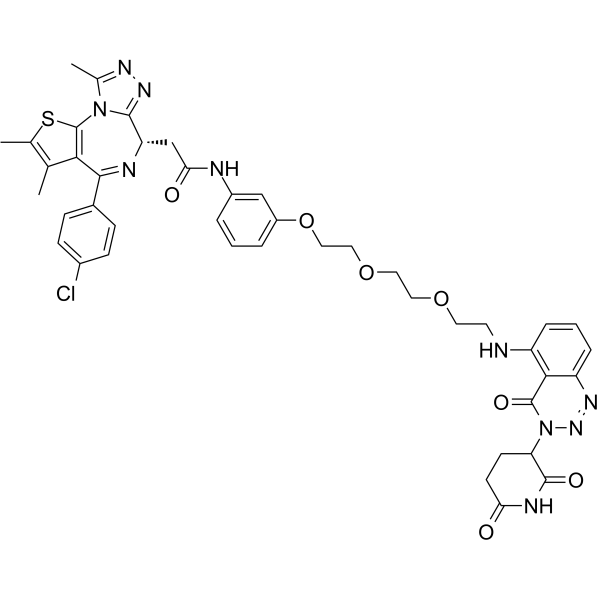
- Formula: C43H43ClN10O7S
- Molecular Weight: 879.38
TD-428 is a BRD4/BET PROTAC degrader. TD-428 induces the degradation of BRD4 and BET proteins via the ubiquitin-proteasome pathway by recruiting cereblon, thereby inhibiting C-MYC transcription and cancer cell proliferation. TD-428 can be used in the research of metastatic castration-resistant prostate cancer and prostate cancer.

- Molecular Weight: 173.555 kDa
Xaluritamig (AMG-509) is a bispecific T cell engager and cytolytic agent with a Kd of 27.6 nM for human CD3ε. Xaluritamig binds to CD3ε via an anti-CD3 single-chain variable fragment (scFv) domain, and to STEAP1 via a bispecific anti-STEAP1 antigen-binding fragment (Fab) domain, thereby recruiting and activating T cells and forming a bridge between T cells and STEAP1-expressing cancer cells. Xaluritamig induces T cell-mediated redirected cytotoxicity, tumor cell lysis, cytokine release, CD8+ T cell activation and expansion, as well as tumor stasis or regression. Xaluritamig contains an Fc domain with no effector function, which prolongs serum half-life, exhibits only minimal activity against cells with low STEAP1 expression and normal cells, and shows extremely low target-related off-tumor toxicity in cynomolgus monkeys. Xaluritamig is used in STEAP1×CD3 XmAb 2+1 immunotherapy and in research on metastatic castration-resistant prostate cancer and Ewing sarcoma.

- Molecular Weight: 145.5 kDa
Vandortuzumab (DSTP-3086S Antibody; RG-7450 Antibody) is a humanized anti-STEAP1 IgG1 antibody and antimitotic agent that can be conjugated with MMAE (HY-15162) to form the antibody-drug conjugate (ADC) Vandortuzumab vedotin. Vandortuzumab vedotin specifically binds to STEAP1 and drives internalization of the complex, releasing the MMAE (HY-15162) payload intracellularly. After binding to tubulin, MMAE inhibits cell division and induces cell death. Vandortuzumab exhibits antitumor activity in preclinical xenograft models of prostate cancer and can be used for research related to metastatic castration-resistant prostate cancer (mCRPC).

- Molecular Weight: 124.81 kDa
Pasritamig (JNJ-78278343; KLCB-245) is a bispecific T-cell engager (BiTE) that targets the complex of human kallikrein KLK2 and CD3 receptor. Pasritamig redirects the cytotoxicity of T cells to KLK2-expressing tumor cells and induces T cell-mediated lysis of KLK2-expressing prostate cancer cells. Administered via subcutaneous injection, subcutaneous infusion or intravenous infusion, Pasritamig exhibits antitumor activity against metastatic castration-resistant prostate cancer. Pasritamig has a safety profile with an extremely low incidence of cytokine release syndrome and can be safely administered in an outpatient setting. Pasritamig is applicable to the research of metastatic castration-resistant prostate cancer.
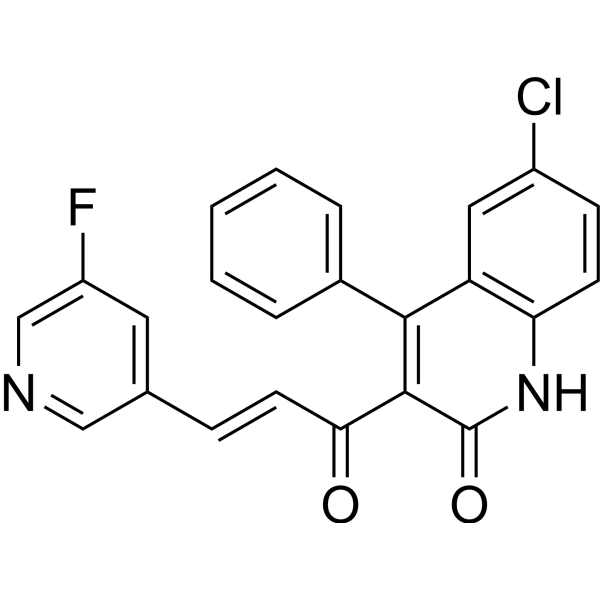
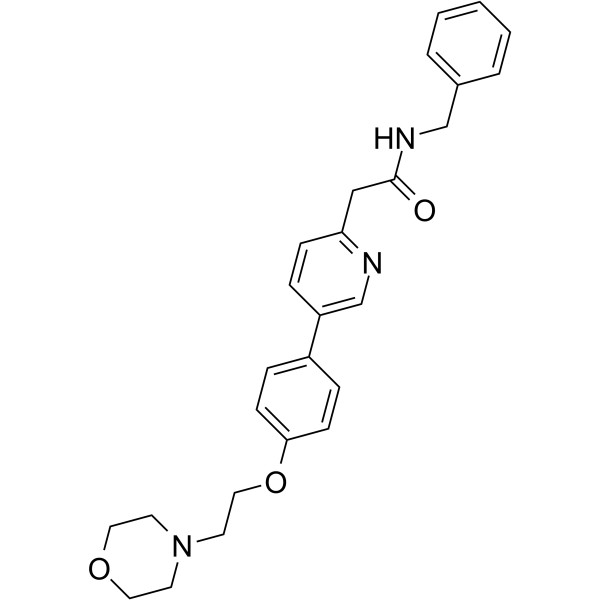
- Formula: C23H14ClFN2O2
- Molecular Weight: 404.82
SBI-0640756 (SBI-756) is an inhibitor of eIF4G1 and disrupts the eIF4F complex.
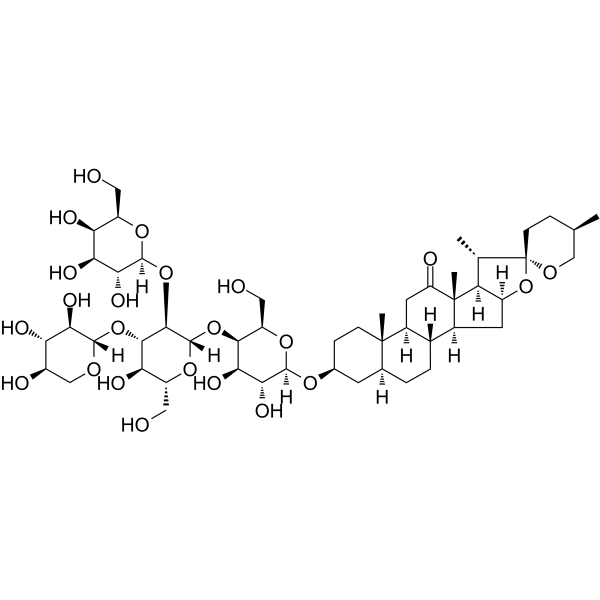
- Formula: C50H80O23
- Molecular Weight: 1049.16
Terrestrosin D is an orally active apoptosis inducer. Terrestrosin D induces cell cycle arrest at the G1 and S phases, reduces mitochondrial membrane potential, and inhibits the growth of cancer cells and endothelial cells. Terrestrosin D is studied in castration-resistant prostate cancer and pulmonary fibrosis.

- Molecular Weight: 145.5 kDa
YS5 (FOR 46/FG-3246 antibody) is an anti-CD46 antibody. YS5 can serve as an ADC Antibody to synthesize the ADC FOR 46/FG-3246. YS5 is applicable to research related to metastatic castration-resistant prostate cancer.

- Molecular Weight: 146.24 kDa
Peligifatamab is a PSMA-targeted α-radioimmunoconjugate with an EC50 of 1.2 nM against human targets. Peligifatamab induces DNA damage, DNA double-strand breaks, cell cycle arrest and apoptosis (Apoptosis) in PSMA-positive prostate cancer cells. Peligifatamab reduces cell viability in a manner dependent on cellular PSMA expression levels. Peligifatamab inhibits tumor growth and tumor-induced abnormal bone growth in prostate cancer bone metastasis models. Peligifatamab exhibits antitumor efficacy in subcutaneous prostate cancer models and xenograft models. Peligifatamab can be used for the research of metastatic castration-resistant prostate cancer.

- Formula: C40H41N5O7
- Molecular Weight: 703.78
PROTAC AR Degrader-8 is the PROTAC degrader for androgen receptor (AR) that degrades AR-FL with DC50s of 0.018 μM and 0.14 μM in 22Rv1 cell and LNCaP cell, degrades AR-V7 with DC50 of 0.026 μM in 22Rv1 cell. PROTAC AR Degrader-8 inhibits the proliferation of cancer cell 22Rv1 and LNCaP with IC50 values of 0.038 μM and 1.11 μM. PROTAC AR Degrader-8 arrests cell cycle at G2/M phase, induces apoptosis in 22Rv1 cell. PROTAC AR Degrader-8 exhibits anticancer efficacy in mouse and zebrafish model. PROTAC AR Degrader-8 can be used for the research of prostate cancer, castration-resistant prostate cancer.
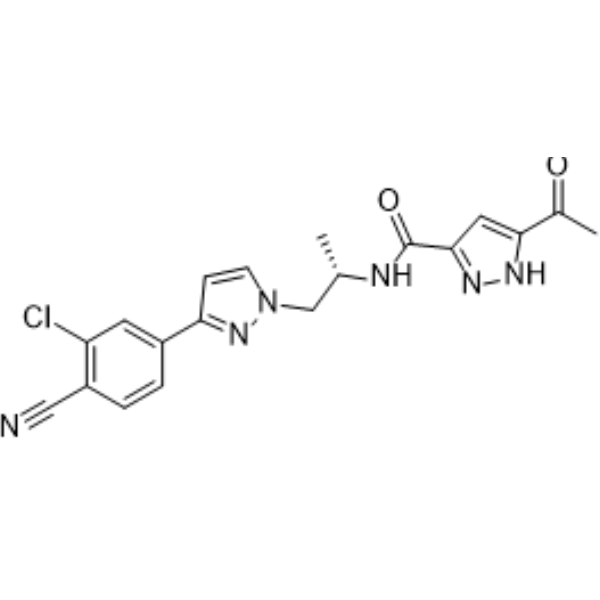
- Formula: C19H17ClN6O2
- Molecular Weight: 396.83
Ketodarolutamide (ORM-15341) is a potent, high-affinity nonsteroidal competitive full antagonist of androgen receptor (AR). Ketodarolutamide displays a Ki value of 8 nM for rat wild-type AR and an IC50 value of 38 nM in AR-HEK293 cells. Ketodarolutamide inhibits testosterone-induced nuclear translocation of the AR and antagonizes both overexpressed and mutant ARs. Ketodarolutamide specifically suppresses the proliferation of AR-dependent prostate cancer cells and exhibits antitumor activity in models of castration-resistant prostate cancer (CRPC) . Ketodarolutamide is suitable for the mechanistic and therapeutic research of prostate cancer.

- Formula: C11H12O3
- Molecular Weight: 192.21
Dehydrozingerone is a ginger-derived component and cyclin D1 inhibitor that downregulates cyclin D1 expression and induces cell cycle G1 phase arrest. Dehydrozingerone reduces the proliferative capacity of castration-resistant prostate cancer cells under in vitro conditions. Dehydrozingerone reduces subcutaneous tumor growth by inhibiting cell proliferation and angiogenesis. Dehydrozingerone exerts antibacterial and antifungal activities via its α,β-unsaturated carbonyl conjugated system. Dehydrozingerone can be used in studies related to castration-resistant prostate cancer, bacterial infections, and food spoilage fungal infections.
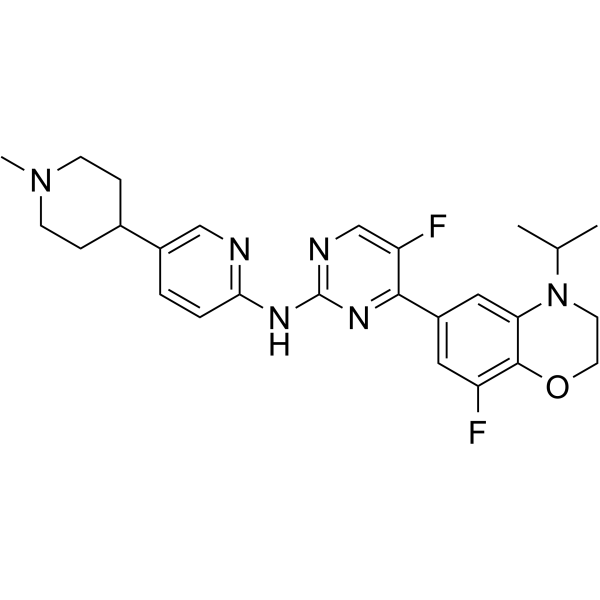
- Formula: C26H30F2N6O
- Molecular Weight: 480.55
Inixaciclib (NUV-422) is a blood-brain barrier-penetrant inhibitor of CDK2, CDK4 and CDK6. Inixaciclib inhibits cancer cell growth. Inixaciclib induces anti-tumor activity in xenograft models of glioblastoma, CDK4/CDK6 inhibitor-resistant HR+ HER2- metastatic breast cancer, and anti-androgen-resistant prostate cancer. Inixaciclib can be used for the research of relapsed or metastatic castration-resistant prostate cancer.
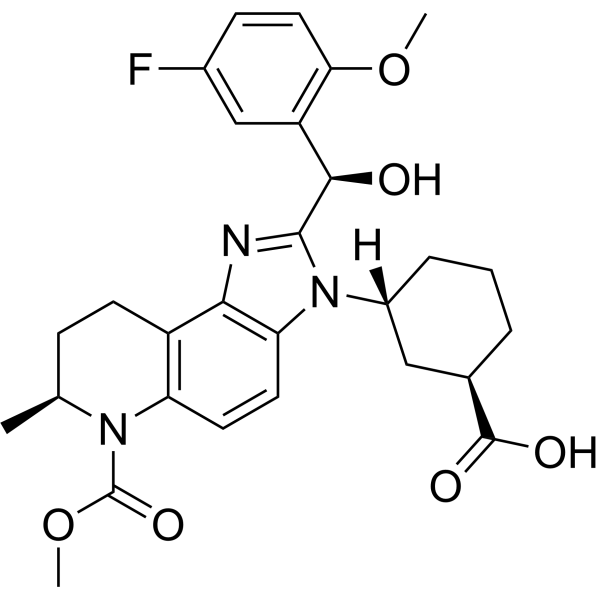
- Formula: C28H32FN3O6
- Molecular Weight: 525.57
Pocenbrodib is a P300/CBP inhibitor. Pocenbrodib blocks the function of P300/CBP and inhibits the acetylation of histones and non-histone proteins. Pocenbrodib may be used in research related to castration-resistant prostate cancer and other cancers.



