



Pelgifatamab

Based on 1 Customer Validation
Peligifatamab is a PSMA-targeted α-radioimmunoconjugate with an EC50 of 1.2 nM against human targets. Peligifatamab induces DNA damage, DNA double-strand breaks, cell cycle arrest and apoptosis (Apoptosis) in PSMA-positive prostate cancer cells. Peligifatamab reduces cell viability in a manner dependent on cellular PSMA expression levels. Peligifatamab inhibits tumor growth and tumor-induced abnormal bone growth in prostate cancer bone metastasis models. Peligifatamab exhibits antitumor efficacy in subcutaneous prostate cancer models and xenograft models. Peligifatamab can be used for the research of metastatic castration-resistant prostate cancer.
For research use only. We do not sell to patients.
- Purity : 99.884%
- CAS No.: 2414550-93-7
- Molecular Weight:146.24 kDa
-
Storage:
Please store the product under the recommended conditions in the Certificate of Analysis.


To place orders, for customer services and technical support, please contact: MedChemExpress USA
Tel: 609-228-6898 E-mail: [email protected] [email protected]


-
 Biological Activity
-
Chemical Information
- Protocols
- Purity & Documentation
- References
-
 Help & FAQs





Biological Activity
Description
Isotype
Human IgG1 kappa
Recommend Isotype Controls
Species Reactivity
Human
IC50 & Target
FOLH1/PSMA
In Vivo
Peligifatamab (100-500 kBq/kg; i.v.; single dose) exhibits potent antitumor efficacy in androgen-independent and castration-resistant subcutaneous prostate cancer xenografts, with a T/C ratio as low as 0.09 at a single dose of 500 kBq/kg in MDA-PCa-2b xenografts[1].
Peligifatamab (75-500 kBq/kg; 4×75 kBq/kg; 4×125 kBq/kg; 2×150 kBq/kg; 2×250 kBq/kg; i.v.; single dose; weekly; biweekly) induces potent antitumor efficacy in xenografts of prostate cancer, with a T/C ratio as low as 0.01 in ST1273 xenografts when a single dose of 500 kBq/kg is administered[1].
Peligifatamab (100-200 kBq/kg; i.v.; single dose) potently inhibits tumor growth and tumor-induced bone tissue changes in an intratibial prostate cancer bone metastasis model, with a single dose of 100 kBq/kg resulting in a T/C ratio of 0.03[1].
Peligifatamab (500 kBq/kg; total antibody 0.14-5 mg/kg; i.v.; single dose) maintains potent antitumor efficacy in the 22Rv1 xenograft model when the total antibody dose ranges from 0.14 to 1.5 mg/kg, whereas the efficacy decreases at a total antibody dose of 5 mg/kg[1].
MedChemExpress (MCE) has not independently confirmed the accuracy of these methods. They are for reference only.
-
Animal Model:CB17-Scid (male)[1]
-
Dosage:75 kBq/kg ; 150 kBq/kg ; 300 kBq/kg; 4 × 75 kBq/kg; 2 × 150 kBq
-
Administration:i.v.; single dose; weekly for 4 doses; biweekly for 2 doses
-
Result:Achieved T/C ratios of 0.51, 0.42, and 0.31 with single doses of 75, 150, and 300 kBq/kg, respectively.
Resulted in 7 of 10 mice showing partial response or stable disease with 300 kBq/kg single dose.
Achieved T/C ratios of 0.07 and 0.12 with fractionated doses of 4 × 75 kBq/kg and 2 × 150 kBq/kg, respectively.
-
Animal Model:athymic nude (male); NMRI Nude (male)[1]
-
Dosage:100 kBq/kg (0.14 mg/kg total antibody); 250 kBq/kg (0.14 mg/kg total antibody); 500 kBq/kg (0.14 mg/kg total antibody)
-
Administration:i.v.; single dose
-
Result:Achieved T/C ratios of 0.33, 0.18, and 0.09 with single doses of 100, 250, and 500 kBq/kg in MDA-PCa-2b xenografts, respectively.
Achieved T/C ratios of 0.54, 0.37, and 0.19 with single doses of 100, 250, and 500 kBq/kg in 22Rv1 xenografts, respectively.
Achieved T/C ratios of 0.27, 0.47, and 0.15 with single doses of 100, 250, and 500 kBq/kg in C4-2 xenografts, respectively.
Induced statistically significant tumor growth inhibition at ≥250 kBq/kg in MDA-PCa-2b and 22Rv1 models, and starting at 100 kBq/kg in the C4-2 model.
-
Animal Model:NMRI nude (female); CB17-Scid (male)[1]
-
Dosage:125 kBq/kg (0.14 mg/kg total antibody); 250 kBq/kg (0.14 mg/kg total antibody); 500 kBq/kg (0.14 mg/kg total antibody); 4 × 125 kBq/kg (0.14 mg/kg total antibody per dose); 2 × 250 kBq/kg (0.14 mg/kg total antibody per dose); 75 kBq/kg (0.14 mg/kg total antibody); 150 kBq/kg (0.14 mg/kg total antibody); 300 kBq/kg (0.14 mg/kg total antibody); 4 × 75 kBq/kg (0.14 mg/kg total antibody per dose); 2 × 150 kBq/kg (0.14 mg/kg total antibody per dose)
-
Administration:i.v.; single dose; weekly for 4 doses; biweekly for 2 doses
-
Result:Achieved T/C ratios of 0.3, 0.05, and 0.01 with single doses of 125, 250, and 500 kBq/kg in ST1273 xenografts, respectively.
Resulted in 5 partial responses and 4 complete responses out of 10 mice with 500 kBq/kg single dose in ST1273 xenografts.
Reduced serum PSA levels effectively with 250 and 500 kBq/kg single doses in ST1273 xenografts.
Achieved T/C ratios of 0.13 and 0.04 with fractionated doses of 4 × 125 kBq/kg and 2 × 250 kBq/kg in ST1273 xenografts, respectively.
Achieved T/C ratios of 0.39, 0.28, and 0.07 with single doses of 75, 150, and 300 kBq/kg in KUCaP-1 xenografts, respectively.
Resulted in 2 stable disease and 6 partial responses out of 10 mice with 300 kBq/kg single dose in KUCaP-1 xenografts.
Achieved T/C ratios of 0.24 and 0.25 with fractionated doses of 4 × 75 kBq/kg and 2 × 150 kBq/kg in KUCaP-1 xenografts, respectively.
Achieved T/C ratios of 0.58 and 0.27 with single doses of 150 and 300 kBq/kg in LuCaP 86.2 xenografts, respectively.
Resulted in 5 stable disease, 1 partial response, and 1 complete response out of 10 mice with 300 kBq/kg single dose in LuCaP 86.2 xenografts.
-
Animal Model:NOD.scid (male)[1]
-
Dosage:100 kBq/kg (0.14 mg/kg total antibody); 200 kBq/kg (0.14 mg/kg total antibody)
-
Administration:i.v.; single dose
-
Result:Reduced LNCaP-luc tumor burden in bone with T/C ratios of 0.03 and 0.14 based on bioluminescence with single doses of 100 and 200 kBq/kg, respectively.
Lowered serum PSA levels with single doses of 100 and 200 kBq/kg.
Significantly inhibited the total area of tumor-induced bone changes compared to vehicle controls with single doses of 100 and 200 kBq/kg.
-
Animal Model:NMRI Nude (male)[1]
-
Dosage:500 kBq/kg (0.14 mg/kg total antibody); 500 kBq/kg (0.75 mg/kg total antibody); 500 kBq/kg (1.5 mg/kg total antibody); 500 kBq/kg (5 mg/kg total antibody)
-
Administration:i.v.; single dose
-
Result:Achieved T/C ratios of 0.13-0.31 with single 500 kBq/kg doses at total antibody doses of 0.14, 0.75, and 1.5 mg/kg.
Resulted in reduced efficacy with a T/C ratio of 0.84 with single 500 kBq/kg dose at 5 mg/kg total antibody dose.
- RNA extraction experimental
- Mammalian live/dead viability and cytotoxicity staining
- Annexin V plus membrane-impermeant dye apoptosis staining
- BrdU Incorporation Assay
- Patient-Derived Orthotopic Xenograft (PDOX)
- Protocol for Cell Cycle
- CCK-8/WST-8 Cell Proliferation Assay
- Cell Viability Determination by MTT Colorimetric Assay
- How to Select the Route of Administration for Mammals
- Detection of Apoptosis
- TUNEL staining for apoptotic DNA fragmentation
- Flow cytometric DNA-content cell-cycle staining
- Cell Cytotoxicity Assay
- Patient-Derived Xenograft (PDX)
- Apoptosis Solutions
- Splenic/Portal-Vein Liver Metastasis Xenograft
- Intracardiac/Intra-Arterial Metastasis Xenograft
- MTT Cell Proliferation Assay
- Subcutaneous Cell-Line-Derived Xenograft
- Genotoxicity/Mutagenicity Study
- Orthotopic Cell-Line Xenograft
- Intraperitoneal/Peritoneal Dissemination Xenograft
Gene ID
Accession
Conjugated
Unconjugated
Reconsititution
The product can be reconstituted/diluted with sterile PBS or saline.
Format
-
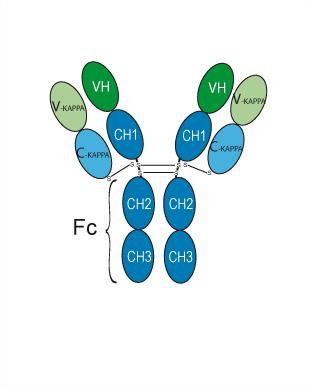
Human IgG1 kappa
Application
ELISA, FACS, Functional assay
Verified Bioactivity
-
 Immobilized PSMA Protein, Human (HEK293, N-His, HY-P70548A) can bind Pelgifatamab. The EC50 for this effect is 107.5 ng/mL.


Chemical Information
-
CAS No. 2414550-93-7
-
Appearance Liquid
-
Molecular Weight 146.24 kDa
-
Color Colorless to light yellow
-
SMILES
[Pelgifatamab]
-
Synonyms
BAY-2315497; PSMA-TTC
-
Shipping
Shipping with dry ice.
-
Formulation
Please refer to the lot-specific COA for specific buffer information.
-
Storage
Please store the product under the recommended conditions in the Certificate of Analysis.


Purity & Documentation
-
Data Sheet (265 KB)
-
SDS (252 KB)
- English - EN (252 KB)
- Français - FR (252 KB)
- Deutsch - DE (252 KB)
- Norwegian - NO (252 KB)
- Español - ES (252 KB)
- Swedish - SV (252 KB)
- Italian - IT (252 KB)
- Korean - KR (252 KB)
- Portuguese - PT (252 KB)
-
Inhibitory Antibodies User Guide (603 KB)
References

Calculators
Concentration (start) × Volume (start) = Concentration (final) × Volume (final)


Pelgifatamab Related Classifications
HY-P9992 Related Classifications
 Powered by Bioz