



Pasritamig

Based on 1 Customer Validation
Pasritamig (JNJ-78278343; KLCB-245) is a bispecific T-cell engager (BiTE) that targets the complex of human kallikrein KLK2 and CD3 receptor. Pasritamig redirects the cytotoxicity of T cells to KLK2-expressing tumor cells and induces T cell-mediated lysis of KLK2-expressing prostate cancer cells. Administered via subcutaneous injection, subcutaneous infusion or intravenous infusion, Pasritamig exhibits antitumor activity against metastatic castration-resistant prostate cancer. Pasritamig has a safety profile with an extremely low incidence of cytokine release syndrome and can be safely administered in an outpatient setting. Pasritamig is applicable to the research of metastatic castration-resistant prostate cancer.
For research use only. We do not sell to patients.
- Purity : 99.97%
- CAS No.: 2921676-04-0
- Molecular Weight:124.81 kDa
-
Storage:
Please store the product under the recommended conditions in the Certificate of Analysis.


To place orders, for customer services and technical support, please contact: MedChemExpress USA
Tel: 609-228-6898 E-mail: [email protected] [email protected]


-
 Biological Activity
-
Chemical Information
- Protocols
- Purity & Documentation
- References
-
 Help & FAQs








Biological Activity
Description
Isotype
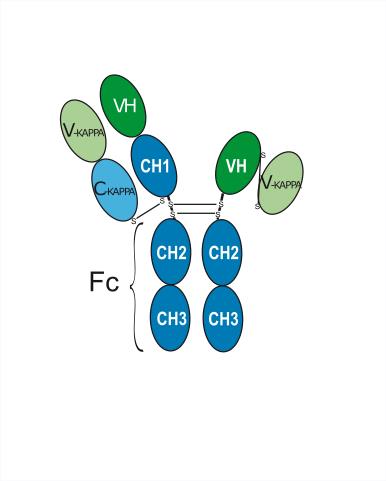
(H-gamma1_L-kappa)_scFvkh-G1(h-CH2-CH3)
Recommend Isotype Controls
Species Reactivity
Human
IC50 & Target
KLK2 & CD3E
In Vivo
MedChemExpress (MCE) has not independently confirmed the accuracy of these methods. They are for reference only.
- How to Select the Route of Administration for Mammals
- Cell Cytotoxicity Assay
- Mammalian live/dead viability and cytotoxicity staining
- Research Protocol for Inflammation-related Diseases
- Subcutaneous Cell-Line-Derived Xenograft
- Research Protocol for Cancer Immunology
- Cell Viability Determination by MTT Colorimetric Assay
Gene ID
Accession
Conjugated
Unconjugated
Reconsititution
The product can be reconstituted/diluted with sterile PBS or saline.
Format
-
G1-kappa_scFv-h-CH2-CH3
Application
ELISA, FACS, Functional assay
Verified Bioactivity
-
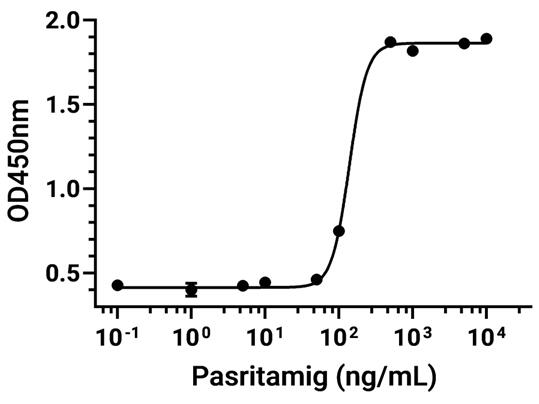
 Immobilized Kallikrein-2 Protein, Human (HEK293, His, HY-P70317) can bind Pasritamig. The EC50 for this effect is 53.53 ng/mL.
 -
 Immobilized CD3 epsilon Protein, Human (HEK293, His,HY-P70506) can bind Pasritamig. The EC50 for this effect is 791.3 ng/mL.
 -
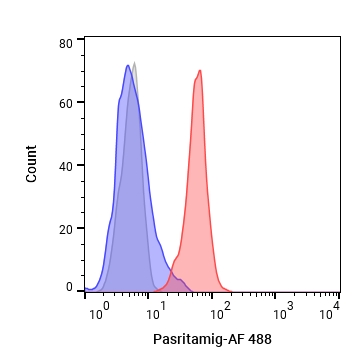 Flow cytometric analysis of 1X10⁶ Juakat cells with Pasritamig (HY-P991015, red). Cells were fixed with 4% paraformaldehyde. Then stained with the primary antibody at 1/200 dilution for an hour at 4℃. AF 488-conjugated AffiniPure Goat Anti-Human IgG H&L (HY-P83776) was used as the secondary antibody at 1/1,000 dilution for 30 minutes at 4℃. Human IgG1 kappa (HY-P99001, blue) was used as the isotype control, cells without incubation with primary antibody were used as the unlabeled control (black).


Chemical Information
-
CAS No. 2921676-04-0
-
Appearance Liquid
-
Molecular Weight 124.81 kDa
-
Color Colorless to light yellow
-
SMILES
[Pasritamig]
-
Synonyms
JNJ-78278343; KLCB-245
-
Shipping
Shipping with dry ice.
-
Formulation
Please refer to the lot-specific COA for specific buffer information.
-
Storage
Please store the product under the recommended conditions in the Certificate of Analysis.


Purity & Documentation
-
Data Sheet (260 KB)
-
SDS (252 KB)
- English - EN (252 KB)
- Français - FR (252 KB)
- Deutsch - DE (252 KB)
- Norwegian - NO (252 KB)
- Español - ES (252 KB)
- Swedish - SV (252 KB)
- Italian - IT (252 KB)
- Korean - KR (252 KB)
- Portuguese - PT (252 KB)
-
Inhibitory Antibodies User Guide (603 KB)
References
[1]. Stein MN, et al. Pasritamig, a First-in-Class, Bispecific T-Cell Engager Targeting Human Kallikrein 2, in Metastatic Castration-Resistant Prostate Cancer: A Phase I Study. J Clin Oncol. 2025;43(22):2515-2526. [Content Brief]
[3]. Meng L, Yang Y, Mortazavi A, Zhang J. Emerging Immunotherapy Approaches for Treating Prostate Cancer. Int J Mol Sci. 2023 Sep 20;24(18):14347. [Content Brief]

Calculators
Concentration (start) × Volume (start) = Concentration (final) × Volume (final)


Pasritamig Related Classifications
HY-P991015 Related Classifications
 Powered by Bioz