



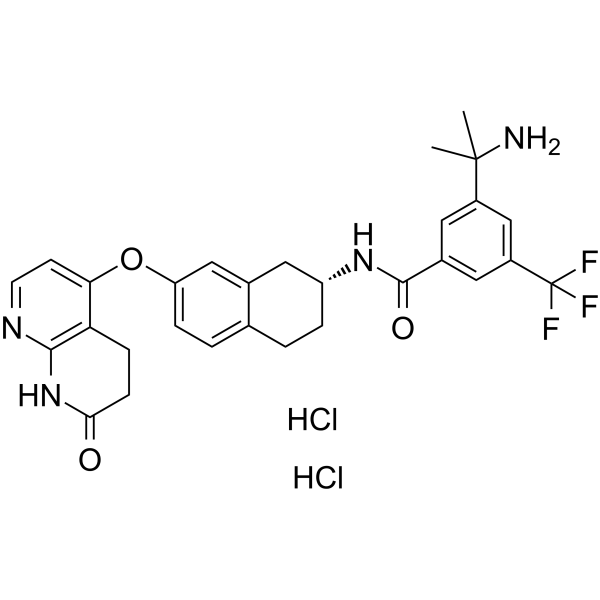
ML786 dihydrochloride
ML786 dihydrochloride is a potent and orally bioavailable Raf inhibitor, with IC50s of 2.1, 4.2, and 2.5 nM for V600EΔB-Raf, wt B-Raf, and C-Raf, respectively. ML786 dihydrochloride also inhibits Abl-1, DDR2, EPHA2, KDR, and RET (IC50=<0.5, 7.0, 11, 6.2, 0.8 nM). ML786 dihydrochloride can be used for the research of cancers.
For research use only. We do not sell to patients.
- CAS No.: 1237536-18-3
- Formula: C29H31Cl2F3N4O3
- Molecular Weight:611.48
-
Storage:
Please store the product under the recommended conditions in the Certificate of Analysis.

To place orders, for customer services and technical support, please contact: MedChemExpress USA
Tel: 609-228-6898 E-mail: [email protected] [email protected]


-
 Biological Activity
-
Chemical Information
- Protocols
- Purity & Documentation
- References
-
 Help & FAQs


-
HY-15605
EncorafenibBRAF Inhibitor -
HY-10966
SB-590885BRAF/c-Raf Inhibitor -
HY-14660
DabrafenibBRAF Inhibitor -
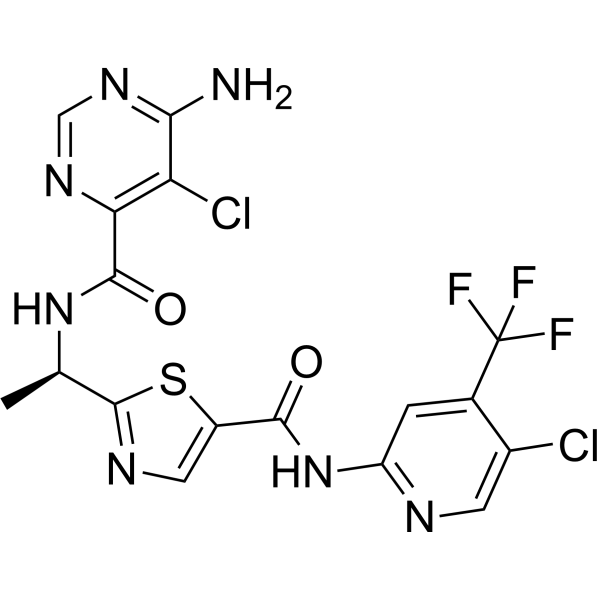
HY-15246
TovorafenibRaf Kinase Inhibitor -
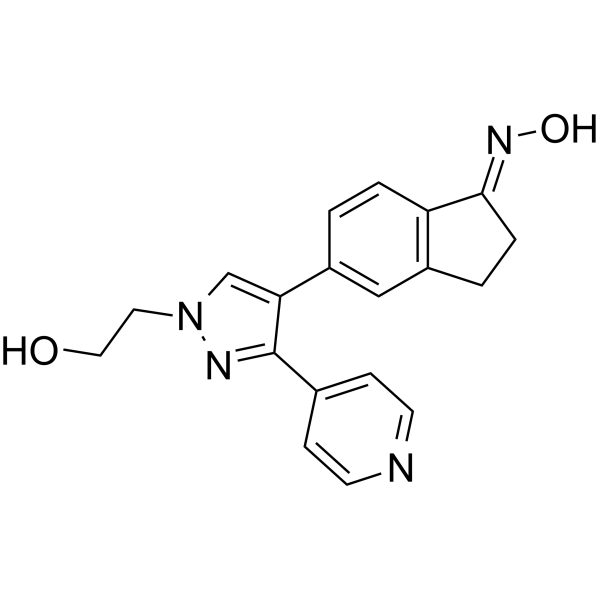
HY-50864
GDC-0879B-Raf Inhibitor -
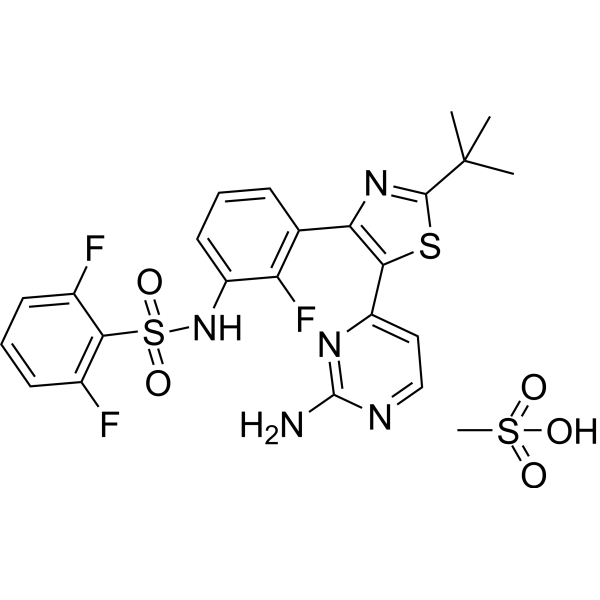
HY-14660A
Dabrafenib MesylateRaf Inhibitor -
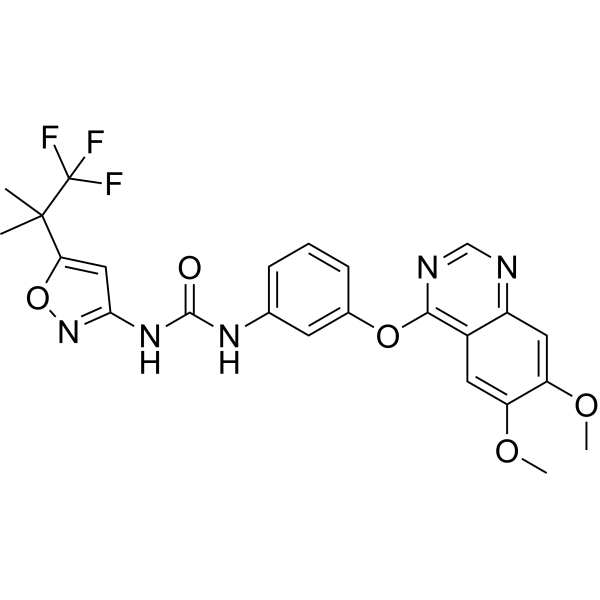
HY-15200
AgerafenibBRAF Inhibitor -
HY-10247
BRAF inhibitorB-Raf Inhibitor -
HY-10542
GW 5074Raf-1 Inhibitor -
HY-11004
AZ 628Apoptosis Inducer -
HY-51424
PLX-4720B-Raf Inhibitor -
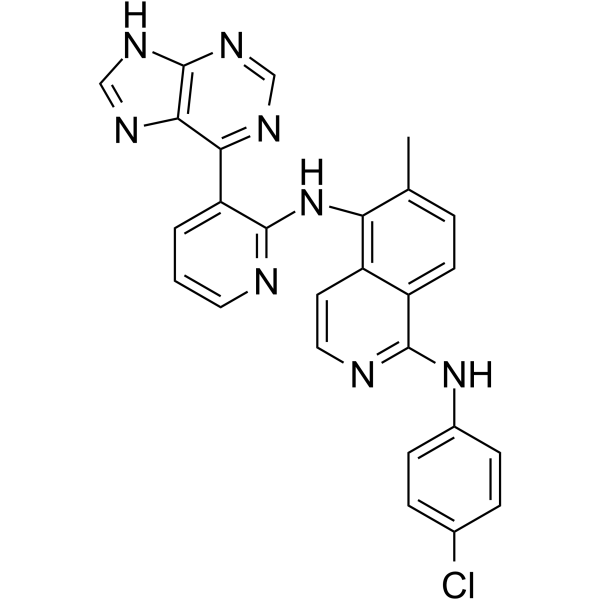
HY-14177
Raf inhibitor 1Raf Inhibitor
All VEGFR Isoforms
More

Biological Activity
Description
IC50 & Target
[1]|
RAF 2.1 nM (IC50) |
Abl1 <0.5 nM (IC50) |
DDR2 7.0 nM (IC50) |
KDR 6.2 nM (IC50) |
EPHA2 11 nM (IC50) |
RET 0.8 nM (IC50) |
Cellular Effect
|
Cell Line

|
Type | Value | Description | References |
|---|---|---|---|---|
| A-375 | IC50 |
56 nM
Compound: 6
|
Inhibition of B-Raf V600E mutant in human A375 cell line assessed as inhibition of ERK phosphorylation for 3 hrs with compound by ELISA
Inhibition of B-Raf V600E mutant in human A375 cell line assessed as inhibition of ERK phosphorylation for 3 hrs with compound by ELISA
|
[PMID: 26804230] |
In Vitro
In Vivo
ML786 (75 mg/kg; a single p.o.) strongly inhibits the Raf pathway in mice[1].
ML786 (10 mg/kg; p.o.) exhibits oral bioavailability of 85% and AUC1-24h of 35.9 μM·h in rats[1].
ML786 (1 mg/kg; i.v.) exhibits plasma clearance of 0.44 L/h/kg and Vss of 3.93 L/kg in rats[1].
MedChemExpress (MCE) has not independently confirmed the accuracy of these methods. They are for reference only.
-
Animal Model:Nude NCR (ν/ν) mice bearing A375 M xenografts[1]
-
Dosage:75 mg/kg
-
Administration:P.o. once daily for 21 days
-
Result:Induced partial regressions of the tumor xenografts.
Showed no indication of toxicity or weight loss.


Chemical Information
-
CAS No. 1237536-18-3
-
Molecular Weight 611.48
-
Formula C29H31Cl2F3N4O3
-
SMILES
O=C(CC1)NC2=C1C(OC3=CC=C(CC[C@@H](NC(C4=CC(C(F)(F)F)=CC(C(C)(C)N)=C4)=O)C5)C5=C3)=CC=N2.Cl.Cl
-
Shipping
Room temperature in continental US; may vary elsewhere.
-
Storage
Please store the product under the recommended conditions in the Certificate of Analysis.

Protocols
-
Cell Cytotoxicity Assay
Cytotoxicity assays are usually based on the assessment of cell membrane damage, which can also be indirectly detected by measuring cell viability. Detection methods include MTT assay, CKK-8 assay, LDH assay and ATP assay, etc.


Purity & Documentation
References

Calculators
Concentration (start) × Volume (start) = Concentration (final) × Volume (final)


ML786 dihydrochloride Related Classifications
HY-14979A Related Classifications
 Powered by Bioz