Search Result
Results for "
9003-11-6
" in MedChemExpress (MCE) Product Catalog:
-
- HY-D1005
-
|
PEG-PPG-PEG, 12600 (Average Mn)
|
Environmental Pollutants
LPL Receptor
|
Inflammation/Immunology
|
|
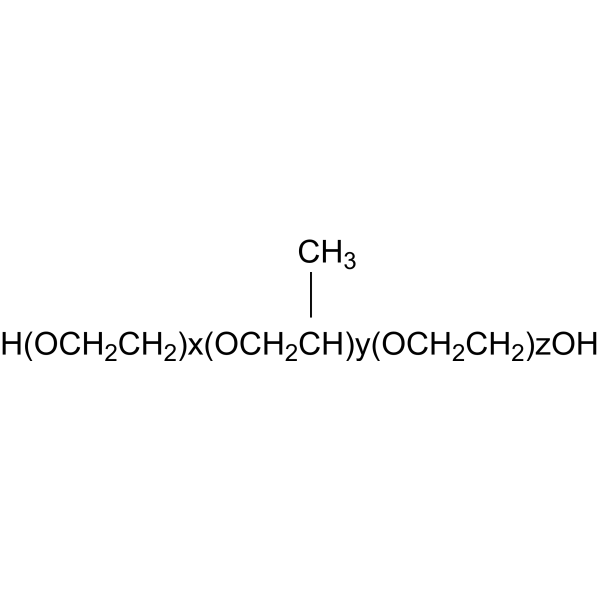
Poloxamer 407 (F127) is a nonionic surfactant that is 100% active and relatively non-toxic to cells at low concentrations, and frequently used with dye AM esters such as Indo-1 AM, Fura-2 AM, Calcein AM, Fluo-3 AM, Fluo-4 AM, Quest Fluo-8 AM and Quest Rhod-4 AM, etc. to improve their water solubility. Poloxamer 407 is also a lipoprotein lipase inhibitor .
|
-
-
- HY-D1005A
-
-
-
- HY-D1005A22
-
|
PEG-PPG-PEG, 14600 (Average)
|
Environmental Pollutants
Biochemical Assay Reagents
|
Others
|
|
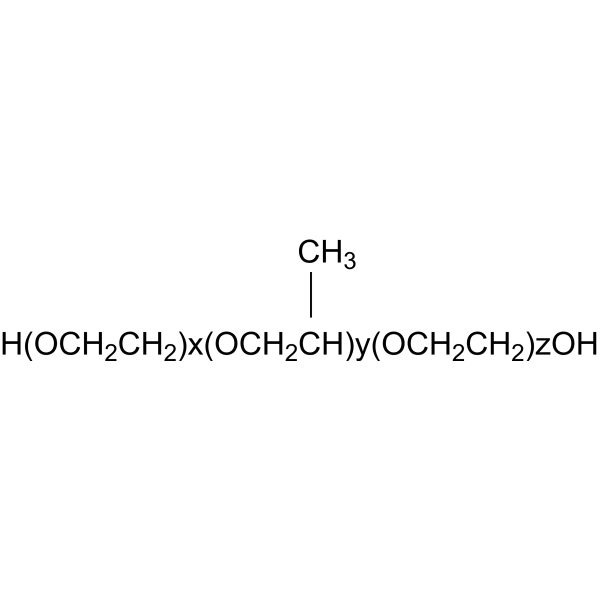
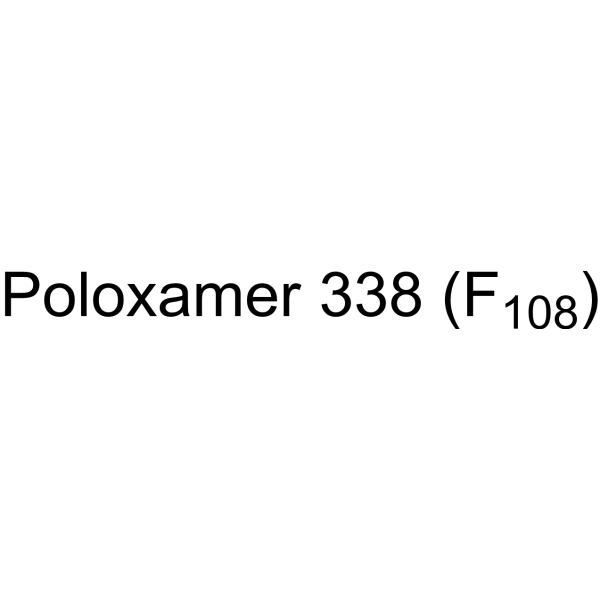
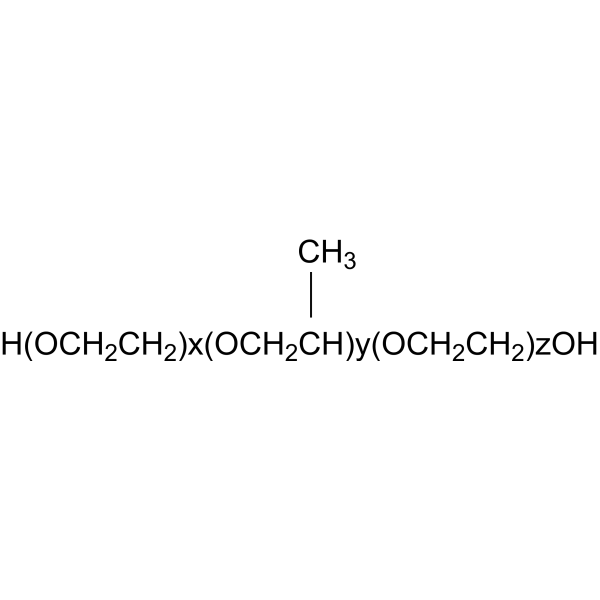
Poloxamer 338 F108 is block polymer of polyoxyethylene and polyoxypropylene with average molecular mass of 14600. Poloxamer 338 F108 reduces the aggregation of red blood cells, inhibits proliferation of human lymphocyte cell IIBR1. Poloxamer 338 F108 exhibits short-term and subchronic toxicity in rats .
|
-
-
- HY-D1005H
-
-
-
- HY-D1005A6
-
|
PEG-PPG-PEG, 2200 (Average)
|
Environmental Pollutants
Biochemical Assay Reagents
|
Others
|
|
Poloxamer 124 L44 is a block polymer of polyoxyethylene and polyoxypropylene and a hydrophobic surfactant. Poloxamer 124 L44 causes eye irritation and exhibits oral toxicity in albino rats with an LD50 of 5 g/kg. Poloxamer 124 L44 has reversible adverse effects on triglyceride and cholesterol transport in the lymphatic system of rats. Poloxamer 124 L44 can form thermoreversible hydrogels and is used as a food additive and as a drug delivery vehicle in cosmetics, pharmaceuticals, and tissue engineering[1][2][3].
|
-
-
- HY-D1005A8
-
|
PEG-PPG-PEG, 2000 (Average)
|
Environmental Pollutants
Biochemical Assay Reagents
Bacterial
P-glycoprotein
|
Infection
Cancer
|
|
Poloxamer 181 L61 is a block polymer of polyethylene oxide and polypropylene oxide with an average molecular weight of 2000. Poloxamer has the ability to inhibit P-gp. Poloxamer 181 has antimicrobial activity and can inhibit Mycobacterium avium. Poloxamer 181 can form a thermally reversible hydrogel and is used as a food additive, and as an agent delivery carrier in cosmetics, pharmaceuticals and tissue engineering .
|
-
-
- HY-D1005A10
-
|
PEG-PPG-PEG, 2900 (Average)
|
Environmental Pollutants
Biochemical Assay Reagents
Bacterial
P-glycoprotein
|
Infection
Inflammation/Immunology
|
|
Poloxamer 184 L64 is a block copolymer of polyethylene oxide and polypropylene oxide with an average molecular weight of 2900. Poloxamer has the ability to inhibit P-gp. Poloxamer 184 exhibits short-term skin toxicity, characterized by mild erythema and intradermal inflammatory reactions. Poloxamer 184 has antimicrobial activity, inhibiting 60% of Mycobacterium avium at a concentration of 1 mg/mL. Poloxamer 184 forms a thermoreversible hydrogel and is used as a food additive and as a drug delivery carrier in cosmetics and tissue engineering .
|
-
-
- HY-D1005A2
-
|
PEG-PPG-PEG, 1900 (Average)
|
Environmental Pollutants
Biochemical Assay Reagents
|
Others
|
|
Poloxamer 105 L35 is block polymer of polyoxyethylene and polyoxypropylene with average molecular mass of 1900 Da. Poloxamer 105 L35 forms thermoreversible hydrogel, that is utilized in food additives, drug delivery carriers in cosmetics, pharmaceutical ingredients and tissue engineering .
|
-
-
- HY-D1005A25
-
-
-
- HY-D1005A23
-
|
PEG-PPG-PEG, 4400 (Average)
|
Environmental Pollutants
Biochemical Assay Reagents
P-glycoprotein
|
Inflammation/Immunology
|
|
Poloxamer 401 L121 is a block copolymer of polyethylene oxide and polypropylene oxide with an average molecular weight of 4400. Poloxamer has the ability to inhibit P-gp. Poloxamer 401 inhibits multiagent resistance and adjuvant activity. Poloxamer 401 can be used as a cosmetic ingredient. Poloxamer 401 can be used in nanoparticle engineering (lymphatic targeting particles) research .
|
-
-
- HY-D1005B
-
|
PEG-PPG-PEG, 7700 (Average Mn)
|
Environmental Pollutants
|
Others
|
|
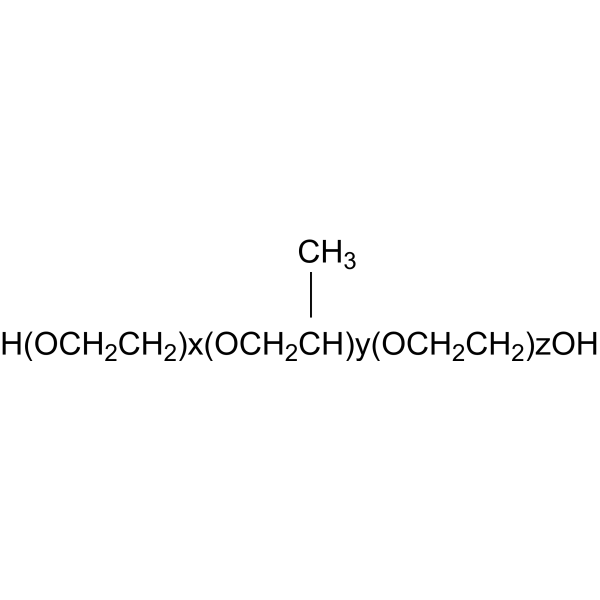
Poloxamer 237 (F87) (PEG-PPG-PEG, 7700 (Average Mn)) is an alcohol substance that acts as an oil-in-water emulsifier and solubilizer. Poloxamer 237 (F87) is used in the research of formulations such as contact lens care solutions and eye drops .
|
-
-
- HY-D1005F
-
|
PEG-PPG-PEG, 2500(Average Mn)
|
Environmental Pollutants
Biochemical Assay Reagents
|
Others
|
|
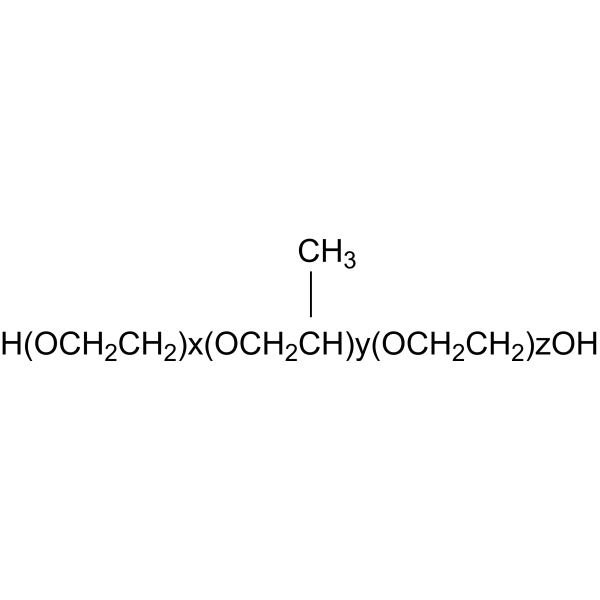
Poloxamer 182 (L62) can be used as an excipient, such as Emulsifier, solubilizer, lubricant, etc. Pharmaceutical excipients, or pharmaceutical auxiliaries, refer to other chemical substances used in the pharmaceutical process other than pharmaceutical ingredients. Pharmaceutical excipients generally refer to inactive ingredients in pharmaceutical preparations, which can improve the stability, solubility and processability of pharmaceutical preparations. Pharmaceutical excipients also affect the absorption, distribution, metabolism, and elimination (ADME) processes of co-administered drugs .
|
-
-
- HY-D1005I
-
|
|
Biochemical Assay Reagents
|
Others
|
|
Poloxamer L61 is a non-ionic triblock copolymer surfactant. Poloxamer L61 effectively achieves intracellular molecular delivery to cancer cells during photoacoustic molecular delivery, and maintains cell viability by promoting cell membrane resealing, thus avoiding irreversible damage caused by laser-induced membrane permeabilization. Poloxamer L61 is a key component of SP1017, a compound related to gene therapy, which regulates the interaction between DNA and extracellular matrix as well as cellular uptake, and significantly enhances the distribution and bioavailability of plasmid DNA in skeletal muscle. Poloxamer L61 can be used in studies on local or systemic therapeutic protein production .
|
-

-
- HY-D1005A5
-
|
PEG-PPG-PEG, 1850 (Average)
|
Biochemical Assay Reagents
|
Others
|
|
Poloxamer 123 (L43) (PEG-PPG-PEG, average molecular weight 1850) is a nonionic triblock copolymer of polyoxyethylene-polyoxypropylene-polyoxyethylene with an average molecular weight of 1850. Poloxamer 123 L43 can be used as a surfactant, emulsifier, and solubilizer in cosmetics .
|
-
-
- HY-D1005K
-
-

-
- HY-D1005A9
-
|
PEG-PPG-PEG, 2650 (Average)
|
Biochemical Assay Reagents
Bacterial
P-glycoprotein
|
Infection
|
|
Poloxamer 183 L63 is a block copolymer of polyoxyethylene and polyoxypropylene with an average molecular weight of 2000. Poloxamer has the ability to inhibit P-gp. Poloxamer 183 exhibits antimicrobial activity and can inhibit Mycobacterium avium. Poloxamer 183 can be used as a cosmetic ingredient .
|
-
-
- HY-D1005A4
-
|
PEG-PPG-PEG, 1630 (Average)
|
Biochemical Assay Reagents
|
Infection
|
|
Poloxamer 122 L42 (PEG-PPG-PEG, 1630 (Average)) is a synthetic nonionic triblock copolymer composed of polyoxyethylene-polyoxypropylene, with emulsifying and wetting properties. Poloxamer 122 L42 forms large spherical aggregates in aqueous solutions near its cloud point,. Poloxamer 122 L42 can form thermoreversible hydrogels, and is also used in research related to serving as a drug delivery carrier in the fields of food additives, cosmetics, pharmaceutical preparations and tissue engineering .
|
-
-
- HY-D1005A7
-
|
PEG-PPG-PEG, 2400 (Average)
|
Biochemical Assay Reagents
|
Others
|
|
Poloxamer 125 (L45) (PEG-PPG-PEG, 2400 (Average)) is a block polymer of polyoxyethylene and polyoxypropylene, belonging to water-soluble non-ionic biosurfactants with properties such as emulsification and wetting. Poloxamer 125 (L45) has thermosensitive characteristics and can form thermoreversible hydrogels in aqueous solutions, presenting a fluid state at room temperature and transforming into a viscous gel under body temperature conditions; when its concentration is higher than the critical micelle concentration, it can also self-assemble into micelles in aqueous systems. Poloxamer 125 (L45) enables controlled drug release, prolongs the local retention time of drugs, and is often used as a drug delivery carrier. Poloxamer 125 (L45) can be applied in the fields of cosmetics, biomedicine and tissue engineering .
|
-
-
- HY-D1005J
-
-

-
- HY-D1005L
-
-

-
- HY-D1005
-
|
PEG-PPG-PEG, 12600 (Average Mn)
|
生化学アッセイ試薬
|
|
Poloxamer 407 (F127) is a nonionic surfactant that is 100% active and relatively non-toxic to cells at low concentrations, and frequently used with dye AM esters such as Indo-1 AM, Fura-2 AM, Calcein AM, Fluo-3 AM, Fluo-4 AM, Quest Fluo-8 AM and Quest Rhod-4 AM, etc. to improve their water solubility. Poloxamer 407 is also a lipoprotein lipase inhibitor .
|
-
- HY-D1005A
-
|
PEG-PPG-PEG, 8800 (Average Mn)
|
生化学アッセイ試薬
|
|
Poloxamer 188 is a nonionic linear copolymer with surfactant properties. Poloxamer 188 exhibits anti-thrombotic, anti-inflammatory, and cytoprotective activities in various tissue injury models. Poloxamer 188 can be used for drug delivery .
|
-
- HY-D1005A22
-
|
PEG-PPG-PEG, 14600 (Average)
|
生化学アッセイ試薬
|
|
Poloxamer 338 F108 is block polymer of polyoxyethylene and polyoxypropylene with average molecular mass of 14600. Poloxamer 338 F108 reduces the aggregation of red blood cells, inhibits proliferation of human lymphocyte cell IIBR1. Poloxamer 338 F108 exhibits short-term and subchronic toxicity in rats .
|
-
- HY-D1005H
-
|
PEG-PPG-PEG, 8400(Average Mn)
|
生化学アッセイ試薬
|
|
Poloxamer 188 is a nonionic linear copolymer with surfactant properties. Poloxamer 188 exhibits anti-thrombotic, anti-inflammatory, and cytoprotective activities in various tissue injury models .
|
-
- HY-D1005A6
-
|
PEG-PPG-PEG, 2200 (Average)
|
生化学アッセイ試薬
|
|
Poloxamer 124 L44 is a block polymer of polyoxyethylene and polyoxypropylene and a hydrophobic surfactant. Poloxamer 124 L44 causes eye irritation and exhibits oral toxicity in albino rats with an LD50 of 5 g/kg. Poloxamer 124 L44 has reversible adverse effects on triglyceride and cholesterol transport in the lymphatic system of rats. Poloxamer 124 L44 can form thermoreversible hydrogels and is used as a food additive and as a drug delivery vehicle in cosmetics, pharmaceuticals, and tissue engineering[1][2][3].
|
-
- HY-D1005A8
-
|
PEG-PPG-PEG, 2000 (Average)
|
生化学アッセイ試薬
|
|
Poloxamer 181 L61 is a block polymer of polyethylene oxide and polypropylene oxide with an average molecular weight of 2000. Poloxamer has the ability to inhibit P-gp. Poloxamer 181 has antimicrobial activity and can inhibit Mycobacterium avium. Poloxamer 181 can form a thermally reversible hydrogel and is used as a food additive, and as an agent delivery carrier in cosmetics, pharmaceuticals and tissue engineering .
|
-
- HY-D1005A10
-
|
PEG-PPG-PEG, 2900 (Average)
|
生化学アッセイ試薬
|
|
Poloxamer 184 L64 is a block copolymer of polyethylene oxide and polypropylene oxide with an average molecular weight of 2900. Poloxamer has the ability to inhibit P-gp. Poloxamer 184 exhibits short-term skin toxicity, characterized by mild erythema and intradermal inflammatory reactions. Poloxamer 184 has antimicrobial activity, inhibiting 60% of Mycobacterium avium at a concentration of 1 mg/mL. Poloxamer 184 forms a thermoreversible hydrogel and is used as a food additive and as a drug delivery carrier in cosmetics and tissue engineering .
|
-
- HY-D1005A2
-
|
PEG-PPG-PEG, 1900 (Average)
|
生化学アッセイ試薬
|
|
Poloxamer 105 L35 is block polymer of polyoxyethylene and polyoxypropylene with average molecular mass of 1900 Da. Poloxamer 105 L35 forms thermoreversible hydrogel, that is utilized in food additives, drug delivery carriers in cosmetics, pharmaceutical ingredients and tissue engineering .
|
-
- HY-D1005A25
-
|
PEG-PPG-PEG, 5750 (Average)
|
生化学アッセイ試薬
|
|
Poloxamer 403 P123 is a block copolymer of polyoxyethylene and polyoxypropylene with an average molecular weight of 5750. Poloxamer has the ability to inhibit P-gp. Poloxamer 403 increases creatine kinase levels. Poloxamer 403 is myotoxic .
|
-
- HY-D1005A23
-
|
PEG-PPG-PEG, 4400 (Average)
|
生化学アッセイ試薬
|
|
Poloxamer 401 L121 is a block copolymer of polyethylene oxide and polypropylene oxide with an average molecular weight of 4400. Poloxamer has the ability to inhibit P-gp. Poloxamer 401 inhibits multiagent resistance and adjuvant activity. Poloxamer 401 can be used as a cosmetic ingredient. Poloxamer 401 can be used in nanoparticle engineering (lymphatic targeting particles) research .
|
-
- HY-D1005B
-
|
PEG-PPG-PEG, 7700 (Average Mn)
|
生化学アッセイ試薬
|
|
Poloxamer 237 (F87) (PEG-PPG-PEG, 7700 (Average Mn)) is an alcohol substance that acts as an oil-in-water emulsifier and solubilizer. Poloxamer 237 (F87) is used in the research of formulations such as contact lens care solutions and eye drops .
|
-
- HY-D1005F
-
|
PEG-PPG-PEG, 2500(Average Mn)
|
生化学アッセイ試薬
|
|
Poloxamer 182 (L62) can be used as an excipient, such as Emulsifier, solubilizer, lubricant, etc. Pharmaceutical excipients, or pharmaceutical auxiliaries, refer to other chemical substances used in the pharmaceutical process other than pharmaceutical ingredients. Pharmaceutical excipients generally refer to inactive ingredients in pharmaceutical preparations, which can improve the stability, solubility and processability of pharmaceutical preparations. Pharmaceutical excipients also affect the absorption, distribution, metabolism, and elimination (ADME) processes of co-administered drugs .
|
-
- HY-D1005I
-
|
|
生化学アッセイ試薬
|
|
Poloxamer L61 is a non-ionic triblock copolymer surfactant. Poloxamer L61 effectively achieves intracellular molecular delivery to cancer cells during photoacoustic molecular delivery, and maintains cell viability by promoting cell membrane resealing, thus avoiding irreversible damage caused by laser-induced membrane permeabilization. Poloxamer L61 is a key component of SP1017, a compound related to gene therapy, which regulates the interaction between DNA and extracellular matrix as well as cellular uptake, and significantly enhances the distribution and bioavailability of plasmid DNA in skeletal muscle. Poloxamer L61 can be used in studies on local or systemic therapeutic protein production .
|
-
- HY-D1005A5
-
|
PEG-PPG-PEG, 1850 (Average)
|
生化学アッセイ試薬
|
|
Poloxamer 123 (L43) (PEG-PPG-PEG, average molecular weight 1850) is a nonionic triblock copolymer of polyoxyethylene-polyoxypropylene-polyoxyethylene with an average molecular weight of 1850. Poloxamer 123 L43 can be used as a surfactant, emulsifier, and solubilizer in cosmetics .
|
-
- HY-D1005K
-
|
|
生化学アッセイ試薬
|
|
Poloxamer L64 is used to formulate low-foaming, high-detergent detergents and can also be used as a pesticide emulsifier .
|
-
- HY-D1005A9
-
|
PEG-PPG-PEG, 2650 (Average)
|
生化学アッセイ試薬
|
|
Poloxamer 183 L63 is a block copolymer of polyoxyethylene and polyoxypropylene with an average molecular weight of 2000. Poloxamer has the ability to inhibit P-gp. Poloxamer 183 exhibits antimicrobial activity and can inhibit Mycobacterium avium. Poloxamer 183 can be used as a cosmetic ingredient .
|
-
- HY-D1005A4
-
|
PEG-PPG-PEG, 1630 (Average)
|
生化学アッセイ試薬
|
|
Poloxamer 122 L42 (PEG-PPG-PEG, 1630 (Average)) is a synthetic nonionic triblock copolymer composed of polyoxyethylene-polyoxypropylene, with emulsifying and wetting properties. Poloxamer 122 L42 forms large spherical aggregates in aqueous solutions near its cloud point,. Poloxamer 122 L42 can form thermoreversible hydrogels, and is also used in research related to serving as a drug delivery carrier in the fields of food additives, cosmetics, pharmaceutical preparations and tissue engineering .
|
-
- HY-D1005A7
-
|
PEG-PPG-PEG, 2400 (Average)
|
生化学アッセイ試薬
|
|
Poloxamer 125 (L45) (PEG-PPG-PEG, 2400 (Average)) is a block polymer of polyoxyethylene and polyoxypropylene, belonging to water-soluble non-ionic biosurfactants with properties such as emulsification and wetting. Poloxamer 125 (L45) has thermosensitive characteristics and can form thermoreversible hydrogels in aqueous solutions, presenting a fluid state at room temperature and transforming into a viscous gel under body temperature conditions; when its concentration is higher than the critical micelle concentration, it can also self-assemble into micelles in aqueous systems. Poloxamer 125 (L45) enables controlled drug release, prolongs the local retention time of drugs, and is often used as a drug delivery carrier. Poloxamer 125 (L45) can be applied in the fields of cosmetics, biomedicine and tissue engineering .
|
-
- HY-D1005J
-
|
|
生化学アッセイ試薬
|
|
Poloxamer L62 is used to formulate low-foaming, high-detergent detergents and can also be used as a pesticide emulsifier .
|
-
- HY-D1005L
-
|
|
生化学アッセイ試薬
|
|
Poloxamer F38 can be used as an emulsifier and defoaming agent .
|
-
- HY-D1005
-
|
PEG-PPG-PEG, 12600 (Average Mn)
|
|
Emulsifiers
Solubilizing Agents
|
|
Poloxamer 407 (F127) is a nonionic surfactant that is 100% active and relatively non-toxic to cells at low concentrations, and frequently used with dye AM esters such as Indo-1 AM, Fura-2 AM, Calcein AM, Fluo-3 AM, Fluo-4 AM, Quest Fluo-8 AM and Quest Rhod-4 AM, etc. to improve their water solubility. Poloxamer 407 is also a lipoprotein lipase inhibitor .
|
-
- HY-D1005A
-
|
PEG-PPG-PEG, 8800 (Average Mn)
|
|
Emulsifiers
Solubilizing Agents
|
|
Poloxamer 188 is a nonionic linear copolymer with surfactant properties. Poloxamer 188 exhibits anti-thrombotic, anti-inflammatory, and cytoprotective activities in various tissue injury models. Poloxamer 188 can be used for drug delivery .
|
-
- HY-D1005H
-
|
PEG-PPG-PEG, 8400(Average Mn)
|
|
Polymers
|
|
Poloxamer 188 is a nonionic linear copolymer with surfactant properties. Poloxamer 188 exhibits anti-thrombotic, anti-inflammatory, and cytoprotective activities in various tissue injury models .
|
-
- HY-D1005F
-
|
PEG-PPG-PEG, 2500(Average Mn)
|
|
Emulsifiers
Surfactants
|
|
Poloxamer 182 (L62) can be used as an excipient, such as Emulsifier, solubilizer, lubricant, etc. Pharmaceutical excipients, or pharmaceutical auxiliaries, refer to other chemical substances used in the pharmaceutical process other than pharmaceutical ingredients. Pharmaceutical excipients generally refer to inactive ingredients in pharmaceutical preparations, which can improve the stability, solubility and processability of pharmaceutical preparations. Pharmaceutical excipients also affect the absorption, distribution, metabolism, and elimination (ADME) processes of co-administered drugs .
|
入力情報は安全に管理されます. ※ 必須入力項目.
Inquiry Information
- 製品名:
- 製品番号:
- 数量:
- MCE 日本正規代理店:





