Search Result
Results for "
DNA+minor+groove
" in MedChemExpress (MCE) Product Catalog:
1
Biochemical Assay Reagents
2
Isotope-Labeled Compounds
| Cat. No. |
Product Name |
Target |
Research Areas |
Chemical Structure |
-
- HY-D0814
-
|
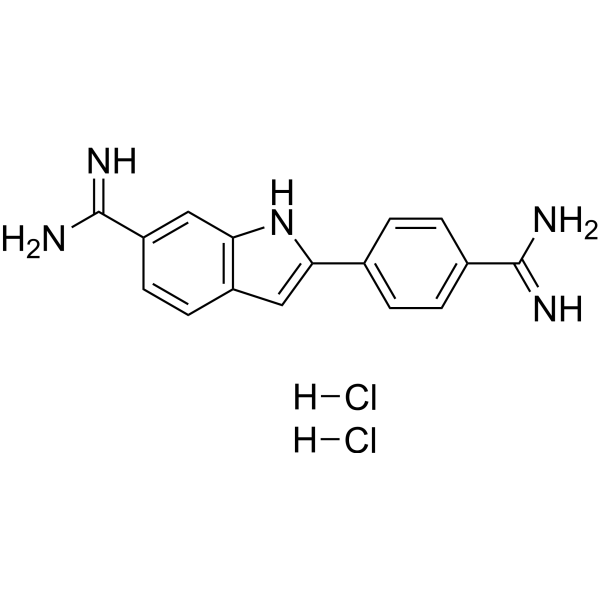
4',6-Diamidino-2-phenylindole dihydrochloride
|
DNA Stain
Sodium Channel
|
Neurological Disease
|
|
DAPI (4',6-Diamidino-2-phenylindole) dihydrochloride is a DAPI dye. DAPI is a fluorescent dye that binds strongly to DNA. It binds to the AT base pair of the double-stranded DNA minor groove, and one DAPI molecule can occupy three base pair positions. The fluorescence intensity of DAPI molecules bound to double-stranded DNA is increased by about 20 times, and it is commonly observed with fluorescence microscopy, and the amount of DNA can be determined based on the intensity of fluorescence. In addition, because DAPI can pass through intact cell membranes, it can be used to stain both live and fixed cells . DAPI (Compound 3) is an acid-sensing ion channel 3 (ASIC3) inhibitor. DAPI binds to ASIC3 and blocks the channel function. DAPI can be used in the study of chronic pain treatment (Ex/Em = 356/451 nm).
|
-
-
- HY-16293
-
|
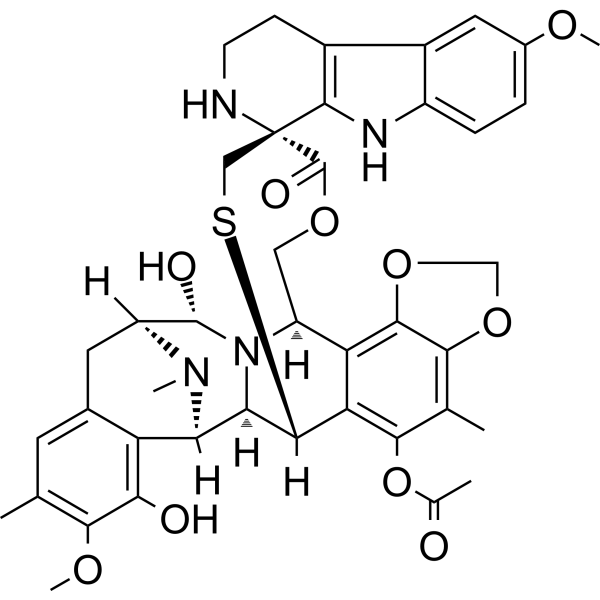
PM01183; LY-01017
|
DNA Alkylator/Crosslinker
DNA/RNA Synthesis
|
Cancer
|
|
Lurbinectedin (PM01183) is a DNA minor groove covalent binder with potent anti-tumour activity; inhibits RMG1 and RMG2 cell growth with IC50 values of 1.25 and 1.16 nM, respectively.
|
-
-
- HY-101161
-
SG3199
3 Publications Verification
|
DNA Alkylator/Crosslinker
ADC Payload
|
Cancer
|
|
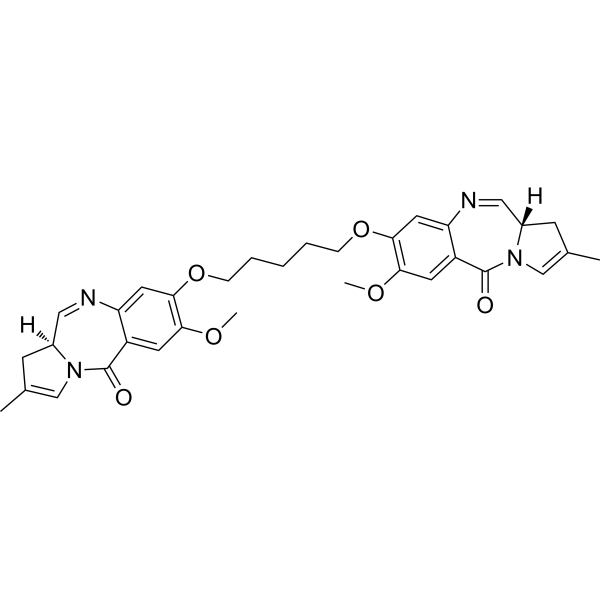
SG3199 is a cytotoxic DNA minor groove interstrand crosslinking pyrrolobenzodiazepine (PBD) dimer. SG3199 is the released warhead component of the ADC payload Tesirine (SG3249) .
|
-
-
- HY-128952
-
|
SG3249
|
Drug-Linker Conjugates for ADC
DNA Alkylator/Crosslinker
|
Cancer
|
|
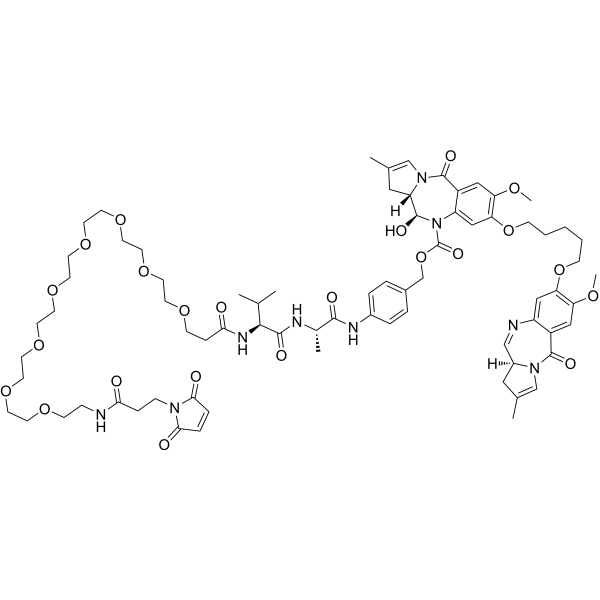
Tesirine (SG3249) is an antibody-drug conjugate (ADC) pyrrolobenzodiazepine (PBD) dimer payload. Tesirine combines potent antitumor activity with desirable physicochemical properties such as favorable hydrophobicity and improved conjugation characteristics. SG3199 (HY-101161) is the released warhead component of the ADC payload Tesirine. SG3199 retains picomolar activity in a panel of cancer cell lines. PBD dimers are highly efficient DNA minor groove cross-linking agents with potent cytotoxicity .
|
-
-
- HY-101127
-
|
PBD dimer
|
ADC Payload
|
Cancer
|
|
SGD-1882 is a cytotoxic, DNA minor-groove crosslinking agent pyrrolobenzodiazepine (PBD) dimer, acting as the payload for ADCs.
|
-
-
- HY-128915
-
|
|
DNA Alkylator/Crosslinker
ADC Payload
|
Cancer
|
|
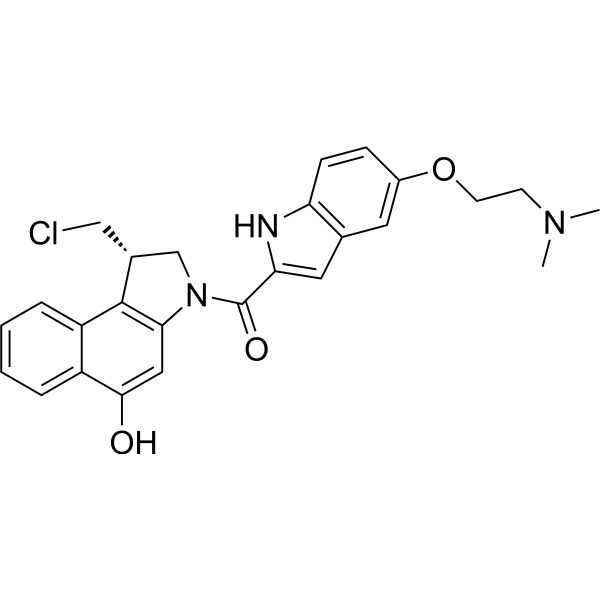
Duocarmycin DM free base, a DNA minor-groove alkylator, is an antibody agent conjugates (ADCs) toxin. Duocarmycin DM free base is based on its characteristic curved indole structure and a spirocyclopropylcyclohexadienone electrophile to act anticancer activity .
|
-
-
- HY-W040129
-
|
|
DNA Alkylator/Crosslinker
DNA/RNA Synthesis
Apoptosis
Caspase
|
Infection
Neurological Disease
Cancer
|
|
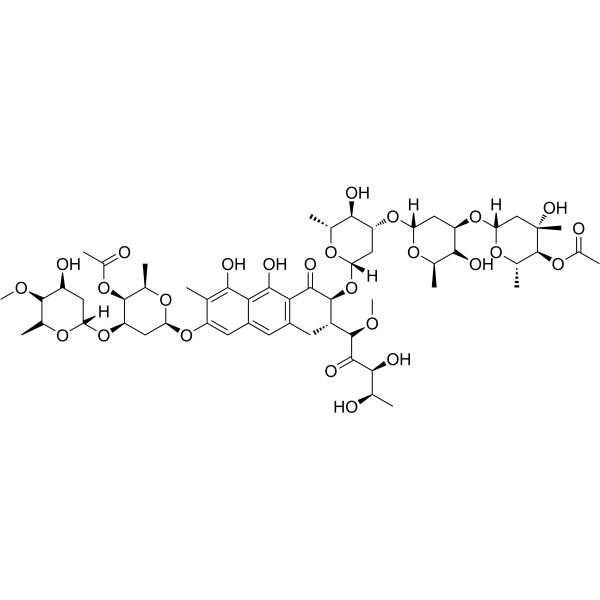
Chromomycin A3 is an inhibitor that selectively binds to GC-rich DNA sequences. Chromomycin A3 targets the DNA minor groove after forming a dimer with Mg 2+. Chromomycin A3 inhibits DNA replication and transcription, blocks the binding of Sp1 transcription factor to target gene promoters, downregulates the expression of anti-apoptotic proteins such as FLIP, Mcl-1, and XIAP, and induces S-phase cycle arrest and caspase-dependent apoptosis in tumor cells. Chromomycin A3 can antagonize oxidative stress induced by glutathione depletion and neuronal apoptosis induced by Camptothecin (HY-15660). Chromomycin A3 can be used in basic research on malignant tumors such as cholangiocarcinoma, and is a potential chemosensitizer and GC-rich region probe .
|
-
-
- HY-128904
-
|
|
Drug-Linker Conjugates for ADC
|
Cancer
|
|
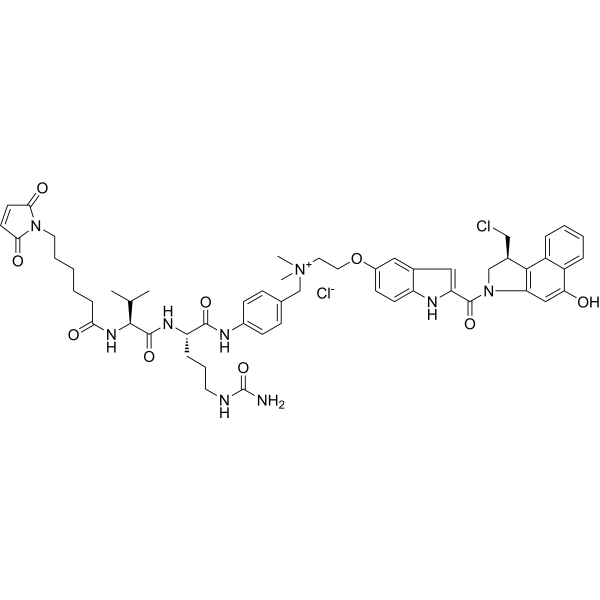
MC-Val-Cit-PAB-duocarmycin chloride is a agent-linker conjugate for ADC with potent antitumor activity by using Duocarmycin (a DNA minor groove binding alkylating agent), linked via the ADC linker MC-Val-Cit-PAB.
|
-
-
- HY-D1738
-
|
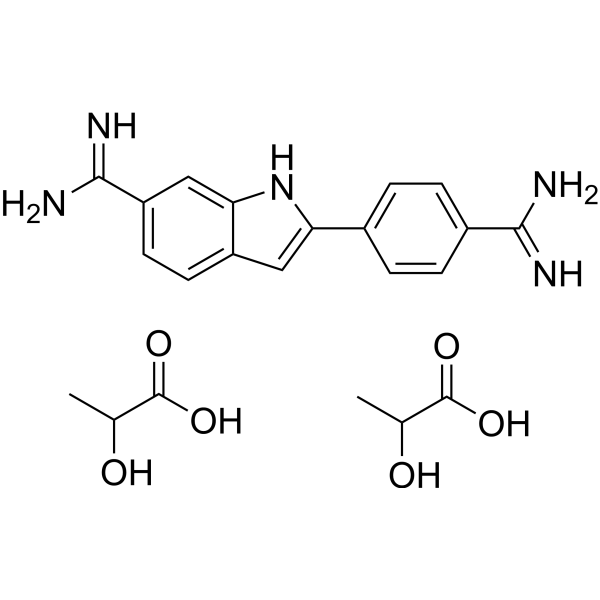
4',6-Diamidino-2-phenylindole dilactate
|
Fluorescent Dye
|
Others
|
|
DAPI (4',6-Diamidino-2-phenylindole) dilactate is a DAPI dye. DAPI is a fluorescent dye that binds strongly to DNA. It binds to the AT base pair of the double-stranded DNA minor groove, and one DAPI molecule can occupy three base pair positions. The fluorescence intensity of DAPI molecules bound to double-stranded DNA is increased by about 20 times, and it is commonly observed with fluorescence microscopy, and the amount of DNA can be determined based on the intensity of fluorescence. DAPI cannot penetrate intact cell membranes and is commonly used for staining both live and fixed cells . DAPI (Compound 3) is an acid-sensing ion channel 3 (ASIC3) inhibitor. DAPI binds to ASIC3 and blocks the channel function. DAPI can be used in the study of chronic pain treatment (Ex/Em = 356/451 nm) .
|
-
-
- HY-D2868
-
|
4',6-Diamidino-2-phenylindole
|
DNA Stain
Sodium Channel
|
Neurological Disease
|
|
DAPI (4',6-Diamidino-2-phenylindole) is a DAPI dye. DAPI is a fluorescent dye that binds strongly to DNA. It binds to the AT base pair of the double-stranded DNA minor groove, and one DAPI molecule can occupy three base pair positions. The fluorescence intensity of DAPI molecules bound to double-stranded DNA is increased by about 20 times, and it is commonly observed with fluorescence microscopy, and the amount of DNA can be determined based on the intensity of fluorescence. In addition, because DAPI can pass through intact cell membranes, it can be used to stain both live and fixed cells . DAPI (Compound 3) is an acid-sensing ion channel 3 (ASIC3) inhibitor. DAPI binds to ASIC3 and blocks the channel function. DAPI can be used in the study of chronic pain treatment (Ex/Em = 356/451 nm).
|
-

-
- HY-172663A
-
|
|
DNA/RNA Synthesis
Apoptosis
|
Cancer
|
|
Trabectedin derivative 1 TFA is a selective DNA minor groove binder. Trabectedin derivative 1 TFA inhibits DNA transcription and repair to induce tumor cell apoptosis. Trabectedin derivative 1 TFA is promising for research of solid tumors such as soft tissue sarcoma and ovarian cancer .
|
-

-
- HY-157465
-
|
|
Drug-Linker Conjugates for ADC
|
Cancer
|
|
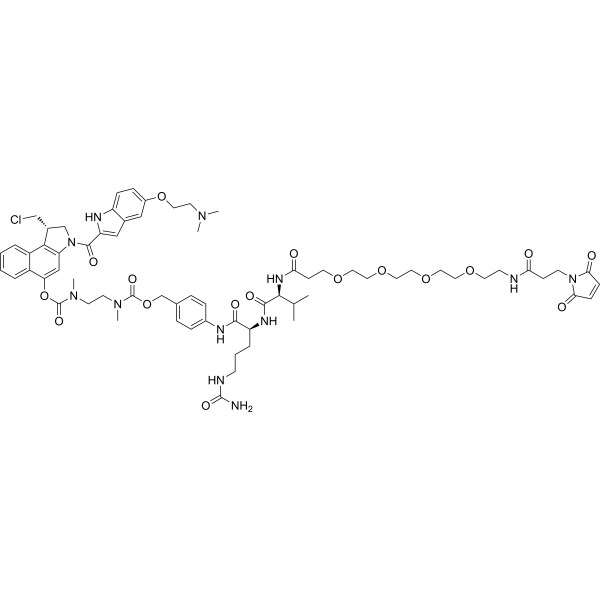
MA-PEG4-VC-PAB-DMEA-duocarmycin DM is a drug-linker conjugate for ADC by using the DNA minor-groove alkylator Duocarmycin DM (HY-130978), linked via MA-PEG4-vc-PAB-DMEA (HY-126668).
|
-
-
- HY-130978
-
|
|
DNA Alkylator/Crosslinker
ADC Payload
|
Cancer
|
|
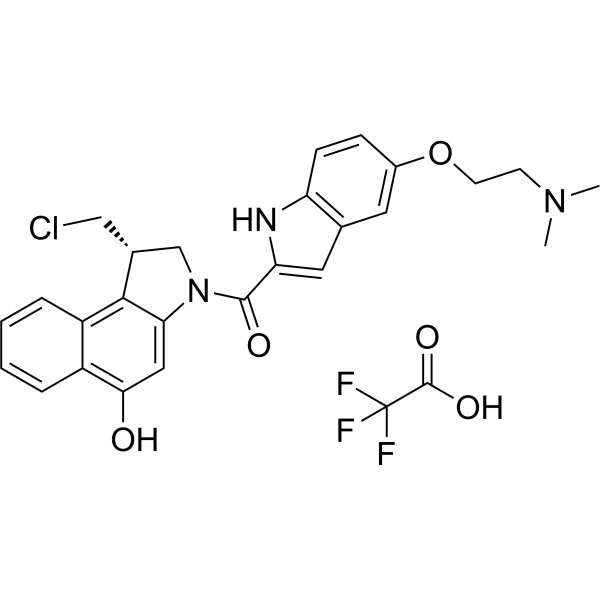
Duocarmycin DM, a DNA minor-groove alkylator, is an antibody agent conjugates (ADCs) toxin. Duocarmycin DM is based on its characteristic curved indole structure and a spirocyclopropylcyclohexadienone electrophile to act anticancer activity .
|
-
-
- HY-16293S
-
|
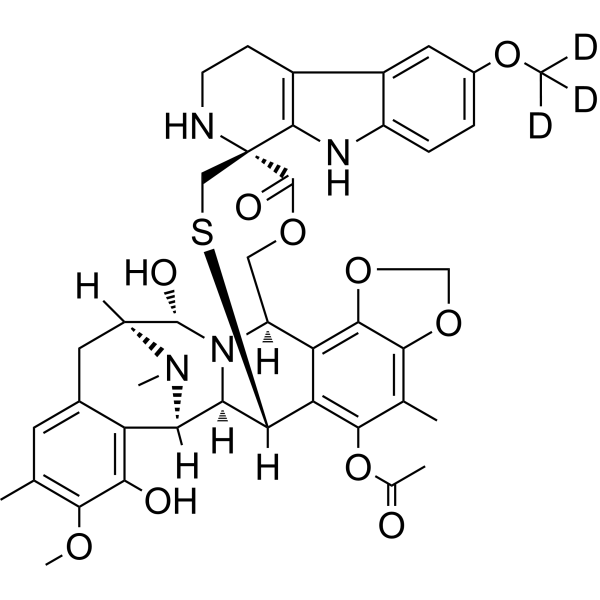
PM01183-d3; LY-01017-d3
|
DNA Alkylator/Crosslinker
DNA/RNA Synthesis
|
Cancer
|
|
Lurbinectedin-d3 is deuterium labeled Lurbinectedin. Lurbinectedin (PM01183) is a DNA minor groove covalent binder with potent anti-tumour activity; inhibits RMG1 and RMG2 cell growth with IC50 values of 1.25 and 1.16 nM, respectively .
|
-
-
- HY-135900
-
|
|
ADC Payload
Bacterial
|
Cancer
|
|
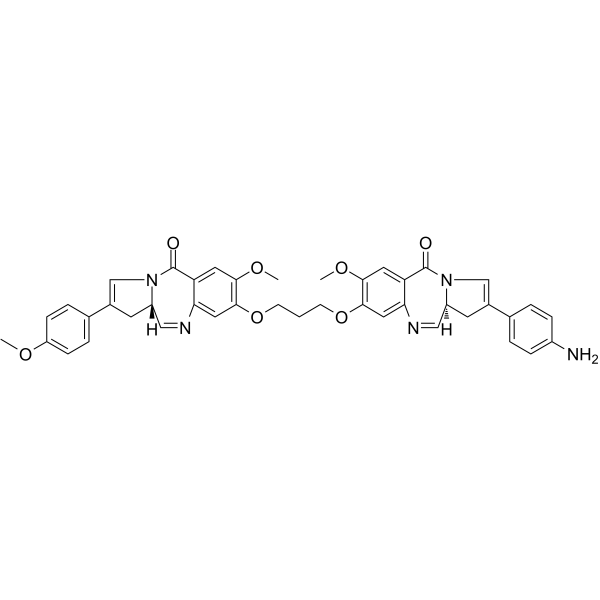
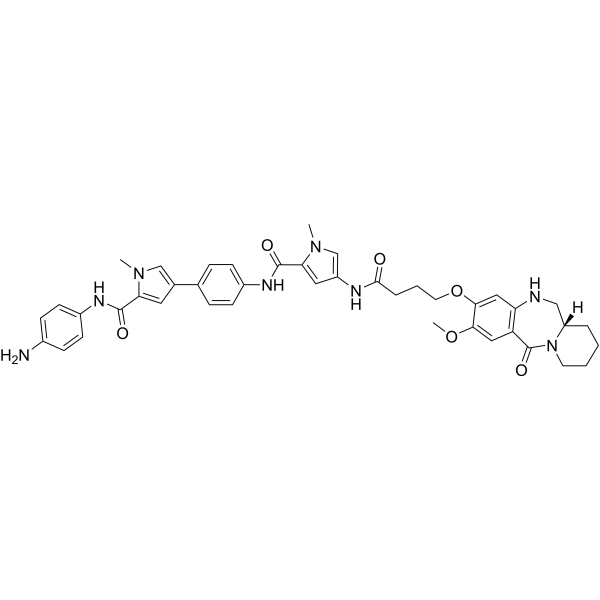
Aniline-MPB-amino-C3-PBD is a cytotoxic agent comprised non-alkylating group. Aniline-MPB-amino-C3-PBD is a sequence-selective DNA minor-groove binding agent. Aniline-MPB-amino-C3-PBD acts as the payload for ADCs. Antimicrobial activity .
|
-
-
- HY-175269
-
|
|
DNA Alkylator/Crosslinker
DNA/RNA Synthesis
Topoisomerase
|
Cancer
|
|
MGB1Y is a noncovalent DNA minor groove binder (MGB). MGB1Y potently inhibits cancer cells proliferation and topoisomerase I activity. MGB1Y downregulates their breast cancer-related genes in MCF7 and MDA-MB-231 cells. MGB1Y has a broad-spectrum anticancer activity, such as breast cancer, colon cancer, and leukemia .
|
-

-
- HY-178174
-
|
|
DNA/RNA Synthesis
Topoisomerase
|
Cancer
|
|
MGB4 is a DNA minor groove binder. MGB4 binds to ARE-containing DNA and inhibition of topoisomerase I activity. MGB4 can impacts key cellular pathways, including inhibition oftranslation and alterations in sphingolipid and amino acid metabolism. MGB4 also reduces spermine and spermidine metabolism companied with Doxorubicin (HY-15142A). MGB4 can be used for the research of cancer, such as Prostate cancer .
|
-

-
- HY-D1396
-
Br-DAPI
3 Publications Verification
|
Fluorescent Dye
DNA Stain
|
Others
|
|
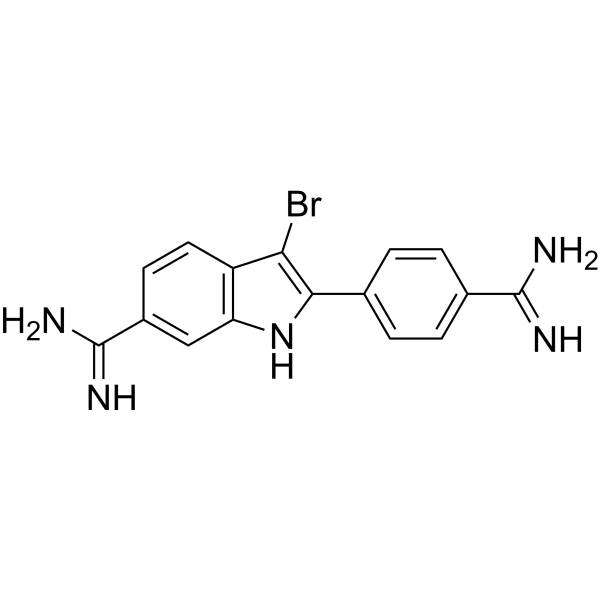
Br-DAPI is a marker dye in DAPI series. DAPI is a fluorescent dye that binds strongly to DNA. It binds to the AT base pair of the double-stranded DNA minor groove, and one DAPI molecule can occupy three base pair positions. The fluorescence intensity of DAPI molecules bound to double-stranded DNA is increased by about 20 times, and it is commonly observed with fluorescence microscopy, and the amount of DNA can be determined based on the intensity of fluorescence. In addition, because DAPI can pass through intact cell membranes, it can be used to stain both live and fixed cells . Storage: Keep away from light.
|
-
-
- HY-128952G
-
|
SG3249
|
Drug-Linker Conjugates for ADC
DNA Alkylator/Crosslinker
|
Cancer
|
|
Tesirine (GMP) (SG3249 (GMP)) is Tesirine (HY-128952) produced by using GMP guidelines. GMP small molecules works appropriately as an auxiliary reagent for cell therapy manufacture. Tesirine (SG3249) is an antibody-drug conjugate (ADC) pyrrolobenzodiazepine (PBD) dimer payload. Tesirine combines potent antitumor activity with desirable physicochemical properties such as favorable hydrophobicity and improved conjugation characteristics. SG3199 (HY-101161) is the released warhead component of the ADC payload Tesirine. SG3199 retains picomolar activity in a panel of cancer cell lines. PBD dimers are highly efficient DNA minor groove cross-linking agents with potent cytotoxicity .
|
-

-
- HY-126782
-
-

-
- HY-144336
-
|
|
DNA Alkylator/Crosslinker
|
Cancer
|
|
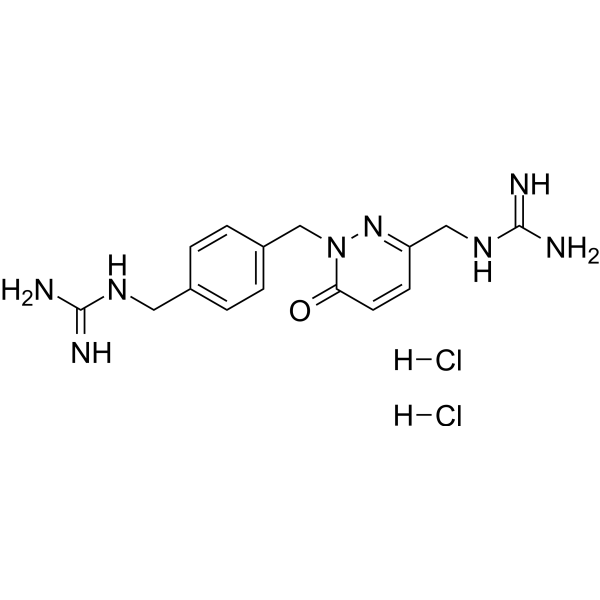
DNA crosslinker 3 (dihydrochloride) (compound 1) is a potent DNA minor groove binder with DNA binding affinity (ΔTm) of 1.4 °C. DNA crosslinker 3 (dihydrochloride) can be used for researching anticancer .
|
-
-
- HY-144333
-
|
|
DNA Alkylator/Crosslinker
|
Cancer
|
|
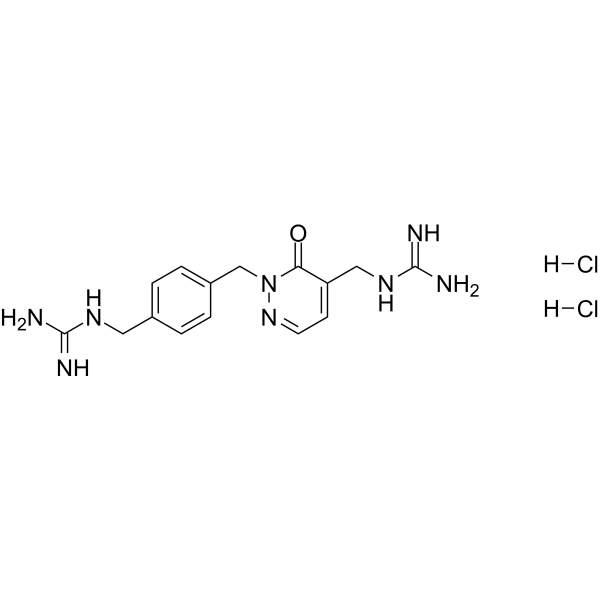
DNA crosslinker 1 dihydrochloride (Compound 4) is a potent DNA minor groove binder with DNA binding affinity (ΔTm) of 1.1 °C. DNA crosslinker 1 dihydrochloride can be used for researching anticancer .
|
-
-
- HY-144337
-
|
|
DNA Alkylator/Crosslinker
|
Cancer
|
|
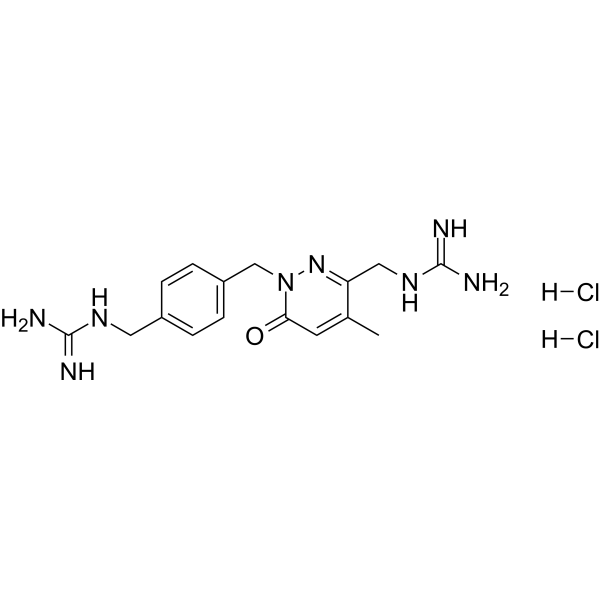
DNA crosslinker 4 (dihydrochloride) is a potent DNA minor groove binder. DNA crosslinker 4 (dihydrochloride) has certain inhibitory activity against cancer cells NCI-H460, A2780 and MCF-7. DNA crosslinker 4 (dihydrochloride) can be used for researching anticancer .
|
-
-
- HY-157465A
-
|
|
Drug-Linker Conjugates for ADC
|
Cancer
|
|
MA-PEG4-VC-PAB-DMEA-duocarmycin DM TFA is a drug-linker conjugate for ADC by using the DNA minor-groove alkylator Duocarmycin DM (HY-130978), linked via MA-PEG4-vc-PAB-DMEA (HY-126668).
|
-

-
- HY-144335
-
|
|
DNA Alkylator/Crosslinker
|
Cancer
|
|
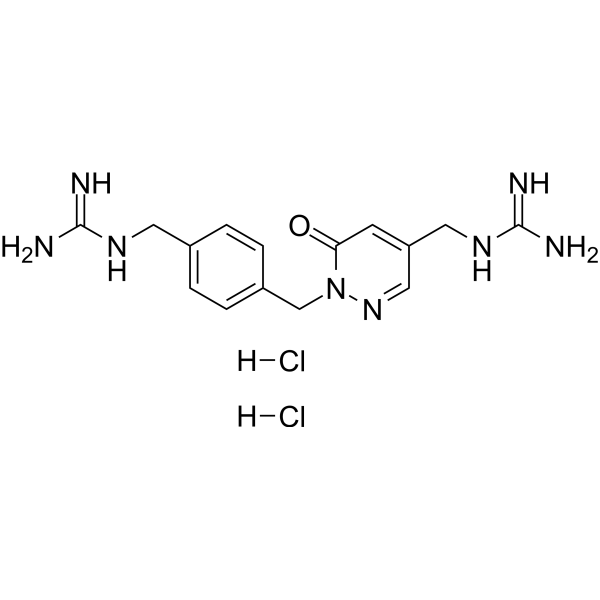
DNA crosslinker 2 (dihydrochloride) is a potent DNA minor groove binder with DNA binding affinity (ΔTm) of 1.2 °C. DNA crosslinker 2 (dihydrochloride) has certain inhibitory activity against cancer cells NCI-H460, A2780 and MCF-7. DNA crosslinker 2 (dihydrochloride) can be used for researching anticancer .
|
-
-
- HY-152187
-
|
|
Topoisomerase
Apoptosis
|
Others
|
|
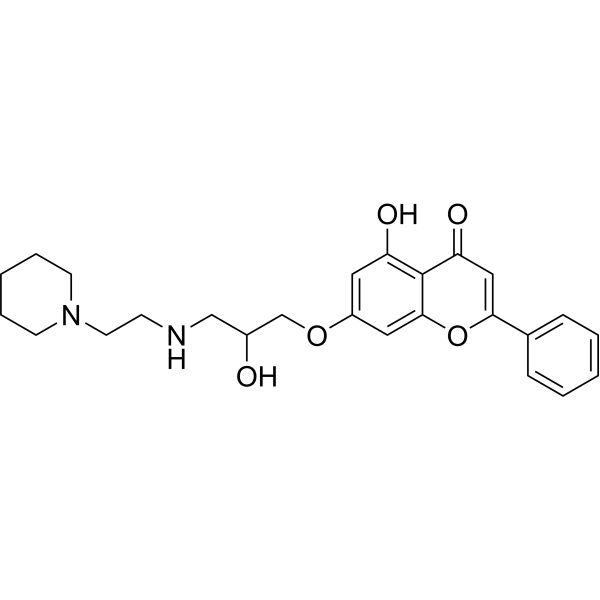
Topoisomerase IIα-IN-5 is a topoisomerase II (topo II) α catalytic inhibitor. Topoisomerase IIα-IN-5 intercalates into DNA and binds to the DNA minor groove. Topoisomerase IIα-IN-5 exhibits better efficacy and less genotoxicity than Etoposide (HY-13629) .
|
-
-
- HY-W040129R
-
|
|
Reference Standards
Bacterial
Fungal
Apoptosis
Antibiotic
|
Infection
Neurological Disease
Cancer
|
|
Chromomycin A3 (Standard) is the analytical standard of Chromomycin A3 (HY-W040129). This product is intended for research and analytical applications. Chromomycin A3 is an inhibitor that selectively binds to GC-rich DNA sequences. Chromomycin A3 targets the DNA minor groove after forming a dimer with Mg 2+. Chromomycin A3 inhibits DNA replication and transcription, blocks the binding of Sp1 transcription factor to target gene promoters, downregulates the expression of anti-apoptotic proteins such as FLIP, Mcl-1, and XIAP, and induces S-phase cycle arrest and caspase-dependent apoptosis in tumor cells. Chromomycin A3 can antagonize oxidative stress induced by glutathione depletion and neuronal apoptosis induced by Camptothecin (HY-15660). Chromomycin A3 can be used in basic research on malignant tumors such as cholangiocarcinoma, and is a potential chemosensitizer and GC-rich region probe .
|
-

-
- HY-101161S
-
-

-
- HY-101161R
-
|
|
Reference Standards
DNA Alkylator/Crosslinker
ADC Payload
|
Cancer
|
|
SG3199 (Standard) is the analytical standard of SG3199 (HY-101161). This product is intended for research and analytical applications. SG3199 is a cytotoxic DNA minor groove interstrand crosslinking pyrrolobenzodiazepine (PBD) dimer. SG3199 is the released warhead component of the ADC payload Tesirine (SG3249) .
|
-

-
- HY-P991862
-
|
|
ADC Antibody
Anaplastic lymphoma kinase (ALK)
|
Cancer
|
|
CDX-0125-TEI Antibody is an anti-human ALK antibody. AMG-224 Antibody can generate antibody drug conjugate (ADC) (CDX-0125-TEI) with thienoindole (TEI) DNA minor groove alkylating agent. CDX-0125-TEI Antibody can be used for the study of neuroblastoma .
|
-

-
- HY-185494
-
|
|
Drug-Linker Conjugates for ADC
DNA Alkylator/Crosslinker
|
Cancer
|
|
Mal-Val-Lys-PAB-CBI-PBD dimer is a Drug-Linker Conjugates for ADC. Mal-Val-Lys-PAB-CBI-PBD dimer consists of the ADC Cytotoxin CBI-PBD dimer and a linker Mal-Val-Lys-PAB. Mal-Val-Lys-PAB-CBI-PBD dimer exhibits alkylating activity at A-T-rich DNA minor groove adenine residues, disrupting DNA integrity. Mal-Val-Lys-PAB-CBI-PBD dimer induces cancer cell growth inhibition and cellular death. Mal-Val-Lys-PAB-CBI-PBD dimer can be used for the research of cancer .
|
-

-
- HY-DY1081
-
|
4',6-Diamidino-2-phenylindole dihydrochloride (solution)
|
Sodium Channel
DNA Stain
|
Neurological Disease
|
DAPI (4',6-Diamidino-2-phenylindole) dihydrochloride (solution) is a DAPI dye. DAPI is a fluorescent dye that binds strongly to DNA. It binds to the AT base pair of the double-stranded DNA minor groove, and one DAPI molecule can occupy three base pair positions. The fluorescence intensity of DAPI molecules bound to double-stranded DNA is increased by about 20 times, and it is commonly observed with fluorescence microscopy, and the amount of DNA can be determined based on the intensity of fluorescence. In addition, because DAPI can pass through intact cell membranes, it can be used to stain both live and fixed cells . DAPI (Compound 3) is an acid-sensing ion channel 3 (ASIC3) inhibitor. DAPI binds to ASIC3 and blocks the channel function. DAPI can be used in the study of chronic pain treatment (Ex/Em = 356/451 nm).
Solvent and concentration: ddH2O: 5 mg/mL
|
-

| Cat. No. |
Product Name |
Type |
-
- HY-D0814
-
|
4',6-Diamidino-2-phenylindole dihydrochloride
|
Fluorescent Dyes
|
|
DAPI (4',6-Diamidino-2-phenylindole) dihydrochloride is a DAPI dye. DAPI is a fluorescent dye that binds strongly to DNA. It binds to the AT base pair of the double-stranded DNA minor groove, and one DAPI molecule can occupy three base pair positions. The fluorescence intensity of DAPI molecules bound to double-stranded DNA is increased by about 20 times, and it is commonly observed with fluorescence microscopy, and the amount of DNA can be determined based on the intensity of fluorescence. In addition, because DAPI can pass through intact cell membranes, it can be used to stain both live and fixed cells . DAPI (Compound 3) is an acid-sensing ion channel 3 (ASIC3) inhibitor. DAPI binds to ASIC3 and blocks the channel function. DAPI can be used in the study of chronic pain treatment (Ex/Em = 356/451 nm).
|
-
- HY-D1738
-
|
4',6-Diamidino-2-phenylindole dilactate
|
Fluorescent Dyes
|
|
DAPI (4',6-Diamidino-2-phenylindole) dilactate is a DAPI dye. DAPI is a fluorescent dye that binds strongly to DNA. It binds to the AT base pair of the double-stranded DNA minor groove, and one DAPI molecule can occupy three base pair positions. The fluorescence intensity of DAPI molecules bound to double-stranded DNA is increased by about 20 times, and it is commonly observed with fluorescence microscopy, and the amount of DNA can be determined based on the intensity of fluorescence. DAPI cannot penetrate intact cell membranes and is commonly used for staining both live and fixed cells . DAPI (Compound 3) is an acid-sensing ion channel 3 (ASIC3) inhibitor. DAPI binds to ASIC3 and blocks the channel function. DAPI can be used in the study of chronic pain treatment (Ex/Em = 356/451 nm) .
|
-
- HY-D2868
-
|
4',6-Diamidino-2-phenylindole
|
Fluorescent Dyes
|
|
DAPI (4',6-Diamidino-2-phenylindole) is a DAPI dye. DAPI is a fluorescent dye that binds strongly to DNA. It binds to the AT base pair of the double-stranded DNA minor groove, and one DAPI molecule can occupy three base pair positions. The fluorescence intensity of DAPI molecules bound to double-stranded DNA is increased by about 20 times, and it is commonly observed with fluorescence microscopy, and the amount of DNA can be determined based on the intensity of fluorescence. In addition, because DAPI can pass through intact cell membranes, it can be used to stain both live and fixed cells . DAPI (Compound 3) is an acid-sensing ion channel 3 (ASIC3) inhibitor. DAPI binds to ASIC3 and blocks the channel function. DAPI can be used in the study of chronic pain treatment (Ex/Em = 356/451 nm).
|
-
- HY-128952G
-
|
SG3249
|
Fluorescent Dyes
|
|
Tesirine (GMP) (SG3249 (GMP)) is Tesirine (HY-128952) produced by using GMP guidelines. GMP small molecules works appropriately as an auxiliary reagent for cell therapy manufacture. Tesirine (SG3249) is an antibody-drug conjugate (ADC) pyrrolobenzodiazepine (PBD) dimer payload. Tesirine combines potent antitumor activity with desirable physicochemical properties such as favorable hydrophobicity and improved conjugation characteristics. SG3199 (HY-101161) is the released warhead component of the ADC payload Tesirine. SG3199 retains picomolar activity in a panel of cancer cell lines. PBD dimers are highly efficient DNA minor groove cross-linking agents with potent cytotoxicity .
|
-
- HY-DY1081
-
|
4',6-Diamidino-2-phenylindole dihydrochloride (solution)
|
Fluorescent Dyes
|
DAPI (4',6-Diamidino-2-phenylindole) dihydrochloride (solution) is a DAPI dye. DAPI is a fluorescent dye that binds strongly to DNA. It binds to the AT base pair of the double-stranded DNA minor groove, and one DAPI molecule can occupy three base pair positions. The fluorescence intensity of DAPI molecules bound to double-stranded DNA is increased by about 20 times, and it is commonly observed with fluorescence microscopy, and the amount of DNA can be determined based on the intensity of fluorescence. In addition, because DAPI can pass through intact cell membranes, it can be used to stain both live and fixed cells . DAPI (Compound 3) is an acid-sensing ion channel 3 (ASIC3) inhibitor. DAPI binds to ASIC3 and blocks the channel function. DAPI can be used in the study of chronic pain treatment (Ex/Em = 356/451 nm).
Solvent and concentration: ddH2O: 5 mg/mL
|
| Cat. No. |
Product Name |
Type |
-
- HY-128952G
-
|
SG3249
|
Biochemical Assay Reagents
|
|
Tesirine (GMP) (SG3249 (GMP)) is Tesirine (HY-128952) produced by using GMP guidelines. GMP small molecules works appropriately as an auxiliary reagent for cell therapy manufacture. Tesirine (SG3249) is an antibody-drug conjugate (ADC) pyrrolobenzodiazepine (PBD) dimer payload. Tesirine combines potent antitumor activity with desirable physicochemical properties such as favorable hydrophobicity and improved conjugation characteristics. SG3199 (HY-101161) is the released warhead component of the ADC payload Tesirine. SG3199 retains picomolar activity in a panel of cancer cell lines. PBD dimers are highly efficient DNA minor groove cross-linking agents with potent cytotoxicity .
|
| Cat. No. |
Product Name |
Target |
Research Area |
Image |
-
- HY-P991862
-
|
|
ADC Antibody
Anaplastic lymphoma kinase (ALK)
|
Cancer
|
|
CDX-0125-TEI Antibody is an anti-human ALK antibody. AMG-224 Antibody can generate antibody drug conjugate (ADC) (CDX-0125-TEI) with thienoindole (TEI) DNA minor groove alkylating agent. CDX-0125-TEI Antibody can be used for the study of neuroblastoma .
|
-

(5)
| Cat. No. |
Product Name |
Category |
Target |
Chemical Structure |
-
- HY-W040129
-
|
|
Microorganisms
Source Classification
|
DNA Alkylator/Crosslinker
DNA/RNA Synthesis
Apoptosis
Caspase
|
|
Chromomycin A3 is an inhibitor that selectively binds to GC-rich DNA sequences. Chromomycin A3 targets the DNA minor groove after forming a dimer with Mg 2+. Chromomycin A3 inhibits DNA replication and transcription, blocks the binding of Sp1 transcription factor to target gene promoters, downregulates the expression of anti-apoptotic proteins such as FLIP, Mcl-1, and XIAP, and induces S-phase cycle arrest and caspase-dependent apoptosis in tumor cells. Chromomycin A3 can antagonize oxidative stress induced by glutathione depletion and neuronal apoptosis induced by Camptothecin (HY-15660). Chromomycin A3 can be used in basic research on malignant tumors such as cholangiocarcinoma, and is a potential chemosensitizer and GC-rich region probe .
|
-
-
- HY-W040129R
-
|
|
Microorganisms
Source Classification
|
Reference Standards
Bacterial
Fungal
Apoptosis
Antibiotic
|
|
Chromomycin A3 (Standard) is the analytical standard of Chromomycin A3 (HY-W040129). This product is intended for research and analytical applications. Chromomycin A3 is an inhibitor that selectively binds to GC-rich DNA sequences. Chromomycin A3 targets the DNA minor groove after forming a dimer with Mg 2+. Chromomycin A3 inhibits DNA replication and transcription, blocks the binding of Sp1 transcription factor to target gene promoters, downregulates the expression of anti-apoptotic proteins such as FLIP, Mcl-1, and XIAP, and induces S-phase cycle arrest and caspase-dependent apoptosis in tumor cells. Chromomycin A3 can antagonize oxidative stress induced by glutathione depletion and neuronal apoptosis induced by Camptothecin (HY-15660). Chromomycin A3 can be used in basic research on malignant tumors such as cholangiocarcinoma, and is a potential chemosensitizer and GC-rich region probe .
|
-
| Cat. No. |
Product Name |
Chemical Structure |
-
- HY-16293S
-
|
|
|
Lurbinectedin-d3 is deuterium labeled Lurbinectedin. Lurbinectedin (PM01183) is a DNA minor groove covalent binder with potent anti-tumour activity; inhibits RMG1 and RMG2 cell growth with IC50 values of 1.25 and 1.16 nM, respectively .
|
-
-
- HY-101161S
-
|
|
|
SG3199-d6 is the deuterium labeled SG3199 (HY-101161). SG3199 is a cytotoxic DNA minor groove interstrand crosslinking pyrrolobenzodiazepine (PBD) dimer. SG3199 is the released warhead component of the ADC payload Tesirine (SG3249).
|
-
| Cat. No. |
Product Name |
Target |
Research Areas |
Chemical Structure |
-
- HY-128952G
-
|
SG3249
|
Drug-Linker Conjugates for ADC
DNA Alkylator/Crosslinker
|
Cancer
|
|
Tesirine (GMP) (SG3249 (GMP)) is Tesirine (HY-128952) produced by using GMP guidelines. GMP small molecules works appropriately as an auxiliary reagent for cell therapy manufacture. Tesirine (SG3249) is an antibody-drug conjugate (ADC) pyrrolobenzodiazepine (PBD) dimer payload. Tesirine combines potent antitumor activity with desirable physicochemical properties such as favorable hydrophobicity and improved conjugation characteristics. SG3199 (HY-101161) is the released warhead component of the ADC payload Tesirine. SG3199 retains picomolar activity in a panel of cancer cell lines. PBD dimers are highly efficient DNA minor groove cross-linking agents with potent cytotoxicity .
|
-
Your information is safe with us. * Required Fields.
Inquiry Information
- Product Name:
- Cat. No.:
- Quantity:
- MCE Japan Authorized Agent:








