



Duocarmycin DM free base

Based on 1 Customer Validation
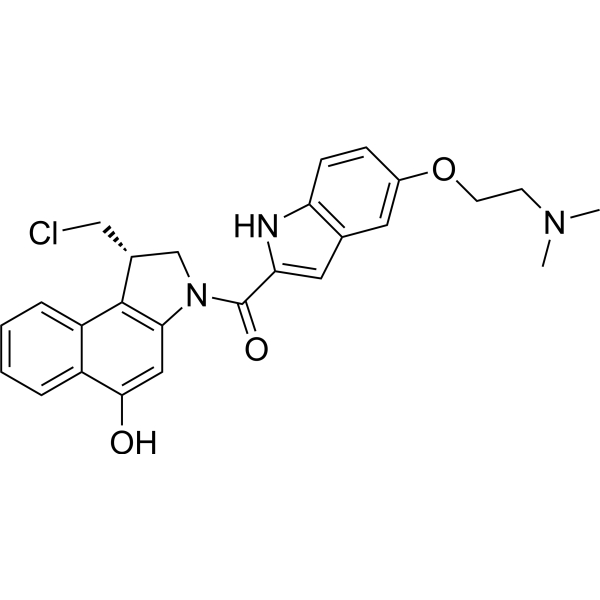
Duocarmycin DM free base, a DNA minor-groove alkylator, is an antibody agent conjugates (ADCs) toxin. Duocarmycin DM free base is based on its characteristic curved indole structure and a spirocyclopropylcyclohexadienone electrophile to act anticancer activity.
For research use only. We do not sell to patients.
- Purity : 99.69%
- CAS No.: 1116745-06-2
- Formula: C26H26ClN3O3
- Molecular Weight:463.96
-
Storage:
-20°C, protect from light, stored under nitrogen
* In solvent : -80°C, 6 months; -20°C, 1 month (protect from light, stored under nitrogen)

To place orders, for customer services and technical support, please contact: MedChemExpress USA
Tel: 609-228-6898 E-mail: [email protected] [email protected]


-
 Biological Activity
-
Chemical Information
-
Solvent & Solubility
- Purity & Documentation
- References
-
 Help & FAQs


-
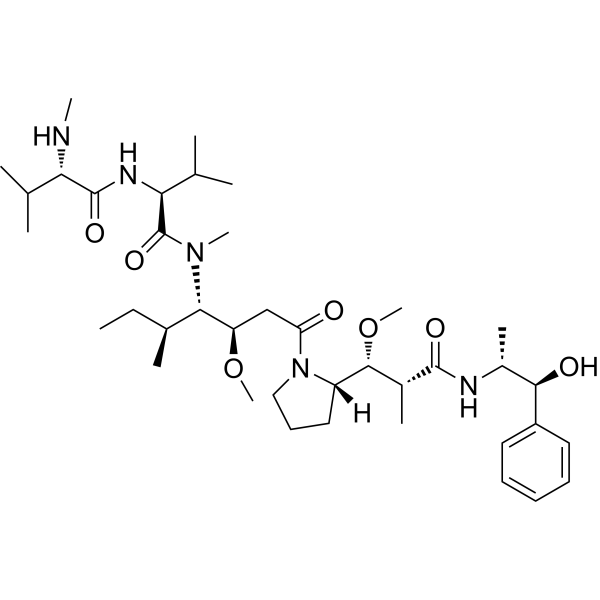
HY-15162
Monomethyl auristatin EAntimitotic Agent -
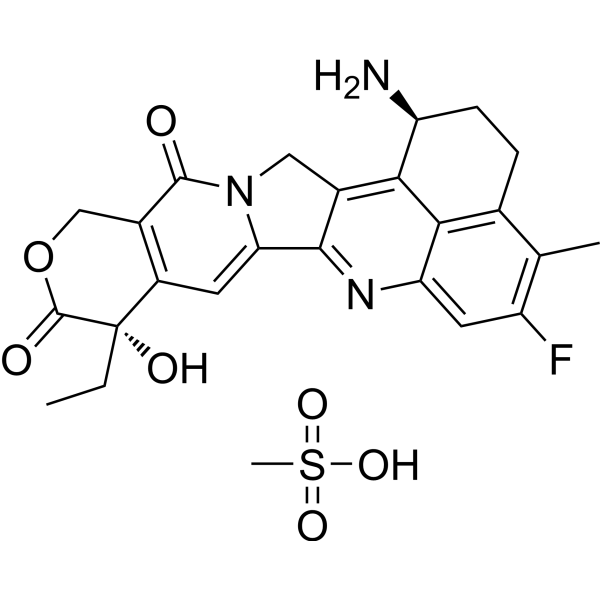
HY-13631A
Exatecan mesylateTopoisomerase I Inhibitor -
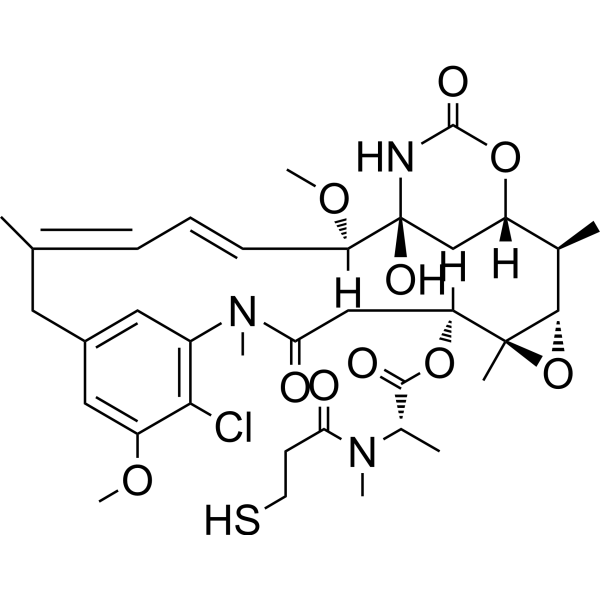
HY-19792
MertansineMicrotubule-Targeted Cytotoxin -
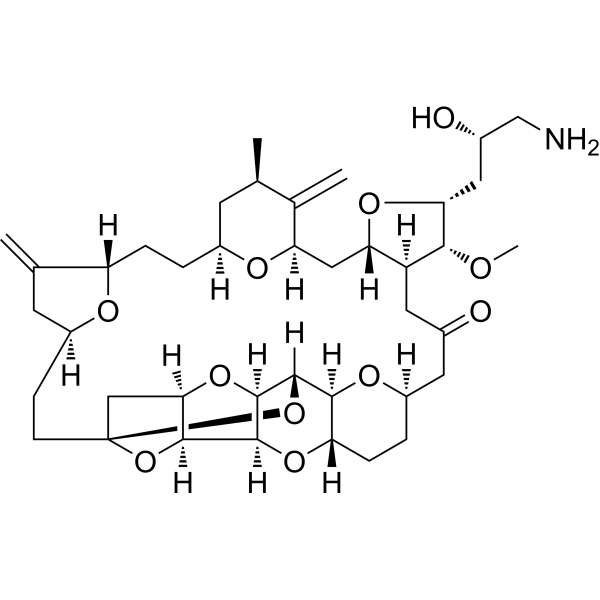
HY-13442
EribulinMicrotubule Inhibitor -
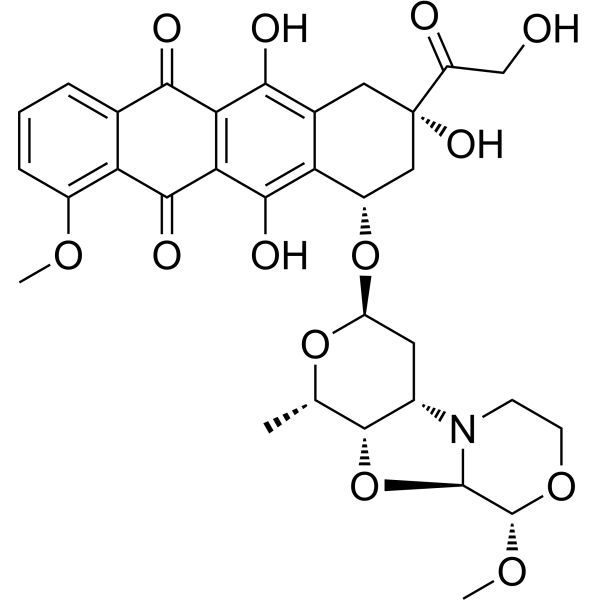
HY-16700
PNU-159682ADC Cytotoxin -
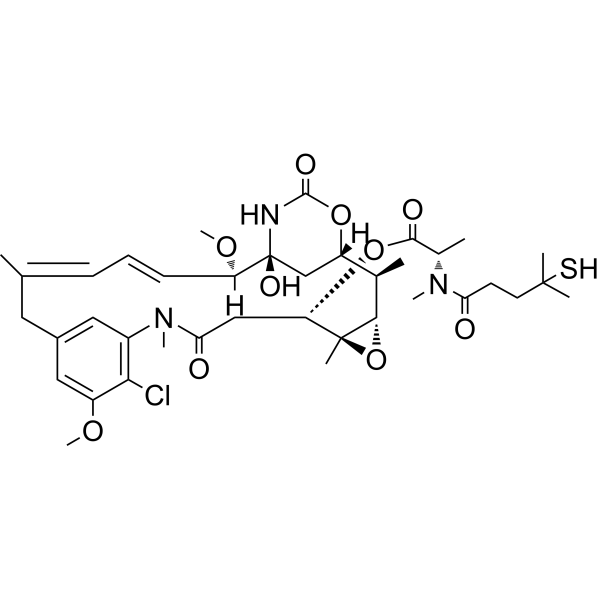
HY-12454
DM4Tubulin Inhibitor -
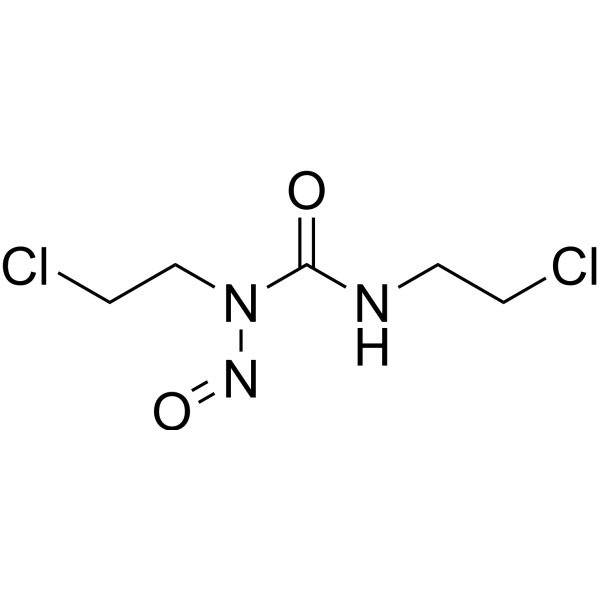
HY-13585
CarmustineDNA/RNA Alkylator -
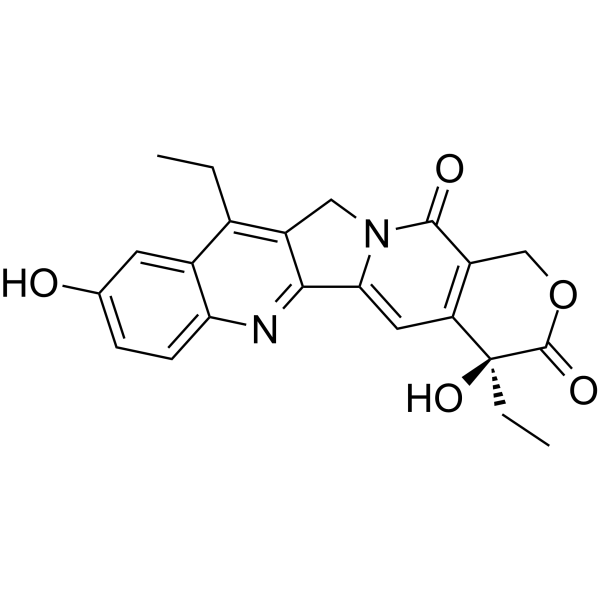
HY-13704
SN-38Topoisomerase I Inhibitor -
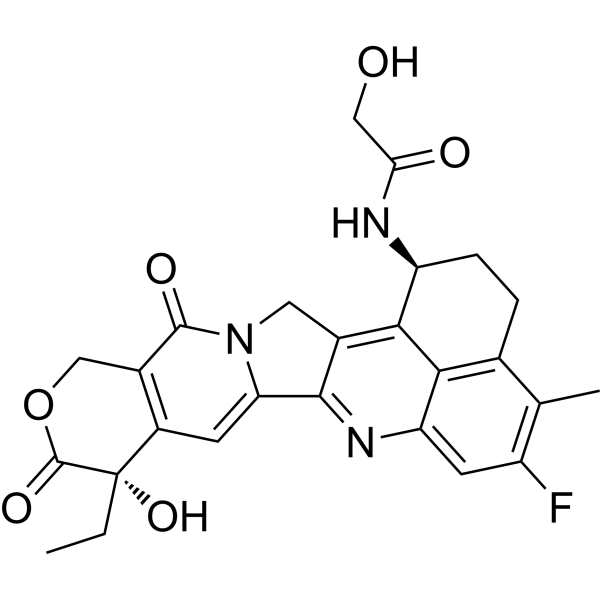
HY-13631D
DXdTopoisomerase I Inhibitor -
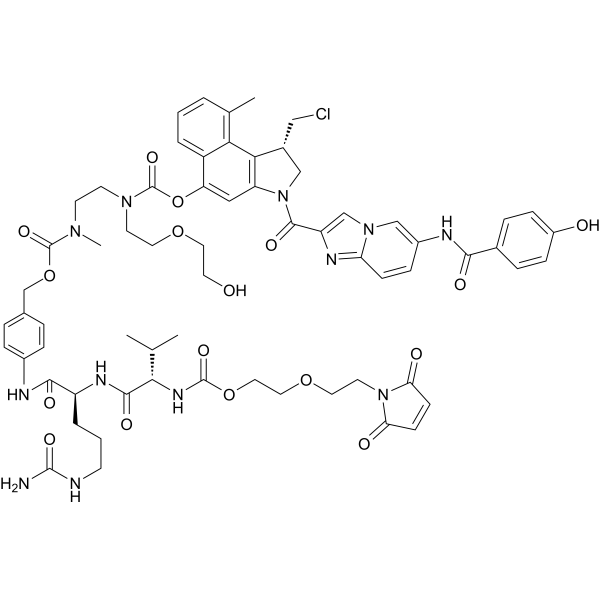
HY-128957
Vc-seco-DUBADrug-Linker Conjugate for ADC -
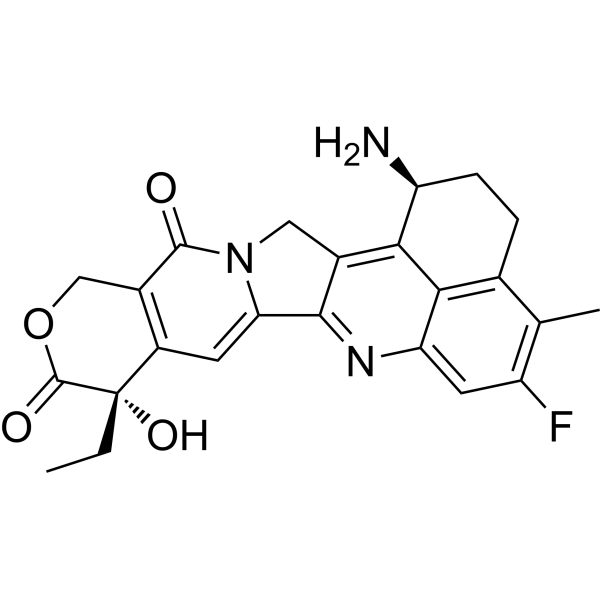
HY-13631
ExatecanTopoisomerase I Inhibitor -
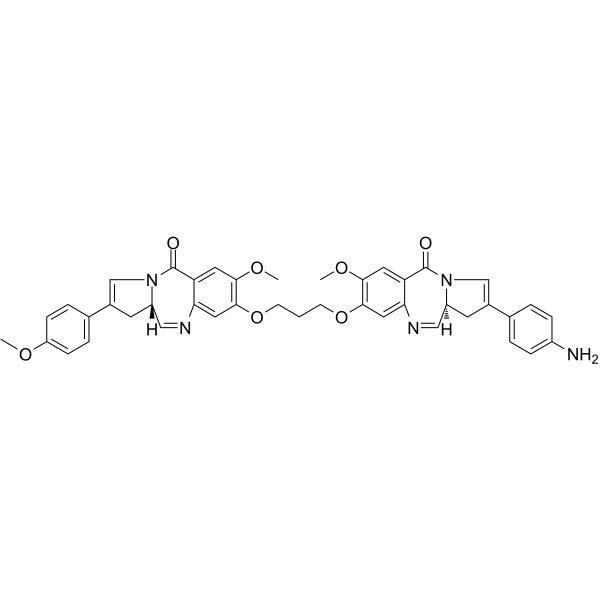
HY-101127
SGD-1882Pyrrolobenzodiazepine Dimer


Biological Activity
Description
IC50 & Target
[1]|
Daunorubicins/Doxorubicins |
Cellular Effect
|
Cell Line

|
Type | Value | Description | References |
|---|---|---|---|---|
| A549 | IC50 |
0.026 nM
Compound: 12
|
Cytotoxicity against human A549 cells after 24 hrs
Cytotoxicity against human A549 cells after 24 hrs
|
[PMID: 21767954] |
In Vitro
The Duocarmycins and CC-1065 are members of a class of DNA minor groove, AT-sequence selective, and adenine-N3 alkylating agents, isolated from Streptomyces sp. that exhibit extremely potent cytotoxicity against the growth of cancer cells grown in culture[2].
Duocarmycin shows cytotoxicity to several human cancer cells, with IC50 of 22, 13.8, 3.87, 15.4, and 7.31 pM for HT-29, CL1-5, Caski, EJ, and LS174T, respectively[3].
MedChemExpress (MCE) has not independently confirmed the accuracy of these methods. They are for reference only.


Chemical Information
-
CAS No. 1116745-06-2
-
Appearance Solid
-
Molecular Weight 463.96
-
Formula C26H26ClN3O3
-
Color Light yellow to green yellow
-
SMILES
O=C(N1C[C@@H](CCl)C2=C1C=C(O)C3=CC=CC=C23)C(N4)=CC5=C4C=CC(OCCN(C)C)=C5
-
Shipping
Room temperature in continental US; may vary elsewhere.
-
Storage
-20°C, protect from light, stored under nitrogen
* In solvent : -80°C, 6 months; -20°C, 1 month (protect from light, stored under nitrogen)


Solvent & Solubility
In Vitro:
DMSO : 50 mg/mL (107.77 mM; Need ultrasonic; Hygroscopic DMSO has a significant impact on the solubility of product, please use newly opened DMSO)
Please refer to the solubility information to select the appropriate solvent. Once prepared, please aliquot and store the solution to prevent product inactivation from repeated freeze-thaw cycles.
Storage method and period of stock solution: -80°C, 6 months; -20°C, 1 month (protect from light, stored under nitrogen). When stored at -80°C, please use it within 6 months. When stored at -20°C, please use it within 1 month.
Please refer to the solubility information to select the appropriate solvent. Once prepared, please aliquot and store the solution to prevent product inactivation from repeated freeze-thaw cycles.
Storage method and period of stock solution: -80°C, 6 months; -20°C, 1 month (protect from light, stored under nitrogen). When stored at -80°C, please use it within 6 months. When stored at -20°C, please use it within 1 month.
Concentration (start) × Volume (start) = Concentration (final) × Volume (final)
In Vivo:
Select the appropriate dissolution method based on your experimental animal and administration route.
- For the following dissolution methods, please ensure to first prepare a clear stock solution using an In Vitro approach and then sequentially add co-solvents:
- To ensure reliable experimental results, the clarified stock solution can be appropriately stored based on storage conditions. As for the working solution for In Vivo experiments, it is recommended to prepare freshly and use it on the same day.
- The percentages shown for the solvents indicate their volumetric ratio in the final prepared solution. If precipitation or phase separation occurs during preparation, heat and/or sonication can be used to aid dissolution.
Add each solvent one by one: 10% DMSO 40% PEG300 5% Tween-80 45% Saline
Solubility: ≥ 2 mg/mL (4.31 mM); Clear solution
This protocol yields a clear solution of ≥ 2 mg/mL (saturation unknown).
Taking 1 mL working solution as an example, add 100 μL DMSO stock solution (20.0 mg/mL) to 400 μL PEG300, and mix evenly; then add 50 μL Tween-80 and mix evenly; then add 450 μL Saline to adjust the volume to 1 mL.
Preparation of Saline: Dissolve 0.9 g sodium chloride in ddH₂O and dilute to 100 mL to obtain a clear Saline solution.
Add each solvent one by one: 10% DMSO 90% (20% SBE-β-CD in Saline)
Solubility: ≥ 2 mg/mL (4.31 mM); Clear solution
This protocol yields a clear solution of ≥ 2 mg/mL (saturation unknown).
Taking 1 mL working solution as an example, add 100 μL DMSO stock solution (20.0 mg/mL) to 900 μL 20% SBE-β-CD in Saline, and mix evenly.
Preparation of 20% SBE-β-CD in Saline (4°C, storage for one week): 2 g SBE-β-CD powder is dissolved in 10 mL Saline, completely dissolve until clear.
In Vivo Dissolution Calculator
Please enter the basic information of animal experiments:
-
-
-
-
Recommended: Prepare an additional quantity of animals to account for potential losses during experiments.
Please enter your animal formula composition:
-
%DMSO +
Recommended: Keep the proportion of DMSO in working solution below 2% if your animal is weak.
-
%+
-
+%Tween-80 + +
-
%Saline +
The co-solvents required include: DMSO, . All of co-solvents are available by MedChemExpress (MCE). , Tween 80. All of co-solvents are available by MedChemExpress (MCE).
Working solution concentration: 0.22 mg/mL
Method for preparing stock solution: mg drug dissolved in μL DMSO. Stock solution concentration: mg/mL. * In solvent : -80°C, 6 months; -20°C, 1 month (protect from light, stored under nitrogen)
1. Take μL DMSO stock solution;
2. Add μL .
μL , mix evenly;
3. Then add μL Tween 80, mix evenly;
4. Then add μL
Please ensure that the stock solution in the first step is dissolved to a clear state, and add co-solvents in sequence. You can use ultrasonic heating (ultrasonic cleaner, recommended frequency 20-40 kHz), vortexing, etc. to assist dissolution.


Purity & Documentation
-
Data Sheet (274 KB)
-
SDS (252 KB)
- English - EN (252 KB)
- Français - FR (252 KB)
- Deutsch - DE (252 KB)
- Norwegian - NO (252 KB)
- Español - ES (252 KB)
- Swedish - SV (252 KB)
- Italian - IT (252 KB)
- Korean - KR (252 KB)
- Portuguese - PT (252 KB)
-
Handling Instructions (2659 KB)
References
[1]. Patil PC, et al. A Short Review on the Synthetic Strategies of Duocarmycin Analogs that are Powerful DNA Alkylating Agents. Anticancer Agents Med Chem. 2015;15(5):616-630. [Content Brief]
[2]. Koch MF, et al. Structural, Biochemical, and Computational Studies Reveal the Mechanism of Selective Aldehyde Dehydrogenase 1A1 Inhibition by Cytotoxic Duocarmycin Analogues. Angew Chem Int Ed Engl. 2015 Nov 9;54(46):13550-4. [Content Brief]
[3]. Chen KC, et al. Selective cancer therapy by extracellular activation of a highly potent glycosidic duocarmycin analogue. Mol Pharm. 2013;10(5):1773-1782. [Content Brief]
[4]. Chen KC, Schmuck K, Tietze LF, Roffler SR. Selective cancer therapy by extracellular activation of a highly potent glycosidic duocarmycin analogue. Mol Pharm. 2013;10(5):1773-1782. [Content Brief]


Complete Stock Solution Preparation Table
Please refer to the solubility information to select the appropriate solvent. Once prepared, please aliquot and store the solution to prevent product inactivation from repeated freeze-thaw cycles.
Storage method and period of stock solution: -80°C, 6 months; -20°C, 1 month (protect from light, stored under nitrogen). When stored at -80°C, please use it within 6 months. When stored at -20°C, please use it within 1 month.
| Optional Solvent | Concentration Solvent Mass | 1 mg | 5 mg | 10 mg | 25 mg |
|---|---|---|---|---|---|
| DMSO | 1 mM | 2.1554 mL | 10.7768 mL | 21.5536 mL | 53.8840 mL |
| 5 mM | 0.4311 mL | 2.1554 mL | 4.3107 mL | 10.7768 mL | |
| 10 mM | 0.2155 mL | 1.0777 mL | 2.1554 mL | 5.3884 mL | |
| 15 mM | 0.1437 mL | 0.7185 mL | 1.4369 mL | 3.5923 mL | |
| 20 mM | 0.1078 mL | 0.5388 mL | 1.0777 mL | 2.6942 mL | |
| 25 mM | 0.0862 mL | 0.4311 mL | 0.8621 mL | 2.1554 mL | |
| 30 mM | 0.0718 mL | 0.3592 mL | 0.7185 mL | 1.7961 mL | |
| 40 mM | 0.0539 mL | 0.2694 mL | 0.5388 mL | 1.3471 mL | |
| 50 mM | 0.0431 mL | 0.2155 mL | 0.4311 mL | 1.0777 mL | |
| 60 mM | 0.0359 mL | 0.1796 mL | 0.3592 mL | 0.8981 mL | |
| 80 mM | 0.0269 mL | 0.1347 mL | 0.2694 mL | 0.6735 mL | |
| 100 mM | 0.0216 mL | 0.1078 mL | 0.2155 mL | 0.5388 mL |


Duocarmycin DM free base Related Classifications
HY-128915 Related Classifications
 Powered by Bioz