Search Result
Results for "
DNA polymerase I
" in MedChemExpress (MCE) Product Catalog:
-
- HY-12484
-
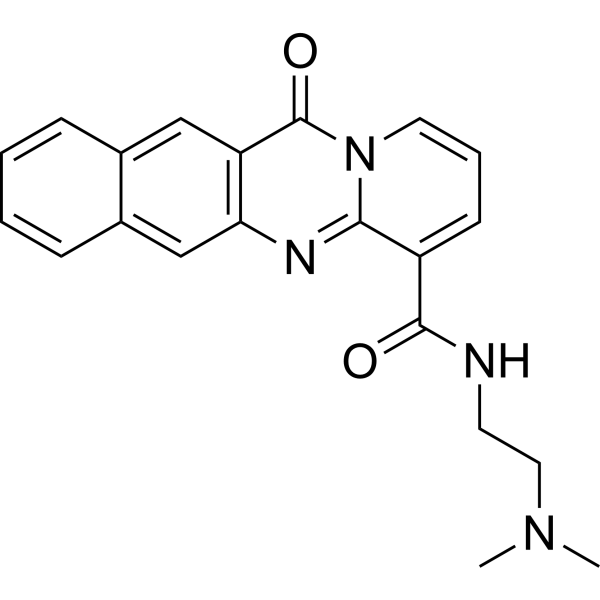
BMH-21
Maximum Cited Publications
14 Publications Verification
|
DNA/RNA Synthesis
|
Cancer
|
|
BMH-21 is a first-in-class DNA intercalator which inhibits RNA polymerase I (Pol I) transcription. BMH-21 possesses anticancer activity .
|
-
-
- HY-W001951
-
|
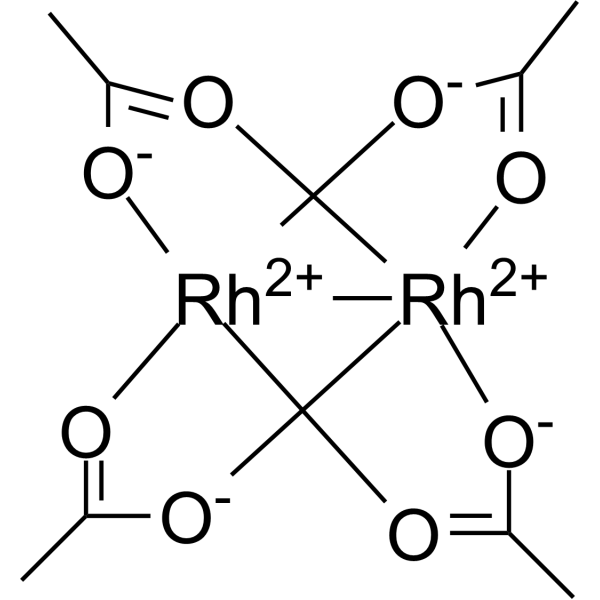
Tetrakis(acetato)dirhodium(II); Rhodium(II) acetate dimer
|
DNA/RNA Synthesis
|
Cancer
|
|
Dirhodium tetraacetate (Tetrakis (acetato) dirhodium (II)) is an anticancer agent. Dirhodium tetraacetate functionally inhibits the activities of DNA polymerase I and RNA polymerase. It also acts as a catalyst and can be used to construct rhodium-based artificial metalloenzymes .
|
-
-
- HY-109056
-
|
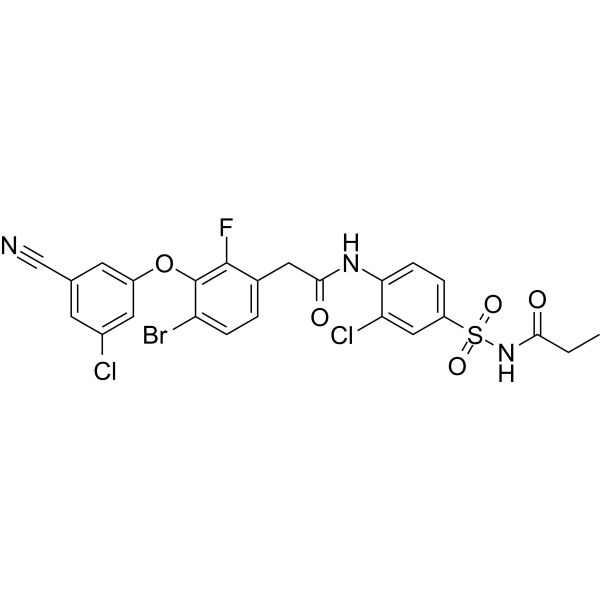
R-1206
|
Drug Intermediate
HIV
Reverse Transcriptase
Carbonic Anhydrase
|
Infection
Cancer
|
|
Elsulfavirine (R-1206) is an orally active human carbonic anhydrase (carbonic anhydrase, CA) inhibitor and an allosteric inhibitor of HIV-1 non-nucleoside reverse transcriptase (NNRT). Elsulfavirine also targets and blocks the interaction between adenylosuccinate lyase (ADSL) and insulin-induced gene proteins INSIG1/2, blocks SREBP-1-mediated de novo lipid synthesis, and inhibits the proliferation of liver cancer cells. The combination of Elsulfavirine and Lenvatinib (HY-10981) produces a synergistic anti-tumor effect. Elsulfavirine is converted into the active metabolite VM1500A in vivo, blocks the DNA polymerase activity of reverse transcriptase, and inhibits HIV-1 replication. Elsulfavirine exhibits a Ki of 1960 nM-52400 nM against human carbonic anhydrase isoforms including I, VII, VI, VA, VB, IX, XIII, XIV. Elsulfavirine is used in studies related to HIV-1 infection and liver cancer .
|
-
-
- HY-113225
-
|
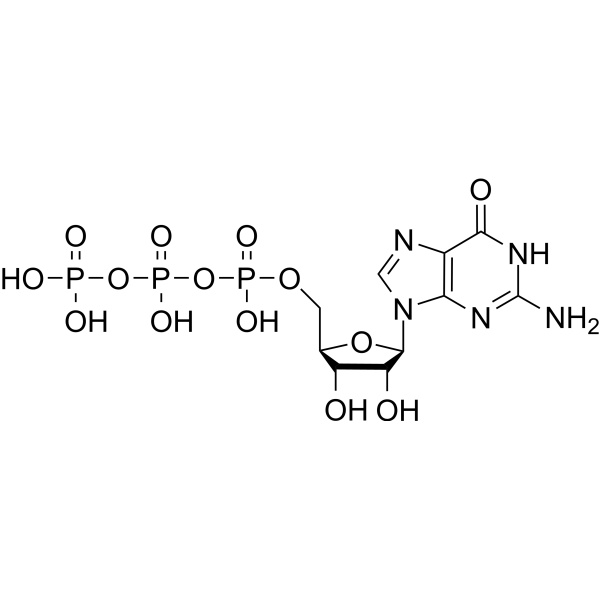
GTP
|
Endogenous Metabolite
DNA/RNA Synthesis
Apoptosis
Mitosis
|
Cancer
|
|
Guanosine triphosphate (GTP) is a critical nucleotide and regulator of cellular metabolism. Guanosine triphosphate promotes ribosomal DNA localization, pre-rRNA transcription and ribosome biogenesis by binding to RNA polymerase I and GPN proteins (GPN1/3). Guanosine triphosphate links MYC-dependent ribosome biogenesis to nucleotide sufficiency, acts as a metabolic gatekeeper supporting protein synthesis, DNA/RNA synthesis and cellular signal transduction, while also participating in the physiological activities of pancreatic β-cells and serving as an oxidative substrate for reactive oxygen species. In small cell lung cancer with high MYC expression, Guanosine triphosphate accumulates through the IMPDH-driven synthetic pathway, thereby affecting apoptosis and mitotic processes. Guanosine triphosphate is used in the research of small cell lung cancer, hepatoblastoma and cellular metabolism .
|
-
-
- HY-W013403
-
|
|
IFNAR
|
Infection
|
|
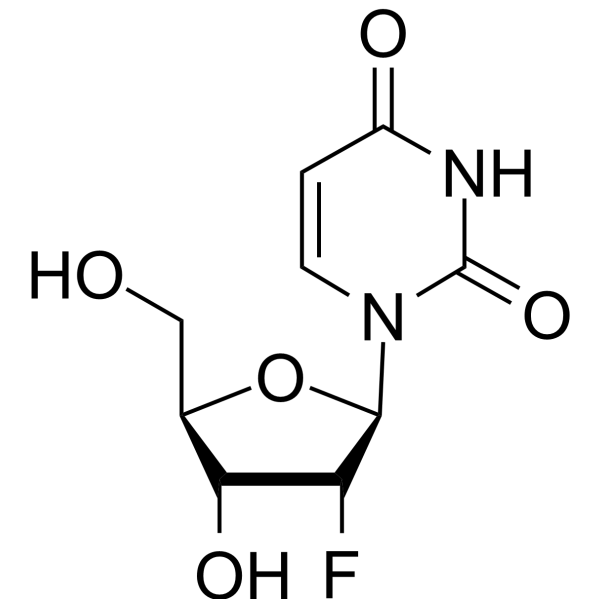
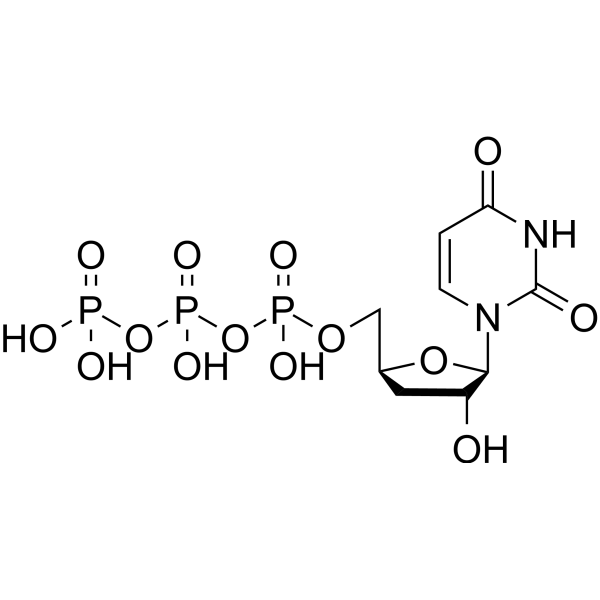
2'-Deoxy-2'-fluorouridine is a derivative of the pyrimidine nucleoside uridine. 2'-Deoxy-2'-fluorouridine is a nucleoside analog that inhibits the replication of wild-type viruses by binding to the viral RNA. Hepatitis C polyU/UC RNA strands containing 2'-Deoxy-2'-fluorouridine, bind to RIG-I but do not activate RIG-I signaling in a reporter assay using Huh7 cells. 2'-Deoxy-2'-fluorouridine also has been used as a starting material in the synthesis of respiratory syncytial virus (RSV) polymerase inhibitors. 2'-Deoxy-2'-fluorouridine can incorporate into DNA and RNA in rat and woodchuck model upon administration. 2'-Deoxy-2'-fluorouridine can be studied in anti-viral research .
|
-
-
- HY-153118
-
|
ctDNA sodium, Type I, fibers; DNA sodium, from calf thymus, Type I, fibers; Thymonucleic acid sodium, Type I, fibers
|
Biochemical Assay Reagents
|
Others
Cancer
|
|
Deoxyribonucleic acid sodium, from calf thymus, Type I, fibers is the sodium salts form of Calf thymus DNA (HY-109517). Calf thymus DNA is a double-stranded template DNA isolated from calf thymus. It can be used to study the interaction between DNA and DNA binding agents, as well as the structure and function of DNA, for DNA quantification and used as a substrate for DNA polymerase analysis, etc .
|
-
-
- HY-135780A
-
-
-
- HY-D1021
-
|
Aminoallyl-dUTP sodium salt
|
DNA/RNA Synthesis
|
Others
|
|
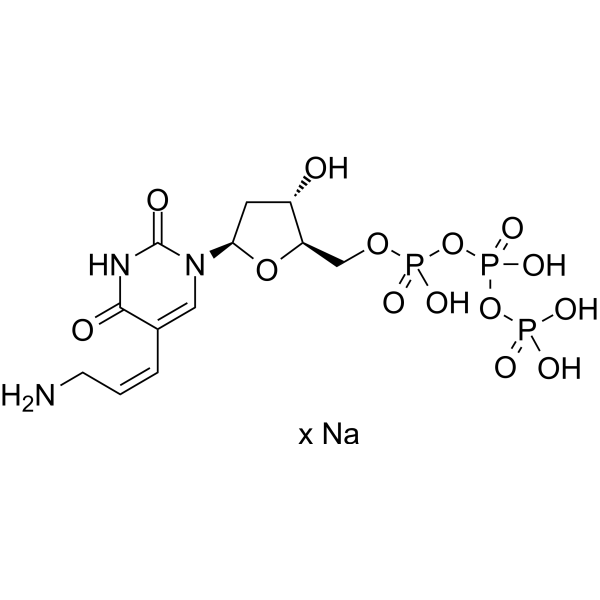
AA-dUTP (Aminoallyl-dUTP) sodium salt is a reverse transcriptase and DNA polymerase I substrate with probe precursor activity. AA-dUTP sodium salt undergoes enzymatic incorporation into DNA during cDNA synthesis and nick translation. AA-dUTP sodium salt generates amine-modified DNA, which can be used for labeling with amine-reactive fluorescent dyes .
|
-
-
- HY-138646
-
|
Poly(dA:dT) sodium
|
Cyclic GMP-AMP Synthase
STING
|
Inflammation/Immunology
|
|
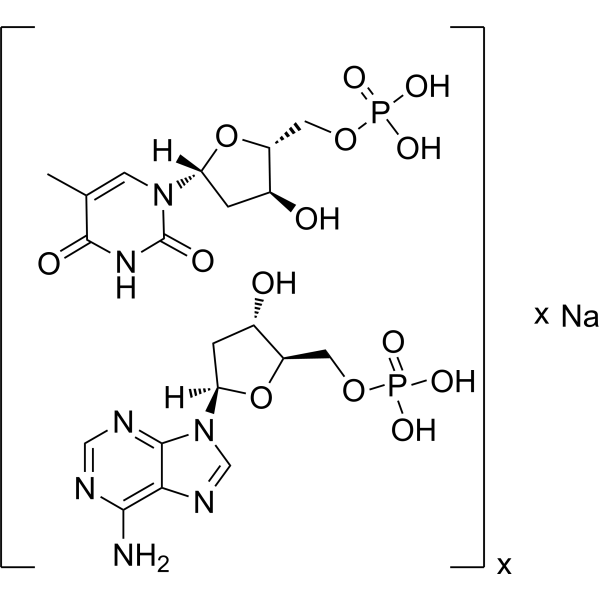
Poly(deoxyadenylic-thymidylic) acid (Poly(dA:dT)) sodium is a double-stranded DNA stimulant. Poly(deoxyadenylic-thymidylic) acid sodium is recognized by the intracellular DNA sensor DDX41 and activates the innate immune pathway via the adaptor protein STING, inducing the production of cytokines such as type I interferons. Poly(deoxyadenylic-thymidylic) acid sodium also serves as an in vitro transcription template for free RNA polymerase .
|
-
-
- HY-113225S2
-
|
GTP-13C dilithium
|
Isotope-Labeled Compounds
Endogenous Metabolite
Mitosis
Apoptosis
DNA/RNA Synthesis
|
Infection
Cancer
|
|
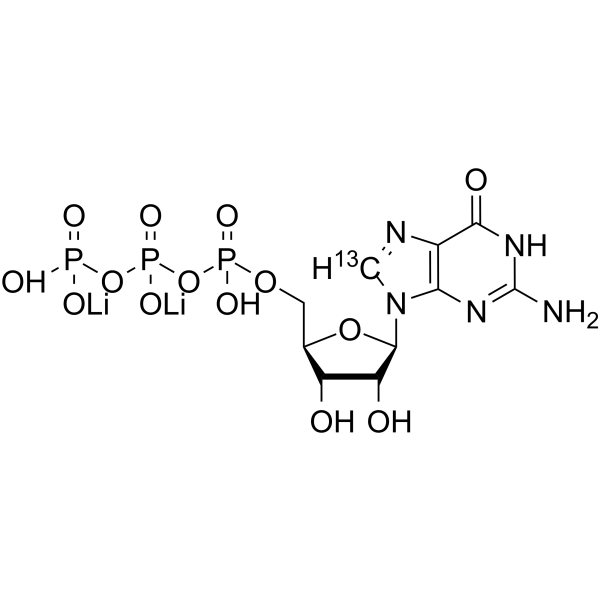
Guanosine triphosphate- 13C (GTP- 13C) dilithium is 13C-labeled Guanosine triphosphate (HY-113225). Guanosine triphosphate (GTP) is a critical nucleotide and regulator of cellular metabolism. Guanosine triphosphate promotes ribosomal DNA localization, pre-rRNA transcription and ribosome biogenesis by binding to RNA polymerase I and GPN proteins (GPN1/3). Guanosine triphosphate links MYC-dependent ribosome biogenesis to nucleotide sufficiency, acts as a metabolic gatekeeper supporting protein synthesis, DNA/RNA synthesis and cellular signal transduction, while also participating in the physiological activities of pancreatic β-cells and serving as an oxidative substrate for reactive oxygen species. In small cell lung cancer with high MYC expression, Guanosine triphosphate accumulates through the IMPDH-driven synthetic pathway, thereby affecting apoptosis and mitotic processes. Guanosine triphosphate is used in the research of small cell lung cancer, hepatoblastoma and cellular metabolism .
|
-
-
- HY-113225S5
-
|
GTP-13C10 dilithium
|
Isotope-Labeled Compounds
Endogenous Metabolite
Mitosis
Apoptosis
DNA/RNA Synthesis
|
Infection
Cancer
|
|
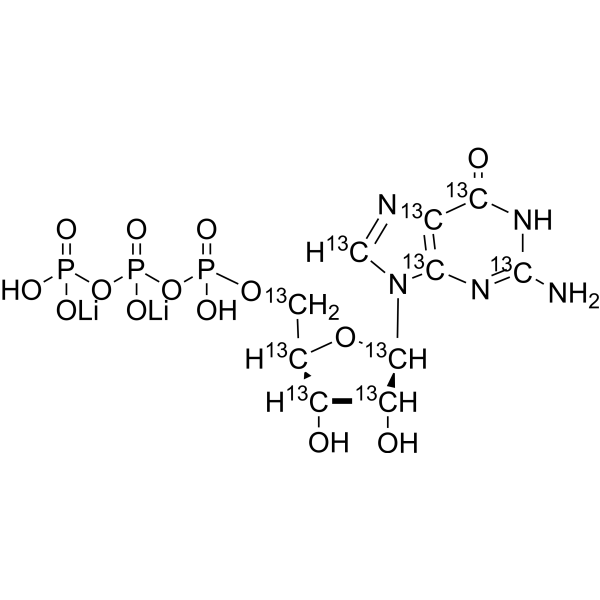
Guanosine triphosphate- 13C10 (GTP- 13C10) dilithium is 13C-labeled Guanosine triphosphate (HY-113225). Guanosine triphosphate dilithium (GTP) is a critical nucleotide and regulator of cellular metabolism. Guanosine triphosphate dilithium promotes ribosomal DNA localization, pre-rRNA transcription and ribosome biogenesis by binding to RNA polymerase I and GPN proteins (GPN1/3). Guanosine triphosphate dilithium links MYC-dependent ribosome biogenesis to nucleotide sufficiency, acts as a metabolic gatekeeper supporting protein synthesis, DNA/RNA synthesis and cellular signal transduction, while also participating in the physiological activities of pancreatic β-cells and serving as an oxidative substrate for reactive oxygen species. In small cell lung cancer with high MYC expression, Guanosine triphosphate dilithium accumulates through the IMPDH-driven synthetic pathway, thereby affecting apoptosis and mitotic processes. Guanosine triphosphate dilithium is used in the research of small cell lung cancer, hepatoblastoma and cellular metabolism .
|
-
-
- HY-113225S3
-
|
GTP-15N5 dilithium
|
Isotope-Labeled Compounds
Endogenous Metabolite
Mitosis
Apoptosis
DNA/RNA Synthesis
|
Infection
Cancer
|
|
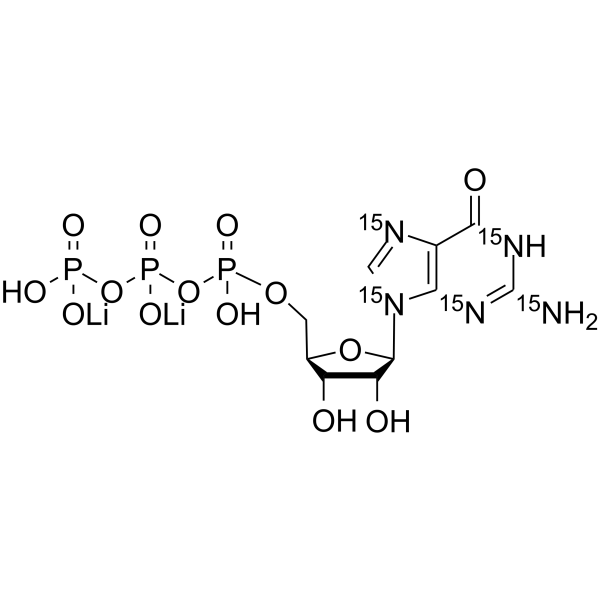
Guanosine triphosphate- 15N5 (GTP- 15N5) dilithium is 15N labeled Guanosine triphosphate (HY-113225). Guanosine triphosphate dilithium (GTP) is a critical nucleotide and regulator of cellular metabolism. Guanosine triphosphate dilithium promotes ribosomal DNA localization, pre-rRNA transcription and ribosome biogenesis by binding to RNA polymerase I and GPN proteins (GPN1/3). Guanosine triphosphate dilithium links MYC-dependent ribosome biogenesis to nucleotide sufficiency, acts as a metabolic gatekeeper supporting protein synthesis, DNA/RNA synthesis and cellular signal transduction, while also participating in the physiological activities of pancreatic β-cells and serving as an oxidative substrate for reactive oxygen species. In small cell lung cancer with high MYC expression, Guanosine triphosphate dilithium accumulates through the IMPDH-driven synthetic pathway, thereby affecting apoptosis and mitotic processes. Guanosine triphosphate dilithium is used in the research of small cell lung cancer, hepatoblastoma and cellular metabolism .
|
-
-
- HY-135780
-
-
-
- HY-113225S1
-
|
GTP-13C10,15N5 tetraammonium
|
Endogenous Metabolite
Mitosis
Apoptosis
DNA/RNA Synthesis
|
Cancer
|
|
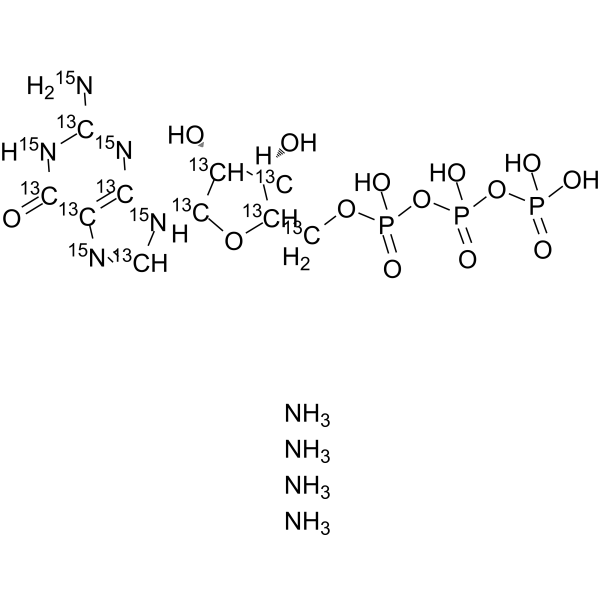
Guanosine triphosphate- 13C10, 15N5 tetraammonium is the 13C and 15N labeled Guanosine triphosphate tetraammonium. Guanosine triphosphate tetraammonium (GTP) is a critical nucleotide and regulator of cellular metabolism. Guanosine triphosphate tetraammonium promotes ribosomal DNA localization, pre-rRNA transcription and ribosome biogenesis by binding to RNA polymerase I and GPN proteins (GPN1/3). Guanosine triphosphate tetraammonium links MYC-dependent ribosome biogenesis to nucleotide sufficiency, acts as a metabolic gatekeeper supporting protein synthesis, DNA/RNA synthesis and cellular signal transduction, while also participating in the physiological activities of pancreatic β-cells and serving as an oxidative substrate for reactive oxygen species. In small cell lung cancer with high MYC expression, Guanosine triphosphate tetraammonium accumulates through the IMPDH-driven synthetic pathway, thereby affecting apoptosis and mitotic processes. Guanosine triphosphate tetraammonium is used in the research of small cell lung cancer, hepatoblastoma and cellular metabolism .
|
-
-
- HY-113225S4
-
|
GTP-15N5,d14 dilithium
|
Isotope-Labeled Compounds
Endogenous Metabolite
Mitosis
Apoptosis
DNA/RNA Synthesis
|
Infection
Cancer
|
|
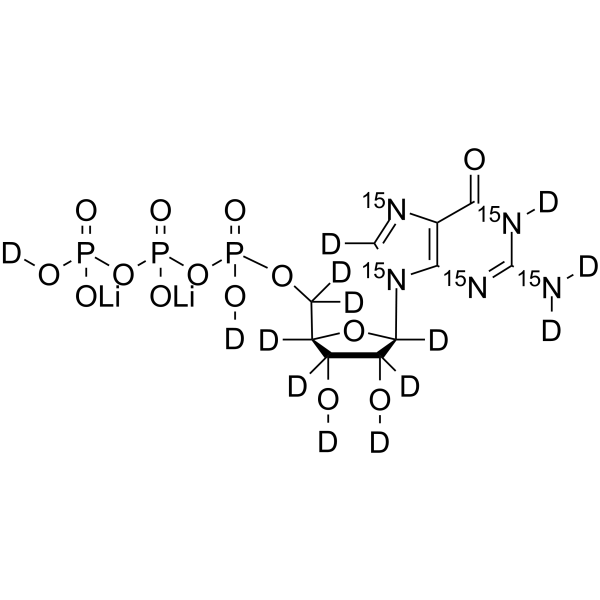
Guanosine triphosphate- 15N5,d14 (GTP- 15N5,d14) dilithium is deuterium and 15N labeled Guanosine triphosphate (HY-113225). Guanosine triphosphate dilithium (GTP) is a critical nucleotide and regulator of cellular metabolism. Guanosine triphosphate dilithium promotes ribosomal DNA localization, pre-rRNA transcription and ribosome biogenesis by binding to RNA polymerase I and GPN proteins (GPN1/3). Guanosine triphosphate dilithium links MYC-dependent ribosome biogenesis to nucleotide sufficiency, acts as a metabolic gatekeeper supporting protein synthesis, DNA/RNA synthesis and cellular signal transduction, while also participating in the physiological activities of pancreatic β-cells and serving as an oxidative substrate for reactive oxygen species. In small cell lung cancer with high MYC expression, Guanosine triphosphate dilithium accumulates through the IMPDH-driven synthetic pathway, thereby affecting apoptosis and mitotic processes. Guanosine triphosphate dilithium is used in the research of small cell lung cancer, hepatoblastoma and cellular metabolism .
|
-
-
- HY-122532
-
|
|
Histone Methyltransferase
|
Cancer
|
|
Fagaronine chloride is an alkaloid with inhibitory activity against reverse transcriptase and topoisomerase I. Fagaronine chloride can effectively inhibit the reverse transcriptase of RSii tumor virus at a concentration of 6-60 μg/mL. Fagaronine chloride rapidly blocks the synthesis of DNA polymerase by interacting with the template primer. Fagaronine chloride has shown anti-tumor potential, especially in the study of retroviral infection .
|
-

-
- HY-146365
-
|
|
DNA/RNA Synthesis
HIV
|
Infection
Inflammation/Immunology
|
|
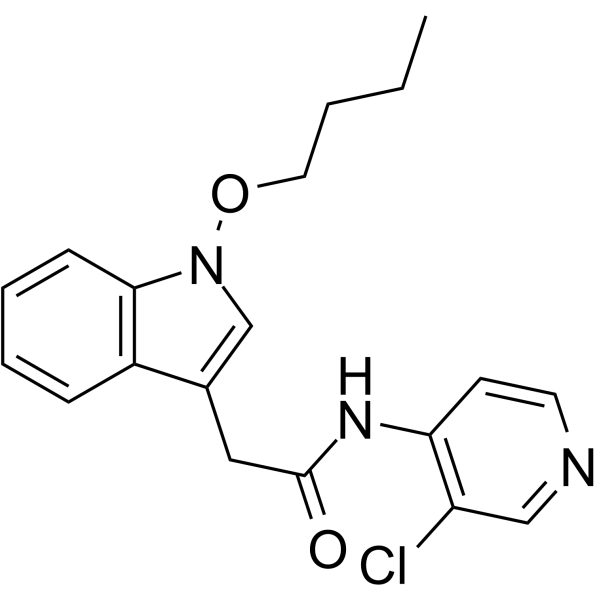
HIV-1 inhibitor-30 (compound 10i) is a potent HIV-1 inhibitor with an EC50 value of 40 nM and an IC50 value of 80 nM for HIV-1 RT DNA polymerase. HIV-1 inhibitor-30 has highly antiretroviral activity against seven non-nucleoside reverse transcriptase inhibitor (NNRTI)-resistant HIV-1 strains (RT-K103N; RT-Y181C; RT-K103N,Y181C; RT-L100I,K103N; RT-Y188L; RT-K103N,G190A; RT-K103N,V108I) with IC50s of 0.04~1.42 μM. HIV-1 inhibitor-30 can be used for researching AIDS .
|
-
-
- HY-W013403S
-
|
|
IFNAR
|
Infection
|
|
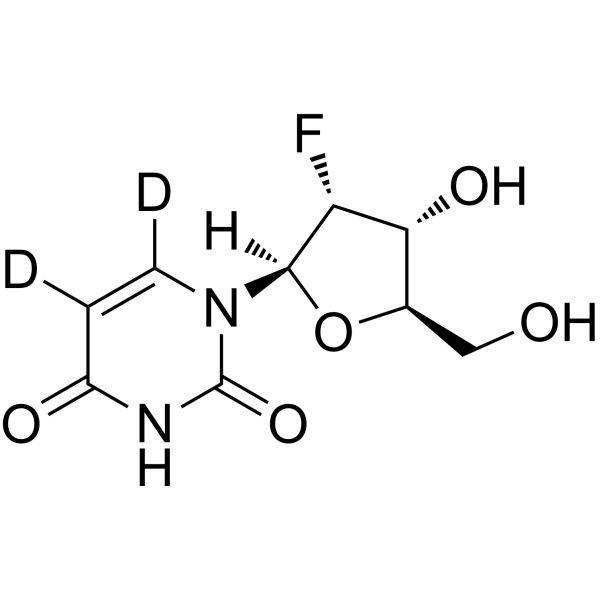
2'-Deoxy-2'-fluorouridine-d2 is the deuterium labeled 2'-Deoxy-2'-fluorouridine . 2'-Deoxy-2'-fluorouridine is a derivative of the pyrimidine nucleoside uridine. 2'-Deoxy-2'-fluorouridine is a nucleoside analog that inhibits the replication of wild-type viruses by binding to the viral RNA. Hepatitis C polyU/UC RNA strands containing 2'-Deoxy-2'-fluorouridine, bind to RIG-I but do not activate RIG-I signaling in a reporter assay using Huh7 cells. 2'-Deoxy-2'-fluorouridine also has been used as a starting material in the synthesis of respiratory syncytial virus (RSV) polymerase inhibitors. 2'-Deoxy-2'-fluorouridine can incorporate into DNA and RNA in rat and woodchuck model upon administration. 2'-Deoxy-2'-fluorouridine can be studied in anti-viral research .
|
-
-
- HY-160968
-
|
|
Drug Derivative
Antibiotic
Bacterial
DNA/RNA Synthesis
|
Infection
Cancer
|
|
4-Demethoxy-7,9-di-epi-daunorubicin, a derivative of Daunorubicin (HY-13062A), is an anthracycline antibiotics. 4-Demethoxy-7,9-di-epi-daunorubicin can bind to calf thymus DNA and forms a complex with the stacked DNA base pairs. 4-Demethoxy-7,9-di-epi-daunorubicin can inhibit prokaryotic nucleic acid polymerases, including E. coli DNA polymerase I and RNA polymerase. 4-Demethoxy-7,9-di-epi-daunorubicin can be used for researches of cancer and infection .
|
-

-
- HY-109056A
-
|
R-1206 sodium
|
HIV
Drug Intermediate
Reverse Transcriptase
Carbonic Anhydrase
|
Infection
Cancer
|
|
Elsulfavirine sodium (R-1206) is an orally active human carbonic anhydrase (carbonic anhydrase, CA) inhibitor and an allosteric inhibitor of HIV-1 non-nucleoside reverse transcriptase (NNRT). Elsulfavirine sodium also targets and blocks the interaction between adenylosuccinate lyase (ADSL) and insulin-induced gene proteins INSIG1/2, blocks SREBP-1-mediated de novo lipid synthesis, and inhibits the proliferation of liver cancer cells. The combination of Elsulfavirine sodium and Lenvatinib (HY-10981) produces a synergistic anti-tumor effect. Elsulfavirine sodium is converted into the active metabolite VM1500A in vivo, blocks the DNA polymerase activity of reverse transcriptase, and inhibits HIV-1 replication. Elsulfavirine sodium exhibits a Ki of 1960 nM-52400 nM against human carbonic anhydrase isoforms including I, VII, VI, VA, VB, IX, XIII, XIV. Elsulfavirine sodium is used in studies related to HIV-1 infection and liver cancer .
|
-

-
- HY-109056R
-
|
R-1206 (Standard)
|
Reference Standards
Drug Intermediate
HIV
Reverse Transcriptase
Carbonic Anhydrase
|
Infection
Cancer
|
|
Elsulfavirine (Standard) is the analytical standard of Elsulfavirine (HY-109056). This product is intended for research and analytical applications. Elsulfavirine (R-1206) is an orally active human carbonic anhydrase (carbonic anhydrase, CA) inhibitor and an allosteric inhibitor of HIV-1 non-nucleoside reverse transcriptase (NNRT). Elsulfavirine also targets and blocks the interaction between adenylosuccinate lyase (ADSL) and insulin-induced gene proteins INSIG1/2, blocks SREBP-1-mediated de novo lipid synthesis, and inhibits the proliferation of liver cancer cells. The combination of Elsulfavirine and Lenvatinib (HY-10981) produces a synergistic anti-tumor effect. Elsulfavirine is converted into the active metabolite VM1500A in vivo, blocks the DNA polymerase activity of reverse transcriptase, and inhibits HIV-1 replication. Elsulfavirine exhibits a Ki of 1960 nM-52400 nM against human carbonic anhydrase isoforms including I, VII, VI, VA, VB, IX, XIII, XIV. Elsulfavirine is used in studies related to HIV-1 infection and liver cancer .
|
-

-
- HY-W001951
-
|
Tetrakis(acetato)dirhodium(II); Rhodium(II) acetate dimer
|
生化学アッセイ試薬
|
|
Dirhodium tetraacetate (Tetrakis (acetato) dirhodium (II)) is an anticancer agent. Dirhodium tetraacetate functionally inhibits the activities of DNA polymerase I and RNA polymerase. It also acts as a catalyst and can be used to construct rhodium-based artificial metalloenzymes .
|
-
- HY-D1021
-
|
Aminoallyl-dUTP sodium salt
|
生化学アッセイ試薬
|
|
AA-dUTP (Aminoallyl-dUTP) sodium salt is a reverse transcriptase and DNA polymerase I substrate with probe precursor activity. AA-dUTP sodium salt undergoes enzymatic incorporation into DNA during cDNA synthesis and nick translation. AA-dUTP sodium salt generates amine-modified DNA, which can be used for labeling with amine-reactive fluorescent dyes .
|
-
- HY-KE8007
-
|
|
|
This product is a DNA polymerase obtained by expressing DNA Polymerase I (E. coli) in E. coli and purifying and isolating it multiple times.
|
-
- HY-K0524
-
1 Publications Verification
|
|
MCE 2-Color Tracking SYBR qPCR Master Mix (Universal) is a 2× concentration premixed reagent utilizing a special performance-enhanced Taq DNA polymerase protected via a hot-start activation technique, and optimized qPCR buffer system to perform SYBR Green I based quantitative PCR (qPCR). The 100 rxns is defined as the base specification. All larger sizes correspond to incremental volumes of this base.
|
| 製品番号 |
製品名 |
Category |
Target |
構造式 |
-
- HY-113225S2
-
|
|
|
Guanosine triphosphate- 13C (GTP- 13C) dilithium is 13C-labeled Guanosine triphosphate (HY-113225). Guanosine triphosphate (GTP) is a critical nucleotide and regulator of cellular metabolism. Guanosine triphosphate promotes ribosomal DNA localization, pre-rRNA transcription and ribosome biogenesis by binding to RNA polymerase I and GPN proteins (GPN1/3). Guanosine triphosphate links MYC-dependent ribosome biogenesis to nucleotide sufficiency, acts as a metabolic gatekeeper supporting protein synthesis, DNA/RNA synthesis and cellular signal transduction, while also participating in the physiological activities of pancreatic β-cells and serving as an oxidative substrate for reactive oxygen species. In small cell lung cancer with high MYC expression, Guanosine triphosphate accumulates through the IMPDH-driven synthetic pathway, thereby affecting apoptosis and mitotic processes. Guanosine triphosphate is used in the research of small cell lung cancer, hepatoblastoma and cellular metabolism .
|
-
-
- HY-113225S5
-
|
|
|
Guanosine triphosphate- 13C10 (GTP- 13C10) dilithium is 13C-labeled Guanosine triphosphate (HY-113225). Guanosine triphosphate dilithium (GTP) is a critical nucleotide and regulator of cellular metabolism. Guanosine triphosphate dilithium promotes ribosomal DNA localization, pre-rRNA transcription and ribosome biogenesis by binding to RNA polymerase I and GPN proteins (GPN1/3). Guanosine triphosphate dilithium links MYC-dependent ribosome biogenesis to nucleotide sufficiency, acts as a metabolic gatekeeper supporting protein synthesis, DNA/RNA synthesis and cellular signal transduction, while also participating in the physiological activities of pancreatic β-cells and serving as an oxidative substrate for reactive oxygen species. In small cell lung cancer with high MYC expression, Guanosine triphosphate dilithium accumulates through the IMPDH-driven synthetic pathway, thereby affecting apoptosis and mitotic processes. Guanosine triphosphate dilithium is used in the research of small cell lung cancer, hepatoblastoma and cellular metabolism .
|
-
-
- HY-113225S3
-
|
|
|
Guanosine triphosphate- 15N5 (GTP- 15N5) dilithium is 15N labeled Guanosine triphosphate (HY-113225). Guanosine triphosphate dilithium (GTP) is a critical nucleotide and regulator of cellular metabolism. Guanosine triphosphate dilithium promotes ribosomal DNA localization, pre-rRNA transcription and ribosome biogenesis by binding to RNA polymerase I and GPN proteins (GPN1/3). Guanosine triphosphate dilithium links MYC-dependent ribosome biogenesis to nucleotide sufficiency, acts as a metabolic gatekeeper supporting protein synthesis, DNA/RNA synthesis and cellular signal transduction, while also participating in the physiological activities of pancreatic β-cells and serving as an oxidative substrate for reactive oxygen species. In small cell lung cancer with high MYC expression, Guanosine triphosphate dilithium accumulates through the IMPDH-driven synthetic pathway, thereby affecting apoptosis and mitotic processes. Guanosine triphosphate dilithium is used in the research of small cell lung cancer, hepatoblastoma and cellular metabolism .
|
-
-
- HY-113225S1
-
|
|
|
Guanosine triphosphate- 13C10, 15N5 tetraammonium is the 13C and 15N labeled Guanosine triphosphate tetraammonium. Guanosine triphosphate tetraammonium (GTP) is a critical nucleotide and regulator of cellular metabolism. Guanosine triphosphate tetraammonium promotes ribosomal DNA localization, pre-rRNA transcription and ribosome biogenesis by binding to RNA polymerase I and GPN proteins (GPN1/3). Guanosine triphosphate tetraammonium links MYC-dependent ribosome biogenesis to nucleotide sufficiency, acts as a metabolic gatekeeper supporting protein synthesis, DNA/RNA synthesis and cellular signal transduction, while also participating in the physiological activities of pancreatic β-cells and serving as an oxidative substrate for reactive oxygen species. In small cell lung cancer with high MYC expression, Guanosine triphosphate tetraammonium accumulates through the IMPDH-driven synthetic pathway, thereby affecting apoptosis and mitotic processes. Guanosine triphosphate tetraammonium is used in the research of small cell lung cancer, hepatoblastoma and cellular metabolism .
|
-
-
- HY-113225S4
-
|
|
|
Guanosine triphosphate- 15N5,d14 (GTP- 15N5,d14) dilithium is deuterium and 15N labeled Guanosine triphosphate (HY-113225). Guanosine triphosphate dilithium (GTP) is a critical nucleotide and regulator of cellular metabolism. Guanosine triphosphate dilithium promotes ribosomal DNA localization, pre-rRNA transcription and ribosome biogenesis by binding to RNA polymerase I and GPN proteins (GPN1/3). Guanosine triphosphate dilithium links MYC-dependent ribosome biogenesis to nucleotide sufficiency, acts as a metabolic gatekeeper supporting protein synthesis, DNA/RNA synthesis and cellular signal transduction, while also participating in the physiological activities of pancreatic β-cells and serving as an oxidative substrate for reactive oxygen species. In small cell lung cancer with high MYC expression, Guanosine triphosphate dilithium accumulates through the IMPDH-driven synthetic pathway, thereby affecting apoptosis and mitotic processes. Guanosine triphosphate dilithium is used in the research of small cell lung cancer, hepatoblastoma and cellular metabolism .
|
-
-
- HY-W013403S
-
|
|
|
2'-Deoxy-2'-fluorouridine-d2 is the deuterium labeled 2'-Deoxy-2'-fluorouridine . 2'-Deoxy-2'-fluorouridine is a derivative of the pyrimidine nucleoside uridine. 2'-Deoxy-2'-fluorouridine is a nucleoside analog that inhibits the replication of wild-type viruses by binding to the viral RNA. Hepatitis C polyU/UC RNA strands containing 2'-Deoxy-2'-fluorouridine, bind to RIG-I but do not activate RIG-I signaling in a reporter assay using Huh7 cells. 2'-Deoxy-2'-fluorouridine also has been used as a starting material in the synthesis of respiratory syncytial virus (RSV) polymerase inhibitors. 2'-Deoxy-2'-fluorouridine can incorporate into DNA and RNA in rat and woodchuck model upon administration. 2'-Deoxy-2'-fluorouridine can be studied in anti-viral research .
|
-
-
- HY-113225
-
|
GTP
|
|
Nucleotide Analogs
|
|
Guanosine triphosphate (GTP) is a critical nucleotide and regulator of cellular metabolism. Guanosine triphosphate promotes ribosomal DNA localization, pre-rRNA transcription and ribosome biogenesis by binding to RNA polymerase I and GPN proteins (GPN1/3). Guanosine triphosphate links MYC-dependent ribosome biogenesis to nucleotide sufficiency, acts as a metabolic gatekeeper supporting protein synthesis, DNA/RNA synthesis and cellular signal transduction, while also participating in the physiological activities of pancreatic β-cells and serving as an oxidative substrate for reactive oxygen species. In small cell lung cancer with high MYC expression, Guanosine triphosphate accumulates through the IMPDH-driven synthetic pathway, thereby affecting apoptosis and mitotic processes. Guanosine triphosphate is used in the research of small cell lung cancer, hepatoblastoma and cellular metabolism .
|
入力情報は安全に管理されます. ※ 必須入力項目.
Inquiry Information
- 製品名:
- 製品番号:
- 数量:
- MCE 日本正規代理店:





