



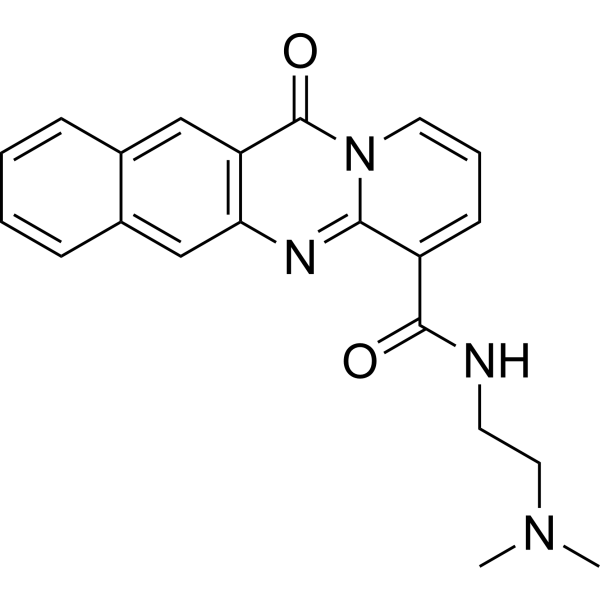
BMH-21
Based on 15 publication(s) in Google Scholar
BMH-21 is a first-in-class DNA intercalator which inhibits RNA polymerase I (Pol I) transcription. BMH-21 possesses anticancer activity.
For research use only. We do not sell to patients.
- Purity : 98.56%
- CAS No.: 896705-16-1
- Formula: C21H20N4O2
- Molecular Weight:360.41
-
Storage:Powder -20°C, 3 years , 4°C, 2 years ; In solvent -80°C, 2 years , -20°C, 1 year

To place orders, for customer services and technical support, please contact: MedChemExpress USA
Tel: 609-228-6898 E-mail: [email protected] [email protected]


-
 Biological Activity
-
Chemical Information
-
Solvent & Solubility
- Purity & Documentation
- References
-
 Help & FAQs


-
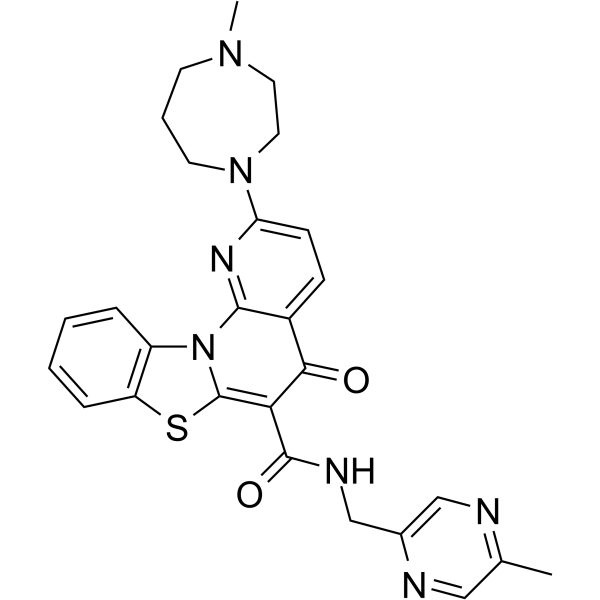
HY-13323
CX-5461RNA Polymerase I Inhibitor -
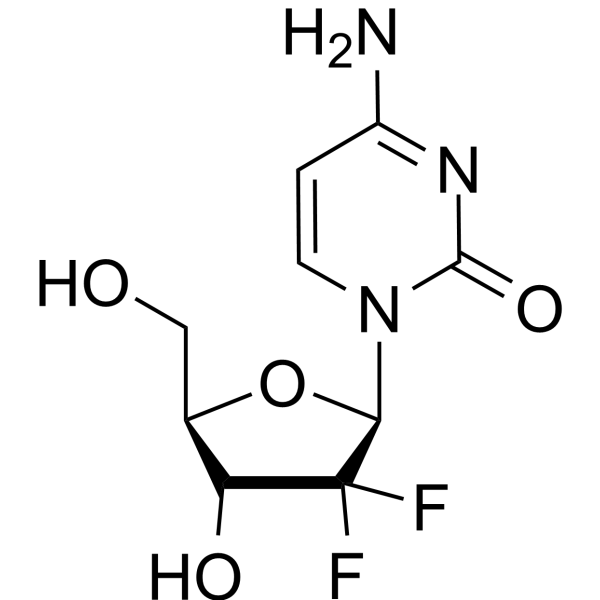
HY-17026
GemcitabineDNA Synthesis Inhibitor -
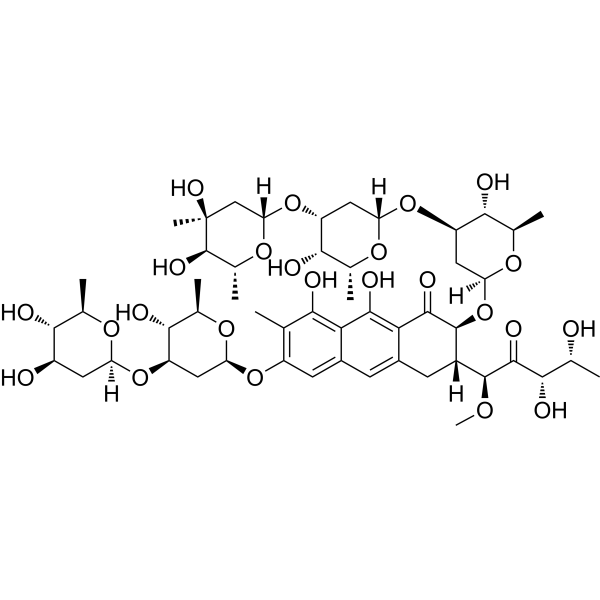
HY-A0122
PlicamycinSp1 Inhibitor -
HY-17419
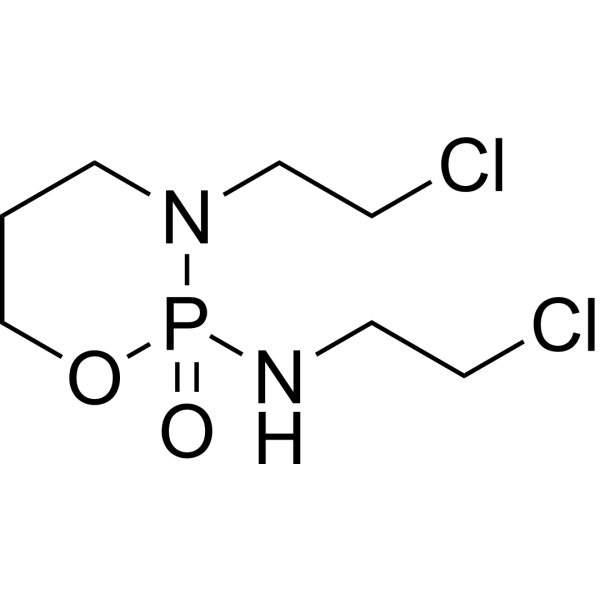
IfosfamideDNA Alkylator/Crosslinker -
HY-W014622
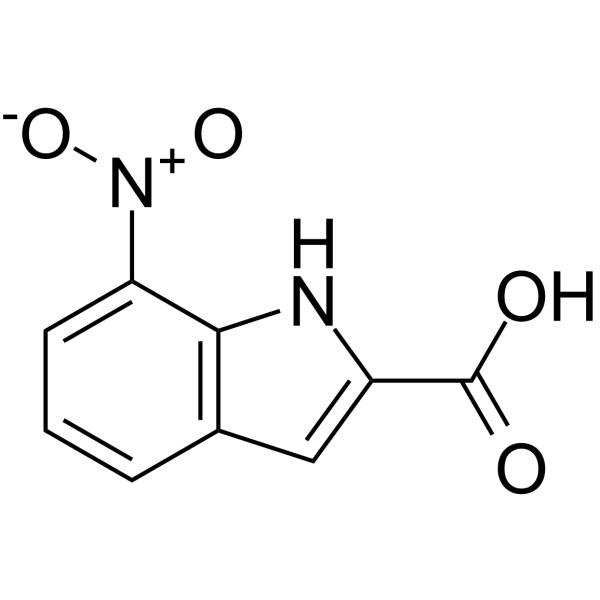
CRT0044876APE1 Inhibitor -
HY-14944
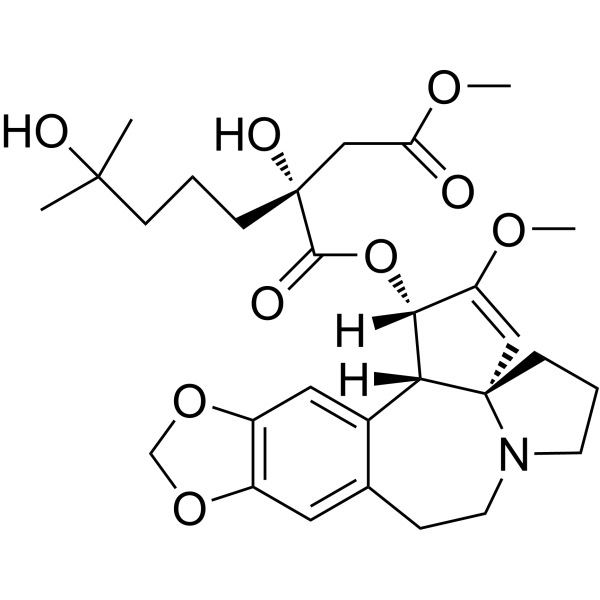
HomoharringtonineSTAT Inhibitor -
HY-B0256
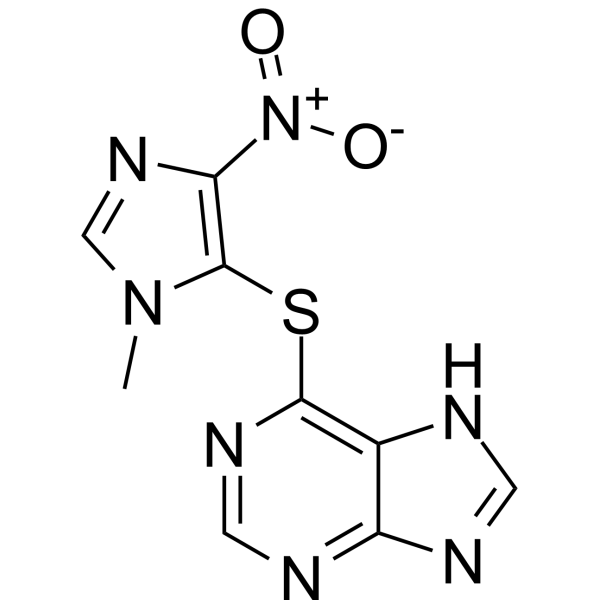
AzathioprineAutoimmunity Inhibitor -
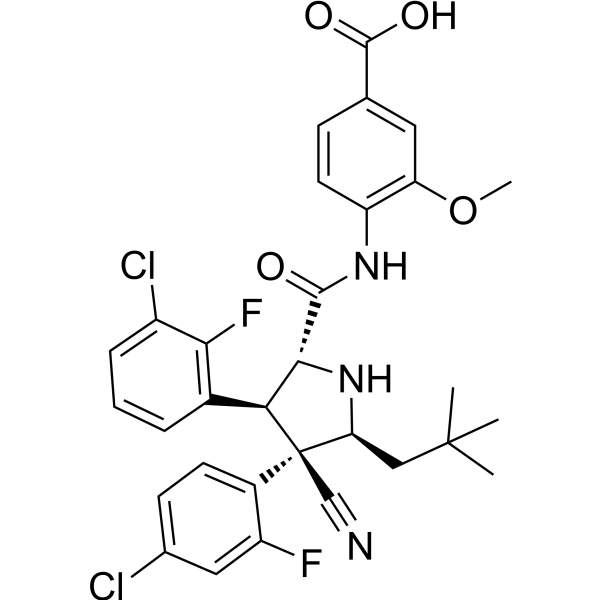
HY-15676
IdasanutlinMDM2 Inhibitor -
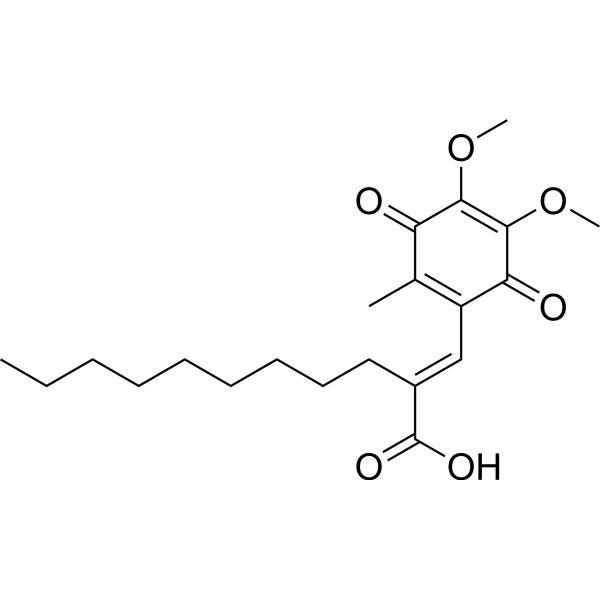
HY-19357
ErenapurstatApe-1/Ref-1 Inhibitor -
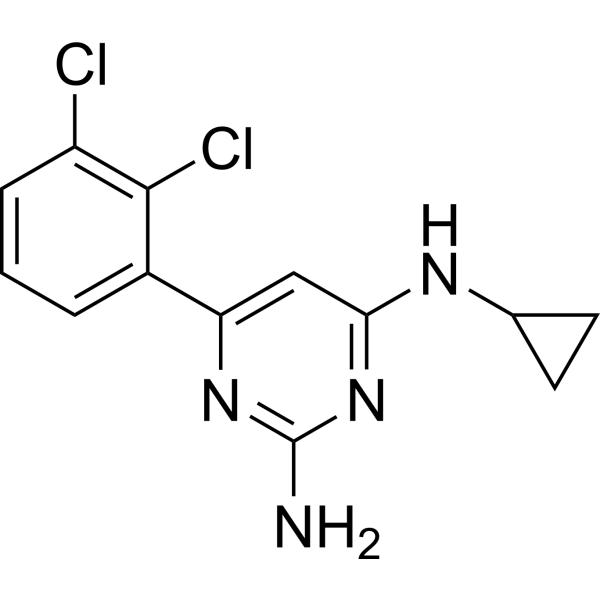
HY-12814
TH588MTH1 (NUDT1) Inhibitor -
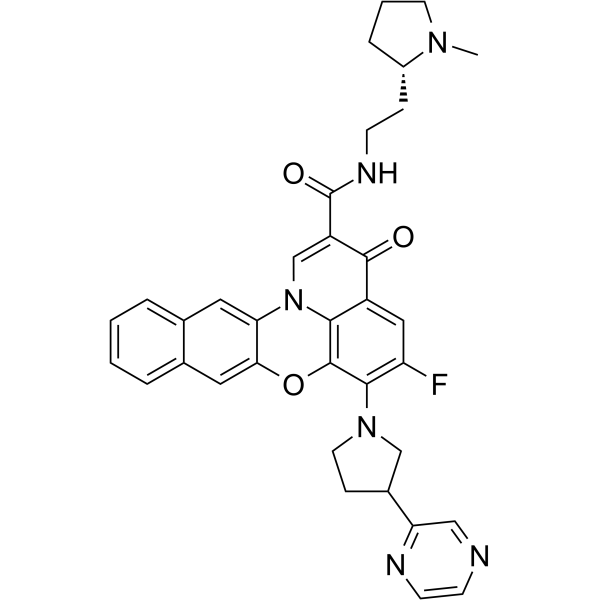
HY-14776
QuarfloxinRNA Pol I Inhibitor -

HY-B0256R
Azathioprine (Standard)Autoimmunity Inhibitor
Publications Citing Use of MedChemExpress (MCE) BMH-21
More- Mol Cancer. 2024 Dec 20;23(1):275. [Abstract]
- Mol Cell. 2025 Mar 6;85(5):894-912.e10. [Abstract]
- Cell Death Dis. 2025 Nov 7;16(1):812. [Abstract]
- Curr Biol. 2021 Jun 21;31(12):2507-2519.e4. [Abstract]
- Liver Int. 2026 Jan;46(1):e70478. [Abstract]
- J Cell Biol. 2023 Jan 2;222(1):e202202110. [Abstract]
- J Mol Med (Berl). 2019 Aug;97(8):1183-1193. [Abstract]
- Transl Oncol. 2026 Apr:66:102701. [Abstract]
- Development. 2024 Nov 1;151(21):dev202875. [Abstract]
- Mol Biol Cell. 2023 May 1;34(5):ar47. [Abstract]
- bioRxiv. 2026 May 28:2026.05.26.728043. [Abstract]
- bioRxiv. 2025 Nov 20:2025.11.19.689351. [Abstract]
- bioRxiv. 2025 Aug 19.
- SSRN. 2024 May 17.
- Utrecht University. 2023 Feb.
 Customer Validation & Images

-
WB
-
Cell Proliferation/Viability Assay
-
Cell Imaging/Staining
-
In Vivo Efficacy Study
-
In Vivo Efficacy Study
All DNA/RNA Synthesis Isoforms
More

Biological Activity
Description
IC50 & Target
|
RNA Polymerase |
Cellular Effect
|
Cell Line

|
Type | Value | Description | References |
|---|---|---|---|---|
| HeLa | IC50 |
0.46 μM
Compound: BMH-21
|
Cytotoxicity against human HeLa cells
Cytotoxicity against human HeLa cells
|
[PMID: 34124673] |
| U2OS | IC50 |
0.05 μM
Compound: 2, BMH-21
|
Induction of RNA polymerase-1 RPA194 subunit degradation in human U2OS cells after 3 hrs by epifluorescence microscopic analysis
Induction of RNA polymerase-1 RPA194 subunit degradation in human U2OS cells after 3 hrs by epifluorescence microscopic analysis
|
[PMID: 24847734] |
| U2OS | IC50 |
0.07 μM
Compound: 2, BMH-21
|
Inhibition of RNA polymerase-1 in human U2OS cells assessed as decrease in nucleolar localization of nucleolin after 3 hrs by epifluorescence microscopic analysis
Inhibition of RNA polymerase-1 in human U2OS cells assessed as decrease in nucleolar localization of nucleolin after 3 hrs by epifluorescence microscopic analysis
|
[PMID: 24847734] |
In Vitro
BMH-21 binds ribosomal DNA and inhibits Pol I transcription[1].
BMH-21 inhibits RNA polymerase I independent of DNA damage response[1].
BMH-21 intercalates into double strand (ds) DNA and has binding preference towards GC-rich DNA sequences[1].
BMH-21 (1 μM; 3 hours) acts in a DNA damage independent manner to activate nucleolar stress and RPA194 degradation[1].
MedChemExpress (MCE) has not independently confirmed the accuracy of these methods. They are for reference only.
-
Cell Line:U2OS cells
-
Concentration:0 μM, 0.1 μM , 1 μM, 10 μM
-
Incubation Time:48 hours
-
Result:Decreased the viability of cells at concentrations that activated the DNA damage response.
-
Cell Line:A375 cells
-
Concentration:1 μM
-
Incubation Time:3 hours
-
Result:Degraded RPA194 with blocked ATM and DNA-PKcs activity.
In Vivo
MedChemExpress (MCE) has not independently confirmed the accuracy of these methods. They are for reference only.
-
Animal Model:6-week old athymic NCr nu/nu mice, with HCT116 colorectal carcinoma xenograft[2]
-
Dosage:50 mg/kg
-
Administration:Intraperitoneal injection, daily, for 6 days
-
Result:Significantly inhibited HCT116 colon cancer tumor growth.


Chemical Information
-
CAS No. 896705-16-1
-
Appearance Solid
-
Molecular Weight 360.41
-
Formula C21H20N4O2
-
Color Yellow to orange
-
SMILES
O=C(C1=CC=CN2C1=NC3=C(C=C4C(C=CC=C4)=C3)C2=O)NCCN(C)C
-
Shipping
Room temperature in continental US; may vary elsewhere.
-
Storage
Powder -20°C 3 years 4°C 2 years In solvent -80°C 2 years -20°C 1 year


Publications (15)
-
Journal Impact Factor
-
Most Recent
-
Mol Cancer
AI-based classification of anticancer drugs reveals nucleolar condensation as a predictor of immunogenicity. [Abstract]2024 Dec 20;23(1):275. PMID: 39702289
BMH-21 purchased from MedChemExpress. Usage Cited in: Mol Cancer. 2024 Dec 20;23(1):275. [Abstract]
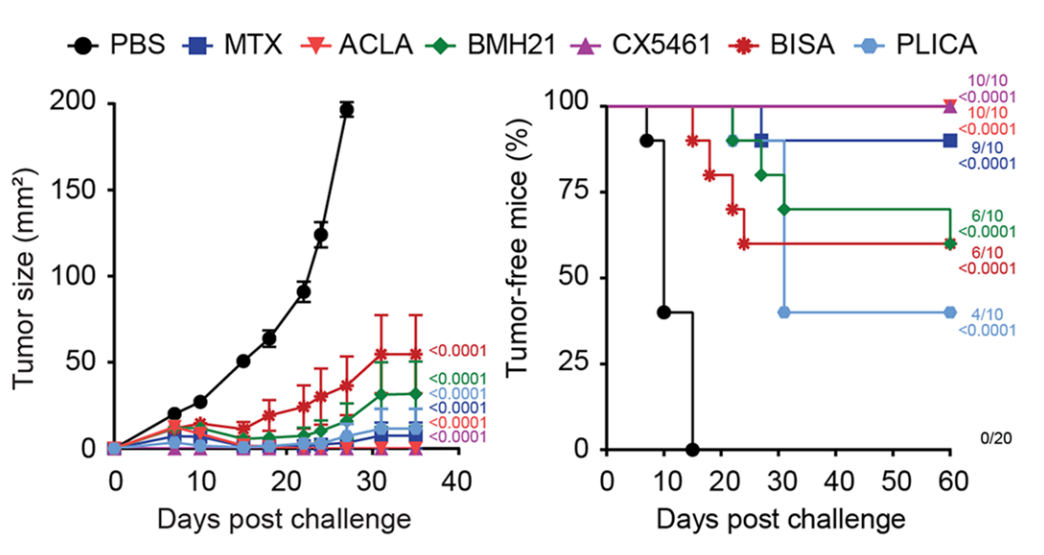
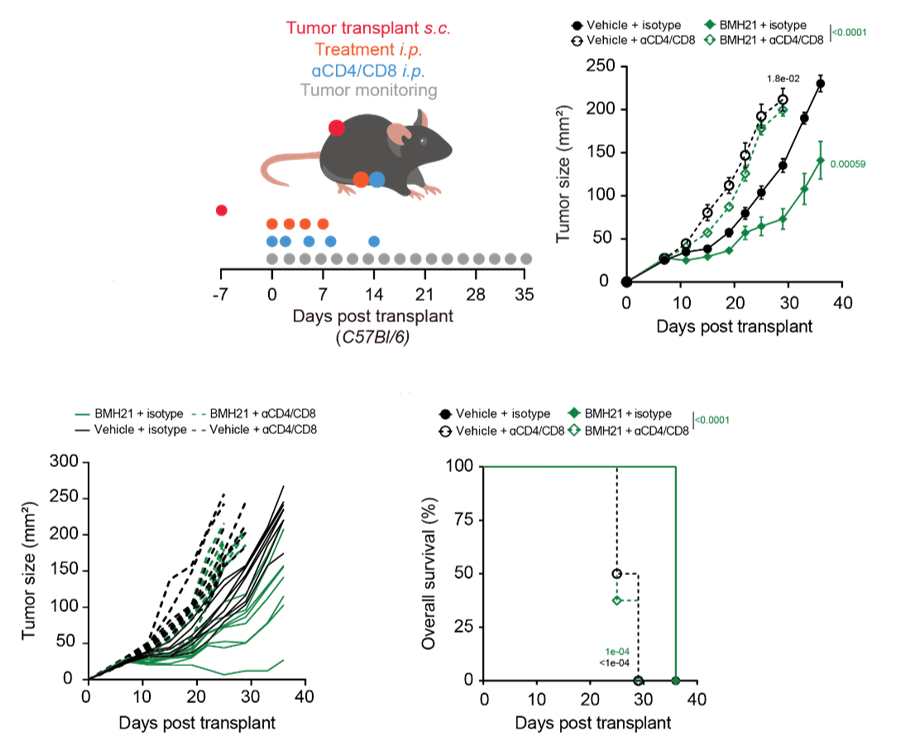
BMH-21 (5 µM) caused a significant delay in growth of mouse fibrosarcoma MCA205 cells and kept a significant percentage of mice alive and tumor-free.
BMH-21 purchased from MedChemExpress. Usage Cited in: Mol Cancer. 2024 Dec 20;23(1):275. [Abstract]
Systemic treatment of mice bearing established tumors with BMH-21 (50 mg/kg; i.p.) significantly reduced tumor progression, and this effect was lost upon in vivo depletion of T cells by monoclonal antibodies specific for CD4 and CD8.
-
Mol Cell
2025 Mar 6;85(5):894-912.e10. PMID: 39909041
BMH-21 purchased from MedChemExpress. Usage Cited in: Mol Cell. 2025 Mar 6;85(5):894-912.e10. [Abstract]
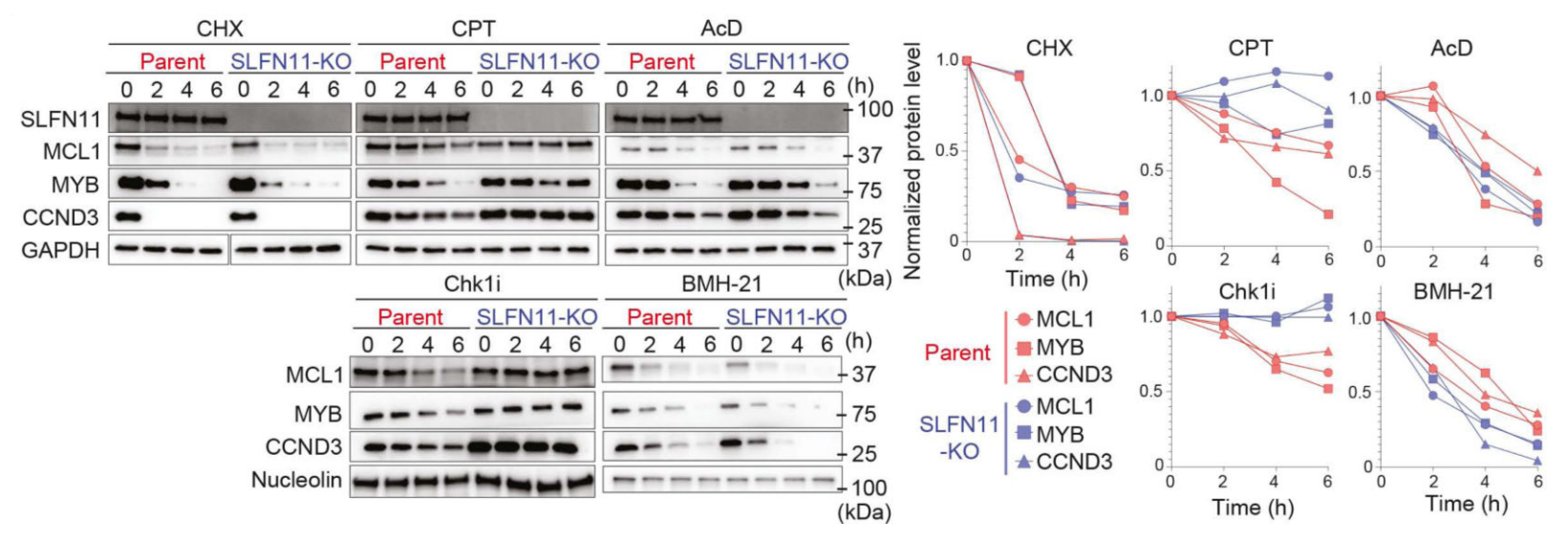
BMH-21 (10 μM; 6 h) decreased MCL1, CCND3, and MYB similarly regardless of SLFN11 in CCRF-CEM cells.
BMH-21 purchased from MedChemExpress. Usage Cited in: Mol Cell. 2025 Mar 6;85(5):894-912.e10. [Abstract]
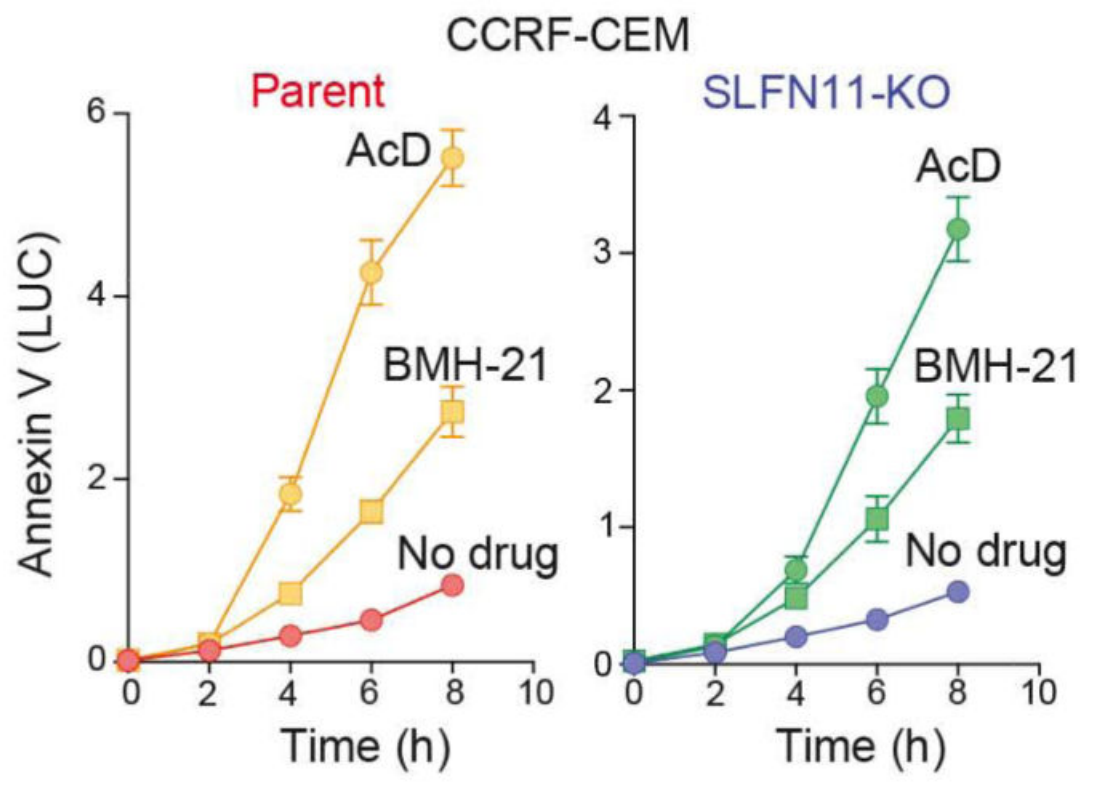
BMH-21 (10 μM) activated apoptosis independently of SLFN11 in CCRF-CEM cells, with similar kinetics to SLFN11-dependent apoptosis.
BMH-21 purchased from MedChemExpress. Usage Cited in: Mol Cell. 2025 Mar 6;85(5):894-912.e10. [Abstract]
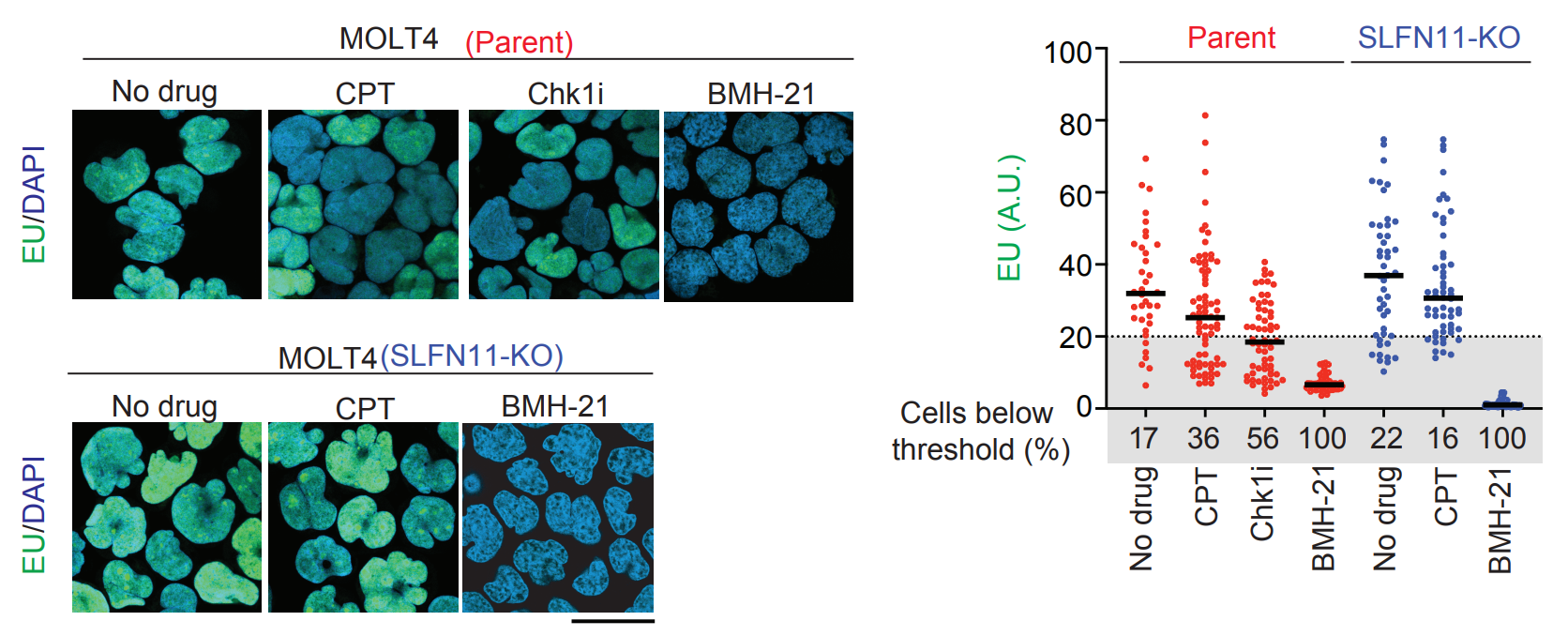
The RNA polymerase I (POLR1) inhibitors BMH-21 (10 µM; 6 h) drastically reduced EU incorporation in leukemia MOLT4 irrespective of SLFN11 expression.
-
Cell Death Dis
Pre-rRNAs control mitosis by maintaining chromosomal segregation through protecting SMC2 from AURKA-mediated phosphorylation. [Abstract]2025 Nov 7;16(1):812. PMID: 41203590 -
Curr Biol
The nucleolus as a polarized coaxial cable in which the rDNA axis is surrounded by dynamic subunit-specific phases. [Abstract]2021 Jun 21;31(12):2507-2519.e4. PMID: 33862007 -
Liver Int
Targeting RNA Polymerase I Inhibits Ribosome Biogenesis to Block Liver Fibrosis Progression. [Abstract]2026 Jan;46(1):e70478. PMID: 41388799 -
J Cell Biol
2023 Jan 2;222(1):e202202110. PMID: 36282216 -
J Mol Med (Berl)
2019 Aug;97(8):1183-1193. PMID: 31201471 -
Transl Oncol
FOSL1 promotes homologous recombination repair and camptothecin resistance via TCOF1-mediated ribosome biogenesis in non-small cell lung cancer. [Abstract]2026 Apr:66:102701. PMID: 41687404 -
Development
Ribosome biogenesis is essential for hemogenic endothelial cells to generate hematopoietic stem cells. [Abstract]2024 Nov 1;151(21):dev202875. PMID: 39324287 -
Mol Biol Cell
Mitotic DNA damage promotes chromokinesin-mediated missegregation of polar chromosomes in cancer cells. [Abstract]2023 May 1;34(5):ar47. PMID: 36989031 -
bioRxiv
2026 May 28:2026.05.26.728043. PMID: 42244595 -
bioRxiv
Dual RNA Polymerase I Inhibition with CX-5461 and BMH-21 Synergizes in Breast Cancer by Activating p53-Dependent Stress. [Abstract]2025 Nov 20:2025.11.19.689351. PMID: 41332727 -
-
-


Solvent & Solubility
In Vitro:
DMSO : 1 mg/mL (2.77 mM; Need ultrasonic; Hygroscopic DMSO has a significant impact on the solubility of product, please use newly opened DMSO)
Please refer to the solubility information to select the appropriate solvent. Once prepared, please aliquot and store the solution to prevent product inactivation from repeated freeze-thaw cycles.
Storage method and period of stock solution: -80°C, 2 years; -20°C, 1 year. When stored at -80°C, please use it within 2 years. When stored at -20°C, please use it within 1 year.
Please refer to the solubility information to select the appropriate solvent. Once prepared, please aliquot and store the solution to prevent product inactivation from repeated freeze-thaw cycles.
Storage method and period of stock solution: -80°C, 2 years; -20°C, 1 year. When stored at -80°C, please use it within 2 years. When stored at -20°C, please use it within 1 year.
Concentration (start) × Volume (start) = Concentration (final) × Volume (final)
In Vivo:
For the following dissolution methods, please prepare the working solution directly:
It is recommended to prepare fresh solutions and use them promptly within a short period of time.
The percentages shown for the solvents indicate their volumetric ratio in the final prepared solution. If precipitation or phase separation occurs during preparation, heat and/or sonication can be used to aid dissolution.
Add each solvent one by one: 50% PEG300 50% Saline
Solubility: 25 mg/mL (69.37 mM); Suspended solution; Need ultrasonic


Purity & Documentation
-
Data Sheet (278 KB)
-
SDS (392 KB)
- English - EN (392 KB)
- Français - FR (392 KB)
- Deutsch - DE (392 KB)
- Norwegian - NO (392 KB)
- Español - ES (392 KB)
- Swedish - SV (392 KB)
- Italian - IT (392 KB)
- Korean - KR (392 KB)
- Portuguese - PT (392 KB)
-
Handling Instructions (2659 KB)
References
[1]. Colis L, et al. DNA intercalator BMH-21 inhibits RNA polymerase I independent of DNA damage response. Oncotarget. 2014 Jun 30;5(12):4361-9. [Content Brief]
[2]. Karita Peltonen, et al. A Targeting Modality for Destruction of RNA Polymerase I that Possesses Anticancer Activity. Cancer Cell. 2014 Jan 13; 25(1): 77–90. [Content Brief]


Complete Stock Solution Preparation Table
Please refer to the solubility information to select the appropriate solvent. Once prepared, please aliquot and store the solution to prevent product inactivation from repeated freeze-thaw cycles.
Storage method and period of stock solution: -80°C, 2 years; -20°C, 1 year. When stored at -80°C, please use it within 2 years. When stored at -20°C, please use it within 1 year.
| Optional Solvent | Concentration Solvent Mass | 1 mg | 5 mg | 10 mg | 25 mg |
|---|---|---|---|---|---|
| DMSO | 1 mM | 2.7746 mL | 13.8731 mL | 27.7462 mL | 69.3654 mL |


BMH-21 Related Classifications
HY-12484 Related Classifications
 Powered by Bioz