



Guanosine triphosphate
Based on 6 publication(s) in Google Scholar
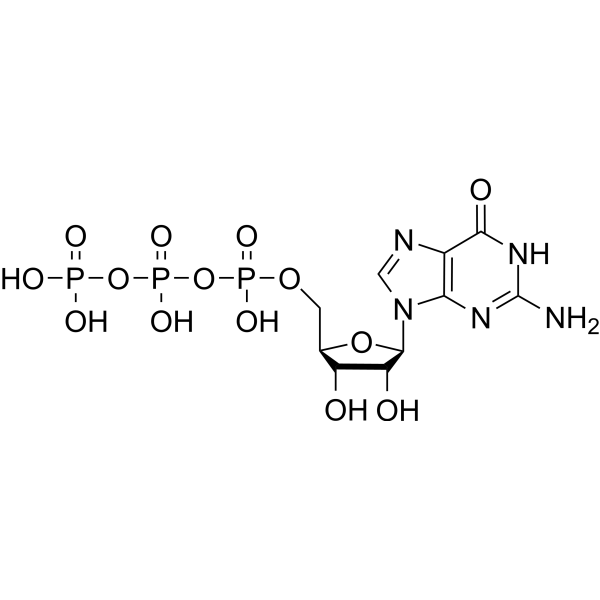
Guanosine triphosphate (GTP) is a critical nucleotide and regulator of cellular metabolism. Guanosine triphosphate promotes ribosomal DNA localization, pre-rRNA transcription and ribosome biogenesis by binding to RNA polymerase I and GPN proteins (GPN1/3). Guanosine triphosphate links MYC-dependent ribosome biogenesis to nucleotide sufficiency, acts as a metabolic gatekeeper supporting protein synthesis, DNA/RNA synthesis and cellular signal transduction, while also participating in the physiological activities of pancreatic β-cells and serving as an oxidative substrate for reactive oxygen species. In small cell lung cancer with high MYC expression, Guanosine triphosphate accumulates through the IMPDH-driven synthetic pathway, thereby affecting apoptosis and mitotic processes. Guanosine triphosphate is used in the research of small cell lung cancer, hepatoblastoma and cellular metabolism.
For research use only. We do not sell to patients.
- CAS No.: 86-01-1
- Formula: C10H16N5O14P3
- Molecular Weight:523.18
-
Storage:
Please store the product under the recommended conditions in the Certificate of Analysis.

To place orders, for customer services and technical support, please contact: MedChemExpress USA
Tel: 609-228-6898 E-mail: [email protected] [email protected]


-
 Biological Activity
-
Chemical Information
- Protocols
- Purity & Documentation
- References
-
 Help & FAQs


-
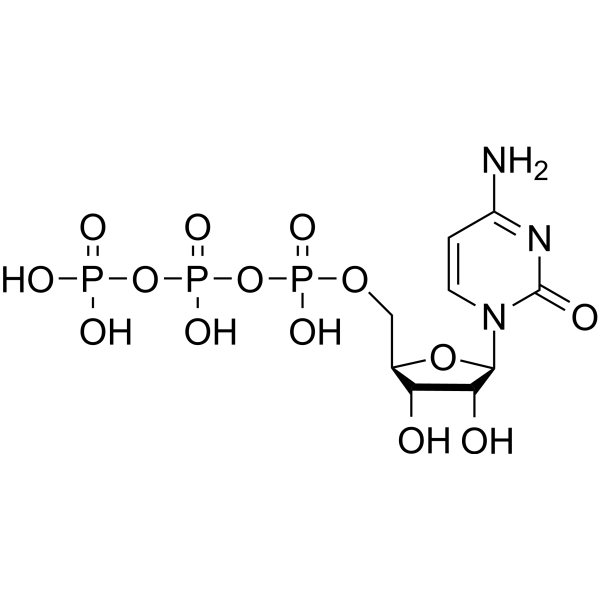
HY-125818
Cytidine-5'-triphosphateNucleoside Triphosphate -

HY-125818B
Cytidine-5'-triphosphate sodium hydrateNucleoside Triphosphate -

HY-138615S5
Deoxythymidine-5'-triphosphate-d15 dilithiumStable Isotope -

HY-131561
Ara-UTPNucleotides Analogs -
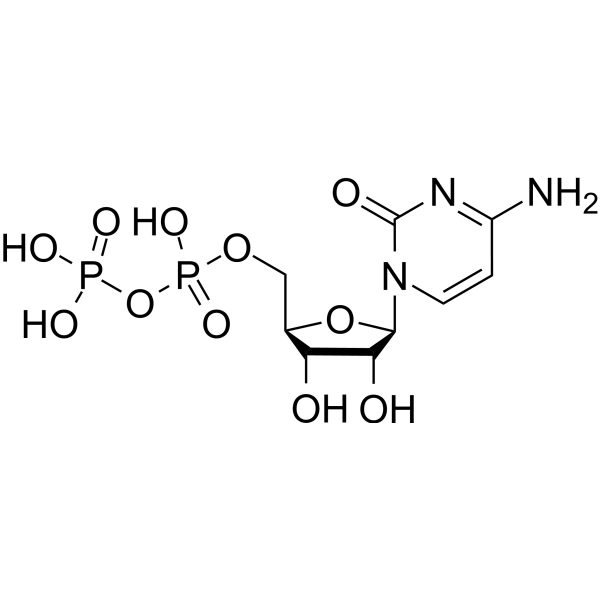
HY-113400
Cytidine 5'-diphosphateNucleotide -
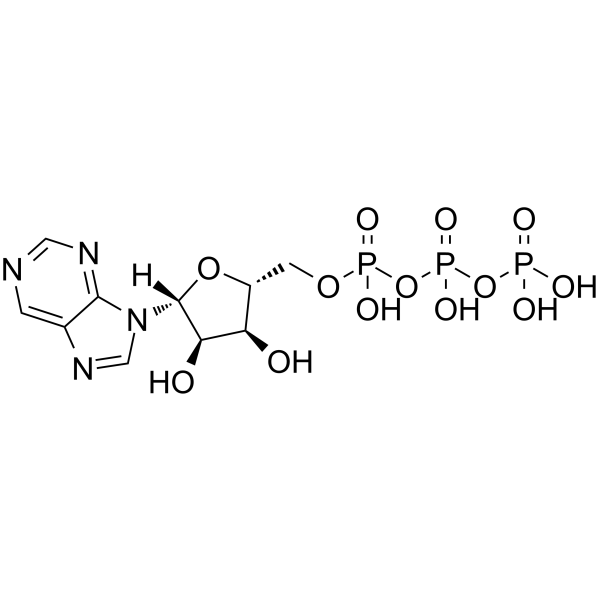
HY-137658
Purine riboside triphosphateTriphosphate Derivative
Publications Citing Use of MedChemExpress (MCE) Guanosine triphosphate
MoreAll Endogenous Metabolite Isoforms
MoreAll DNA/RNA Synthesis Isoforms
More

Biological Activity
Description
IC50 & Target
|
RNA Polymerase |
Human Endogenous Metabolite |
In Vitro
Primary MYC-high human small-cell lung cancer tumors have elevated endogenous guanosine triphosphate levels independent of proliferation status[1].
Guanosine triphosphate (GTP depletion via 1 μM MPA; 12 h) reduced protein synthesis in chemoresistant DMS53-CR human small-cell lung cancer cells, while restoring guanosine triphosphate levels (20 μM guanosine; 12 h) rescued protein synthesis activity[1].
Guanosine triphosphate binding to MYC-upregulated GPN1 and GPN3 GTPases is required for RNA polymerase I localization, ribosome biogenesis, and proliferation in MYC-high H82 human small-cell lung cancer cells, and constitutively GTP-bound GPN1/GPN3 mutants protect cells from guanosine triphosphate depletion-mediated inhibition of these activities[1].
Depletion of cellular GTP (1 μg/ml mycophenolic acid; 1-24 h) in HIT-T15 insulin-secreting β-cells potently inhibits mitogenesis, with significant inhibition observed as early as 1 hour and near-complete inhibition after 6-24 hours of treatment[2].
Depletion of cellular GTP (1.6-6.3 μg/ml mycophenolic acid; 18 h) in HIT-T15 and INS-1 insulin-secreting β-cells inhibits Ca2+-stimulated insulin secretion[2].
Guanosine triphosphate (1 mM; 4 h at 37 °C) undergoes oxidation to oxo8GTP in the presence of a ROS-generating system (1 mM L-ascorbic acid + 10 μM cupric sulfate), with oxo8GTP levels increasing ~4-fold and GTP levels showing a small significant decrease relative to control[3].
MedChemExpress (MCE) has not independently confirmed the accuracy of these methods. They are for reference only. Further protocols information, click here.
-
Cell Line:HIT-T15 insulin-secreting β-cells, INS-1 insulin-secreting β-cells
-
Concentration:0.3-10 μg/ml mycophenolic acid (HIT-T15 cells, GTP depleted to apoptosis-inducing levels); 25 μg/ml mycophenolic acid (INS-1 cells, GTP depleted to apoptosis-inducing levels)
-
Incubation Time:24-96 h (HIT-T15 cells); 48 h (INS-1 cells)
-
Result:Reduced HIT-T15 cell number by 70% after 48 hours of 3 μg/ml mycophenolic acid treatment, with parallel reductions in DNA, protein, and insulin content.
Reduced MTS formazan production by 30% (0.3 μg/ml, 48 h) to 80% (1 μg/ml, 96 h) in HIT-T15 cells. Induced apoptotic nuclear changes in 29% (1 μg/ml), 49% (3 μg/ml), and 70% (10 μg/ml) of HIT-T15 cells after 48 hours of treatment.
Increased oligonucleosome enrichment factor to ~3.5-fold of control in HIT-T15 cells after 48 hours of treatment.
Revealed chromatin condensation/margination in 25% and apoptotic bodies in 16% of HIT-T15 cells via electron microscopy after 48 hours of treatment.
Increased oligonucleosome enrichment factor to ~3-fold of control and induced apoptotic nuclear changes in INS-1 cells after 48 hours of 25 μg/ml mycophenolic acid treatment.


Chemical Information
-
CAS No. 86-01-1
-
Molecular Weight 523.18
-
Formula C10H16N5O14P3
-
SMILES
O[C@H]1[C@@H](O)[C@H](N2C(N=C(N)NC3=O)=C3N=C2)O[C@@H]1COP(OP(OP(O)(O)=O)(O)=O)(O)=O
-
Synonyms
GTP
-
Structure Classification
-
Initial Source
-
Shipping
Room temperature in continental US; may vary elsewhere.
-
Storage
Please store the product under the recommended conditions in the Certificate of Analysis.


Publications (6)
-
Journal Impact Factor
-
Most Recent
-
Cancer Commun (Lond)
Simvastatin overcomes the pPCK1-pLDHA-SPRINGlac axis-mediated ferroptosis and chemo-immunotherapy resistance in AKT-hyperactivated intrahepatic cholangiocarcinoma. [Abstract]2025 May 29. PMID: 40443016 -
Acta Pharm Sin B
Super-resolution imaging for in situ monitoring sub-cellular micro-dynamics of small molecule drug. [Abstract]2024 Apr;14(4):1864-1877. PMID: 38572114 -
J Mol Biol
2024 Apr 15;436(8):168513. PMID: 38447889 -
Bioorg Med Chem
Synthesis and biological evaluation of all possible inosine-mixed cyclic dinucleotides that activate different hSTING variants. [Abstract]2021 Jan 1:29:115899. PMID: 33285409 -
STAR Protoc
Protocol to identify the signaling network of nucleotide second messengers in Shigella sonnei. [Abstract]2026 Mar 20;7(1):104353. PMID: 41671092 -

Protocols
-
RNA extraction experimental
By lysing cells, releasing RNA, and removing impurities such as proteins and DNA, high-purity RNA products are finally obtained. The commonly used traditional method is the guanidine isothiocyanate/phenol/chloroform method (Trizol), which is suitable for a variety of animal materials including animal tissues, microorganisms, cultured cells, etc., and most plant materials.
-
Apoptosis
Apoptosis, also called programmed cell death, is generally characterized by distinct morphological characteristics.
-
TUNEL staining for apoptotic DNA fragmentation
TUNEL staining detects DNA strand breaks by using terminal deoxynucleotidyl transferase to add labeled nucleotides to exposed 3′-OH DNA termini, generating either microscopic staining in fixed cells or tissue sections, or fluorescence/cytometric signal in cell suspensions. TUNEL positivity reflects DNA fragmentation but should not be interpreted alone as definitive apoptosis, because TUNEL can also label necrotic, autolytic, mechanically damaged, or DNA-repair-associated DNA breaks.
-
Annexin V plus membrane-impermeant dye apoptosis staining
Annexin V-based apoptosis assays rely on the detection of phosphatidylserine (PS) externalization from the inner leaflet of the plasma membrane to the outer leaflet, an early biochemical hallmark of apoptosis. Fluorescently labeled Annexin V binds PS in a calcium-dependent manner, enabling identification of early apoptotic cells by flow cytometry or fluorescence microscopy. When combined with a membrane-impermeant DNA-binding dye (e. g. , propidium iodide), this approach allows discrimination between viable (Annexin V−/dye−), early apoptotic (Annexin V+/dye−), and late apoptotic or necrotic (Annexin V+/dye+) cell populations by assessing membrane integrity and PS exposure.
-
ROS/oxidative-stress fluorescent staining
ROS/oxidative-stress fluorescent staining uses cell-permeant fluorogenic probes that become fluorescent after oxidation inside cells or tissues; commonly used examples include DCFH-DA/DCFDA for broad cellular oxidant detection, DHE for superoxide-related signal detection, MitoSOX for mitochondrial superoxide-related signal detection, and CellROX probes for oxidative-stress-associated fluorescence readouts. The assay detects probe oxidation rather than a single ROS species unless the probe and analysis method have been chemically validated for that species. DCFH-DA enters cells, is deacetylated by intracellular esterases to DCFH, and produces fluorescent DCF after oxidation, so the readout is used as an operational measure of total cellular oxidative stress rather than a species-specific ROS measurement. DHE and MitoSOX can report superoxide-related oxidation, but red fluorescence alone can include non-specific ethidium-like oxidation products; HPLC or optimized spectral approaches are
-
Human Islet Cell Culture
The method of preserving islets in vitro, with purified reduced immunogenicity. The steps are islet isolation, islet cell purification, in vitro determination of islet function and islet cell culture.
-
Apoptosis Solutions
Apoptosis is a regulated, generally non-lytic cell-death pathway that removes unwanted, damaged, infected, or abnormal cells through coordinated morphological changes, caspase activation, DNA fragmentation, and membrane remodeling. The intrinsic apoptosis pathway is controlled mainly by mitochondrial outer membrane permeabilization, BCL-2 family proteins, cytochrome c release, apoptosome formation, caspase-9 activation, and downstream executioner caspase-3/7 activation. The extrinsic apoptosis pathway is initiated by death receptors such as Fas, TNFR, and TRAIL receptors, which recruit adaptor proteins and activate caspase-8 before engaging executioner caspases or mitochondrial amplification through BID cleavage. Apoptosis is linked to many phenotypes, including cancer cell killing, tissue homeostasis, immune regulation, neurodegeneration, infection response, and treatment-induced cytotoxicity; unresolved questions include how apoptosis interacts with necroptosis, pyroptosis, ferroptos


Purity & Documentation
References
[1]. Huang F, et al. Guanosine triphosphate links MYC-dependent metabolic and ribosome programs in small-cell lung cancer. J Clin Invest. 2021;131(1):e139929. [Content Brief]
[2]. Li G, et al. Prolonged depletion of guanosine triphosphate induces death of insulin-secreting cells by apoptosis. Endocrinology. 1998;139(9):3752-3762. [Content Brief]
[3]. Bolin C, et al. Assessing biomarkers of oxidative stress: analysis of guanosine and oxidized guanosine nucleotide triphosphates by high performance liquid chromatography with electrochemical detection. J Chromatogr B Analyt Technol Biomed Life Sci. 2007;856(1-2):121-130. [Content Brief]

Calculators
Concentration (start) × Volume (start) = Concentration (final) × Volume (final)


Guanosine triphosphate Related Classifications
HY-113225 Related Classifications
 Powered by Bioz