



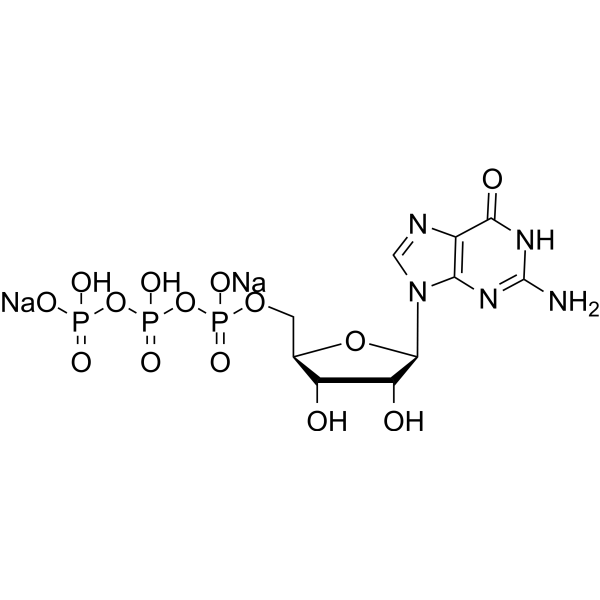
Guanosine triphosphate disodium
Based on 9 publication(s) in Google Scholar
Guanosine triphosphate (GTP) disodium is a critical nucleotide and regulator of cellular metabolism. Guanosine triphosphate disodium promotes ribosomal DNA localization, pre-rRNA transcription and ribosome biogenesis by binding to RNA polymerase I and GPN proteins (GPN1/3). Guanosine triphosphate disodium links MYC-dependent ribosome biogenesis to nucleotide sufficiency, acts as a metabolic gatekeeper supporting protein synthesis, DNA/RNA synthesis and cellular signal transduction, while also participating in the physiological activities of pancreatic β-cells and serving as an oxidative substrate for reactive oxygen species. In small cell lung cancer with high MYC expression, Guanosine triphosphate disodium accumulates through the IMPDH-driven synthetic pathway, thereby affecting apoptosis and mitotic processes. Guanosine triphosphate disodium is used in the research of small cell lung cancer, hepatoblastoma and cellular metabolism.
For research use only. We do not sell to patients.
- Purity : 99.58%
- CAS No.: 56001-37-7
- Formula: C10H14N5Na2O14P3
- Molecular Weight:567.14
-
Storage:
Solution, -20°C, protect from light, 2 years

To place orders, for customer services and technical support, please contact: MedChemExpress USA
Tel: 609-228-6898 E-mail: [email protected] [email protected]


-
 Biological Activity
-
Chemical Information
-
Solvent & Solubility
- Purity & Documentation
- References
-
 Help & FAQs


-
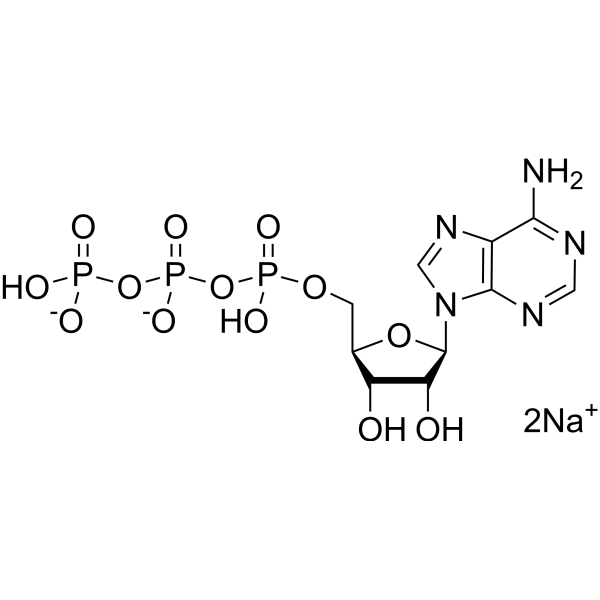
HY-B0345A
ATP disodium salt -
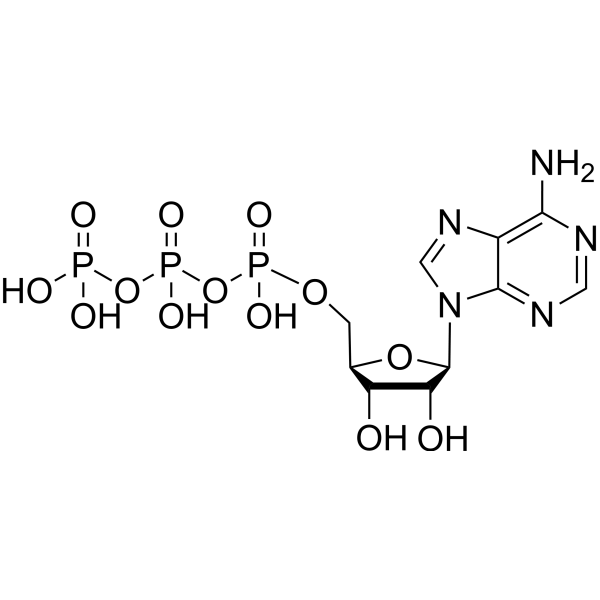
HY-B2176
ATP -
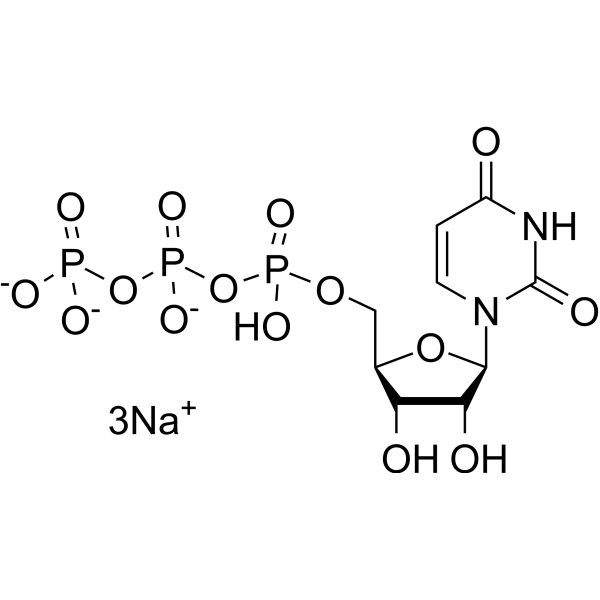
HY-W013093
Uridine triphosphate trisodium salt -
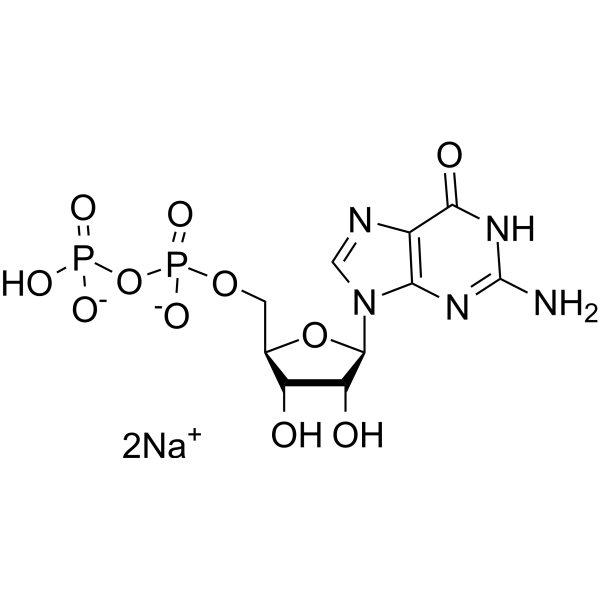
HY-113066A
Guanosine 5'-diphosphate disodium salt -
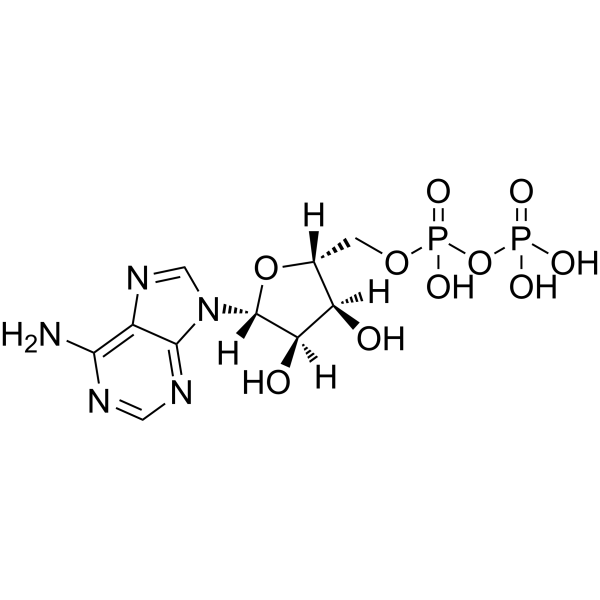
HY-W010918
Adenosine 5'-diphosphate -
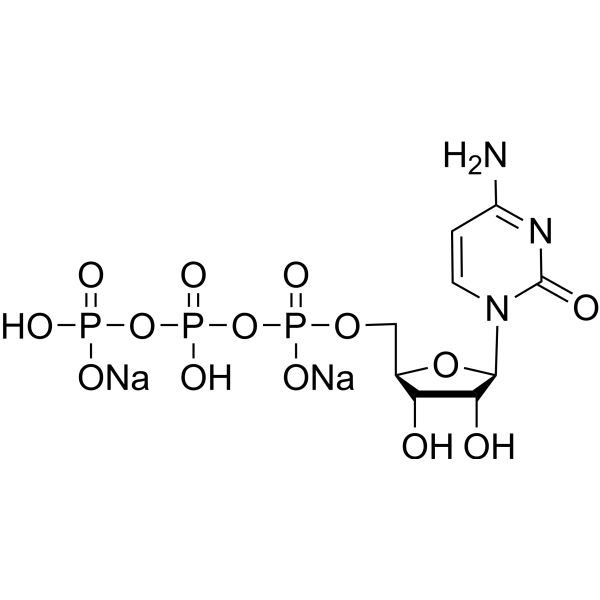
HY-W013100
Cytidine-5'-triphosphate disodium -
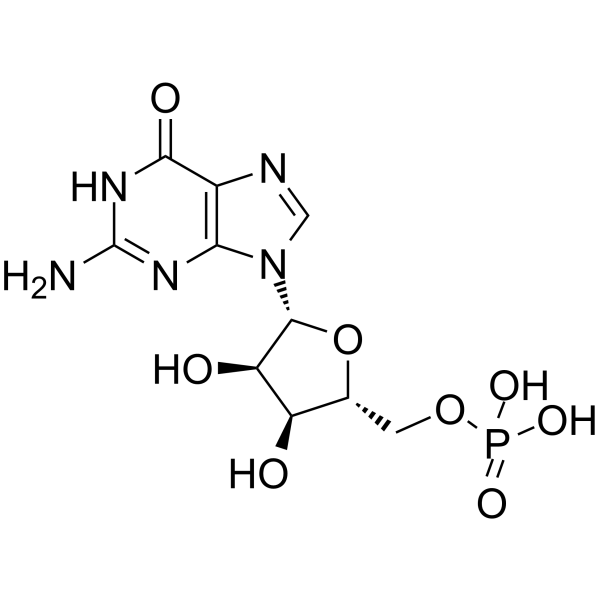
HY-N5134
5'-Guanylic acid -
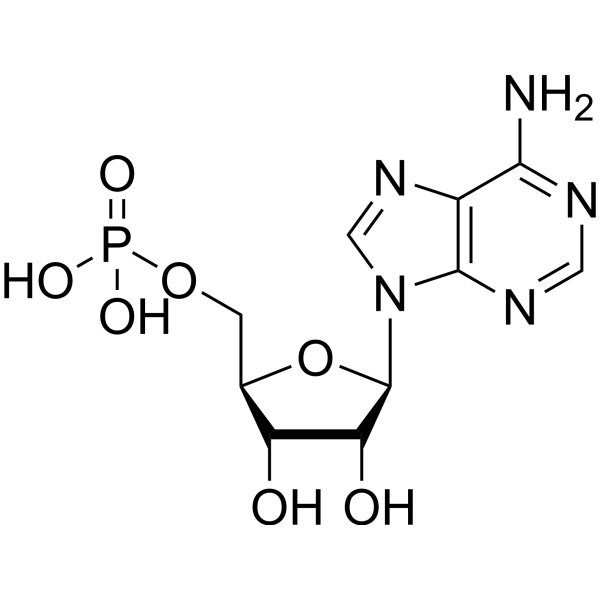
HY-A0181
Adenosine monophosphate -

HY-B2176I
ATP disodium salt, 100 mM Solution, PCR Grade -
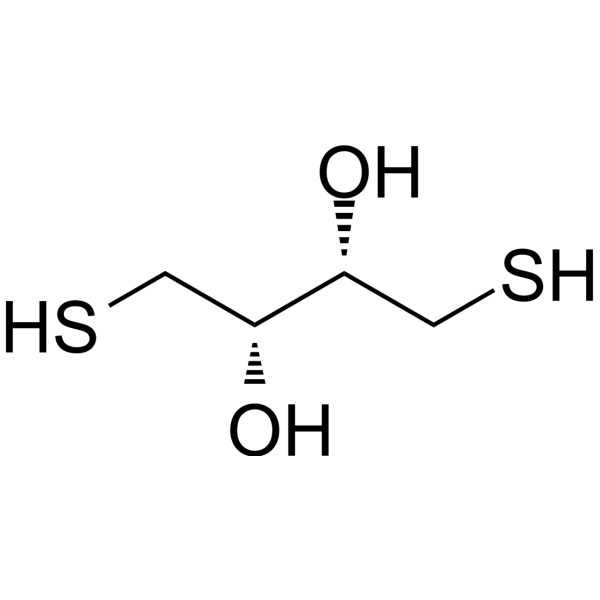
HY-15917
DL-Dithiothreitol -

HY-W010918R
Adenosine 5'-diphosphate (Standard) -
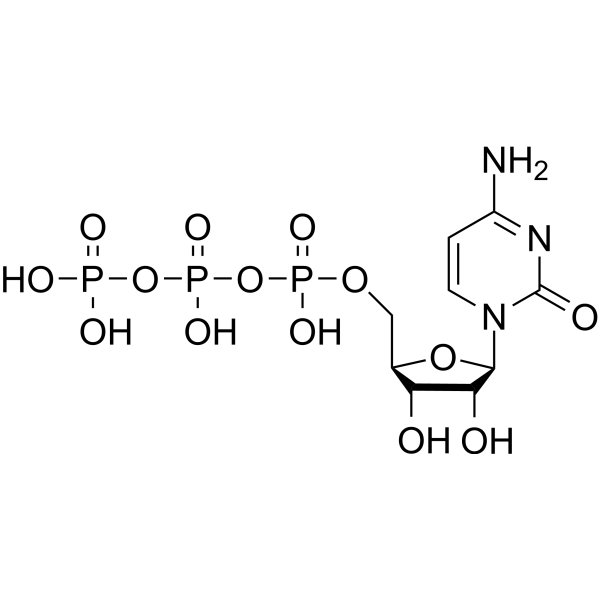
HY-125818
Cytidine-5'-triphosphate
Publications Citing Use of MedChemExpress (MCE) Guanosine triphosphate disodium
More- Cancer Commun (Lond). 2025 May 29. [Abstract]
- Mol Cell. 2022 Jun 2;82(11):2032-2049.e7. [Abstract]
- Acta Pharm Sin B. 2024 Apr;14(4):1864-1877. [Abstract]
- Anal Chim Acta. 2021 Dec 15:1188:339180. [Abstract]
- J Mol Biol. 2024 Apr 15;436(8):168513. [Abstract]
- J Biol Chem. 2026 Jan 28:111214. [Abstract]
- Bioorg Med Chem. 2021 Jan 1:29:115899. [Abstract]
- STAR Protoc. 2026 Mar 20;7(1):104353. [Abstract]
- bioRxiv. 2024 Apr 24.
 Customer Validation & Images

-
Bio/Physico-chemical Assay
-
Bio/Physico-chemical Assay
-
Bio/Physico-chemical Assay
-
Bio/Physico-chemical Assay
All Endogenous Metabolite Isoforms
MoreAll DNA/RNA Synthesis Isoforms
More

Biological Activity
Description
IC50 & Target
|
RNA Polymerase |
Human Endogenous Metabolite |
In Vitro
Primary MYC-high human small-cell lung cancer tumors have elevated endogenous guanosine triphosphate disodium levels independent of proliferation status[1].
Guanosine triphosphate (GTP depletion via 1 μM MPA; 12 h) disodium reduced protein synthesis in chemoresistant DMS53-CR human small-cell lung cancer cells, while restoring guanosine triphosphate disodium levels (20 μM guanosine; 12 h) rescued protein synthesis activity[1].
Guanosine triphosphate disodium binding to MYC-upregulated GPN1 and GPN3 GTPases is required for RNA polymerase I localization, ribosome biogenesis, and proliferation in MYC-high H82 human small-cell lung cancer cells, and constitutively GTP-bound GPN1/GPN3 mutants protect cells from guanosine triphosphate disodium depletion-mediated inhibition of these activities[1].
Depletion of cellular GTP (1 μg/ml mycophenolic acid; 1-24 h) in HIT-T15 insulin-secreting β-cells potently inhibits mitogenesis, with significant inhibition observed as early as 1 hour and near-complete inhibition after 6-24 hours of treatment[2].
Depletion of cellular Guanosine triphosphate (1.6-6.3 μg/ml mycophenolic acid; 18 h) disodium in HIT-T15 and INS-1 insulin-secreting β-cells inhibits Ca2+-stimulated insulin secretion[2].
Guanosine triphosphate (1 mM; 4 h at 37 °C) disodium undergoes oxidation to oxo8GTP in the presence of a ROS-generating system (1 mM L-ascorbic acid + 10 μM cupric sulfate), with oxo8GTP levels increasing ~4-fold and Guanosine triphosphate disodium levels showing a small significant decrease relative to control[3].
MedChemExpress (MCE) has not independently confirmed the accuracy of these methods. They are for reference only.
-
Cell Line:HIT-T15 insulin-secreting β-cells, INS-1 insulin-secreting β-cells
-
Concentration:0.3-10 μg/ml mycophenolic acid (HIT-T15 cells, GTP depleted to apoptosis-inducing levels); 25 μg/ml mycophenolic acid (INS-1 cells, GTP depleted to apoptosis-inducing levels)
-
Incubation Time:24-96 h (HIT-T15 cells); 48 h (INS-1 cells)
-
Result:Reduced HIT-T15 cell number by 70% after 48 hours of 3 μg/ml mycophenolic acid treatment, with parallel reductions in DNA, protein, and insulin content.
Reduced MTS formazan production by 30% (0.3 μg/ml, 48 h) to 80% (1 μg/ml, 96 h) in HIT-T15 cells. Induced apoptotic nuclear changes in 29% (1 μg/ml), 49% (3 μg/ml), and 70% (10 μg/ml) of HIT-T15 cells after 48 hours of treatment.
Increased oligonucleosome enrichment factor to ~3.5-fold of control in HIT-T15 cells after 48 hours of treatment.
Revealed chromatin condensation/margination in 25% and apoptotic bodies in 16% of HIT-T15 cells via electron microscopy after 48 hours of treatment.
Increased oligonucleosome enrichment factor to ~3-fold of control and induced apoptotic nuclear changes in INS-1 cells after 48 hours of 25 μg/ml mycophenolic acid treatment.


Chemical Information
-
CAS No. 56001-37-7
-
Appearance Liquid
-
Molecular Weight 567.14
-
Formula C10H14N5Na2O14P3
-
Color Colorless to light yellow
-
SMILES
O=C1C(N=CN2[C@H]3[C@H](O)[C@H](O)[C@@H](COP(OP(OP(O)(O[Na])=O)(O)=O)(O[Na])=O)O3)=C2NC(N)=N1
-
Synonyms
GTP disodium
-
Structure Classification
-
Initial Source
-
Shipping
Room temperature in continental US; may vary elsewhere.
-
Storage
Solution, -20°C, protect from light, 2 years


Publications (9)
-
Journal Impact Factor
-
Most Recent
-
Cancer Commun (Lond)
Simvastatin overcomes the pPCK1-pLDHA-SPRINGlac axis-mediated ferroptosis and chemo-immunotherapy resistance in AKT-hyperactivated intrahepatic cholangiocarcinoma. [Abstract]2025 May 29. PMID: 40443016 -
Mol Cell
Cytoplasmic PARP1 links the genome instability to the inhibition of antiviral immunity through PARylating cGAS. [Abstract]2022 Jun 2;82(11):2032-2049.e7. PMID: 35460603 -
Acta Pharm Sin B
Super-resolution imaging for in situ monitoring sub-cellular micro-dynamics of small molecule drug. [Abstract]2024 Apr;14(4):1864-1877. PMID: 38572114 -
Anal Chim Acta
2021 Dec 15:1188:339180. PMID: 34794559 -
J Mol Biol
2024 Apr 15;436(8):168513. PMID: 38447889 -
J Biol Chem
Allosteric targeting with antiviral nucleotide analogs allows fine-tuning of SAMHD1 dNTPase activity. [Abstract]2026 Jan 28:111214. PMID: 41617034
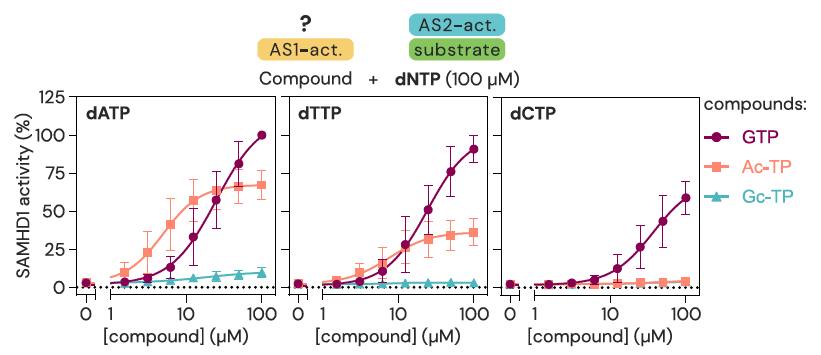
Guanosine triphosphate disodium purchased from MedChemExpress. Usage Cited in: J Biol Chem. 2026 Jan 28:111214. [Abstract]
Guanosine 5'-triphosphate trisodium (GTP) (0-100 μM) induced the highest maximum SAMHD1 dNTPase activity.
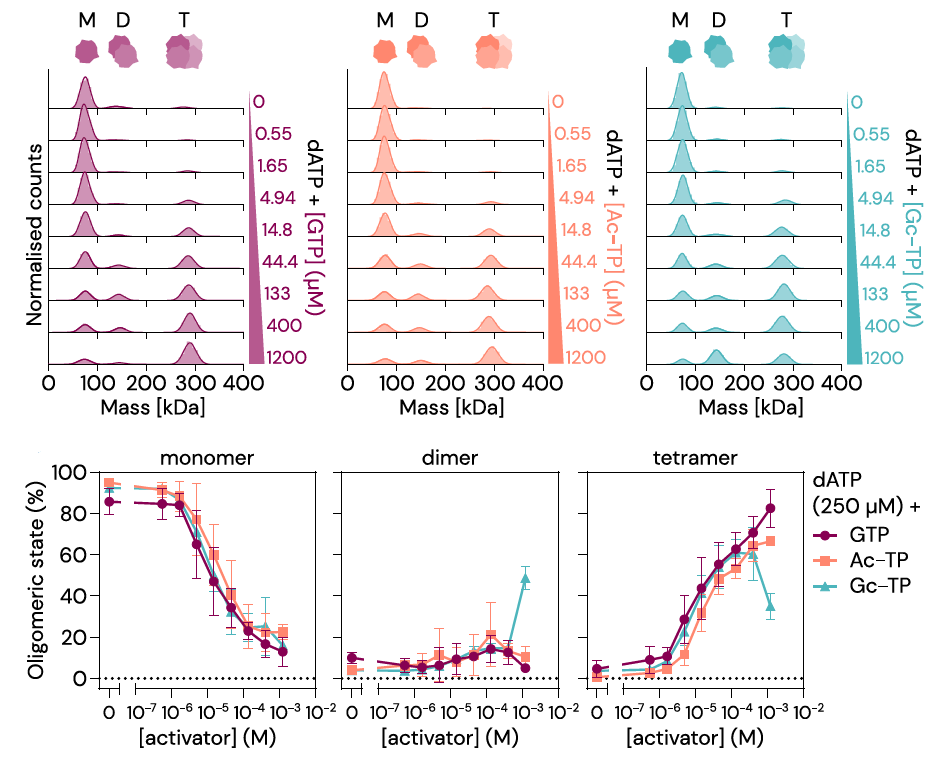
Guanosine triphosphate disodium purchased from MedChemExpress. Usage Cited in: J Biol Chem. 2026 Jan 28:111214. [Abstract]
Guanosine 5'-triphosphate trisodium (GTP) (5-1200 μM) effectively induced tetramerization of the recombinant SAMHD1 protein in a dose-dependent manner.
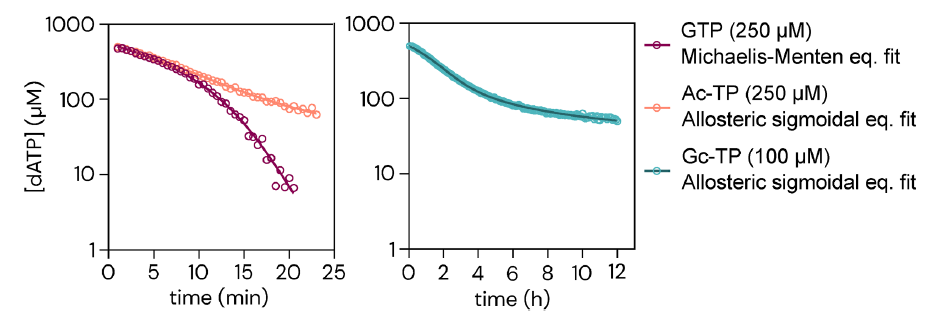
Guanosine triphosphate disodium purchased from MedChemExpress. Usage Cited in: J Biol Chem. 2026 Jan 28:111214. [Abstract]
High-confidence fits were obtained for the Guanosine 5'-triphosphate trisodium (GTP) (250 μM; 25 min)-activated hydrolysis of dATP.
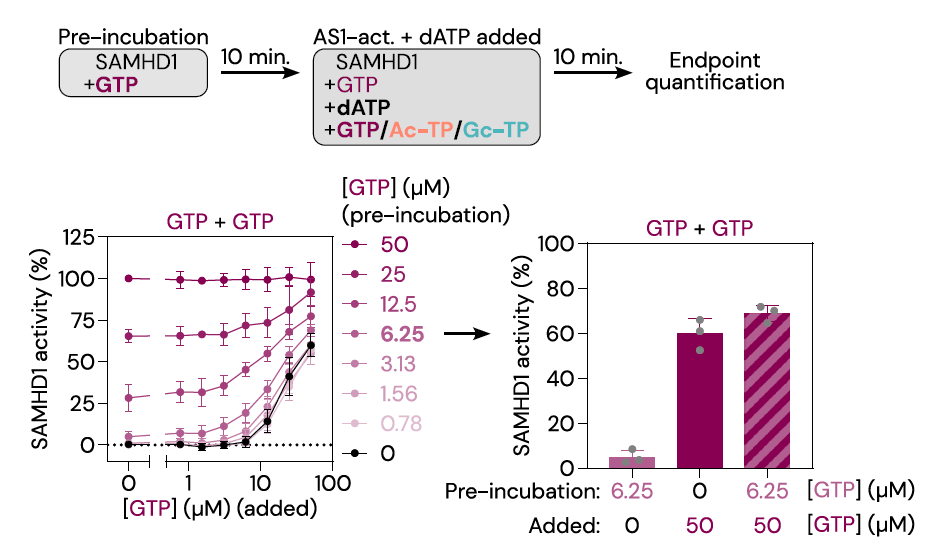
Guanosine triphosphate disodium purchased from MedChemExpress. Usage Cited in: J Biol Chem. 2026 Jan 28:111214. [Abstract]
In the absence of competitors, increasing Guanosine 5'-triphosphate trisodium (GTP) (0-50 μM) preincubation concentrations led to increasing activity. Guanosine 5'-triphosphate trisodium (GTP) added at the reaction start further increased SAMHD1 activity.
-
Bioorg Med Chem
Synthesis and biological evaluation of all possible inosine-mixed cyclic dinucleotides that activate different hSTING variants. [Abstract]2021 Jan 1:29:115899. PMID: 33285409 -
STAR Protoc
Protocol to identify the signaling network of nucleotide second messengers in Shigella sonnei. [Abstract]2026 Mar 20;7(1):104353. PMID: 41671092 -


Solvent & Solubility
In Vitro:
H2O : 125 mg/mL (220.40 mM; Need ultrasonic)
Please refer to the solubility information to select the appropriate solvent. Once prepared, please aliquot and store the solution to prevent product inactivation from repeated freeze-thaw cycles.
Storage method and period of stock solution: -80°C, 6 months; -20°C, 1 month. When stored at -80°C, please use it within 6 months. When stored at -20°C, please use it within 1 month.
* Note: If you choose water as the stock solution, please dilute it to the working solution, then filter and sterilize it with a 0.22 μm filter before use.
Please refer to the solubility information to select the appropriate solvent. Once prepared, please aliquot and store the solution to prevent product inactivation from repeated freeze-thaw cycles.
Storage method and period of stock solution: -80°C, 6 months; -20°C, 1 month. When stored at -80°C, please use it within 6 months. When stored at -20°C, please use it within 1 month.
* Note: If you choose water as the stock solution, please dilute it to the working solution, then filter and sterilize it with a 0.22 μm filter before use.
Concentration (start) × Volume (start) = Concentration (final) × Volume (final)


Purity & Documentation
-
Data Sheet (287 KB)
-
SDS (394 KB)
- English - EN (394 KB)
- Français - FR (394 KB)
- Deutsch - DE (394 KB)
- Norwegian - NO (394 KB)
- Español - ES (394 KB)
- Swedish - SV (394 KB)
- Italian - IT (394 KB)
- Korean - KR (394 KB)
- Portuguese - PT (394 KB)
-
Handling Instructions (2659 KB)
References
[1]. Huang F, et al. Guanosine triphosphate links MYC-dependent metabolic and ribosome programs in small-cell lung cancer. J Clin Invest. 2021;131(1):e139929. [Content Brief]
[2]. Li G, et al. Prolonged depletion of guanosine triphosphate induces death of insulin-secreting cells by apoptosis. Endocrinology. 1998;139(9):3752-3762. [Content Brief]
[3]. Bolin C, et al. Assessing biomarkers of oxidative stress: analysis of guanosine and oxidized guanosine nucleotide triphosphates by high performance liquid chromatography with electrochemical detection. J Chromatogr B Analyt Technol Biomed Life Sci. 2007;856(1-2):121-130. [Content Brief]


Complete Stock Solution Preparation Table
Please refer to the solubility information to select the appropriate solvent. Once prepared, please aliquot and store the solution to prevent product inactivation from repeated freeze-thaw cycles.
Storage method and period of stock solution: -80°C, 6 months; -20°C, 1 month. When stored at -80°C, please use it within 6 months. When stored at -20°C, please use it within 1 month.
| Optional Solvent | Concentration Solvent Mass | 1 mg | 5 mg | 10 mg | 25 mg |
|---|---|---|---|---|---|
| H2O | 1 mM | 1.7632 mL | 8.8162 mL | 17.6323 mL | 44.0808 mL |
| 5 mM | 0.3526 mL | 1.7632 mL | 3.5265 mL | 8.8162 mL | |
| 10 mM | 0.1763 mL | 0.8816 mL | 1.7632 mL | 4.4081 mL | |
| 15 mM | 0.1175 mL | 0.5877 mL | 1.1755 mL | 2.9387 mL | |
| 20 mM | 0.0882 mL | 0.4408 mL | 0.8816 mL | 2.2040 mL | |
| 25 mM | 0.0705 mL | 0.3526 mL | 0.7053 mL | 1.7632 mL | |
| 30 mM | 0.0588 mL | 0.2939 mL | 0.5877 mL | 1.4694 mL | |
| 40 mM | 0.0441 mL | 0.2204 mL | 0.4408 mL | 1.1020 mL | |
| 50 mM | 0.0353 mL | 0.1763 mL | 0.3526 mL | 0.8816 mL | |
| 60 mM | 0.0294 mL | 0.1469 mL | 0.2939 mL | 0.7347 mL | |
| 80 mM | 0.0220 mL | 0.1102 mL | 0.2204 mL | 0.5510 mL | |
| 100 mM | 0.0176 mL | 0.0882 mL | 0.1763 mL | 0.4408 mL |
* Note: If you choose water as the stock solution, please dilute it to the working solution, then filter and sterilize it with a 0.22 μm filter before use.


Guanosine triphosphate disodium Related Classifications
HY-W010737 Related Classifications
 Powered by Bioz