1. Search Result
Search Result
Results for "

Dehydroepiandrosterone

" in MedChemExpress (MCE) Product Catalog:

29

Inhibitors & Agonists

1

Peptides

13

Natural
Products

1

Recombinant Proteins

7

Isotope-Labeled Compounds

1

Antibodies

Cat. No. Product Name Target Research Areas Chemical Structure
  • HY-14650
    DHEA
    Maximum Cited Publications
    50 Publications Verification

    Prasterone; Dehydroisoandrosterone; Dehydroepiandrosterone

    Environmental Pollutants Endogenous Metabolite Androgen Receptor Cardiovascular Disease Endocrinology Cancer
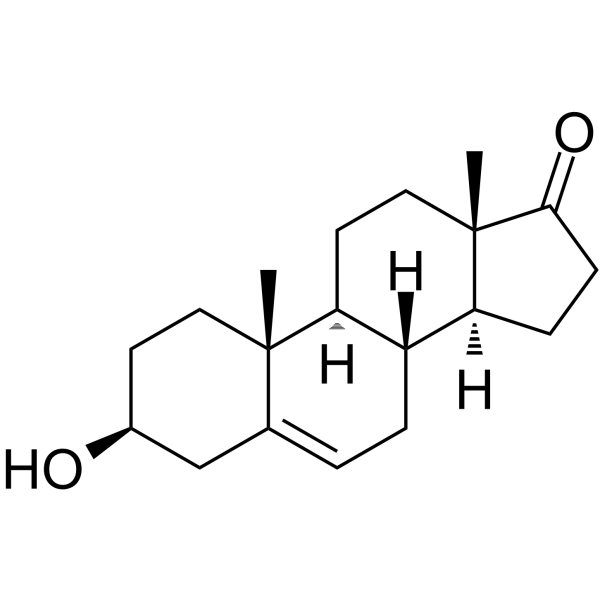
    DHEA (Prasterone) is one of the most abundant steroid hormones. DHEA (Prasterone) mediates its action via multiple signaling pathways involving specific membrane receptors and via transformation into androgen and estrogen derivatives (e.g., androgens, estrogens, 7α and 7β DHEA, and 7α and 7β epiandrosterone derivatives) acting through their specific receptors.
    DHEA
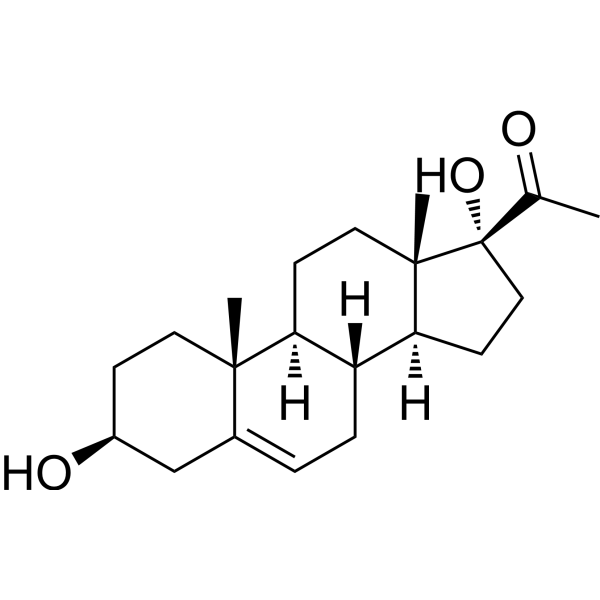
  • HY-113263
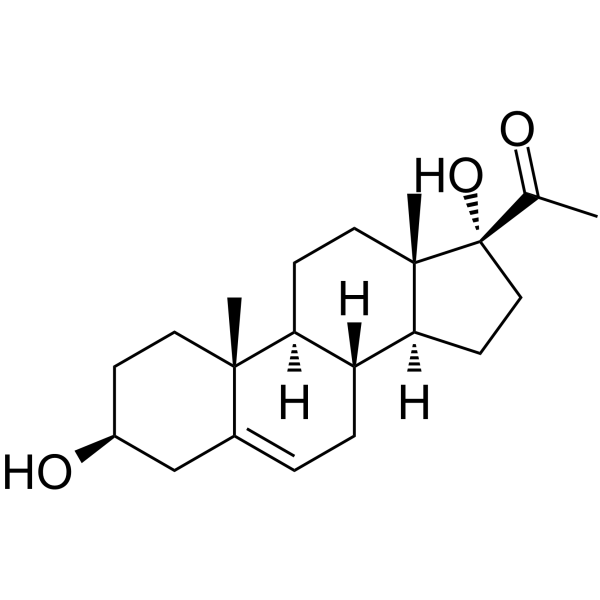
    17a-Hydroxypregnenolone
    2 Publications Verification

    17-OHP5

    Endogenous Metabolite Metabolic Disease
    17a-Hydroxypregnenolone (17-OHP5) is a metabolite of Pregnenolone (HY-B0151) and a precursor in the biosynthesis of Dehydroepiandrosterone (HY-14650). 17a-Hydroxypregnenolone is a substrate for the enzyme 3β-hydroxysteroid dehydrogenase (3β-HSD) .
    17a-Hydroxypregnenolone
  • HY-113416
    Dehydroepiandrosterone sulfate
    5 Publications Verification

    DHEA sulfate; Prasterone sulfate

    GABA Receptor Sigma Receptor iGluR PPAR NF-κB Neurological Disease Metabolic Disease Inflammation/Immunology
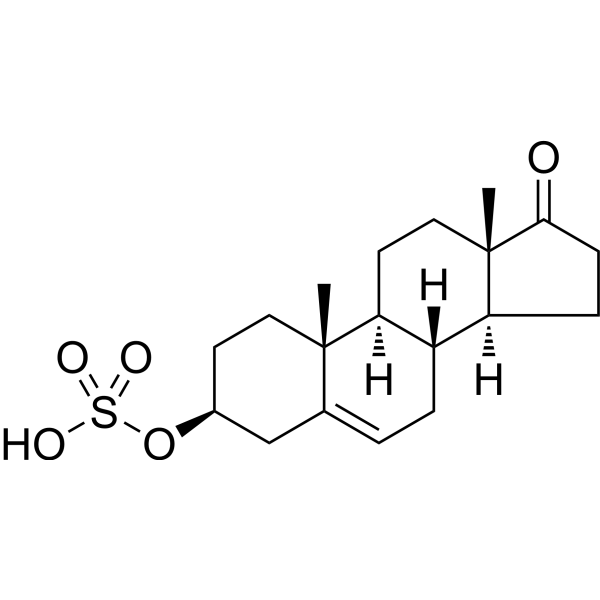
    Dehydroepiandrosterone sulfate (DHEA sulfate; Prasterone sulfate) is a neurosteroid and the main secretion product of the adrenal gland. Dehydroepiandrosterone sulfate has both non-competitive antagonist activity of GABAA receptor and agonist activity of σ1 receptor. Dehydroepiandrosterone sulfate can partially penetrate the blood-brain barrier, inhibit GABAA receptor-mediated chloride influx, enhance NMDA receptor activity through σ1 receptors, exert anti-inflammatory, anti-glucocorticoid and antidepressant effects, and increase convulsive sensitivity. Dehydroepiandrosterone sulfate participates in neuroprotection, neurite growth regulation and catecholamine secretion regulation, and can be used in the study of depression, post-traumatic stress disorder (PTSD), Alzheimer's disease, etc. Dehydroepiandrosterone sulfate may also be a biomarker for cardiovascular disease mortality, and its concentration is independently and negatively correlated with mortality .
    Dehydroepiandrosterone sulfate
  • HY-B0765
    Dehydroepiandrosterone sulfate sodium
    5 Publications Verification

    DHEA sulfate sodium; Prasterone sulfate sodium

    GABA Receptor Sigma Receptor iGluR PPAR NF-κB Neurological Disease Metabolic Disease Inflammation/Immunology
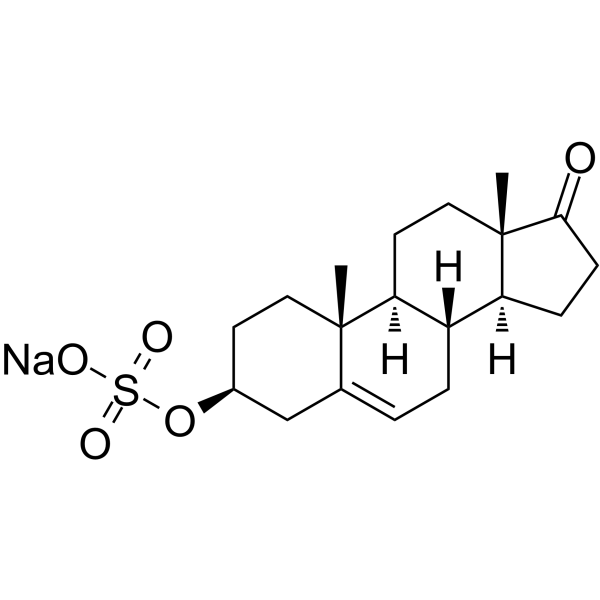
    Dehydroepiandrosterone sulfate (DHEA sulfate; Prasterone sulfate) sodium salt is a neurosteroid and the main secretion product of the adrenal gland. Dehydroepiandrosterone sulfate sodium salt has both non-competitive antagonist activity of GABAA receptor and agonist activity of σ1 receptor. Dehydroepiandrosterone sulfate sodium salt can partially penetrate the blood-brain barrier, inhibit GABAA receptor-mediated chloride influx, enhance NMDA receptor activity through σ1 receptors, exert anti-inflammatory, anti-glucocorticoid and antidepressant effects, and increase convulsive sensitivity. Dehydroepiandrosterone sulfate sodium salt participates in neuroprotection, neurite growth regulation and catecholamine secretion regulation, and can be used in the study of depression, post-traumatic stress disorder (PTSD), Alzheimer's disease, etc. Dehydroepiandrosterone sulfate sodium salt may also be a biomarker for cardiovascular disease mortality, and its concentration is independently and negatively correlated with mortality .
    Dehydroepiandrosterone sulfate sodium
  • HY-14650R

    Prasterone (Standard); Dehydroisoandrosterone (Standard); Dehydroepiandrosterone (Standard)

    Androgen Receptor Endogenous Metabolite Reference Standards Metabolic Disease
    DHEA (Prasterone) (Standard) is the analytical standard of DHEA. This product is intended for research and analytical applications. DHEA is a steroid hormone .
    DHEA (Standard)
  • HY-141901S

    Isotope-Labeled Compounds Others
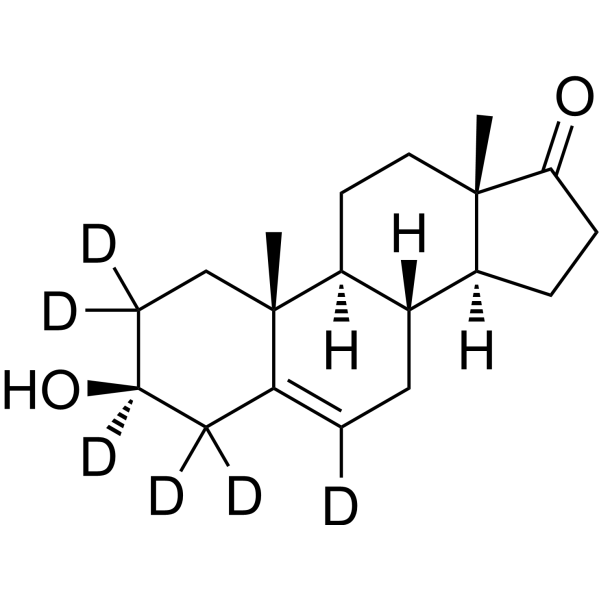
    Dehydroepiandrosterone-d6 is the deuterium labeled Dehydroepiandrosterone .
    Dehydroepiandrosterone-d6
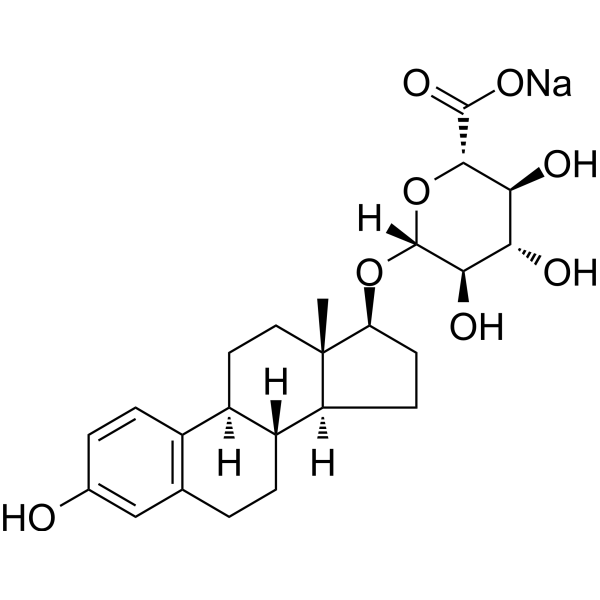
  • HY-W353102

    Endogenous Metabolite P-glycoprotein Metabolic Disease
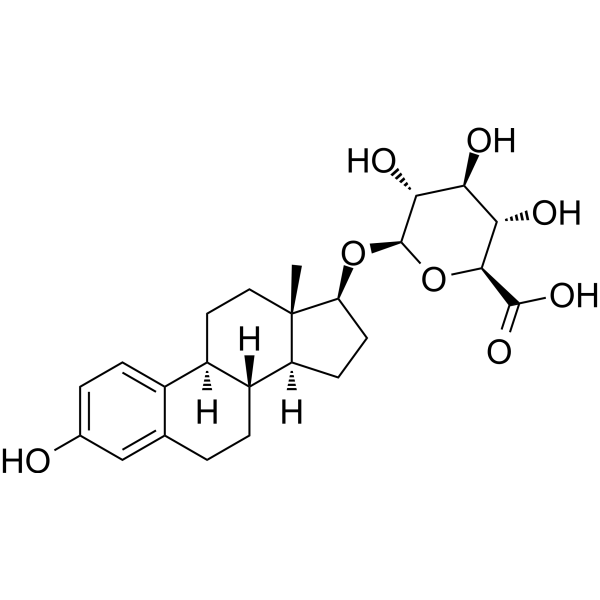
    Estradiol 17-(β-D-Glucuronide) is a D-ring glucuronide metabolite of natural estrogen formed in the liver. Estradiol 17-(β-D-Glucuronide) is a substrate of the organic anion-transporting polypeptide family (Oatp) and multidrug resistance-associated protein 2 (Mrp2). Estradiol 17-(β-D-Glucuronide) regulates MRP8-mediated transport processes and inhibits MRP8-mediated transport of dehydroepiandrosterone 3-sulfate and taurocholic acid. Estradiol 17-(β-D-Glucuronide) induces immediate, reversible reduction of bile flow and acute intrahepatic cholestasis in female rats without altering the bile acid composition in bile. Estradiol 17-(β-D-Glucuronide) can be used in studies related to intrahepatic cholestasis .
    Estradiol 17-(β-D-Glucuronide)
  • HY-129987

    Endogenous Metabolite P-glycoprotein Metabolic Disease
    Estradiol 17-(β-D-Glucuronide) sodium is a D-ring glucuronide metabolite of natural estrogen formed in the liver. Estradiol 17-(β-D-Glucuronide) sodium is a substrate of the organic anion-transporting polypeptide family (Oatp) and multidrug resistance-associated protein 2 (Mrp2). Estradiol 17-(β-D-Glucuronide) sodium regulates MRP8-mediated transport processes and inhibits MRP8-mediated transport of dehydroepiandrosterone 3-sulfate and taurocholic acid. Estradiol 17-(β-D-Glucuronide) sodium induces immediate, reversible reduction of bile flow and acute intrahepatic cholestasis in female rats without altering the bile acid composition in bile. Estradiol 17-(β-D-Glucuronide) sodium can be used in studies related to intrahepatic cholestasis .
    Estradiol 17-(β-D-Glucuronide) sodium
  • HY-B1405
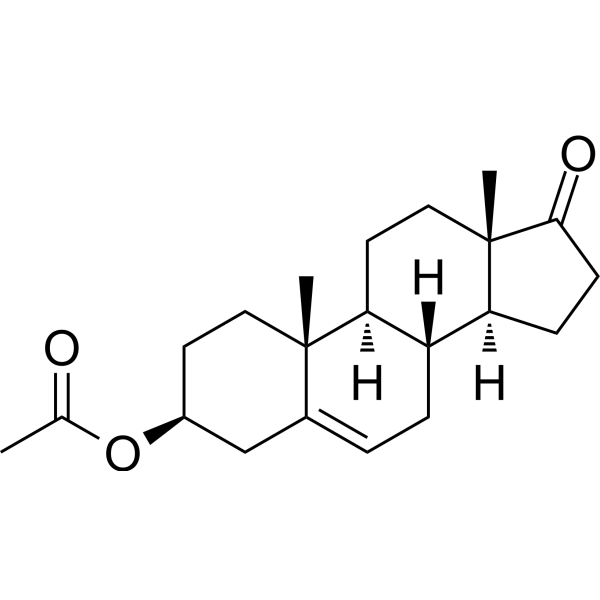
    Dehydroisoandrosterone 3-acetate
    1 Publications Verification

    Dehydroepiandrosterone 3-acetate; DHEA acetate

    Androgen Receptor Endocrinology Cancer
    Dehydroepiandrosterone 3-acetate is a testosterone/estrogen precursor and known modulator of vertebrate aggression.
    Dehydroisoandrosterone 3-acetate
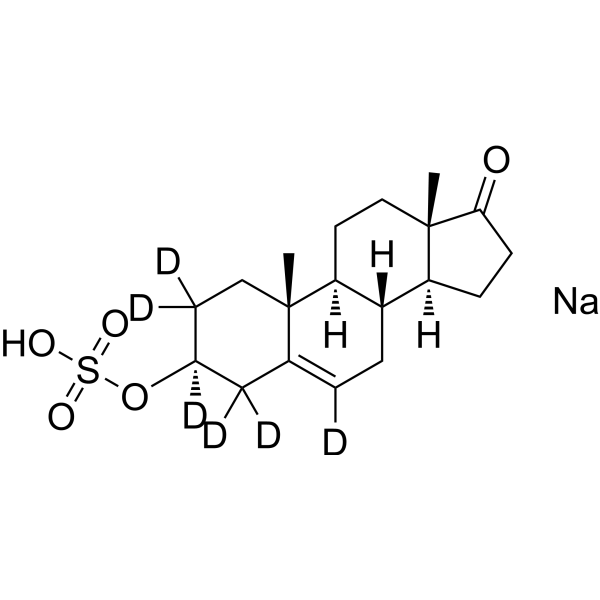
  • HY-141921S

    DHEA sulfate sodium-d6; Prasterone sulfate sodium-d6

    Isotope-Labeled Compounds GABA Receptor Sigma Receptor iGluR PPAR NF-κB Neurological Disease Metabolic Disease Inflammation/Immunology
    Dehydroepiandrosterone sulfate sodium salt-d6 (DHEA sulfate sodium salt-d6; Prasterone sulfate sodium salt-d6) is the deuterium labeled Dehydroepiandrosterone sulfate sodium salt (HY-B0765). Dehydroepiandrosterone sulfate (DHEA sulfate; Prasterone sulfate) sodium salt is a neurosteroid and the main secretion product of the adrenal gland. Dehydroepiandrosterone sulfate sodium salt has both non-competitive antagonist activity of GABAA receptor and agonist activity of σ1 receptor. Dehydroepiandrosterone sulfate sodium salt can partially penetrate the blood-brain barrier, inhibit GABAA receptor-mediated chloride influx, enhance NMDA receptor activity through σ1 receptors, exert anti-inflammatory, anti-glucocorticoid and antidepressant effects, and increase convulsive sensitivity. Dehydroepiandrosterone sulfate sodium salt participates in neuroprotection, neurite growth regulation and catecholamine secretion regulation, and can be used in the study of depression, post-traumatic stress disorder (PTSD), Alzheimer's disease, etc. Dehydroepiandrosterone sulfate sodium salt may also be a biomarker for cardiovascular disease mortality, and its concentration is independently and negatively correlated with mortality .
    Dehydroepiandrosterone sulfate sodium-d6
  • HY-113031

    16α-Hydroxy-DHEA; 16α-OH-DHEA; 16α-hydroxy DHEA

    Cytochrome P450 Endocrinology
    16a-Hydroxydehydroisoandrosterone (16α-Hydroxy-DHEA) is a metabolite of the endogenous steroid hormone dehydroepiandrosterone. 16α-hydroxy Dehydroepiandrosterone is formed from dehydroepiandrosterone via 16-hydroxylation by the cytochrome P450 (CYP) isoforms CYP3A4 and CYP3A5 in adult human liver microsomes, as well as by fetal recombinant CYP3A7. It is a precursor to fetal estrogens, including estriol.
    16a-Hydroxydehydroisoandrosterone
  • HY-113416R

    DHEA sulfate (Standard); Prasterone sulfate (Standard)

    Reference Standards GABA Receptor Sigma Receptor iGluR PPAR NF-κB Neurological Disease Metabolic Disease Inflammation/Immunology
    Dehydroepiandrosterone sulfate (DHEA sulfate; Prasterone sulfate) (Standard) is the analytical standard of Dehydroepiandrosterone sulfate (HY-113416). This product is intended for research and analytical applications. Dehydroepiandrosterone sulfate (DHEA sulfate; Prasterone sulfate) is a neurosteroid and the main secretion product of the adrenal gland. Dehydroepiandrosterone sulfate has both non-competitive antagonist activity of GABAA receptor and agonist activity of σ1 receptor. Dehydroepiandrosterone sulfate can partially penetrate the blood-brain barrier, inhibit GABAA receptor-mediated chloride influx, enhance NMDA receptor activity through σ1 receptors, exert anti-inflammatory, anti-glucocorticoid and antidepressant effects, and increase convulsive sensitivity. Dehydroepiandrosterone sulfate participates in neuroprotection, neurite growth regulation and catecholamine secretion regulation, and can be used in the study of depression, post-traumatic stress disorder (PTSD), Alzheimer's disease, etc. Dehydroepiandrosterone sulfate may also be a biomarker for cardiovascular disease mortality, and its concentration is independently and negatively correlated with mortality .
    Dehydroepiandrosterone sulfate (Standard)
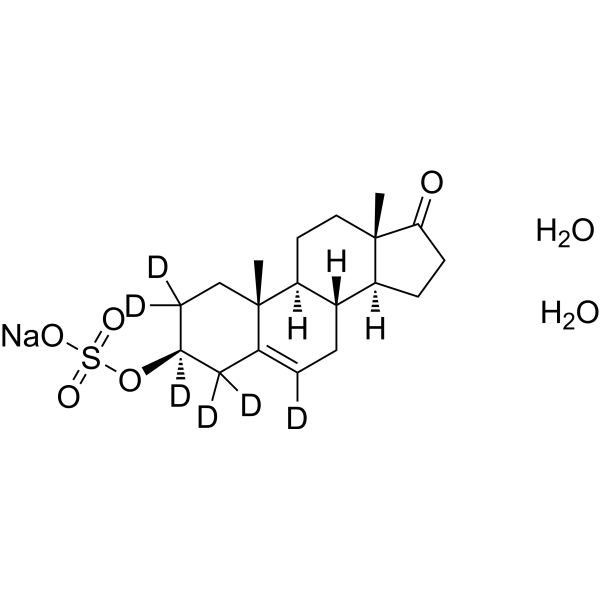
  • HY-113416AS

    DHEA sulfate-d6 sodium dihydrate; Prasterone sulfate-d6 sodium dihydrate

    Isotope-Labeled Compounds GABA Receptor Sigma Receptor iGluR PPAR NF-κB Neurological Disease Metabolic Disease Inflammation/Immunology
    Dehydroepiandrosterone sulfate sodium dihydrate-d6 sodium dihydrate is the deuterium labeled Dehydroepiandrosterone sulfate sodium dihydrate. Dehydroepiandrosterone sulfate (DHEA sulfate; Prasterone sulfate) sodium dihydrate is a neurosteroid and the main secretion product of the adrenal gland. Dehydroepiandrosterone sulfate sodium dihydrate has both non-competitive antagonist activity of GABAA receptor and agonist activity of σ1 receptor. Dehydroepiandrosterone sulfate sodium dihydrate can partially penetrate the blood-brain barrier, inhibit GABAA receptor-mediated chloride influx, enhance NMDA receptor activity through σ1 receptors, exert anti-inflammatory, anti-glucocorticoid and antidepressant effects, and increase convulsive sensitivity. Dehydroepiandrosterone sulfate sodium dihydrate participates in neuroprotection, neurite growth regulation and catecholamine secretion regulation, and can be used in the study of depression, post-traumatic stress disorder (PTSD), Alzheimer's disease, etc. Dehydroepiandrosterone sulfate sodium dihydrate may also be a biomarker for cardiovascular disease mortality, and its concentration is independently and negatively correlated with mortality .
    Dehydroepiandrosterone sulfate-d6 sodium dihydrate
  • HY-141901S1

    Prasterone-d5; Dehydroisoandrosterone-d5; Dehydroepiandrosterone-d5

    Isotope-Labeled Compounds Endogenous Metabolite Androgen Receptor Cardiovascular Disease Endocrinology Cancer
    DHEA-d5 (Prasterone-d5; Dehydroisoandrosterone-d5; Dehydroepiandrosterone-d5) is the deuterium labeled DHEA (HY-14650). DHEA (Prasterone) is one of the most abundant steroid hormones. DHEA (Prasterone) mediates its action via multiple signaling pathways involving specific membrane receptors and via transformation into androgen and estrogen derivatives (e.g., androgens, estrogens, 7α and 7β DHEA, and 7α and 7β epiandrosterone derivatives) acting through their specific receptors.
    DHEA-d5
  • HY-113263R
    17a-Hydroxypregnenolone (Standard)
    2 Publications Verification

    17-OHP5 (Standard)

    Reference Standards Endogenous Metabolite Metabolic Disease
    17a-Hydroxypregnenolone (Standard) is the analytical standard of 17a-Hydroxypregnenolone. This product is intended for research and analytical applications. 17a-Hydroxypregnenolone is a metabolite of Pregnenolone (HY-B0151) and a precursor in the biosynthesis of Dehydroepiandrosterone (HY-14650). 17a-Hydroxypregnenolone is a substrate for the enzyme 3β-hydroxysteroid dehydrogenase (3β-HSD) .
    17a-Hydroxypregnenolone (Standard)
  • HY-113263S

    17-OHP5-d3

    Isotope-Labeled Compounds Endogenous Metabolite Metabolic Disease
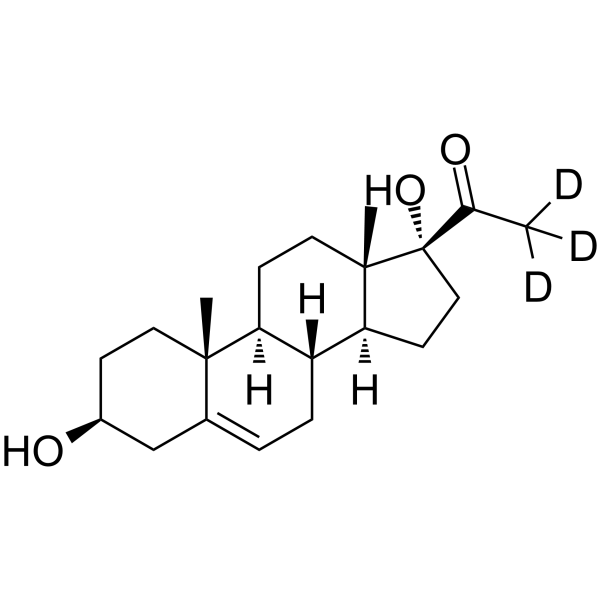
    17a-Hydroxypregnenolone-d3 (17-OHP5-d3) is the deuterium labeled 17a-Hydroxypregnenolone (HY-113263). 17a-Hydroxypregnenolone is a metabolite of Pregnenolone (HY-B0151) and a precursor in the biosynthesis of Dehydroepiandrosterone (HY-14650). 17a-Hydroxypregnenolone is a substrate for the enzyme 3β-hydroxysteroid dehydrogenase (3β-HSD) .
    17a-Hydroxypregnenolone-d3
  • HY-P3820

    Neurokinin Receptor Neurological Disease Inflammation/Immunology
    [Dehydro-Pro4] Substance P (4-11) is a peptide fragment of Substance P. Substance P is a peptide mainly secreted by neurons. Substance P takes part in many biological processes, including nociception, inflammation and immunity .
    [Dehydro-Pro4] Substance P (4-11)
  • HY-141901S2

    Isotope-Labeled Compounds Others
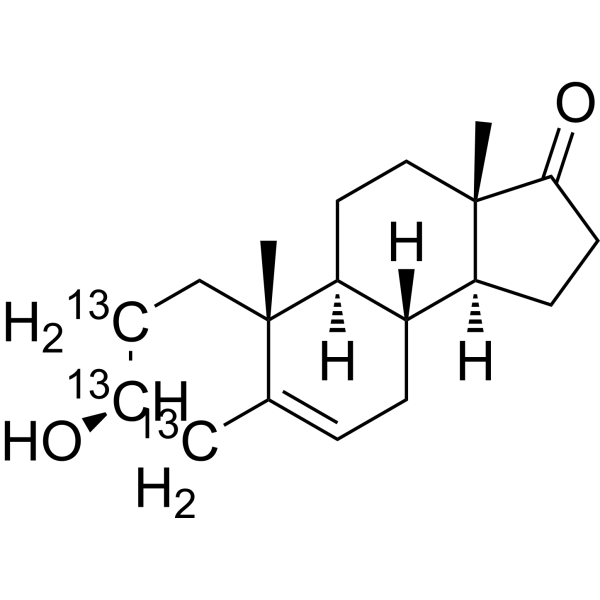
    Dehydroepiandrosterone- 13C3 is a 13C-labeled and deuterium labeled Dehydroepiandrosterone .
    Dehydroepiandrosterone-13C3
  • HY-B0765R

    DHEA sulfate sodium (Standard); Prasterone sulfate sodium (Standard)

    Reference Standards GABA Receptor Sigma Receptor iGluR PPAR NF-κB Neurological Disease Metabolic Disease Inflammation/Immunology
    Dehydroepiandrosterone sulfate (DHEA sulfate; Prasterone sulfate) sodium salt (Standard) is the analytical standard of Dehydroepiandrosterone sulfate sodium salt (HY-B0765). This product is intended for research and analytical applications. Dehydroepiandrosterone sulfate (DHEA sulfate; Prasterone sulfate) is a neurosteroid and the main secretion product of the adrenal gland. Dehydroepiandrosterone sulfate has both non-competitive antagonist activity of GABAA receptor and agonist activity of σ1 receptor. Dehydroepiandrosterone sulfate can partially penetrate the blood-brain barrier, inhibit GABAA receptor-mediated chloride influx, enhance NMDA receptor activity through σ1 receptors, exert anti-inflammatory, anti-glucocorticoid and antidepressant effects, and increase convulsive sensitivity. Dehydroepiandrosterone sulfate participates in neuroprotection, neurite growth regulation and catecholamine secretion regulation, and can be used in the study of depression, post-traumatic stress disorder (PTSD), Alzheimer's disease, etc. Dehydroepiandrosterone sulfate may also be a biomarker for cardiovascular disease mortality, and its concentration is independently and negatively correlated with mortality .
    Dehydroepiandrosterone sulfate sodium (Standard)
  • HY-B1405R

    Dehydroepiandrosterone 3-acetate (Standard); DHEA acetate (Standard)

    Reference Standards Androgen Receptor Endocrinology Cancer
    Dehydroisoandrosterone 3-acetate (Standard) is the analytical standard of Dehydroisoandrosterone 3-acetate. This product is intended for research and analytical applications. Dehydroepiandrosterone 3-acetate is a testosterone/estrogen precursor and known modulator of vertebrate aggression.
    Dehydroisoandrosterone 3-acetate (Standard)
  • HY-N2318R

    Reference Standards TRP Channel Neurological Disease
    Dehydroisoandrosterone 3-acetate (Standard) is the analytical standard of Dehydroisoandrosterone 3-acetate. This product is intended for research and analytical applications. Dehydroepiandrosterone 3-acetate is a testosterone/estrogen precursor and known modulator of vertebrate aggression.
    Podocarpic acid (Standard)
  • HY-107043

    7β-Hydroxy-EpiA

    Estrogen Receptor/ERR Neurological Disease Inflammation/Immunology
    7β-Hydroxy-epi-androsterone (7β-Hydroxy-EpiA) can bind to ERβ and has anti-inflammatory and neuroprotective properties. 7β-Hydroxy-epi-androsterone is an endogenous androgenic derivative of dehydroepiandrosterone .
    7β-Hydroxy-epi-androsterone
  • HY-120067

    Cytochrome P450 Endocrinology
    YM116 is an orally active and competitive CYP17A1 (17,20-lyase) inhibitor (Ki: 0.38 nM). YM116 reduces the synthesis of adrenal androgens by preferentially inhibiting C17-20 lyase activity. YM116 decreases the serum testosterone concentration, reduces dehydroepiandrosterone sulfate levels and decreases prostatic weights .
    YM116
  • HY-113263S1

    17-OHP5-13C2,d2

    Endogenous Metabolite Isotope-Labeled Compounds Metabolic Disease
    17α-Hydroxypregnenolone- 13C2,d2 is the deuterium and 13C labeled 17α-Hydroxypregnenolone . 17a-Hydroxypregnenolone is a metabolite of Pregnenolone (HY-B0151) and a precursor in the biosynthesis of Dehydroepiandrosterone (HY-14650). 17a-Hydroxypregnenolone is a substrate for the enzyme 3β-hydroxysteroid dehydrogenase (3β-HSD) .
    17α-Hydroxypregnenolone-13C2,d2
  • HY-176010

    Drug Derivative Others
    Dehydroepiandrosterone sulfate 17-(O-carboxymethyl)oxime is a derivative of dehydroepiandrosterone sulfate .
    Dehydroepiandrosterone sulfate 17-(O-carboxymethyl)oxime sodium
  • HY-182542

    OAT Cancer
    SOAT-IN-3 is a selective inhibitor of sodium-dependent organic anion transporter (SOAT/SLC10A6). SOAT-IN-3 reduces intracellular estradiol synthesis, the process of dehydroepiandrosterone (DHEA) production from DHEAS, and DHEAS-induced cancer cell proliferation. SOAT-IN-3 shows no cytotoxicity against breast cancer cells at the tested concentrations. SOAT-IN-3 can be used in the research of breast cancer .
    SOAT-IN-3
  • HY-182767

    Na+/HCO3- Cotransporter Cancer
    SOAT-IN-2 is a selective sodium-dependent organic anion transporter (SOAT, SLC10A6) inhibitor. SOAT-IN-2 blocks sodium-dependent cellular uptake of sulfated steroid Dehydroepiandrosterone sulfate (DHEAS, HY-113416). SOAT-IN-2 reduces intracellular estradiol synthesis, DHEA (HY-14650) formation, and DHEAS-stimulated cancer cell proliferation without inducing cytotoxicity. SOAT-IN-2 can be used for the research of breast cancer .
    SOAT-IN-2
  • HY-N15925

    ent-Dehydroepiandrosterone

    Biochemical Assay Reagents Others
    ent-DHEA is an enantiomer of DHEA (HY-14650). DHEA (Prasterone) is one of the most abundant steroid hormones .
    ent-DHEA
  • HY-N15918

    Drug Isomer Others
    ent-DHEA Sulfate sodium is an enantiomer of Dehydroepiandrosterone sulfate (HY-113416).
    ent-DHEA Sulfate sodium

Inquiry Online

Your information is safe with us. * Required Fields.

Salutation


Country or Region *

Applicant Name *


Organization Name *

Department *


Email Address *


Product Name *

Cat. No.


Requested quantity *

Phone Number *


Remarks

Inquiry Online

Inquiry Information

Product Name:
Cat. No.:
Quantity:
MCE Japan Authorized Agent: