



Dehydroepiandrosterone sulfate
Based on 4 publication(s) in Google Scholar
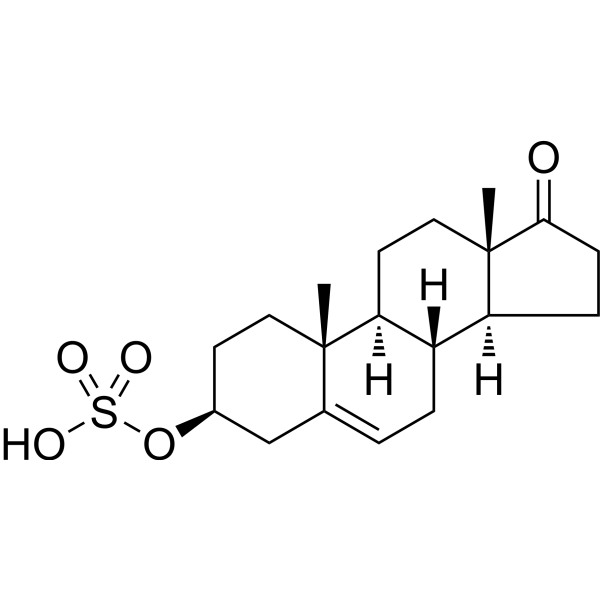
Dehydroepiandrosterone sulfate (DHEA sulfate; Prasterone sulfate) is a neurosteroid and the main secretion product of the adrenal gland. Dehydroepiandrosterone sulfate has both non-competitive antagonist activity of GABAA receptor and agonist activity of σ1 receptor. Dehydroepiandrosterone sulfate can partially penetrate the blood-brain barrier, inhibit GABAA receptor-mediated chloride influx, enhance NMDA receptor activity through σ1 receptors, exert anti-inflammatory, anti-glucocorticoid and antidepressant effects, and increase convulsive sensitivity. Dehydroepiandrosterone sulfate participates in neuroprotection, neurite growth regulation and catecholamine secretion regulation, and can be used in the study of depression, post-traumatic stress disorder (PTSD), Alzheimer's disease, etc. Dehydroepiandrosterone sulfate may also be a biomarker for cardiovascular disease mortality, and its concentration is independently and negatively correlated with mortality.
For research use only. We do not sell to patients.
- Purity: 99.93%
- CAS No.: 651-48-9
- Formula: C19H28O5S
- Molecular Weight:368.49
-
Storage:Powder -20°C, 3 years , 4°C, 2 years ; In solvent -80°C, 6 months , -20°C, 1 month

To place orders, for customer services and technical support, please contact: MedChemExpress USA
Tel: 609-228-6898 E-mail: [email protected] [email protected]


-
 Biological Activity
-
Chemical Information
-
Solvent & Solubility
- Purity & Documentation
- References
-
 Help & FAQs


-
HY-14650
DHEA -
HY-N0583
Hydrocortisone -
HY-14519
Methotrexate -
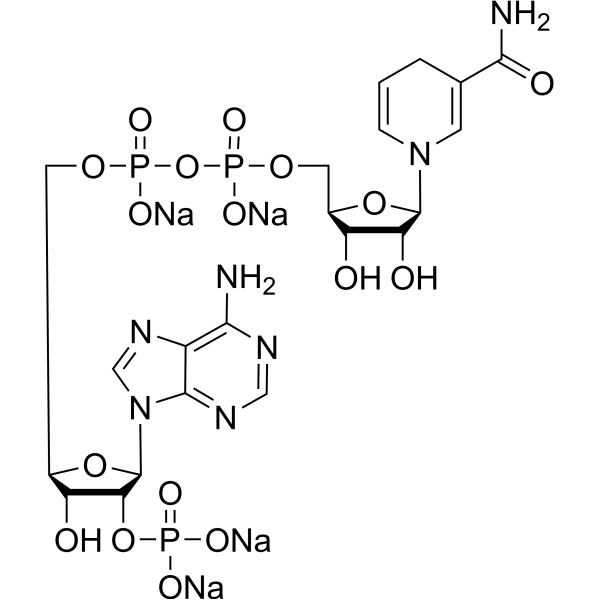
HY-F0003
NADPH tetrasodium salt -
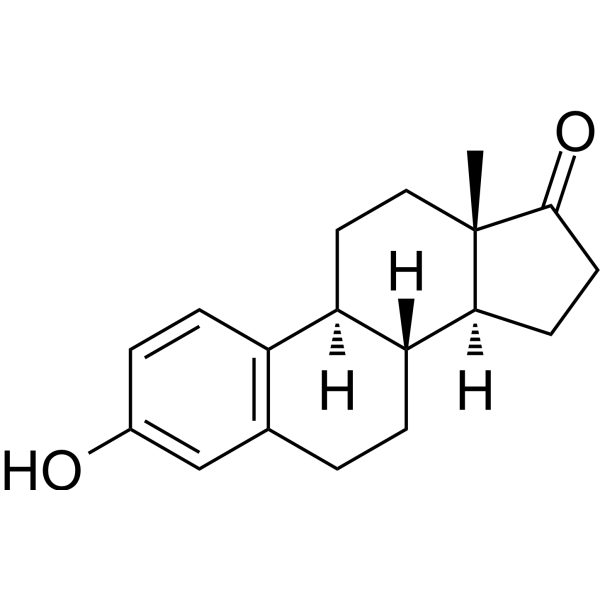
HY-B0234
Estrone -
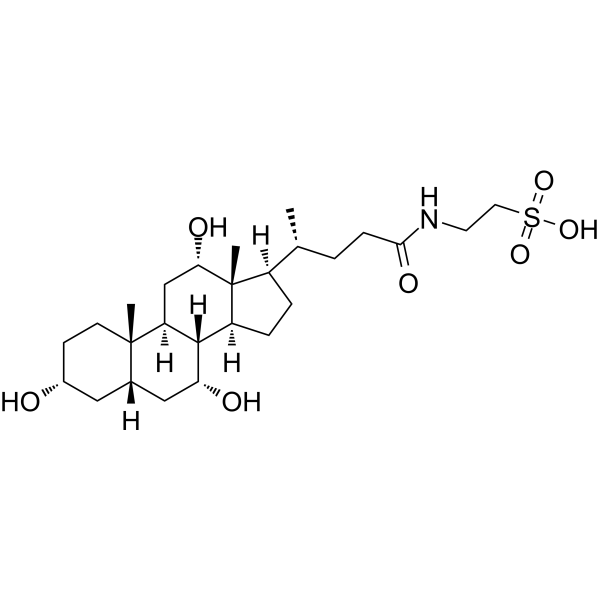
HY-B1788
Taurocholic acid -
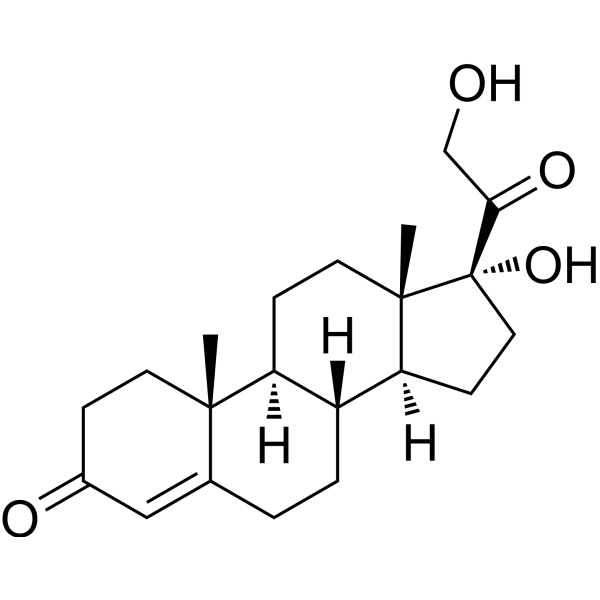
HY-77839
Cortodoxone -
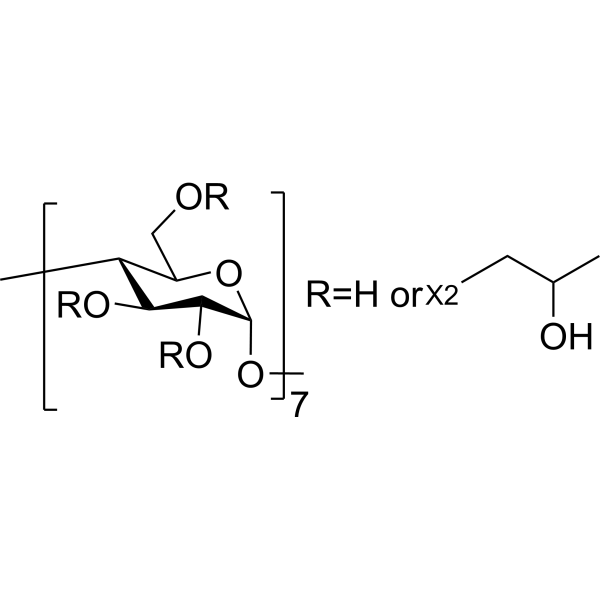
HY-101103
HP-β-CD -

HY-113416R
Dehydroepiandrosterone sulfate (Standard) -
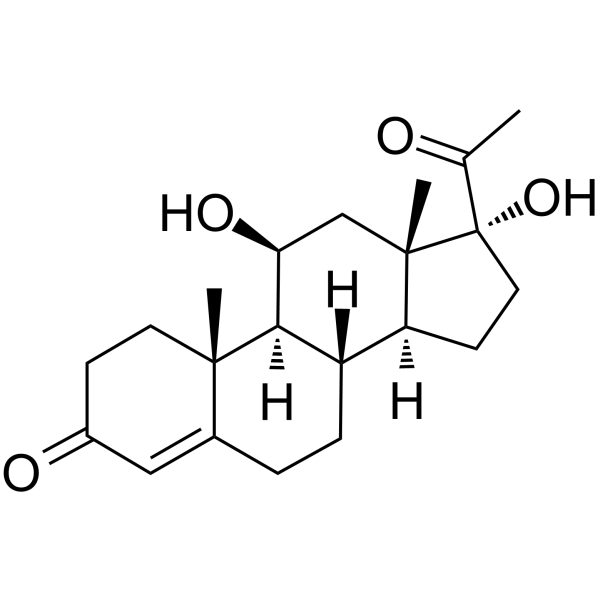
HY-113405
21-Deoxycortisol -
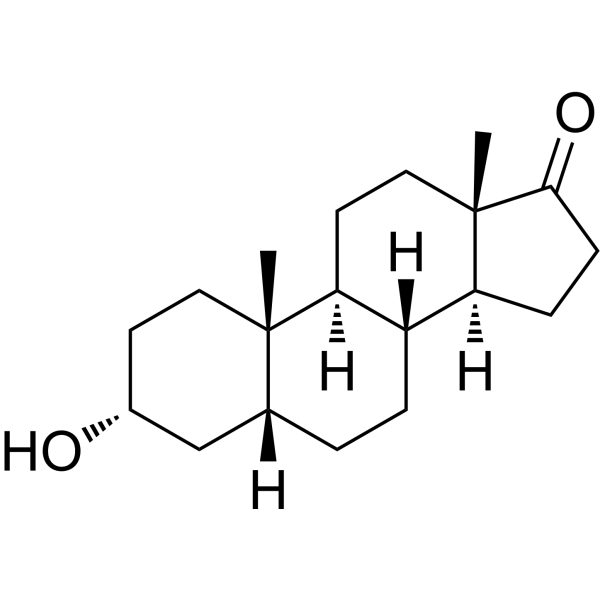
HY-113320
Etiocholanolone -
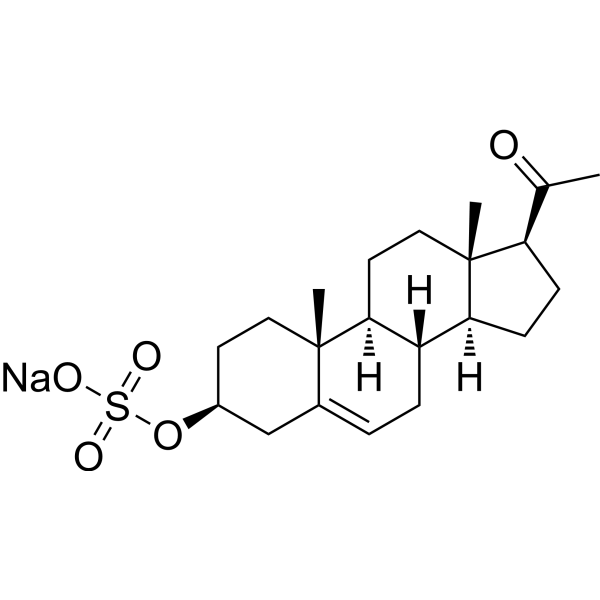
HY-110189
Pregnenolone monosulfate sodium
Publications Citing Use of MedChemExpress (MCE) Dehydroepiandrosterone sulfate
More Customer Validation & Images

-
Cell Proliferation/Viability Assay

-
Cell Proliferation/Viability Assay

-
IF

-
Cell Migration/Invasion Assay

-
Bio/Physico-chemical Assay

All Sigma Receptor Isoforms
MoreAll iGluR Isoforms
More

Biological Activity
Description
IC50 & Target
|
Human Endogenous Metabolite |
Sigma 1 Receptor |
PPARα |
Cellular Effect
|
Cell Line

|
Type | Value | Description | References |
|---|---|---|---|---|
| CHO | EC50 |
127 μM
Compound: 50
|
Agonist activity at human TGR5 expressed in CHO cells by luciferase assay
Agonist activity at human TGR5 expressed in CHO cells by luciferase assay
|
[PMID: 18307294] |
| Sf9 | IC50 |
3 μM
Compound: Dehydroepiandrosterone-3-sulfate
|
TP_TRANSPORTER: inhibition of E217betaG uptake in membrane vesicles from MRP4-expressing Sf9 cells
TP_TRANSPORTER: inhibition of E217betaG uptake in membrane vesicles from MRP4-expressing Sf9 cells
|
[PMID: 14643890] |
In Vitro
Dehydroepiandrosterone sulfate (0.1 nM-10 μM; 2-24 h) increases neuronal survival in embryonic rat cortical cell hypoxia assay, with significant effects at 10 μM[1].
Dehydroepiandrosterone sulfate (0.1-10 μM) protects neurons in rat cerebellar granule cell oxygen-glucose deprivation assay in a dose-dependent manner, with almost complete protection at 10 μM[1].
Dehydroepiandrosterone sulfate (DHEAS) (1 μM-1 mM; 48 h) inhibits TNF-α-induced VCAM-1, IL-8, and ICAM-1 expression in human aortic endothelial cell inflammation assay, and inhibits NF-κB activity via activation of PPARα[5].
Dehydroepiandrosterone sulfate (DHEAS) (10-7-10-5 M; 96 h) inhibits LIF-induced proliferation of juvenile bovine chromaffin cells and enhances EGF-induced proliferation of adult bovine chromaffin cells in a proliferation assay[6].
MedChemExpress (MCE) has not independently confirmed the accuracy of these methods. They are for reference only.
-
Cell Line:Human aortic endothelial cells (HAECs)
-
Concentration:0.1 μM-1 mM
-
Incubation Time:48 hours
-
Result:Had no significant effect on cell viability, as over 95% of cells remained viable across all concentrations tested, comparable to vehicle control.
-
Cell Line:Human aortic endothelial cells (HAECs)
-
Concentration:1 mM
-
Incubation Time:48 hours (pretreatment) + 4 hours (TNF-α stimulation)
-
Result:Significantly reduced TNF-α-induced IL-8 and ICAM-1 mRNA expression by 5-fold and 2-fold, respectively, compared to TNF-α alone.
-
Cell Line:Human aortic endothelial cells (HAECs)
-
Concentration:1-1000 μM
-
Incubation Time:48 hours
-
Result:Increased IκB-α protein levels in a dose-dependent manner, with maximal induction at 1000 μM, correlating with NF-κB inhibition.
-
Cell Line:Juvenile/adult bovine chromaffin cells
-
Concentration:10-7-10-5 M
-
Incubation Time:96 hours
-
Result:Did not affect basal proliferation but inhibited LIF-induced proliferation by 30% at 10-5 M.
In adult cells, enhanced EGF-induced proliferation by 25% at 10-5 M, without effect at lower concentrations.
In Vivo
Dehydroepiandrosterone sulfate (DHEAS) (converted from 2 mg/kg Dehydroepiandrosterone intraperitoneally; once daily; 13 days) can shorten the immobility time in the forced swim test in the male FSL rat model of depression, but when used in combination with electroconvulsive shock (ECS), it offsets the antidepressant effect of ECS[8].
Dehydroepiandrosterone sulfate (DHEAS) (10 mg/kg; subcutaneous injection; once daily; 4 weeks) enhances the seizure sensitivity of Laka mice in the pentylenetetrazol-induced seizure model, as shown by a decrease in the half effective dose of seizure (ED50 from 67.6 mg/kg to 48.6 mg/kg) and a shortens seizure latency, an effect that is reversed by Progesterone (HY-N0437) or Dizocilpine (HY-15084B)[9].
Chronic treatment with Dehydroepiandrosterone sulfate for 4 weeks significantly reduces the body weight of mice in the pentylenetetrazol-induced seizure model[9].
MedChemExpress (MCE) has not independently confirmed the accuracy of these methods. They are for reference only.
-
Animal Model:Albino Guinea Pig Noise-Induced Cochlear Injury Model (250-350 g): 2 kHz pure tone (120-125 dB SPL for 10 min) induced cochlear injury[7]
-
Dosage:1 mg/kg Dehydroepiandrosterone sulfate
-
Administration:Intravenous injection, single dose immediately before acoustic overexposure
-
Result:Significantly improved cochlear function 1 week after acoustic exposure, reducing CAP threshold shifts and increasing DPOAE amplitude compared to control groups.
The protective effect was observed at 1 mg/kg but not at 0.1 mg/kg, with no significant effect immediately after exposure.
-
Animal Model:Flinder Sensitive Line (FSL) Rat Model of Depression (male, 200-220 g, 6-8 weeks old): forced swim test (FST) assay[8]
-
Dosage:2 mg/kg Dehydroepiandrosterone (converted to Dehydroepiandrosterone sulfate)
-
Administration:Intraperitoneal injection, daily for 13 days
-
Result:Chronic Dehydroepiandrosterone administration (converted to Dehydroepiandrosterone sulfate) alone reduced immobility time in FST, mimicking antidepressant effects.
Combined treatment with electroconvulsive shock (ECS) abolished this effect, with immobility time significantly increased compared to DHEA or ECS alone, indicating DHEAS may antagonize ECS efficacy.
-
Animal Model:Mouse Pentylenetetrazol-Induced Seizure Model (20-25 g): Pentylenetetrazol-induced tonic convulsions[9]
-
Dosage:10 mg/kg Dehydroepiandrosterone sulfate (dissolved in 0.1% Tween 80 saline)
-
Administration:Subcutaneous injection, daily for 4 weeks
-
Result:Chronic treatment shifted pentylenetetrazol dose-response curves leftward, reducing ED50 for convulsions and shortening latency to seizure onset, indicating enhanced seizure sensitivity.
This proconvulsant effect was prevented by co-treatment with progesterone or dizocilpine, linking it to GABAA receptor antagonism and NMDA receptor activation.


Chemical Information
-
CAS No. 651-48-9
-
Appearance Solid
-
Molecular Weight 368.49
-
Formula C19H28O5S
-
Color White to off-white
-
SMILES
C[C@@]12[C@]3([H])[C@](CC=C1C[C@@H](OS(=O)(O)=O)CC2)([H])[C@@]4([H])[C@@](C)(C(CC4)=O)CC3
-
Synonyms
DHEA sulfate; Prasterone sulfate
-
Structure Classification
-
Shipping
Room temperature in continental US; may vary elsewhere.
-
Storage
Powder -20°C 3 years 4°C 2 years In solvent -80°C 6 months -20°C 1 month


Publications (4)
-
Journal Impact Factor
-
Most Recent
-
Cell Metab
Sensing steroid hormone 17α-hydroxypregnenolone by GPR56 enables protection from ferroptosis-induced liver injury. [Abstract]2024 Nov 5;36(11):2402-2418.e10. PMID: 39389061 -
Nat Chem Biol
2022 Nov;18(11):1196-1203. PMID: 35982227 -
Eur J Pharmacol
18β-Glycyrrhetinic acid synergizes with enzalutamide to counteract castration-resistant prostate cancer by inhibiting OATP2B1 uptake of dehydroepiandrosterone sulfate. [Abstract]2024 Nov 15:983:176995. PMID: 39277096
Dehydroepiandrosterone sulfate purchased from MedChemExpress. Usage Cited in: Eur J Pharmacol. 2024 Nov 15:983:176995. [Abstract]
CCK8 assay was conducted to determine the viability of LNCap and 22RV1 cells treated with Dehydroepiandrosterone sulfate (DHEAS) (0, 2.5, 5, and 10 μM) for 48 h in a normal cultivation environment and an androgen-deprived environment. The results showed that DHEAS had no significant effect on cell proliferation in the FBS group.
Dehydroepiandrosterone sulfate purchased from MedChemExpress. Usage Cited in: Eur J Pharmacol. 2024 Nov 15:983:176995. [Abstract]
A CCK8 assay was conducted to determine the viability of LNCap and 22RV1 cells treated with Dehydroepiandrosterone sulfate (DHEAS, 2.5-10 μM) for 2, 4, and 6 days in an androgen-deprived environment. DHEAS promoted the proliferation of LNCap and 22RV1 cells in the androgen deprivation environment. When treated with 10 μM DHEAS, the proliferation rate of LNCap and 22RV1 cells was higher than that recorded in the blank control group. The proliferation rate of LNCap and 22RV1 cells increased by 21.8% and 20.8%, respectively, on day 6.
Dehydroepiandrosterone sulfate purchased from MedChemExpress. Usage Cited in: Eur J Pharmacol. 2024 Nov 15:983:176995. [Abstract]
Immunofluorescence was used to demonstrate the co-localization of androgen receptor (AR) in 22RV1 cells treated with 18β-GA (40 μM) and ENZ (40 μM) for 24 h after Dehydroepiandrosterone sulfate (DHEAS, 10 μM) stimulation.
Dehydroepiandrosterone sulfate purchased from MedChemExpress. Usage Cited in: Eur J Pharmacol. 2024 Nov 15:983:176995. [Abstract]
Transwell migration assay was performed to assess the migration ability of 22RV1 cells, and the cells were treated with 18β-GA (40 μM) and ENZ (40 μM) for 48 h. The results of the Transwell migration experiments suggested that Dehydroepiandrosterone sulfate (DHEAS, 10 μM; 48 h) increased the migration of 22RV1 cells compared to the rate of cell migration recorded in the control group, but the combined treatment using 18β-GA and ENZ significantly inhibited cell mobility.
Dehydroepiandrosterone sulfate purchased from MedChemExpress. Usage Cited in: Eur J Pharmacol. 2024 Nov 15:983:176995. [Abstract]
The effects of 24 components found in traditional Chinese medicine (10 and 100 μM) on the uptake of Dehydroepiandrosterone sulfate (DHEAS, 10 μM) for 10 min were assessed in OATP2B1-HEK293 cells.
-


Solvent & Solubility
In Vitro:
DMSO : 100 mg/mL (271.38 mM; Need ultrasonic; Hygroscopic DMSO has a significant impact on the solubility of product, please use newly opened DMSO)
Please refer to the solubility information to select the appropriate solvent. Once prepared, please aliquot and store the solution to prevent product inactivation from repeated freeze-thaw cycles.
Storage method and period of stock solution: -80°C, 6 months; -20°C, 1 month. When stored at -80°C, please use it within 6 months. When stored at -20°C, please use it within 1 month.
Please refer to the solubility information to select the appropriate solvent. Once prepared, please aliquot and store the solution to prevent product inactivation from repeated freeze-thaw cycles.
Storage method and period of stock solution: -80°C, 6 months; -20°C, 1 month. When stored at -80°C, please use it within 6 months. When stored at -20°C, please use it within 1 month.
Concentration (start) × Volume (start) = Concentration (final) × Volume (final)
In Vivo:
Select the appropriate dissolution method based on your experimental animal and administration route.
- For the following dissolution methods, please ensure to first prepare a clear stock solution using an In Vitro approach and then sequentially add co-solvents:
- To ensure reliable experimental results, the clarified stock solution can be appropriately stored based on storage conditions. As for the working solution for In Vivo experiments, it is recommended to prepare freshly and use it on the same day.
- The percentages shown for the solvents indicate their volumetric ratio in the final prepared solution. If precipitation or phase separation occurs during preparation, heat and/or sonication can be used to aid dissolution.
Add each solvent one by one: 10% DMSO 40% PEG300 5% Tween-80 45% Saline
Solubility: ≥ 2.5 mg/mL (6.78 mM); Clear solution
This protocol yields a clear solution of ≥ 2.5 mg/mL (saturation unknown).
Taking 1 mL working solution as an example, add 100 μL DMSO stock solution (25.0 mg/mL) to 400 μL PEG300, and mix evenly; then add 50 μL Tween-80 and mix evenly; then add 450 μL Saline to adjust the volume to 1 mL.
Preparation of Saline: Dissolve 0.9 g sodium chloride in ddH₂O and dilute to 100 mL to obtain a clear Saline solution.
Add each solvent one by one: 10% DMSO 90% (20% SBE-β-CD in Saline)
Solubility: ≥ 2.5 mg/mL (6.78 mM); Clear solution
This protocol yields a clear solution of ≥ 2.5 mg/mL (saturation unknown).
Taking 1 mL working solution as an example, add 100 μL DMSO stock solution (25.0 mg/mL) to 900 μL 20% SBE-β-CD in Saline, and mix evenly.
Preparation of 20% SBE-β-CD in Saline (4°C, storage for one week): 2 g SBE-β-CD powder is dissolved in 10 mL Saline, completely dissolve until clear.
In Vivo Dissolution Calculator
Please enter the basic information of animal experiments:
-
-
-
-
Recommended: Prepare an additional quantity of animals to account for potential losses during experiments.
Please enter your animal formula composition:
-
%DMSO +
Recommended: Keep the proportion of DMSO in working solution below 2% if your animal is weak.
-
%+
-
+%Tween-80 + +
-
%Saline +
The co-solvents required include: DMSO, . All of co-solvents are available by MedChemExpress (MCE). , Tween 80. All of co-solvents are available by MedChemExpress (MCE).
Working solution concentration: 0.22 mg/mL
Method for preparing stock solution: mg drug dissolved in μL DMSO. Stock solution concentration: mg/mL.
1. Take μL DMSO stock solution;
2. Add μL .
μL , mix evenly;
3. Then add μL Tween 80, mix evenly;
4. Then add μL
Please ensure that the stock solution in the first step is dissolved to a clear state, and add co-solvents in sequence. You can use ultrasonic heating (ultrasonic cleaner, recommended frequency 20-40 kHz), vortexing, etc. to assist dissolution.


Purity & Documentation
-
Data Sheet (314 KB)
-
SDS (251 KB)
- English - EN (251 KB)
- Français - FR (251 KB)
- Deutsch - DE (251 KB)
- Norwegian - NO (251 KB)
- Español - ES (251 KB)
- Swedish - SV (251 KB)
- Italian - IT (251 KB)
- Korean - KR (251 KB)
- Portuguese - PT (251 KB)
-
Handling Instructions (2659 KB)
References
[1]. Baulieu EE, et al. Dehydroepiandrosterone (DHEA), DHEA sulfate, and aging: contribution of the DHEAge Study to a sociobiomedical issue. Proc Natl Acad Sci U S A. 2000 Apr 11;97(8):4279-84. [Content Brief]
[2]. Maninger N, et al. Neurobiological and neuropsychiatric effects of dehydroepiandrosterone (DHEA) and DHEA sulfate (DHEAS). Front Neuroendocrinol. 2009 Jan;30(1):65-91. [Content Brief]
[3]. Dillon JS. Dehydroepiandrosterone, dehydroepiandrosterone sulfate and related steroids: their role in inflammatory, allergic and immunological disorders. Curr Drug Targets Inflamm Allergy. 2005 Jun;4(3):377-85. [Content Brief]
[4]. Barrett-Connor E, et al. A prospective study of dehydroepiandrosterone sulfate, mortality, and cardiovascular disease. N Engl J Med. 1986 Dec 11;315(24):1519-24. [Content Brief]
[5]. Altman R, et al. Inhibition of vascular inflammation by dehydroepiandrosterone sulfate in human aortic endothelial cells: roles of PPARalpha and NF-kappaB. Vascul Pharmacol. 2008 Feb-Mar;48(2-3):76-84. [Content Brief]
[6]. Sicard F, et al. Age-dependent regulation of chromaffin cell proliferation by growth factors, dehydroepiandrosterone (DHEA), and DHEA sulfate. Proc Natl Acad Sci U S A. 2007 Feb 6;104(6):2007-12. [Content Brief]
[7]. Tabuchi K, et al. Dehydroepiandrosterone sulfate reduces acoustic injury of the guinea-pig cochlea. J Pharmacol Sci. 2005 Oct;99(2):191-4. [Content Brief]
[8]. Maayan R, et al. The involvement of dehydroepiandrosterone (DHEA) and its sulfate ester (DHEAS) in blocking the therapeutic effect of electroconvulsive shocks in an animal model of depression. Eur Neuropsychopharmacol. 2005 May;15(3):253-62. [Content Brief]
[9]. Reddy DS, et al. Proconvulsant effects of neurosteroids pregnenolone sulfate and dehydroepiandrosterone sulfate in mice. Eur J Pharmacol. 1998 Mar 12;345(1):55-9. [Content Brief]


Complete Stock Solution Preparation Table
Please refer to the solubility information to select the appropriate solvent. Once prepared, please aliquot and store the solution to prevent product inactivation from repeated freeze-thaw cycles.
Storage method and period of stock solution: -80°C, 6 months; -20°C, 1 month. When stored at -80°C, please use it within 6 months. When stored at -20°C, please use it within 1 month.
| Optional Solvent | Concentration Solvent Mass | 1 mg | 5 mg | 10 mg | 25 mg |
|---|---|---|---|---|---|
| DMSO | 1 mM | 2.7138 mL | 13.5689 mL | 27.1378 mL | 67.8444 mL |
| 5 mM | 0.5428 mL | 2.7138 mL | 5.4276 mL | 13.5689 mL | |
| 10 mM | 0.2714 mL | 1.3569 mL | 2.7138 mL | 6.7844 mL | |
| 15 mM | 0.1809 mL | 0.9046 mL | 1.8092 mL | 4.5230 mL | |
| 20 mM | 0.1357 mL | 0.6784 mL | 1.3569 mL | 3.3922 mL | |
| 25 mM | 0.1086 mL | 0.5428 mL | 1.0855 mL | 2.7138 mL | |
| 30 mM | 0.0905 mL | 0.4523 mL | 0.9046 mL | 2.2615 mL | |
| 40 mM | 0.0678 mL | 0.3392 mL | 0.6784 mL | 1.6961 mL | |
| 50 mM | 0.0543 mL | 0.2714 mL | 0.5428 mL | 1.3569 mL | |
| 60 mM | 0.0452 mL | 0.2261 mL | 0.4523 mL | 1.1307 mL | |
| 80 mM | 0.0339 mL | 0.1696 mL | 0.3392 mL | 0.8481 mL | |
| 100 mM | 0.0271 mL | 0.1357 mL | 0.2714 mL | 0.6784 mL |


Dehydroepiandrosterone sulfate Related Classifications
HY-113416 Related Classifications
 Powered by Bioz