



DHEA
Based on 64 publication(s) in Google Scholar
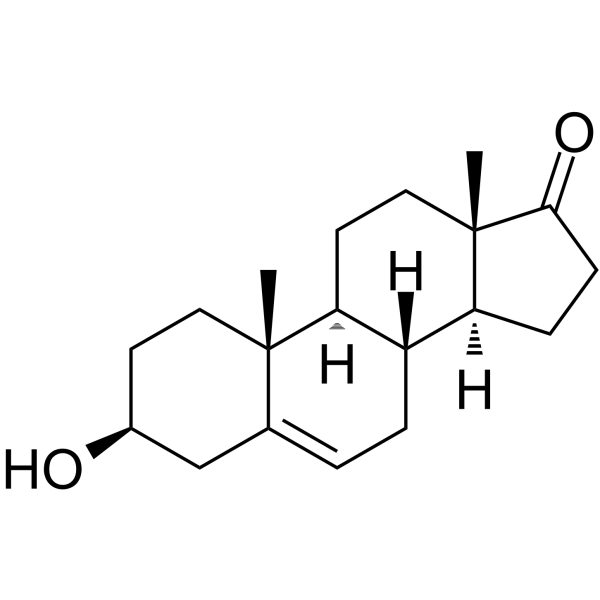
DHEA (Prasterone) is one of the most abundant steroid hormones. DHEA (Prasterone) mediates its action via multiple signaling pathways involving specific membrane receptors and via transformation into androgen and estrogen derivatives (e.g., androgens, estrogens, 7α and 7β DHEA, and 7α and 7β epiandrosterone derivatives) acting through their specific receptors.
Nur für Forschungszwecke. Wir verkaufen nicht an Patienten.
- Reinheit : 99.94%
- CAS. Nr.: 53-43-0
- Formel: C19H28O2
- Molecular Weight:288.42
-
Speicherung:Powder -20°C, 3 years , 4°C, 2 years ; In solvent -80°C, 2 years , -20°C, 1 year

To place orders, for customer services and technical support, please contact: MedChemExpress USA
Tel: 609-228-6898 E-mail: [email protected] [email protected]


-
 Biologische Aktivität
-
Chemical Information
-
Lösungsmittel & Löslichkeit
- Protokoll
- Reinheit & Dokumentation
- Verweise
-
 Help & FAQs


-

HY-Y1888
Corn oil -

HY-154629
Sesame OilNatural Product -
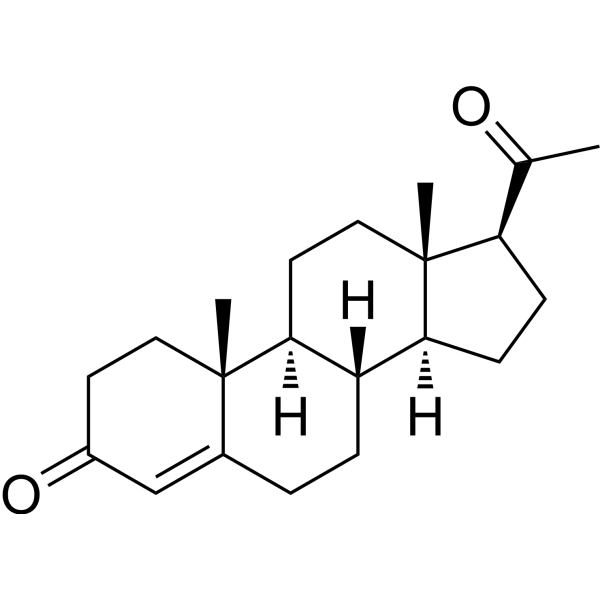
HY-N0437
ProgesteroneEndogenous Metabolite -
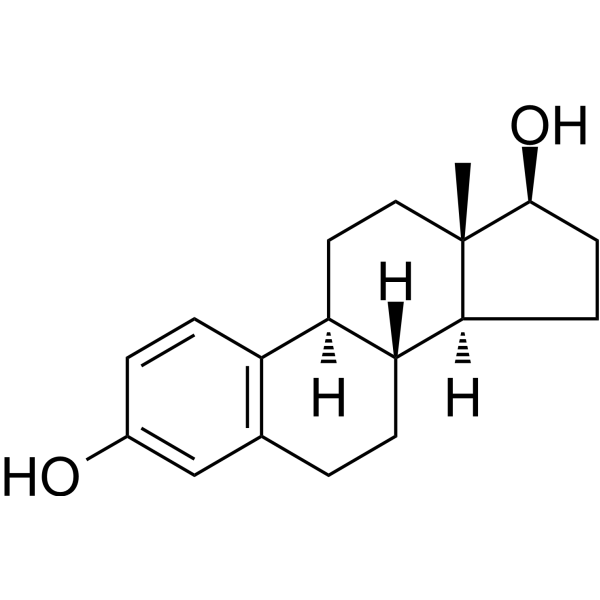
HY-B0141
EstradiolHuman Endogenous Metabolite -
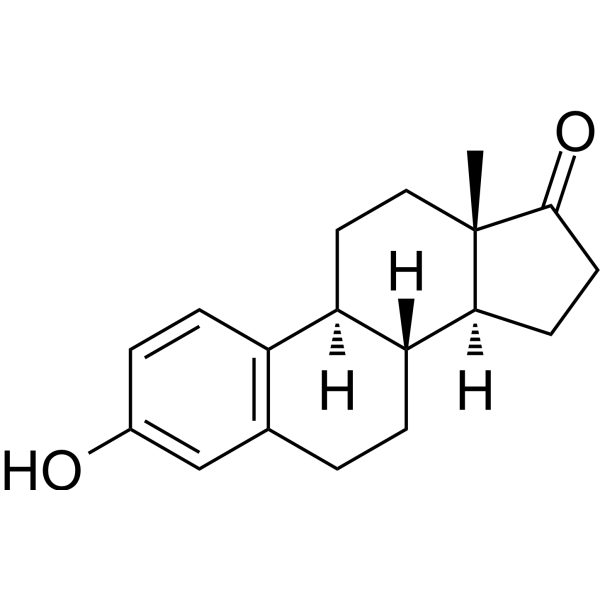
HY-B0234
EstroneEndogenous Metabolite -
HY-B0151
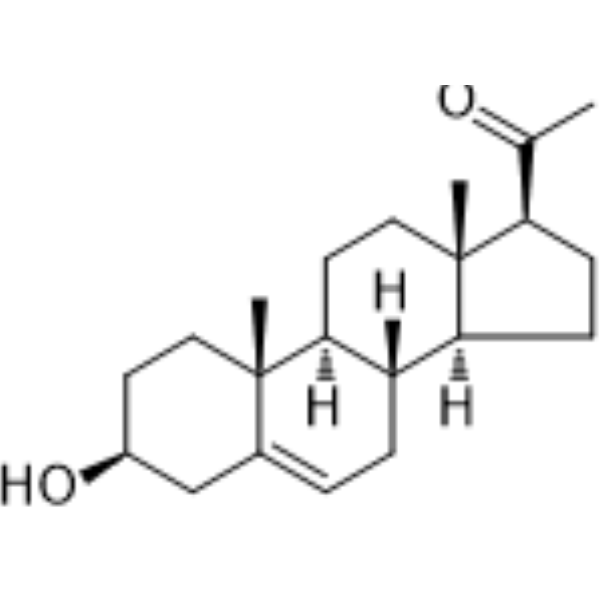
PregnenoloneCB1 Inhibitor -
HY-Y0320
Dimethyl sulfoxide, meets analytical specification of Ch.P.Aprotic Solvent -
HY-B0141R
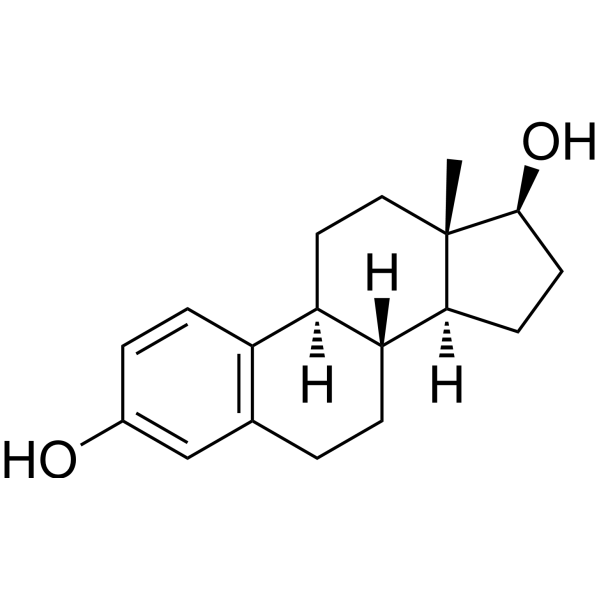
Estradiol (Standard) -
HY-P1156
Insulin(cattle)Recombinant Cattle Insulin -
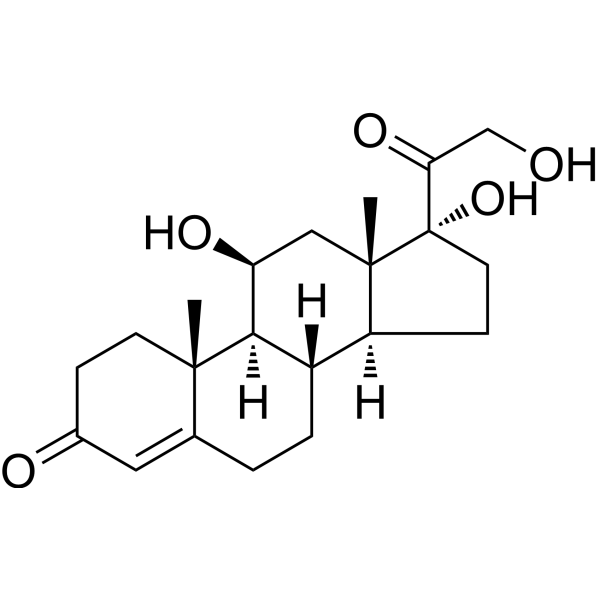
HY-N0583
HydrocortisoneGlucocorticoid Receptor Agonist -
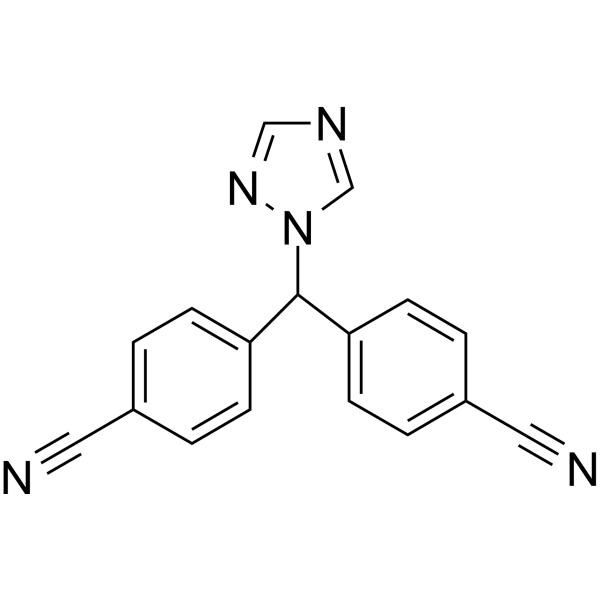
HY-14248
LetrozoleAromatase Inhibitor -
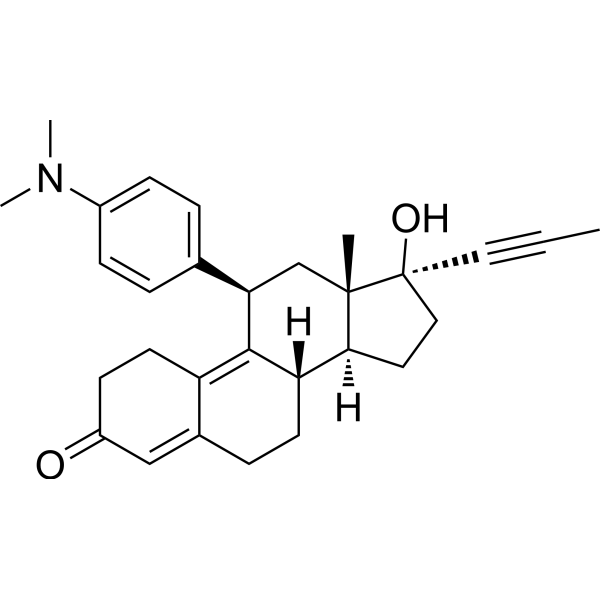
HY-13683
MifepristoneProgesterone Receptor Antagonist
Publications Citing Use of MedChemExpress (MCE) DHEA
More- Nature. 2026 Mar;651(8104):251-259. [Abstract]
- Cell Metab. 2024 Nov 5;36(11):2402-2418.e10. [Abstract]
- Nat Aging. 2026 Jul;6(7):1395-1416.
- Adv Funct Mater. 2025 Nov 17.
- Nat Commun. 2025 Aug 15;16(1):7611. [Abstract]
- Mol Cell. 2026 Sep 3;86(17):3604-3621.e11.
- Nat Chem Biol. 2022 Nov;18(11):1196-1203. [Abstract]
- Gut Microbes. 2026 Dec 31;18(1):2657047. [Abstract]
- Cell Commun Signal. 2024 Jan 10;22(1):28. [Abstract]
- NPJ Biofilms Microbiomes. 2026 Aug 24.
- Phytomedicine. 2026 Jul:156:158243. [Abstract]
- Phytomedicine. 2025 Jul:142:156777. [Abstract]
- Acta Pharmacol Sin. 2024 Aug;45(8):1582-1590. [Abstract]
- Proc Natl Acad Sci U S A. 2022 Apr 12;119(15):e2117004119. [Abstract]
- J Hazard Mater Lett. 2025 Nov.
- Mol Med. 2025 May 29;31(1):210. [Abstract]
- Phytother Res. 2025 Sep 27. [Abstract]
- Phytother Res. 2023 Apr;37(4):1405-1421. [Abstract]
- Free Radic Biol Med. 2024 Nov 1:224:707-722. [Abstract]
- Cell Rep. 2023 Aug 28;42(9):113044. [Abstract]
- Anal Chem. 2026 Jun 30;98(25):19042-19056. [Abstract]
- Anal Chem. 2026 Jun 16;98(23):16962-16970. [Abstract]
- Environ Pollut. 2024 Apr 15:347:123723. [Abstract]
- Cancer Cell Int. 2024 Jan 6;24(1):12. [Abstract]
- J Ethnopharmacol. 2025 Jul 14;353(Pt A):120294. [Abstract]
- Biochem Pharmacol. 2025 Jun:236:116871. [Abstract]
- Cell Mol Life Sci. 2025 Mar 6;82(1):104. [Abstract]
- Life Sci. 2026 Jul 15:397:124392. [Abstract]
- Eur J Pharmacol. 2024 Aug 15:977:176742. [Abstract]
- Reprod Biol Endocrinol. 2024 Aug 6;22(1):98. [Abstract]
- Int J Mol Sci. 2024 Nov 4;25(21):11852. [Abstract]
- Int Immunopharmacol. 2024 Aug 20:137:112480. [Abstract]
- Int Immunopharmacol. 2022 Jun:107:108717. [Abstract]
- Phenomics. 2026 Jun 16.
- Am J Physiol Cell Physiol. 2025 May 1;328(5):C1586-C1604. [Abstract]
- Biol Res. 2023 Jun 12;56(1):31. [Abstract]
- J Ovarian Res. 2025 Jan 20;18(1):9. [Abstract]
- J Ovarian Res. 2024 May 11;17(1):100. [Abstract]
- Talanta Open. 2025 Apr 25.
- Biochim Biophys Acta Mol Basis Dis. 2026 Jan 26;1872(4):168173. [Abstract]
- Biochim Biophys Acta Mol Basis Dis. 2024 Jun;1870(5):167182. [Abstract]
- Am J Pathol. 2025 Sep 12:S0002-9440(25)00342-6. [Abstract]
- iScience. 2026 Jul 20;29(8):116561.
- FASEB J. 2025 Jul 31;39(14):e70846. [Abstract]
- Biochim Biophys Acta Mol Cell Res. 2024 Oct;1871(7):119822. [Abstract]
- Mol Hum Reprod. 2024 Oct 12;30(10):gaae037. [Abstract]
- J Funct Foods. 2026 Mar 11.
- J Biochem Mol Toxicol. 2025 Feb;39(2):e70158. [Abstract]
- Toxicol Appl Pharmacol. 2022 Apr 15:441:115969. [Abstract]
- Toxicol Appl Pharmacol. 2019 Sep 1:378:114612. [Abstract]
- Mol Cell Endocrinol. 2024 Oct 1:592:112322. [Abstract]
- Mol Cell Endocrinol. 2022 Jun 15;550:111645. [Abstract]
- Andrology. 2021 Nov;9(6):1923-1933. [Abstract]
- Gynecol Endocrinol. 2025 Dec;41(1):2536579. [Abstract]
- Histochem Cell Biol. 2026 Aug 5;164(1):71. [Abstract]
- PeerJ. 2026 Apr 30:14:e21194. [Abstract]
- Theriogenology. 2026 Apr 1:254:117813. [Abstract]
- Theriogenology. 2022 Sep 1:189:118-126. [Abstract]
- Reprod Sci. 2025 Aug 11. [Abstract]
- Gene. 2025 Mar 15:941:149210. [Abstract]
- Mol Reprod Dev. 2024 Aug;91(8):e23768. [Abstract]
- J Chromatogr B Analyt Technol Biomed Life Sci. 2026 Jun 1:1277:125074. [Abstract]
- SSRN. 2025 Dec 15.
- Aging (Albany NY). 2020 May 14;12(10):9041-9065. [Abstract]
 Customer Validation & Images

-
Histological Imaging/Staining
-
WB
-
RT-PCR
-
Histological Imaging/Staining
-
In Vivo Efficacy Study
Alle Endogenous Metabolite Isoform-spezifische Produkte anzeigen
More

Biologische Aktivität
Beschreibung
IC50 & Target
|
Human Endogenous Metabolite |
Cellular Effect
|
Cell Line

|
Type | Value | Description | References |
|---|---|---|---|---|
| A-431 | IC50 |
>50 μM
Compound: DHEA
|
Cytotoxic activity against human A431 cells after 24 hrs by MTT assay
Cytotoxic activity against human A431 cells after 24 hrs by MTT assay
|
[PMID: 25456391] |
| A-431 | IC50 |
>50 μM
Compound: DHEA
|
Cytotoxic activity against human A431 cells after 48 hrs by MTT assay
Cytotoxic activity against human A431 cells after 48 hrs by MTT assay
|
[PMID: 25456391] |
| A549 | IC50 |
>20 μM
Compound: c1
|
Antiproliferative activity against human A549 cells assessed as reduction in cell viability incubated for 48 hrs by MTS assay
Antiproliferative activity against human A549 cells assessed as reduction in cell viability incubated for 48 hrs by MTS assay
|
[PMID: 30822712] |
| A549 | IC50 |
47.8 μM
Compound: DHEA
|
Cytotoxic activity against human A549 cells after 24 hrs by MTT assay
Cytotoxic activity against human A549 cells after 24 hrs by MTT assay
|
[PMID: 25456391] |
| A549 | IC50 |
47.8 μM
Compound: DHEA
|
Cytotoxic activity against human A549 cells after 48 hrs by MTT assay
Cytotoxic activity against human A549 cells after 48 hrs by MTT assay
|
[PMID: 25456391] |
| CHO | EC50 |
3.33 μM
Compound: 49
|
Agonist activity at human TGR5 expressed in CHO cells by luciferase assay
Agonist activity at human TGR5 expressed in CHO cells by luciferase assay
|
[PMID: 18307294] |
| DU-145 | IC50 |
>50 μM
Compound: DHEA
|
Antiproliferative activity against human DU145 cells assessed as reduction in cell viability after 96 hrs by sulforhodamine B assay
Antiproliferative activity against human DU145 cells assessed as reduction in cell viability after 96 hrs by sulforhodamine B assay
|
[PMID: 26866967] |
| HCT-116 | IC50 |
>50 μM
Compound: DHEA
|
Antiproliferative activity against human HCT116 cells assessed as reduction in cell viability after 96 hrs by sulforhodamine B assay
Antiproliferative activity against human HCT116 cells assessed as reduction in cell viability after 96 hrs by sulforhodamine B assay
|
[PMID: 26866967] |
| HEK293 | EC50 |
>10 μM
Compound: 19
|
Binding affinity to FLAG/tGFP-tagged NPC1 I1061T mutant (unknown origin) expressed in HEK293 cells assessed as localization after 24 hrs by fluorescence microscopy
Binding affinity to FLAG/tGFP-tagged NPC1 I1061T mutant (unknown origin) expressed in HEK293 cells assessed as localization after 24 hrs by fluorescence microscopy
|
[PMID: 24928400] |
| HEK-293T | IC50 |
24.9 μM
Compound: 1, DHEA, dehydroepiandrosterone
|
Inhibition of G6PD in HEK293T cells assessed as accumulation of 6-phosphogluconate after 5 hrs by LC-MS/MS analysis using 6-aminonicotinamide
Inhibition of G6PD in HEK293T cells assessed as accumulation of 6-phosphogluconate after 5 hrs by LC-MS/MS analysis using 6-aminonicotinamide
|
[PMID: 22506561] |
| HeLa | IC50 |
>50 μM
Compound: DHEA
|
Cytotoxic activity against human HeLa cells after 24 hrs by MTT assay
Cytotoxic activity against human HeLa cells after 24 hrs by MTT assay
|
[PMID: 25456391] |
| HeLa | IC50 |
>50 μM
Compound: DHEA
|
Cytotoxic activity against human HeLa cells after 48 hrs by MTT assay
Cytotoxic activity against human HeLa cells after 48 hrs by MTT assay
|
[PMID: 25456391] |
| HepG2 | IC50 |
>50 μM
Compound: DHEA
|
Cytotoxic activity against human HepG2 cells after 24 hrs by MTT assay
Cytotoxic activity against human HepG2 cells after 24 hrs by MTT assay
|
[PMID: 25456391] |
| HepG2 | IC50 |
>50 μM
Compound: DHEA
|
Cytotoxic activity against human HepG2 cells after 48 hrs by MTT assay
Cytotoxic activity against human HepG2 cells after 48 hrs by MTT assay
|
[PMID: 25456391] |
| HL-60 | IC50 |
>20 μM
Compound: c1
|
Antiproliferative activity against human HL60 cells assessed as reduction in cell viability incubated for 48 hrs by MTS assay
Antiproliferative activity against human HL60 cells assessed as reduction in cell viability incubated for 48 hrs by MTS assay
|
[PMID: 30822712] |
| HL-60 | IC50 |
>50 μM
Compound: DHEA
|
Antiproliferative activity against human HL60 cells assessed as reduction in cell viability after 96 hrs by MTS assay
Antiproliferative activity against human HL60 cells assessed as reduction in cell viability after 96 hrs by MTS assay
|
[PMID: 26866967] |
| HT-29 | IC50 |
>50 μM
Compound: DHEA
|
Cytotoxic activity against human HT-29 cells after 24 hrs by MTT assay
Cytotoxic activity against human HT-29 cells after 24 hrs by MTT assay
|
[PMID: 25456391] |
| HT-29 | IC50 |
>50 μM
Compound: DHEA
|
Cytotoxic activity against human HT-29 cells after 48 hrs by MTT assay
Cytotoxic activity against human HT-29 cells after 48 hrs by MTT assay
|
[PMID: 25456391] |
| HT-29 | IC50 |
>50 μM
Compound: DHEA
|
Antiproliferative activity against human HT-29 cells assessed as reduction in cell viability after 96 hrs by sulforhodamine B assay
Antiproliferative activity against human HT-29 cells assessed as reduction in cell viability after 96 hrs by sulforhodamine B assay
|
[PMID: 26866967] |
| J774.2 | CC50 |
198.17 μM
Compound: 1a; DHEA
|
Cytotoxicity against mouse J774.2 cells assessed as reduction in cell viability measured after 48 hrs by resazurin dye based assay
Cytotoxicity against mouse J774.2 cells assessed as reduction in cell viability measured after 48 hrs by resazurin dye based assay
|
[PMID: 34571489] |
| J774.A1 | IC50 |
141 nM
Compound: 1, DHEA
|
Inhibition of LPS-induced TNFalpha production in mouse J774A.1 cells
Inhibition of LPS-induced TNFalpha production in mouse J774A.1 cells
|
[PMID: 17892941] |
| Jurkat | IC50 |
46.5 μM
Compound: DHEA
|
Antiproliferative activity against human Jurkat cells assessed as reduction in cell viability after 96 hrs by MTS assay
Antiproliferative activity against human Jurkat cells assessed as reduction in cell viability after 96 hrs by MTS assay
|
[PMID: 26866967] |
| LNCaP | IC50 |
>50 μM
Compound: DHEA
|
Cytotoxic activity against human LNCAP cells after 24 hrs by MTT assay
Cytotoxic activity against human LNCAP cells after 24 hrs by MTT assay
|
[PMID: 25456391] |
| LNCaP | IC50 |
>50 μM
Compound: DHEA
|
Cytotoxic activity against human LNCAP cells after 48 hrs by MTT assay
Cytotoxic activity against human LNCAP cells after 48 hrs by MTT assay
|
[PMID: 25456391] |
| LNCaP | IC50 |
>50 μM
Compound: DHEA
|
Antiproliferative activity against human LNCAP cells assessed as reduction in cell viability after 96 hrs by sulforhodamine B assay
Antiproliferative activity against human LNCAP cells assessed as reduction in cell viability after 96 hrs by sulforhodamine B assay
|
[PMID: 26866967] |
| MCF7 | IC50 |
>20 μM
Compound: c1
|
Antiproliferative activity against human MCF7 cells assessed as reduction in cell viability incubated for 48 hrs by MTS assay
Antiproliferative activity against human MCF7 cells assessed as reduction in cell viability incubated for 48 hrs by MTS assay
|
[PMID: 30822712] |
| MCF7 | IC50 |
>200 μM
Compound: DHEA
|
Cytotoxicity against human MCF7 cells after 48 hrs by MTT assay
Cytotoxicity against human MCF7 cells after 48 hrs by MTT assay
|
[PMID: 23880359] |
| MCF7 | IC50 |
>50 μM
Compound: DHEA
|
Cytotoxic activity against human MCF7 cells after 24 hrs by MTT assay
Cytotoxic activity against human MCF7 cells after 24 hrs by MTT assay
|
[PMID: 25456391] |
| MCF7 | IC50 |
>50 μM
Compound: DHEA
|
Cytotoxic activity against human MCF7 cells after 48 hrs by MTT assay
Cytotoxic activity against human MCF7 cells after 48 hrs by MTT assay
|
[PMID: 25456391] |
| MCF7 | IC50 |
>50 μM
Compound: DHEA
|
Antiproliferative activity against human MCF7 cells assessed as reduction in cell viability after 96 hrs by sulforhodamine B assay
Antiproliferative activity against human MCF7 cells assessed as reduction in cell viability after 96 hrs by sulforhodamine B assay
|
[PMID: 26866967] |
| MDA-MB-231 | IC50 |
>50 μM
Compound: DHEA
|
Antiproliferative activity against human MDA-MB-231 cells assessed as reduction in cell viability after 96 hrs by sulforhodamine B assay
Antiproliferative activity against human MDA-MB-231 cells assessed as reduction in cell viability after 96 hrs by sulforhodamine B assay
|
[PMID: 26866967] |
| PC-12 | IC50 |
0.29 nM
Compound: DHEA
|
Neuroprotective activity in rat PC12 cells assessed as inhibition of serum deprivation-induced apoptosis after 24 hrs by APO Percentage apoptosis assay
Neuroprotective activity in rat PC12 cells assessed as inhibition of serum deprivation-induced apoptosis after 24 hrs by APO Percentage apoptosis assay
|
[PMID: 19845386] |
| PC-12 | IC50 |
1.65 nM
Compound: DHEA
|
Displacement of [3H]DHEA from DHEA-binding site in rat PC12 cell membranes by gamma-scintillation counting
Displacement of [3H]DHEA from DHEA-binding site in rat PC12 cell membranes by gamma-scintillation counting
|
[PMID: 19845386] |
| SMMC-7721 | IC50 |
>20 μM
Compound: c1
|
Antiproliferative activity against human SMMC7721 cells assessed as reduction in cell viability incubated for 48 hrs by MTS assay
Antiproliferative activity against human SMMC7721 cells assessed as reduction in cell viability incubated for 48 hrs by MTS assay
|
[PMID: 30822712] |
| SW480 | IC50 |
>20 μM
Compound: c1
|
Antiproliferative activity against human SW480 cells assessed as reduction in cell viability incubated for 48 hrs by MTS assay
Antiproliferative activity against human SW480 cells assessed as reduction in cell viability incubated for 48 hrs by MTS assay
|
[PMID: 30822712] |
| T47D | IC50 |
2.55 μM
Compound: DHEA
|
Antiproliferative activity against human T47D cells assessed as reduction in cell viability after 96 hrs by sulforhodamine B assay
Antiproliferative activity against human T47D cells assessed as reduction in cell viability after 96 hrs by sulforhodamine B assay
|
[PMID: 26866967] |
In Vitro
DHEA (Prasterone) is an effective antiapoptotic factor, reversing the serum deprivation-induced apoptosis in prostate cancer cells (DU145 and LNCaP cell lines) as well as in colon cancer cells (Caco2 cell line). DHEA (Prasterone) significantly reduces serum deprivation-induced apoptosis in all 3 cancer cell types, quantitated with the APOPercentage assay (apoptosis is reduced from 0.587±0.053 to 0.142±0.0016 or 0.059±0.002 after treatment for 12 hours with DHEA or NGF, respectively; n=3, P<0.01), and by flow cytometry analysis (FACS) for DU145 cells. The antiapoptotic effect of DHEA is dose dependent with an EC50 at nanomolar concentrations (EC50: 11.2±3.6 nM and 12.4±2.2 nM in DU145 and Caco2 cells, respectively)[1]. DHEA (Prasterone) is the principal sex steroid precursor in humans and can be converted directly to androgens. DHEA (Prasterone) (≥1 μM) causes a dose-dependent inhibition of Chub-S7 proliferation, as assessed by thymidine incorporation assays. DHEA (Prasterone) treatment inhibits expression of the key glucocorticoid-regulating genes H6PDH (≥100 nM) and HSD11B1 (≥1 μM) in differentiating preadipocytes in a dose-dependent manner. In keeping with this finding, DHEA (Prasterone) treatment (≥1 μM) results in a marked reduction in 11β-HSD1 oxoreductase activity (≥1 μM) and a concurrent increase in dehydrogenase activity at the highest DHEA dose used (25 μM DHEA) in differentiated adipocytes[2].
MedChemExpress (MCE) has not independently confirmed the accuracy of these methods. They are for reference only. Further protocols information, click here.
In Vivo
MedChemExpress (MCE) has not independently confirmed the accuracy of these methods. They are for reference only.
Clinical Trial
| NCT Number | Sponsor | Condition | Start Date |
Phase
|
|---|---|---|---|---|
| NCT01329991 | Plexxikon| | 2011-05 | PHASE1 |


Chemical Information
-
CAS. Nr. 53-43-0
-
Appearance Solid
-
Molecular Weight 288.42
-
Formel C19H28O2
-
Color White to off-white
-
SMILES
O=C1CC[C@@]2([H])[C@]3([H])CC=C4C[C@@H](O)CC[C@]4(C)[C@@]3([H])CC[C@@]21C
-
Synonyms
Prasterone; Dehydroisoandrosterone; Dehydroepiandrosterone
-
Structure Classification
-
Initial Source
-
Versand
Room temperature in continental US; may vary elsewhere.
-
Speicherung
Powder -20°C 3 years 4°C 2 years In solvent -80°C 2 years -20°C 1 year


Publications (64)
-
Journal Impact Factor
-
Most Recent
-
Nature
2026 Mar;651(8104):251-259. PMID: 41606314 -
Cell Metab
Sensing steroid hormone 17α-hydroxypregnenolone by GPR56 enables protection from ferroptosis-induced liver injury. [Abstract]2024 Nov 5;36(11):2402-2418.e10. PMID: 39389061 -
-
-
Nat Commun
2025 Aug 15;16(1):7611. PMID: 40817119
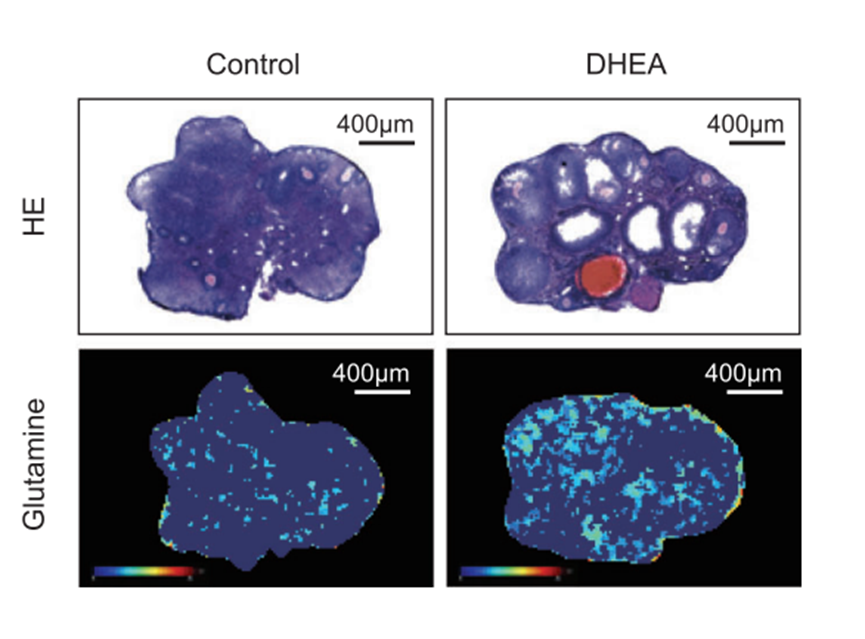
DHEA purchased from MedChemExpress. Usage Cited in: Nat Commun. 2025 Aug 15;16(1):7611. [Abstract]
Representative images of hematoxylin and eosin (HE) staining and MALDI mass spectrometry imaging of Gln on murine ovaries. Gln levels increased within granulosa cells of the DHEA (600 mg/kg; i.p.; 21 consecutive days) group.
DHEA purchased from MedChemExpress. Usage Cited in: Nat Commun. 2025 Aug 15;16(1):7611. [Abstract]
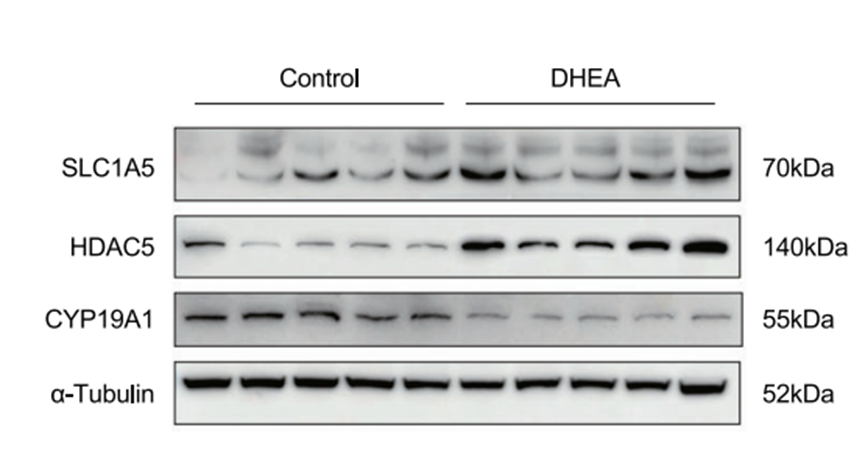
Western blots analysis of SLC1A5 and HDAC5 were significantly elevated, whereas CYP19A1 decreased. in the ovaries of Control and DHEA (600 mg/kg; i.p.; 21 consecutive days)-treated mice.
DHEA purchased from MedChemExpress. Usage Cited in: Nat Commun. 2025 Aug 15;16(1):7611. [Abstract]
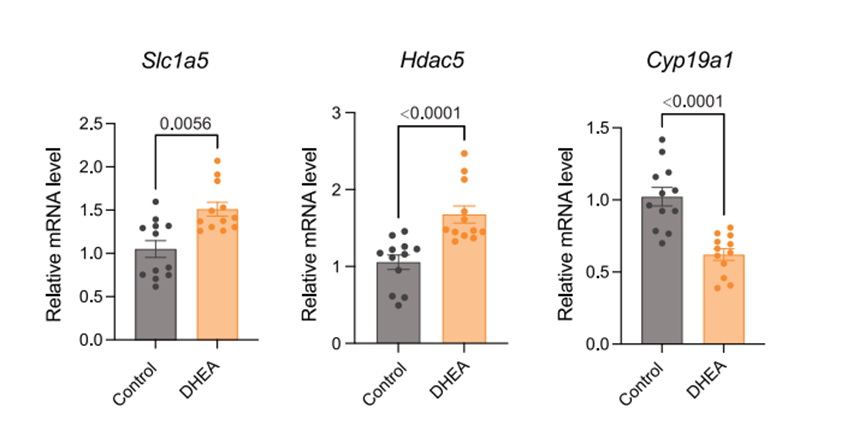
mRNA expression of SLC1A5 and HDAC5 were significantly elevated, whereas CYP19A1 decreased in ovaries collected from Control and DHEA (600 mg/kg; i.p.; 21 consecutive days)-treated mice determined by qPCR.
-
-
Nat Chem Biol
2022 Nov;18(11):1196-1203. PMID: 35982227 -
Gut Microbes
Gut microbiota signatures in primary aldosteronism and functional identification of an aldosterone-degrading gut bacterium. [Abstract]2026 Dec 31;18(1):2657047. PMID: 41964107 -
Cell Commun Signal
Bisphenol a downregulates GLUT4 expression by activating aryl hydrocarbon receptor to exacerbate polycystic ovary syndrome. [Abstract]2024 Jan 10;22(1):28. PMID: 38200540
DHEA purchased from MedChemExpress. Usage Cited in: Cell Commun Signal. 2024 Jan 10;22(1):28. [Abstract]
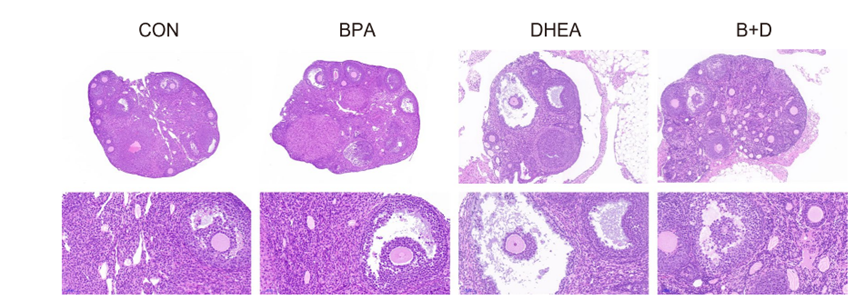
Representative ovary sections were stained with H&E, DHEA (60 mg/kg/day; s.c.; 21 days) treatment resulted in a higher number of cystic follicles, thinner granulosa cell layers, and a lower number of corpora lutea compared to the control treatment.
DHEA purchased from MedChemExpress. Usage Cited in: Cell Commun Signal. 2024 Jan 10;22(1):28. [Abstract]
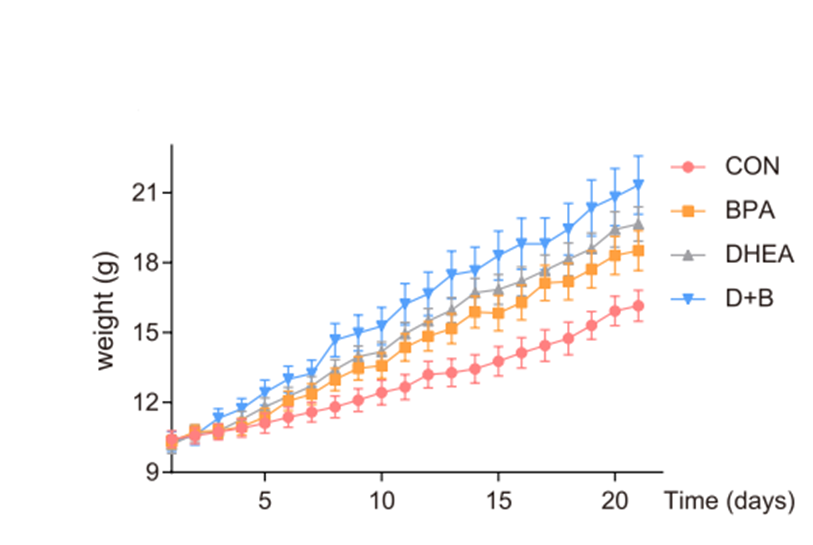
DHEA (60 mg/kg/day; s.c.; 21 days)-induced PCOS mice, gained body weight.
-
-
Phytomedicine
Morus alba L. (Sangzhi) alkaloids reduce polycystic ovary syndrome by improving hypothalamic-pituitary-ovarian axis function. [Abstract]2026 Jul:156:158243. PMID: 42107446 -
Phytomedicine
Palmitic acid enhances the sensitivity of ferroptosis via endoplasmic reticulum stress mediated the ATF4/TXNIP Axis in polycystic ovary syndrome. [Abstract]2025 Jul:142:156777. PMID: 40393214 -
Acta Pharmacol Sin
The classical D1 dopamine receptor antagonist SCH23390 is a functional sigma-1 receptor allosteric modulator. [Abstract]2024 Aug;45(8):1582-1590. PMID: 38605179 -
Proc Natl Acad Sci U S A
2022 Apr 12;119(15):e2117004119. PMID: 35394864 -
-
Mol Med
Androgens alleviate the depression-like phenotype in female mice by inhibiting AVPR1a in the hippocampal brain region. [Abstract]2025 May 29;31(1):210. PMID: 40437391 -
Phytother Res
Hesperidin Inhibits Oxidative Stress and Apoptosis of Granulosa Cells in Polycystic Ovarian Syndrome Through the JAK2/STAT3 and PI3K/AKT Pathways. [Abstract]2025 Sep 27. PMID: 41014201 -
Phytother Res
Carnosol inhibits KGN cells oxidative stress and apoptosis and attenuates polycystic ovary syndrome phenotypes in mice through Keap1-mediated Nrf2/HO-1 activation. [Abstract]2023 Apr;37(4):1405-1421. PMID: 36786429 -
Free Radic Biol Med
Platycodin D ameliorates polycystic ovary syndrome-induced ovarian damage by upregulating CD44 to attenuate ferroptosis. [Abstract]2024 Nov 1:224:707-722. PMID: 39321891 -
Cell Rep
2023 Aug 28;42(9):113044. PMID: 37643085 -
Anal Chem
A Sensitive and Robust Back-Flush Transfer 2D-LC-MS/MS Combined with Quaternary Ammonium Oxime Derivatization for the Quantification of 12 Steroid Hormones in Serum from Polycystic Ovary Syndrome Patients. [Abstract]2026 Jun 30;98(25):19042-19056. PMID: 42319043 -
Anal Chem
High-Throughput Reactive Desorption Electrospray Ionization Mass Spectrometry for Targeted Derivatization and Analysis of Poorly Ionized Small Molecules. [Abstract]2026 Jun 16;98(23):16962-16970. PMID: 42223360 -
Environ Pollut
Letrozole induced a polycystic ovary syndrome model in zebrafish by interfering with the hypothalamic-pituitary-gonadal axis. [Abstract]2024 Apr 15:347:123723. PMID: 38452838 -
Cancer Cell Int
RORα inhibits gastric cancer proliferation through attenuating G6PD and PFKFB3 induced glycolytic activity. [Abstract]2024 Jan 6;24(1):12. PMID: 38184549 -
J Ethnopharmacol
She ethnomedicine ameliorates ovarian dysfunction through enhanced cellular proliferation and anti-inflammation. [Abstract]2025 Jul 14;353(Pt A):120294. PMID: 40669675 -
Biochem Pharmacol
2025 Jun:236:116871. PMID: 40090595 -
Cell Mol Life Sci
Melatonin refines ovarian mitochondrial dysfunction in PCOS by regulating the circadian rhythm gene Clock. [Abstract]2025 Mar 6;82(1):104. PMID: 40047877 -
Life Sci
G0S2 drives lipid metabolism disorders and oxidative stress to promote M1 macrophage polarization and inflammation in polycystic ovary syndrome. [Abstract]2026 Jul 15:397:124392. PMID: 41985712 -
Eur J Pharmacol
Dapagliflozin attenuates fat accumulation and insulin resistance in obese mice with polycystic ovary syndrome. [Abstract]2024 Aug 15:977:176742. PMID: 38880216 -
Reprod Biol Endocrinol
Liraglutide improves follicle development in polycystic ovary syndrome by inhibiting CXCL10 secretion. [Abstract]2024 Aug 6;22(1):98. PMID: 39107809 -
Int J Mol Sci
Analysis of GCRV Pathogenesis and Therapeutic Measures Through Proteomic and Metabolomic Investigations in GCRV-Infected Tissues of Grass Carp (Ctenopharyngodon idella). [Abstract]2024 Nov 4;25(21):11852. PMID: 39519403 -
Int Immunopharmacol
Dehydroepiandrosterone attenuated the immune escape of oral squamous cell carcinoma through NF-κB p65/miR-15b-5p/B7-H4 axis. [Abstract]2024 Aug 20:137:112480. PMID: 38885603 -
Int Immunopharmacol
Gut microbiota dysbiosis-derived macrophage pyroptosis causes polycystic ovary syndrome via steroidogenesis disturbance and apoptosis of granulosa cells. [Abstract]2022 Jun:107:108717. PMID: 35334358 -
-
Am J Physiol Cell Physiol
Umbilical cord mesenchymal stem cells-derived extracellular vesicles improve excessive autophagy of granulosa cells through METTL3. [Abstract]2025 May 1;328(5):C1586-C1604. PMID: 40106233 -
Biol Res
Acupuncture regulates the apoptosis of ovarian granulosa cells in polycystic ovarian syndrome-related abnormal follicular development through LncMEG3-mediated inhibition of miR-21-3p. [Abstract]2023 Jun 12;56(1):31. PMID: 37303036 -
J Ovarian Res
Nicotinamide riboside supplementation ameliorates ovarian dysfunction in a PCOS mouse model. [Abstract]2025 Jan 20;18(1):9. PMID: 39833950 -
J Ovarian Res
Interlukin-22 improves ovarian function in polycystic ovary syndrome independent of metabolic regulation: a mouse-based experimental study. [Abstract]2024 May 11;17(1):100. PMID: 38734641 -
-
Biochim Biophys Acta Mol Basis Dis
Circ_0075691 regulates lipid metabolism in granulosa cells by interacting with EIF4A3 to promote PTGS2 mRNA stability. [Abstract]2026 Jan 26;1872(4):168173. PMID: 41605366 -
Biochim Biophys Acta Mol Basis Dis
Rhythm gene PER1 mediates ferroptosis and lipid metabolism through SREBF2/ALOX15 axis in polycystic ovary syndrome. [Abstract]2024 Jun;1870(5):167182. PMID: 38653359 -
Am J Pathol
Dehydroepiandrosterone Prevents Collagen Loss by Regulating HIF-1α Expression and Mitophagy in Hypoxic Human Scleral Fibroblasts. [Abstract]2025 Sep 12:S0002-9440(25)00342-6. PMID: 40946797 -
-
FASEB J
Reverse Effects of Nicotinamide Mononucleotide Supplementation on Declining Quality of Oocytes With Polycystic Ovary Syndrome. [Abstract]2025 Jul 31;39(14):e70846. PMID: 40678956 -
Biochim Biophys Acta Mol Cell Res
SFRP4 contributes to insulin resistance-induced polycystic ovary syndrome by triggering ovarian granulosa cell hyperandrogenism and apoptosis through the nuclear β-catenin/IL-6 signaling axis. [Abstract]2024 Oct;1871(7):119822. PMID: 39159685 -
Mol Hum Reprod
2024 Oct 12;30(10):gaae037. PMID: 39423135 -
-
J Biochem Mol Toxicol
Lycopene Ameliorates Polycystic Ovary Syndrome in Rats by Inhibiting Ovarian Ferroptosis Through Activation of the AMPK/Nrf2 Pathway. [Abstract]2025 Feb;39(2):e70158. PMID: 39871526 -
Toxicol Appl Pharmacol
Icariin promotes mouse Leydig cell testosterone synthesis via the Esr1/Src/Akt/Creb/Sf-1 pathway. [Abstract]2022 Apr 15:441:115969. PMID: 35259346 -
Toxicol Appl Pharmacol
Icariin protects mouse Leydig cell testosterone synthesis from the adverse effects of di(2-ethylhexyl) phthalate. [Abstract]2019 Sep 1:378:114612. PMID: 31175881 -
Mol Cell Endocrinol
Downregulation of CASC15 attenuates the symptoms of polycystic ovary syndrome by affecting granulosa cell proliferation and regulating ovarian follicular development. [Abstract]2024 Oct 1:592:112322. PMID: 38942281 -
Mol Cell Endocrinol
Inhibition of Nicotinamide adenine dinucleotide phosphate oxidase 4 attenuates cell apoptosis and oxidative stress in a rat model of polycystic ovary syndrome through the activation of Nrf-2/HO-1 signaling pathway. [Abstract]2022 Jun 15;550:111645. PMID: 35413388 -
Andrology
2021 Nov;9(6):1923-1933. PMID: 34185441 -
Gynecol Endocrinol
Hsa_circ_0020491 promotes polycystic ovary syndrome by interacting with IGF2BP2 through regulation of granular cell autophagy and mitochondrial dysfunction. [Abstract]2025 Dec;41(1):2536579. PMID: 40739999 -
Histochem Cell Biol
YAP/TEAD complex restricts H3K27ac deposition to suppress testosterone synthesis in adult Leydig cells. [Abstract]2026 Aug 5;164(1):71. PMID: 42557471 -
PeerJ
Androgen promotes oocyte development by upregulating gap junction intercellular communication activity in granulosa cells in mice. [Abstract]2026 Apr 30:14:e21194. PMID: 42083638 -
Theriogenology
LH promotes testosterone synthesis in rooster leydig cells through YAP1/ACSL4/SOAT1 pathway. [Abstract]2026 Apr 1:254:117813. PMID: 41529502 -
Theriogenology
Melatonin inhibits testosterone synthesis in Roosters Leydig cells by regulating lipolysis of lipid droplets. [Abstract]2022 Sep 1:189:118-126. PMID: 35753225 -
Reprod Sci
2025 Aug 11. PMID: 40789984 -
Gene
Bisphenol A alters JUN promoter methylation, impairing steroid metabolism in placental cells and linking to sub-representative phenotypes. [Abstract]2025 Mar 15:941:149210. PMID: 39755265 -
Mol Reprod Dev
Effect of berberine combined with metformin on autophagy in polycystic ovary syndrome by regulating AMPK/AKT/mTOR pathway. [Abstract]2024 Aug;91(8):e23768. PMID: 39155689 -
J Chromatogr B Analyt Technol Biomed Life Sci
Ultrafiltration-MSPE with in-situ quaternary aminooxy oximation for LC-MS/MS quantification of nine serum free androgens. [Abstract]2026 Jun 1:1277:125074. PMID: 41967455 -
-
Aging (Albany NY)
Sigma-1 receptor is involved in diminished ovarian reserve possibly by influencing endoplasmic reticulum stress-mediated granulosa cells apoptosis. [Abstract]2020 May 14;12(10):9041-9065. PMID: 32409627


Lösungsmittel & Löslichkeit
In Vitro:
DMSO : 50 mg/mL (173.36 mM; Need ultrasonic; Hygroscopic DMSO has a significant impact on the solubility of product, please use newly opened DMSO)
Ethanol : 40 mg/mL (138.69 mM; ultrasonic and warming and heat to 60°C)
H2O : < 0.1 mg/mL (insoluble)
Please refer to the solubility information to select the appropriate solvent. Once prepared, please aliquot and store the solution to prevent product inactivation from repeated freeze-thaw cycles.
Storage method and period of stock solution: -80°C, 2 years; -20°C, 1 year. When stored at -80°C, please use it within 2 years. When stored at -20°C, please use it within 1 year.
Please refer to the solubility information to select the appropriate solvent. Once prepared, please aliquot and store the solution to prevent product inactivation from repeated freeze-thaw cycles.
Storage method and period of stock solution: -80°C, 2 years; -20°C, 1 year. When stored at -80°C, please use it within 2 years. When stored at -20°C, please use it within 1 year.
Konzentration (Stammlösung) × Volumen (Stammlösung) = Konzentration (Ziellösung) × Volumen (Ziellösung)
In Vivo:
Select the appropriate dissolution method based on your experimental animal and administration route.
- For the following dissolution methods, please ensure to first prepare a clear stock solution using an In Vitro approach and then sequentially add co-solvents:
- To ensure reliable experimental results, the clarified stock solution can be appropriately stored based on storage conditions. As for the working solution for In Vivo experiments, it is recommended to prepare freshly and use it on the same day.
- The percentages shown for the solvents indicate their volumetric ratio in the final prepared solution. If precipitation or phase separation occurs during preparation, heat and/or sonication can be used to aid dissolution.
Add each solvent one by one: 10% EtOH 90% (20% SBE-β-CD in Saline)
Solubility: ≥ 2.5 mg/mL (8.67 mM); Clear solution
This protocol yields a clear solution of ≥ 2.5 mg/mL (saturation unknown).
Taking 1 mL working solution as an example, add 100 μL EtOH stock solution (25.0 mg/mL) to 900 μL 20% SBE-β-CD in Saline, and mix evenly.
Preparation of 20% SBE-β-CD in Saline (4°C, storage for one week): 2 g SBE-β-CD powder is dissolved in 10 mL Saline, completely dissolve until clear.
Add each solvent one by one: 10% EtOH 90% Corn Oil
Solubility: ≥ 2.5 mg/mL (8.67 mM); Clear solution
This protocol yields a clear solution of ≥ 2.5 mg/mL (saturation unknown). If the continuous dosing period exceeds half a month, please choose this protocol carefully.
Taking 1 mL working solution as an example, add 100 μL EtOH stock solution (25.0 mg/mL) to 900 μL Corn oil, and mix evenly.
Add each solvent one by one: 10% DMSO 40% PEG300 5% Tween-80 45% Saline
Solubility: ≥ 1.25 mg/mL (4.33 mM); Clear solution
This protocol yields a clear solution of ≥ 1.25 mg/mL (saturation unknown).
Taking 1 mL working solution as an example, add 100 μL DMSO stock solution (12.5 mg/mL) to 400 μL PEG300, and mix evenly; then add 50 μL Tween-80 and mix evenly; then add 450 μL Saline to adjust the volume to 1 mL.
Preparation of Saline: Dissolve 0.9 g sodium chloride in ddH₂O and dilute to 100 mL to obtain a clear Saline solution.
Add each solvent one by one: 10% DMSO 90% (20% SBE-β-CD in Saline)
Solubility: ≥ 1.25 mg/mL (4.33 mM); Clear solution
This protocol yields a clear solution of ≥ 1.25 mg/mL (saturation unknown).
Taking 1 mL working solution as an example, add 100 μL DMSO stock solution (12.5 mg/mL) to 900 μL 20% SBE-β-CD in Saline, and mix evenly.
Preparation of 20% SBE-β-CD in Saline (4°C, storage for one week): 2 g SBE-β-CD powder is dissolved in 10 mL Saline, completely dissolve until clear.
For the following dissolution methods, please prepare the working solution directly:
It is recommended to prepare fresh solutions and use them promptly within a short period of time.
The percentages shown for the solvents indicate their volumetric ratio in the final prepared solution. If precipitation or phase separation occurs during preparation, heat and/or sonication can be used to aid dissolution.
Add each solvent one by one: Corn Oil
Solubility: 3.57 mg/mL (12.38 mM); Clear solution; Need ultrasonic and warming and heat to 60°C
In Vivo Dissolution Calculator
Please enter the basic information of animal experiments:
-
-
-
-
Recommended: Prepare an additional quantity of animals to account for potential losses during experiments.
Please enter your animal formula composition:
-
%DMSO +
Recommended: Keep the proportion of DMSO in working solution below 2% if your animal is weak.
-
%+
-
+%Tween-80 + +
-
%Saline +
The co-solvents required include: DMSO, . All of co-solvents are available by MedChemExpress (MCE). , Tween 80. All of co-solvents are available by MedChemExpress (MCE).
Working solution concentration: 0.22 mg/mL
Method for preparing stock solution: mg drug dissolved in μL DMSO. Stock solution concentration: mg/mL.
1. Take μL DMSO stock solution;
2. Add μL .
μL , mix evenly;
3. Then add μL Tween 80, mix evenly;
4. Then add μL
Please ensure that the stock solution in the first step is dissolved to a clear state, and add co-solvents in sequence. You can use ultrasonic heating (ultrasonic cleaner, recommended frequency 20-40 kHz), vortexing, etc. to assist dissolution.

Protokoll
-
Research Protocol for Endocrine Diseases
Endocrine diseases often arise from disrupted hormone production, hormone signaling, or target-tissue responsiveness; for diabetes-focused endocrine disease models, insulin signaling regulates glucose uptake, hepatic glucose output, lipid metabolism, and β-cell compensation. Type 2 diabetes develops through interacting defects in insulin resistance, β-cell dysfunction, adipose inflammation, hepatic glucose overproduction, altered incretin signaling, and ectopic lipid metabolism. A major unresolved question is whether endocrine dysfunction is driven primarily by target-tissue insulin resistance, intrinsic β-cell failure, immune/inflammatory stress, or combined multi-organ failure that differs by disease stage.


Reinheit & Dokumentation
-
Data Sheet (283 KB)
-
SDS (418 KB)
- English - EN (418 KB)
- Français - FR (418 KB)
- Deutsch - DE (418 KB)
- Norwegian - NO (418 KB)
- Español - ES (418 KB)
- Swedish - SV (418 KB)
- Italian - IT (418 KB)
- Korean - KR (418 KB)
- Portuguese - PT (418 KB)
-
Handling Instructions (2659 KB)
Verweise
[1]. Anagnostopoulou V, et al. Differential effects of dehydroepiandrosterone and testosterone in prostate and colon cancer cell apoptosis: the role of nerve growth factor (NGF) receptors. Endocrinology. 2013 Jul;154(7):2446-56. [Content Brief]
[2]. McNelis JC, et al. Dehydroepiandrosterone exerts anti-glucocorticoid action on human preadipocyte proliferation, differentiation and glucose uptake. Am J Physiol Endocrinol Metab. 2013 Nov 1;305(9):E1134-44. [Content Brief]
[3]. Catalina F, et al. Decrease of core body temperature in mice by dehydroepiandrosterone. Exp Biol Med (Maywood). 2002 Jun;227(6):382-8. [Content Brief]


Complete Stock Solution Preparation Table
Please refer to the solubility information to select the appropriate solvent. Once prepared, please aliquot and store the solution to prevent product inactivation from repeated freeze-thaw cycles.
Storage method and period of stock solution: -80°C, 2 years; -20°C, 1 year. When stored at -80°C, please use it within 2 years. When stored at -20°C, please use it within 1 year.
| Optional Solvent | Concentration Solvent Mass | 1 mg | 5 mg | 10 mg | 25 mg |
|---|---|---|---|---|---|
| Ethanol / DMSO | 1 mM | 3.4672 mL | 17.3358 mL | 34.6717 mL | 86.6791 mL |
| 5 mM | 0.6934 mL | 3.4672 mL | 6.9343 mL | 17.3358 mL | |
| 10 mM | 0.3467 mL | 1.7336 mL | 3.4672 mL | 8.6679 mL | |
| 15 mM | 0.2311 mL | 1.1557 mL | 2.3114 mL | 5.7786 mL | |
| 20 mM | 0.1734 mL | 0.8668 mL | 1.7336 mL | 4.3340 mL | |
| 25 mM | 0.1387 mL | 0.6934 mL | 1.3869 mL | 3.4672 mL | |
| 30 mM | 0.1156 mL | 0.5779 mL | 1.1557 mL | 2.8893 mL | |
| 40 mM | 0.0867 mL | 0.4334 mL | 0.8668 mL | 2.1670 mL | |
| 50 mM | 0.0693 mL | 0.3467 mL | 0.6934 mL | 1.7336 mL | |
| 60 mM | 0.0578 mL | 0.2889 mL | 0.5779 mL | 1.4447 mL | |
| 80 mM | 0.0433 mL | 0.2167 mL | 0.4334 mL | 1.0835 mL | |
| 100 mM | 0.0347 mL | 0.1734 mL | 0.3467 mL | 0.8668 mL |


DHEA Related Classifications
HY-14650 Related Classifications
 Powered by Bioz