1. Search Result
Search Result
Results for "

Gi-protein

" in MedChemExpress (MCE) Product Catalog:

12

Inhibitors & Agonists

2

Biochemical Assay Reagents

2

Peptides

4

Natural
Products

1

Isotope-Labeled Compounds

1

Oligonucleotides

Cat. No. Product Name Target Research Areas Chemical Structure
  • HY-112779

    Endogenous Metabolite Infection
    Pertussis Toxin is a protein-based AB5-type exotoxin produced by the bacterium Bordetella pertussis, which causes whooping cough. Pertussis Toxin inhibits G protein-coupled receptor (GPR) signaling through Gi proteins .
    Pertussis Toxin
  • HY-114364
    UDP-Galactose disodium
    4 Publications Verification

    Endogenous Metabolite P2Y Receptor Metabolic Disease
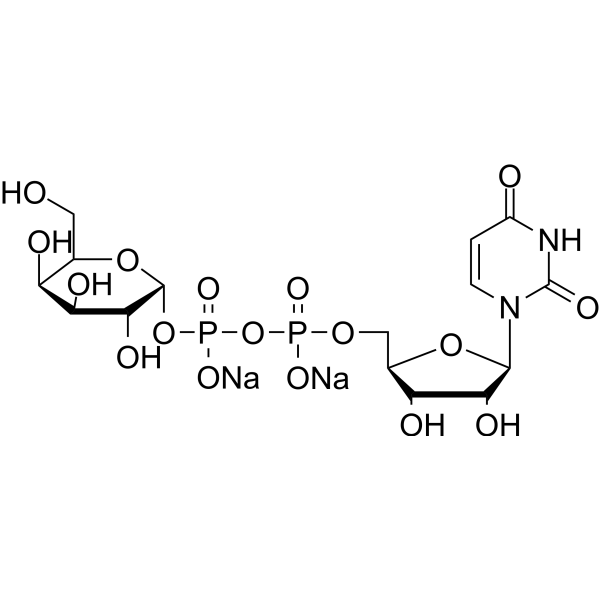
    UDP-Galactose disodium is a monosaccharide and a key glycosyl donor molecule in cells that participates in nucleotide sugar metabolism. UDP-Galactose disodium is the natural agonist of the P2Y14 receptor coupled to Gi proteins in the immune system (IC50 = 0.67 μM, hP2Y14). UDP-Galactose disodium can be used to study cell signal transduction and substance metabolism .
    UDP-Galactose disodium
  • HY-W140439

    18:1 Lyso PC

    Endogenous Metabolite Inflammation/Immunology
    1-Oleoyl-sn-glycero-3-phosphocholine (18:1 Lyso PC), a lysophospholipid, is a GPR82 inhibitor. 1-Oleoyl-sn-glycero-3-phosphocholine abrogates constitutive Gi-coupled GPR82 activity, shifts active/inactive equilibrium to inactive, suppresses Gi protein activation, increases cAMP production, and decreases GTPγS binding to Gαi proteins. 1-Oleoyl-sn-glycero-3-phosphocholine contributes to adipocyte lipolysis regulation.1-Oleoyl-sn-glycero-3-phosphocholine exhibits reduced serum levels in mouse models of steatohepatitis, linked to hepatic Lpcat 1-4 up-regulation .
    1-Oleoyl-sn-glycero-3-phosphocholine
  • HY-150524

    Endogenous Metabolite P2Y Receptor Metabolic Disease
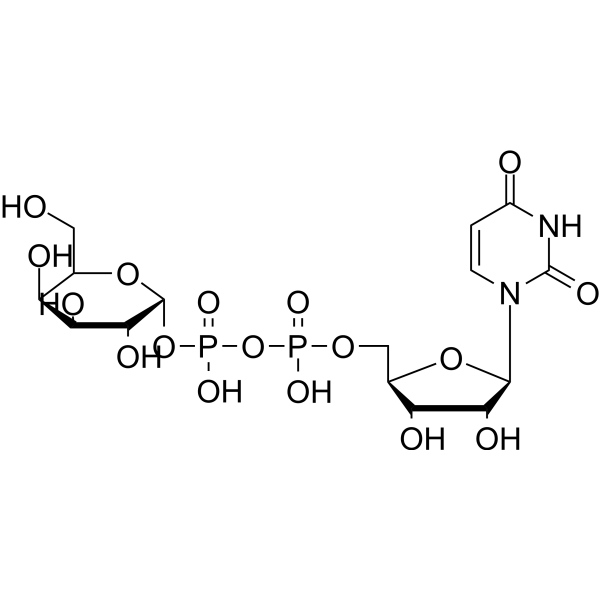
    UDP-Galactose is a monosaccharide and a key glycosyl donor molecule in cells that participates in nucleotide sugar metabolism. UDP-Galactose is the natural agonist of the P2Y14 receptor coupled to Gi proteins in the immune system (IC50 = 0.67 μM, hP2Y14). UDP-Galactose can be used to study cell signal transduction and substance metabolism .
    UDP-Galactose
  • HY-107024

    OGP(10-14); Historphin

    Src Others
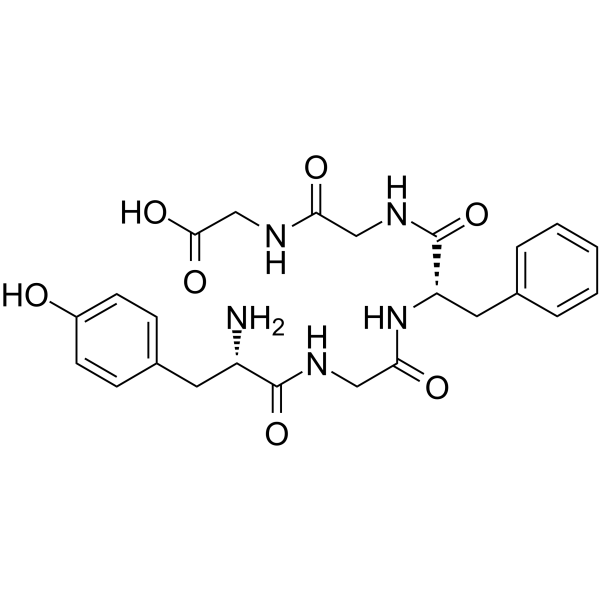
    Osteogenic Growth Peptide (10-14) (OGP(10-14)), the C-terminal truncated pentapeptide of osteogenic growth peptide (OGP), retains the full OGP-like activity. Osteogenic Growth Peptide (10-14) is responsible for the binding to the OGP receptor and activates an intracellular Gi-protein-MAP kinase signaling pathway. Osteogenic Growth Peptide (10-14) is a potent mitogen and stimulator of osteogenesis and hematopoiesis. Osteogenic Growth Peptide (10-14) acts as a Src inhibitor .
    Osteogenic Growth Peptide (10-14)
  • HY-156025

    Hydroxycarboxylic Acid Receptor (HCAR) Inflammation/Immunology
    HCAR2 agonist 1 (Compound 9n) is a Gi protein-biased allosteric modulator of HCAR2. HCAR2 agonist 1 activates the Gi protein signaling pathway. HCAR2 agonist 1 shows anti-inflammatory effect, and reduces mRNA level of pro-inflammatory cytokine (TNF-α, IL-1β, IL-6, and MCP-1). HCAR2 agonist 1 enhances anti-inflammatory effects of orthosteric agonists in the mouse model of colitis .
    HCAR2 agonist 1
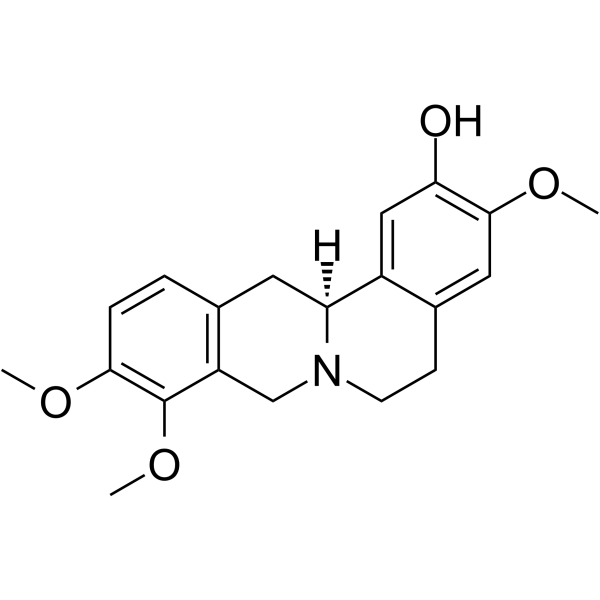
  • HY-N0927

    Tetrahydrocolumbamine; (S)-Tetrahydrocolumbamine

    Dopamine Receptor Others Neurological Disease
    (-)-Isocorypalmine (Tetrahydrocolumbamine; (S)-Tetrahydrocolumbamine) is a dopamine receptor ligand and modulator capable of crossing the blood-brain barrier. (-)-Isocorypalmine exhibits receptor selectivity, acting as a partial agonist of dopamine D1 and D5 receptors (coupled via Gs proteins), as well as an antagonist of D2, D3 and D4 receptors (by blocking Gi protein-mediated signaling). (-)-Isocorypalmine shows no significant binding to various non-dopamine receptors, ion channels and transporters. (-)-Isocorypalmine is metabolically stable in vivo, effectively inhibits spontaneous and cocaine-induced hyperlocomotion, sensitization and conditioned place preference in mice, and does not induce addictive place preference when administered alone. (-)-Isocorypalmine can be used in addiction research .
    (-)-Isocorypalmine
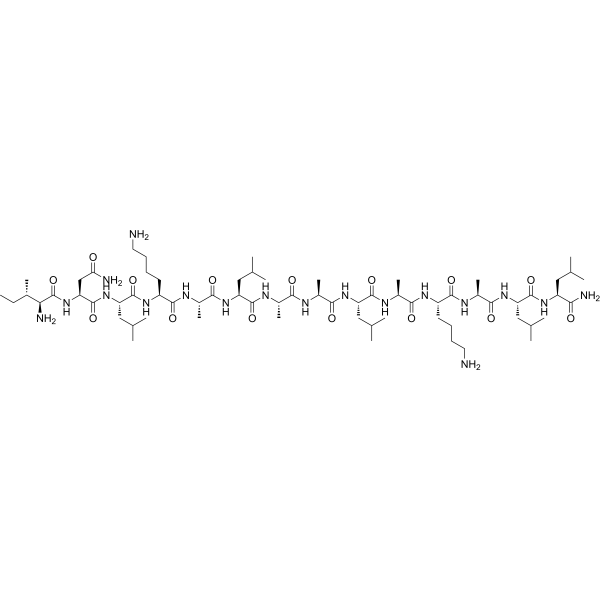
  • HY-P0258

    Mastoparan 7

    Apoptosis Cardiovascular Disease Neurological Disease
    Mas7 (Mastoparan 7), a structural analogue of mastoparan, is an activator of heterotrimeric Gi proteins and its downstream effectors.
    Mas7
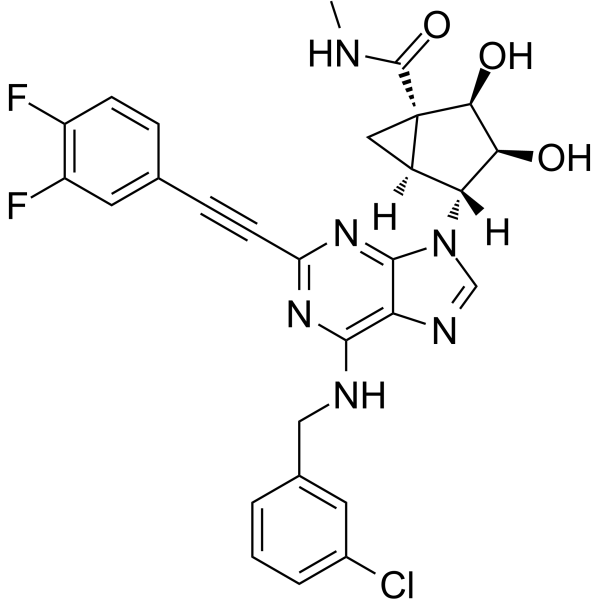
  • HY-110202

    Adenosine Receptor Neurological Disease Inflammation/Immunology
    MRS5698 is a selective Gi protein-coupled A3 adenosine receptor (A3AR) agonist, with Kis of approximately 3 nM for human and mouse A3AR, respectively. MRS5698 can be used for the research of pain and psoriasis .
    MRS5698
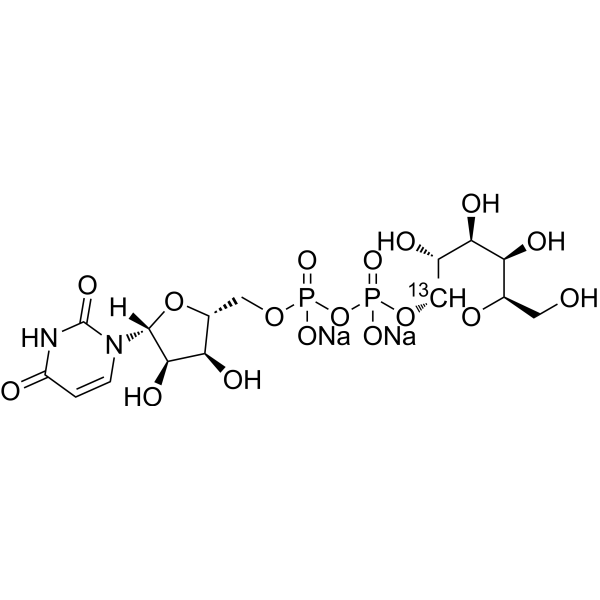
  • HY-114364S

    Isotope-Labeled Compounds Others
    UDP-α-D-Galactose- 13C disodium is the 13C labeled UDP-α-D-Galactose disodium. UDP-Galactose disodium is a monosaccharide and a key glycosyl donor molecule in cells that participates in nucleotide sugar metabolism. UDP-Galactose disodium is the natural agonist of the P2Y14 receptor coupled to Gi proteins in the immune system (IC50 = 0.67 μM, hP2Y14). UDP-Galactose disodium can be used to study cell signal transduction and substance metabolism .
    UDP-α-D-Galactose-13C disodium
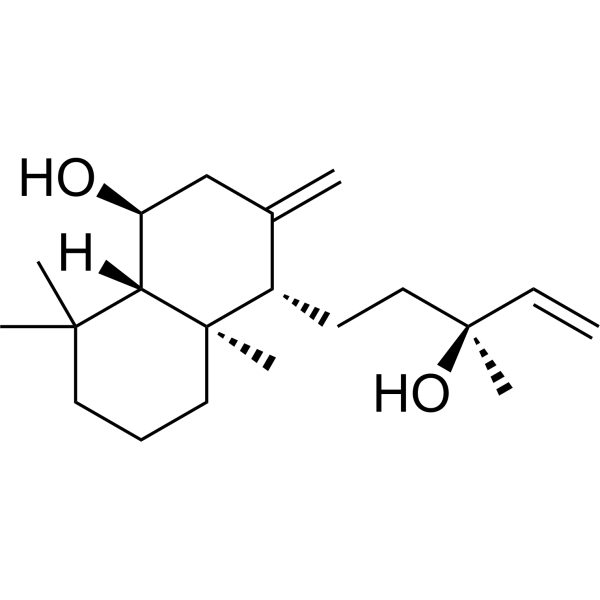
  • HY-W744699

    (+)-Larixol

    Src ERK Akt Inflammation/Immunology
    Larixol is an fMLP inhibitor and also inhibits Src kinase, ERK1/2, p38 and AKT phosphorylation signals in immune regulation. Larixol can interfere with the interaction between the βγ subunit of the fMLP receptor Gi protein and its downstream molecules, thereby inhibiting fMLP-induced respiratory burst. Larixol inhibits fMLP (0.1 μM)-induced superoxide anion production (IC50: 1.98 μM), cathepsin G release (IC50: 2.76 μM), and chemotaxis. Larixol improves neutrophil hyperactivation and reduces inflammation or tissue damage. A series of Larixol derivatives were found to have inhibitory effects on FSGS-related TRPC6 functional mutants .
    Larixol
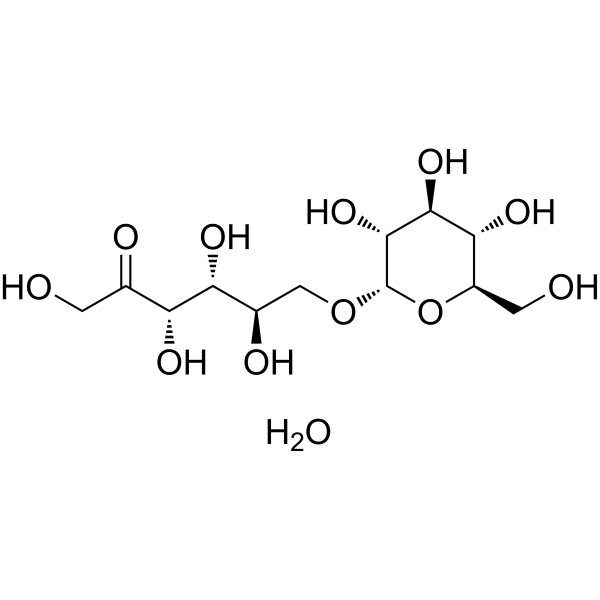
  • HY-W745090

    Formyl Peptide Receptor (FPR) Src ERK Akt p38 MAPK Others
    Isomaltulose monohydrate is a fMLP inhibitor and also inhibits Src kinase, ERK1/2, p38 and AKT phosphorylation signals in immune regulation. Isomaltulose monohydrate can interfere with the interaction between the βγ subunit of the fMLP receptor Gi protein and its downstream molecules, thereby inhibiting fMLP-induced respiratory burst. Isomaltulose monohydrate inhibits fMLP (0.1 μM)-induced superoxide anion production (IC50: 1.98 μM) , cathepsin G release (IC< sub>50: 2.76 μM) and chemotaxis. Isomaltulose monohydrate can improve excessive activation of neutrophils and reduce inflammation or tissue damage. A series of derivatives of Isomaltulose monohydrate are found to have inhibitory effects on FSGS-related TRPC6 functional mutants .
    Isomaltulose monohydrate

Inquiry Online

Your information is safe with us. * Required Fields.

Salutation


Country or Region *

Applicant Name *


Organization Name *

Department *


Email Address *


Product Name *

Cat. No.


Requested quantity *

Phone Number *


Remarks

Inquiry Online

Inquiry Information

Product Name:
Cat. No.:
Quantity:
MCE Japan Authorized Agent:

