



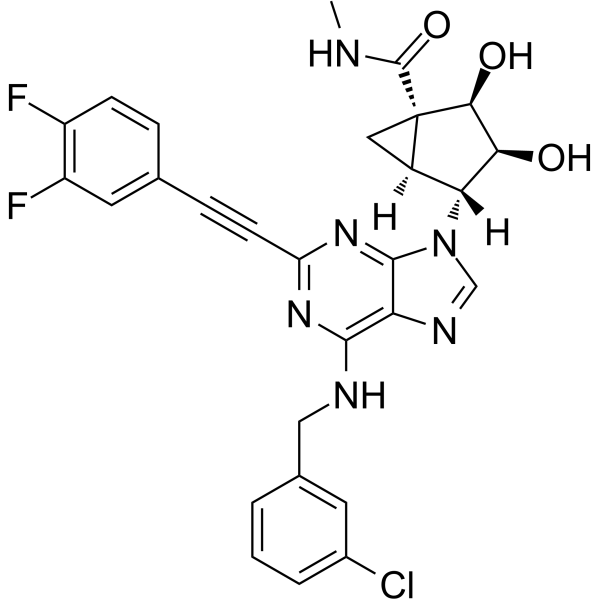
MRS5698
MRS5698 is a selective Gi protein-coupled A3 adenosine receptor (A3AR) agonist, with Kis of approximately 3 nM for human and mouse A3AR, respectively. MRS5698 can be used for the research of pain and psoriasis.
For research use only. We do not sell to patients.
- CAS No.: 1377273-00-1
- Formula: C28H23ClF2N6O3
- Molecular Weight:564.97
-
Storage:
Please store the product under the recommended conditions in the Certificate of Analysis.

To place orders, for customer services and technical support, please contact: MedChemExpress USA
Tel: 609-228-6898 E-mail: [email protected] [email protected]


-
 Biological Activity
-
Chemical Information
- Protocols
- Purity & Documentation
- References
-
 Help & FAQs


-
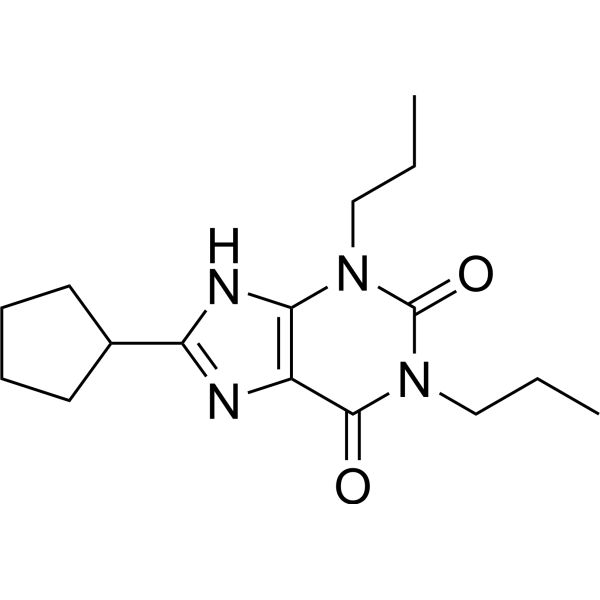
HY-100937
DPCPXA1 Receptor Antagonist -
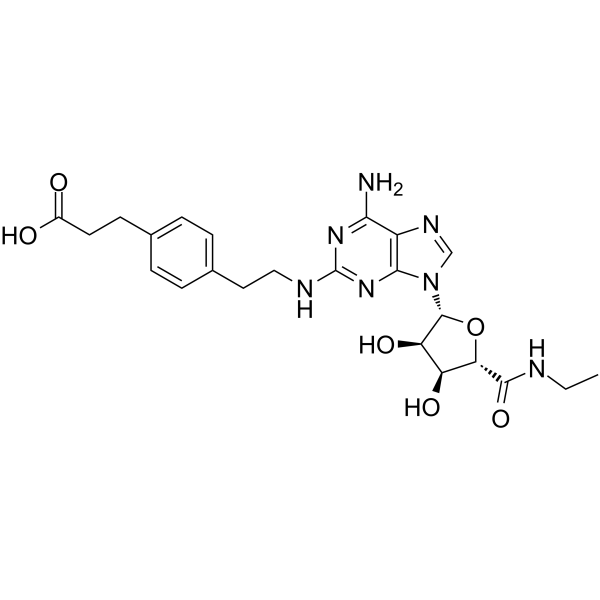
HY-13201
CGS 21680 -
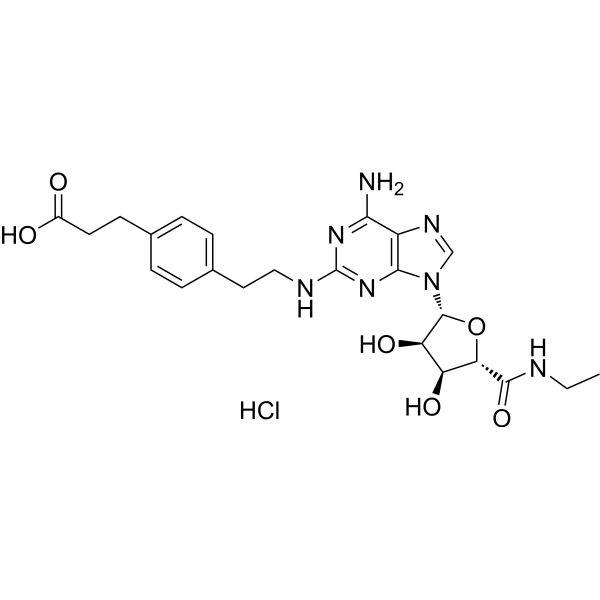
HY-13201A
CGS 21680 HydrochlorideAdenosine A2A Receptor Agonist -
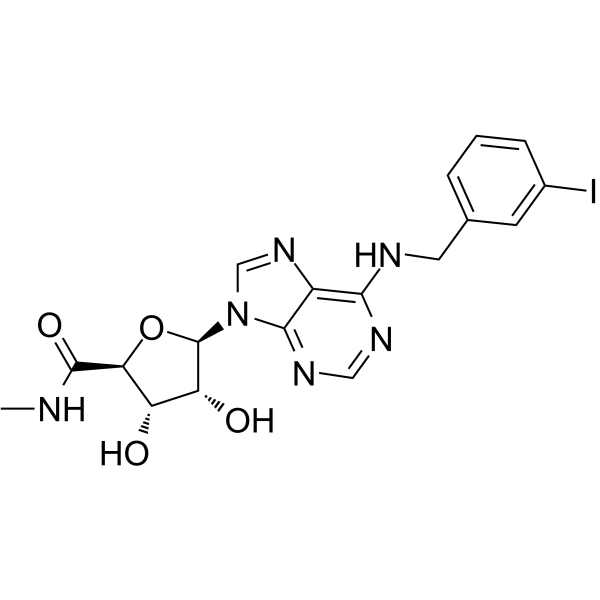
HY-13591
PiclidenosonA3AR Agonist -
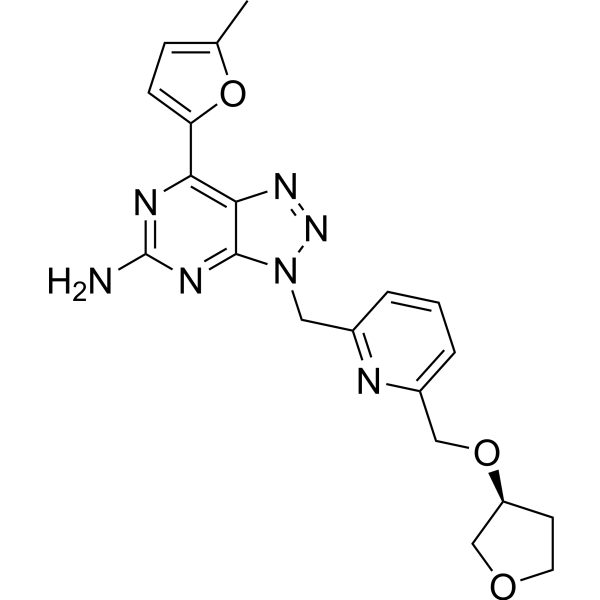
HY-101978
CiforadenantA2AR Antagonist -
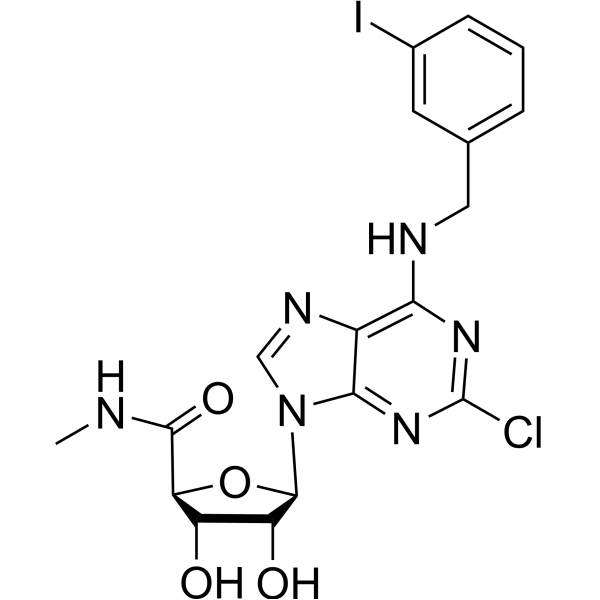
HY-12365
NamodenosonA3AR Agonist -
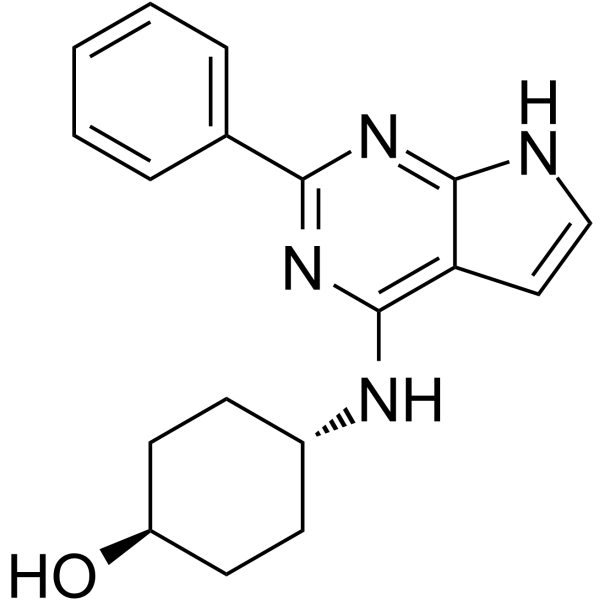
HY-14858
DerenofyllineA1 Receptor Antagonist -
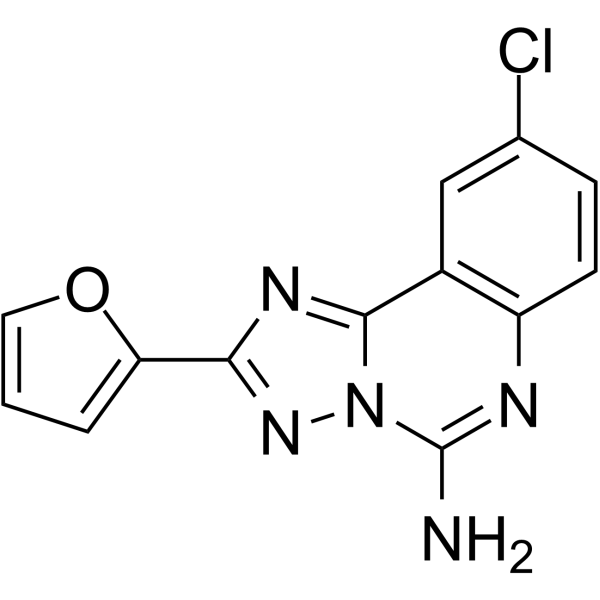
HY-100678
CGS 15943Adenosine Receptor Antagonist -
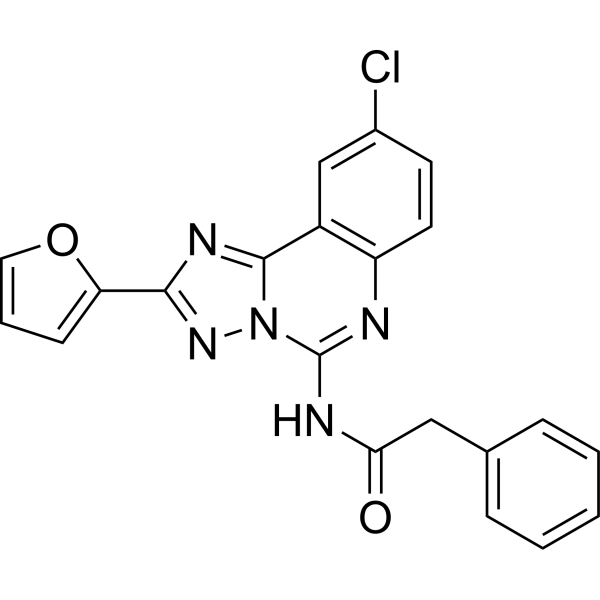
HY-103190
MRS1220A3 Receptor Antagonist -
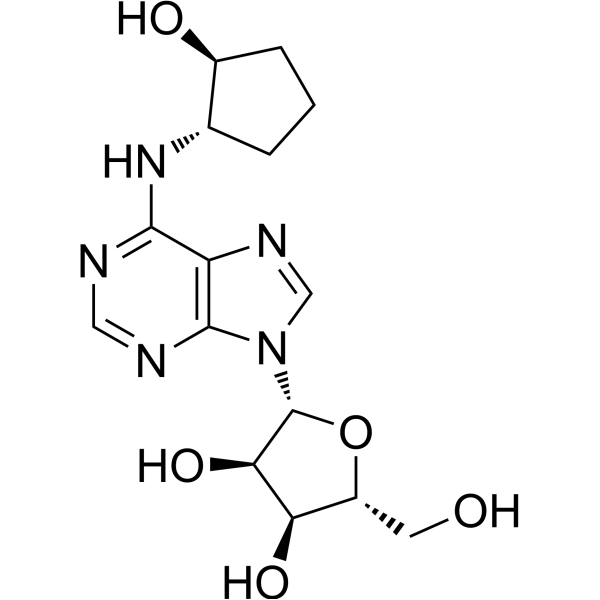
HY-18978
GR79236Adenosine A1 Receptor Agonist -
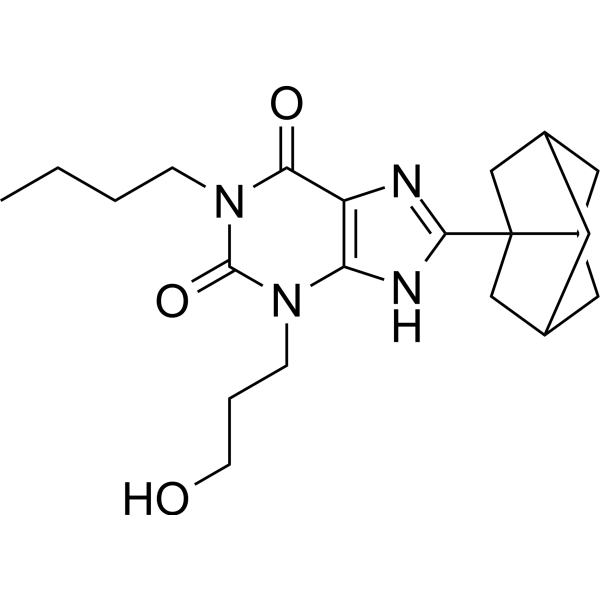
HY-103175
PSB36A1 Adenosine Receptor Antagonist -
HY-14917
CapadenosonAdenosine Receptor Agonist
All Adenosine Receptor Isoforms
More

Biological Activity
Description
IC50 & Target
[1]|
Adenosine A3 receptor ~3 nM (Ki) |
Cellular Effect
|
Cell Line

|
Type | Value | Description | References |
|---|---|---|---|---|
| CHO | EC50 |
1.2 nM
Compound: 31, MRS5698
|
Agonist activity at human recombinant adenosine A3 receptor expressed in CHO cells assessed as inhibition of forskolin-stimulated cAMP production incubated for 30 mins prior to forskolin-stimulation measured after 15 mins by enzyme immunoassay
Agonist activity at human recombinant adenosine A3 receptor expressed in CHO cells assessed as inhibition of forskolin-stimulated cAMP production incubated for 30 mins prior to forskolin-stimulation measured after 15 mins by enzyme immunoassay
|
[PMID: 22559880] |
In Vitro
MRS5698 displays higher affinity and selectivity (>3000-fold) agonist A3R vs. other adenosine receptor (ARs) in both human and mouse[1].
MRS5698 (0.1-10 µM; 1 hours) induces a concentration-dependently robust A3R-mediated cAMP reduction in HEK-293T cells permanently expressing the A3R, regardless the illumination condition[3].
MedChemExpress (MCE) has not independently confirmed the accuracy of these methods. They are for reference only.
In Vivo
MRS5698 (1 mg/kg; i.p. at days 2, 3 ) reduces the IL-23 induced (IL23 injected in day 0, 1, 3) ear thickness of C57BL/6N mouse during the third and fourth experimental days[3].
MedChemExpress (MCE) has not independently confirmed the accuracy of these methods. They are for reference only.
-
Animal Model:Oxaliplatin-induced Male Sprague Dawley rats (200–250 g starting weight)[2]
-
Dosage:3 nmol/day
-
Administration:Intrathecal injection for 25 days
-
Result:Increased the value of mechanical paw withdrawal threshold in grams (PWT) in rat.
Attenuated oxaliplatin-induced expression of NLRP3 and maturation of caspase 1 in the DH-SC.
Reduced IL-1β levels in the spinal cord.


Chemical Information
-
CAS No. 1377273-00-1
-
Molecular Weight 564.97
-
Formula C28H23ClF2N6O3
-
SMILES
CNC([C@]12[C@]([C@](N3C4=NC(C#CC5=CC(F)=C(C=C5)F)=NC(NCC6=CC(Cl)=CC=C6)=C4N=C3)([H])[C@@H]([C@@H]2O)O)([H])C1)=O
-
Shipping
Room temperature in continental US; may vary elsewhere.
-
Storage
Please store the product under the recommended conditions in the Certificate of Analysis.


Purity & Documentation
References
[1]. Tosh DK, et al. Efficient, large-scale synthesis and preclinical studies of MRS5698, a highly selective A3 adenosine receptor agonist that protects against chronic neuropathic pain. Purinergic Signal. 2015;11(3):371-387. [Content Brief]
[2]. Wahlman C, et al. Chemotherapy-induced pain is promoted by enhanced spinal adenosine kinase levels through astrocyte-dependent mechanisms. Pain. 2018;159(6):1025-1034. [Content Brief]
[3]. López-Cano M, et al. Optical control of adenosine A3 receptor function in psoriasis. Pharmacol Res. 2021 Aug;170:105731. [Content Brief]

Calculators
Concentration (start) × Volume (start) = Concentration (final) × Volume (final)


MRS5698 Related Classifications
HY-110202 Related Classifications
 Powered by Bioz