15 Results for "

Ishikawa

" in MedChemExpress (MCE) Product Catalog:
Products (15)

15 Results for "Ishikawa" in MCE Product Catalog:

Cat. No.: HY-112825
CAS No.: 704878-75-1
Purity:  98.52%
Research Areas:  

Inflammation/Immunology Cancer

TSI-01 is a selective LPCAT2 inhibitor, with IC50 values of 0.47 μM and 3.02 μM against LPCAT2 and LPCAT1, respectively. TSI-01 competitively inhibits acetyl-CoA (acetyl-CoA) targeting the lysophosphatidic acid acetyltransferase activity of LPCAT2, and suppresses PAF biosynthesis in calcium ionophore-stimulated mouse peritoneal macrophages. TSI-01 inhibits the proliferation of endometrial cancer cells and promotes endometrial cancer cell apoptosis (apoptosis). TSI-01 can be used for the research of endometrial cancer and PAF-related inflammatory diseases .
loading...
    loading...
Cat. No.: HY-16441
CAS No.: 150863-82-4
Synonyms: S-1; TS-1
Research Areas:  

Cancer

Tegafur-gimeracil-oteracil potassium (S-1; TS-1) is an orally active anticancer agent composed of Tegafur (HY-17400), Gimeracil (HY-17469), and Oteracil potassium (HY-17511). Tegafur-gimeracil-oteracil potassium inhibits the proliferation, migration and invasion of endometrial cancer cells and induces apoptosis by blocking the PI3K/AKT/mTOR signaling pathway. Tegafur-gimeracil-oteracil potassium can be used in research related to endometrial cancer and gastric cancer with peritoneal metastasis .
loading...
    loading...
Cat. No.: HY-N6724
CAS No.: 56258-32-3
Synonyms: Dihydroalterperylenol; ATX-I
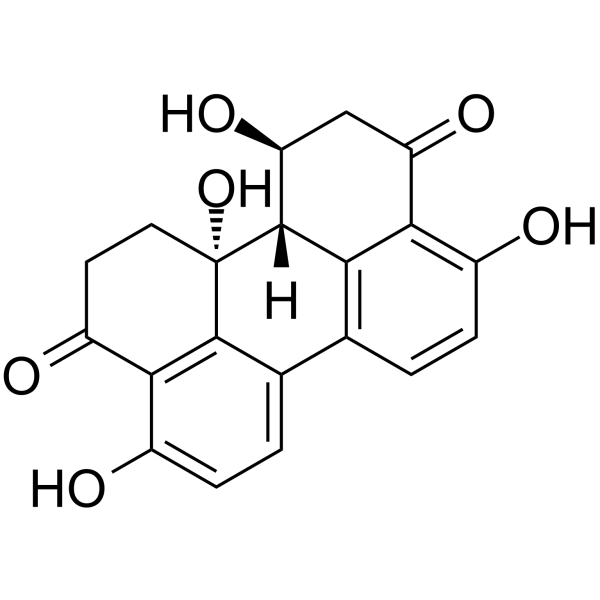
Altertoxin I (Dihydroalterperylenol; ATX-I) is a quinone mycotoxin with immunosuppressive, mutagenic and anticancer activities. Altertoxin I inhibits LPS (HY-D1056)-mediated NF-κB activation and estrogen-dependent alkaline phosphatase activity. Altertoxin I activates the AhR signaling pathway, induces the expression of CYP 1A1/1A2/1B1 and the enzymatic activity of EROD. Altertoxin I can be used in breast cancer research .
loading...
    loading...
Cat. No.: HY-135312
CAS No.: 2361115-35-5
Purity:  98.13%
Research Areas:  

Cancer

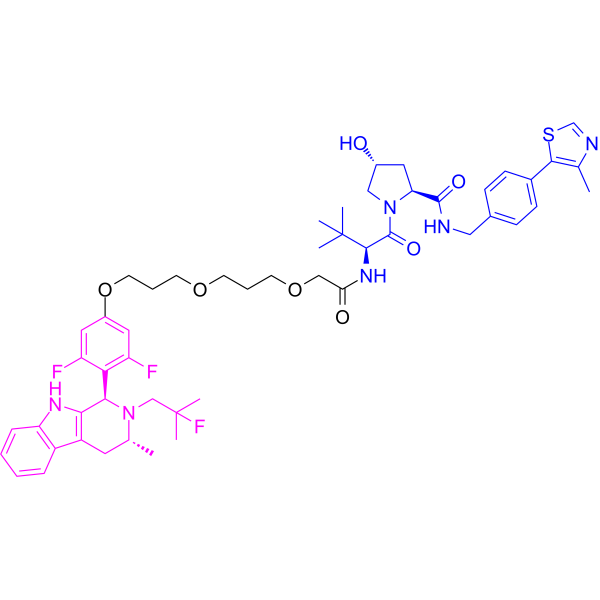
AZ'6421 is an orally active ERα PROTAC degrader with a DC50 of 0.4 nM. AZ'6421 recruits the VHL E3 ligase to form a ternary complex, inducing proteasome-mediated polyubiquitination and degradation of ERα. AZ'6421 inhibits the growth of ER + cancer cells. AZ'6421 can be used in studies related to ER + breast cancer .
loading...
    loading...
Cat. No.: HY-N4012
CAS No.: 5548-10-7
Synonyms: 3-Indoleglyoxamide
Indole-3-glyoxylamide (Compound 4) is a type of indole alkaloid. Indole-3-glyoxylamide shows no significant cytotoxic activity against Hela, Ishikawa, and MGC-803 cells .
loading...
    loading...
Cat. No.: HY-151477
CAS No.: 96068-42-7
Target:  

SARS-CoV

Research Areas:  

Infection Cancer

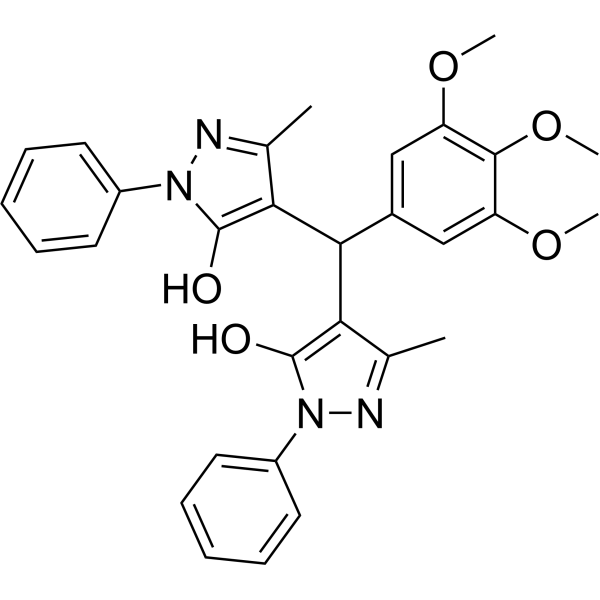
SARS-CoV-2-IN-32 (compound 3g) is a COVID-19 inhibitor. SARS-CoV-2-IN-32 shows anti-proliferative activity against cancer cells. SARS-CoV-2-IN-32 exhibits comparatively high binding affinity (-8.8 Kcal/mole) to COVID-19 main protease (M pro) (PDB ID: 6LU7). SARS-CoV-2-IN-32 can be used in studies of cancer and COVID-19 .
loading...
    loading...
Cat. No.: HY-N12044
CAS No.: 84633-33-0
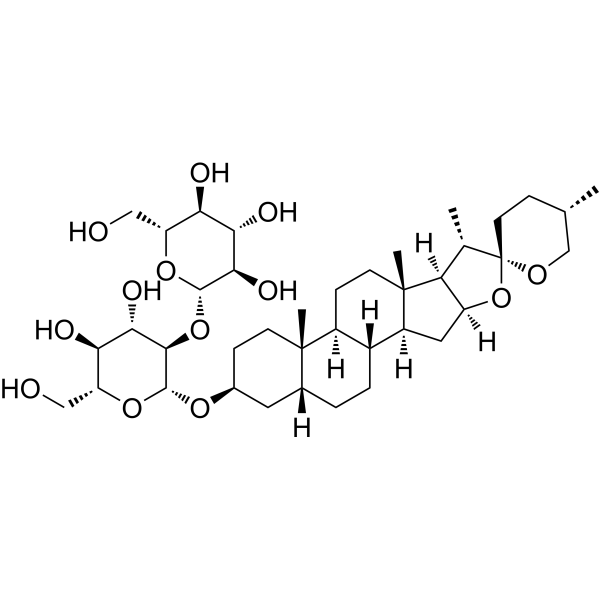
Asparanin A is an apoptosis inducer with anticancer activity. Asparanin A induces cell cycle arrest in the G0/G1 phase through mitochondria and PI3K/AKT signaling pathways, inhibiting cancer cell growth. Asparanin A also demonstrated in vivo efficacy in a mouse xenograft model of Ishikawa endometrial carcinoma, significantly inhibiting tumor growth .
loading...
    loading...
Cat. No.: HY-151478
CAS No.: 299919-79-2
Target:  

SARS-CoV

Research Areas:  

Infection Cancer

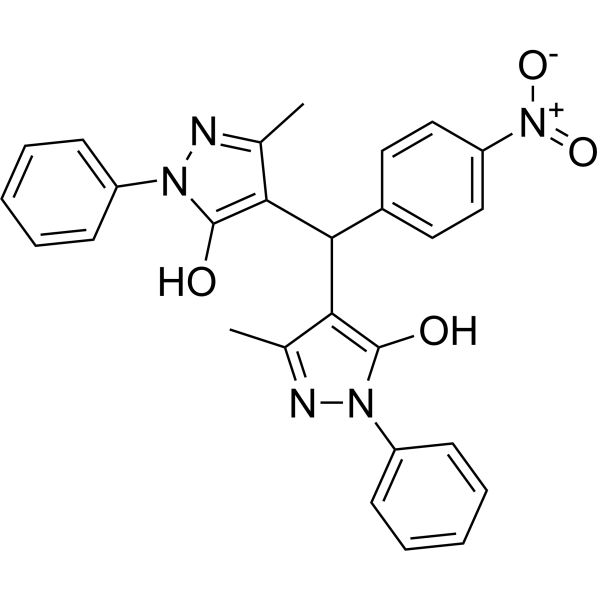
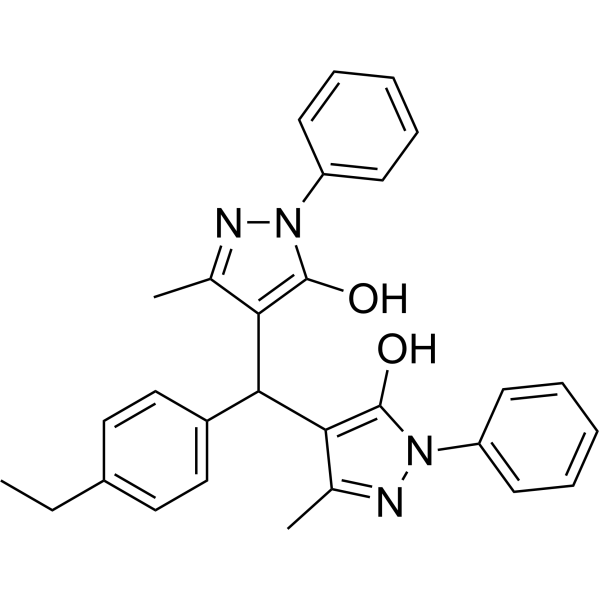
SARS-CoV-2-IN-33 (compound 3m) is a COVID-19 inhibitor. SARS-CoV-2-IN-33 shows anti-proliferative activity against cancer cells. SARS-CoV-2-IN-33 exhibits comparatively good binding affinity (-8.0 Kcal/mole) to COVID-19 main protease (M pro) (PDB ID: 6LU7). SARS-CoV-2-IN-33 can be used in studies of cancer and COVID-19 .
loading...
    loading...
Cat. No.: HY-N7825
CAS No.: 82425-43-2
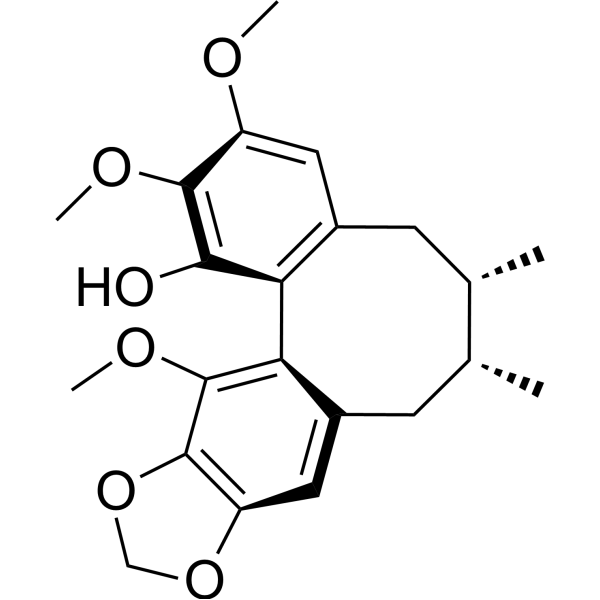
Gomisin L1 is a lignan, shows inhibitory effect on cell viability of A2780 and Ishikawa cells, with IC50s of 39.06 μM and 74.16 μM, respectively .
loading...
    loading...
Cat. No.: HY-N2852
CAS No.: 13059-93-3
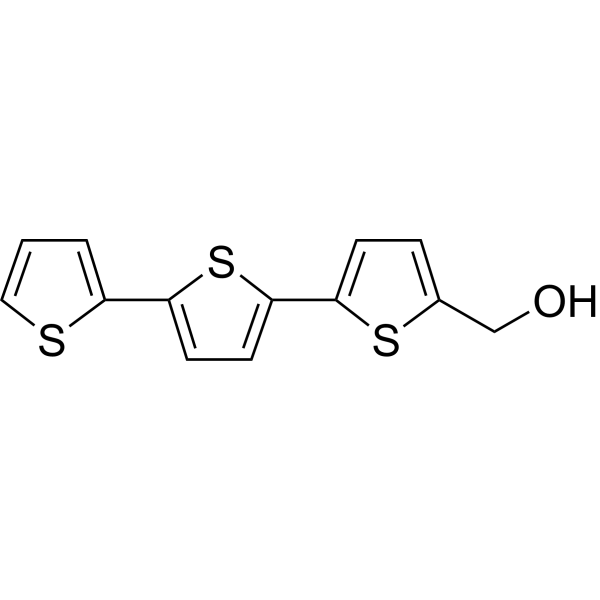
α-Terthienylmethanol is a terthiophene isolated from the n-hexane fraction of E. prostrata. α-Terthienylmethanol has potent cytotoxic activity against human endometrial cancer cells (Hec1A and Ishikawa) (IC50 < 1 μM). α-Terthienylmethanol increases the intracellular level of ROS and decreases that of GSH .
loading...
    loading...
Cat. No.: HY-151474
CAS No.: 1017691-52-9
Target:  

SARS-CoV

Research Areas:  

Cancer

SARS-CoV-2-IN-31 is an effective COVID-19 inhibitor. SARS-CoV-2-IN-31 exhibits excellent to mild activity against various cancer cell lines with IC50 values range from 28.84 to 38.36 μM. SARS-CoV-2-IN-31 can be used for the research of cancer .
loading...
    loading...
Cat. No.: HY-N13845
CAS No.: 1932668-04-6
2'-Prenylisorhamnetin is a natural flavonoid.
loading...
    loading...
Cat. No.: HY-181637
CAS No.: 946437-21-4
Target:  

Drug Derivative

Research Areas:  

Endocrinology

4-DMA-3'-OH-Chalcone (compound 24) is a synthetic chalcone derivative and selective cytotoxic agent.4-DMA-3'-OH-Chalcone reduces viability of endometriotic cells, while preserving or enhancing viability of eutopic endometrial cells.4-DMA-3'-OH-Chalcone can be used for the research of endometriosis .
loading...
    loading...
Cat. No.: HY-181638
CAS No.: 934022-22-7
Target:  

Drug Derivative

Research Areas:  

Metabolic Disease

4-Cl-Benzodioxolyl chalcone is a type of chalcone. It reduces the viability of endometriotic cells while maintaining or increasing the viability of normal endometrial cells. 4-Cl-Benzodioxolyl chalcone can be used in the research of endometriosis .
loading...
    loading...
Cat. No.: HY-107076
CAS No.: 554429-88-8
Research Areas:  

Endocrinology

Estrogen receptor modulator 14 is a chromene-derived prodrug of selective Estrogen Receptor modulator with oral activity. Estrogen receptor modulator 14 undergoes hydrolysis in vivo to produce the active metabolite 2d-(R), which acts on ERα and ERβ. Estrogen receptor modulator 14 acts on central thermoregulatory sites and possesses the ability to regulate estrogen signaling in multiple systemic tissues. Estrogen receptor modulator 14 maintains antiestrogenic activity in the uterus, and alters plasma cholesterol and bone metabolism. Estrogen receptor modulator 14 can be used for the research of estrogen receptor-related diseases .
loading...
    loading...
  • 1

