1. Search Result
Search Result
Results for "

PARP-1-IN-1

" in MedChemExpress (MCE) Product Catalog:

34

阻害剤およびアゴニスト

1

クリックケミストリー

製品番号 製品名 Target 研究分野 構造式
  • HY-171006
    IRF1-IN-1
    1 Publications Verification

    Caspase PARP Pyroptosis Interleukin Related IFNAR Infection Inflammation/Immunology
    IRF1-IN-1 (Compound I-2) is an IRF1 inhibitor. IRF1-IN-1 decreases the recruitment of IRF1 to the promoter of CASP1. IRF1-IN-1 inhibits cell death signaling pathway (i.e., cleavage of Caspase 1, GSDMD, IL-1 and PARP1). IRF1-IN-1 has a protective effect on ionizing radiation-induced inflammatory skin injury .
    IRF1-IN-1
  • HY-114869
    DPQ
    3 Publications Verification

    PARP Neurological Disease Cancer
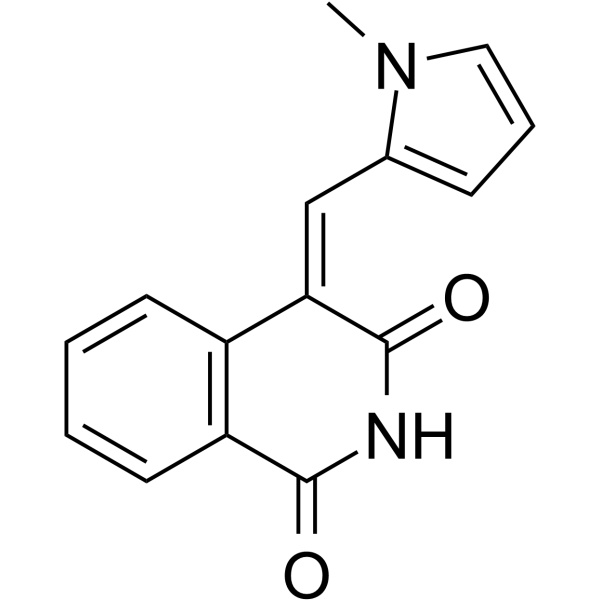
    DPQ is a selective PARP-1 inhibitor that blocks PARP-1-mediated DNA damage repair and NAD +/ATP consumption, thereby inhibiting excessive inflammatory responses. DPQ inhibits NF-κB pathway activation, reduces the expression of pro-inflammatory factors (such as TNF-α, IL-6) and oxidative stress. DPQ can be used in inflammation-related studies of acute lung injury, myocardial infarction, and neurodegenerative diseases .
    DPQ
  • HY-158045

    PROTACs PARP Cancer
    PROTAC PARP1 degrader-1 is a PARP1 PROTAC degrader with a DC50 value of 252.5 nM. PROTAC PARP1 degrader-1, combined with Daunorubicin (HY-13062A), induces the accumulation of cytoplasmic DNA fragments, activates the cGAS/STING innate immune pathway, and remodels the tumor microenvironment. PROTAC PARP1 degrader-1 can be used in research related to breast cancer .
    PROTAC PARP1 degrader-1
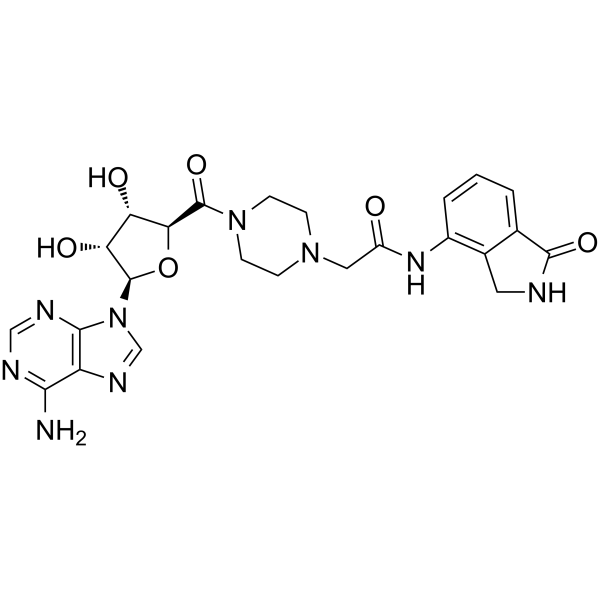
  • HY-15046
    EB-47
    5 Publications Verification

    PARP Cardiovascular Disease Inflammation/Immunology
    EB-47, a potent and selective PARP-1/ARTD-1 inhibitor with an IC50 value of 45 nM, shows modest potency against ARTD5 with an IC50 value of 410 nM. EB-47 mimics the substrate NAD + and extends from the nicotinamide to the adenosine subsite .
    EB-47
  • HY-108632
    BYK204165
    1 Publications Verification

    PARP Cancer
    BYK204165 is a potent and selective PARP1 inhibitor. BYK204165 inhibits cell-free recombinant human PARP-1 (hPARP-1) with a pIC50 of 7.35 (pKi=7.05), and murine PARP-2 (mPARP-2) with a pIC50 of 5.38, respectively. BYK204165 displays 100-fold selectivity for PARP-1 .
    BYK204165
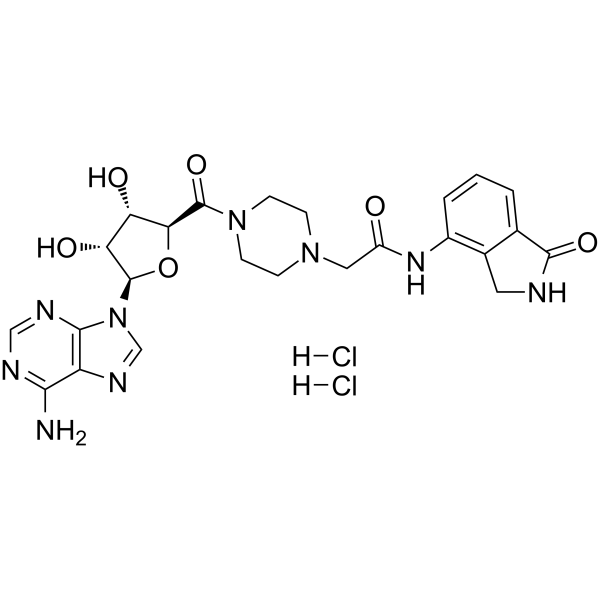
  • HY-108631
    EB-47 dihydrochloride
    5 Publications Verification

    PARP Inflammation/Immunology
    EB-47 dihydrochloride, a potent and selective PARP-1/ARTD-1 inhibitor with an IC50 value of 45 nM, shows modest potency against ARTD5 with an IC50 value of 410 nM. EB-47 mimics the substrate NAD +?and extends from the nicotinamide to the adenosine subsite .
    EB-47 dihydrochloride
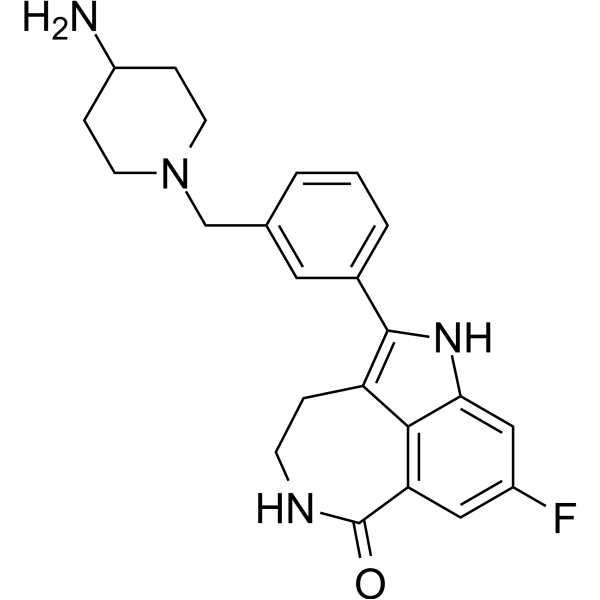
  • HY-144642

    PARP Cancer
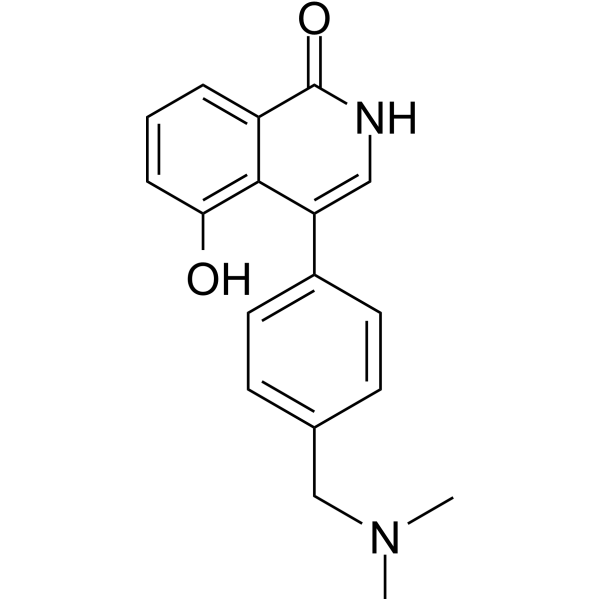
    PARP-1-IN-1 is a high selective and orally active PARP-1 inhibitor (IC50=0.96 nM). PARP-1-IN-1 has well tolerance and remarkable single dose activity in the MDA-MB-436 xenotransplantation model .
    PARP-1-IN-1
  • HY-130652

    E3 Ligase Ligand-Linker Conjugates Cancer
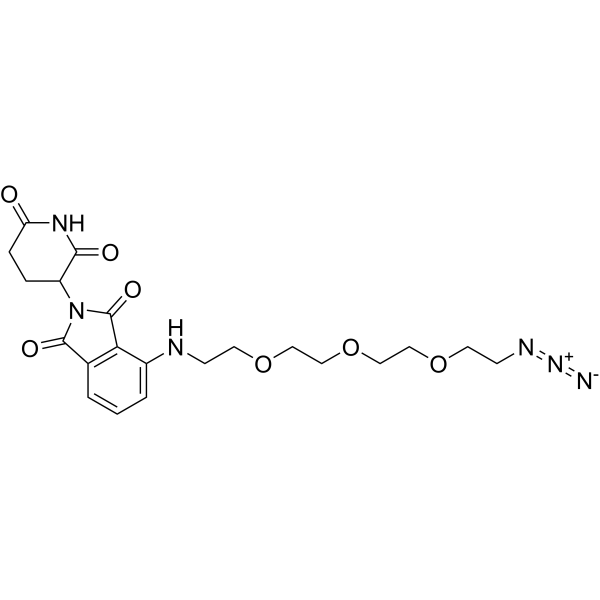
    Pomalidomide 4'-PEG3-azide is a synthesized E3 ligase ligand-linker conjugate that incorporates the Pomalidomide-based cereblon ligand and a linker. Pomalidomide 4'-PEG3-azide can be used for the synthesis of iRucaparib-TP3 (Compound 3). iRucaparib-TP3 is a highly efficient PARP1?degrader based on Rucaparib by using the PROTAC approach . Pomalidomide 4'-PEG3-azide is a click chemistry reagent, it contains an Azide group and can undergo copper-catalyzed azide-alkyne cycloaddition reaction (CuAAc) with molecules containing Alkyne groups. It can also undergo strain-promoted alkyne-azide cycloaddition (SPAAC) reactions with molecules containing DBCO or BCN groups.
    Pomalidomide 4'-PEG3-azide
  • HY-174828

    PARP ATM/ATR Apoptosis Cancer
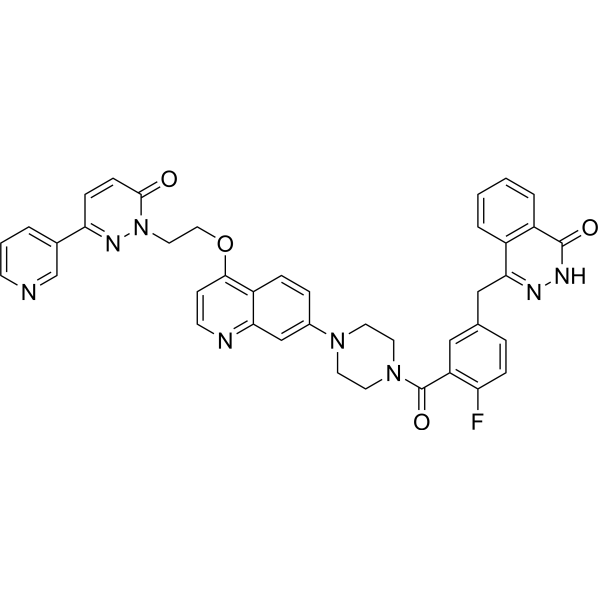
    ATR/PARP1-IN-1 is a potent ATR and PARP1 dual inhibitor with IC50s of 17.3 nM and 0.38 nM, respectively. ATR/PARP1-IN-1 effectively reduces cell viability, induces apoptosis and DNA damage. ATR/PARP1-IN-1 significantly impairs triple-negative breast cancer (TNBC) colony formation, migration, and invasion. ATR/PARP1-IN-1 suppresses tumor growth effectively in MDA-MB-468 xenografted mice, with no significant body weight change .
    ATR/PARP1-IN-1
  • HY-172224

    CDK PARP Cancer
    PARP1/CDK12-IN-1 (107) is a dual inhibitor of CDK12 and PARP1, with IC50 values of 285 nM and 34 nM for CDK12 and PARP1, respectively .
    PARP1/CDK12-IN-1
  • HY-146160

    PARP HDAC Cancer
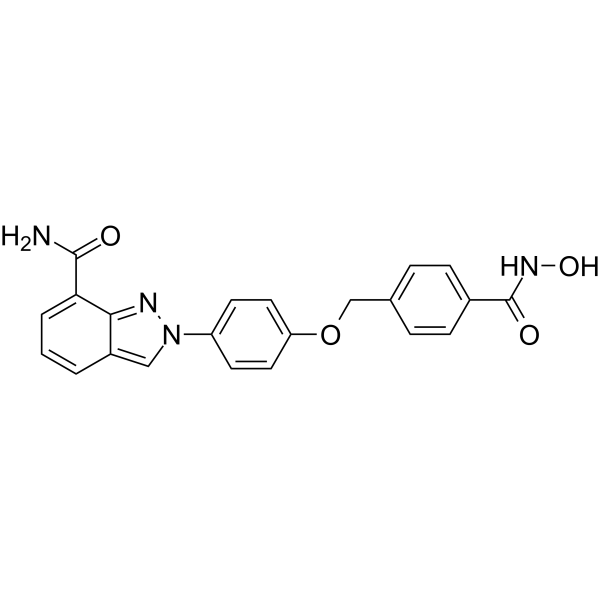
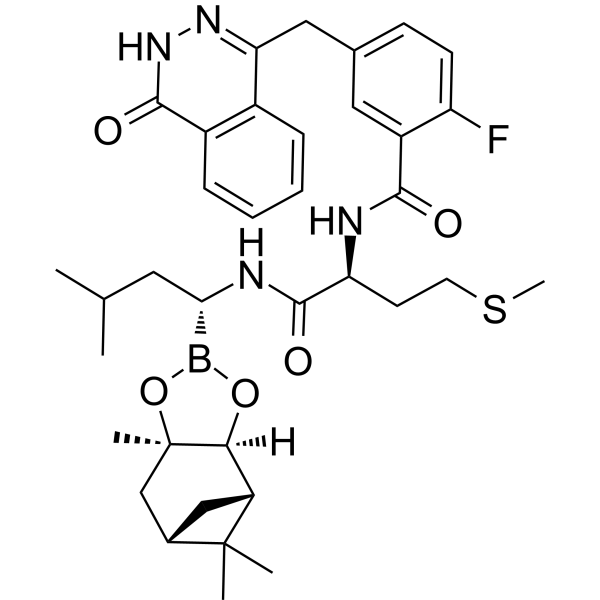
    PARP-1/HDAC-IN-1 is a PARP-1/HDAC6 dual targeting inhibitor with IC50s of 68.90 nM and 510 nM, respectively. PARP-1/HDAC-IN-1 displays remarkable anticancer, anti-migration and anti-angiogenesis activities .
    PARP-1/HDAC-IN-1
  • HY-177100

    PARP Others
    Lotixparib (Example 1) is an inhibitor of poly(ADP-ribose)polymerase-1 (PARP-1). Lotixparib has cytoprotective effect against a retinal disease. Lotixparib can be studied in research for PARP-1-associated diseases .
    Lotixparib
  • HY-158138

    PARP Topoisomerase Apoptosis Cancer
    TOPOI/PARP-1-IN-1 (Compound B6) is an orally active, low cytotoxic TOPOI/PARP dual inhibitor with an IC50 value of 0.09 μM for PARP1. TOPOI/PARP-1-IN-1 can effectively inhibit the proliferation and migration of cancer cells. TOPOI/PARP-1-IN-1 also causes cell cycle arrest in the G0/G1 phase and induces apoptosis. The tumor growth inhibition rate (TGI) of TOPOI/PARP-1-IN-1 in mice is 75.4% .
    TOPOI/PARP-1-IN-1
  • HY-178972

    PARP Infection Metabolic Disease Cancer
    PARP1-IN-48 (Compound 61) is a highly selective PARP1 (PARP1 IC50 = 3 nM, PARP2 IC50 = 170 nM) inhibitor. PARP1-IN-48 can be used for research on cancer, viral infections, and metabolic conditions .
    PARP1-IN-48
  • HY-161372

    PARP c-Met/HGFR Apoptosis Cancer
    PARP1/c-Met-IN-1 (Compound 16) is a selective dual inhibitor for PARP1 and c-Met, with IC50s of 3.3 and 32.2 nM, respectively. PARP1/c-Met-IN-1 induces cell apoptosis and cell cycle arrest in G2/M phase in MDA-MB-231 cells. PARP1/c-Met-IN-1 exhibits antitumor activity in mice .
    PARP1/c-Met-IN-1
  • HY-157212

    Apoptosis PARP Proteasome Cancer
    PARP-1/Proteasome-IN-1 (compound 42i) is a dual PARP-1 and proteasome inhibitor with significant inhibitory effects on breast cancer. PARP-1/Proteasome-IN-1 can downregulate the expression of BRCA1 and RAD51 to inhibit homologous recombination repair function and induce apoptosis .
    PARP-1/Proteasome-IN-1
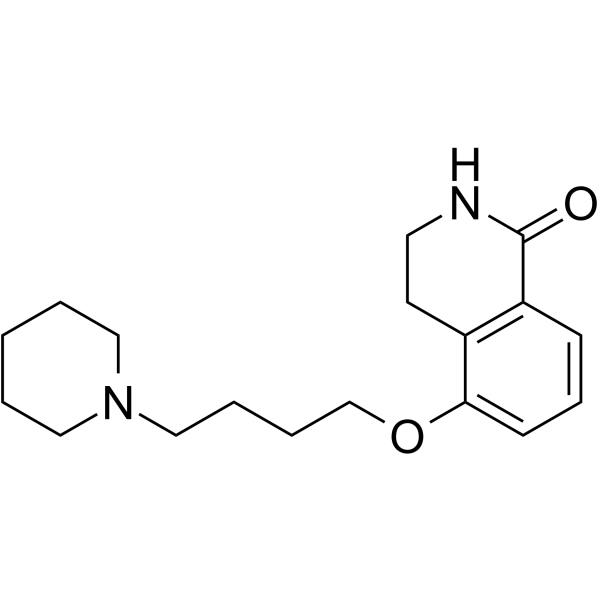
  • HY-15050

    PARP Neurological Disease Inflammation/Immunology
    KCL-440 is a CNS-penetrated PARP inhibitor, with an IC50 of 68 nM. KCL-440 has strong inhibition of PARP-1 .
    KCL-440
  • HY-130648

    E3 Ligase Ligand-Linker Conjugates Autophagy Apoptosis Cancer
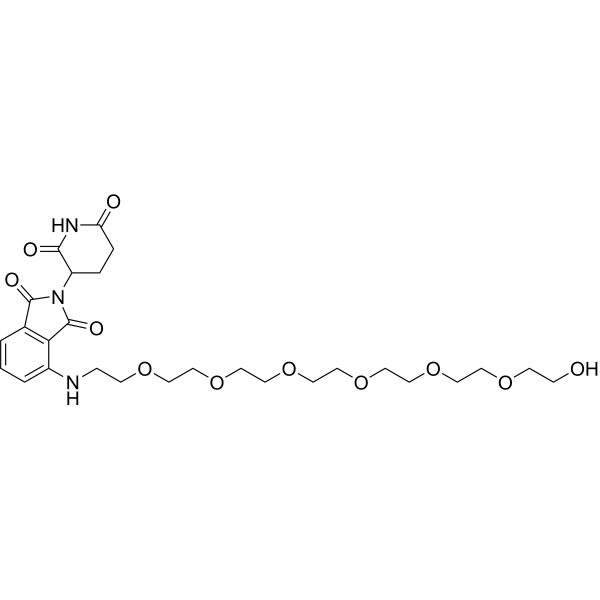
    Thalidomide-NH-PEG7 is a synthesized E3 ligase ligand-linker conjugate for ADC. Thalidomide-NH-PEG7 can be connected to the ligand for protein by a linker to form PROTAC iRucaparib-AP6, a highly specific PARP1 degrader .
    Thalidomide-NH-PEG7
  • HY-183373

    EGFR PARP Cancer
    EGFR/PARP-1-IN-1 is a dual EGFR and PARP-1 inhibitor with IC50 values of 64 nM and 12 nM, respectively. EGFR/PARP-1-IN-1 binds to the ATP-binding pocket of EGFR and interacts with the catalytic domain of PARP-1, inhibiting kinase and enzymatic activity via hydrogen bond formation with key residues in both targets. EGFR/PARP-1-IN-1 induces apoptosis through the endogenous mitochondrial pathway, arrests the cell cycle at the G2 phase, and inhibits cell proliferation. EGFR/PARP-1-IN-1 can be used for research on triple-negative breast cancer .
    EGFR/PARP-1-IN-1
  • HY-171543

    PARP Cancer
    PARP1-IN-37 (Compound 8) is an orally active and selective poly(ADP-ribose) polymerase 1 and 2 (PARP1/2) inhibitor with an IC50 value of 24 nM for PARP1. PARP1-IN-37 inhibits PARP activity in cells with an EC50 value of 3.7 μM. PARP1-IN-37 is promising for research of BRCA-mutated tumors, such as breast and ovarian cancers .
    PARP1-IN-37
  • HY-W424851

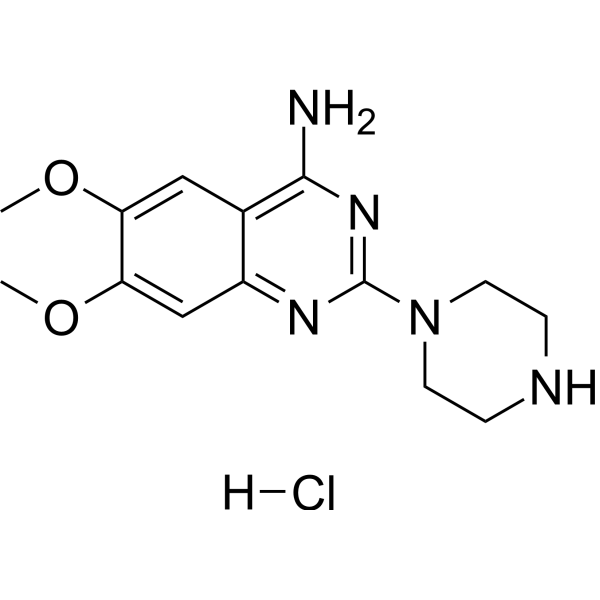
    6,7-Dimethoxy-2-(1-piperazINyl)-4-quINazolINamINe hydrochloride

    PARP Infection Inflammation/Immunology
    DPQ hydrochloride is a blood-brain barrier permeable and selective PARP-1 inhibitor that blocks PARP-1-mediated DNA damage repair and NAD +/ATP consumption, thereby inhibiting excessive inflammatory responses. DPQ hydrochloride inhibits NF-κB pathway activation, reduces the expression of pro-inflammatory factors (such as TNF-α, IL-6) and oxidative stress. DPQ hydrochloride can be used in inflammation-related studies of acute lung injury, myocardial infarction, and neurodegenerative diseases .
    DPQ hydrochloride
  • HY-162349

    HDAC PARP Cancer
    PARP7/HDACs-IN-1 (compound 9l) is a dual-target inhibitor targeting PARP7/HDAC with anti-tumor activity. PARP7/HDACs-IN-1 inhibits different subtypes of PARPs and HDACs with IC50s of 83.3 nM (PARP1), 3.1 nM (PARP7), 35 nM (HDAC1), 30.3 nM (HDAC2), 35.4 nM (HDAC3), and 6.4 nM respectively. (HDAC6) . br/ .
    PARP7/HDACs-IN-1
  • HY-180276

    HyT PARP Drug Derivative Autophagy Cancer
    PARP1 degrader 1 (Compound 2c) is a comparatively potent PARP1 HyT degrader (DC50: 618 nM for intracellular PARP-1). PARP1 degrader 1 is also a HyT-Olaparib (HY-10162) conjugate. PARP1 degrader 1 induces UPR/autophagy, thus facilitating the degradation of PARP-1. PARP1 Degrader 1 can be used in the research of cancer .
    PARP1 degrader 1
  • HY-181842

    PARP ERK Apoptosis Cancer
    PARP1/ERK IN-1 is a dual PARP1/ERK inhibitor, with a PARP1 IC50 of 0.9 nM and an ERK2 IC50 of 1.8 nM. PARP1/ERK IN-1 inhibits proliferation and migration of various cancer cell lines, and induces apoptosis and DNA damage. PARP1/ERK IN-1 suppresses tumor growth in mouse models of colorectal cancer, and reduces the expression of Ki‑67, BRCA1 and Rad51. PARP1/ERK IN-1 can be used in the research of colorectal cancer, triple-negative breast cancer and pancreatic cancer .
    PARP1/ERK IN-1
  • HY-181254

    PARP NAMPT DNA/RNA Synthesis Apoptosis Cancer
    PARP1/NAMPT-IN-1 is a potent and dual PARP1 and NAMPT inhibitor with IC50 values of 1.2 nM and 6.7 nM, respectively. PARP1/NAMPT-IN-1 can disrupt the homologous recombination repair (HRR) pathway, leading to the accumulation of DNA double-strand breaks (DSBs), inducing cell cycle arrest and apoptosis, and also has antimigratory effects. PARP1/NAMPT-IN-1 exhibits excellent antitumor effects in a breast cancer xenograft model. PARP1/NAMPT-IN-1 can be used for the study of triple-negative breast cancer (TNBC) .
    PARP1/NAMPT-IN-1
  • HY-108631R

    Reference Standards PARP Inflammation/Immunology
    EB-47 dihydrochloride (Standard) is the analytical standard of EB-47 (dihydrochloride) (HY-108631). This product is intended for research and analytical applications. EB-47 dihydrochloride, a potent and selective PARP-1/ARTD-1 inhibitor with an IC50 value of 45 nM, shows modest potency against ARTD5 with an IC50 value of 410 nM. EB-47 mimics the substrate NAD+ and extends from the nicotinamide to the adenosine subsite .
    EB-47 dihydrochloride (Standard)
  • HY-108632R

    Reference Standards PARP Cancer
    BYK204165 (Standard) is the analytical standard of BYK204165 (HY-108632). This product is intended for research and analytical applications. BYK204165 is a potent and selective PARP1 inhibitor. BYK204165 inhibits cell-free recombinant human PARP-1 (hPARP-1) with a pIC50 of 7.35 (pKi=7.05), and murine PARP-2 (mPARP-2) with a pIC50 of 5.38, respectively. BYK204165 displays 100-fold selectivity for PARP-1 .
    BYK204165 (Standard)
  • HY-W973851

    Ligands for Target Protein for PROTAC PARP Others
    2H-Indazole-7-carboxamide is a PARP1 ligand and can be used for the synthesis of PROTACs, such as PROTAC PARP1 degrader-1 (HY-158045) .
    2H-Indazole-7-carboxamide
  • HY-171416

    Drug Derivative Others
    LCD36, a derivative of nicotinamide adenine dinucleotide (NAD), can be used for synthesis of PARP-1 tracers for positron emission tomography (PET) imaging of the enzyme activity of PARP-1 .
    LCD36
  • HY-185594

    Drug Intermediate Others
    4-(Cyclohexylbuta-1,3-diyn-1-yl)benzoic acid is a Hyt hydrophobic group. 4-(Cyclohexylbuta-1,3-diyn-1-yl)benzoic acid can be used in the synthesis of PARP1 degrader 1 (HY-180276).
    4-(Cyclohexylbuta-1,3-diyn-1-yl)benzoic acid
  • HY-185459

    PARP Epigenetic Reader Domain Cancer
    PCIP-1 is a PARP2 inhibitor. PCIP-1 recruits BET proteins to PARP2 to inhibit DNA repair, acts via event-driven pharmacology, and does not inhibit PARP-catalyzed PARylation. PCIP-1 inhibits DNA repair, thereby inducing synthetic lethality in homologous recombination-deficient cancer cells and increasing the sensitivity of PARP1-knockout cells. PCIP-1 can be used in the research of homologous recombination-deficient cancers, T-cell acute lymphoblastic leukemia, and BRCA-mutant cancers .
    PCIP-1
  • HY-181459

    PARP DNA/RNA Synthesis Reactive Oxygen Species (ROS) Apoptosis Cancer
    PARP1-IN-55 is a potent and selective PARP1 inhibitor with an IC50 value of 0.019 μM. PARP1-IN-55 exhibits anti-proliferative selective activity against MCF-7 breast cancer cells (IC50 = 3.6 μM). PARP1-IN-55 inhibits the PARP1-mediated DNA damage repair pathway, induces ROS accumulation, disrupts mitochondrial membrane potential, induced apoptosis and suppresses cancer cell migration, invasion, and colony formation. PARP1-IN-55 can be used for the study of breast cancer .
    PARP1-IN-55
  • HY-181928

    c-Met/HGFR PARP Apoptosis Cancer
    PARP1/c-Met-IN-3 (Compound L19) is a selective c-Met and PARP1 inhibitor, with an IC50 of 5.4 nM against c-Met and an IC50 of 3.7 nM against PARP1. PARP1/c-Met-IN-3 inhibits PARP2 enzymatic activity with an IC50 of 4.52 nM, and shows no specificity for PARP1 and PARP2. PARP1/c-Met-IN-3 induces cell cycle arrest and apoptosis. PARP1/c-Met-IN-3 exhibits anti-tumor activity against triple-negative breast cancer .
    PARP1/c-Met-IN-3
  • HY-183317

    Indoleamine 2,3-Dioxygenase (IDO) Interleukin Related Apoptosis Caspase PARP Cancer
    IDO1-IN-34 is a selective IDO1 inhibitor with an IC50 of 0.093 μM. IDO1-IN-34 exhibits cytotoxicity against various cancer cell lines. IDO1-IN-34 inhibits the kynurenine (kynurenine) pathway and activates IL-2. IDO1-IN-34 induces cell apoptosis via the endogenous mitochondrial pathway, while increasing the levels of cytochrome c, caspase-3, caspase-9 and PARP-1. IDO1-IN-34 can be used for research on liver cancer, lung cancer, breast cancer, prostate cancer, colon cancer and leukemia .
    IDO1-IN-34

オンラインお問い合わせ

入力情報は安全に管理されます. 必須入力項目.

タイトル


国或いは地域 *

お名前 *


組纖名 *

デパートメント *


メールアドレス *


製品名 *

製品番号


カスタマ需要量 *

電話番号 *


必ず会社名を記載ください。個人への返信は行いません。

備考

バルクお問い合わせ

Inquiry Information

製品名:
製品番号:
数量:
MCE 日本正規代理店:

