16 Results for "

Serine biosynthesis

" in MedChemExpress (MCE) Product Catalog:
Products (16)

16 Results for "Serine biosynthesis" in MCE Product Catalog:

1
1 Cited Publications
Cat. No.: HY-126254
CAS No.: 2244452-09-1
Purity:  99.55%
Research Areas:  

Cancer

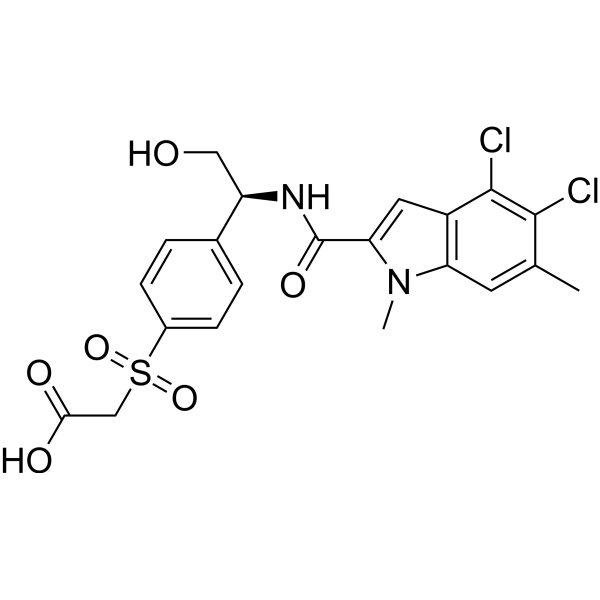
BI-4924 is a lipophilic, highly plasma protein bound selective phosphoglycerate dehydrogenase (PHGDH) inhibitor (IC50=3 nM) with excellent microsomal, as well as hepatocytic stability. Intracellular trapping of BI-4924 disrupts serine biosynthesis with an IC50 of 2200 nM at 72 h .
loading...
    loading...
1
1 Cited Publications
Cat. No.: HY-KE7057

O-Glycosidase is highly specific and can release Galβ1-3GalNAc from serine, threonine residues or as part of a glycopeptide or glycoprotein. Applied to glycoprotein biosynthesis analysis, O-glycan bioactive protein O-glycosylation detection and binding site analysis.

loading...
    loading...
Cat. No.: HY-101409
CAS No.: 5147-00-2
Purity:  ≥98.0%
Synonyms: O-Acetyl-L-Serine
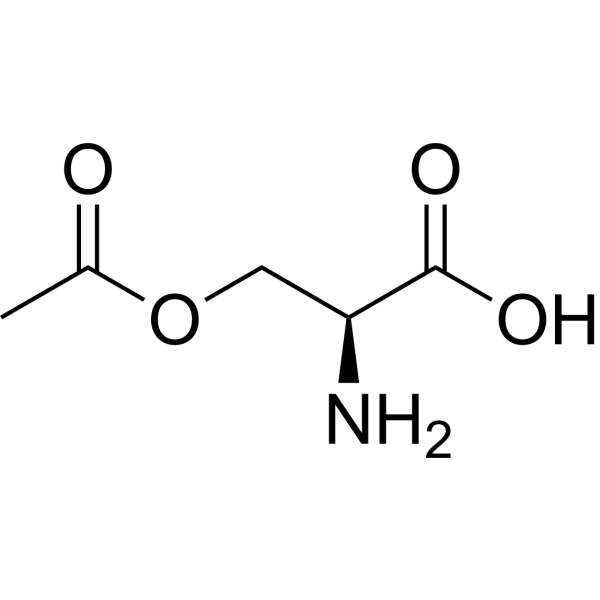
O-Acetylserine (O-Acetyl-L-serine) is an intermediate in the biosynthesis of the amino acid cysteine in bacteria and plants.
loading...
    loading...
Cat. No.: HY-116073
CAS No.: 1113-41-3
Target:  

Acyltransferase

Research Areas:  

Infection Cancer

L-Penicillamine is an orally active serine palmitoyltransferase (SPT) inhibitor. L-Penicillamine inactivates the PLP cofactor by forming adducts, thereby inhibiting SPT activity and reducing sphingolipid biosynthesis. L-Penicillamine not only blocks tumor access to vitamin B6, but also stabilizes the human papillomavirus 16 E6 oncoprotein monomer and inhibits its polymerization, exhibiting a unique anticancer mechanism. L-Penicillamine effectively delays the growth of Sarcoma-180, induces tumor necrosis and prolongs survival (though long-term use may lead to Pyridoxine (HY-B1328) deficiency and weight loss) .
loading...
    loading...
Cat. No.: HY-101409R
CAS No.: 5147-00-2
Synonyms: O-Acetyl-L-Serine (Standard)
O-Acetylserine (Standard) is the analytical standard of O-Acetylserine. This product is intended for research and analytical applications. O-Acetylserine (O-Acetyl-L-serine) is an intermediate in the biosynthesis of the amino acid cysteine in bacteria and plants.
loading...
    loading...
Cat. No.: HY-W552257
CAS No.: 3913-50-6
Target:  

Drug Intermediate

Research Areas:  

Others

Hydroxypyruvic acid phosphate serves as a crucial metabolic intermediate in the biosynthesis of L-Serine (HY-N0650), being formed from the conversion of the glycolytic intermediate 3-phosphoglycerate through the action of 3-phosphoglycerate dehydrogenase.
loading...
    loading...
Cat. No.: HY-134222AS
CAS No.: 2230887-17-7
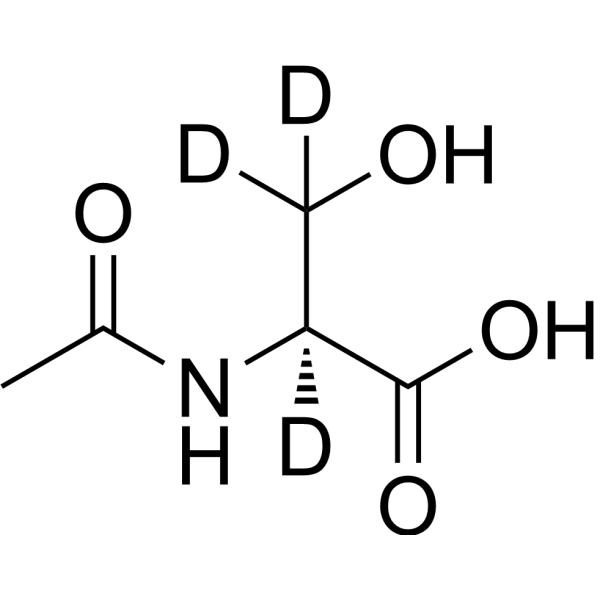
N-Acetylserine-d3 is the deuterium labeled N-Acetylserine (HY-134222A). N-Acetylserine (N-Acetyl-L-serine) is a physiological inducer of cysteine biosynthesis and activator of CysB. N-Acetylserine can bind to the CysB apoprotein. N-Acetylserine stimulates cysJIH transcription in vitro. N-Acetylserine can be used in the research of SARS-CoV-2 infection .
loading...
    loading...
Cat. No.: HY-184416
GDD-261 is an orally active potent allosteric PHGDH inhibitor with IC50 of 61 nM and KD of 1.17 μM. GDD-261 potently suppresses de novo serine biosynthesis via blocking the rate-limiting catalytic activity of PHGDH, elevates intracellular reactive oxygen species (ROS) and γ-H2AX levels, and reduces the GSH/GSSG ratio to trigger tumor cell oxidative stress and DNA damage. GDD-261 mainly applies to research on Erlotinib (HY-50896)-resistant EGFR-mutant non-small cell lung cancer .
loading...
    loading...
Cat. No.: HY-N19420
CAS No.: 89013-69-4
Theasinensin C is an orally effective renin inhibitor and gut microbiota modulator, with an IC50 of 40.21 μM against renin activity. Theasinensin C selectively enriches Akkermansia muciniphila in the gut microbiota, enhances the Akkermansia muciniphila-mediated hydrolysis of the PTS domain of mucin, drives the accumulation of luminal glutamine and serine, and regulates the gut-kidney-liver glutamine/serine metabolic signaling pathway to promote creatine biosynthesis. Theasinensin C improves cognitive function, reduces pro-inflammatory cytokines, alleviates neuropathological changes and restores intestinal barrier integrity. Theasinensin C can be used in research related to hypertension and neuroinflammation induced by high-fructose diet .
loading...
    loading...
Cat. No.: HY-180330
CAS No.: 898619-81-3
Target:  

Bacterial

Research Areas:  

Infection

Antimicrobial agent-46 is a inhibitor of Salmonella typhimurium serine acetyltransferase (StSAT) with an IC50 of 48.6 μM. Antimicrobial agent-46 inhibits bacterial growth in minimal medium lacking cysteine (LB 20%). Antimicrobial agent-46 exerts its effect by targeting the cysteine biosynthesis pathway, which is crucial for bacterial persistence and adaptability. Antimicrobial agent-46 exhibits antibacterial activity against the Gram-negative bacterium Escherichia coli. Antimicrobial agent-46 can be used in infection-related research .
loading...
    loading...
Cat. No.: HY-101409S
Synonyms: O-Acetyl-L-Serine-13C
O-Acetylserine- 13C (O-Acetyl-L-serine- 13C) is the 13C-labeled O-Acetylserine (HY-101409). O-Acetylserine (O-Acetyl-L-serine) is an intermediate in the biosynthesis of the amino acid cysteine in bacteria and plants .
loading...
    loading...
Cat. No.: HY-P811111
Synonyms: LCB1, SPTLC1, Serine palmitoyltransferase 1, Long chain base biosynthesis protein 1, Serine-palmitoyl-CoA transferase 1, LCB 1, SPT 1, SPT1

Host:  

Rabbit

Application:  

WB, IHC-P, ICC/IF

Reactivity:  

Human, Mouse, Rat

loading...
    loading...
Cat. No.: HY-W552257A
CAS No.: 2080296-02-0
Target:  

Drug Intermediate

Research Areas:  

Others

Hydroxypyruvic acid phosphate lithium serves as a crucial metabolic intermediate in the biosynthesis of L-Serine (HY-N0650), being formed from the conversion of the glycolytic intermediate 3-phosphoglycerate through the action of 3-phosphoglycerate dehydrogenase.
loading...
    loading...
Cat. No.: HY-134222AR
CAS No.: 16354-58-8
Synonyms: N-Acetyl-L-Serine (Standard)
N-Acetylserine (Standard) is the analytical standard of N-Acetylserine (HY-134222A). This product is intended for research and analytical applications. N-Acetylserine (N-Acetyl-L-serine) is a physiological inducer of cysteine biosynthesis and activator of CysB. N-Acetylserine can bind to the CysB apoprotein. N-Acetylserine stimulates cysJIH transcription in vitro. N-Acetylserine can be used in the research of SARS-CoV-2 infection .
loading...
    loading...
Cat. No.: HY-177092
CAS No.: 2294820-23-6
AGF347 is a potent and multi-targeted antifolate that targets serine hydroxymethyltransferase (SHMT)2 in the mitochondria and SHMT1 in the cytosol, and inhibits de novo purine biosynthesis. AGF347 induces apoptosis, inhibits mTOR signaling, decreases GSH pools, and increases ROS. AGF347 inhibits proliferation of Cisplatin (HY-17394) sensitive and resistant epithelial ovarian cancer (EOC) cells. AGF347 exhibits antitumor efficacy in SKOV3 EOC xenograft mouse models. AGF347 can be used for ovarian cancer research .
loading...
    loading...
Cat. No.: HY-W1143867
CAS No.: 2226-71-3
4’-Phosphopantetheine is an orally active coenzyme A (CoA) precursor. 4’-Phosphopantetheine is membrane-permeable and acts as a CoA precursor, a prosthetic group, and a reactive oxygen species (ROS) inhibitor. 4’-Phosphopantetheine binds covalently to rat liver fatty acid synthase, modifies the conserved serine residue in the PKS/NRPS carrier protein domain, and serves as a substrate for CoA synthase and PPAT. 4’-Phosphopantetheine undergoes non-catalytic exchange on rat liver fatty acid synthase, with a faster turnover rate than that of the enzyme complex, and restores intracellular CoA levels in cells with impaired de novo biosynthesis. 4’-Phosphopantetheine rescues phenotypes induced by CoA deficiency, normalizes PKAN-related biomarkers, restores mitochondrial enzyme activity, and alleviates vascular endothelial damage. 4’-Phosphopantetheine shows biological stability in serum, acts as a prosthetic group and degradation product of ACP, and inhibits the formation of atherosclerotic plaques. 4’-Phosphopantetheine can be used in the research of brain iron accumulation neurodegenerative diseases, pantothenate kinase-associated neurodegeneration, CoASY protein-associated neurodegenerative diseases, coronary heart disease, and atherosclerosis .
loading...
    loading...
  • 1

