
1. Search Result
Search Result
Results for "

aminopyridine

" in MedChemExpress (MCE) Product Catalog:

38

Inhibitors & Agonists

3

Biochemical Assay Reagents

17

Peptides

3

Natural
Products

2

Isotope-Labeled Compounds

Cat. No. Product Name Target Research Areas Chemical Structure
  • HY-164899

    2-aminopyridine-3-carboxylic acid imidazolide

    Transmembrane Glycoprotein Cancer
    2A3 (2-aminopyridine-3-carboxylic acid imidazolide) is a T cell activator that specifically binds to CEACAM6 and CEACAM5. 2A3 exhibits enzymatic activity that catalyzes the glucuronidation of specific substrates (e.g., 1-naphthol), and possesses significant cytotoxic activity. When integrated into CAR T cells or used alone, 2A3 acts by inducing cytokine release, degranulation, and direct cytotoxicity. 2A3 kills pancreatic and breast cancer cells with high target antigen expression in vitro, and significantly inhibits the growth of pancreatic cancer xenografts in vivo. 2A3 broadly targets malignant tumors with overexpressed CEACAM5, CEACAM6, or co-expressed both, and shows high expression mainly in tissues such as the liver and colon. 2A3 serves as an important research tool for the immunotherapy of pancreatic and breast cancer . 2A3 is a novel SHAPE reagent, which can be used for the analysis of RNA structure both in vitro and in vivo . 2A3 is an electrophilic chemical probe that acylates the 2'-OH in the RNA backbone. 2A3 can be used for RNA SHAPE-MaP experiments and is capable of analyzing the RNA secondary structures at single nucleotide resolution.
    2A3
  • HY-P4070

    Insulin Receptor Metabolic Disease
    Insulin icodec is an Insulin (HY-P0035) analog that strongly but reversibly binds to albumin. Insulin icodec has long plasma half-life. Insulin icodec modulates insulin receptor activity, controls blood glucose levels, reduces HbA1c levels, and binds reversibly to human serum albumin. Insulin icodec can be used for the research of type 2 diabetes mellitus .
    Insulin icodec
  • HY-W027553

    NIK-247 free base; Amiridine free base

    Cholinesterase (ChE) Potassium Channel Sodium Channel Neurological Disease Metabolic Disease
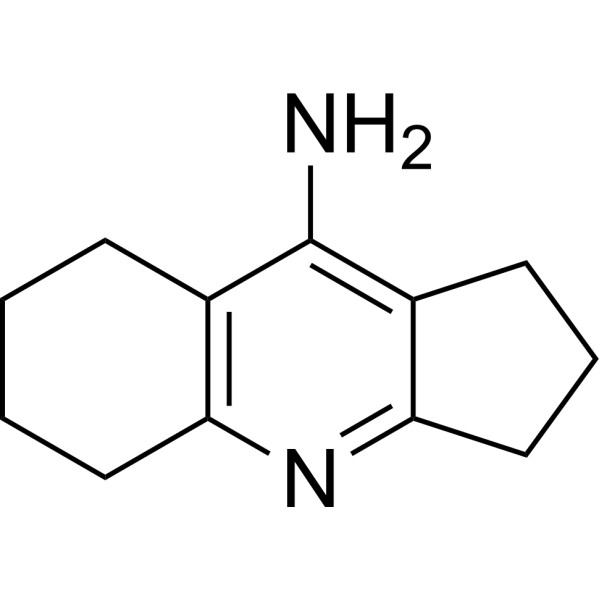
    Ipidacrine is orally active and brain-penetrant AChE and BuChE inhibitors with IC50 values of 1 μM and 1.9 μM, respectively, which is also a partial agonist of M2-cholinergic receptors and a reversible cholinesterase inhibitor. Ipidacrine has a stimulating effect on neuromuscular transmission and excitation along the nerve fibres with a moderately anti-pain effect. Ipidacrine is an aminopyridines and is structurally similar to Tacrine (HY-111338). Ipidacrine is effective in various amnesia models, improves erectile function and inhibits K + and Na +-channels in the neuronal membrane in diabetic rats. Ipidacrine is promising for research of Alzheimer’s disease, ischaemic stroke, idiopathic neuropathy of the facial nerve, diabetes mellitus-induced erectile dysfunction and other deficits in central or peripheral cholinergic deseases .
    Ipidacrine
  • HY-P5362

    Radionuclide-Drug Conjugates (RDCs) Somatostatin Receptor Neurological Disease Cancer
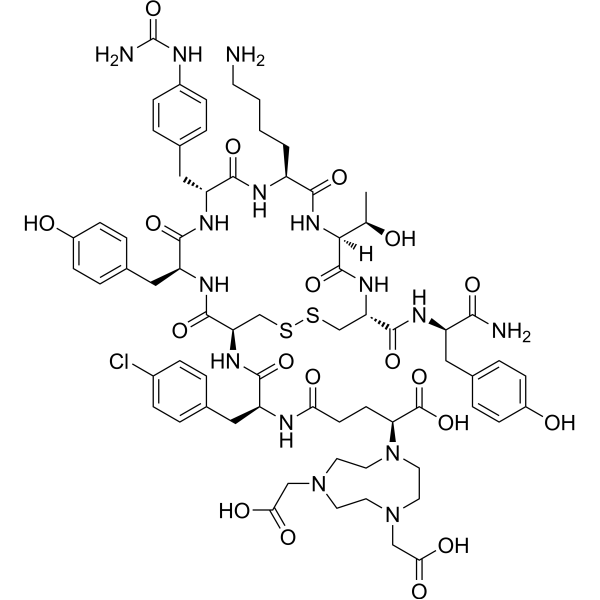
    NODAGA-LM3 is a ligand that can cross the blood-brain barrier and targets somatostatin receptor SSTR2 with high affinity (IC50 = 1.3 nM). NODAGA-LM3 does not trigger the internalization of SSTR2 and can inhibit agonist-induced internalization processes. NODAGA-LM3 shows low uptake in normal tissues such as the liver and spleen, but high uptake in the lungs and blood pool. 68Ga-labeled NODAGA-LM3 can serve as a PET imaging agent for well-differentiated neuroendocrine tumors, and is applied in studies related to small cell lung cancer and well-differentiated neuroendocrine tumors .
    NODAGA-LM3
  • HY-W008188

    Endogenous Metabolite Metabolic Disease
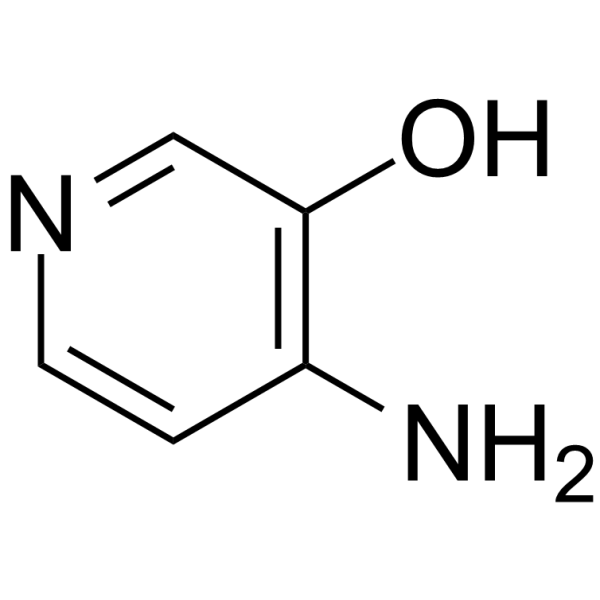
    3-Hydroxy-4-aminopyridine is an endogenous metabolite.
    3-Hydroxy-4-aminopyridine
  • HY-P2336A
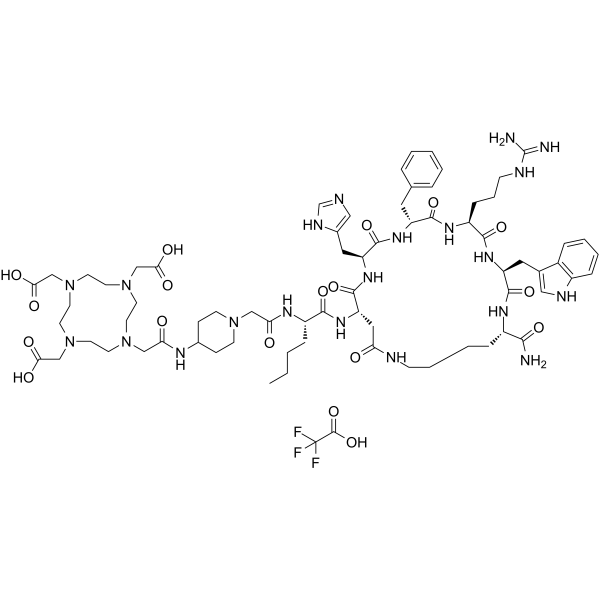
    CCZ01048 TFA
    3 Publications Verification

    Melanocortin Receptor Cancer
    CCZ01048 TFA, a α-MSH analogue, exhibits high binding affinity to melanocortin 1 receptor (MC1R) with a Ki of 0.31 nM. CCZ01048 TFA shows rapid internalization into B16F10 melanoma cells and high in vivo stability. CCZ01048 TFA is a promising candidate for PET imaging of malignant melanoma .
    CCZ01048 TFA
  • HY-P10341

    GCGR Metabolic Disease
    ZP3022 is a dual agonist of glucagon-like peptide-1 (GLP-1) and gastrin that has the ability to sustainably improve glycemic control. Additionally, ZP3022 can effectively increase β-cell mass, promote β-cell proliferation, and enhance the function of pancreatic islets. ZP3022 can be used in anti-diabetic research .
    ZP3022
  • HY-107023

    Thrombin Cardiovascular Disease
    AZD 9684 is a TAFIa inhibitor. AZD 9684 is applicable to research related to thrombosis and pulmonary embolism .
    AZD 9684
  • HY-W008188R

    Reference Standards Endogenous Metabolite Metabolic Disease
    3-Hydroxy-4-aminopyridine is an endogenous metabolite.
    3-Hydroxy-4-aminopyridine (Standard)
  • HY-W002874

    Biochemical Assay Reagents Others
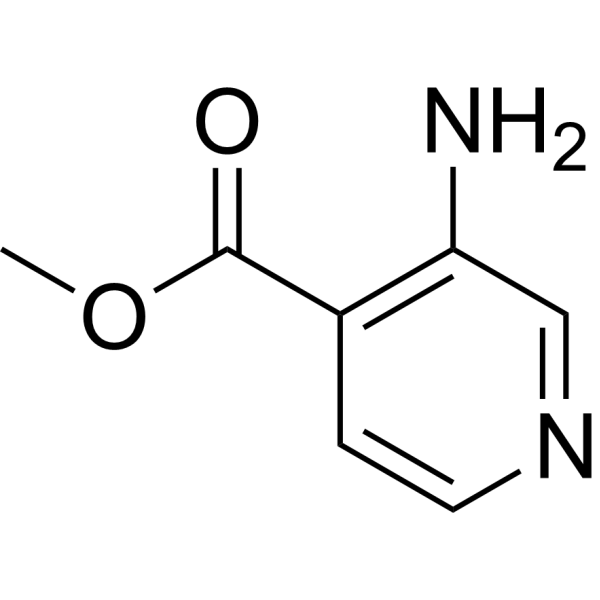
    Methyl 3-aminopyridine-4-carboxylate is a biochemical reagent that can be used as a biological material or organic compound for life science related research.
    Methyl 3-aminopyridine-4-carboxylate
  • HY-W002540

    Biochemical Assay Reagents Others
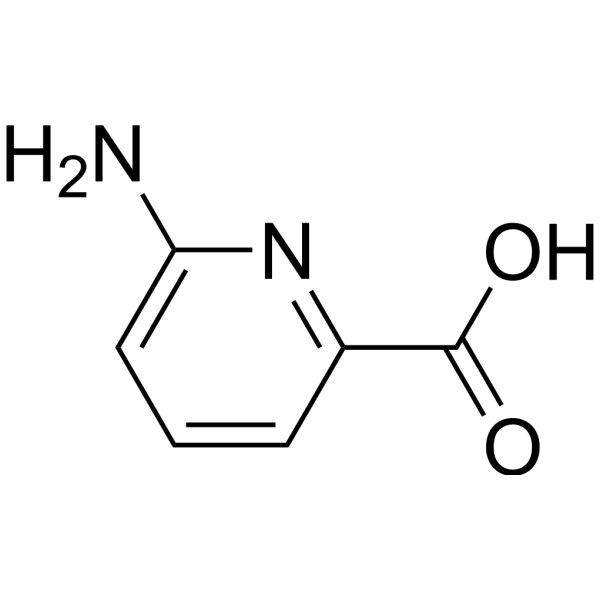
    6-Aminopyridine-2-carboxylic acid is a biochemical reagent that can be used as a biological material or organic compound for life science related research.
    6-Aminopicolinic acid
  • HY-137208

    Drug Metabolite Inflammation/Immunology
    Chondroitin disaccharide Δdi-0S sodium is an unsaturated disaccharide produced by the degradation of Chondroitin sulfate (HY-B2162). Chondroitin disaccharide Δdi-0S sodium produces fluorescent pyridylamino derivative with 2-aminopyridine, which can be used in studies about the metabolic pathway of Chondroitin sulfate and related disease mechanisms .
    Chondroitin disaccharide Δdi-0S sodium
  • HY-W748379

    (±)-Phenyramidol

    Drug Derivative Neurological Disease
    Fenyramidol is an Aminopyridine derivative. Fenyramidol can be used as a moderately potent, non-narcotic muscle relaxant with concomitant analgesic activity .
    Fenyramidol
  • HY-W003145

    Methyl 2-aminopyridine-4-carboxylate

    Biochemical Assay Reagents Others
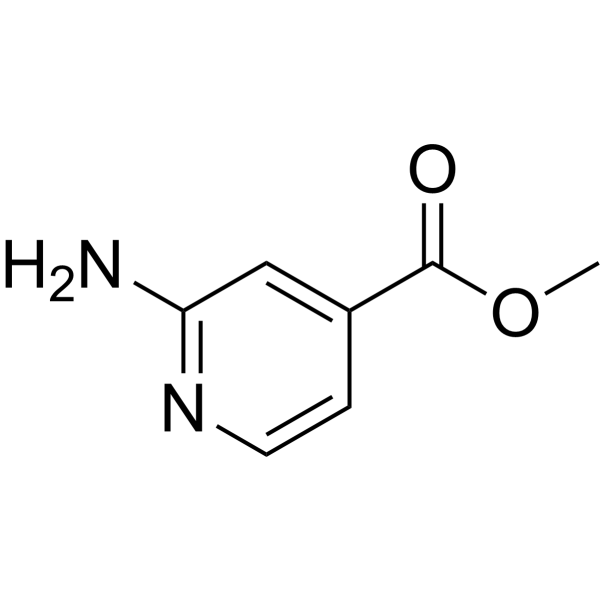
    Methyl 2-aminoisonicotinate is a biochemical reagent that can be used as a biological material or organic compound for life science related research.
    Methyl 2-aminoisonicotinate
  • HY-P11004

    Bacterial Antibiotic Infection
    A3-APO is an antimicrobial peptide. A3-APO has a significant antimicrobial activity by a dual mode of action with both membrane disintegration and intracellular target inhibition. A3-APO can deactivate bacterial toxins and increase the expression of anti-inflammatory cytokines (such as IL-4 and IL-10), without antimicrobial resistance. A3-APO accelerates burn wounds healing in mice infection model of Acinetobacter baumannii and Staphylococcus aureus .
    A3-APO
  • HY-P10472

    GnRH Receptor Endocrinology
    Azaline B is an antagonist for gonadotropin-releasing hormone (GnRH) with IC50 of 1.37 nM, Azaline B can be used in research of sex hormone-related pathological states, ovulation induction and male contraception .
    Azaline B
  • HY-P4757

    Parasite Others
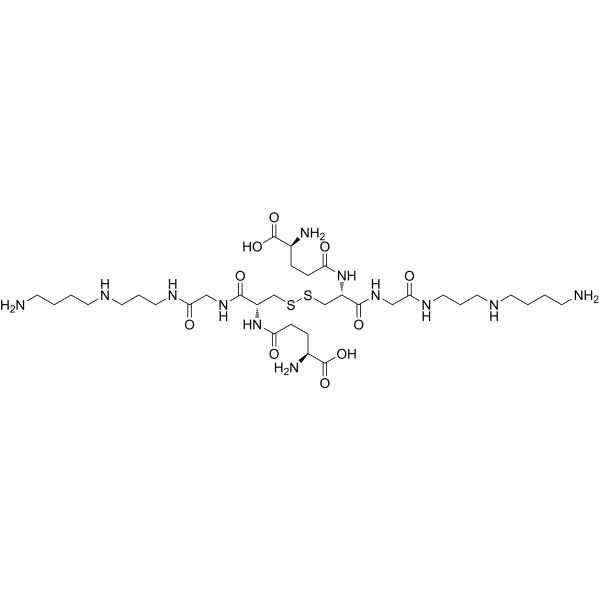
    N1-Glutathionyl-spermidine disulfide is a substrate of trypanothione reductase .
    N1-Glutathionyl-spermidine disulfide
  • HY-W027553R

    NIK-247 free base (Standard); Amiridine free base (Standard)

    Reference Standards Cholinesterase (ChE) Potassium Channel Sodium Channel Neurological Disease Metabolic Disease
    Ipidacrine (Standard) is the analytical reference standard of Ipidacrine. This product is used for research and analytical applications. Ipidacrine is orally active and blood-brain-barrier-penetrant AChE and BuChE inhibitors with IC50 values of 1 μM and 1.9 μM, respectively, which is also a partial agonist of M2-cholinergic receptors and a reversible cholinesterase inhibitor. Ipidacrine has a stimulating effect on neuromuscular transmission and excitation along the nerve fibres with a moderately anti-pain effect. Ipidacrine is an aminopyridines and is structurally similar to Tacrine (HY-111338). Ipidacrine is effective in various amnesia models, improves erectile function and inhibits K + and Na +-channels in the neuronal membrane in diabetic rats. Ipidacrine is promising for research of Alzheimer’s disease, ischaemic stroke, idiopathic neuropathy of the facial nerve, diabetes mellitus-induced erectile dysfunction and other deficits in central or peripheral cholinergic deseases .
    Ipidacrine (Standard)
  • HY-P11243

    Ephrin Receptor Neurological Disease
    EphA4 agonist compound 23 is a novel EphA4 agonist peptide mimic. EphA4 agonist compound 23 exhibits high affinity, high selectivity, and significant receptor activation ability. EphA4 agonist compound 23 is commonly used in the study of neurodegenerative diseases .
    EphA4 agonist compound 23
  • HY-P2434

    Somatostatin Receptor Neurological Disease Metabolic Disease Cancer
    AP102 is a dual SSTR2/SSTR5-specific somatostatin analog (SSA). AP102 is a disulfide-bridged octapeptide SSA containing synthetic iodinated amino acids. AP102 binds with subnanomolar affinity to SSTR2 and SSTR5 (IC50: 0.63 and 0.65 nM, respectively). AP102 does not bind to SSTR1 or SSTR3. AP102 can be used for acromegaly and neuroendocrine tumors research .
    AP102
  • HY-P5362A

    Radionuclide-Drug Conjugates (RDCs) Somatostatin Receptor Cancer
    NODAGA-LM3 TFA is a ligand that can cross the blood-brain barrier and targets somatostatin receptor SSTR2 with high affinity (IC50 = 1.3 nM). NODAGA-LM3 TFA does not trigger the internalization of SSTR2 and can inhibit agonist-induced internalization processes. NODAGA-LM3 TFA shows low uptake in normal tissues such as the liver and spleen, but high uptake in the lungs and blood pool. 68Ga-labeled NODAGA-LM3 TFA can serve as a PET imaging agent for well-differentiated neuroendocrine tumors, and is applied in studies related to small cell lung cancer and well-differentiated neuroendocrine tumors .
    NODAGA-LM3 TFA
  • HY-105168

    Endothelin Receptor Cardiovascular Disease
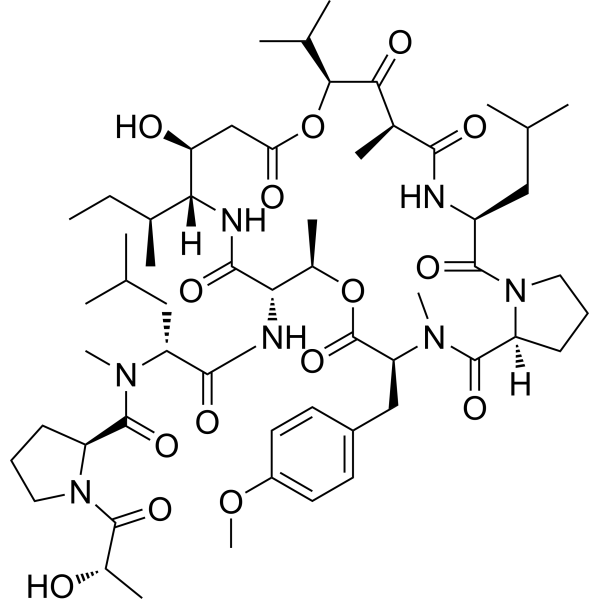
    TAK 044 is an antagonist of Endothelin Receptor. TAK 044 strongly inhibits ET-induced deterioration in various animal models. TAK 044 can be used in study ET-related diseases such as acute myocardial infarction,acute renal failure, acute hepatic malfunction, and subarachnoid hemorrhage .
    TAK 044
  • HY-W005558

    Biochemical Assay Reagents Others
    6-Aminopyridine-3-boronic acid is a boronic acid derivative. Boronic acid derivatives are widely used in organic synthesis for carbon-carbon bond formation. In Suzuki coupling, aryl halides and boronic acid aryl or vinyl esters or boronic acid are coupled using Pd(PPh3)4. It can be used as a pharmaceutical intermediate [1] .
    6-Aminopyridine-3-boronic acid
  • HY-123237

    c-Met/HGFR FLT3 Trk Receptor Apoptosis Autophagy Cancer
    KRC-108, an aminopyridine, is an orally active multiple kinase inhibitor with IC50s of 80 nM, 23 nM, 3 nM, 70 nM, 30 nM, 39 nM for c-Met, c-Met M1250T, c-Met Y1230D, Ron, Flt3 and TrkA, respectively. KRC-108 induces cell cycle arrest, apoptotic cell death, and autophagy. KRC-108 exhibits anti-tumor activity in vivo in HT29 colorectal cancer, NCI-H441 lung cancer xenograft models in athymic BALB/c nu/nu mice .
    KRC-108
  • HY-106017

    Potassium Channel Sodium Channel Neurological Disease
    Nerispirdine is an ion channel inhibitor with IC50s of 3.6, 3.7 and 11.9 μM against K(v)1.1, K(v)1.2 and voltage-dependent Na(+) channel, respectively. Nerispirdine is a 4-aminopyridine (4-AP, HY-B0604) derivative and can be utilized in research on neurological disorders .
    Nerispirdine
  • HY-108578

    Potassium Channel Neurological Disease
    RuBi-4AP, a derivative of 4-aminopyridine (4AP; HY-B0604), is a caged Kv channel blocker. RuBi-4AP contains a photolabile protecting group, allowing its effect to be controlled precisely in both space and time with light. RuBi-4AP can be used for the research of neuronal excitability, synaptic transmission, and signal propagation .
    RuBi-4AP
  • HY-W273015

    4-aminopyridine-2,6-dicarboxylic hydrochloride salt

    MOFs Others
    4-Aminopyridine-2,6-dicarboxylic acid (4-AMinopyridine-2,6-dicarboxylic hydrochloride salt) is a metal-organic framework (MOF).
    4-Aminopyridine-2,6-dicarboxylic acid
  • HY-126017

    Glutathione Peroxidase Inflammation/Immunology
    Aminopyridine 2 is an irreversible, selective, and orally active myeloperoxidase (MPO) inhibitor, with an IC50 of 0.16 μM and a Ki of 24 μM against human MPO. Aminopyridine 2 is applicable to research on chronic inflammatory diseases .
    Aminopyridine 2
  • HY-W195933

    Endogenous Metabolite
    6-Aminopyridine-3-thioamide is a compound with anti-tumor activity that can inhibit the activity of specific enzymes, thereby affecting cell proliferation and survival. 6-Aminopyridine-3-thioamide has also been studied for the inhibition of neurodegenerative diseases and has shown the potential to improve neurological function. The structural characteristics of 6-Aminopyridine-3-thioamide make it an important bioactive molecule in compound development.
    6-Aminopyridine-3-thioamide
  • HY-Y1770S

    5-Bromo-2-pyridinamine-d3; 5-Bromo-2-aminopyridine-d3

    Isotope-Labeled Compounds Others
    2-Amino-5-bromopyridine-d3 is the deuterium labeled 2-Amino-5-bromopyridine .
    2-Amino-5-bromopyridine-d3
  • HY-P2075

    Renin Endocrinology
    EMD 55068 is a renin antagonist. EMD 55068 inhibits the uptake of taurocholate .
    EMD 55068
  • HY-P10876

    Amyloid-β Neurological Disease
    mcK6A1 is an inhibitor for the aggregation of amyloid-β (), that selectively binds to the 16KLVFFA21 segment of Aβ42, forms an extended β-folded structure, and inhibits the formation of Aβ42 oligomers. mcK6A1 can be used in research of Alzheimer's disease and other amyloid-related diseases .
    mcK6A1
  • HY-W027553S1

    NIK-247-d9 free base

    Isotope-Labeled Compounds Cholinesterase (ChE) Potassium Channel Sodium Channel Metabolic Disease
    Ipidacrine-d9 (NIK-247-d9 (free base)) is the deuterium labeled Ipidacrine (HY-W027553). Ipidacrine is orally active and brain-penetrant AChE and BuChE inhibitors with IC50 values of 1 μM and 1.9 μM, respectively, which is also a partial agonist of M2-cholinergic receptors and a reversible cholinesterase inhibitor. Ipidacrine has a stimulating effect on neuromuscular transmission and excitation along the nerve fibres with a moderately anti-pain effect. Ipidacrine is an aminopyridines and is structurally similar to Tacrine (HY-111338). Ipidacrine is effective in various amnesia models, improves erectile function and inhibits K+ and Na+-channels in the neuronal membrane in diabetic rats. Ipidacrine is promising for research of Alzheimer’s disease, ischaemic stroke, idiopathic neuropathy of the facial nerve, diabetes mellitus-induced erectile dysfunction and other deficits in central or peripheral cholinergic deseases .
    Ipidacrine-d9
  • HY-W112438

    MOFs Others
    4,4'-(4-Aminopyridine-3,5-diyl)dibenzoic acid is a metal-organic framework (MOF).
    4,4'-4-Aminopyridine-3,5-diyldibenzoic acid
  • HY-403689

    Biochemical Assay Reagents Others
    Fmoc-PNA-J(Boc)-OH is a nucleobase-modified PNA monomer (2-aminopyridine PNA monomer M) with Fmoc and Boc protecting groups, used for solid-phase synthesis of PNAs that form stable Hoogsteen triple helices with double-stranded RNA at physiologically relevant conditions .
    Fmoc-PNA-J(Boc)-OH
  • HY-19689

    NIK-247; Amiridine

    Cholinesterase (ChE) Potassium Channel Sodium Channel Cardiovascular Disease Neurological Disease Endocrinology
    Ipidacrine (NIK-247; Amiridine) hydrochloride is orally active and blood-brain-barrier-penetrant AChE and BuChE inhibitors with IC50 values of 1 μM and 1.9 μM, respectively, which is also a partial agonist of M2-cholinergic receptors and a reversible cholinesterase inhibitor. Ipidacrine hydrochloride has a stimulating effect on neuromuscular transmission and excitation along the nerve fibres with a moderately anti-pain effect. Ipidacrine hydrochloride is an aminopyridines and is structurally similar to Tacrine (HY-111338). Ipidacrine hydrochloride is effective in various amnesia models, improves erectile function and inhibits K + and Na +-channels in the neuronal membrane in diabetic rats. Ipidacrine hydrochloride is promising for research of Alzheimer’s disease, ischaemic stroke, idiopathic neuropathy of the facial nerve, diabetes mellitus-induced erectile dysfunction and other deficits in central or peripheral cholinergic deseases .
    Ipidacrine hydrochloride
  • HY-P11488

    Radionuclide-Drug Conjugates (RDCs) Somatostatin Receptor PSMA Cancer
    JR11-PEG3-DOTA-PSMA-03 (Compound 2) is an RDC-related compound containing the chelating agent DOTA (HY-W053583), the JR11 peptide (SSTR2 antagonist), and the PSMA ligand. JR11-PEG3-DOTA-PSMA-03 shows SSTR2-binding affinities and PSMA-binding affinities, with IC50 s of 94.0 nM, 81.8 nM, respectively. JR11-PEG3-DOTA-PSMA-03 can be radiolabeled with [ 68Ga]. [ 68Ga] radiolabeled JR11-PEG3-DOTA-PSMA-03 can be used in diagnostic studies of neuroendocrine differentiated prostate cancer .
    JR11-PEG3-DOTA-PSMA-03
  • HY-P11485

    Radionuclide-Drug Conjugates (RDCs) Somatostatin Receptor PSMA Cancer
    JR11-PEG3-HBED-CC-PSMA-03 (Compound 1) is an RDC-related compound containing the chelating agent HBED-CC, the JR11 peptide (SSTR2 antagonist), and the PSMA ligand. JR11-PEG3-HBED-CC-PSMA-03 shows SSTR2-binding affinities and PSMA-binding affinities, with IC50 s of 59.2 nM, 57.0 nM, respectively. JR11-PEG3-HBED-CC-PSMA-03 can be radiolabeled with [ 68Ga]. [ 68Ga] radiolabeled JR11-PEG3-HBED-CC-PSMA-03 can be used in diagnostic studies of neuroendocrine differentiated prostate cancer .
    JR11-PEG3-HBED-CC-PSMA-03

Inquiry Online

Your information is safe with us. * Required Fields.

Salutation


Country or Region *

Applicant Name *


Organization Name *

Department *


Email Address *


Product Name *

Cat. No.


Requested quantity *

Phone Number *


Remarks

Inquiry Online

Inquiry Information

Product Name:
Cat. No.:
Quantity:
MCE Japan Authorized Agent:

