

1. Search Result
Search Result
Results for "

antibiotic residue

" in MedChemExpress (MCE) Product Catalog:

21

Inhibitors & Agonists

2

Screening Libraries

9

Peptides

4

Natural
Products

Targets Recommended:
Cat. No. Product Name Target Research Areas Chemical Structure
  • HY-16909
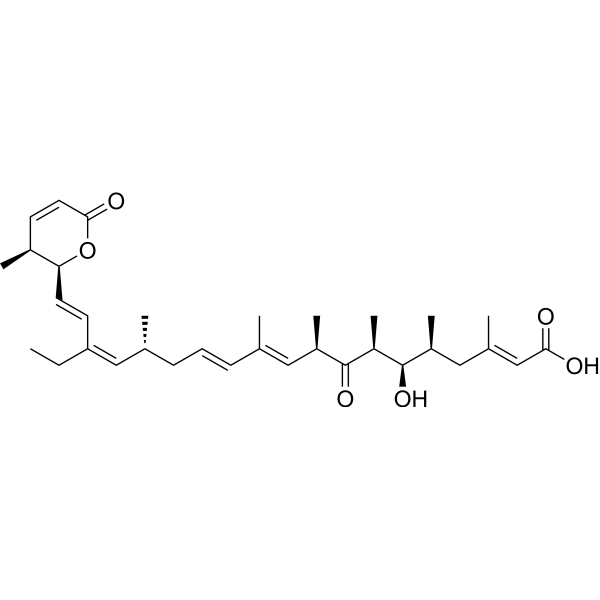
    Leptomycin B
    Maximum Cited Publications
    21 Publications Verification

    CI 940; LMB

    CRM1 Fungal Antibiotic Infection Cancer
    Leptomycin B (CI 940; LMB) is a potent inhibitor of the nuclear export of proteins. Leptomycin B inactivates CRM1/exportin 1 by covalent modification at a cysteine residue. Leptomycin B is a potent antifungal antibiotic blocking the eukaryotic cell cycle .
    Leptomycin B
  • HY-106783
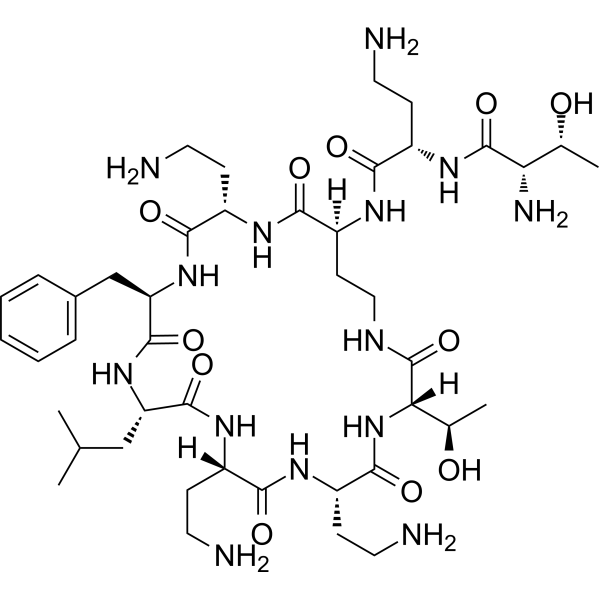
    Polymyxin B nonapeptide
    2 Publications Verification

    Bacterial Antibiotic Infection
    Polymyxin B nonapeptide is a cyclic peptide obtained from Polymyxin B by proteolytic removal of its terminal amino acyl residue. Polymyxin B nonapeptide is less toxic, lacks bactericidal activity, and retains its ability to render gram-negative bacteria susceptible to several antibiotics by permeabilizing their outer membranes .
    Polymyxin B nonapeptide
  • HY-117430

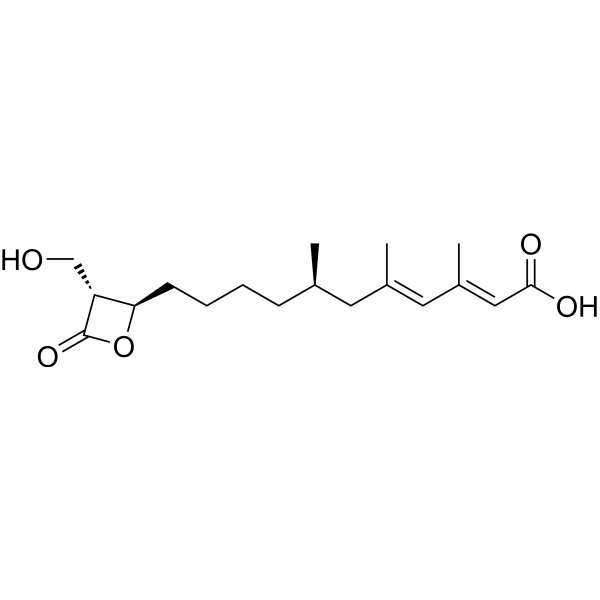
    F-244; 1233A; L-659699

    Flavivirus Dengue Virus Antibiotic Infection Metabolic Disease Cancer
    Hymeglusin, as a fungal β-lactone antibiotic, is a HMG-CoA synthase inhibitor (IC50 = 0.12 μM). Hymeglusin covalently modifies the active Cys 129 residue of the enzyme .
    Hymeglusin
  • HY-P5712
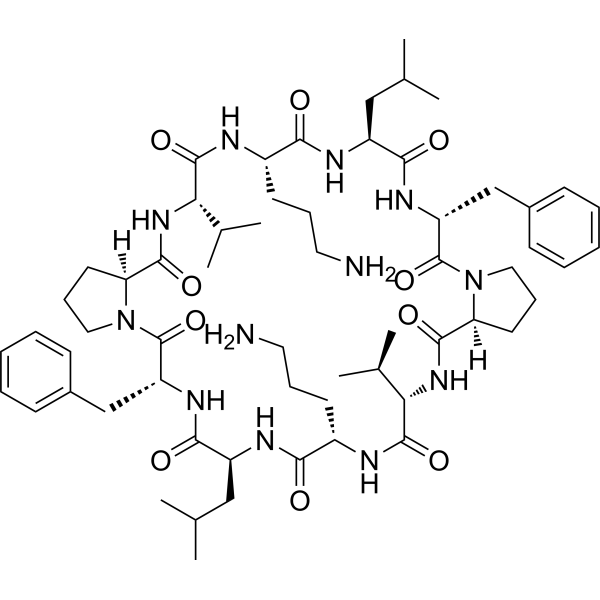
    Gramicidin S
    1 Publications Verification

    Gramicidin soviet

    Antibiotic Bacterial Na+/K+ ATPase Infection
    Gramicidin S (Gramicidin soviet) is a cationic cyclic peptide antibiotic that selectively targets bacterial cell membranes and has anticancer activity. Gramicidin S also exerts antibacterial activity by destroying membrane integrity and interfering with membrane protein function. Gramicidin S inserts into the phospholipid bilayer through hydrophobic amino acid residues, specifically binds to negatively charged membrane lipids and disrupts membrane structure, thereby inhibiting cell division and cell wall synthesis, and ultimately causing bacterial death. Gramicidin S also inhibits ion channels, with IC50s of 41 μM, 24 μM, and 3 μM for Na +/K +-ATPase, tobacco leaf plasma membrane Mg 2+/K +-ATPase, and rat heart plasma membrane Ca 2+-ATPase, respectively .
    Gramicidin S
  • HY-106783A
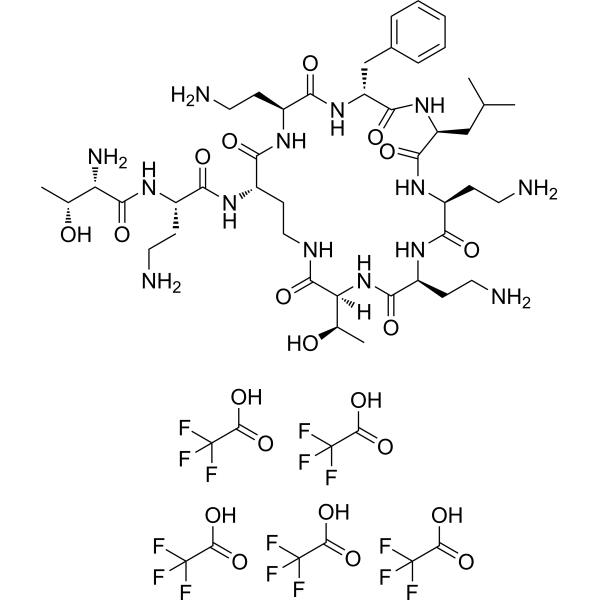
    Polymyxin B nonapeptide TFA
    2 Publications Verification

    Bacterial Antibiotic Infection
    Polymyxin B nonapeptide TFA is a cyclic peptide obtained from Polymyxin B by proteolytic removal of its terminal amino acyl residue. Polymyxin B nonapeptide TFA is less toxic, lacks bactericidal activity, and retains its ability to render gram-negative bacteria susceptible to several antibiotics by permeabilizing their outer membranes .
    Polymyxin B nonapeptide TFA
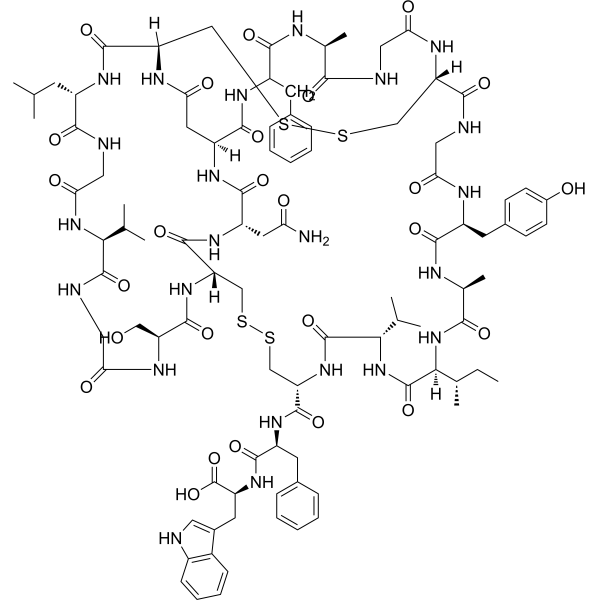
  • HY-P2200

    BMY-29304

    HIV Antibiotic Infection Inflammation/Immunology
    Siamycin I (BMY-29304), a 21-residue tricyclic peptide, is a secondary metabolite in actinomycetes. Siamycin I is a HIV fusion inhibitor with ED50s of 0.05 to 5.7 μM for acute HIV type 1 (HIV-1) and HIV-2 infections. Siamycin I inhibits the gelatinase and gelatinase biosynthesis-activating pheromone (GBAP) signaling via the FsrC-FsrA two-component regulatory system in a noncompetitive manner. Siamycin I suppresses the expression of both fsrBDC and gelE-sprE transcripts. Siamycin I, a lasso peptide, interacts with lipid II and inhibits cell wall biosynthesis. Siamycin I, an antibiotic, has the potential for enterococcal infections research .
    Siamycin I
  • HY-12455

    ADC Payload Antibiotic DNA Alkylator/Crosslinker Apoptosis Caspase Cancer
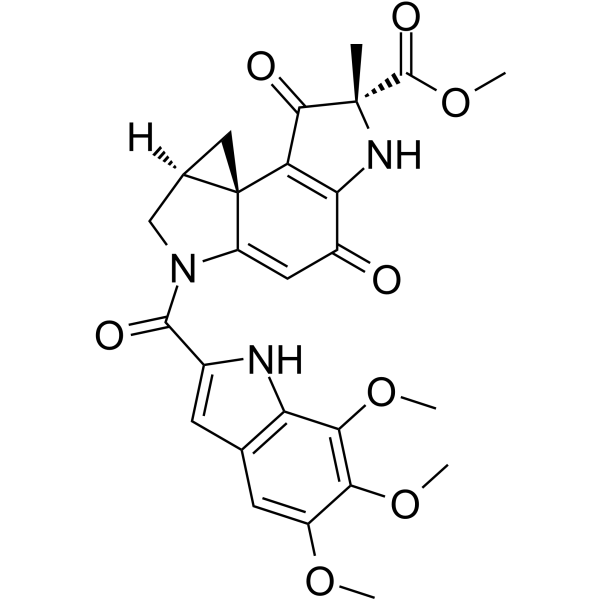
    Duocarmycin A is an antitumor antibiotic and DNA alkylating agent with broad-spectrum antibacterial activity, which can serve as a payload for synthesizing antibody-drug conjugates (ADCs). Duocarmycin A selectively binds to the AT-rich minor groove of DNA, forms covalent adducts by alkylating the adenine N3 residue, thereby disrupting DNA structure and inhibiting its replication and transcription. Duocarmycin A induces apoptosis, sub-G1 phase accumulation and chromatin condensation, reduces the levels of pro-caspase-3/9, and induces p53-independent p21 expression. Duocarmycin A is widely used in the research of various malignancies, including leukemia, sarcoma, glioblastoma, as well as multiple solid tumor models such as lung cancer, breast cancer, and colorectal cancer .
    Duocarmycin A
  • HY-P0274

    Bacterial Antibiotic Infection
    PGLa, a 21-residue peptide, is an antimicrobial peptide. PGLa is a member of the magainin family of antibiotic peptides found in frog skin and its secretions .
    PGLa
  • HY-B0967

    Antibiotic Bacterial Infection
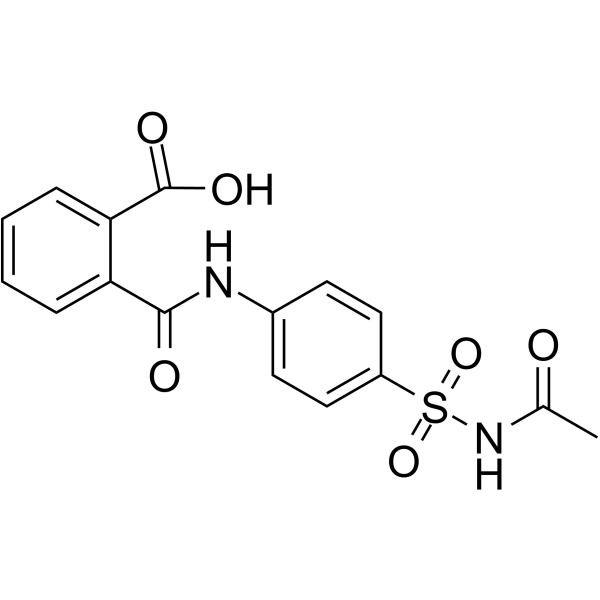
    Phthalylsulfacetamide is an orally active sulfonamide antibiotic and New Delhi metallo-β-lactamase-1 (NDM-1) inhibitor with an IC50 of 15.4 μM. Phthalylsulfacetamide stably binds to the active hydrolysis center of NDM-1, interacts with Zn2+, and interacts with key amino acid residues Val73 and His122 to inhibit enzyme activity. Phthalylsulfacetamide can be used for the research of Escherichia coli infection .
    Phthalylsulfacetamide
  • HY-139798

    Bacterial Infection
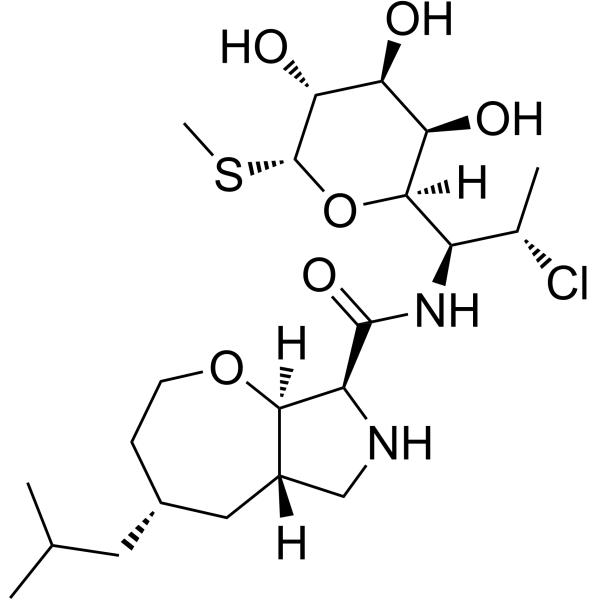
    Iboxamycin is a potent antibiotic candidate bearing a fused bicyclic amino acid residue. Iboxamycin is orally bioavailable, safe and effective in researching both Gram-positive and Gram-negative bacterial infections in mice .
    Iboxamycin
  • HY-P0274A

    Bacterial Antibiotic Infection
    PGLa TFA, a 21-residue peptide, is an antimicrobial peptide. PGLa TFA is a member of the magainin family of antibiotic peptides found in frog skin and its secretions .
    PGLa TFA
  • HY-125104

    Antibiotic Bacterial Infection
    Mirosamicin is an antibiotic with high antibacterial activity that targets a wide range of gram-positive bacteria and certain Gram-negative bacteria as well as mycoplasma. Mirosamicin can be used for research in the field of food safety monitoring .
    Mirosamicin
  • HY-136821

    Bacterial Antibiotic Infection
    Polymyxin D2 is an antibiotic discovered from Bacillus polymyxa, exhibiting antibacterial activity. Its core structure consists of a cyclic heptapeptide moiety and a tripeptide side chain with a fatty acyl residue. Polymyxin D2 can be used in anti-infective research .
    Polymyxin D2
  • HY-129252

    Antibiotic Bacterial Infection Cancer
    Prothracarcin is an antibiotic with antitumor activity that exerts its tumor cell toxicity by covalently binding to the C-2 amino group of guanine residues in the minor groove of DNA. Prothracarcin also shows antibacterial activity against Gram-positive bacteria and some Gram-negative bacteria such as Escherichia coli .
    Prothracarcin
  • HY-106783R

    Reference Standards Bacterial Antibiotic Infection
    Polymyxin B nonapeptide (Standard) is the analytical standard of Polymyxin B nonapeptide. This product is intended for research and analytical applications. Polymyxin B nonapeptide is a cyclic peptide obtained from Polymyxin B by proteolytic removal of its terminal amino acyl residue. Polymyxin B nonapeptide is less toxic, lacks bactericidal activity, and retains its ability to render gram-negative bacteria susceptible to several antibiotics by permeabilizing their outer membranes[1][2][3].
    Polymyxin B nonapeptide (Standard)
  • HY-P10795

    antibiotic NK 2

    Parasite Bacterial Fungal Infection
    NK-2 (Antibiotic NK 2), a shortened linear amphipathic NK-Lysin analog (comprising residues 39 to 65 of NK-lysin), is an antimicrobial peptide that exhibits potent activities against trypanosoma cruzi, Candida albicans, gram-positive and gram-negative bacteria. NK-2 can kill trypanosomes residing inside the human glioblastoma cell line 86HG39, left the host cells apparently unharmed .
    NK-2
  • HY-106783AR

    Reference Standards Bacterial Antibiotic Infection
    Polymyxin B nonapeptide (TFA) (Standard) is the analytical standard of Polymyxin B nonapeptide (TFA). This product is intended for research and analytical applications. Polymyxin B nonapeptide TFA is a cyclic peptide obtained from Polymyxin B by proteolytic removal of its terminal amino acyl residue. Polymyxin B nonapeptide TFA is less toxic, lacks bactericidal activity, and retains its ability to render gram-negative bacteria susceptible to several antibiotics by permeabilizing their outer membranes[1][2][3].
    Polymyxin B nonapeptide TFA (Standard)
  • HY-180685

    Herbicide Antibiotic Bacterial Infection
    N-Acetyldemethylphosphinothricin tripeptide, a peptide antibiotic, is a compound with herbicidal activity. N-Acetyldemethylphosphinothricin tripeptide consists of the unusual amino acid phosphinothricin (PT) and two alanine residues. N-Acetyldemethylphosphinothricin tripeptide penetrates bacterial cells as a prodrug via peptide uptake systems with subsequent release of PT .
    N-Acetyldemethylphosphinothricin tripeptide
  • HY-P2782A

    Endogenous Metabolite Metabolic Disease
    Chloramphenicol Acetyltransferase, Escherichia coli is a bacterial enzyme that detoxifies the antibiotic chloramphenicol and is responsible for chloramphenicol resistance in bacteria. Chloramphenicol Acetyltransferase, Escherichia coli covalently attaches an acetyl group from acetyl-CoA to chloramphenicol, which prevents chloramphenicol from binding to ribosomes. A histidine residue, located in the C-terminal section of Chloramphenicol Acetyltransferase, Escherichia coli, plays a central role in its catalytic mechanism.
    Chloramphenicol Acetyltransferase, Escherichia coli
  • HY-115894

    Herbicide Infection
    DapL-IN-1 is an inhibitor of L,L-diaminoheptanoic acid aminotransferase (DapL) with the characteristics of inhibiting DapL activity in bacteria and plants. DapL-IN-1 can be used to design and discover new biocides such as antibiotics, herbicides or algaecides with the potential to be non-toxic to animals. DapL-IN-1 shows differential sensitivity in inhibiting different DapL homologues, which can provide important information for further drug development. DapL-IN-1 may affect its biological activity by affecting the interaction with residues adjacent to the active site, which may lead to different binding modes .
    DapL-IN-1
  • HY-W718262

    (Rac)-CGP 52547

    Antibiotic Fungal Bacterial Infection Cancer
    Dihydroaeruginoic acid ((Rac)-CGP 52547), an antifungal antibiotic, is a thiazoline iron chelator. Dihydroaeruginoic acid is the condensation product of salicylate and one cysteine residue. Dihydroaeruginoic acid chelates Fe(III), inhibits DNA replication via ribonucleotide reductase, induces G1/S cell cycle block, reduces leukemia cell clonogenic viability. Dihydroaeruginoic acid inhibits phytopathogenic fungi and bacteria, suppresses Candida albicans development, and inhibits Agrobacterium tumefaciens biofilm formation via extracellular iron sequestration. Dihydroaeruginoic acid can be used for the research of phytopathogenic fungal and bacterial infections, and leukemia .
    Dihydroaeruginoic acid

Inquiry Online

Your information is safe with us. * Required Fields.

Salutation


Country or Region *

Applicant Name *


Organization Name *

Department *


Email Address *


Product Name *

Cat. No.


Requested quantity *

Phone Number *


Remarks

Inquiry Online

Inquiry Information

Product Name:
Cat. No.:
Quantity:
MCE Japan Authorized Agent:

