40 Results for "

cereblon E3 ligase complex

" in MedChemExpress (MCE) Product Catalog:
Products (40)

40 Results for "cereblon E3 ligase complex" in MCE Product Catalog:

27
27 Publications Verification
Cat. No.: HY-14658
CAS No.: 50-35-1
Purity:  99.98%
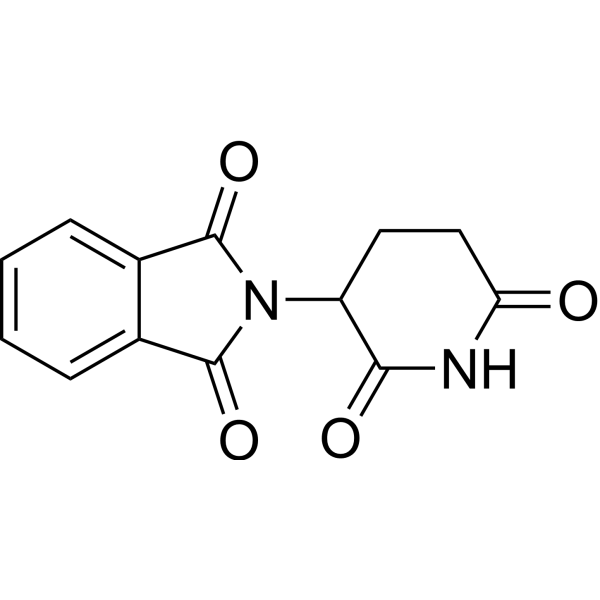
Thalidomide inhibits cereblon (CRBN), a part of the cullin-4 E3 ubiquitin ligase complex CUL4-RBX1-DDB1, with a Kd of ∼250 nM, and has immunomodulatory, anti-inflammatory and anti-angiogenic cancer properties. Thalidomide can work as molecular glue to potentiate substrate.
loading...
    loading...
9
9 Cited Publications
Cat. No.: HY-129602
CAS No.: 2429877-44-9
Purity:  99.73%
Target:  

PROTACs STAT Apoptosis

Research Areas:  

Cancer

SD-36 is a potent STAT3 PROTAC degrader with a Kd of 44.4 nM and a Ki of 11 nM. SD-36 recruits the cereblon/culin 4A E3 ligase complex to mediate ubiquitination and proteasomal degradation of STAT3, inducing G1 phase cell cycle arrest and apoptosis. SD-36 is useful for research on acute myeloid leukemia, anaplastic large cell lymphoma, and hematopoietic and lymphoid malignancies .
loading...
    loading...
7
7 Cited Publications
Cat. No.: HY-130800
CAS No.: 1860875-51-9
Purity:  99.76%
Synonyms: CC-90009
Eragidomide (CC-90009) is a GSPT1 Molecular Glue degrader. Eragidomide exhibits antiproliferative and pro-apoptotic (apoptosis) activities against acute myeloid leukemia cells. Eragidomide recruits the CRL4CRBN E3 ubiquitin ligase complex to selectively target GSPT1 for ubiquitination and proteasomal degradation. Eragidomide reduces leukemia cell engraftment and eliminates leukemia stem cells. Eragidomide promotes the activation of the GCN1/GCN2/ATF4 pathway and the integrated stress response pathway, inhibits global protein translation, promotes preferential translation of ATF4, and induces the accumulation of ATF4, CHOP and ATF3. The response to Eragidomide is regulated by the ILF2/ILF3 heterodimer complex, the mTOR signaling pathway and the integrated stress response. Eragidomide can be used in research related to acute myeloid leukemia and relapsed/refractory acute myeloid leukemia .
loading...
    loading...
4
4 Cited Publications
Cat. No.: HY-153321
CAS No.: 2649400-34-8
Purity:  98.67%
Synonyms: NX-5948; BTK-IN-24
Target:  

PROTACs Btk

Research Areas:  

Inflammation/Immunology

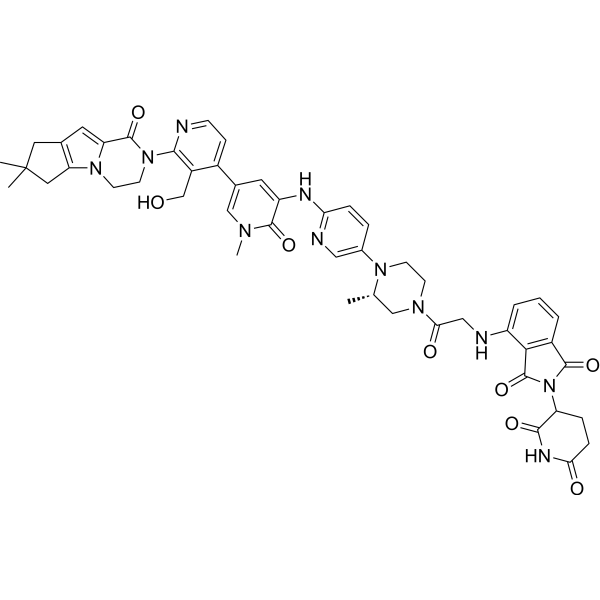
Bexobrutideg (NX-5948) is an orally active chimeric targeting molecule (CTM) that induces specific BTK protein degradation by the cereblon E3 ligase (CRBN) complex without degradation of other cereblon neo-substrates. Bexobrutideg mediates potent anti-inflammatory activity via BTK degradation with resultant inhibition of B cell activation. Bexobrutideg exhibits potent tumor growth inhibition in TMD8 xenograft models that contain either wild-type BTK or BTKi-resistant mutations. Bexobrutideg is efficacious in a mouse collageninduced arthritis (CIA) model. Bexobrutideg can cross the blood brain barrier (BBB). Bexobrutideg is a PROTAC composed of the ligand for target protein, a linker, and a cereblon E3 ligase (CRBN) complex (Red: BTK ligand (HY-170324); Blue: CRBN ligand (HY-171893); Black: linker) .
loading...
    loading...
4
4 Cited Publications
Cat. No.: HY-101519
CAS No.: 2093388-62-4
Purity:  99.59%
Synonyms: ZBC 260
BETd-260 (ZBC 260) is a BET PROTAC degrader. BETd-260 recruits BRD2, BRD3, and BRD4 to the CUL4-RBX1-DDB1-CRBN E3 ubiquitin ligase complex, driving cereblon-, proteasome-, and NEDD8-activating enzyme-dependent ubiquitination and degradation, with a DC50 of approximately 30-100 pM in RS4;11 cells. BETd-260 induces cancer cell apoptosis via endogenous signaling pathways, regulates the expression of the Bcl-2 family, inhibits the oncogene c-Myc, and reduces cell viability. BETd-260 suppresses tumor growth in mouse xenograft models with good biosafety. BETd-260 can be used in research related to acute leukemia, hepatocellular carcinoma, osteosarcoma, and triple-negative breast cancer .
loading...
    loading...
2
2 Cited Publications
Cat. No.: HY-153220
CAS No.: 2416131-46-7
Purity:  98.67%
Synonyms: NX-2127
Target:  

PROTACs Btk

Research Areas:  

Cancer

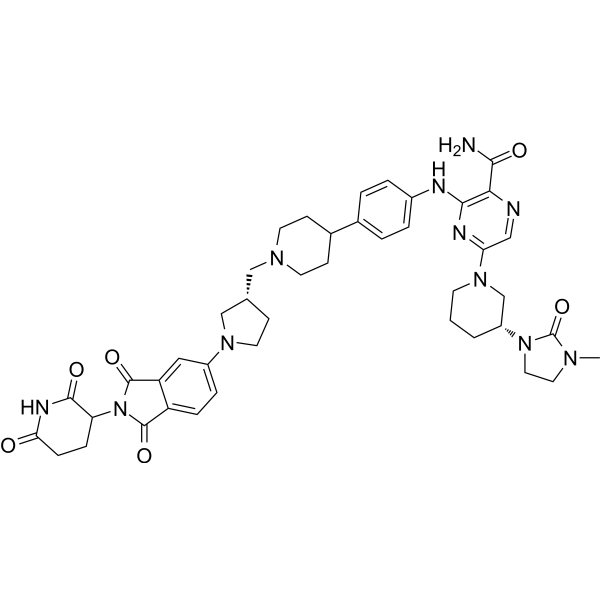
Zelebrudomide is an orally active BTK-targeting PROTAC degrader, with DC50 values of 4.5 nM and 31 nM against wild-type BTK and BTK C481S mutant, respectively. Zelebrudomide recruits the cereblon E3 ubiquitin ligase complex to mediate the degradation of BTK. Zelebrudomide also acts as a molecular glue to bind the cereblon E3 ubiquitin ligase complex, mediating the degradation of IKZF1 and IKZF3. Zelebrudomide can be used in the research of B-cell malignancies .
loading...
    loading...
1
1 Cited Publications
Cat. No.: HY-162318
CAS No.: 2946670-96-6
Research Areas:  

Cancer

MYC degrader 1 is a MYC degrader that recruits Cereblon (CRBN), with a Kd value of 145 nM and oral activity. MYC degrader 1 specifically binds MYC and GSPT1, recruits the CRBN E3 ubiquitin ligase complex, and induces MYC degradation via the ubiquitin-proteasome pathway. MYC degrader 1 downregulates KLHL42 expression, restores pRB1 protein levels, and re-establishes the sensitivity of MYC-overexpressing cancer cells to CDK4/6 inhibitors. MYC degrader 1 combined with Palbociclib (HY-50767) shows significant inhibition of tumor growth. MYC degrader 1 can be used in studies related to bladder cancer, prostate cancer, and breast cancer .
loading...
    loading...
1
1 Cited Publications
Cat. No.: HY-136262
CAS No.: 2362575-45-7
Purity:  98.97%
Target:  

PROTACs E1/E2/E3 Enzyme

Research Areas:  

Cancer

CRBN-6-5-5-VHL is a potent and selective VHL E3 ligand-based Cereblon (CRBN) PROTAC degrader with a DC50 value of 1.5 nM. CRBN-6-5-5-VHL forms a heterotrimeric complex with CRBN and VHL E3 ligase, thereby promoting CRBN ubiquitination and proteasomal degradation without inducing VHL degradation. CRBN-6-5-5-VHL protects myeloma from the toxic effects of IMiDs. CRBN-6-5-5-VHL can be used in the research of multiple myeloma .
loading...
    loading...
1
1 Cited Publications
Cat. No.: HY-117690
CAS No.: 2170679-45-3
Purity:  99.75%
Research Areas:  

Cancer

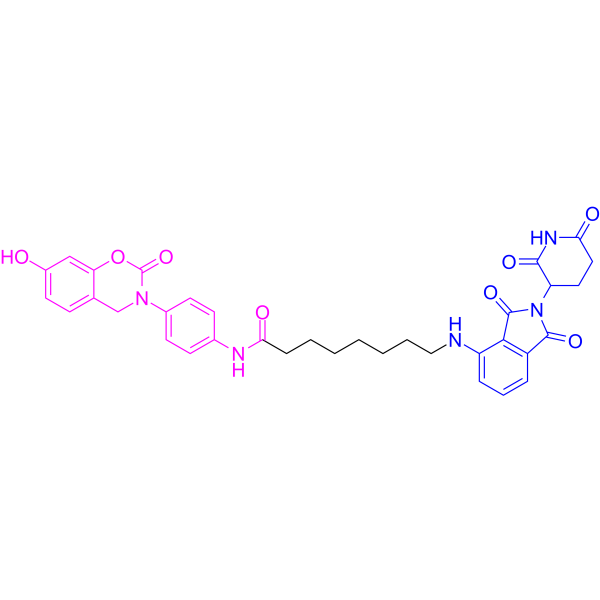
dBRD9 is a BRD9 PROTAC degrader. dBRD9 reduces the binding of the ISGF3 complex to ISG promoters, decreases the level of ISG induction downstream of IFNAR signaling, and reduces the chromatin binding of BRD4 at BRD9 co-binding sites. dBRD9 can be used in research related to acute myeloid leukemia .
loading...
    loading...
1
1 Cited Publications
Cat. No.: HY-162318A
Target:  

c-Myc

Research Areas:  

Cancer

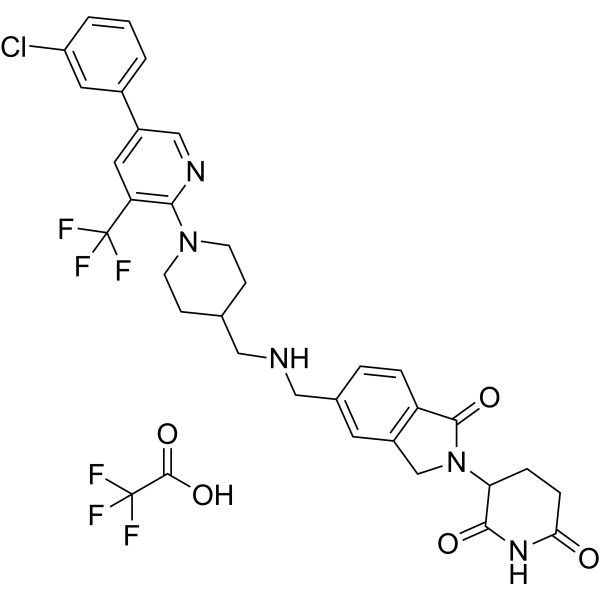
MYC degrader 1 TFA is a MYC degrader that recruits Cereblon (CRBN), with a Kd value of 145 nM and oral activity. MYC degrader 1 TFA specifically binds MYC and GSPT1, recruits the CRBN E3 ubiquitin ligase complex, and induces MYC degradation via the ubiquitin-proteasome pathway. MYC degrader 1 TFA downregulates KLHL42 expression, restores pRB1 protein levels, and re-establishes the sensitivity of MYC-overexpressing cancer cells to CDK4/6 inhibitors. MYC degrader 1 TFA combined with Palbociclib (HY-50767) shows significant inhibition of tumor growth. MYC degrader 1 TFA can be used in studies related to bladder cancer, prostate cancer, and breast cancer .
loading...
    loading...
1
1 Cited Publications
Cat. No.: HY-117690A
CAS No.: 2341840-98-8
Research Areas:  

Cancer

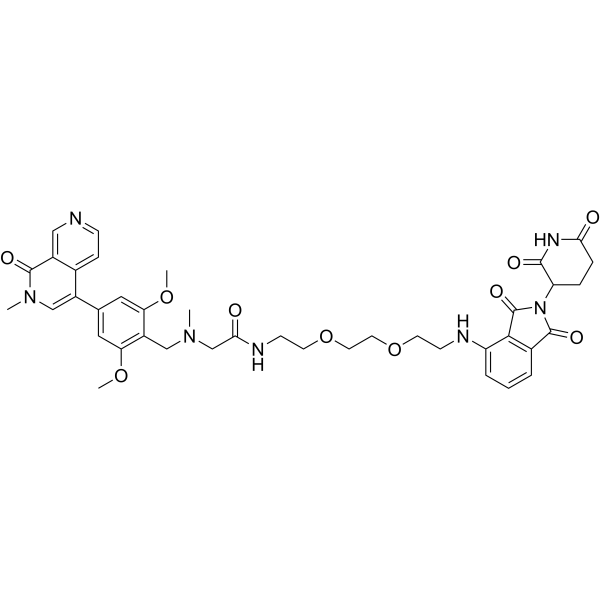
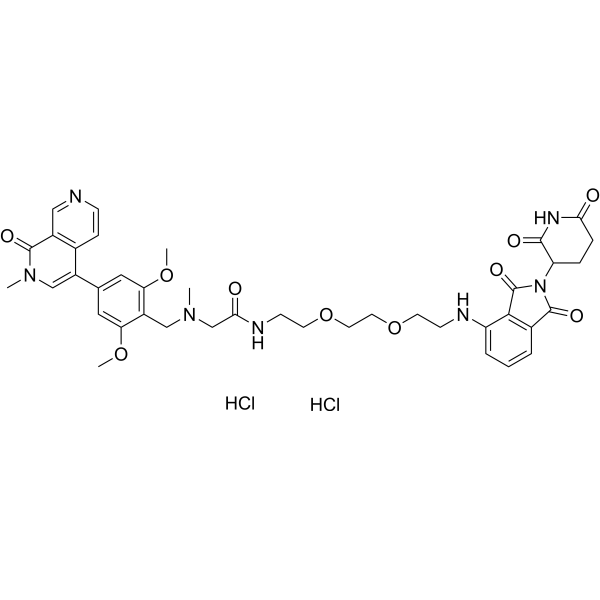
dBRD9 dihydrochloride is a BRD9 PROTAC degrader. dBRD9 dihydrochloride reduces the binding of the ISGF3 complex to ISG promoters, decreases the level of ISG induction downstream of IFNAR signaling, and reduces the chromatin binding of BRD4 at BRD9 co-binding sites. dBRD9 dihydrochloride can be used in research related to acute myeloid leukemia .
loading...
    loading...
Cat. No.: HY-153357
CAS No.: 2416130-57-7
Purity:  98.16%
Target:  

PROTACs Btk c-Myc NF-κB

Research Areas:  

Inflammation/Immunology Cancer

NRX-0492 is an orally active BTK PROTAC degrader, with a binding IC50 of 1.2 nM for both wild-type BTK and BTK T474I, and 2.7 nM for BTK C481S, and exhibits cellular DC50 values of 0.1 nM and 0.2 nM against wild-type BTK and BTK C481S, respectively. NRX-0492 catalyzes the ubiquitination and proteasomal degradation of wild-type and drug-resistant mutant BTK by recruiting the CRBN E3 ubiquitin ligase complex. NRX-0492 inhibits the BCR signaling pathway and its downstream NF-κB/MYC transcriptional program, achieves rapid and sustained degradation in primary CLL cells, and exhibits extremely low cytotoxicity. NRX-0492 degrades BTK, inhibits tumor cell proliferation and activation, and significantly suppresses tumor growth in xenograft models. NRX-0492 can be used in research related to chronic lymphocytic leukemia and diffuse large B-cell lymphoma .
loading...
    loading...
Cat. No.: HY-159099
CAS No.: 2654011-51-3
Purity:  99.15%
WIZ degrader 9 is an orally active molecular glue degrader of the WIZ transcription factor. As a molecular glue, WIZ degrader 9 recruits WIZ to the cereblon E3 ubiquitin ligase complex via its ZF7 domain, driving proteasome-dependent degradation of WIZ. WIZ degrader 9 induces hemoglobin production, reduces the level of H3K9 dimethylation across the whole genome and at the β-globin locus, upregulates the transcription of γ-globin and BGLT3, and increases the level of histone H3K9 acetylation in the promoter region of HBG1/2. WIZ degrader 9 effectively induces fetal hemoglobin production in both mice and cynomolgus monkeys. WIZ degrader 9 can be used for research on sickle cell disease .
loading...
    loading...
Cat. No.: HY-148117
CAS No.: 2758431-97-7
Purity:  99.96%
MD13 is a MIF PROTAC degrader with a DC50 of approximately 100 nM. MD13 induces ubiquitination and degradation of MIF by recruiting the Cereblon Cullin RING E3 ubiquitin ligase complex. MD13 inactivates the MAPK pathway and induces G2/M phase cell cycle arrest. MD13 exhibits antiproliferative effects in 3D tumor spheroid models. MD13 can be used in lung cancer-related research .
loading...
    loading...
Cat. No.: HY-168669
CAS No.: 3052745-16-8
Target:  

PROTACs Ras Caspase ERK

Research Areas:  

Cancer

PROTAC K-Ras Degrader-5 is a cereblon-based K-Ras PROTAC degrader with a DC50 of <100 nM for KRAS G12D. PROTAC K-Ras Degrader-5 recruits KRAS G12D to the cereblon E3 ubiquitin ligase complex for ubiquitination and subsequent proteasomal degradation. PROTAC K-Ras Degrader-5 suppresses pERK levels downstream of KRAS G12D degradation in cancer cells. PROTAC K-Ras Degrader-5 reduces proliferation of cancer cells. PROTAC K-Ras Degrader-5 induces caspase 3/7 activity and cPARP, markers of apoptosis, in pancreatic cancer spheroids and tumors. PROTAC K-Ras Degrader-5 can be used for the research of pancreatic cancer and colorectal cancer .
loading...
    loading...
Cat. No.: HY-145319
CAS No.: 2367619-87-0
Purity:  99.75%
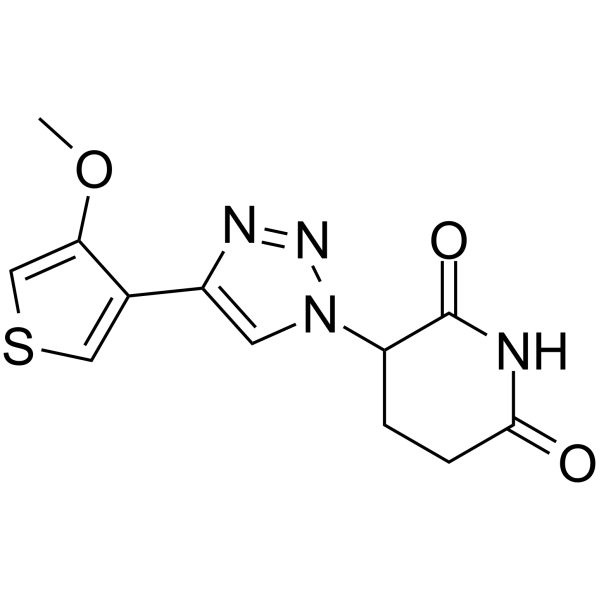
FPFT-2216 is an orally active Molecular glue degrader targeting IKZF1, IKZF3, CK-1α, and PDE6D, with a DC50 of 8 nM against PDE6D. FPFT-2216 mediates ubiquitin-proteasome degradation via the CRL4 CRBN E3 ubiquitin ligase complex and interacts with the non-isoprenoid-binding region of PDE6D. FPFT-2216 activates the p53 signaling pathway, inhibits the CBM complex/NF-κB pathway, upregulates IL-2, suppresses IL-1β and IL-6, and induces tumor cell Apoptosis. FPFT-2216 exhibits anticancer activity against multiple myeloma and lymphoma. FPFT-2216 can be used in research related to multiple myeloma, lymphoma, acute lymphoblastic leukemia, acute myeloid leukemia, pancreatic ductal adenocarcinoma, non-small cell lung cancer, and gastric adenocarcinoma .
loading...
    loading...
Cat. No.: HY-152134
CAS No.: 2785404-83-1
Purity:  98.60%
Research Areas:  

Cancer

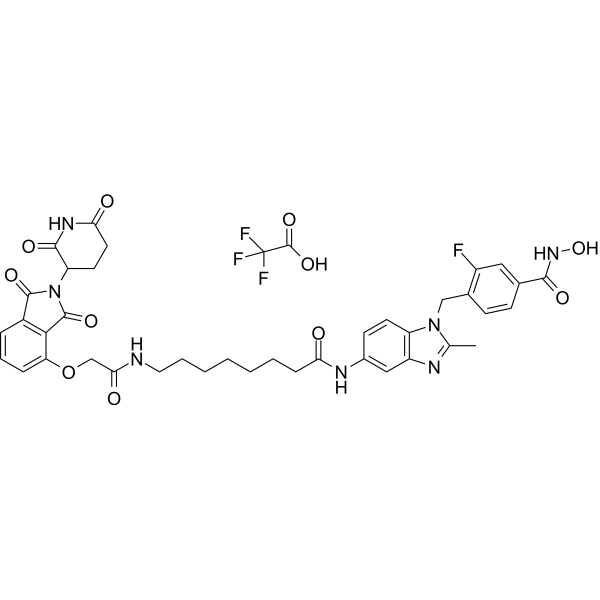
PROTAC HDAC6 degrader 11 is a PROTAC degrader targeting HDAC6, with a DC50 of 19.39 nM in HL-60 leukemia cells. PROTAC HDAC6 degrader 11 can form a ternary complex with HDAC6 and the cereblon E3 ligase, inducing polyubiquitination and proteasomal degradation of HDAC6. PROTAC HDAC6 degrader 11 inhibits the enzymatic activity of HDAC1 and does not trigger HDAC1 degradation. PROTAC HDAC6 degrader 11 induces hyperacetylation of α-tubulin. PROTAC HDAC6 degrader 11 can be used in related research on leukemia .
loading...
    loading...
Cat. No.: HY-111870
CAS No.: 2089205-64-9
Purity:  99.97%
Target:  

PROTACs RIP kinase

Research Areas:  

Inflammation/Immunology Cancer

PROTAC RIPK degrader-6 (Example 1) is a RIPK2 PROTAC degrader that recruits cereblon. PROTAC RIPK degrader-6 recruits the CRBN E3 ubiquitin ligase complex and induces the degradation of RIPK2 kinase via the ubiquitin-proteasome pathway, thereby blocking NOD1/NOD2-mediated pro-inflammatory signaling pathways of NF-κB and MAPK. PROTAC RIPK degrader-6 can be used in research related to RIPK2-mediated autoinflammatory diseases and cancer .
loading...
    loading...
Cat. No.: HY-154860
CAS No.: 2642231-19-2
Purity:  97.38%
PTD10 is a selective and potent BTK PROTAC degrader (DC50 = 0.5 nM, KD = 2.28 nM). PTD10 can recruit cereblon (CRBN) E3 ligase and form a ternary complex with BTK, thereby mediating the ubiquitination and proteasome-dependent degradation of BTK. PTD10 inhibits cancer cells proliferation, and induces cell apoptosis via activation of the caspase-dependent pathway and mitochondrial pathway. PTD10 potently inhibits the BCR, AKT and NF-κB signaling pathway. PTD10 can be used for researches of B-cell malignancies and autoimmune disease .
loading...
    loading...
Cat. No.: HY-153220A
CAS No.: 3024312-52-2
Synonyms: (R)-NX-2127
(R)-Zelebrudomide ((R)-NX-2127) is an isomer of Zelebrudomide (HY-153220). Zelebrudomide is an orally active BTK-targeting PROTAC degrader, with DC50 values of 4.5 nM and 31 nM against wild-type BTK and BTK C481S mutant, respectively. Zelebrudomide recruits the cereblon E3 ubiquitin ligase complex to mediate the degradation of BTK. Zelebrudomide also acts as a molecular glue to bind the cereblon E3 ubiquitin ligase complex, mediating the degradation of IKZF1 and IKZF3. Zelebrudomide can be used in the research of B-cell malignancies .
loading...
    loading...

