1. Search Result
Search Result
Results for "

contaminant

" in MedChemExpress (MCE) Product Catalog:

32

Inhibitors & Agonists

2

Fluorescent Dyes

2

Biochemical Assay Reagents

7

Natural
Products

4

Isotope-Labeled Compounds

Cat. No. Product Name Target Research Areas Chemical Structure
  • HY-W012530

    Endogenous Metabolite PDI Infection Metabolic Disease
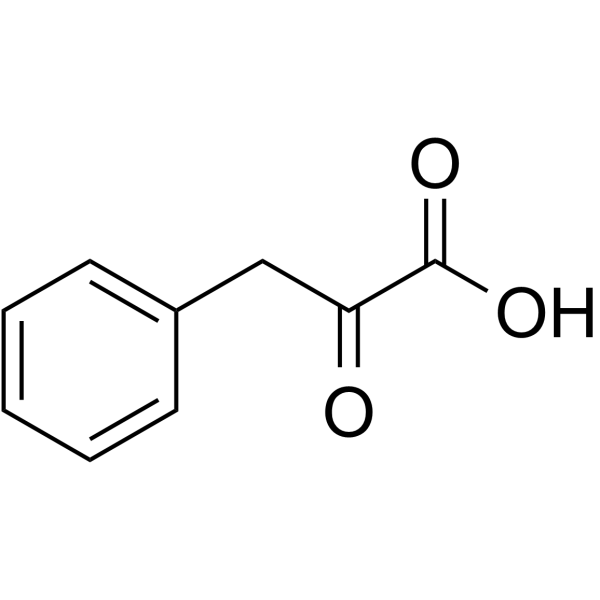
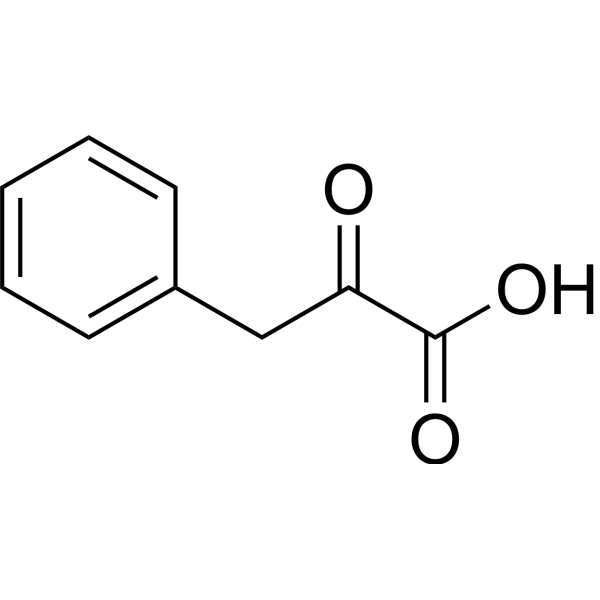
    Phenylpyruvic acid is a precursor of the antifungal compound phenyllactic acid. Phenylpyruvic acid can improve the antifungal activity of eight lactic acid bacterial strains through the addition into a dedined growth medium. Phenylpyruvic acid demonstrates improved inhibitory activity against fungal bread contaminants Aspergillus niger and Penicillium roqueforti. Phenylpyruvic acid affects enzyme activity of the pentose phosphate pathway involved in the oxidative phase in rat brain homogenates. Phenylpyruvic acid can reduce glucose-6-phosphate dehydrogenase activity .
    Phenylpyruvic acid
  • HY-118907

    Fluorescent Dye Others
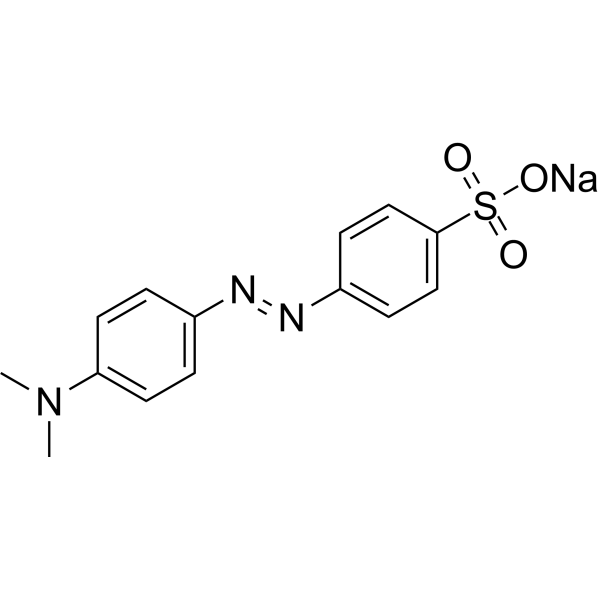
    Methyl Orange is a soluble azo dye commonly used as an acid-base indicator and for staining cells and tissue sections, as well as for dyeing textiles. Methyl Orange appears red at a pH of 3.1 and changes to bright yellow as the pH increases to 4.4. Methyl Orange (500 mg/L) exhibits cytotoxicity and can cause DNA damage .
    Methyl Orange
  • HY-131898
    PTIO
    1 Publications Verification

    NO Synthase Biochemical Assay Reagents Others
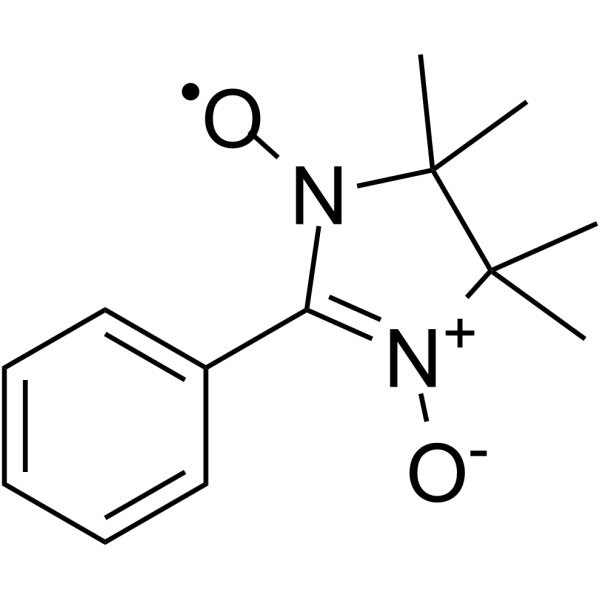
    PTIO is a specific scavenger of NO and redox mediator. PTIO reacts with •NO to form the corresponding imino nitroxides and NO2. PTIO enhances organic contaminants oxidation by permanganate .
    PTIO
  • HY-W345885

    β-glucuronidase Metabolic Disease
    Saccharic acid is a competitive and potent inhibitor of β-glucuronidase. Saccharic acid inhibits glucuronide synthesis. Saccharic acid as an efficient iron chelate to enhance photo-Fenton
    degradation of organic contaminants .
    Saccharic acid
  • HY-W011654

    4-Aminophenyl-beta-D-galactopyranoside, 98%

    Glycosidase Inflammation/Immunology Cancer
    4-Aminophenyl-β-D-galactopyranoside, 98% is a highly efficient substrate for β-galactosidase. It is specifically hydrolyzed by this enzyme to release galactose and electroactive p-aminophenol. 4-Aminophenyl-β-D-galactopyranoside, 98% is widely used in colorimetric and electrochemical assays for detecting β-galactosidase activity and determining enzyme kinetics, such as in biosensing fields including cellular senescence, pathogen and contaminant detection. In addition, since β-galactosidase is often overexpressed in primary ovarian cancer, 4-Aminophenyl-β-D-galactopyranoside, 98% can also be applied to related research on primary ovarian cancer .
    4-Aminophenyl-β-D-galactopyranoside, 98%
  • HY-W585819

    3-MPCD dipalmitate; 3-CPD dipalmitate

    Drug Derivative Others
    3-Chloropropane-1,2-diol dipalmitate (3-MPCD dipalmitate) is a fatty acid ester of 3-monochloropropane-1,2-diol (3-MCPD) and a foodborne contaminant .
    3-Chloropropane-1,2-diol dipalmitate
  • HY-132188

    Endogenous Metabolite Others
    Manganese peroxidase is a heme protein that oxidizes Mn2+ to Mn3+. Manganese peroxidase catalyzes plant lignin de-polymerization. Manganese peroxidase can be used for the biodegradation of hazardous environmental contaminants, and especially for dye wastewater decolorization .
    Manganese peroxidase
  • HY-D0300
    Leucomalachite green
    1 Publications Verification

    Biochemical Assay Reagents Others
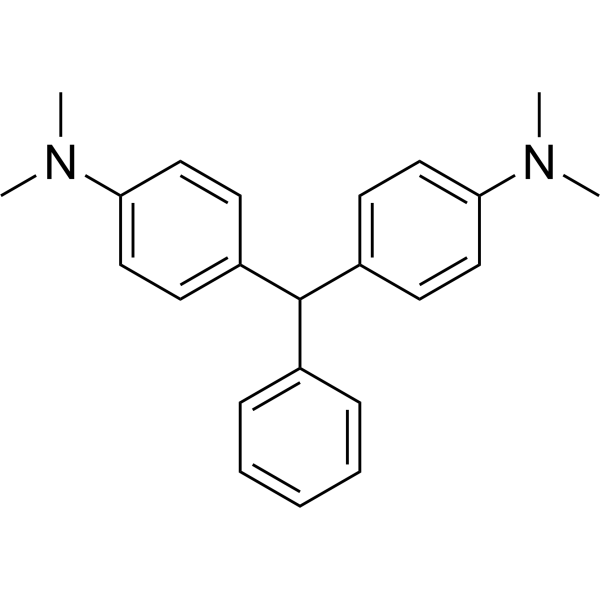
    Leucomalachite green is the major reduced metabolite of malachite green (MG) and has lower cytotoxicity (such as HEp-2 and Caco-2) than malachite green. Leucomalachite green may be involved in interfering with cell metabolism or redox balance and can be used to evaluate its potential harm to human cells as a food contaminant .
    Leucomalachite green
  • HY-125699

    Fungal Infection
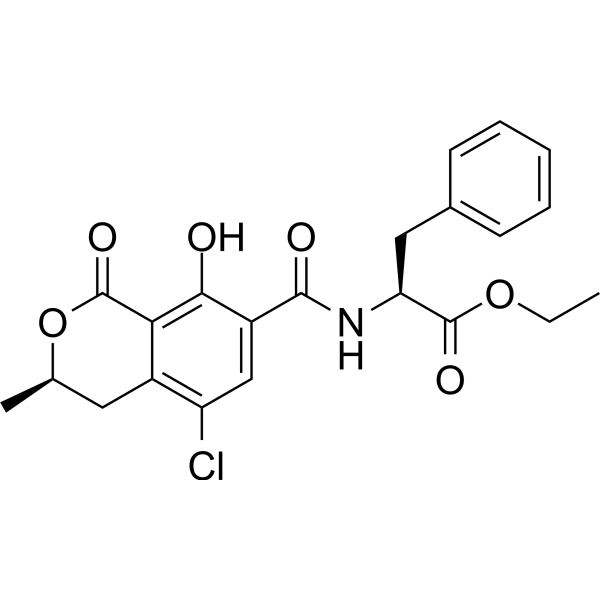
    Ochratoxin C is the ethyl ester analog of ochratoxin A, a mycotoxin produced by A. ochraceus, A. carbonarius, and P. verrucosum that is commonly found as a food contaminant.
    Ochratoxin C
  • HY-W042337

    Environmental Pollutants Apoptosis Others
    3-Methyl-4-nitrophenol, an environmental contaminant, is a well-known constituent of diesel exhaust particles and degradation products of insecticide fenitrothion. 3-Methyl-4-nitrophenol can induce nasal epithelial cell apoptosis and increase the permeability of the nasal epithelial barrier. 3-Methyl-4-nitrophenol is also toxic to the female reproductive system.
    3-Methyl-4-nitrophenol
  • HY-W278566

    Drug Metabolite Cardiovascular Disease Metabolic Disease
    Saluamine is an important N-dealkylated metabolite of Furosemide (HY-B0135) that is produced by microbial transformation and bile metabolism. Saluamine is a contaminant .
    Saluamine
  • HY-W012530R

    Reference Standards Endogenous Metabolite PDI Infection Metabolic Disease
    Phenylpyruvic acid (Standard) is the analytical standard of Phenylpyruvic acid. This product is intended for research and analytical applications. Phenylpyruvic acid is a precursor of the antifungal compound phenyllactic acid. Phenylpyruvic acid can improve the antifungal activity of eight lactic acid bacterial strains through the addition into a dedined growth medium. Phenylpyruvic acid demonstrates improved inhibitory activity against fungal bread contaminants Aspergillus niger and Penicillium roqueforti. Phenylpyruvic acid affects enzyme activity of the pentose phosphate pathway involved in the oxidative phase in rat brain homogenates. Phenylpyruvic acid can reduce glucose-6-phosphate dehydrogenase activity .
    Phenylpyruvic acid (Standard)
  • HY-W016203

    Sodium phenylpyruvate

    Endogenous Metabolite PDI Infection Metabolic Disease
    Phenylpyruvic acid sodium is a endogenous metabolite that participates in the synthesis of 3-phenyllactic acid (PLA) by lactate dehydrogenase. Phenylpyruvic acid is a precursor of the antifungal compound phenyllactic acid. Phenylpyruvic acid can improve the antifungal activity of eight lactic acid bacterial strains through the addition into a dedined growth medium. Phenylpyruvic acid demonstrates improved inhibitory activity against fungal bread contaminants Aspergillus niger and Penicillium roqueforti. Phenylpyruvic acid affects enzyme activity of the pentose phosphate pathway involved in the oxidative phase in rat brain homogenates. Phenylpyruvic acid can reduce glucose-6-phosphate dehydrogenase activity .
    Phenylpyruvic acid sodium
  • HY-101425

    Environmental Pollutants Others
    TCMTB is one of the so-called emerging contaminants (EC). TCMTB is also an antifouling agent .
    TCMTB
  • HY-W674169

    FBSA

    Biochemical Assay Reagents Others
    Perfluorobutanesulfonamide (FBSA) is a per- and polyfluoroalkyl substance, which can be found as contaminant in wastewater .
    Perfluorobutanesulfonamide
  • HY-W582564

    Ethylenediaminetetraacetic acid copper disodium tetrahydrate

    Biochemical Assay Reagents Others
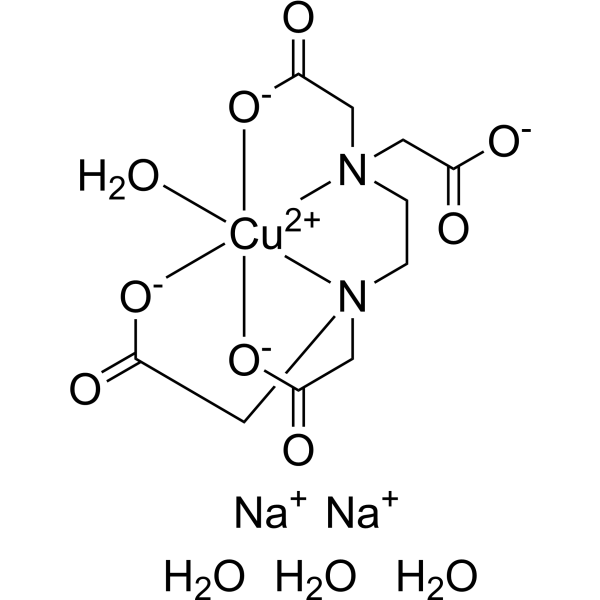
    Cu(Ⅱ)-EDTA disodium tetrahydrate, a typical contaminant in industrial wastewater, is an EDTA-complexed heavy metal. Cu(Ⅱ)-EDTA disodium tetrahydrate can be used in research on the recovery of heavy metal resources from mixed wastewater .
    Cu(Ⅱ)-EDTA disodium tetrahydrate
  • HY-W143948

    NFDHA; Perfluoro-3,6-dioxaheptanoic acid

    Environmental Pollutants Others
    Nonafluoro-3,6-dioxaheptanoic acid (NFDHA) is a component of the aqueous film-forming foam FN-3. Nonafluoro-3,6-dioxaheptanoic acid is mainly distributed and transported in water. Nonafluoro-3,6-dioxaheptanoic acid is considered as an environmental contaminant in watersheds .
    Nonafluoro-3,6-dioxaheptanoic acid
  • HY-W018561

    p,p'-Dioctyldiphenylamine; 4,4'-Dioctyldiphenylamine; DODPA

    Biochemical Assay Reagents Reactive Oxygen Species (ROS) Others
    Bis(4-octylphenyl)amine is an nitrogen-containing anthropogenic organic contaminant. Bis(4-octylphenyl)amine can be used as a high-temperature antioxidant additive in lubricants .
    Bis(4-octylphenyl)amine
  • HY-D0300S1

    Isotope-Labeled Compounds Biochemical Assay Reagents Others
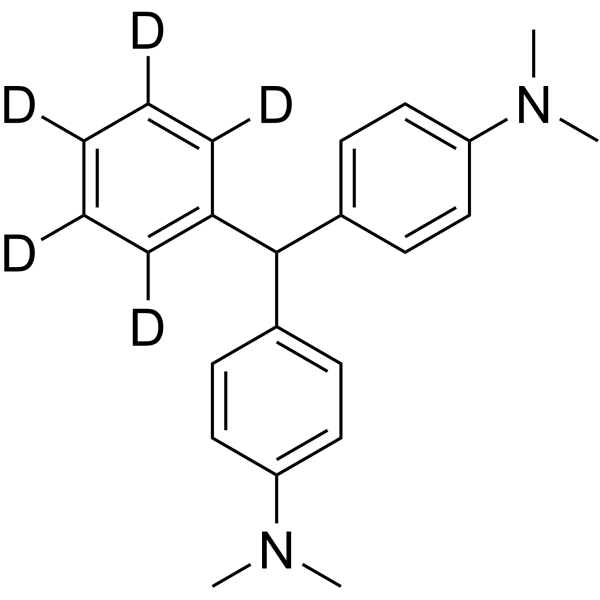
    Leucomalachite green-d6 is the deuterated derivative of Leucomalachite green (HY-D0300). Leucomalachite green is the major reduced metabolite of malachite green (MG) and has lower cytotoxicity (such as HEp-2 and Caco-2) than malachite green. Leucomalachite green may be involved in interfering with cell metabolism or redox balance and can be used to evaluate its potential harm to human cells as a food contaminant .
    Leucomalachite green-d6
  • HY-W762012

    OCDD

    Cytochrome P450 Environmental Pollutants Others
    Octachlorodibenzo-p-dioxin (OCDD) is an environmental contaminant but is not acutely toxic. In rats, Octachlorodibenzo-p-dioxin (50 μg/kg i.v. or 50-5000 μg/kg p.o.) has a systemic elimination half-life of 3-5 months and accumulates and concentrates in the liver and adipose tissue after low-dose, repeated exposure. Repeated administration of octachlorodibenzo-p-dioxin causes increases in 7-ethoxyresorufin-O-deethylase (7-EROD) activity and total cytochrome P-450 levels .
    Octachlorodibenzo-p-dioxin
  • HY-116791

    Others Others
    Calanolide A is an antioxidant that was initially thought to be produced by neuroblastoma cells but was later detected as a contaminant in the cell culture medium with no clear biological activity.
    Calanolide A
  • HY-W754777

    Endogenous Metabolite Environmental Pollutants Others
    IPPD-Q is an antioxidant phenolic quinone derivative of p-phenylenediamine . IPPD-Q is one of the most acutely toxic emerging contaminants in urban waters.
    IPPD-Q
  • HY-W009265

    Octoxynol-2

    Drug Metabolite Others
    4-Octylphenol diethoxylate (Octoxynol-2) is an endogenous estradiol like endocrine disrupter. 4-Octylphenol diethoxylate is the water contaminant .
    4-Octylphenol diethoxylate
  • HY-118907R

    Fluorescent Dye Reference Standards Others
    Methyl Orange (Standard) is the analytical standard of Methyl Orange. This product is intended for research and analytical applications. Methyl Orange is a soluble azo dye commonly used as an acid-base indicator and for staining cells and tissue sections, as well as for dyeing textiles. Methyl Orange appears red at a pH of 3.1 and changes to bright yellow as the pH increases to 4.4. Methyl Orange (500 mg/L) exhibits cytotoxicity and can cause DNA damage .
    Methyl Orange (Standard)
  • HY-131898R

    NO Synthase Biochemical Assay Reagents Others
    PTIO (Standard) is the analytical standard of PTIO. This product is intended for research and analytical applications. PTIO is a specific scavenger of NO and redox mediator. PTIO reacts with •NO to form the corresponding imino nitroxides and •NO2. PTIO enhances organic contaminants oxidation by permanganate .
    PTIO (Standard)
  • HY-121390

    Endogenous Metabolite Cancer
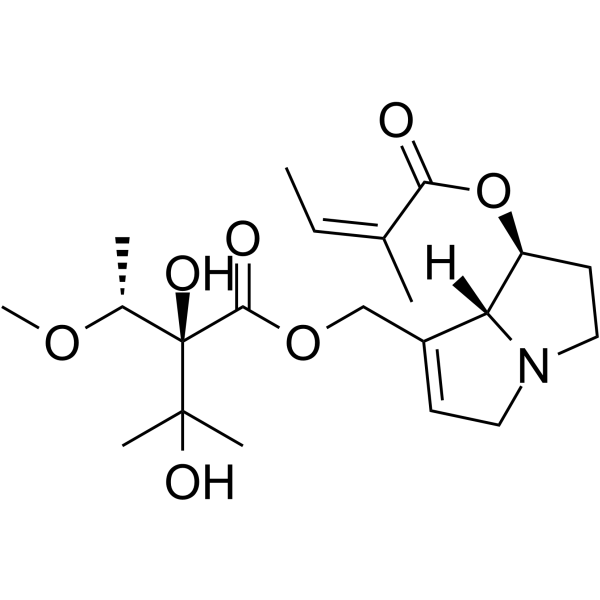
    Lasiocarpine, a hepatotoxic pyrrolizidine alkaloid (PA), causes fatal liver veno-occlusive disease in vivo. Lasiocarpine is toxic only after its metabolic conversion to the toxic intermediate, including dehydrolasiocarpine and N-oxide .
    Lasiocarpine
  • HY-D0300S

    Isotope-Labeled Compounds Biochemical Assay Reagents Others
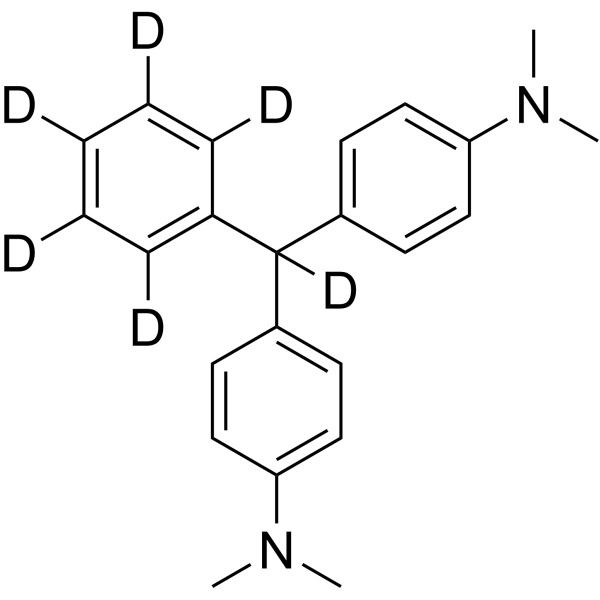
    Leucomalachite green-d5 is the deuterated derivative of Leucomalachite green (HY-D0300). Leucomalachite green is the major reduced metabolite of malachite green (MG) and has lower cytotoxicity (such as HEp-2 and Caco-2) than malachite green. Leucomalachite green may be involved in interfering with cell metabolism or redox balance and can be used to evaluate its potential harm to human cells as a food contaminant .
    Leucomalachite green-d5
  • HY-D0300R

    Biochemical Assay Reagents Reference Standards Others
    Leucomalachite green (Standard) is the analytical standard of Leucomalachite green (HY-D0300). This product is intended for research and analytical applications. Leucomalachite green is the major reduced metabolite of malachite green (MG) and has lower cytotoxicity (such as HEp-2 and Caco-2) than malachite green. Leucomalachite green may be involved in interfering with cell metabolism or redox balance and can be used to evaluate its potential harm to human cells as a food contaminant .
    Leucomalachite green (Standard)
  • HY-W585819R

    3-MPCD dipalmitate (Standard); 3-CPD dipalmitate (Standard)

    Reference Standards Drug Derivative Others
    3-Chloropropane-1,2-diol dipalmitate (3-MPCD dipalmitate) Standard is the analytical standard of 3-Chloropropane-1,2-diol dipalmitate (HY-W585819). This product is intended for research and analytical applications. 3-Chloropropane-1,2-diol dipalmitate (3-MPCD dipalmitate) is a fatty acid ester of 3-monochloropropane-1,2-diol (3-MCPD) and a foodborne contaminant .
    3-Chloropropane-1,2-diol dipalmitate (Standard)
  • HY-W585819S

    3-MPCD dipalmitate-13C3; 3-CPD dipalmitate-13C3

    Isotope-Labeled Compounds Drug Derivative Others
    3-Chloropropane-1,2-diol dipalmitate- 13C3 (3-MPCD dipalmitate- 13C3) is 13C labeled 3-Chloropropane-1,2-diol dipalmitate (HY-W585819). 3-Chloropropane-1,2-diol dipalmitate (3-MPCD dipalmitate) is a fatty acid ester of 3-monochloropropane-1,2-diol (3-MCPD) and a foodborne contaminant .
    3-Chloropropane-1,2-diol dipalmitate-13C3
  • HY-121390A

    Endogenous Metabolite Cancer
    Lasiocarpine hydrochloride, a hepatotoxic pyrrolizidine alkaloid (PA), causes fatal liver veno-occlusive disease in vivo. Lasiocarpine hydrochloride is toxic only after its metabolic conversion to the toxic intermediate, including dehydrolasiocarpine and N-oxide .
    Lasiocarpine hydrochloride
  • HY-W042337S

    Isotope-Labeled Compounds Environmental Pollutants Apoptosis Others
    3-Methyl-4-nitrophenol-d3 is the deuterium labeled 3-Methyl-4-nitrophenol (HY-W042337). 3-Methyl-4-nitrophenol, an environmental contaminant, is a well-known constituent of diesel exhaust particles and degradation products of insecticide fenitrothion. 3-Methyl-4-nitrophenol can induce nasal epithelial cell apoptosis and increase the permeability of the nasal epithelial barrier. 3-Methyl-4-nitrophenol is also toxic to the female reproductive system.
    3-Methyl-4-nitrophenol-d3

Inquiry Online

Your information is safe with us. * Required Fields.

Salutation


Country or Region *

Applicant Name *


Organization Name *

Department *


Email Address *


Product Name *

Cat. No.


Requested quantity *

Phone Number *


Remarks

Inquiry Online

Inquiry Information

Product Name:
Cat. No.:
Quantity:
MCE Japan Authorized Agent: