



Methyl Orange

Based on 1 Customer Validation
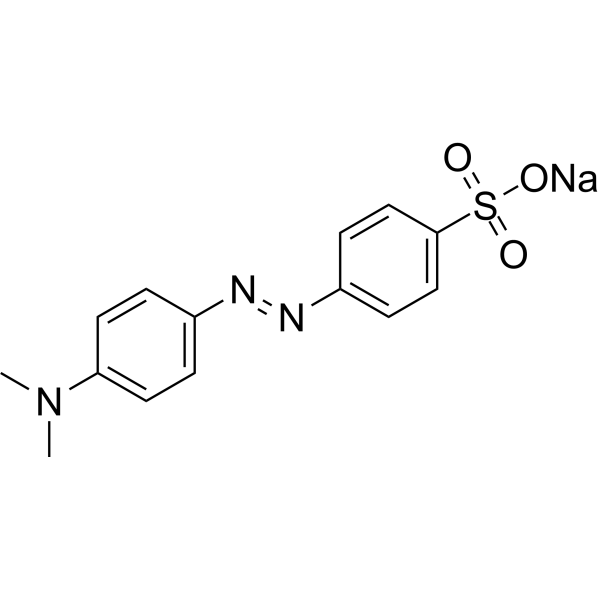
Methyl Orange is a soluble azo dye commonly used as an acid-base indicator and for staining cells and tissue sections, as well as for dyeing textiles. Methyl Orange appears red at a pH of 3.1 and changes to bright yellow as the pH increases to 4.4. Methyl Orange (500 mg/L) exhibits cytotoxicity and can cause DNA damage.
연구목적의 판매만을 진행합니다. 환자를 대상으로 한 판매는 하지 않습니다.
- Purity : 99.85%
- CAS No.: 547-58-0
- 화학식: C14H14N3NaO3S
- 분자량:327.34
-
보관:
4°C, sealed storage, away from moisture
* In solvent : -80°C, 6 months; -20°C, 1 month (sealed storage, away from moisture)

To place orders, for customer services and technical support, please contact: MedChemExpress USA
Tel: 609-228-6898 E-mail: [email protected] [email protected]


-
 Biological Activity
-
Chemical Information
-
용액&용해도
- Protocol
- 순도&문서
- References
-
 Help & FAQs


-

HY-118907R
Methyl Orange (Standard)Azo Dye -
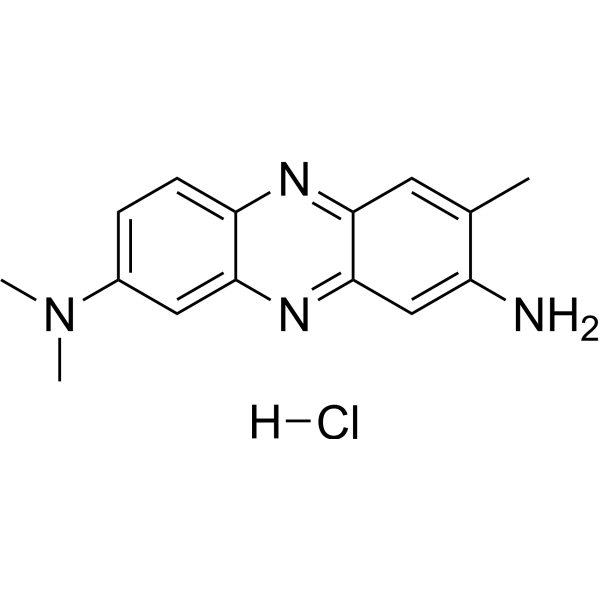
HY-D0166
Neutral RedBiochemical Assay Reagent -
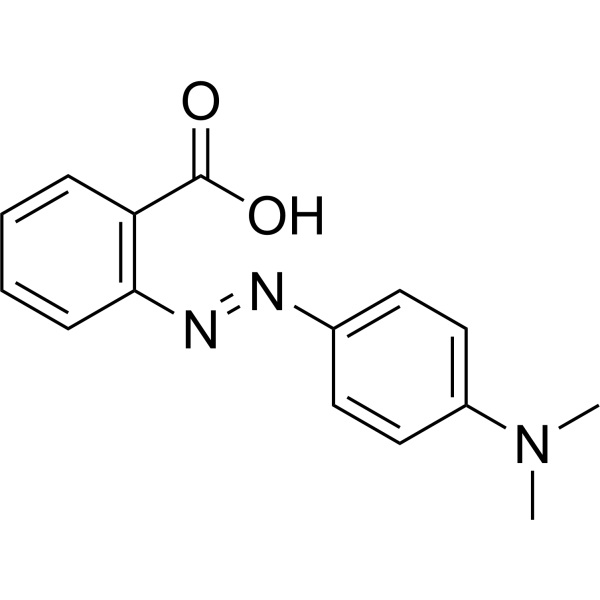
HY-Y0699
Methyl redAzo Dye -
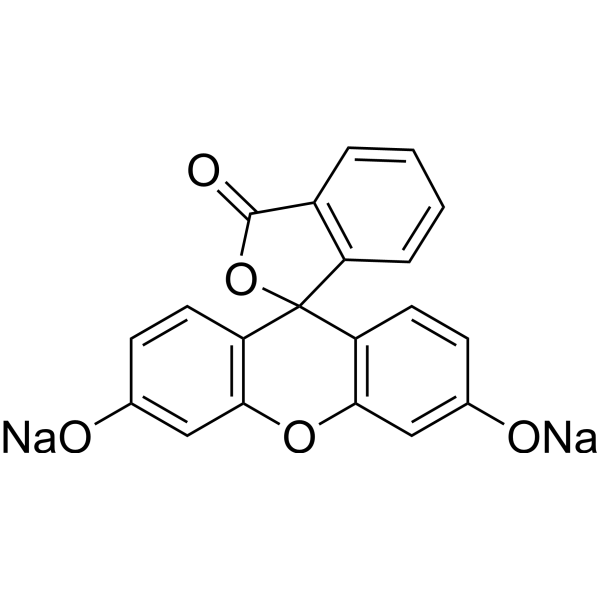
HY-D0208
Fluorescein sodiumFluorescent Tracer -
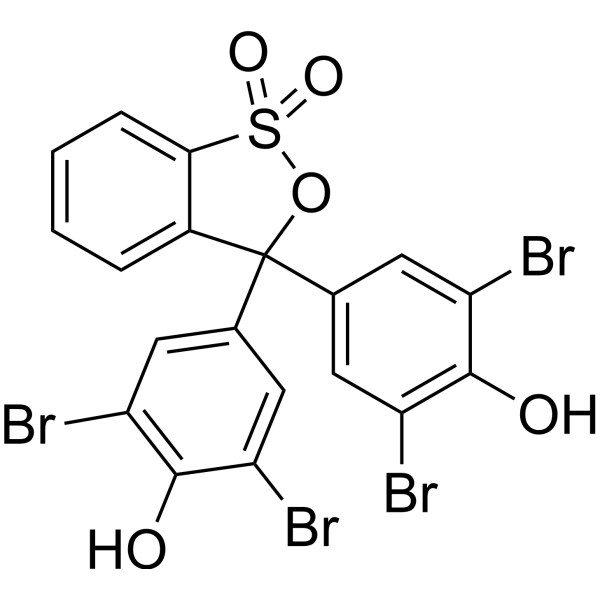
HY-B1571
Bromophenol bluepH Indicator -
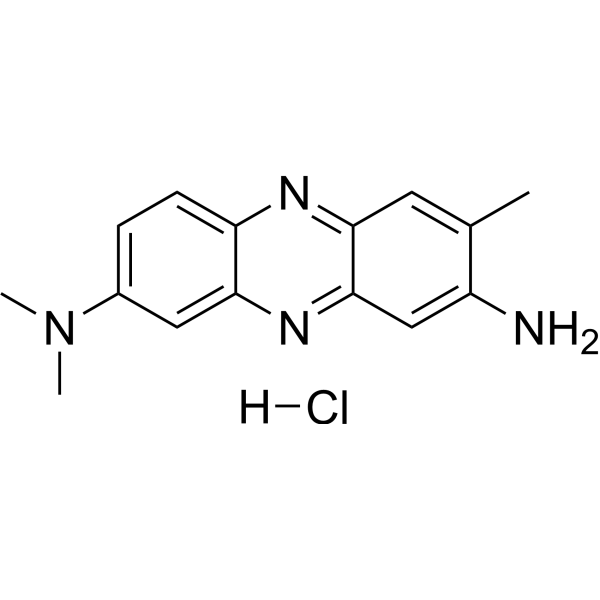
HY-D0166A
Neutral Red (IND)Biochemical Assay Reagent -
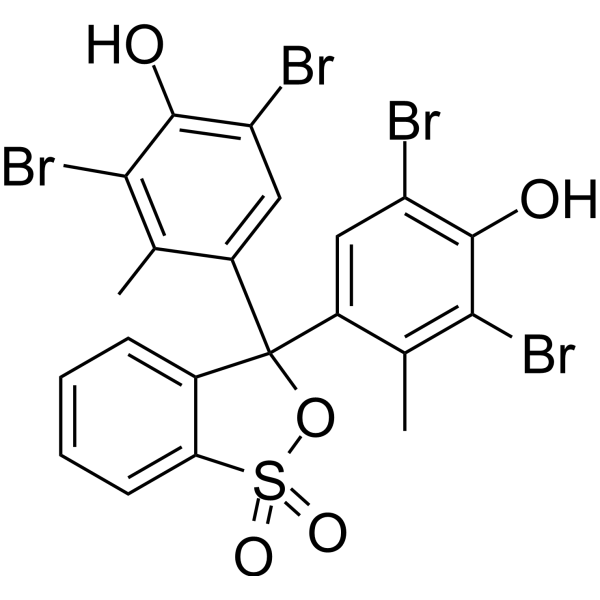
HY-W040144
Bromocresol greenpH Indicator -
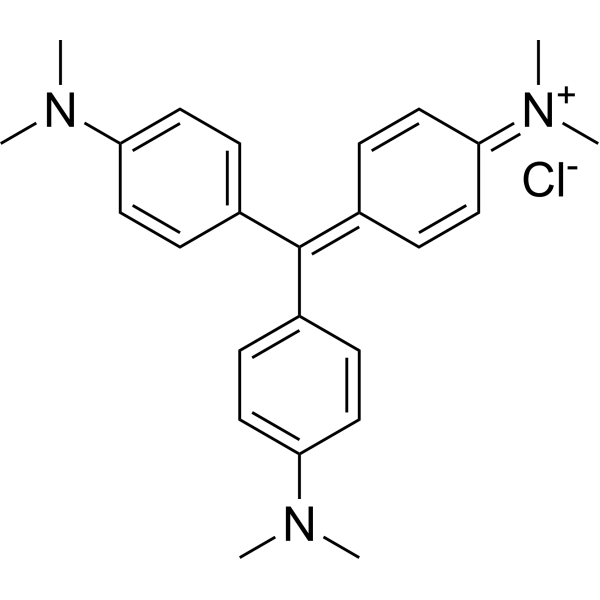
HY-B0324A
Crystal VioletFluorochrome -
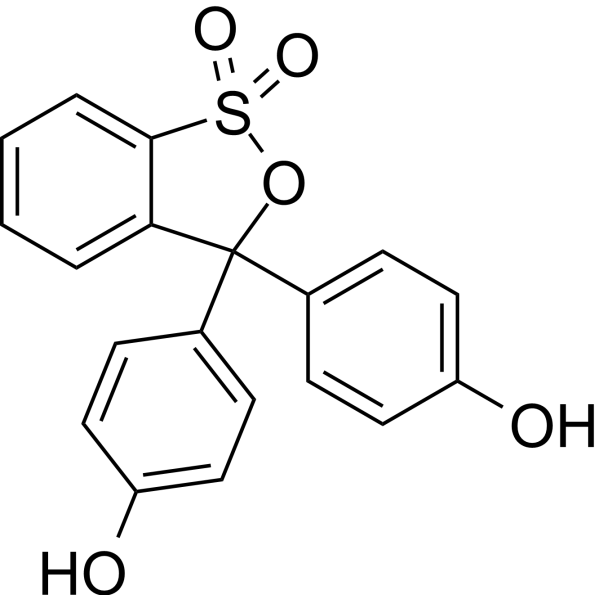
HY-D0169
Phenol RedpH Indicator Dye -

HY-W087928
Bromocresol purplepH Indicator -
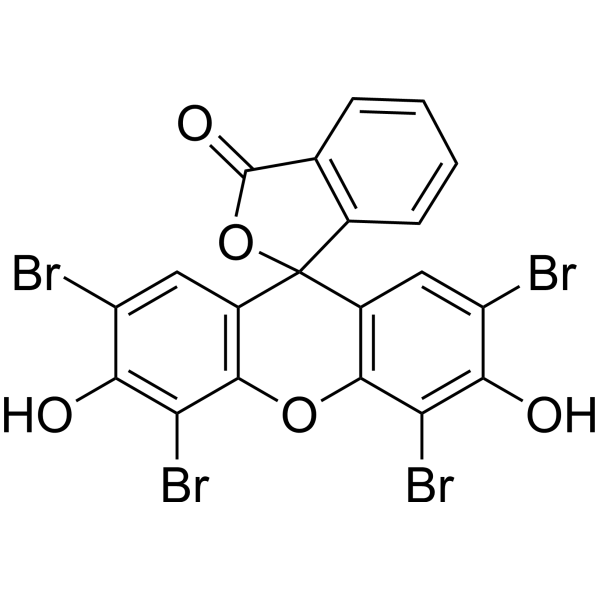
HY-D0505
Eosin YDye Molecule -
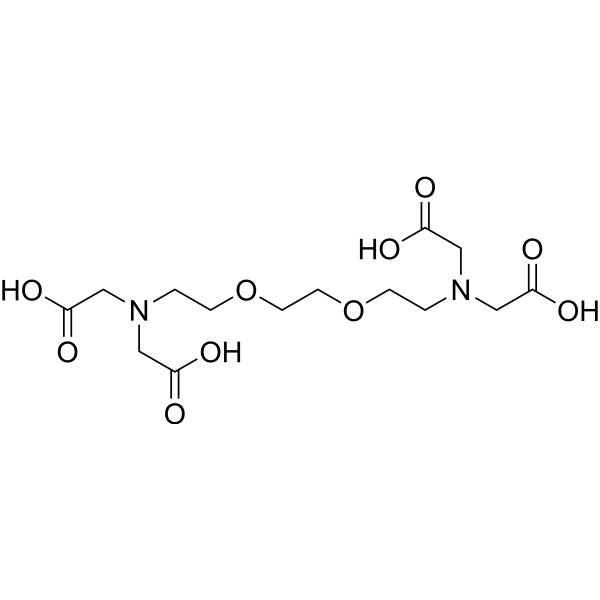
HY-D0861
EGTACalcium Ion Chelator


Biological Activity
제품 설명
In Vitro
Guidelines (The following is our recommended experimental protocol. This protocol is for reference only, and specific operations should be adjusted according to your actual needs).
1. Acid-Base Indicator[2]
Methyl Orange exhibits a distinct color change at different pH values:
pH < 3.1: Red
pH 3.1 - 4.4: Orange
pH > 4.4: Bright Yellow
MedChemExpress (MCE) has not independently confirmed the accuracy of these methods. They are for reference only. Further protocols information, click here.


Chemical Information
-
CAS No. 547-58-0
-
Appearance Solid
-
분자량 327.34
-
화학식 C14H14N3NaO3S
-
Color Orange to red
-
SMILES
O=S(C1=CC=C(C=C1)/N=N/C2=CC=C(C=C2)N(C)C)(O[Na])=O
-
선적
Room temperature in continental US; may vary elsewhere.
-
보관
4°C, sealed storage, away from moisture
* In solvent : -80°C, 6 months; -20°C, 1 month (sealed storage, away from moisture)


용액&용해도
In Vitro:
DMSO : 20 mg/mL (61.10 mM; ultrasonic and warming and heat to 60°C; Hygroscopic DMSO has a significant impact on the solubility of product, please use newly opened DMSO)
Please refer to the solubility information to select the appropriate solvent. Once prepared, please aliquot and store the solution to prevent product inactivation from repeated freeze-thaw cycles.
Storage method and period of stock solution: -80°C, 6 months; -20°C, 1 month (sealed storage, away from moisture). When stored at -80°C, please use it within 6 months. When stored at -20°C, please use it within 1 month.
Please refer to the solubility information to select the appropriate solvent. Once prepared, please aliquot and store the solution to prevent product inactivation from repeated freeze-thaw cycles.
Storage method and period of stock solution: -80°C, 6 months; -20°C, 1 month (sealed storage, away from moisture). When stored at -80°C, please use it within 6 months. When stored at -20°C, please use it within 1 month.
Concentration (start) × Volume (start) = Concentration (final) × Volume (final)

Protocol
-
Cell Cytotoxicity Assay
Cytotoxicity assays are usually based on the assessment of cell membrane damage, which can also be indirectly detected by measuring cell viability. Detection methods include MTT assay, CKK-8 assay, LDH assay and ATP assay, etc.
-
Mammalian live/dead viability and cytotoxicity staining
Live/dead viability and cytotoxicity staining assays are based on the simultaneous detection of intracellular esterase activity in metabolically active (viable) cells and membrane integrity loss in non-viable cells. In commonly used dual-staining approaches, membrane-permeant fluorogenic substrates are converted by intracellular esterases into fluorescent products in live cells, while impermeant DNA-binding dyes selectively enter cells with compromised plasma membranes and label nucleic acids in dead or dying cells, enabling discrimination between viable and non-viable populations by fluorescence microscopy or flow cytometry.
-
Genotoxicity/Mutagenicity Study
The bacterial reverse mutation assay detects point mutations that restore amino-acid prototrophy in auxotrophic Salmonella typhimurium or Escherichia coli tester strains; after exposure to a test article, mutagenic activity is read out as an increased number of revertant colonies on minimal agar compared with the vehicle control. The assay uses tester strains with different mutation targets so that base-substitution and frameshift mutagens can be detected, and testing is performed with and without exogenous mammalian metabolic activation because some chemicals require biotransformation to become mutagenic.
-
Cell Viability Determination by MTT Colorimetric Assay
The following protocol uses the MTT colorimetric assay as a classic literature-established method for assessing cell viability/metabolic activity in cultured mammalian cells. MTT[3-(4,5-dimethylthiazol-2-yl)-2,5-diphenyltetrazolium bromide] is reduced by metabolically active cells to a colored formazan product; the amount of formazan is quantified spectrophotometrically and provides an indirect measure of metabolically active viable cells. Importantly, MTT reduction reflects cellular oxidoreductase/metabolic activity rather than an absolute direct count of living cells, so changes in cellular metabolism can alter the signal independently of cell number.


순도&문서
-
Data Sheet (271 KB)
-
SDS (480 KB)
- English - EN (480 KB)
- Français - FR (480 KB)
- Deutsch - DE (480 KB)
- Norwegian - NO (480 KB)
- Español - ES (480 KB)
- Swedish - SV (480 KB)
- Italian - IT (480 KB)
- Korean - KR (480 KB)
- Portuguese - PT (480 KB)
-
Handling Instructions (2659 KB)
References
[1]. Ahmad M, et al. Photocatalytic degradation of methyl orange from wastewater using a newly developed Fe-Cu-Zn-ZSM-5 catalyst. Environ Sci Pollut Res Int. 2020;27(21):26239-26248. [Content Brief]
[3]. Alaguprathana M, et al. Cytogenotoxicity assessment in Allium cepa roots exposed to methyl orange treated with Oedogonium subplagiostomum AP1. Environ Res. 2022 Oct;213:113612. [Content Brief]


Complete Stock Solution Preparation Table
Please refer to the solubility information to select the appropriate solvent. Once prepared, please aliquot and store the solution to prevent product inactivation from repeated freeze-thaw cycles.
Storage method and period of stock solution: -80°C, 6 months; -20°C, 1 month (sealed storage, away from moisture). When stored at -80°C, please use it within 6 months. When stored at -20°C, please use it within 1 month.
| Optional Solvent | Concentration Solvent Mass | 1 mg | 5 mg | 10 mg | 25 mg |
|---|---|---|---|---|---|
| DMSO | 1 mM | 3.0549 mL | 15.2746 mL | 30.5493 mL | 76.3732 mL |
| 5 mM | 0.6110 mL | 3.0549 mL | 6.1099 mL | 15.2746 mL | |
| 10 mM | 0.3055 mL | 1.5275 mL | 3.0549 mL | 7.6373 mL | |
| 15 mM | 0.2037 mL | 1.0183 mL | 2.0366 mL | 5.0915 mL | |
| 20 mM | 0.1527 mL | 0.7637 mL | 1.5275 mL | 3.8187 mL | |
| 25 mM | 0.1222 mL | 0.6110 mL | 1.2220 mL | 3.0549 mL | |
| 30 mM | 0.1018 mL | 0.5092 mL | 1.0183 mL | 2.5458 mL | |
| 40 mM | 0.0764 mL | 0.3819 mL | 0.7637 mL | 1.9093 mL | |
| 50 mM | 0.0611 mL | 0.3055 mL | 0.6110 mL | 1.5275 mL | |
| 60 mM | 0.0509 mL | 0.2546 mL | 0.5092 mL | 1.2729 mL |


Methyl Orange Related Classifications
HY-118907 Related Classifications
 Powered by Bioz