1. Search Result
Search Result
Pathways Recommended: Anti-infection
Results for "

dermatophyte infection

" in MedChemExpress (MCE) Product Catalog:

14

Inhibitors & Agonists

4

Natural
Products

1

Isotope-Labeled Compounds

Cat. No. Product Name Target Research Areas Chemical Structure
  • HY-B0319
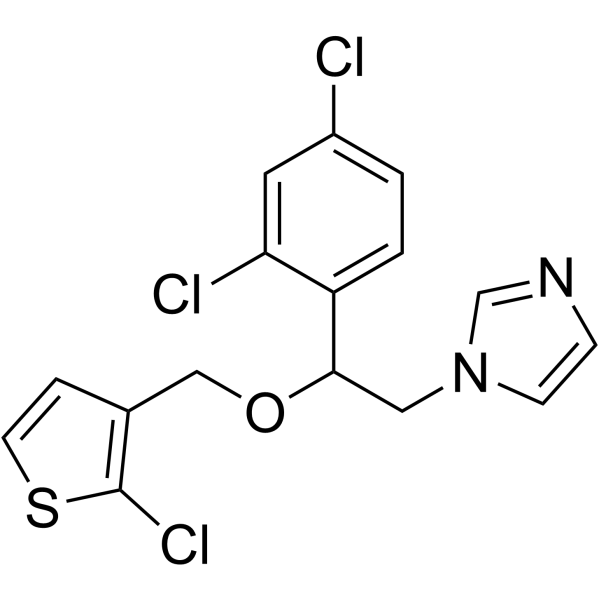
    Tioconazole
    4 Publications Verification

    UK-20349

    Fungal Antibiotic Parasite Akt PI3K mTOR Autophagy Infection Cancer
    Tioconazole (UK-20349) is a broad-spectrum antifungal imidazole derivative. Tioconazole inhibits several dermatophytes and yeasts, with MIC50 values of less than 3.12 mg/L and 9 mg/L, respectively. Additionally, Tioconazole exhibits anti-parasitic activity. Tioconazole exerts anticancer activity by inhibiting the PI3K/AKT/mTOR signaling pathway and blocking autophagy. Tioconazole is applicable for research in the fields of anti-infection and anticancer therapy .
    Tioconazole
  • HY-119847

    BAY-W-6341

    Fungal Infection
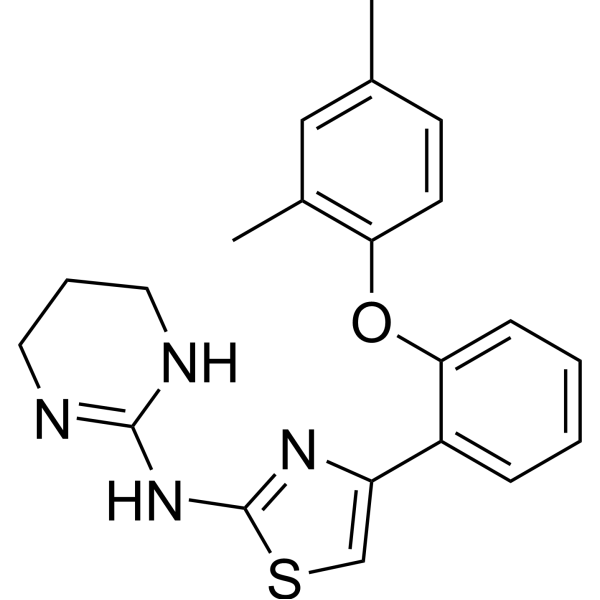
    Abafungin (BAY-W-6341) is a broad-spectrum fungicidal arylguanidine compound and a selective inhibitor of sterol-C-24-methyltransferase. Abafungin blocks the transmethylation reaction at the C-24 position of the sterol side chain during the ergosterol biosynthesis pathway. Abafungin directly disrupts fungal cell membrane integrity, and diminishes fungal viability independent of the fungal growth state. Abafungin can be applied to the research of fungal infections, particularly dermatomycoses .
    Abafungin
  • HY-W984782

    GLUT Bacterial Fungal AMPK PPAR Reactive Oxygen Species (ROS) Apoptosis SOD Infection Metabolic Disease Cancer
    Flindersine is an alkaloid with multiple activities including antibacterial, antifungal, antitumor, and antidiabetic properties. Flindersine increases the activity of antioxidant enzymes, restores the levels of renal biomarkers, and reduces blood glucose, blood lipid, and insulin levels in diabetic rats. Flindersine inhibits the growth of Gram-positive bacteria, Gram-negative bacteria, drug-resistant bacteria, as well as dermatophytes, filamentous fungi, and yeasts. Flindersine reduces the viability of cancer cells and induces apoptosis. Flindersine can be used in research related to breast cancer, type 2 diabetes, bacterial infections, and fungal infections .
    Flindersine
  • HY-B1133
    Sulbentine
    1 Publications Verification

    Dibenzthione

    Fungal Infection
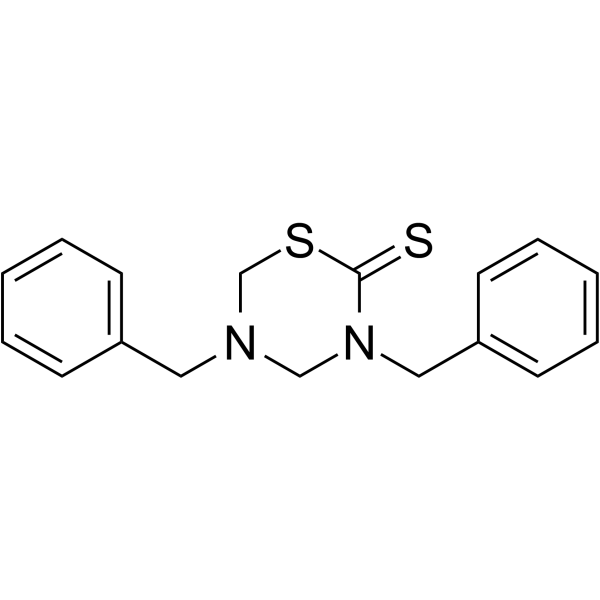
    Sulbentine (Dibenzthione) is a thiadiazine-class antifungal agent. Sulbentine exhibits fungicidal and fungistatic activity against Trichophyton mentagrophytes. Sulbentine can be used for the research of dermatophyte infection .
    Sulbentine
  • HY-114518

    KP363

    Fungal Infection
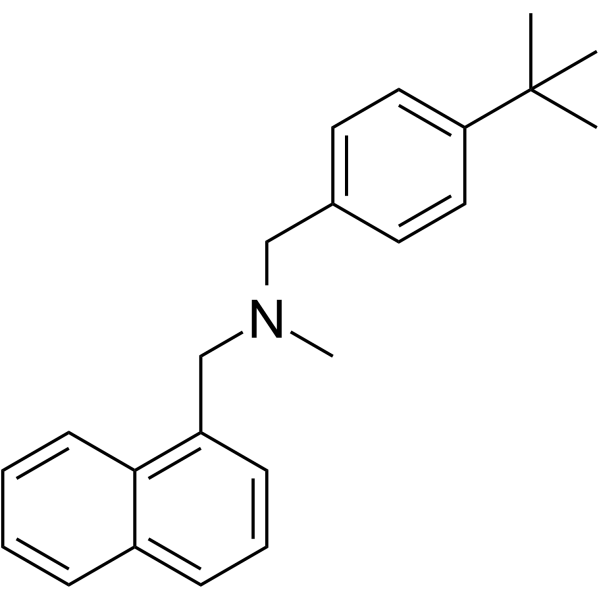
    Butenafine (KP363) is a potent and broad spectrum benzylamine antifungal agent . Butenafine inhibits fungal ergosterol biosynthesis at the point of squalene epoxidation, leading to a deficiency of the fungal cell membranes. Butenafine is effective against dermatophytes infections, such as  tinea pedis,  tinea cruris, tinea versicolor .
    Butenafine
  • HY-N11546

    Cytochrome P450 Bacterial Fungal Infection Cancer
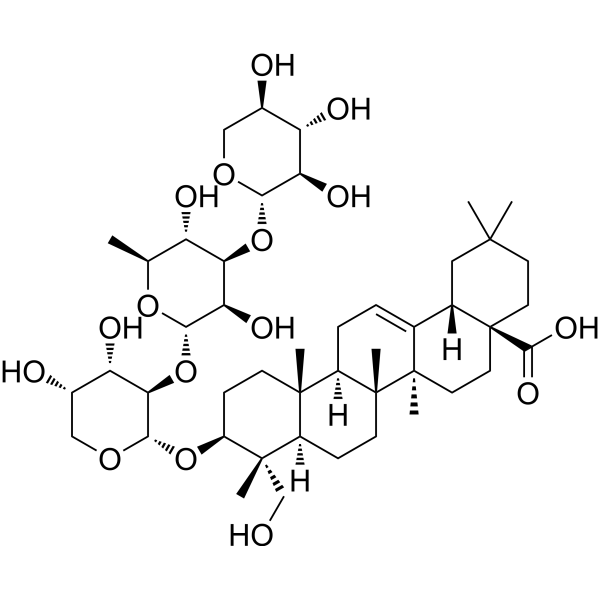
    Sapindoside B is a substance with hepatoprotective activity, and also acts as a cytochrome P-450 (cytochrome P-450) inhibitor, antibacterial agent and membrane-disrupting agent. Sapindoside B reversibly inhibits the content of cytochrome P-450 in liver microsomes, suppresses the phenobarbital-induced increase in enzyme content, reduces the production of active metabolites mediated by cytochrome P-450, and alleviates hepatotoxic injury. Sapindoside B binds to Cutibacterium acnes lipase, reduces lipase activity, inhibits biofilm formation, and decreases bacterial adhesion. Sapindoside B exhibits cytotoxicity against human cancer, liver cancer, leukemia and glioblastoma cells. Sapindoside B inhibits mycelial growth of phytopathogenic fungal strains, possesses antibacterial activity against dermatophytes, and also has hemolytic/membrane-lytic activity. Sapindoside B can be used in research related to liver injury, Cutibacterium acnes biofilm-associated infections, gastric cancer, carcinoma, promyelocytic leukemia, glioblastoma, apple scab and grape gray mold .
    Sapindoside B
  • HY-171796

    Fungal Infection
    Bromomonilicin is a selective fungal cell membrane inhibitor. Bromomonilicin exerts antifungal activity by disrupting fungal cell membrane integrity. Bromomonilicin is promising for research of plant pathogenic fungal infections (e.g., Monilinia fructicola-induced brown rot) and superficial mycoses (e.g., dermatophyte infections) .
    Bromomonilicin
  • HY-139903

    Fungal Calcineurin p38 MAPK Infection
    Antifungal agent 18 is an antifungal agent. Antifungal agent 18 shows a broad-spectrum antifungal activity against major human fungal pathogens. Antifungal agent 18 compromises fungal cell wall integrity by targeting the unfolded protein response (UPR), calcineurin, and MAPK pathways. Antifungal agent 18 shows antifungal activity in virto and vivo. Antifungal agent 18 can be used for the research of invasive fungal pathogens and cutaneous dermatophytes .
    Antifungal agent 18
  • HY-114518S2

    KP363-d4

    Fungal Isotope-Labeled Compounds Infection
    Butenafine-d4 (KP363-d4) is the deuterium labeled Butenafine (HY-114518). Butenafine (KP363) is a potent and broad spectrum benzylamine antifungal agent . Butenafine inhibits fungal ergosterol biosynthesis at the point of squalene epoxidation, leading to a deficiency of the fungal cell membranes. Butenafine is effective against dermatophytes infections, such as ?tinea pedis, ?tinea cruris, tinea versicolor .
    Butenafine-d4
  • HY-10445

    Azoline; R126638

    Fungal Infection
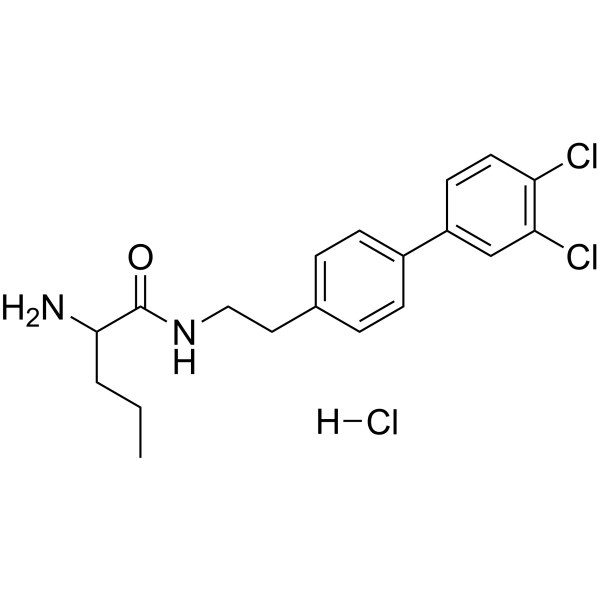
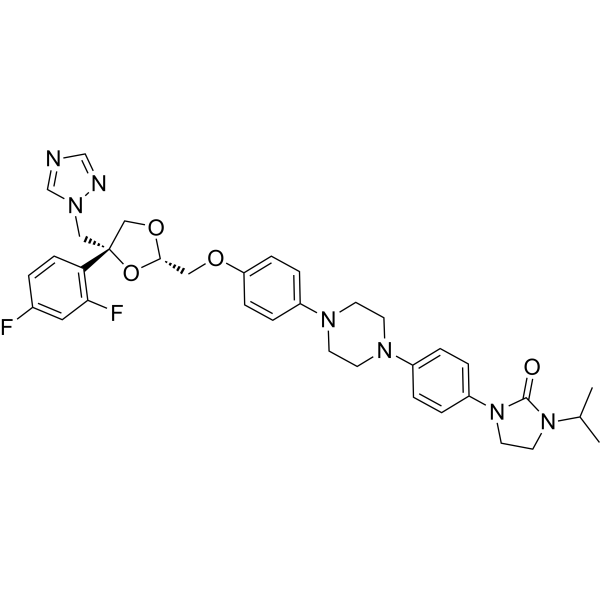
    Pramiconazole is a broad-spectrum antifungal agent with oral activity. Pramiconazole has a good affinity for 14α-demethylase. Pramiconazole can be used in the study of fungal infections in the local skin, hair, nails, oral cavity, and genital mucosa .
    Pramiconazole
  • HY-106546

    KC 9147

    Fungal Infection
    Tolciclate (KC 9147) is an antifungal agent with in vitro inhibitory activity against dermatophytes, effective at concentrations of 0.01-0.1 μg/mL. Tolciclate is colorless and soluble in well-tolerated excipients, and it is more lipophilic than Tolnaftate (HY-B0370). Tolciclate can be used in research related to antifungal infections .
    Tolciclate
  • HY-N19757

    Fungal Infection
    3-O-(2-Acetamido-2-deoxy-β-D-glucopyranosyl) echinocystic acid is an oleanane-type triterpenoid saponin. 3-O-(2-Acetamido-2-deoxy-β-D-glucopyranosyl) echinocystic acid acts as a dermatophyte growth inhibitor with a MIC range of 6.25-25 μg/mL. 3-O-(2-Acetamido-2-deoxy-β-D-glucopyranosyl) echinocystic acid can be used in the research of dermatophyte infections, bacterial infections and yeast infections .
    (3β,16α-Hydroxy)-3-O-(2'acetamido-2'-deoxy-β-D-glucopyranosyl) echinocystic acid
  • HY-N19881

    Fungal Infection
    Drimenal is a pimarane-type natural sesquiterpene with antifungal activity. Drimenal inhibits the growth of yeasts and dermatophytes. Drimenal can be used for the development of pesticide candidates and in research related to fungal infections .
    Drimenal
  • HY-W069116

    Fungal Infection
    Antifungal agent 146 (Compound 19l) is a broad-spectrum antifungal agent. Antifungal agent 146 has inhibitory effects on the main dermatophytes that cause onychomycosis (Trichophyton rubrum, Trichophyton mentagrophytes) and other fungi (Candida albicans, Cryptococcus neoformans and Aspergillus fumigatus) with MIC values of 16, 16, 64, 32, and 32 μg/mL. Antifungal agent 146 can be used for the research of infection .
    Antifungal agent 146

Inquiry Online

Your information is safe with us. * Required Fields.

Salutation


Country or Region *

Applicant Name *


Organization Name *

Department *


Email Address *


Product Name *

Cat. No.


Requested quantity *

Phone Number *


Remarks

Inquiry Online

Inquiry Information

Product Name:
Cat. No.:
Quantity:
MCE Japan Authorized Agent:

