1. Search Result
Search Result
Results for "

gastro-intestinal barrier

" in MedChemExpress (MCE) Product Catalog:

17

Inhibitors & Agonists

3

Natural
Products

2

Isotope-Labeled Compounds

Cat. No. Nombre del producto Target Áreas de investigación Chemical Structure
  • HY-13771
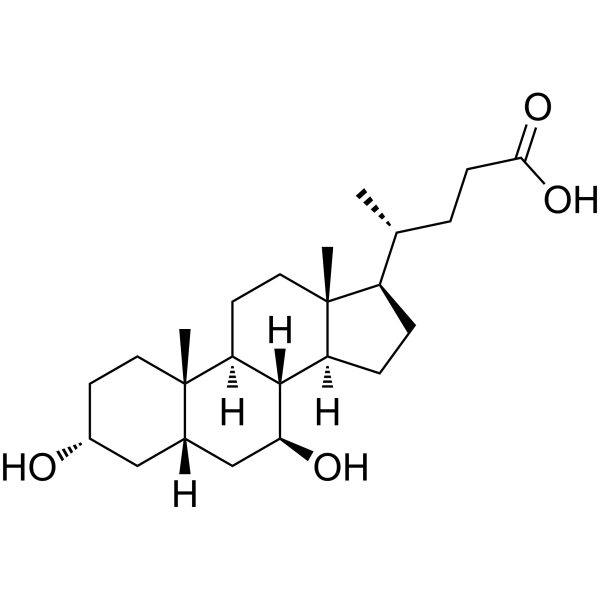
    Ursodeoxycholic acid
    25+ Cited Publications

    Ursodeoxycholate; Ursodiol; UDCA

    G protein-coupled Bile Acid Receptor 1 FXR Angiotensin-converting Enzyme (ACE) Endogenous Metabolite Infection Metabolic Disease Cancer
    Ursodeoxycholic acid (Ursodeoxycholate) is a secondary bile acid issued from the transformation of (cheno)deoxycholic acid by intestinal bacteria, acting as a key regulator of the intestinal barrier integrity and essential for lipid metabolism. Ursodeoxycholic acid acts as signaling molecule, exerting its effects by interacting with bile acid activated receptors, including G-protein coupled bile acid receptor 5 (TGR5, GPCR19) and the farnesoid X receptor (FXR). Ursodeoxycholic acid can be used for the research of a variety of hepatic and gastrointestinal diseases. Ursodeoxycholic acid also reduces ACE2 expression and is beneficial for reducing SARS-CoV-2 infection. Orally active .
    Ursodeoxycholic acid
  • HY-13771A
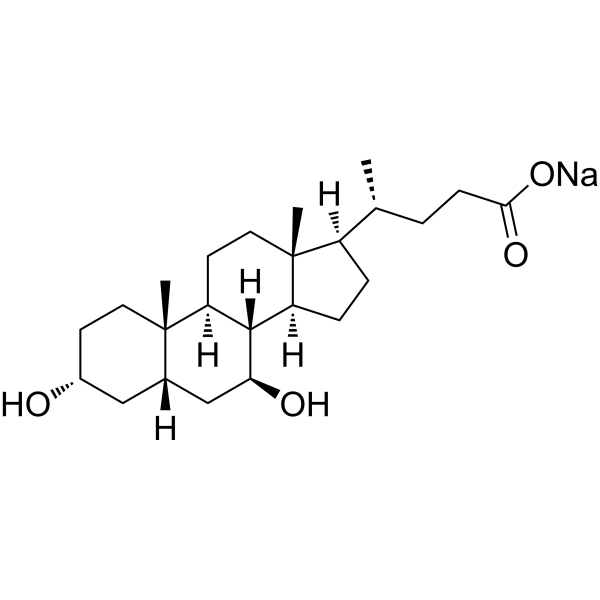
    Ursodeoxycholic acid sodium
    25+ Cited Publications

    Ursodeoxycholate sodium; Ursodiol sodium; UCDA sodium

    G protein-coupled Bile Acid Receptor 1 FXR Endogenous Metabolite Metabolic Disease Inflammation/Immunology Cancer
    Ursodeoxycholic acid (Ursodeoxycholate) sodium is a secondary bile acid issued from the transformation of (cheno)deoxycholic acid by intestinal bacteria, acting as a key regulator of the intestinal barrier integrity and essential for lipid metabolism. Ursodeoxycholic acid sodium acts as signaling molecule, exerting its effects by interacting with bile acid activated receptors, including G-protein coupled bile acid receptor 5 (TGR5, GPCR19) and the farnesoid X receptor (FXR). Ursodeoxycholic acid sodium can be used for the research of a variety of hepatic and gastrointestinal diseases. Orally active .
    Ursodeoxycholic acid sodium
  • HY-B0035
    Sulfamethazine
    3 Publications Verification

    Sulfadimidine; Sulfadimerazine

    Bacterial Antibiotic Infection
    Sulfamethazine (Sulfadimidine) is an antimicrobial agent with blood-brain barrier permeability. Sulfamethazine is widely used to treat and prevent various animal diseases (such as gastrointestinal and respiratory tract infections). In China and the European Commission, the maximum residue level for Sulfamethazine in animal product is set at 100 μg/kg .
    Sulfamethazine
  • HY-113478S

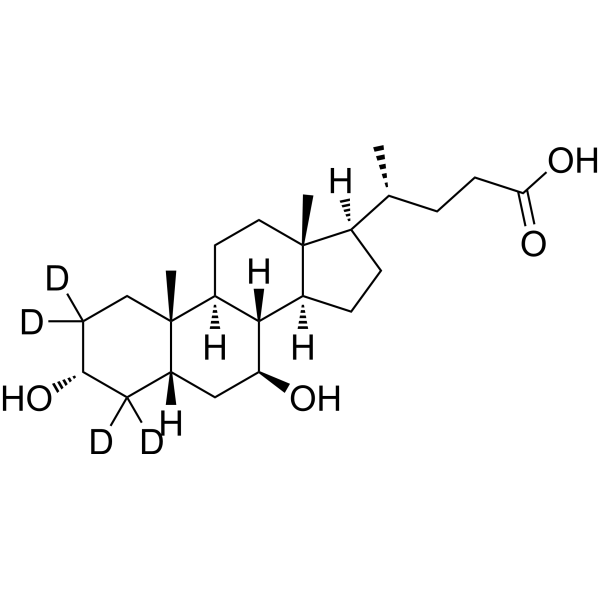
    Ursodeoxycholate-d4; Ursodiol-d4; UDCA-d4

    Isotope-Labeled Compounds Infection Metabolic Disease
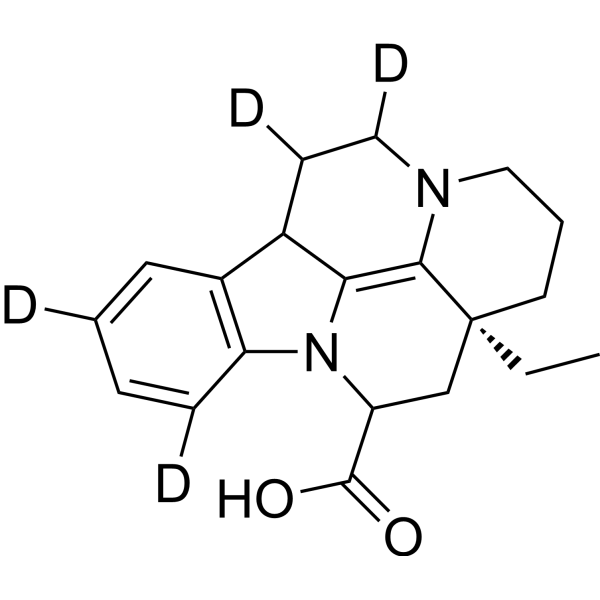
    Ursodeoxycholic acid-2,2,4,4-d4 is the deuterium labeled Ursodeoxycholic acid (HY-13771). Ursodeoxycholic acid is a secondary bile acid issued from the transformation of (cheno)deoxycholic acid by intestinal bacteria, acting as a key regulator of the intestinal barrier integrity and essential for lipid metabolism. Ursodeoxycholic acid acts as signaling molecule, exerting its effects by interacting with bile acid activated receptors, including G-protein coupled bile acid receptor 5 (TGR5, GPCR19) and the farnesoid X receptor (FXR). Ursodeoxycholic acid can be used for the research of a variety of hepatic and gastrointestinal diseases. Ursodeoxycholic acid also reduces ACE2 expression and is beneficial for reducing SARS-CoV-2 infection .
    Ursodeoxycholic acid-d4
  • HY-B0035A
    Sulfamethazine sodium
    3 Publications Verification

    Sulfadimidine sodium; Sulfadimerazine sodium

    Bacterial Antibiotic Infection
    Sulfamethazine sodium (Sulfadimidine sodium) is an antimicrobial with blood-brain barrier permeability. Sulfamethazine sodium is widely used to treat and prevent various animal diseases (such as gastrointestinal and respiratory tract infections). In China and the European Commission, the maximum residue level for Sulfamethazine sodium in animal product is set at 100 μg/kg .
    Sulfamethazine sodium
  • HY-107111

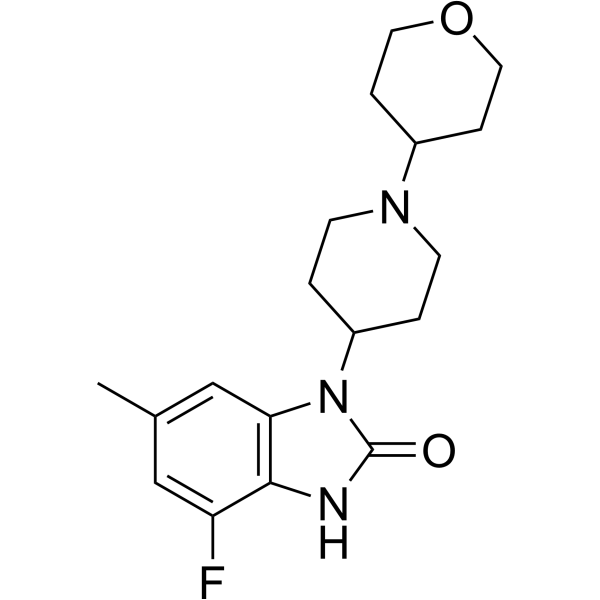
    mAChR Neurological Disease
    GSK1034702 is an orally active and allosteric agonist of M1 mAChR (pEC50=8.1) that can cross the blood-brain barrier. GSK1034702 activates the Gq/11 protein-mediated signaling pathway, enhancing neuronal firing and long-term potentiation (LTP) in the CA1 region of the hippocampus. GSK1034702 can modulate hippocampal function, improve memory encoding in the nicotine withdrawal cognitive dysfunction model, and show pro-cognitive effects in rodents. GSK1034702 can be used for the study of the mechanisms of cognitive impairment diseases such as Alzheimer's disease, and has certain peripheral M receptor activation-related side effects (such as gastrointestinal reactions) .
    GSK1034702
  • HY-164288

    TDI-006570

    Cyclic GMP-AMP Synthase STING Neurological Disease Inflammation/Immunology
    TDI-6570 (TDI-006570) is a blood-brain barrier-permeable, orally active cGAS inhibitor with an IC50 of 1.64 μM. TDI-6570 exhibits high gastrointestinal absorption and a long brain half-life in mice, and shows no toxicity to primary neurons. By inhibiting the cGAS-STING-IFN signaling pathway, TDI-6570 reduces STING levels and the activation of TBK1, blocks double-stranded DNA-induced cGAS activation and downstream interferon-stimulated gene expression, thereby reducing tau protein spread and improving synaptic loss. TDI-6570 reverses memory deficits, increases the amplitude of long-term potentiation, enhances the MEF2C transcriptional network, restores PSD-95 and vGAT punctate structures, and significantly improves cognitive resilience. TDI-6570 can be applied to the research of Alzheimer's disease, Parkinson's disease, systemic lupus erythematosus, as well as various central nervous system and autoimmune diseases .
    TDI-6570
  • HY-B1164
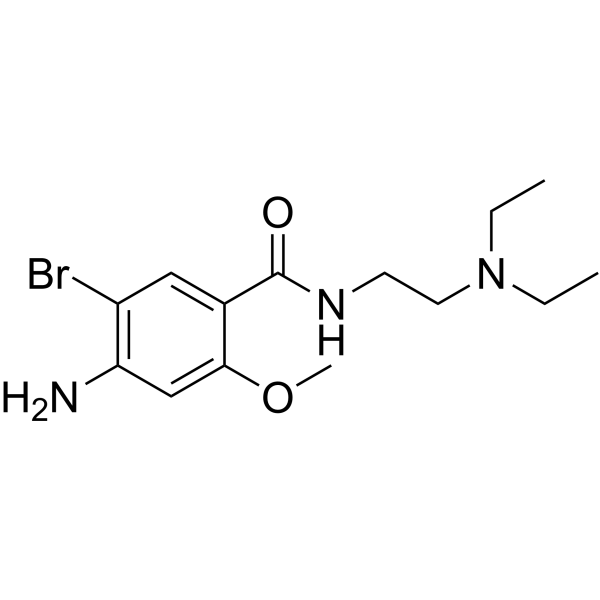
    Bromopride
    2 Publications Verification

    Dopamine Receptor Neurological Disease
    Bromopride is a selective, irreversible, competitive, and orally effective dopamine D2 receptor antagonist. Bromopride can pass through the blood-brain barrier, inhibit the vomiting center, and enhance gastrointestinal motility, exerting antiemetic and gastrointestinal motility effects. Bromopride antagonizes dopamine-mediated vomiting reflexes and promotes gastrointestinal smooth muscle contraction, and has no adverse effects on abdominal wall healing in rats with postoperative abdominal infection. Bromopride can be used for the study of digestive system diseases (such as gastric hypomotility, nausea and vomiting) .
    Bromopride
  • HY-13771R

    Ursodeoxycholate (Standard); Ursodiol (Standard); UDCA (Standard)

    Reference Standards G protein-coupled Bile Acid Receptor 1 FXR Angiotensin-converting Enzyme (ACE) Endogenous Metabolite Infection Metabolic Disease Cancer
    Ursodeoxycholic acid (Standard) is the analytical standard of Ursodeoxycholic acid. This product is intended for research and analytical applications. Ursodeoxycholic acid (Ursodeoxycholate) is a secondary bile acid issued from the transformation of (cheno)deoxycholic acid by intestinal bacteria, acting as a key regulator of the intestinal barrier integrity and essential for lipid metabolism. Ursodeoxycholic acid acts as signaling molecule, exerting its effects by interacting with bile acid activated receptors, including G-protein coupled bile acid receptor 5 (TGR5, GPCR19) and the farnesoid X receptor (FXR). Ursodeoxycholic acid can be used for the research of a variety of hepatic and gastrointestinal diseases. Ursodeoxycholic acid also reduces ACE2 expression and is beneficial for reducing SARS-CoV-2 infection. Orally active .
    Ursodeoxycholic acid (Standard)
  • HY-146391

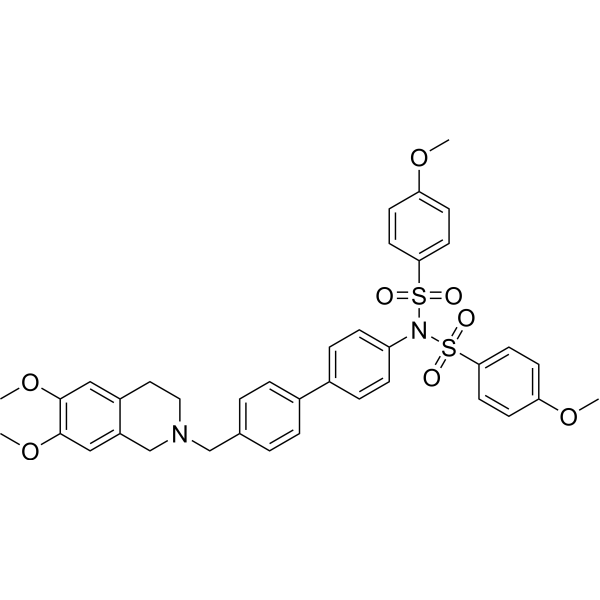
    P-glycoprotein Cancer
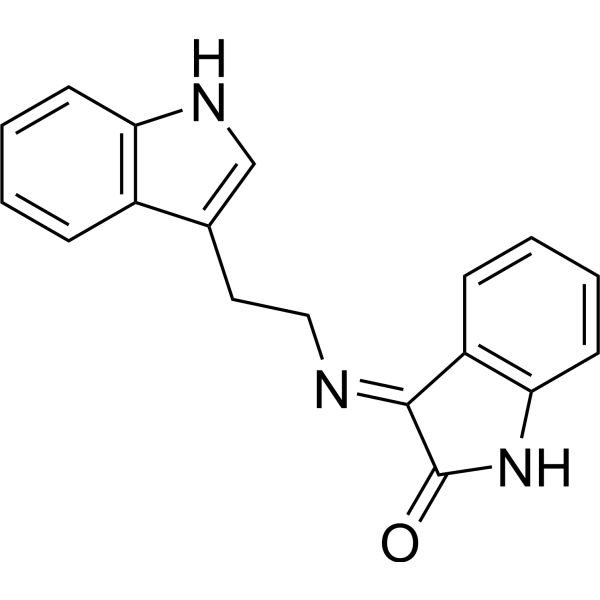
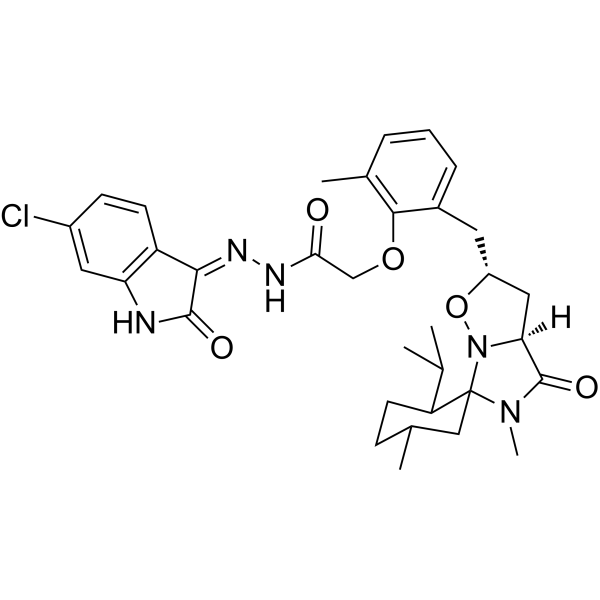
    P-gp inhibitor 4 (Compound 8b) is a selective P-glycoprotein modulator with an EC50 of 94 nM. P-gp inhibitor 4 increases agent transport across gastro-intestinal barrier and recovers doxorubicin toxicity in multidrug resistant cancer cells .
    P-gp inhibitor 4
  • HY-13771S1

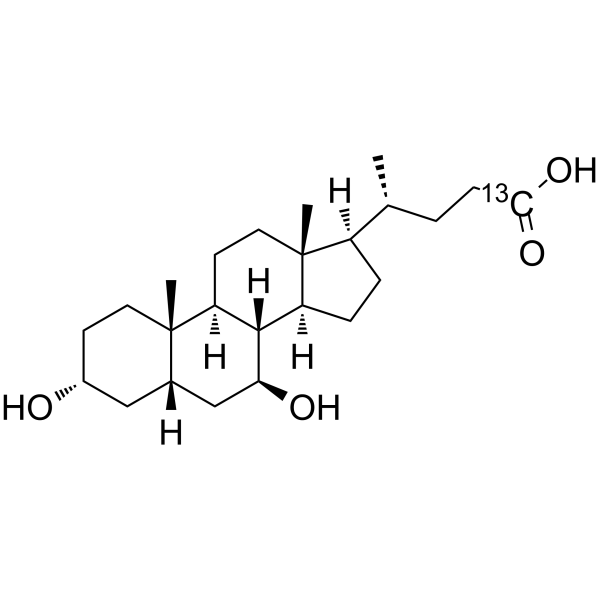
    Ursodeoxycholate-13C; Ursodiol-13C; UDCA-13C

    Isotope-Labeled Compounds G protein-coupled Bile Acid Receptor 1 FXR Endogenous Metabolite Cancer
    Ursodeoxycholic acid- 13C is the 13C labeled Ursodeoxycholic acid. Ursodeoxycholic acid (Ursodeoxycholate) is a secondary bile acid issued from the transformation of (cheno)deoxycholic acid by intestinal bacteria, acting as a key regulator of the intestinal barrier integrity and essential for lipid metabolism. Ursodeoxycholic acid acts as signaling molecule, exerting its effects by interacting with bile acid activated receptors, including G-protein coupled bile acid receptor 5 (TGR5, GPCR19) and the farnesoid X receptor (FXR). Ursodeoxycholic acid can be used for the research of a variety of hepatic and gastrointestinal diseases. Orally active .
    Ursodeoxycholic acid-13C
  • HY-B1164A

    Dopamine Receptor Neurological Disease
    Bromopride hydrochloride is a selective, irreversible, competitive, and orally active dopamine D2 receptor antagonist. Bromopride hydrochloride can pass through the blood-brain barrier, inhibit the vomiting center, and enhance gastrointestinal motility, exerting antiemetic and gastrointestinal motility effects. Bromopride hydrochloride antagonizes dopamine-mediated vomiting reflexes and promotes gastrointestinal smooth muscle contraction, and has no adverse effects on abdominal wall healing in rats with postoperative abdominal infection. Bromopride hydrochloride can be used for the study of digestive system diseases (such as gastric hypomotility, nausea and vomiting) .
    Bromopride hydrochloride
  • HY-163415

    Monoamine Oxidase Neurological Disease
    MAO-IN-5 (Compound ZINC000016952895) is a monoamine oxidase (MAO) inhibitor. According to the prediction of Swiss ADME, MAO-IN-5 can inhibit the CYP enzyme family, has blood-brain barrier (BBB) permeability, and has a high gastrointestinal absorption rate. MAO-IN-5 can be used in the study of neurological diseases .
    MAO-IN-5
  • HY-168241

    Cholinesterase (ChE) 5-HT Receptor Infection
    Flucopride (Compound 4a) is an AChE inhibitor (IC50: 24 nM), and a partial 5-HT4R agonist (Ki: 9.6 nM for (h)5-HT4R). Flucopride promotes the non-amyloidogenic processing of APP in COS-7 transiently expressing (h)5-HT4R (EC50: 23.0 nM). Flucopride may has good gastrointestinal track (GIT) penetration, and blood-brain barrier (BBB) cross-membrane penetration (PAMPA assay) .
    Flucopride
  • HY-162373

    Amylases Glycosidase P-glycoprotein Metabolic Disease
    α-Amylase/α-Glucosidase-IN-10 (compound 5d) is an α-amylase and α-glucosidase inhibitor (IC50: 30.39 μM and 65.1 μM) with potential diabetes inhibitory effects. α-Amylase/α-Glucosidase-IN-10 exhibits high gastrointestinal (GI) absorption in ADMET (Absorption, Distribution, Metabolism, Excretion and Toxicity) prediction. While α-Amylase/α-Glucosidase-IN-10 acts as a substrate for P-gp and does not cross the blood-brain barrier (BBB), there may be a risk of central nervous system side effects .
    α-Amylase/α-Glucosidase-IN-10
  • HY-107111A

    Cholinesterase (ChE) mAChR Neurological Disease
    GSK1034702 hydrochloride is an orally active and allosteric agonist of M1 mAChR (pEC50=8.1) that can cross the blood-brain barrier. GSK1034702 hydrochloride activates the Gq/11 protein-mediated signaling pathway, enhancing neuronal firing and long-term potentiation (LTP) in the CA1 region of the hippocampus. GSK1034702 hydrochloride can modulate hippocampal function, improve memory encoding in the nicotine withdrawal cognitive dysfunction model, and show pro-cognitive effects in rodents. GSK1034702 hydrochloride can be used for the study of the mechanisms of cognitive impairment diseases such as Alzheimer's disease, and has certain peripheral M receptor activation-related side effects (such as gastrointestinal reactions) .
    GSK1034702 hydrochloride
  • HY-107111R

    Reference Standards mAChR Neurological Disease
    GSK1034702 (Standard) is the analytical standard of GSK1034702 (HY-107111). This product is intended for research and analytical applications. GSK1034702 is an orally active and allosteric agonist of M1 mAChR (pEC50=8.1) that can cross the blood-brain barrier. GSK1034702 activates the Gq/11 protein-mediated signaling pathway, enhancing neuronal firing and long-term potentiation (LTP) in the CA1 region of the hippocampus. GSK1034702 can modulate hippocampal function, improve memory encoding in the nicotine withdrawal cognitive dysfunction model, and show pro-cognitive effects in rodents. GSK1034702 can be used for the study of the mechanisms of cognitive impairment diseases such as Alzheimer's disease, and has certain peripheral M receptor activation-related side effects (such as gastrointestinal reactions) .
    GSK1034702 (Standard)

Consulta en línea

Your information is safe with us. * Required Fields.

Saludo


Country or Region *

Nombre del solicitante *


Nombre de la Organizaciòn *

Department *


Direcciòn del E-mail *


Nombre del producto *

Cat. No.


Requested quantity *

Número de teléfono *


Observaciones

Consulta en línea

Inquiry Information

Nombre del producto:
Cat. No.:
Cantidad:
MCE Japan Authorized Agent:

