



Ursodeoxycholic acid (Standard)

Based on 1 Customer Validation
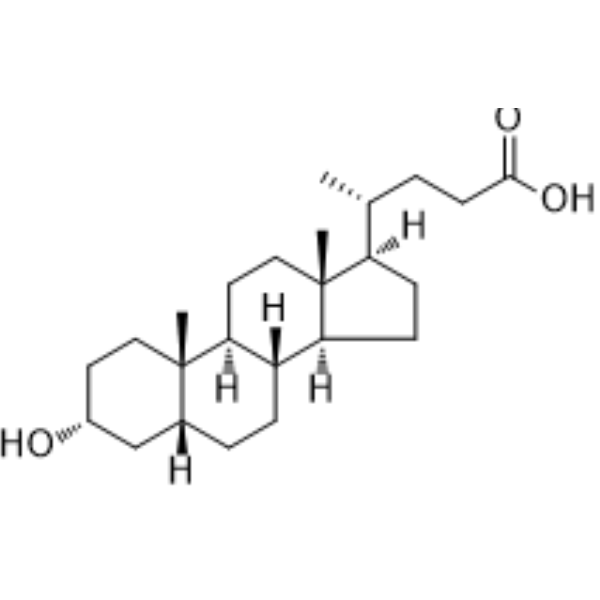
Ursodeoxycholic acid (Standard) is the analytical standard of Ursodeoxycholic acid. This product is intended for research and analytical applications. Ursodeoxycholic acid (Ursodeoxycholate) is a secondary bile acid issued from the transformation of (cheno)deoxycholic acid by intestinal bacteria, acting as a key regulator of the intestinal barrier integrity and essential for lipid metabolism. Ursodeoxycholic acid acts as signaling molecule, exerting its effects by interacting with bile acid activated receptors, including G-protein coupled bile acid receptor 5 (TGR5, GPCR19) and the farnesoid X receptor (FXR). Ursodeoxycholic acid can be used for the research of a variety of hepatic and gastrointestinal diseases. Ursodeoxycholic acid also reduces ACE2 expression and is beneficial for reducing SARS-CoV-2 infection. Orally active.
For research use only. We do not sell to patients.
- Purity : 99.83%
- CAS No.: 128-13-2
- Formula: C24H40O4
- Molecular Weight:392.57
-
Storage:
Please store the product under the recommended conditions in the Certificate of Analysis.


To place orders, for customer services and technical support, please contact: MedChemExpress USA
Tel: 609-228-6898 E-mail: [email protected] [email protected]


-
 Product Information
-
Chemical Information
- Purity & Documentation
-
 Help & FAQs


-
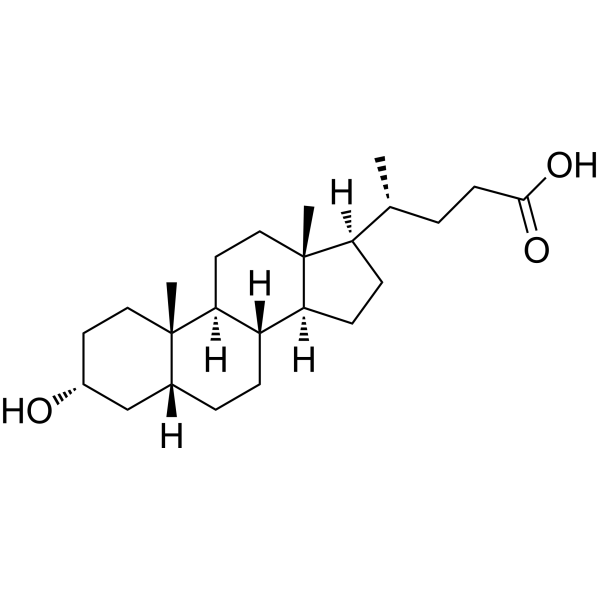
HY-B0172R
Lithocholic acid (Standard)Autophagy Inducer -
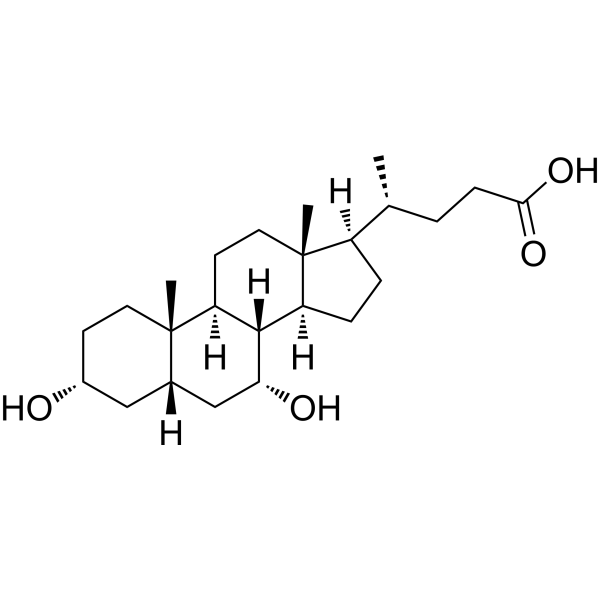
HY-76847R
Chenodeoxycholic Acid (Standard)Endogenous Metabolite -
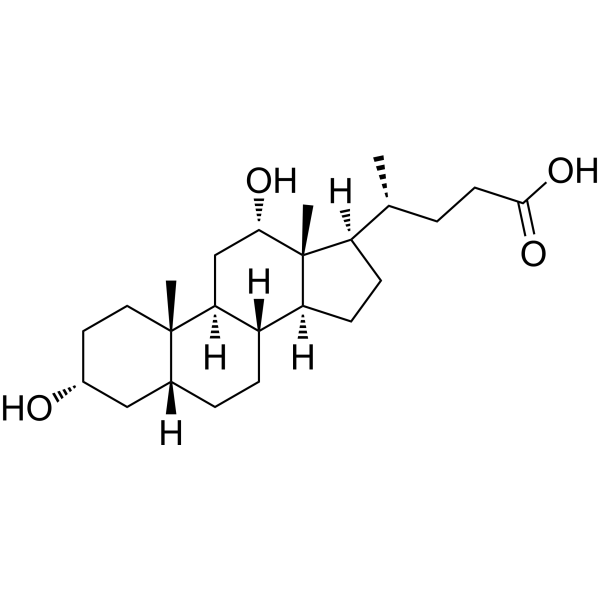
HY-N0593R
Deoxycholic acid (Standard)Bile Acid Receptor Activator -

HY-N0169R
Hyodeoxycholic acid (Standard)GPBAR1 Agonist -
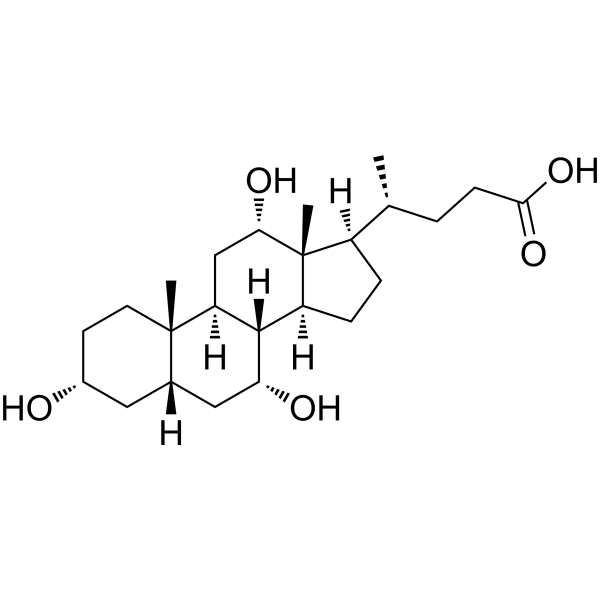
HY-N0324R
Cholic acid (Standard)Endogenous Metabolite -
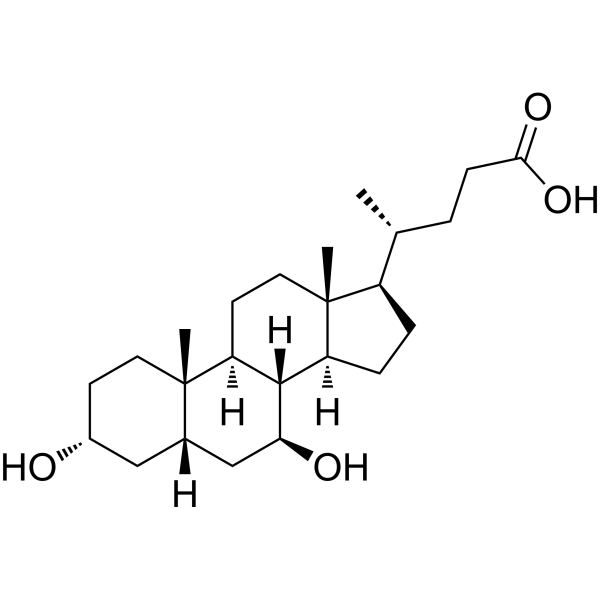
HY-13771
Ursodeoxycholic acidGPCR19 Agonist /FXR Antagonist -
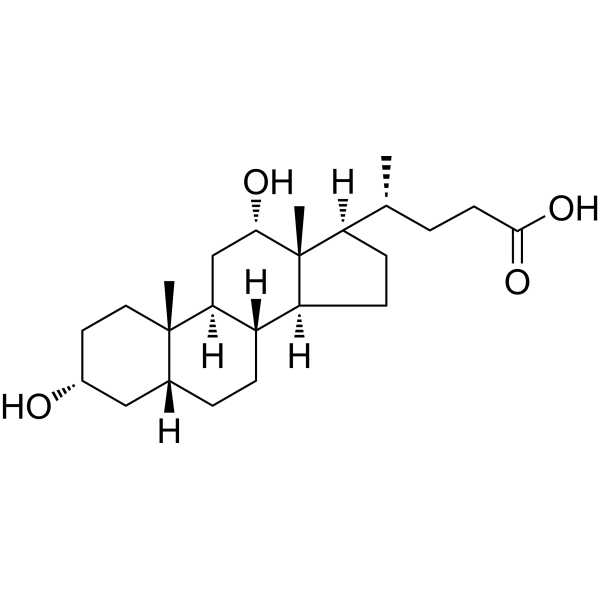
HY-N0593
Deoxycholic acidBile Acid Receptor Activator -

HY-125731R
Glycodeoxycholic Acid (Standard)Endogenous Metabolite -
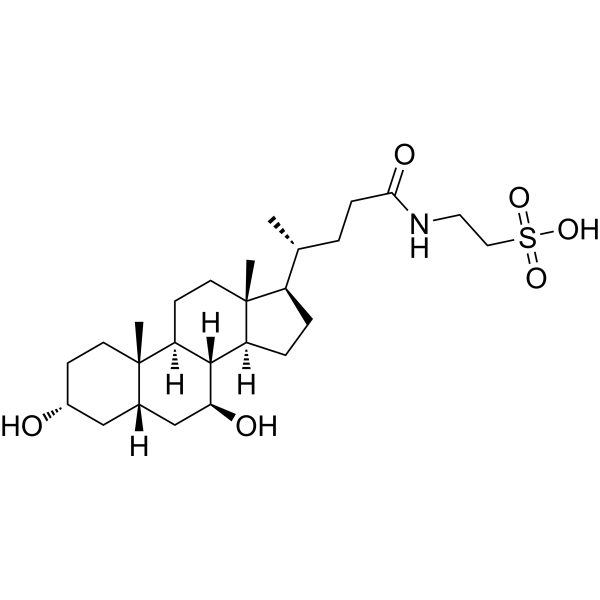
HY-19696
TauroursodeoxycholateEndoplasmic Reticulum Stress Inhibitor -

HY-19696R
Tauroursodeoxycholate (Standard)Endoplasmic Reticulum Stress Inhibitor -
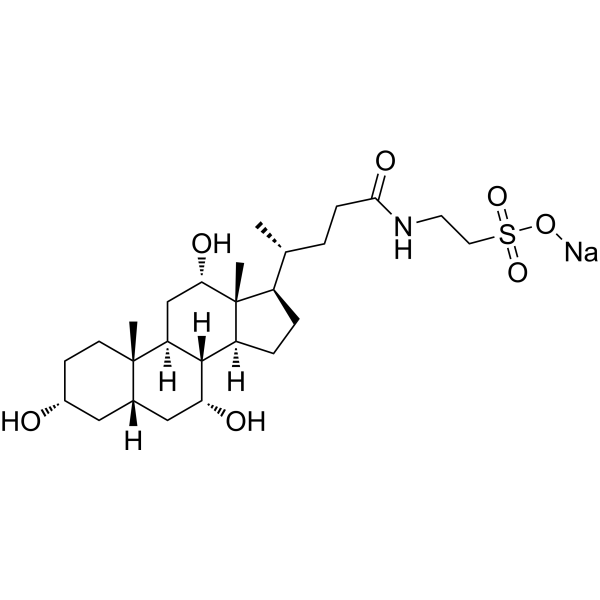
HY-N0545R
Taurocholic acid sodium (Standard)Immunoregulation Agent -
HY-B0172
Lithocholic acidAutophagy Inducer


Product Information
Information
Application
The compound is the grade of analytical standard, which is the reference standard supplied assay. It is commonly used in qualitative, quantitative and methodological research experiments in HPLC, GC and MS.


Chemical Information
-
CAS No. 128-13-2
-
Appearance Solid
-
Molecular Weight 392.57
-
Formula C24H40O4
-
Color White to off-white
-
SMILES
C[C@H](CCC(O)=O)[C@H]1CC[C@@]2([H])[C@]3([H])[C@@H](O)C[C@]4([H])C[C@H](O)CC[C@]4(C)[C@@]3([H])CC[C@]12C
-
Synonyms
Ursodeoxycholate (Standard); Ursodiol (Standard); UDCA (Standard)
-
Structure Classification
-
Shipping
Room temperature in continental US; may vary elsewhere.
-
Storage
Please store the product under the recommended conditions in the Certificate of Analysis.


Purity & Documentation
-
SDS (252 KB)
- Français - FR (252 KB)
- Deutsch - DE (252 KB)
- Norwegian - NO (252 KB)
- Español - ES (252 KB)
- Swedish - SV (252 KB)
- Italian - IT (252 KB)
- Korean - KR (252 KB)
- Portuguese - PT (252 KB)
-
Handling Instructions (2659 KB)
References
[1]. Winston JA, et al. Secondary bile acid ursodeoxycholic acid alters weight, the gut microbiota, and the bile acid pool in conventional mice. PLoS One. 2021;16(2):e0246161. Published 2021 Feb 18. [Content Brief]
[2]. Jackson H, et al. Influence of ursodeoxycholic acid on the mortality and malignancy associated with primary biliary cirrhosis: a population-based cohort study. Hepatology. 2007 Oct;46(4):1131-7. [Content Brief]
[3]. Kumar D, et al. Use of ursodeoxycholic acid in liver diseases. J Gastroenterol Hepatol. 2001 Jan;16(1):3-14. [Content Brief]
[4]. Brevini T, et al. FXR inhibition may protect from SARS-CoV-2 infection by reducing ACE2. Nature. 2022 Dec 5. [Content Brief]
[5]. Biao Nie, et al. Specific Bile Acids Inhibit Hepatic Fatty Acid Uptake in Mice. Hepatology. 2012 Oct;56(4):1300-10. [Content Brief]

Calculators
Concentration (start) × Volume (start) = Concentration (final) × Volume (final)


Ursodeoxycholic acid (Standard) Related Classifications
HY-13771R Related Classifications
 Powered by Bioz
Keywords
- Ursodeoxycholic acid (Standard)
- 128-13-2
- Ursodeoxycholate (Standard)
- Ursodiol (Standard)
- UDCA (Standard)
- Reference Standards
- G protein-coupled Bile Acid Receptor 1
- FXR
- Angiotensin-converting Enzyme (ACE)
- Endogenous Metabolite
- secondary bile acid
- intestinal barrier integrity
- lipid metabolism
- hepatic
- gastrointestinal diseases
- oral
- Inhibitor
- inhibitor
- inhibit