



Lithocholic acid
Based on 21 publication(s) in Google Scholar
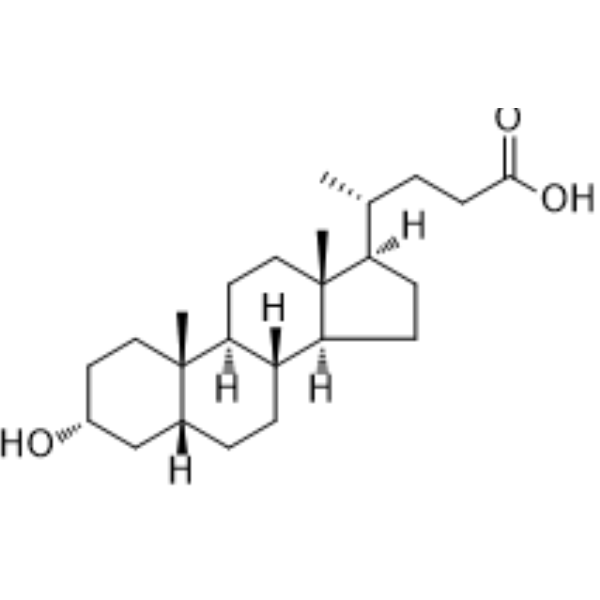
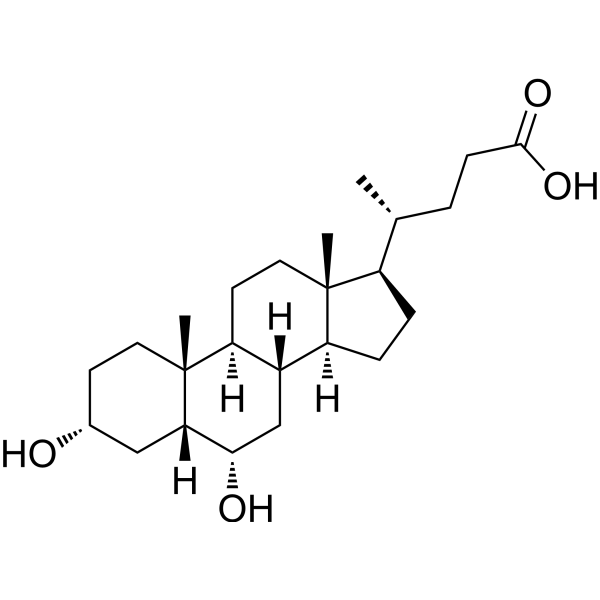
Lithocholic acid is a toxic secondary bile acid that can promote intrahepatic cholestasis and promote tumorigenesis. Lithocholic acid is also a FXR antagonist and a PXR/SXR agonist.
For research use only. We do not sell to patients.
- Purity : 99.96%
- CAS No.: 434-13-9
- Formula: C24H40O3
- Molecular Weight:376.57
-
Storage:Powder -20°C, 3 years , 4°C, 2 years ; In solvent -80°C, 6 months , -20°C, 1 month

To place orders, for customer services and technical support, please contact: MedChemExpress USA
Tel: 609-228-6898 E-mail: [email protected] [email protected]


-
 Biological Activity
-
Chemical Information
-
Solvent & Solubility
- Purity & Documentation
- References
-
 Help & FAQs


-
HY-N0593
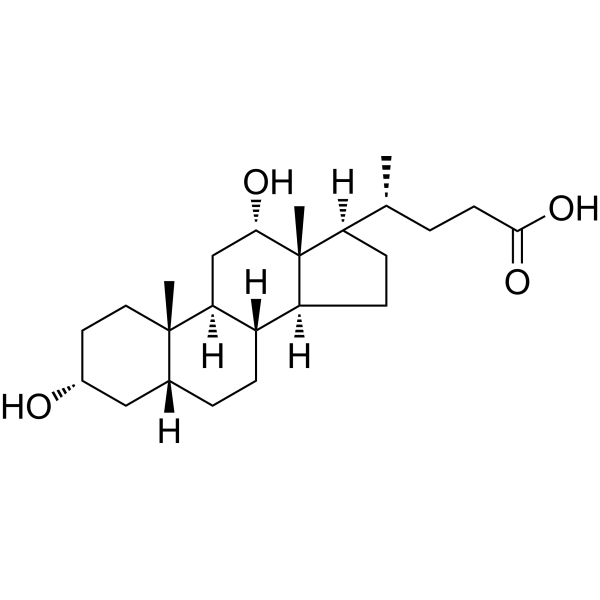
Deoxycholic acidBile Acid Receptor Activator -
HY-N0324
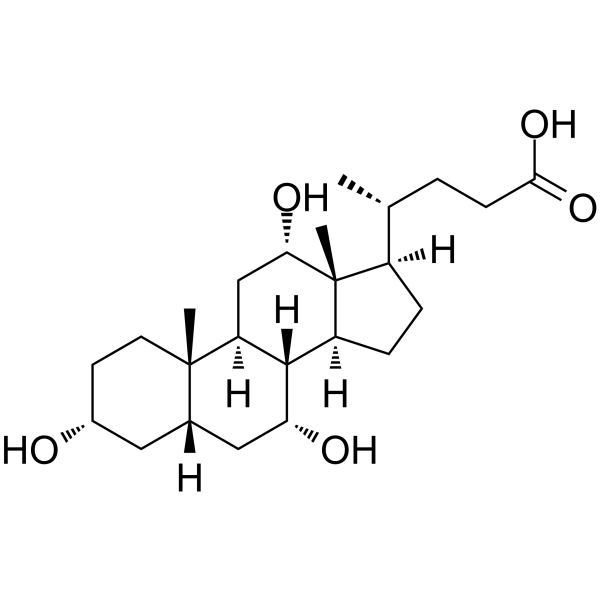
Cholic acidEndogenous Metabolite -
HY-76847
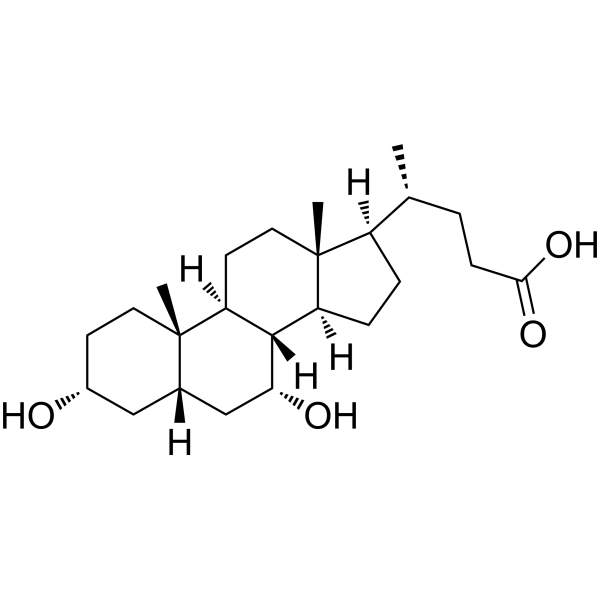
Chenodeoxycholic AcidEndogenous Metabolite -
HY-B1788
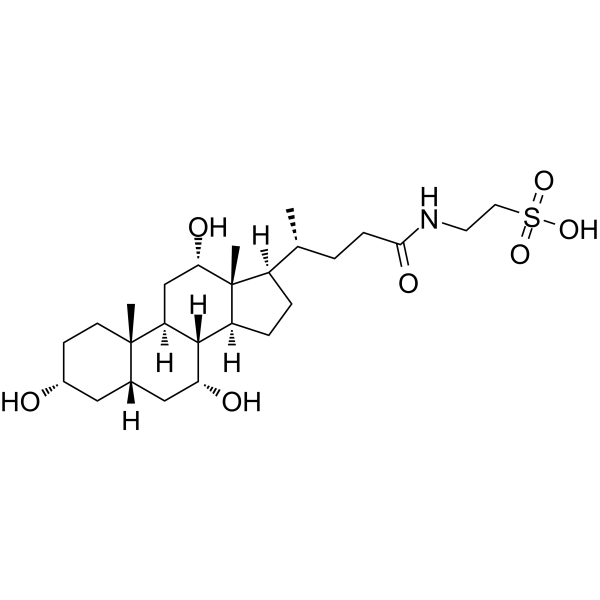
Taurocholic acidImmunoregulation Agent -
HY-N1423
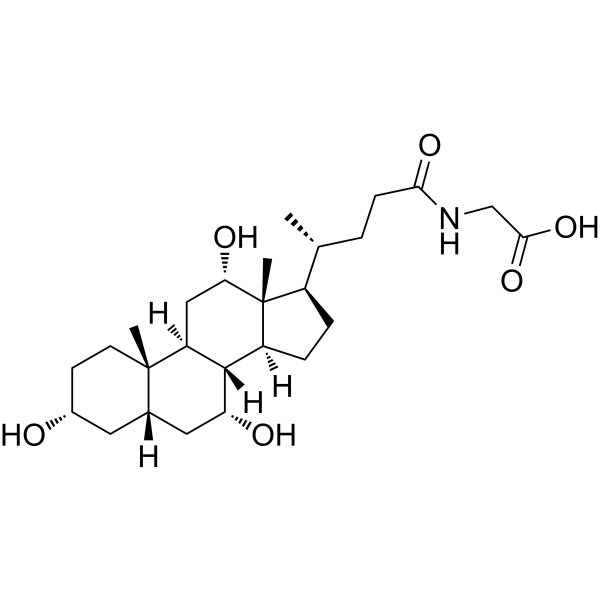
Glycocholic acidBile Acid Derivative -
HY-N2334
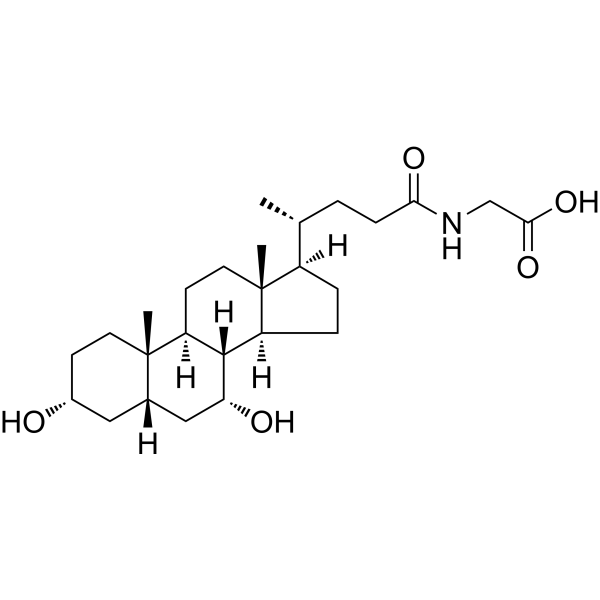
Glycochenodeoxycholic acidEndogenous Metabolite -
HY-N2027
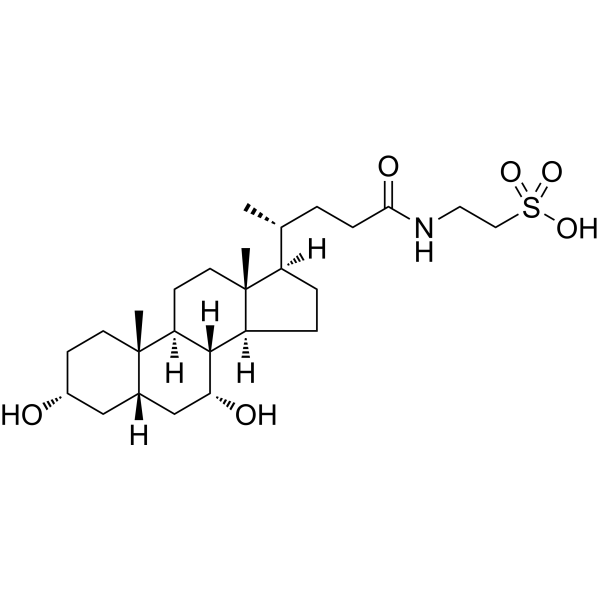
Taurochenodeoxycholic acidEndogenous Metabolite -
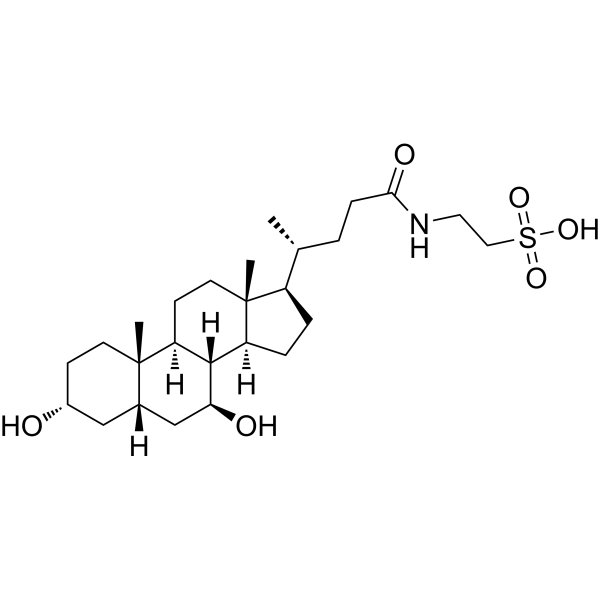
HY-19696
TauroursodeoxycholateEndoplasmic Reticulum Stress Inhibitor -
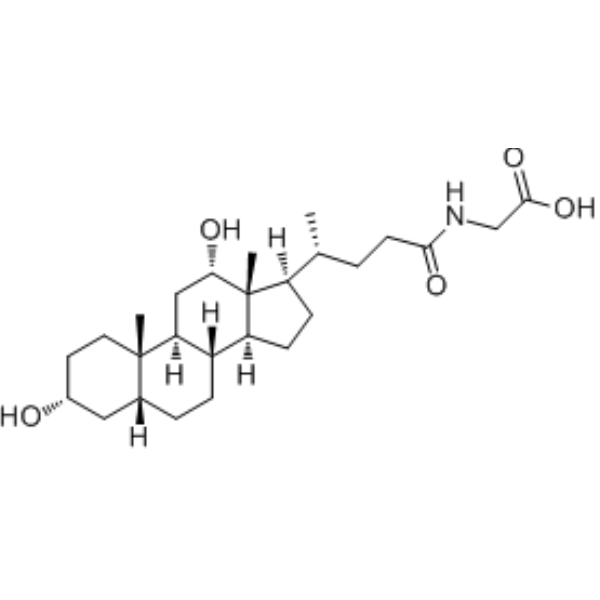
HY-125731
Glycodeoxycholic acidEndogenous Metabolite -
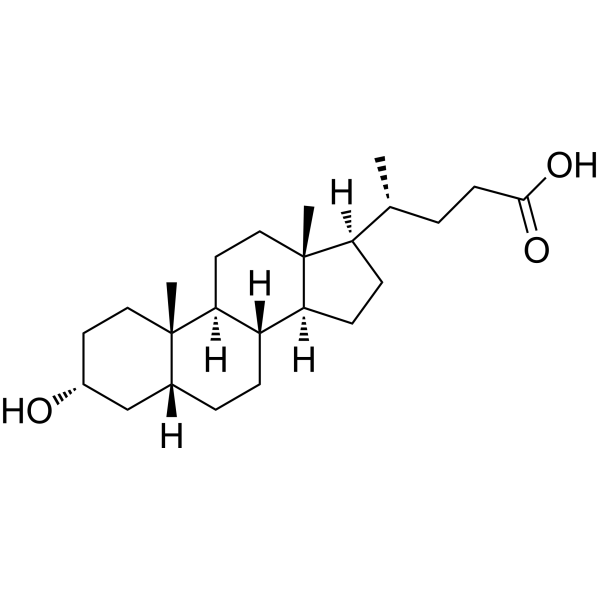
HY-B0172R
Lithocholic acid (Standard)Autophagy Inducer -
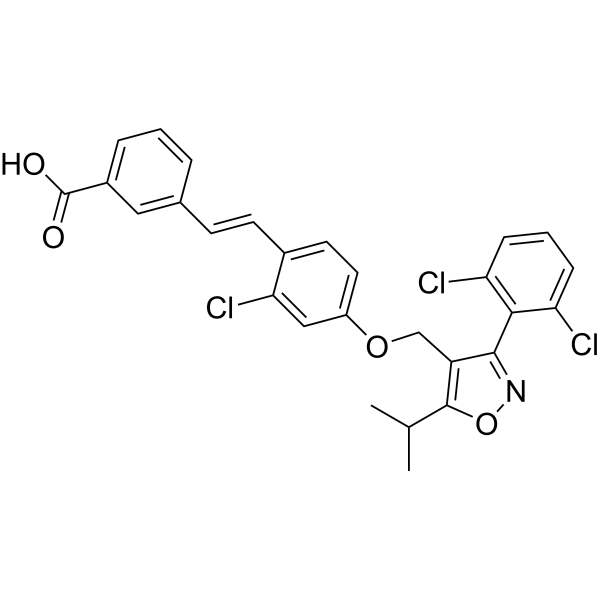
HY-50108
GW 4064FXR Agonist -
HY-N0169
Hyodeoxycholic acidGPBAR1 Agonist
Publications Citing Use of MedChemExpress (MCE) Lithocholic acid
More- Nature. 2025 Jul;643(8070):192-200. [Abstract]
- Imeta. 2026 Feb 19.
- Cell Res. 2019 Mar;29(3):193-205. [Abstract]
- Cell Host Microbe. 2025 Aug 19:S1931-3128(25)00291-4. [Abstract]
- Cell Host Microbe. 2024 Feb 14;32(2):191-208.e9. [Abstract]
- Adv Sci (Weinh). 2025 Mar;12(12):e2411719. [Abstract]
- Pharmacol Res. 2023 Oct:196:106902. [Abstract]
- J Transl Med. 2024 Dec 20;22(1):1124. [Abstract]
- J Transl Med. 2023 Aug 30;21(1):581. [Abstract]
- Cell Prolif. 2023 Nov;56(11):e13488. [Abstract]
- Br J Pharmacol. 2019 Jul;176(13):2162-2178. [Abstract]
- J Invest Dermatol. 2022 May;142(5):1381-1390.e11. [Abstract]
- Food Funct. 2021 Mar 15;12(5):2323-2334. [Abstract]
- Cells. 2026 Mar 5;15(5):473. [Abstract]
- J Hypertens. 2022 Aug 1;40(8):1577-1588. [Abstract]
- Sci Rep. 2017 Aug 30;7(1):9967. [Abstract]
- Cell Signal. 2026 Mar 6.
- Aquaculture. 2023 Sep 18, 740123.
- Microb Pathog. 2026 Jan:210:108187. [Abstract]
- Food Chem Toxicol. 2018 Oct:120:253-260. [Abstract]
- bioRxiv. 2026 Jun 19.
 Customer Validation & Images

-
RT-PCR
-
Histological Imaging/Staining
-
In Vivo Efficacy Study
-
IHC
-
RT-PCR
All Endogenous Metabolite Isoforms
More

Biological Activity
Description
IC50 & Target
|
Microbial Metabolite |
Human Endogenous Metabolite |
Cellular Effect
|
Cell Line

|
Type | Value | Description | References |
|---|---|---|---|---|
| A549 | IC50 |
>200 μM
Compound: LCA
|
Anticancer activity against human A549 cells assessed as inhibition of cell proliferation by MTT assay
Anticancer activity against human A549 cells assessed as inhibition of cell proliferation by MTT assay
|
[PMID: 36439975] |
| Caco-2 | IC50 |
56 μM
Compound: LCA
|
Cytotoxicity against human Caco2 cells assessed as cell viability after 24 hrs by MTT assay
Cytotoxicity against human Caco2 cells assessed as cell viability after 24 hrs by MTT assay
|
[PMID: 24332653] |
| CHO | EC50 |
0.58 μM
Compound: 6, LCA
|
Agonist activity at human TGR5 expressed in CHO cells by luciferase assay
Agonist activity at human TGR5 expressed in CHO cells by luciferase assay
|
[PMID: 18307294] |
| CHO | EC50 |
5.6 μM
Compound: LCA
|
Agonist activity at TGR5 expressed in CHO cells by CRE-driven luciferase reporter gene assay
Agonist activity at TGR5 expressed in CHO cells by CRE-driven luciferase reporter gene assay
|
[PMID: 19911773] |
| COS-1 | EC50 |
20 μM
Compound: 6, LCA
|
Agonist activity at human FXR expressed in COS1 cells by luciferase assay
Agonist activity at human FXR expressed in COS1 cells by luciferase assay
|
[PMID: 18307294] |
| COS-1 | EC50 |
6.7 μM
Compound: LCA
|
Agonist activity at human FXR expressed in COS1 cells by luciferase reporter gene assay
Agonist activity at human FXR expressed in COS1 cells by luciferase reporter gene assay
|
[PMID: 19911773] |
| DLD-1 | IC50 |
173.1 μM
Compound: LCA
|
Cytotoxicity against human DLD1 cells assessed as cell viability after 48 hrs by MTT assay
Cytotoxicity against human DLD1 cells assessed as cell viability after 48 hrs by MTT assay
|
[PMID: 25685308] |
| Erythrocyte | IC50 |
0.009 mg/mL
Compound: L
|
Hemolytic activity in human erythrocytes assessed as release of hemoglobin after 60 mins
Hemolytic activity in human erythrocytes assessed as release of hemoglobin after 60 mins
|
[PMID: 24461290] |
| HCT-116 | IC50 |
>200 μM
Compound: LCA
|
Anticancer activity against human HCT-116 cells assessed as inhibition of cell proliferation by MTT assay
Anticancer activity against human HCT-116 cells assessed as inhibition of cell proliferation by MTT assay
|
[PMID: 36439975] |
| HCT-116 | IC50 |
81.1 μM
Compound: LCA
|
Cytotoxicity against human HCT116 cells assessed as cell viability after 48 hrs by MTT assay
Cytotoxicity against human HCT116 cells assessed as cell viability after 48 hrs by MTT assay
|
[PMID: 25685308] |
| HCT-8 | IC50 |
97.4 μM
Compound: LCA
|
Cytotoxicity against human HCT8 cells assessed as cell viability after 48 hrs by MTT assay
Cytotoxicity against human HCT8 cells assessed as cell viability after 48 hrs by MTT assay
|
[PMID: 25685308] |
| HEK293 | EC50 |
0.68 μM
Compound: 1, LCA
|
Agonist activity at human GPBAR1 expressed in HEK293 cells assessed as increase in intracellular cAMP level after 30 mins by cAMP-Glo assay
Agonist activity at human GPBAR1 expressed in HEK293 cells assessed as increase in intracellular cAMP level after 30 mins by cAMP-Glo assay
|
[PMID: 25735208] |
| HEK-293T | EC50 |
2.14 μM
Compound: LCA
|
Agonist activity at VP16 tagged-VDR-LBD (unknown origin) expressed in HEK293T cells assessed as SRC1 coactivator peptide recruitment after 16 hrs by luciferase reporter gene based two hybrid assay
Agonist activity at VP16 tagged-VDR-LBD (unknown origin) expressed in HEK293T cells assessed as SRC1 coactivator peptide recruitment after 16 hrs by luciferase reporter gene based two hybrid assay
|
[PMID: 26774929] |
| HEK-293T | IC50 |
46.7 μM
Compound: LCA
|
Antagonist activity against VP16 tagged-VDR-LBD (unknown origin) expressed in HEK293T cells assessed as inhibition of 1,25-dihydroxyvitamin D3-induced SRC1 coactivator peptide recruitment after 16 hrs by luciferase reporter gene based two hybrid assay
Antagonist activity against VP16 tagged-VDR-LBD (unknown origin) expressed in HEK293T cells assessed as inhibition of 1,25-dihydroxyvitamin D3-induced SRC1 coactivator peptide recruitment after 16 hrs by luciferase reporter gene based two hybrid assay
|
[PMID: 26774929] |
| HepG2 | EC50 |
50 μM
Compound: LCA
|
Cytotoxicity in human HepG2 cells assessed as induction of cell necrosis incubated for 4 hrs by LDH release assay
Cytotoxicity in human HepG2 cells assessed as induction of cell necrosis incubated for 4 hrs by LDH release assay
|
[PMID: 27652492] |
| HepG2 | EC50 |
50 μM
Compound: LCA
|
Cytotoxicity in human HepG2 cells assessed as reduction in cell viability incubated for 4 hrs by CellTiter-Glo assay
Cytotoxicity in human HepG2 cells assessed as reduction in cell viability incubated for 4 hrs by CellTiter-Glo assay
|
[PMID: 27652492] |
| HET-1A | CC50 |
25 μM
Compound: 35, LCA
|
Cytotoxicity against human HET-1A cells assessed as cell viability after 24 hrs by MTT assay
Cytotoxicity against human HET-1A cells assessed as cell viability after 24 hrs by MTT assay
|
[PMID: 20713311] |
| HT-1080 | IC50 |
23 μM
Compound: LCA
|
Cytotoxicity against human HT1080 cells assessed as cell viability after 24 hrs by MTT assay
Cytotoxicity against human HT1080 cells assessed as cell viability after 24 hrs by MTT assay
|
[PMID: 24332653] |
| HT-29 | IC50 |
>200 μM
Compound: LCA
|
Anticancer activity against human HT-29 cells assessed as inhibition of cell proliferation by MTT assay
Anticancer activity against human HT-29 cells assessed as inhibition of cell proliferation by MTT assay
|
[PMID: 36439975] |
| Huh-7 | IC50 |
>200 μM
Compound: LCA
|
Anticancer activity against human Huh-7 cells assessed as inhibition of cell proliferation by MTT assay
Anticancer activity against human Huh-7 cells assessed as inhibition of cell proliferation by MTT assay
|
[PMID: 36439975] |
| LoVo | IC50 |
>200 μM
Compound: LCA
|
Anticancer activity against human LoVo cells assessed as inhibition of cell proliferation by MTT assay
Anticancer activity against human LoVo cells assessed as inhibition of cell proliferation by MTT assay
|
[PMID: 36439975] |
| MGC-803 | IC50 |
>200 μM
Compound: LCA
|
Anticancer activity against human MGC-803 cells assessed as inhibition of cell proliferation by MTT assay
Anticancer activity against human MGC-803 cells assessed as inhibition of cell proliferation by MTT assay
|
[PMID: 36439975] |
| NCI-H716 | EC50 |
5 μM
Compound: LCA
|
Agonist activity at TGR5 expressed in NCI-H716 cells assessed as cAMP level after 60 mins by FRET analysis
Agonist activity at TGR5 expressed in NCI-H716 cells assessed as cAMP level after 60 mins by FRET analysis
|
[PMID: 24900463] |
| PC-3 | IC50 |
50 μM
Compound: 1, LCA
|
Antagonist activity at EphA2 in human PC3 cells assessed as inhibition of ephrin-A1-Fc-stimulated EphA2 phosphorylation pretreated for 20 mins by sandwich ELISA
Antagonist activity at EphA2 in human PC3 cells assessed as inhibition of ephrin-A1-Fc-stimulated EphA2 phosphorylation pretreated for 20 mins by sandwich ELISA
|
[PMID: 23489211] |
| RKO | IC50 |
>200 μM
Compound: LCA
|
Anticancer activity against human RKO cells assessed as inhibition of cell proliferation by MTT assay
Anticancer activity against human RKO cells assessed as inhibition of cell proliferation by MTT assay
|
[PMID: 36439975] |
| SK-HEP1 | IC50 |
>200 μM
Compound: LCA
|
Anticancer activity against human SK-HEP1 cells assessed as inhibition of cell proliferation by MTT assay
Anticancer activity against human SK-HEP1 cells assessed as inhibition of cell proliferation by MTT assay
|
[PMID: 36439975] |
| SW480 | IC50 |
>200 μM
Compound: LCA
|
Anticancer activity against human SW480 cells assessed as inhibition of cell proliferation by MTT assay
Anticancer activity against human SW480 cells assessed as inhibition of cell proliferation by MTT assay
|
[PMID: 36439975] |
In Vitro
Lithocholic acid inhibits CDCA- and GW4064-induced FXR activation with an IC50of 0.7 and 1.4 μM, respectively[5].
Lithocholic acid (10-30 μM, 24 h) inhibits the 100 nM GW4064 induced BSEP expression in HepG2 cells[5].
Lithocholic acid (0-500 μM) dose-dependently inhibits the proliferation of neuroblastoma cells (BE(2)-m17, SK-n-SH, SK-n-MCIXC and Lan-1)[3].
MedChemExpress (MCE) has not independently confirmed the accuracy of these methods. They are for reference only.
In Vivo
-
Animal Model:Male mice (C57BL/6)[4].
-
Dosage:0.6% LCA-supplement diet, with the AIN93G diet as a control
-
Administration:in diet, for 6 days
-
Result:Induced liver injury.
Activated TGFβ-SMAD3 signaling.
Increased serum ALP activities.
-
Animal Model:Male mice (C57BL/6)[2].
-
Dosage:125 mg/kg, dissolved in corn oil
-
Administration:i.p., twice a day for four days
-
Result:Induced liver injury, generated necrosis and neutrophilic-granulocytic infiltrate (H&E staining).
Increased AST, ALT and ALP level.
Induced Disease Models
Please do not refer to only one article to determine the experimental conditions. It is recommended to determine the optimal experimental conditions (animal strain, age, dosage, frequency and cycle, detection time and indicators, etc.) through preliminary experiments before the formal experiment.
Lithocholic acid (LCA) can be used to induce cholestasis models[6][7].
Administration: 0.2 μmol/100 g • iv • killed after 1 h
Mice: ICR • male • 5-7-week-old (period: 3 days)
Administration: 150 mg/kg • po • 2 times a day for 5 times
(2) LCA (p.o.) is taken up in corn oil. The animals were sacrificed 12 h following the 5th treatment. The blood samples (50 μl) can be collected by tail bleeding at 0, 12, 24 and 36 h following the 1st dose.
MedChemExpress (MCE) has not independently confirmed the accuracy of these methods. They are for reference only.


Chemical Information
-
CAS No. 434-13-9
-
Appearance Solid
-
Molecular Weight 376.57
-
Formula C24H40O3
-
Color White to off-white
-
SMILES
C[C@@]12[C@](CC[C@]2([H])[C@H](C)CCC(O)=O)([H])[C@@]3([H])[C@]([C@@]4([C@](C[C@H](O)CC4)([H])CC3)C)([H])CC1
-
Synonyms
3α-Hydroxy-5β-cholanic acid
-
Structure Classification
-
Initial Source
-
Shipping
Room temperature in continental US; may vary elsewhere.
-
Storage
Powder -20°C 3 years 4°C 2 years In solvent -80°C 6 months -20°C 1 month


Publications (21)
-
Journal Impact Factor
-
Most Recent
-
Nature
2025 Jul;643(8070):192-200. PMID: 39695227 -
-
Cell Res
Virus-induced accumulation of intracellular bile acids activates the TGR5-β-arrestin-SRC axis to enable innate antiviral immunity. [Abstract]2019 Mar;29(3):193-205. PMID: 30651583
Lithocholic acid purchased from MedChemExpress. Usage Cited in: Cell Res. 2019 Mar;29(3):193-205. [Abstract]
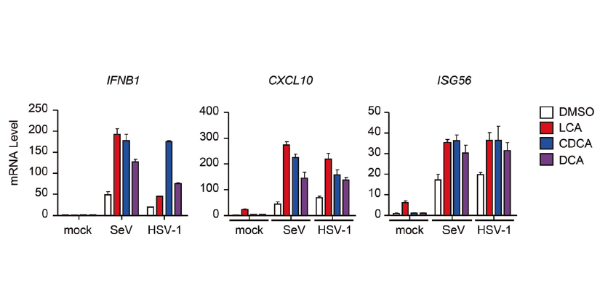
Effects of bile acids (BAs) on virus-induced transcription of antiviral genes. Raw264.7 cells were infected with HSV-1 or SeV for 30 min and treated with Lithocholic acid (LCA) (0.1 mM), Chenodeoxycholic Acid (CDCA) (0.1 mM) or Deoxycholic acid (DCA) (0.1 mM) for 6 h before qPCR analysis of the indicated mRNA levels.
Lithocholic acid purchased from MedChemExpress. Usage Cited in: Cell Res. 2019 Mar;29(3):193-205. [Abstract]
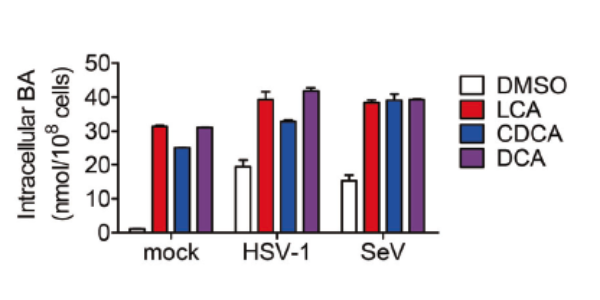
Examination of intracellular bile acids (BA) levels after cells were treated with exogenous BAs. Raw264.7 cells were infected with HSV-1 or SeV for 30 min and treated with Lithocholic acid (LCA) (0.1 mM), Chenodeoxycholic Acid (CDCA) (0.1 mM) or Deoxycholic acid (DCA) (0.1 mM) for 6 h before BA assays were performed.
-
Cell Host Microbe
2025 Aug 19:S1931-3128(25)00291-4. PMID: 40848719 -
Cell Host Microbe
A gut microbiota-bile acid axis promotes intestinal homeostasis upon aspirin-mediated damage. [Abstract]2024 Feb 14;32(2):191-208.e9. PMID: 38237593 -
Adv Sci (Weinh)
Targeting FDFT1 Reduces Cholesterol and Bile Acid Production and Delays Hepatocellular Carcinoma Progression Through the HNF4A/ALDOB/AKT1 Axis. [Abstract]2025 Mar;12(12):e2411719. PMID: 39899681
Lithocholic acid purchased from MedChemExpress. Usage Cited in: Adv Sci (Weinh). 2025 Mar;12(12):e2411719. [Abstract]
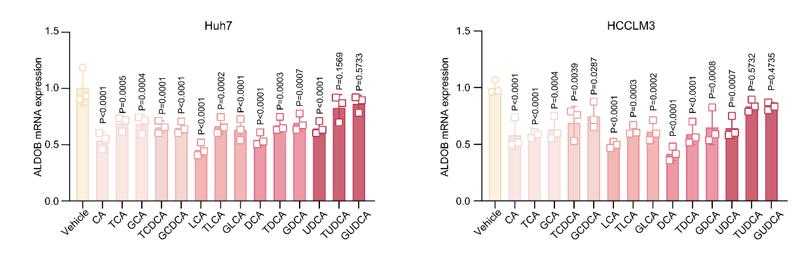
The mRNA levels of ALDOB in Huh7 or HCCLM3 cells treated with various bile acids (100 μM, 24 h). All data are presented as mean ± SD. Data were analyzed by one-way ANOVA with Bonferroni multiple-comparison correction. CA, cholic acid; TCA, taurocholic acid; GCA, glycocholic acid; TCDCA, taurochenodeoxycholic acid; GCDCA, glycochenodeoxycholic acid; LCA, lithocholic acid; TLCA, taurolithocholic acid; GLCA, glycolithocholic acid; DCA, deoxycholic acid; TDCA, taurodeoxycholic acid; GDCA, glycodeoxycholic acid; UDCA, ursodeoxycholic acid; TUDCA, tauroursodeoxycholic acid; GUDCA, glycoursodeoxycholic acid.
-
Pharmacol Res
2023 Oct:196:106902. PMID: 37657657
Lithocholic acid purchased from MedChemExpress. Usage Cited in: Pharmacol Res. 2023 Oct:196:106902. [Abstract]
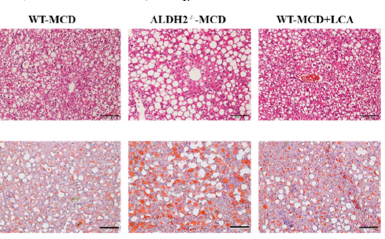
LCA supplementation ameliorated MCD-induced NASH aggravated by ALDH2 deficiency. Representative photomicrographs of liver sections stained with H&E or Oil-red O (scale bar, 100 μm); the NAS score and oil red O-positive area were analysed and quantified (n = 8).
-
J Transl Med
Conjugated bile acids alleviate acute pancreatitis through inhibition of TGR5 and NLRP3 mediated inflammation. [Abstract]2024 Dec 20;22(1):1124. PMID: 39707318 -
J Transl Med
Quantitative proteomic and phosphoproteomic analysis reveal the relationship between mitochondrial dysfunction and cytoskeletal remodeling in hiPSC-CMs deficient in PINK1. [Abstract]2023 Aug 30;21(1):581. PMID: 37649075 -
Cell Prolif
Suppression of the gut microbiota-bile acid-FGF19 axis in patients with atrial fibrillation. [Abstract]2023 Nov;56(11):e13488. PMID: 37186335 -
Br J Pharmacol
2019 Jul;176(13):2162-2178. PMID: 30875096 -
J Invest Dermatol
Bile Acids Improve Psoriasiform Dermatitis through Inhibition of IL-17A Expression and CCL20-CCR6-Mediated Trafficking of T Cells. [Abstract]2022 May;142(5):1381-1390.e11. PMID: 34808237
Lithocholic acid purchased from MedChemExpress. Usage Cited in: J Invest Dermatol. 2022 May;142(5):1381-1390.e11. [Abstract]
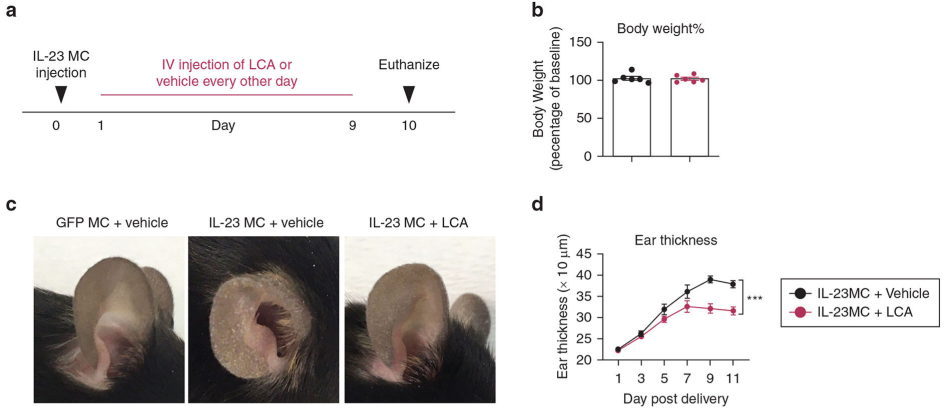
(a) Schematic illustration of experimental protocols. Mice were administered i.v. PBS vehicle or LCA (Lithocholic acid, ) at a dose of 4 mg/kg/per day every other day beginning the following day after MC was delivered. (b) Percentage of baseline body weight, (c) representative photographs, (d) time course of ear thickness.
Lithocholic acid purchased from MedChemExpress. Usage Cited in: J Invest Dermatol. 2022 May;142(5):1381-1390.e11. [Abstract]
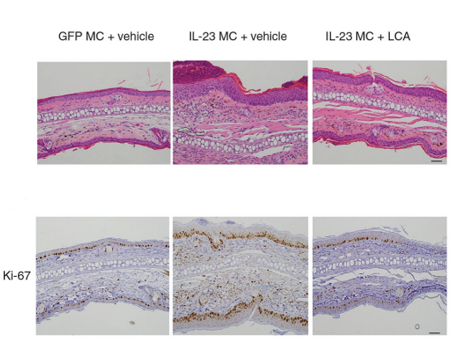
Wild-type C57BL/6 mice were administered i.v. PBS vehicle or LCA (Lithocholic acid ) at a dose of 4 mg/kg/per day every other day beginning the following day after MC was delivered.Image of H&E section (up), representative images of Ki-67 immunohistochemistry (bottom).
-
Food Funct
Apigenin protects mice against 3,5-diethoxycarbonyl-1,4-dihydrocollidine-induced cholestasis. [Abstract]2021 Mar 15;12(5):2323-2334. PMID: 33620063 -
Cells
PROTAC-Mediated Targeted Degradation of MDM2 Induces Tumor-Suppressive Signaling in Osteosarcoma Cells. [Abstract]2026 Mar 5;15(5):473. PMID: 41827906 -
J Hypertens
Renal Farnesoid X Receptor improves high fructose-induced salt-sensitive hypertension in mice by inhibiting DNM3 to promote nitro oxide production. [Abstract]2022 Aug 1;40(8):1577-1588. PMID: 35792095 -
Sci Rep
2017 Aug 30;7(1):9967. PMID: 28855630 -
-
-
Microb Pathog
Lithocholic acid exerts antiviral activity against porcine epidemic diarrhea virus by enhancing TGR5-mediated type III interferon production. [Abstract]2026 Jan:210:108187. PMID: 41242567 -
Food Chem Toxicol
2018 Oct:120:253-260. PMID: 30009888 -


Solvent & Solubility
In Vitro:
DMSO : 100 mg/mL (265.55 mM; Need ultrasonic; Hygroscopic DMSO has a significant impact on the solubility of product, please use newly opened DMSO)
Ethanol : 10 mg/mL (26.56 mM; ultrasonic and warming and heat to 60°C)
H2O : 0.99 mg/mL (2.63 mM; ultrasonic and warming and adjust pH to 11 with NaOH and heat to 60°C)
Please refer to the solubility information to select the appropriate solvent. Once prepared, please aliquot and store the solution to prevent product inactivation from repeated freeze-thaw cycles.
Storage method and period of stock solution: -80°C, 6 months; -20°C, 1 month. When stored at -80°C, please use it within 6 months. When stored at -20°C, please use it within 1 month.
* Note: If you choose water as the stock solution, please dilute it to the working solution, then filter and sterilize it with a 0.22 μm filter before use.
Please refer to the solubility information to select the appropriate solvent. Once prepared, please aliquot and store the solution to prevent product inactivation from repeated freeze-thaw cycles.
Storage method and period of stock solution: -80°C, 6 months; -20°C, 1 month. When stored at -80°C, please use it within 6 months. When stored at -20°C, please use it within 1 month.
* Note: If you choose water as the stock solution, please dilute it to the working solution, then filter and sterilize it with a 0.22 μm filter before use.
Concentration (start) × Volume (start) = Concentration (final) × Volume (final)
In Vivo:
Select the appropriate dissolution method based on your experimental animal and administration route.
- For the following dissolution methods, please ensure to first prepare a clear stock solution using an In Vitro approach and then sequentially add co-solvents:
- To ensure reliable experimental results, the clarified stock solution can be appropriately stored based on storage conditions. As for the working solution for In Vivo experiments, it is recommended to prepare freshly and use it on the same day.
- The percentages shown for the solvents indicate their volumetric ratio in the final prepared solution. If precipitation or phase separation occurs during preparation, heat and/or sonication can be used to aid dissolution.
Add each solvent one by one: 10% DMSO 90% (20% SBE-β-CD in Saline)
Solubility: ≥ 2.08 mg/mL (5.52 mM); Clear solution
This protocol yields a clear solution of ≥ 2.08 mg/mL (saturation unknown).
Taking 1 mL working solution as an example, add 100 μL DMSO stock solution (20.8 mg/mL) to 900 μL 20% SBE-β-CD in Saline, and mix evenly.
Preparation of 20% SBE-β-CD in Saline (4°C, storage for one week): 2 g SBE-β-CD powder is dissolved in 10 mL Saline, completely dissolve until clear.
Add each solvent one by one: 10% EtOH 40% PEG300 5% Tween-80 45% Saline
Solubility: ≥ 1 mg/mL (2.66 mM); Clear solution
This protocol yields a clear solution of ≥ 1 mg/mL (saturation unknown).
Taking 1 mL working solution as an example, add 100 μL EtOH stock solution (10.0 mg/mL) to 400 μL PEG300, and mix evenly; then add 50 μL Tween-80 and mix evenly; then add 450 μL Saline to adjust the volume to 1 mL.
Preparation of Saline: Dissolve 0.9 g sodium chloride in ddH₂O and dilute to 100 mL to obtain a clear Saline solution.
Add each solvent one by one: 10% EtOH 90% (20% SBE-β-CD in Saline)
Solubility: ≥ 1 mg/mL (2.66 mM); Clear solution
This protocol yields a clear solution of ≥ 1 mg/mL (saturation unknown).
Taking 1 mL working solution as an example, add 100 μL EtOH stock solution (10.0 mg/mL) to 900 μL 20% SBE-β-CD in Saline, and mix evenly.
Preparation of 20% SBE-β-CD in Saline (4°C, storage for one week): 2 g SBE-β-CD powder is dissolved in 10 mL Saline, completely dissolve until clear.
Add each solvent one by one: 10% EtOH 90% Corn Oil
Solubility: ≥ 1 mg/mL (2.66 mM); Clear solution
This protocol yields a clear solution of ≥ 1 mg/mL (saturation unknown). If the continuous dosing period exceeds half a month, please choose this protocol carefully.
Taking 1 mL working solution as an example, add 100 μL EtOH stock solution (10.0 mg/mL) to 900 μL Corn oil, and mix evenly.
In Vivo Dissolution Calculator
Please enter the basic information of animal experiments:
-
-
-
-
Recommended: Prepare an additional quantity of animals to account for potential losses during experiments.
Please enter your animal formula composition:
-
%DMSO +
Recommended: Keep the proportion of DMSO in working solution below 2% if your animal is weak.
-
%+
-
+%Tween-80 + +
-
%Saline +
The co-solvents required include: DMSO, . All of co-solvents are available by MedChemExpress (MCE). , Tween 80. All of co-solvents are available by MedChemExpress (MCE).
Working solution concentration: 0.22 mg/mL
Method for preparing stock solution: mg drug dissolved in μL DMSO. Stock solution concentration: mg/mL.
1. Take μL DMSO stock solution;
2. Add μL .
μL , mix evenly;
3. Then add μL Tween 80, mix evenly;
4. Then add μL
Please ensure that the stock solution in the first step is dissolved to a clear state, and add co-solvents in sequence. You can use ultrasonic heating (ultrasonic cleaner, recommended frequency 20-40 kHz), vortexing, etc. to assist dissolution.


Purity & Documentation
-
Data Sheet (280 KB)
-
SDS (394 KB)
- English - EN (394 KB)
- Français - FR (394 KB)
- Deutsch - DE (394 KB)
- Norwegian - NO (394 KB)
- Español - ES (394 KB)
- Swedish - SV (394 KB)
- Italian - IT (394 KB)
- Korean - KR (394 KB)
- Portuguese - PT (394 KB)
-
Handling Instructions (2659 KB)
References
[1]. Jenkins, D.J., et al., Effect on blood lipids of very high intakes of fiber in diets low in saturated fat and cholesterol. N Engl J Med, 1993. 329(1): p. 21-6. [Content Brief]
[2]. Yang R, et al. Metabolomic analysis of cholestatic liver damage in mice. Food Chem Toxicol. 2018 Jul 14;120:253-260. [Content Brief]
[3]. Goldberg, A.A., et al., Lithocholic bile acid selectively kills neuroblastoma cells, while sparing normal neuronal cells. Oncotarget, 2011. 2(10): p. 761-82. [Content Brief]
[4]. Matsubara, T., et al., TGF-beta-SMAD3 signaling mediates hepatic bile acid and phospholipid metabolism following lithocholic acid-induced liver injury. J Lipid Res, 2012. 53(12): p. 2698-707. [Content Brief]
[5]. Yu J, et al. Lithocholic acid decreases expression of bile salt export pump through farnesoid X receptor antagonist activity. J Biol Chem. 2002 Aug 30;277(35):31441-7. [Content Brief]


Complete Stock Solution Preparation Table
Please refer to the solubility information to select the appropriate solvent. Once prepared, please aliquot and store the solution to prevent product inactivation from repeated freeze-thaw cycles.
Storage method and period of stock solution: -80°C, 6 months; -20°C, 1 month. When stored at -80°C, please use it within 6 months. When stored at -20°C, please use it within 1 month.
| Optional Solvent | Concentration Solvent Mass | 1 mg | 5 mg | 10 mg | 25 mg |
|---|---|---|---|---|---|
| H2O / Ethanol / DMSO | 1 mM | 2.6555 mL | 13.2777 mL | 26.5555 mL | 66.3887 mL |
| Ethanol / DMSO | 5 mM | 0.5311 mL | 2.6555 mL | 5.3111 mL | 13.2777 mL |
| 10 mM | 0.2656 mL | 1.3278 mL | 2.6555 mL | 6.6389 mL | |
| 15 mM | 0.1770 mL | 0.8852 mL | 1.7704 mL | 4.4259 mL | |
| 20 mM | 0.1328 mL | 0.6639 mL | 1.3278 mL | 3.3194 mL | |
| 25 mM | 0.1062 mL | 0.5311 mL | 1.0622 mL | 2.6555 mL | |
| DMSO | 30 mM | 0.0885 mL | 0.4426 mL | 0.8852 mL | 2.2130 mL |
| 40 mM | 0.0664 mL | 0.3319 mL | 0.6639 mL | 1.6597 mL | |
| 50 mM | 0.0531 mL | 0.2656 mL | 0.5311 mL | 1.3278 mL | |
| 60 mM | 0.0443 mL | 0.2213 mL | 0.4426 mL | 1.1065 mL | |
| 80 mM | 0.0332 mL | 0.1660 mL | 0.3319 mL | 0.8299 mL | |
| 100 mM | 0.0266 mL | 0.1328 mL | 0.2656 mL | 0.6639 mL |
* Note: If you choose water as the stock solution, please dilute it to the working solution, then filter and sterilize it with a 0.22 μm filter before use.


Lithocholic acid Related Classifications
HY-B0172 Related Classifications
 Powered by Bioz
Keywords