



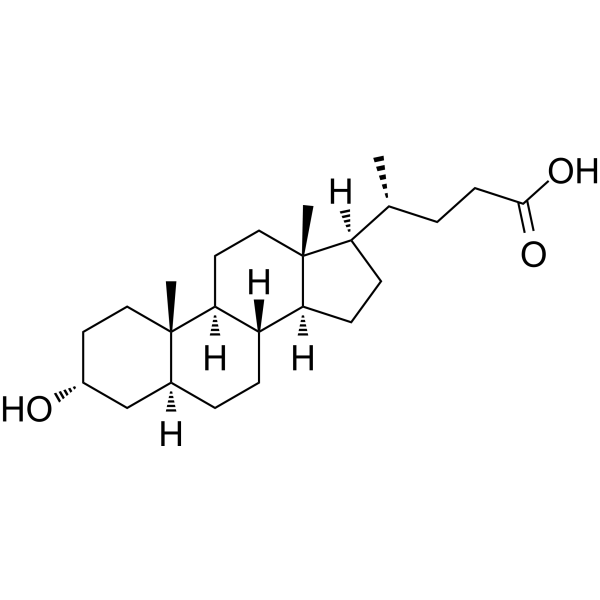
Allolithocholic acid
Based on 1 publication(s) in Google Scholar
Allolithocholic acid is an orally active metabolite of Lithocholic acid (HY-B0172). Allolithocholic acid is a dual GPBAR1 agonist (EC50 = 2.7 μM) and RORγt inverse agonist (IC50 = 3.4 μM). Allolithocholic acid modulates immune and metabolic pathways, regulates immune cell polarization, prevents M1 macrophage and Th17 CD4 cell polarization. Allolithocholic acid improves insulin sensitivity, reduces liver lipid accumulation, reverses liver immunological, inflammatory and metabolic signaling dysregulation, restores bile acid homeostasis, adipose tissue histopathology/function, and intestinal microbiota composition, modulates intestinal immunity. Allolithocholic acid can be used for the researches of cancer, inflammayion, immunology and metabolic disease.
For research use only. We do not sell to patients.
- Purity : 99.69%
- CAS No.: 2276-94-0
- Formula: C24H40O3
- Molecular Weight:376.57
-
Storage:
4°C, protect from light, stored under nitrogen
* In solvent : -80°C, 6 months; -20°C, 1 month (protect from light, stored under nitrogen)

To place orders, for customer services and technical support, please contact: MedChemExpress USA
Tel: 609-228-6898 E-mail: [email protected] [email protected]


-
 Biological Activity
-
Chemical Information
-
Solvent & Solubility
- Protocols
- Purity & Documentation
- References
-
 Help & FAQs


-
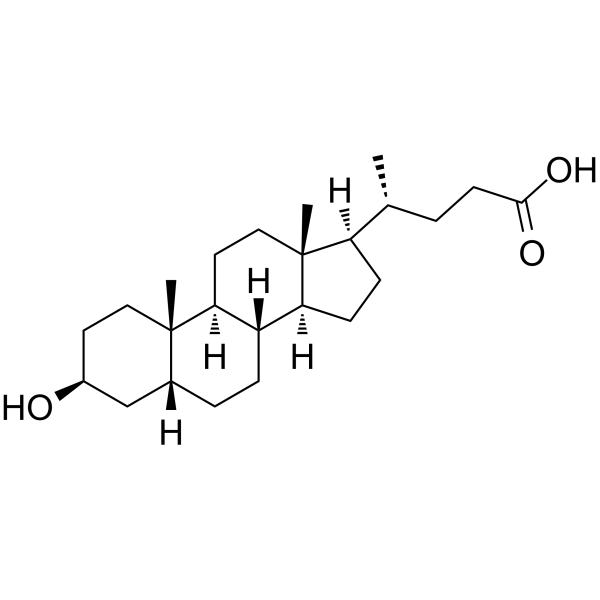
HY-B0172B
Isolithocholic acidBile Acid -
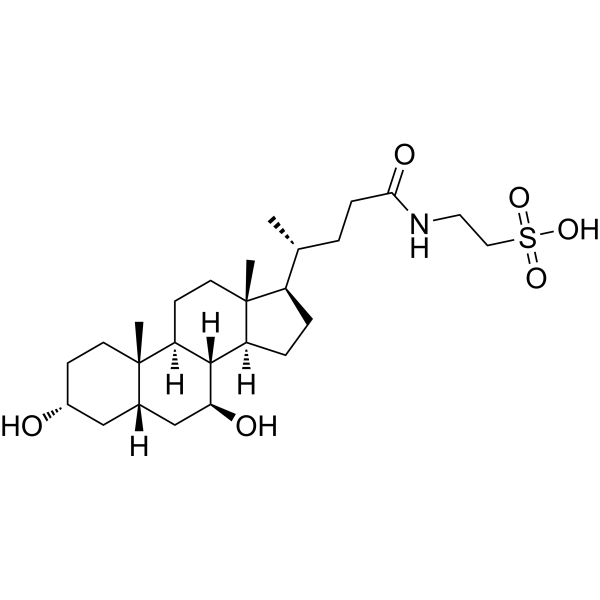
HY-19696
TauroursodeoxycholateEndoplasmic Reticulum Stress Inhibitor -
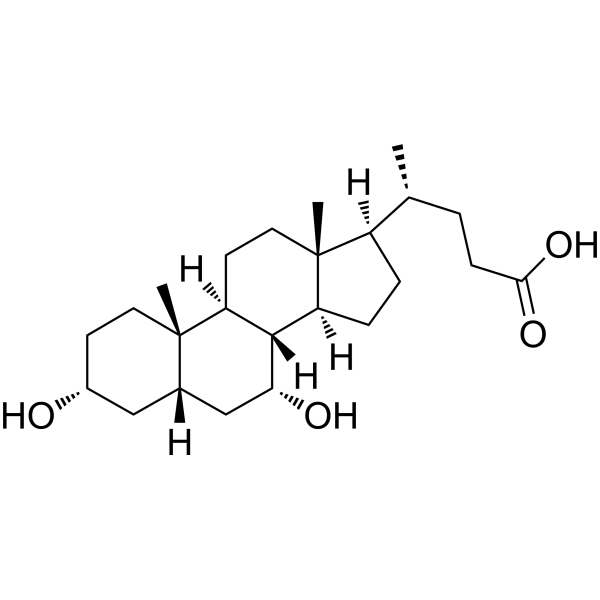
HY-76847
Chenodeoxycholic AcidEndogenous Metabolite -
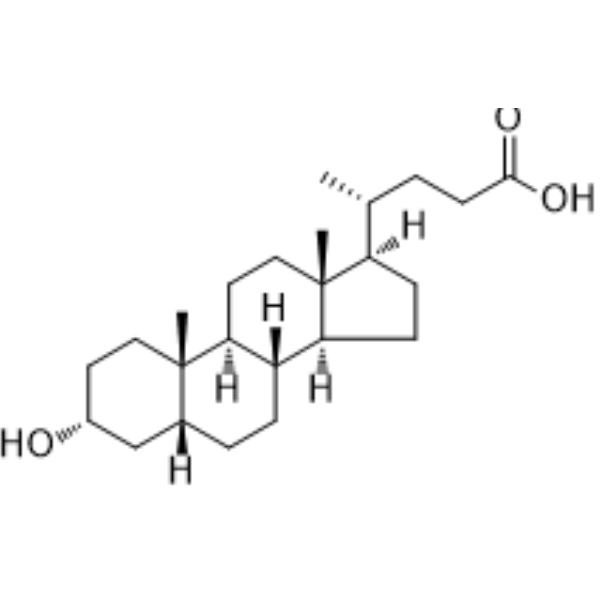
HY-B0172
Lithocholic acidAutophagy Inducer -
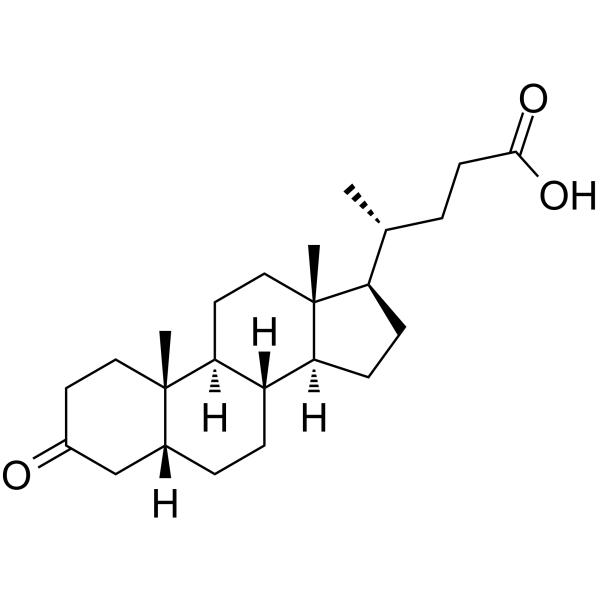
HY-125801
3-Oxo-5β-cholanoic acidTH17 Cell Differentiation Inhibitor -
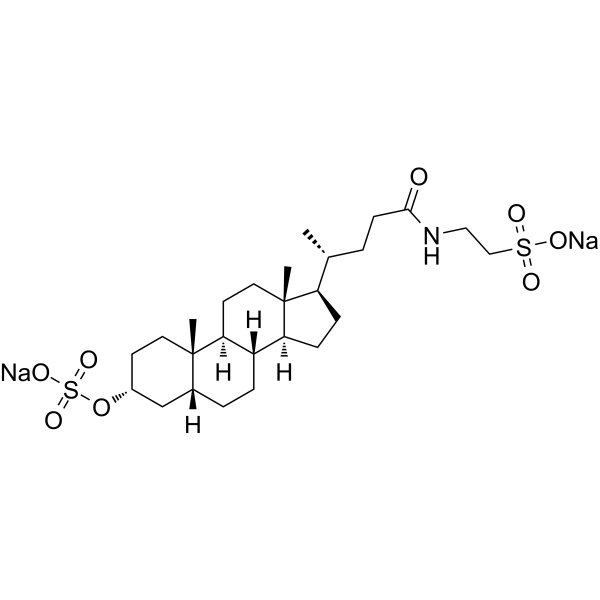
HY-137255
Taurolithocholic acid 3-sulfate disodiumGPR39 Agonist -
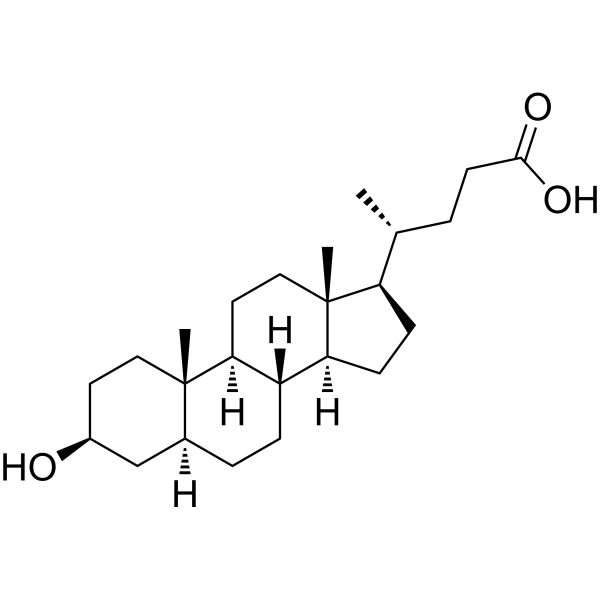
HY-B0172A
Isoallolithocholic acidT Cell Regulator -
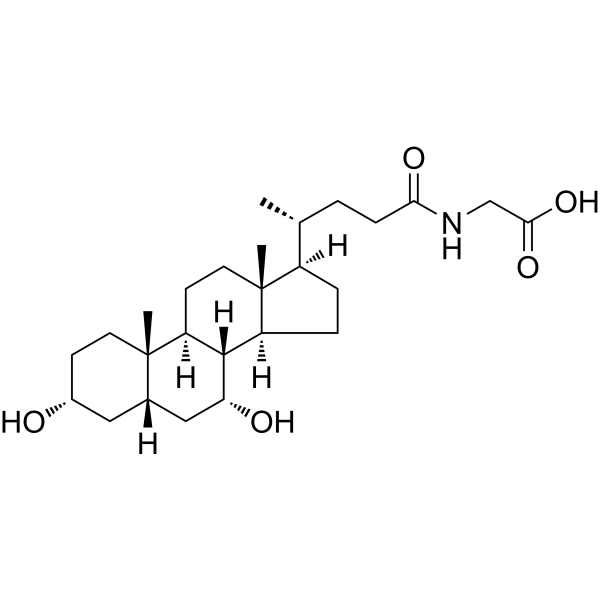
HY-N2334
Glycochenodeoxycholic acidEndogenous Metabolite -
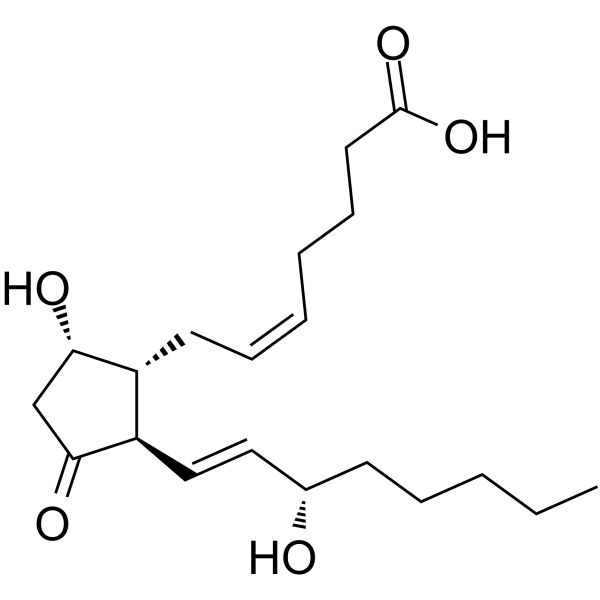
HY-101988
Prostaglandin D2Prostaglandin -
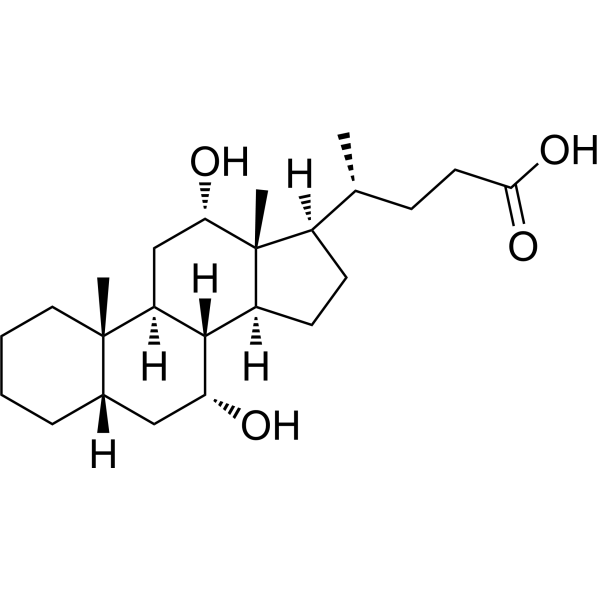
HY-W399297
Isodeoxycholic acidEndogenous Metabolite -
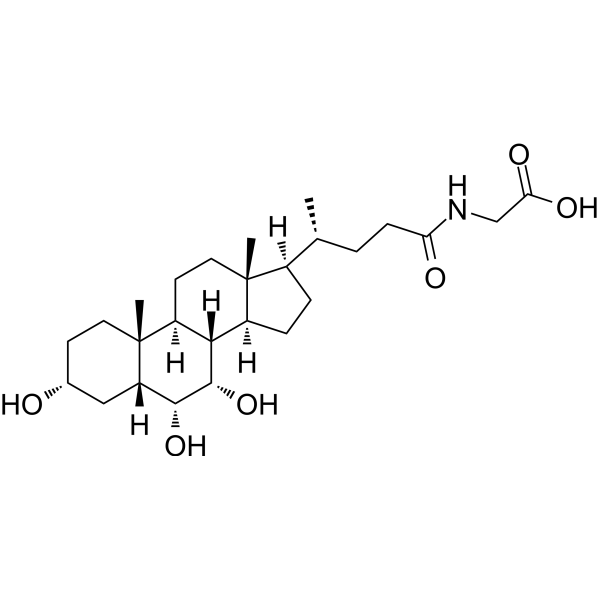
HY-122141
Glycohyocholic acidConjugated Bile Acid -

HY-W587530
6-Oxolithocholic acidEndogenous metabolite
Publications Citing Use of MedChemExpress (MCE) Allolithocholic acid
More

Biological Activity
Description
IC50 & Target
[1]|
RORγt 3.4 μM (IC50) |
In Vitro
Allolithocholic acid activates human GPBAR1 in HEK-293T cells with an EC50 of 2.7 μM[1].
Allolithocholic acid inhibits human RORγt in HEK-293T cells with an IC50 of 3.4 μM[1].
Allolithocholic acid (1 μM; 24 h) shifts polarized human M1 macrophages toward an M2-like phenotype by reducing pro-inflammatory marker expression and increasing anti-inflammatory marker expression[1].
Allolithocholic acid (1 μM; 72 h) inhibits Th17 polarization and promotes Treg polarization of human CD4+ T lymphocytes[1].
Allolithocholic acid (1-10 μM; 24 h) dose-dependently reduces pro-fibrotic gene expression in TGFβ-activated primary hepatic stellate cells[1].
MedChemExpress (MCE) has not independently confirmed the accuracy of these methods. They are for reference only.
-
Cell Line:Macrophages
-
Concentration:1 μM
-
Incubation Time:24 h
-
Result:Reduced expression of CD38 and TNFα and ncreased the expression of CD206 and L-10.
In Vivo
MedChemExpress (MCE) has not independently confirmed the accuracy of these methods. They are for reference only.
-
Animal Model:C57BL/6J (male, metabolic dysfunction-associated steatohepatitis model induced by high fat/high fructose diet + 200 µl/kg carbon tetrachloride i.p. every 2 weeks for 8 weeks)[1]
-
Dosage:10 mg/kg
-
Administration:I.g.,; daily; 7 weeks
-
Result:Reduced oral glucose tolerance test area under the curve compared to untreated disease model mice.
Reduced plasma aspartate transferase, total cholesterol, high-density lipoprotein cholesterol, and low-density lipoprotein cholesterol levels; did not significantly alter triglyceride levels.
Lowered systolic blood pressure and white blood cell counts.
Reduced liver steatosis (lowered NAFLD Activity Score and hepatic cholesterol content) and liver fibrosis (reduced collagen deposition area percentage).
Reversed disease-induced shifts in bile acid pool composition in liver, plasma, and stool, including reducing levels of α/β-muricholic acid and their taurine conjugates, and decreasing primary/secondary bile acid ratio.
Downregulated 2117 liver genes (including pro-inflammatory chemokines Ccl2, Ccl3, Ccl7, Cxcl12; interferon signaling genes Stat2, Irf9, Jak3; NF-κB signaling genes Irak2, Traf5, Ikbkb; and metabolic genes AdipoQ, Pnpla3, Lpl, Srebf1) compared to untreated disease model mice.
Decreased adipocyte diameter, increased adipocyte number; reduced adipose tissue mRNA expression of TNFα, IL-6, adiponectin-1, resistin, and leptin.
Reduced the Firmicutes/Bacteroidetes ratio by increasing Bacteroidetes abundance, and increased Bifidobacterium levels.
- Phagocytosis Functional Assay
- 3T3-L1 preadipocyte-to-adipocyte differentiation
- Naïve CD4+ T-cell subset differentiation/polarization
- Research Protocol for Endocrine Diseases
- Large-size fat particle sorting
- Research Protocol for Microbiome Analysis
- Research Protocol for Metabolic Diseases
- Lipid Droplets: Oil Red O/Sudan Dye Lipid Staining


Chemical Information
-
CAS No. 2276-94-0
-
Appearance Solid
-
Molecular Weight 376.57
-
Formula C24H40O3
-
Color White to light yellow
-
SMILES
C[C@@]12[C@](CC[C@]2([H])[C@H](C)CCC(O)=O)([H])[C@@]3([H])[C@@](CC1)([H])[C@@]4([C@@](C[C@@H](CC4)O)([H])CC3)C
-
Structure Classification
-
Initial Source
-
Shipping
Room temperature in continental US; may vary elsewhere.
-
Storage
4°C, protect from light, stored under nitrogen
* In solvent : -80°C, 6 months; -20°C, 1 month (protect from light, stored under nitrogen)


Publications (1)
-
Journal Impact Factor
-
Most Recent
-
Nature
2025 Jul;643(8070):192-200. PMID: 39695227


Solvent & Solubility
In Vitro:
DMSO : 25 mg/mL (66.39 mM; Need ultrasonic; Hygroscopic DMSO has a significant impact on the solubility of product, please use newly opened DMSO)
Please refer to the solubility information to select the appropriate solvent. Once prepared, please aliquot and store the solution to prevent product inactivation from repeated freeze-thaw cycles.
Storage method and period of stock solution: -80°C, 6 months; -20°C, 1 month (protect from light, stored under nitrogen). When stored at -80°C, please use it within 6 months. When stored at -20°C, please use it within 1 month.
Please refer to the solubility information to select the appropriate solvent. Once prepared, please aliquot and store the solution to prevent product inactivation from repeated freeze-thaw cycles.
Storage method and period of stock solution: -80°C, 6 months; -20°C, 1 month (protect from light, stored under nitrogen). When stored at -80°C, please use it within 6 months. When stored at -20°C, please use it within 1 month.
Concentration (start) × Volume (start) = Concentration (final) × Volume (final)
In Vivo:
Select the appropriate dissolution method based on your experimental animal and administration route.
- For the following dissolution methods, please ensure to first prepare a clear stock solution using an In Vitro approach and then sequentially add co-solvents:
- To ensure reliable experimental results, the clarified stock solution can be appropriately stored based on storage conditions. As for the working solution for In Vivo experiments, it is recommended to prepare freshly and use it on the same day.
- The percentages shown for the solvents indicate their volumetric ratio in the final prepared solution. If precipitation or phase separation occurs during preparation, heat and/or sonication can be used to aid dissolution.
Add each solvent one by one: 10% DMSO 40% PEG300 5% Tween-80 45% Saline
Solubility: ≥ 1.25 mg/mL (3.32 mM); Clear solution
This protocol yields a clear solution of ≥ 1.25 mg/mL (saturation unknown).
Taking 1 mL working solution as an example, add 100 μL DMSO stock solution (12.5 mg/mL) to 400 μL PEG300, and mix evenly; then add 50 μL Tween-80 and mix evenly; then add 450 μL Saline to adjust the volume to 1 mL.
Preparation of Saline: Dissolve 0.9 g sodium chloride in ddH₂O and dilute to 100 mL to obtain a clear Saline solution.
Add each solvent one by one: 10% DMSO 90% (20% SBE-β-CD in Saline)
Solubility: ≥ 1.25 mg/mL (3.32 mM); Clear solution
This protocol yields a clear solution of ≥ 1.25 mg/mL (saturation unknown).
Taking 1 mL working solution as an example, add 100 μL DMSO stock solution (12.5 mg/mL) to 900 μL 20% SBE-β-CD in Saline, and mix evenly.
Preparation of 20% SBE-β-CD in Saline (4°C, storage for one week): 2 g SBE-β-CD powder is dissolved in 10 mL Saline, completely dissolve until clear.
In Vivo Dissolution Calculator
Please enter the basic information of animal experiments:
-
-
-
-
Recommended: Prepare an additional quantity of animals to account for potential losses during experiments.
Please enter your animal formula composition:
-
%DMSO +
Recommended: Keep the proportion of DMSO in working solution below 2% if your animal is weak.
-
%+
-
+%Tween-80 + +
-
%Saline +
The co-solvents required include: DMSO, . All of co-solvents are available by MedChemExpress (MCE). , Tween 80. All of co-solvents are available by MedChemExpress (MCE).
Working solution concentration: 0.22 mg/mL
Method for preparing stock solution: mg drug dissolved in μL DMSO. Stock solution concentration: mg/mL. * In solvent : -80°C, 6 months; -20°C, 1 month (protect from light, stored under nitrogen)
1. Take μL DMSO stock solution;
2. Add μL .
μL , mix evenly;
3. Then add μL Tween 80, mix evenly;
4. Then add μL
Please ensure that the stock solution in the first step is dissolved to a clear state, and add co-solvents in sequence. You can use ultrasonic heating (ultrasonic cleaner, recommended frequency 20-40 kHz), vortexing, etc. to assist dissolution.


Purity & Documentation
-
Data Sheet (279 KB)
-
SDS (394 KB)
- English - EN (394 KB)
- Français - FR (394 KB)
- Deutsch - DE (394 KB)
- Norwegian - NO (394 KB)
- Español - ES (394 KB)
- Swedish - SV (394 KB)
- Italian - IT (394 KB)
- Korean - KR (394 KB)
- Portuguese - PT (394 KB)
-
Handling Instructions (2659 KB)
References
[1]. Marchianò S, et al. Allo-lithocholic acid, a microbiome derived secondary bile acid, attenuates liver fibrosis. Biochem Pharmacol. 2025;236:116883. [Content Brief]
[2]. Lee JW, et al. Formation of secondary allo-bile acids by novel enzymes from gut Firmicutes. Gut Microbes. 2022;14(1):2132903. [Content Brief]


Complete Stock Solution Preparation Table
Please refer to the solubility information to select the appropriate solvent. Once prepared, please aliquot and store the solution to prevent product inactivation from repeated freeze-thaw cycles.
Storage method and period of stock solution: -80°C, 6 months; -20°C, 1 month (protect from light, stored under nitrogen). When stored at -80°C, please use it within 6 months. When stored at -20°C, please use it within 1 month.
| Optional Solvent | Concentration Solvent Mass | 1 mg | 5 mg | 10 mg | 25 mg |
|---|---|---|---|---|---|
| DMSO | 1 mM | 2.6555 mL | 13.2777 mL | 26.5555 mL | 66.3887 mL |
| 5 mM | 0.5311 mL | 2.6555 mL | 5.3111 mL | 13.2777 mL | |
| 10 mM | 0.2656 mL | 1.3278 mL | 2.6555 mL | 6.6389 mL | |
| 15 mM | 0.1770 mL | 0.8852 mL | 1.7704 mL | 4.4259 mL | |
| 20 mM | 0.1328 mL | 0.6639 mL | 1.3278 mL | 3.3194 mL | |
| 25 mM | 0.1062 mL | 0.5311 mL | 1.0622 mL | 2.6555 mL | |
| 30 mM | 0.0885 mL | 0.4426 mL | 0.8852 mL | 2.2130 mL | |
| 40 mM | 0.0664 mL | 0.3319 mL | 0.6639 mL | 1.6597 mL | |
| 50 mM | 0.0531 mL | 0.2656 mL | 0.5311 mL | 1.3278 mL | |
| 60 mM | 0.0443 mL | 0.2213 mL | 0.4426 mL | 1.1065 mL |


Allolithocholic acid Related Classifications
HY-143712 Related Classifications
 Powered by Bioz