



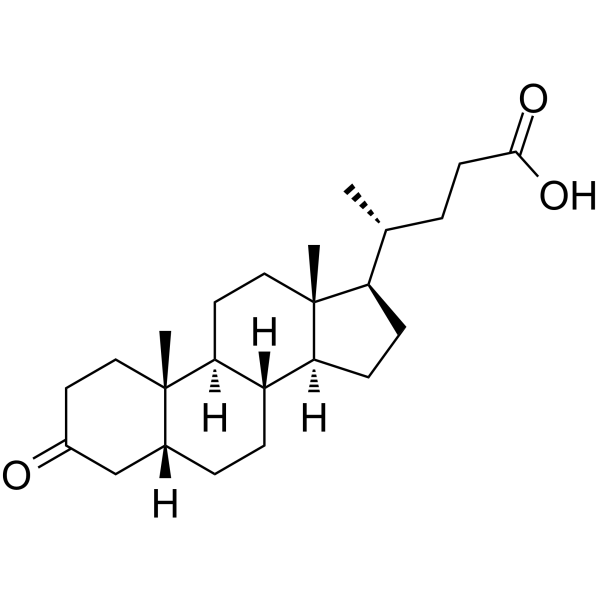
3-Oxo-5β-cholanoic acid
Based on 1 publication(s) in Google Scholar
3-Oxo-5β-cholanoic acid (Dehydrolithocholic acid), a bile acid metabolite, inhibits the diferentiation of TH17 cells by directly binding to the key transcription factor RORγt (Kd=1.13 μM).
For research use only. We do not sell to patients.
- Purity: 99.62%
- CAS No.: 1553-56-6
- Formula: C24H38O3
- Molecular Weight:374.56
-
Storage:
-20°C, stored under nitrogen
* In solvent : -80°C, 6 months; -20°C, 1 month (stored under nitrogen)

To place orders, for customer services and technical support, please contact: MedChemExpress USA
Tel: 609-228-6898 E-mail: [email protected] [email protected]


-
 Biological Activity
-
Chemical Information
-
Solvent & Solubility
- Purity & Documentation
- References
-
 Help & FAQs


-
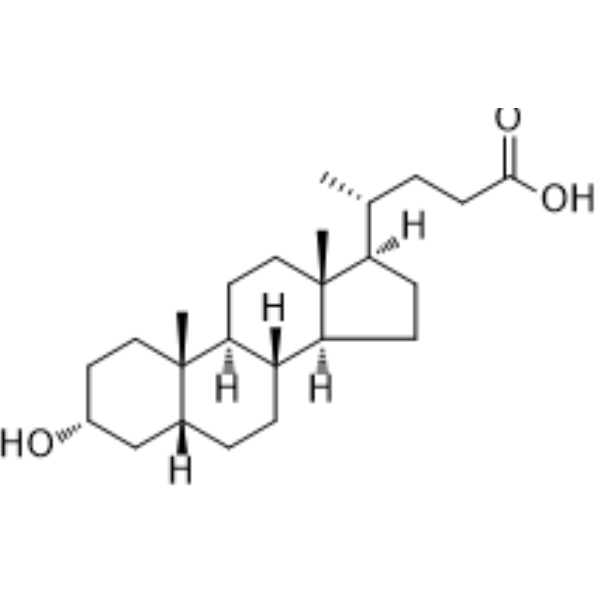
HY-B0172
Lithocholic acid -
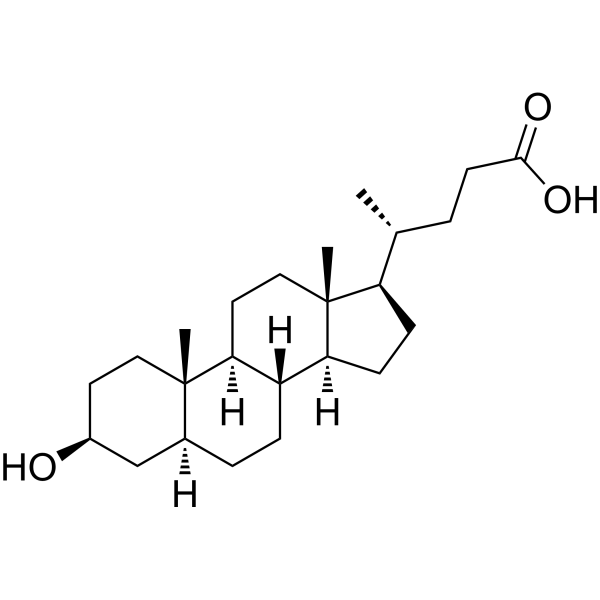
HY-B0172A
Isoallolithocholic acid -
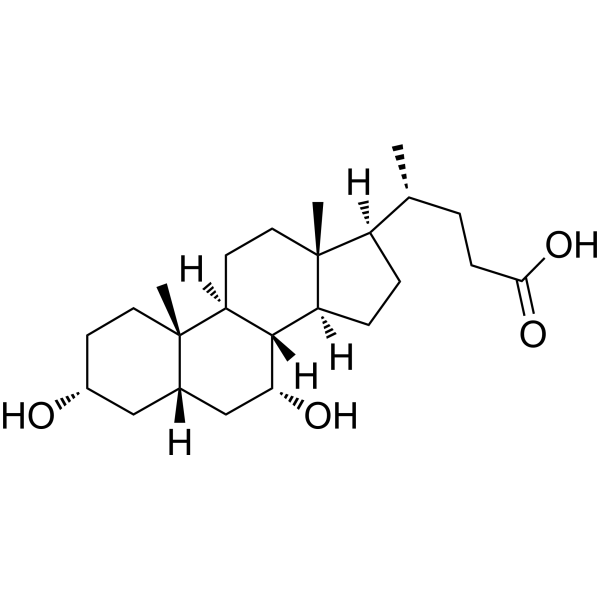
HY-76847
Chenodeoxycholic Acid -
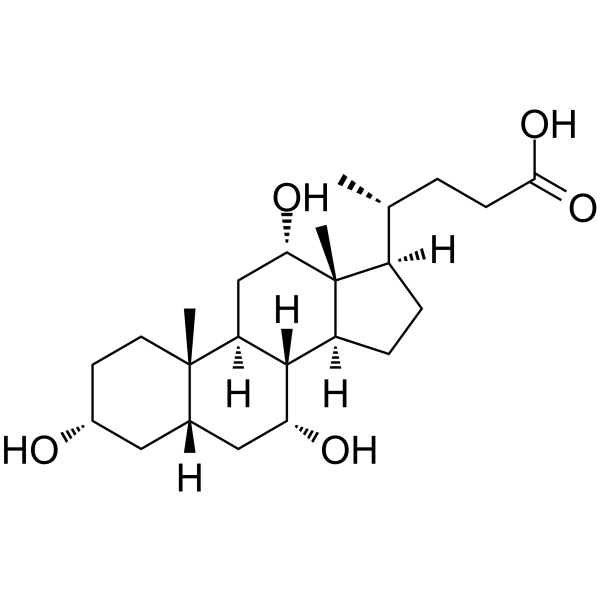
HY-N0324
Cholic acid -
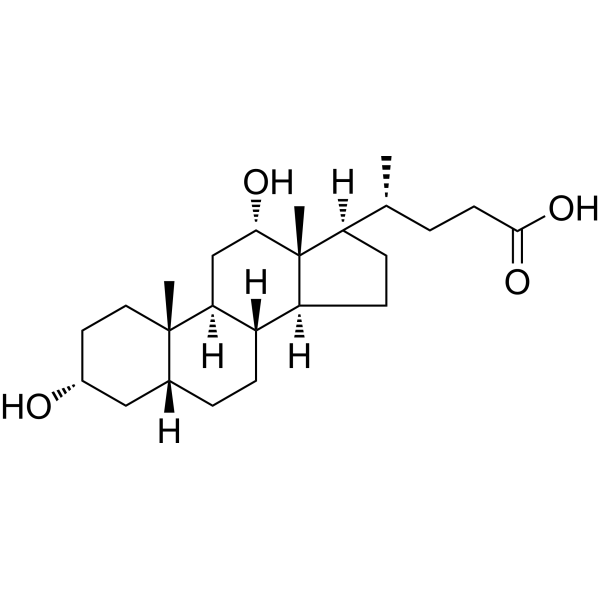
HY-N0593
Deoxycholic acid -
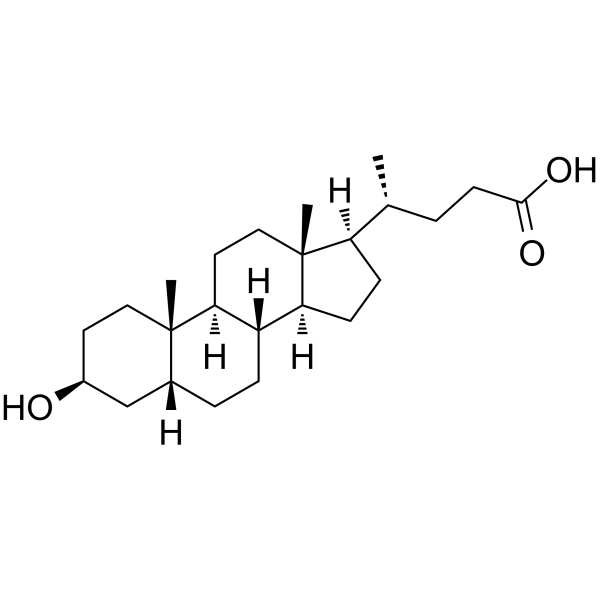
HY-B0172B
Isolithocholic acid -
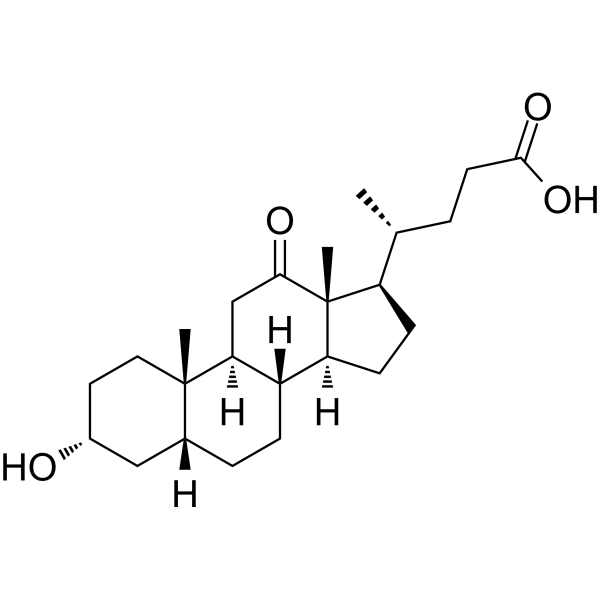
HY-135772
12-Ketodeoxycholic acid -
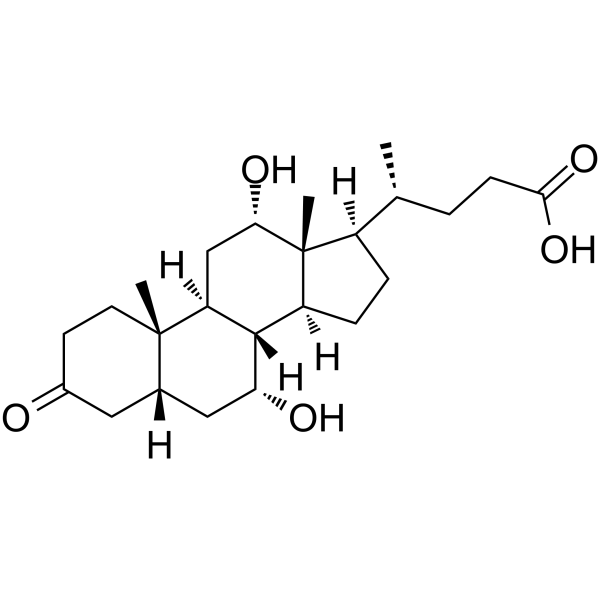
HY-N7387
3-Oxocholic acid -
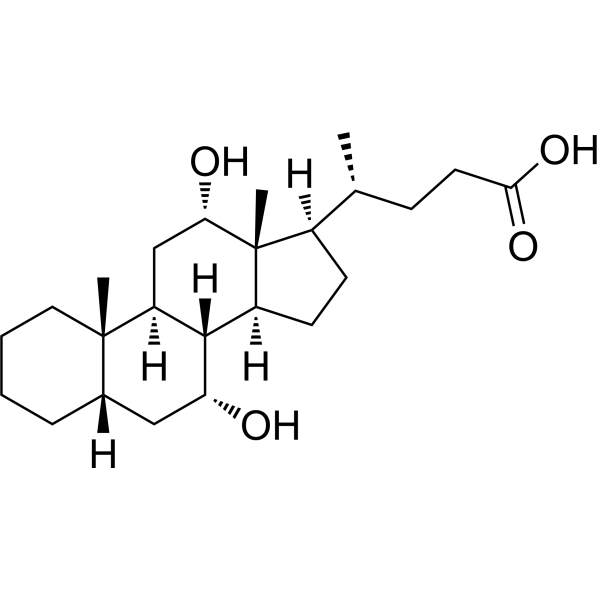
HY-W399297
Isodeoxycholic acid -
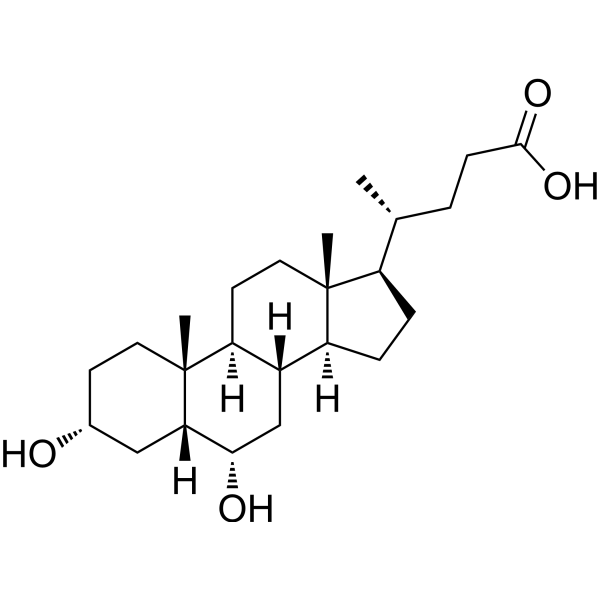
HY-N0169
Hyodeoxycholic acid -
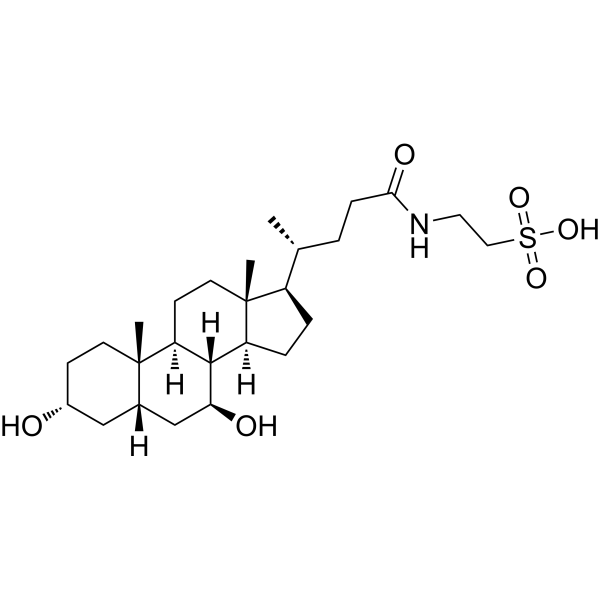
HY-19696
Tauroursodeoxycholate -
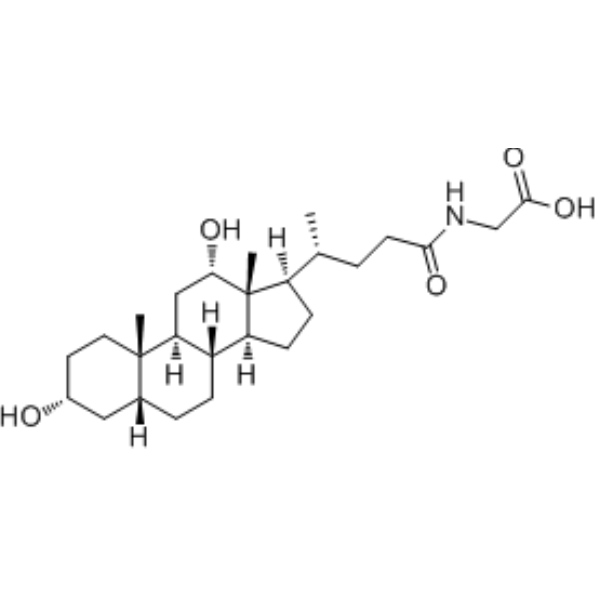
HY-125731
Glycodeoxycholic acid
Publications Citing Use of MedChemExpress (MCE) 3-Oxo-5β-cholanoic acid
More

Biological Activity
Description
Cellular Effect
|
Cell Line

|
Type | Value | Description | References |
|---|---|---|---|---|
| CHO | EC50 |
0.27 μM
Compound: 15, dehydro-LCA
|
Agonist activity at human TGR5 expressed in CHO cells by luciferase assay
Agonist activity at human TGR5 expressed in CHO cells by luciferase assay
|
[PMID: 18307294] |
In Vitro
Treatment with 3-Oxo-5β-cholanoic acid significantly reduced the activity of the RORγt reporter. These data suggest that 3-Oxo-5β-cholanoic acid probably inhibits TH17 cell differentiation by physically interacting with RORγt, and inhibiting its transcriptional activity[1].
MedChemExpress (MCE) has not independently confirmed the accuracy of these methods. They are for reference only.
In Vivo
MedChemExpress (MCE) has not independently confirmed the accuracy of these methods. They are for reference only.
-
Animal Model:B6 Jax mice (with a faecal slurry containing SFB)[1]
-
Dosage:0.3% (w/w)
-
Administration:Gavaged; for 1 week
-
Result:Significantly reduced the percentage of ileal TH17 cells.


Chemical Information
-
CAS No. 1553-56-6
-
Appearance Solid
-
Molecular Weight 374.56
-
Formula C24H38O3
-
Color White to off-white
-
SMILES
C[C@H](CCC(O)=O)[C@H]1CC[C@@]2([H])[C@]3([H])CC[C@]4([H])CC(CC[C@]4(C)[C@@]3([H])CC[C@]12C)=O
-
Synonyms
Dehydrolithocholic acid; 3-oxoLCA
-
Shipping
Room temperature in continental US; may vary elsewhere.
-
Storage
-20°C, stored under nitrogen
* In solvent : -80°C, 6 months; -20°C, 1 month (stored under nitrogen)


Publications (1)
-
Journal Impact Factor
-
Most Recent
-
Nature
2025 Jul;643(8070):192-200. PMID: 39695227


Solvent & Solubility
In Vitro:
DMSO : 100 mg/mL (266.98 mM; Need ultrasonic; Hygroscopic DMSO has a significant impact on the solubility of product, please use newly opened DMSO)
H2O : < 0.1 mg/mL (insoluble)
Please refer to the solubility information to select the appropriate solvent. Once prepared, please aliquot and store the solution to prevent product inactivation from repeated freeze-thaw cycles.
Storage method and period of stock solution: -80°C, 6 months; -20°C, 1 month (stored under nitrogen). When stored at -80°C, please use it within 6 months. When stored at -20°C, please use it within 1 month.
Please refer to the solubility information to select the appropriate solvent. Once prepared, please aliquot and store the solution to prevent product inactivation from repeated freeze-thaw cycles.
Storage method and period of stock solution: -80°C, 6 months; -20°C, 1 month (stored under nitrogen). When stored at -80°C, please use it within 6 months. When stored at -20°C, please use it within 1 month.
Concentration (start) × Volume (start) = Concentration (final) × Volume (final)
In Vivo:
Select the appropriate dissolution method based on your experimental animal and administration route.
- For the following dissolution methods, please ensure to first prepare a clear stock solution using an In Vitro approach and then sequentially add co-solvents:
- To ensure reliable experimental results, the clarified stock solution can be appropriately stored based on storage conditions. As for the working solution for In Vivo experiments, it is recommended to prepare freshly and use it on the same day.
- The percentages shown for the solvents indicate their volumetric ratio in the final prepared solution. If precipitation or phase separation occurs during preparation, heat and/or sonication can be used to aid dissolution.
Add each solvent one by one: 10% DMSO 40% PEG300 5% Tween-80 45% Saline
Solubility: ≥ 2.5 mg/mL (6.67 mM); Clear solution
This protocol yields a clear solution of ≥ 2.5 mg/mL (saturation unknown).
Taking 1 mL working solution as an example, add 100 μL DMSO stock solution (25.0 mg/mL) to 400 μL PEG300, and mix evenly; then add 50 μL Tween-80 and mix evenly; then add 450 μL Saline to adjust the volume to 1 mL.
Preparation of Saline: Dissolve 0.9 g sodium chloride in ddH₂O and dilute to 100 mL to obtain a clear Saline solution.
Add each solvent one by one: 10% DMSO 90% (20% SBE-β-CD in Saline)
Solubility: ≥ 2.5 mg/mL (6.67 mM); Clear solution
This protocol yields a clear solution of ≥ 2.5 mg/mL (saturation unknown).
Taking 1 mL working solution as an example, add 100 μL DMSO stock solution (25.0 mg/mL) to 900 μL 20% SBE-β-CD in Saline, and mix evenly.
Preparation of 20% SBE-β-CD in Saline (4°C, storage for one week): 2 g SBE-β-CD powder is dissolved in 10 mL Saline, completely dissolve until clear.
For the following dissolution methods, please prepare the working solution directly:
It is recommended to prepare fresh solutions and use them promptly within a short period of time.
The percentages shown for the solvents indicate their volumetric ratio in the final prepared solution. If precipitation or phase separation occurs during preparation, heat and/or sonication can be used to aid dissolution.
Add each solvent one by one: 0.5% CMC-Na/saline water
Solubility: 3.33 mg/mL (8.89 mM); Suspended solution; Need ultrasonic and warming and heat to 60°C
In Vivo Dissolution Calculator
Please enter the basic information of animal experiments:
-
-
-
-
Recommended: Prepare an additional quantity of animals to account for potential losses during experiments.
Please enter your animal formula composition:
-
%DMSO +
Recommended: Keep the proportion of DMSO in working solution below 2% if your animal is weak.
-
%+
-
+%Tween-80 + +
-
%Saline +
The co-solvents required include: DMSO, . All of co-solvents are available by MedChemExpress (MCE). , Tween 80. All of co-solvents are available by MedChemExpress (MCE).
Working solution concentration: 0.22 mg/mL
Method for preparing stock solution: mg drug dissolved in μL DMSO. Stock solution concentration: mg/mL. * In solvent : -80°C, 6 months; -20°C, 1 month (stored under nitrogen)
1. Take μL DMSO stock solution;
2. Add μL .
μL , mix evenly;
3. Then add μL Tween 80, mix evenly;
4. Then add μL
Please ensure that the stock solution in the first step is dissolved to a clear state, and add co-solvents in sequence. You can use ultrasonic heating (ultrasonic cleaner, recommended frequency 20-40 kHz), vortexing, etc. to assist dissolution.


Purity & Documentation
-
Data Sheet (276 KB)
-
SDS (394 KB)
- English - EN (394 KB)
- Français - FR (394 KB)
- Deutsch - DE (394 KB)
- Norwegian - NO (394 KB)
- Español - ES (394 KB)
- Swedish - SV (394 KB)
- Italian - IT (394 KB)
- Korean - KR (394 KB)
- Portuguese - PT (394 KB)
-
Handling Instructions (2659 KB)
References


Complete Stock Solution Preparation Table
Please refer to the solubility information to select the appropriate solvent. Once prepared, please aliquot and store the solution to prevent product inactivation from repeated freeze-thaw cycles.
Storage method and period of stock solution: -80°C, 6 months; -20°C, 1 month (stored under nitrogen). When stored at -80°C, please use it within 6 months. When stored at -20°C, please use it within 1 month.
| Optional Solvent | Concentration Solvent Mass | 1 mg | 5 mg | 10 mg | 25 mg |
|---|---|---|---|---|---|
| DMSO | 1 mM | 2.6698 mL | 13.3490 mL | 26.6980 mL | 66.7450 mL |
| 5 mM | 0.5340 mL | 2.6698 mL | 5.3396 mL | 13.3490 mL | |
| 10 mM | 0.2670 mL | 1.3349 mL | 2.6698 mL | 6.6745 mL | |
| 15 mM | 0.1780 mL | 0.8899 mL | 1.7799 mL | 4.4497 mL | |
| 20 mM | 0.1335 mL | 0.6674 mL | 1.3349 mL | 3.3372 mL | |
| 25 mM | 0.1068 mL | 0.5340 mL | 1.0679 mL | 2.6698 mL | |
| 30 mM | 0.0890 mL | 0.4450 mL | 0.8899 mL | 2.2248 mL | |
| 40 mM | 0.0667 mL | 0.3337 mL | 0.6674 mL | 1.6686 mL | |
| 50 mM | 0.0534 mL | 0.2670 mL | 0.5340 mL | 1.3349 mL | |
| 60 mM | 0.0445 mL | 0.2225 mL | 0.4450 mL | 1.1124 mL | |
| 80 mM | 0.0334 mL | 0.1669 mL | 0.3337 mL | 0.8343 mL | |
| 100 mM | 0.0267 mL | 0.1335 mL | 0.2670 mL | 0.6674 mL |


3-Oxo-5β-cholanoic acid Related Classifications
HY-125801 Related Classifications
 Powered by Bioz