



Hyodeoxycholic acid
Based on 7 publication(s) in Google Scholar
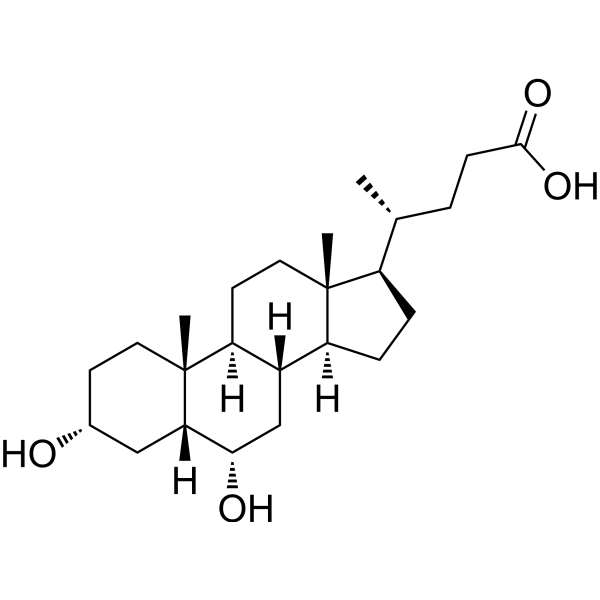
Hyodeoxycholic acid is a secondary bile acid formed in the small intestine by the gut flora, and acts as a TGR5 (GPCR19) agonist, with an EC50 of 31.6 µM in CHO cells.
For research use only. We do not sell to patients.
- Purity : 99.94%
- CAS No.: 83-49-8
- Formula: C24H40O4
- Molecular Weight:392.57
-
Storage:
4°C, protect from light
* In solvent : -80°C, 6 months; -20°C, 1 month (protect from light)

To place orders, for customer services and technical support, please contact: MedChemExpress USA
Tel: 609-228-6898 E-mail: [email protected] [email protected]


-
 Biological Activity
-
Chemical Information
-
Solvent & Solubility
- Purity & Documentation
- References
-
 Help & FAQs


-
HY-N0593
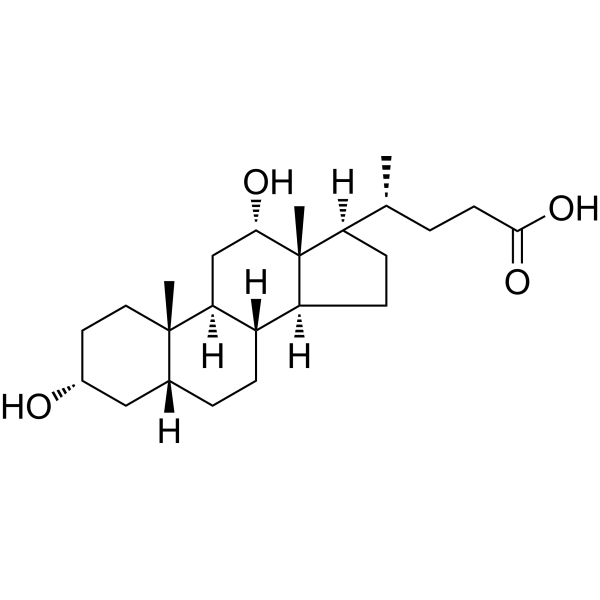
Deoxycholic acidBile Acid Receptor Activator -
HY-76847
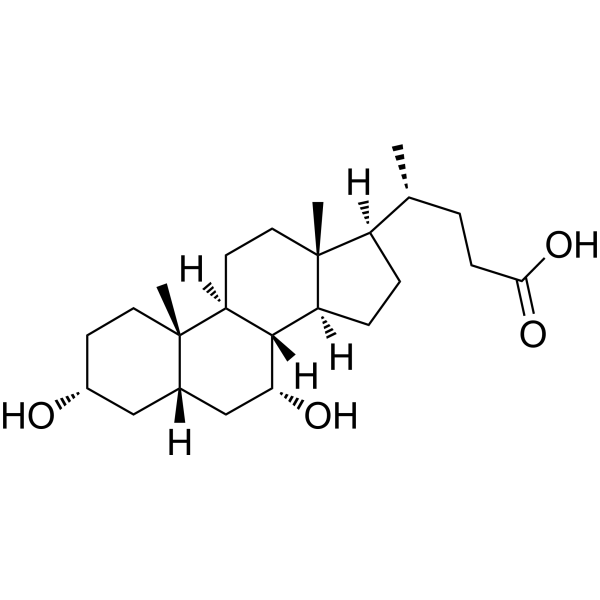
Chenodeoxycholic AcidEndogenous Metabolite -
HY-B0172
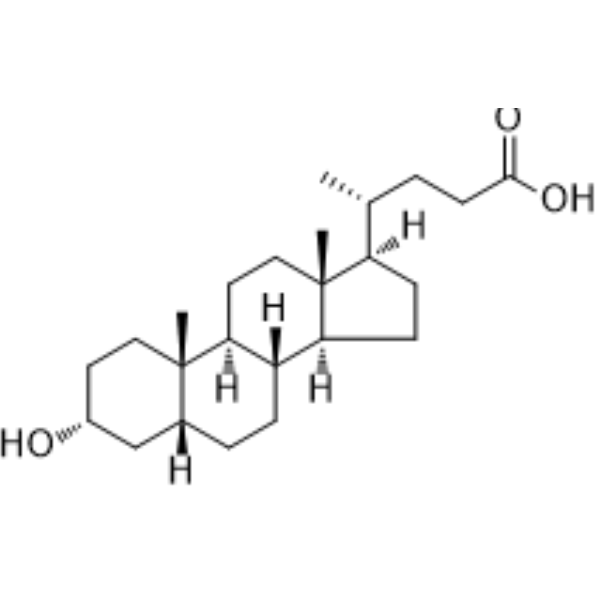
Lithocholic acidAutophagy Inducer -
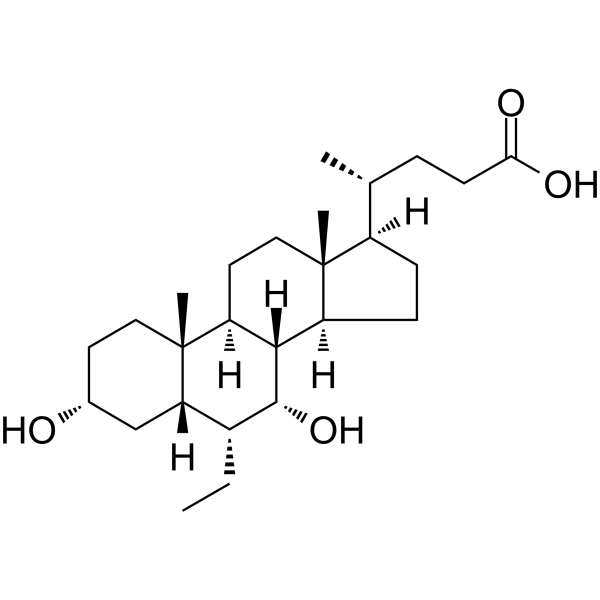
HY-12222
Obeticholic acidFXR Agonist -
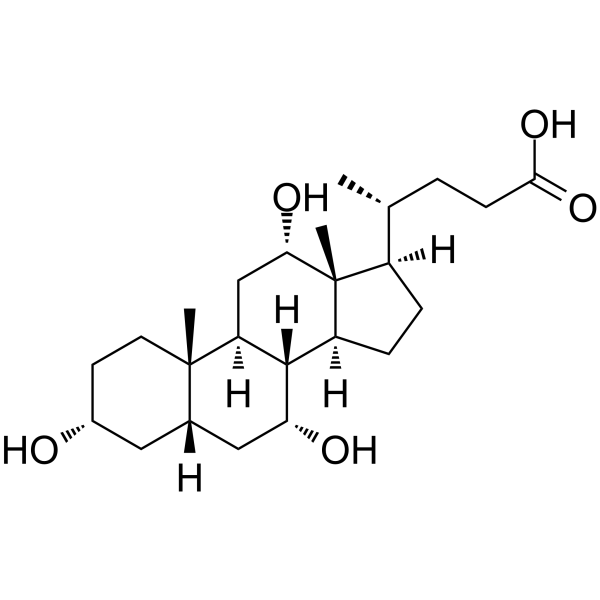
HY-N0324
Cholic acidEndogenous Metabolite -
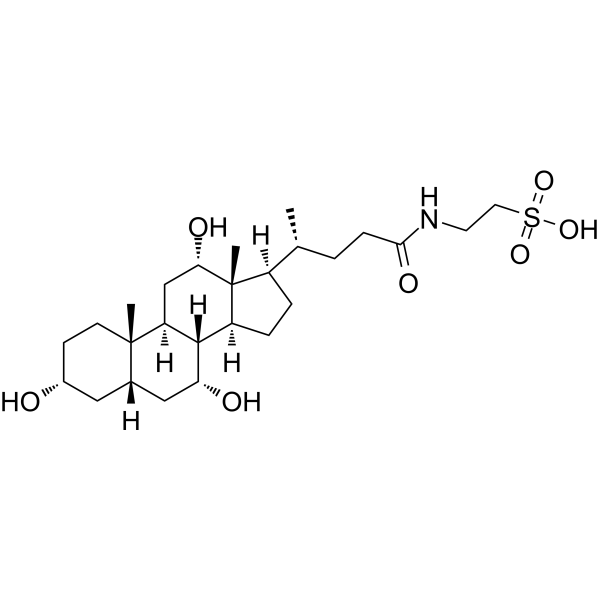
HY-B1788
Taurocholic acidImmunoregulation Agent -
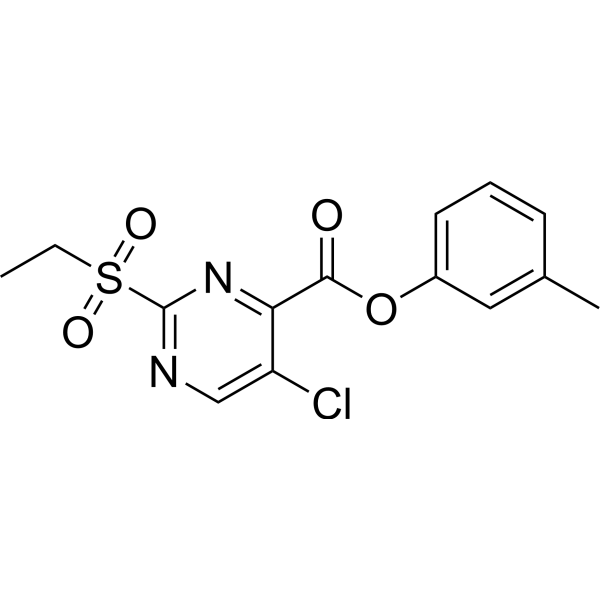
HY-111534
SBI-115TGR5 (GPCR19) Antagonist -
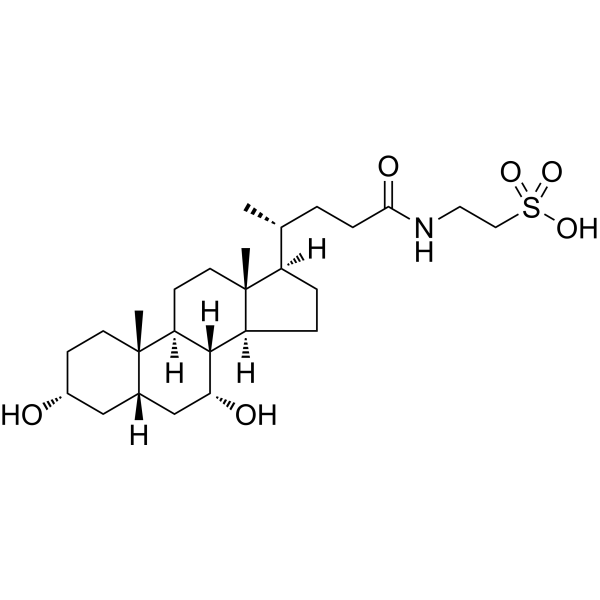
HY-N2027
Taurochenodeoxycholic acidEndogenous Metabolite -
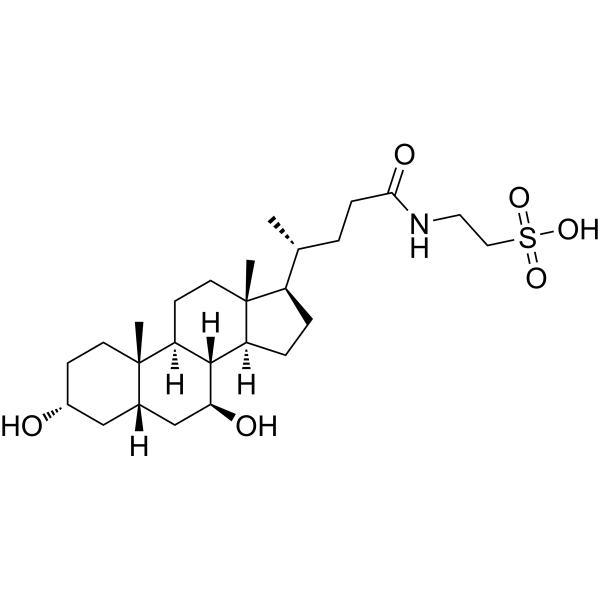
HY-19696
TauroursodeoxycholateEndoplasmic Reticulum Stress Inhibitor -
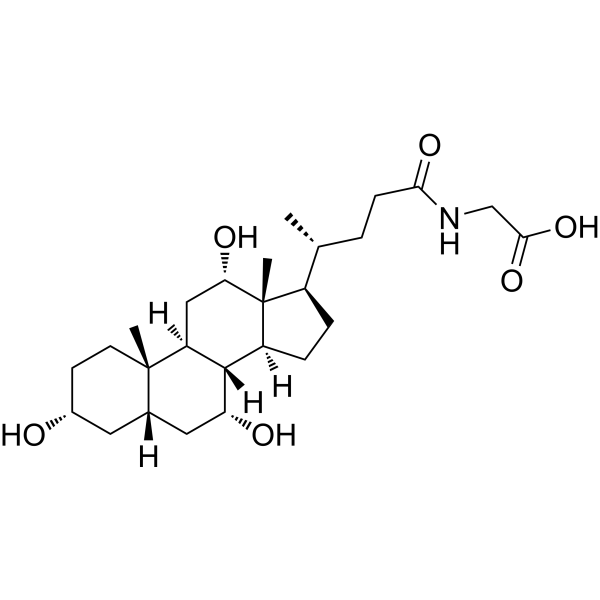
HY-N1423
Glycocholic acidBile Acid Derivative -
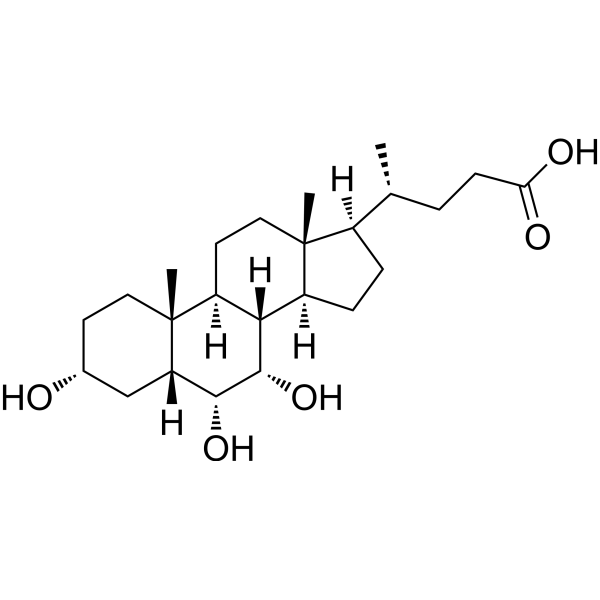
HY-121238
Hyocholic acidAnti-diabete Agent -
HY-128853
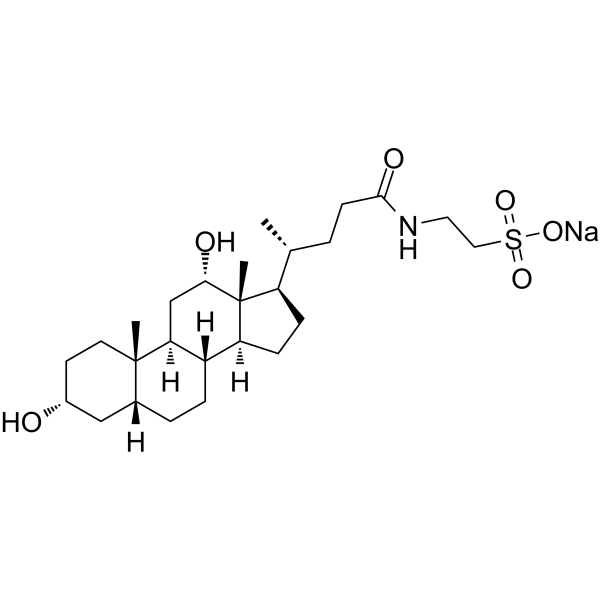
Taurodeoxycholate sodiumAnti-inflammatory Agent
Publications Citing Use of MedChemExpress (MCE) Hyodeoxycholic acid
More- Nature. 2025 Jul;643(8070):192-200. [Abstract]
- Cell Host Microbe. 2025 Aug 19:S1931-3128(25)00291-4. [Abstract]
- J Adv Res. 2025 Jul 11:S2090-1232(25)00543-0. [Abstract]
- Redox Biol. 2026 May:92:104096. [Abstract]
- Cell Death Differ. 2026 Mar 11. [Abstract]
- J Anim Sci Biotechnol. 2026 Jul 6;17(1):140.
- Transl Psychiatry. 2025 Oct 6;15(1):366. [Abstract]
 Customer Validation & Images

-
WB
-
RT-PCR
-
IHC
-
IF
All Endogenous Metabolite Isoforms
More

Biological Activity
Description
IC50 & Target
|
Microbial Metabolite |
Human Endogenous Metabolite |
Cellular Effect
|
Cell Line

|
Type | Value | Description | References |
|---|---|---|---|---|
| CHO | EC50 |
31.6 μM
Compound: 10, HDCA
|
Agonist activity at human TGR5 expressed in CHO cells by luciferase assay
Agonist activity at human TGR5 expressed in CHO cells by luciferase assay
|
[PMID: 18307294] |
| HEK-293T | EC50 |
>150 μM
Compound: HDCA
|
Agonist activity at VP16 tagged-VDR-LBD (unknown origin) expressed in HEK293T cells assessed as SRC1 coactivator peptide recruitment after 16 hrs by luciferase reporter gene based two hybrid assay
Agonist activity at VP16 tagged-VDR-LBD (unknown origin) expressed in HEK293T cells assessed as SRC1 coactivator peptide recruitment after 16 hrs by luciferase reporter gene based two hybrid assay
|
[PMID: 26774929] |
| HEK-293T | IC50 |
>50 μM
Compound: HDCA
|
Antagonist activity against VP16 tagged-VDR-LBD (unknown origin) expressed in HEK293T cells assessed as inhibition of 1,25-dihydroxyvitamin D3-induced SRC1 coactivator peptide recruitment after 16 hrs by luciferase reporter gene based two hybrid assay
Antagonist activity against VP16 tagged-VDR-LBD (unknown origin) expressed in HEK293T cells assessed as inhibition of 1,25-dihydroxyvitamin D3-induced SRC1 coactivator peptide recruitment after 16 hrs by luciferase reporter gene based two hybrid assay
|
[PMID: 26774929] |
| HT-29 | IC50 |
>80 μM
Compound: 1; HDCA
|
Antiproliferative activity against human HT-29 cells after 48 hrs by SRB assay
Antiproliferative activity against human HT-29 cells after 48 hrs by SRB assay
|
[PMID: 27448915] |
| PC-3M | IC50 |
>80 μM
Compound: 1; HDCA
|
Antiproliferative activity against human PC3M cells after 48 hrs by SRB assay
Antiproliferative activity against human PC3M cells after 48 hrs by SRB assay
|
[PMID: 27448915] |
In Vitro
Hyodeoxycholic acid is a secondary hydrophilic bile acid formed in the small intestine by the gut flora, and acts as an agonist of TGR5, with an EC50 of 31.6 μM in CHO cells[1]. Hyodeoxycholic acid (50, 100 μM) increases the expression of genes (Abca1, Abcg1, and Apoe) involved in cholesterol efflux in RAW 264.7 cells[2].
MedChemExpress (MCE) has not independently confirmed the accuracy of these methods. They are for reference only.
In Vivo
MedChemExpress (MCE) has not independently confirmed the accuracy of these methods. They are for reference only.


Chemical Information
-
CAS No. 83-49-8
-
Appearance Solid
-
Molecular Weight 392.57
-
Formula C24H40O4
-
Color White to off-white
-
SMILES
C[C@H](CCC(O)=O)[C@H]1CC[C@@]2([H])[C@]3([H])C[C@H](O)[C@]4([H])C[C@H](O)CC[C@]4(C)[C@@]3([H])CC[C@]12C
-
Synonyms
HDCA
-
Structure Classification
-
Initial Source
-
Shipping
Room temperature in continental US; may vary elsewhere.
-
Storage
4°C, protect from light
* In solvent : -80°C, 6 months; -20°C, 1 month (protect from light)


Publications (7)
-
Journal Impact Factor
-
Most Recent
-
Nature
2025 Jul;643(8070):192-200. PMID: 39695227 -
Cell Host Microbe
2025 Aug 19:S1931-3128(25)00291-4. PMID: 40848719 -
J Adv Res
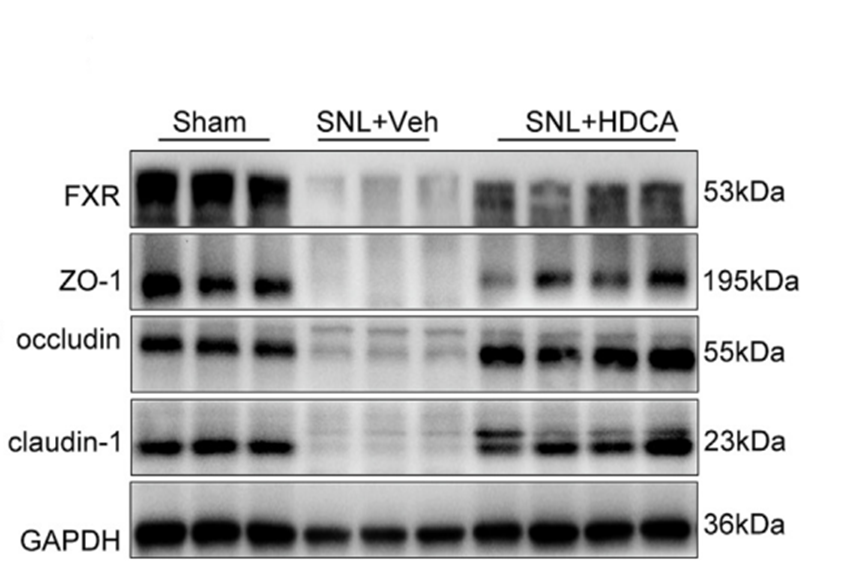
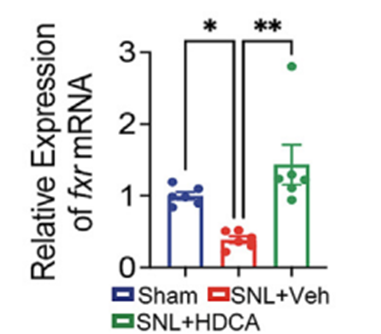
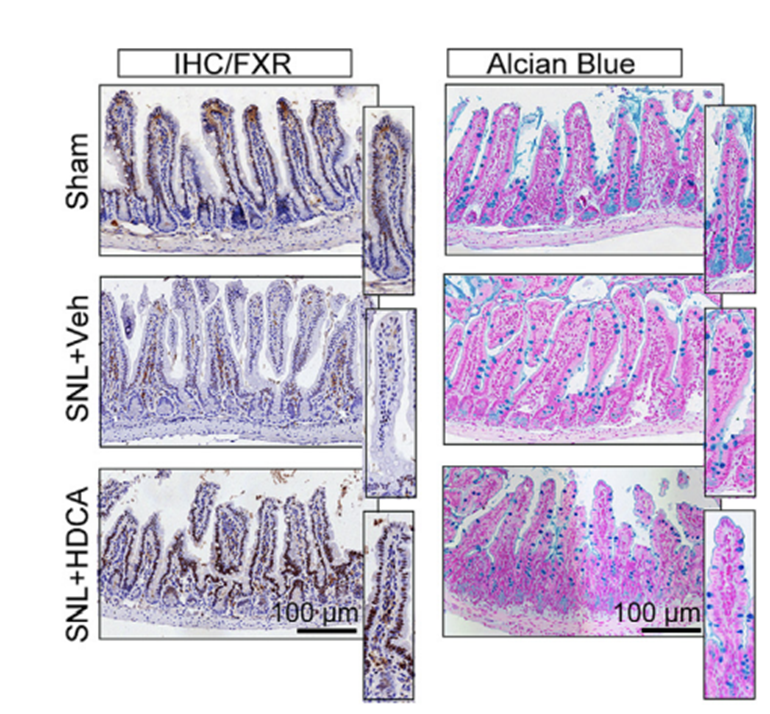
Hyodeoxycholic acid relieves neuropathic pain by activating farnesoid X receptor signaling. [Abstract]2025 Jul 11:S2090-1232(25)00543-0. PMID: 40653266
Hyodeoxycholic acid purchased from MedChemExpress. Usage Cited in: J Adv Res. 2025 Jul 11:S2090-1232(25)00543-0. [Abstract]
Representative immunoblots treated with Hyodeoxycholic acid (HDCA) (20 mg/kg, i.g.).
Hyodeoxycholic acid purchased from MedChemExpress. Usage Cited in: J Adv Res. 2025 Jul 11:S2090-1232(25)00543-0. [Abstract]
PWT and PWL of mice following Hyodeoxycholic acid (HDCA) (20 mg/kg, i.g.) treatment, relative expression levels of FXR mRNA.
Hyodeoxycholic acid purchased from MedChemExpress. Usage Cited in: J Adv Res. 2025 Jul 11:S2090-1232(25)00543-0. [Abstract]
Immunohistochemical staining of FXR + cells and Alcian Blue staining in the distal ileum treated with Hyodeoxycholic acid (HDCA) (20 mg/kg, i.g.).
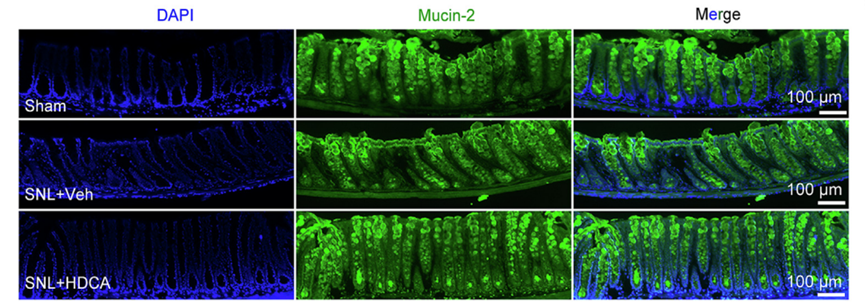
Hyodeoxycholic acid purchased from MedChemExpress. Usage Cited in: J Adv Res. 2025 Jul 11:S2090-1232(25)00543-0. [Abstract]
Immunofluorescence staining and mean fluorescence intensity of Mucin-2 treated with Hyodeoxycholic acid (HDCA) (20 mg/kg, i.g.).
-
Redox Biol
Hyodeoxycholic acid attenuates atherosclerosis by antagonizing FXR and modulating the PD-1/mTORC1 signaling axis. [Abstract]2026 May:92:104096. PMID: 41775219 -
Cell Death Differ
Gut-derived hyodeoxycholate reprograms the spleen-eye immunometabolic axis to suppress autoimmune uveitis. [Abstract]2026 Mar 11. PMID: 41813862 -
-
Transl Psychiatry
TGR5 dysfunction underlies chronic social defeat stress via cAMP/PKA signaling pathway in the hippocampus. [Abstract]2025 Oct 6;15(1):366. PMID: 41053031


Solvent & Solubility
In Vitro:
DMSO : 100 mg/mL (254.73 mM; Need ultrasonic; Hygroscopic DMSO has a significant impact on the solubility of product, please use newly opened DMSO)
Please refer to the solubility information to select the appropriate solvent. Once prepared, please aliquot and store the solution to prevent product inactivation from repeated freeze-thaw cycles.
Storage method and period of stock solution: -80°C, 6 months; -20°C, 1 month (protect from light). When stored at -80°C, please use it within 6 months. When stored at -20°C, please use it within 1 month.
Please refer to the solubility information to select the appropriate solvent. Once prepared, please aliquot and store the solution to prevent product inactivation from repeated freeze-thaw cycles.
Storage method and period of stock solution: -80°C, 6 months; -20°C, 1 month (protect from light). When stored at -80°C, please use it within 6 months. When stored at -20°C, please use it within 1 month.
Concentration (start) × Volume (start) = Concentration (final) × Volume (final)
In Vivo:
Select the appropriate dissolution method based on your experimental animal and administration route.
- For the following dissolution methods, please ensure to first prepare a clear stock solution using an In Vitro approach and then sequentially add co-solvents:
- To ensure reliable experimental results, the clarified stock solution can be appropriately stored based on storage conditions. As for the working solution for In Vivo experiments, it is recommended to prepare freshly and use it on the same day.
- The percentages shown for the solvents indicate their volumetric ratio in the final prepared solution. If precipitation or phase separation occurs during preparation, heat and/or sonication can be used to aid dissolution.
Add each solvent one by one: 10% DMSO 40% PEG300 5% Tween-80 45% Saline
Solubility: ≥ 2.5 mg/mL (6.37 mM); Clear solution
This protocol yields a clear solution of ≥ 2.5 mg/mL (saturation unknown).
Taking 1 mL working solution as an example, add 100 μL DMSO stock solution (25.0 mg/mL) to 400 μL PEG300, and mix evenly; then add 50 μL Tween-80 and mix evenly; then add 450 μL Saline to adjust the volume to 1 mL.
Preparation of Saline: Dissolve 0.9 g sodium chloride in ddH₂O and dilute to 100 mL to obtain a clear Saline solution.
Add each solvent one by one: 10% DMSO 90% (20% SBE-β-CD in Saline)
Solubility: ≥ 2.5 mg/mL (6.37 mM); Clear solution
This protocol yields a clear solution of ≥ 2.5 mg/mL (saturation unknown).
Taking 1 mL working solution as an example, add 100 μL DMSO stock solution (25.0 mg/mL) to 900 μL 20% SBE-β-CD in Saline, and mix evenly.
Preparation of 20% SBE-β-CD in Saline (4°C, storage for one week): 2 g SBE-β-CD powder is dissolved in 10 mL Saline, completely dissolve until clear.
In Vivo Dissolution Calculator
Please enter the basic information of animal experiments:
-
-
-
-
Recommended: Prepare an additional quantity of animals to account for potential losses during experiments.
Please enter your animal formula composition:
-
%DMSO +
Recommended: Keep the proportion of DMSO in working solution below 2% if your animal is weak.
-
%+
-
+%Tween-80 + +
-
%Saline +
The co-solvents required include: DMSO, . All of co-solvents are available by MedChemExpress (MCE). , Tween 80. All of co-solvents are available by MedChemExpress (MCE).
Working solution concentration: 0.22 mg/mL
Method for preparing stock solution: mg drug dissolved in μL DMSO. Stock solution concentration: mg/mL. * In solvent : -80°C, 6 months; -20°C, 1 month (protect from light)
1. Take μL DMSO stock solution;
2. Add μL .
μL , mix evenly;
3. Then add μL Tween 80, mix evenly;
4. Then add μL
Please ensure that the stock solution in the first step is dissolved to a clear state, and add co-solvents in sequence. You can use ultrasonic heating (ultrasonic cleaner, recommended frequency 20-40 kHz), vortexing, etc. to assist dissolution.


Purity & Documentation
-
Data Sheet (277 KB)
-
SDS (394 KB)
- English - EN (394 KB)
- Français - FR (394 KB)
- Deutsch - DE (394 KB)
- Norwegian - NO (394 KB)
- Español - ES (394 KB)
- Swedish - SV (394 KB)
- Italian - IT (394 KB)
- Korean - KR (394 KB)
- Portuguese - PT (394 KB)
-
Handling Instructions (2659 KB)
References
[1]. Sato H, et al. Novel potent and selective bile acid derivatives as TGR5 agonists: biological screening, structure-activity relationships, and molecular modeling studies. J Med Chem. 2008 Mar 27;51(6):1831-41. [Content Brief]
[2]. Shih DM, et al. Hyodeoxycholic acid improves HDL function and inhibits atherosclerotic lesion formation in LDLR-knockout mice. FASEB J. 2013 Sep;27(9):3805-17. [Content Brief]


Complete Stock Solution Preparation Table
Please refer to the solubility information to select the appropriate solvent. Once prepared, please aliquot and store the solution to prevent product inactivation from repeated freeze-thaw cycles.
Storage method and period of stock solution: -80°C, 6 months; -20°C, 1 month (protect from light). When stored at -80°C, please use it within 6 months. When stored at -20°C, please use it within 1 month.
| Optional Solvent | Concentration Solvent Mass | 1 mg | 5 mg | 10 mg | 25 mg |
|---|---|---|---|---|---|
| DMSO | 1 mM | 2.5473 mL | 12.7366 mL | 25.4732 mL | 63.6829 mL |
| 5 mM | 0.5095 mL | 2.5473 mL | 5.0946 mL | 12.7366 mL | |
| 10 mM | 0.2547 mL | 1.2737 mL | 2.5473 mL | 6.3683 mL | |
| 15 mM | 0.1698 mL | 0.8491 mL | 1.6982 mL | 4.2455 mL | |
| 20 mM | 0.1274 mL | 0.6368 mL | 1.2737 mL | 3.1841 mL | |
| 25 mM | 0.1019 mL | 0.5095 mL | 1.0189 mL | 2.5473 mL | |
| 30 mM | 0.0849 mL | 0.4246 mL | 0.8491 mL | 2.1228 mL | |
| 40 mM | 0.0637 mL | 0.3184 mL | 0.6368 mL | 1.5921 mL | |
| 50 mM | 0.0509 mL | 0.2547 mL | 0.5095 mL | 1.2737 mL | |
| 60 mM | 0.0425 mL | 0.2123 mL | 0.4246 mL | 1.0614 mL | |
| 80 mM | 0.0318 mL | 0.1592 mL | 0.3184 mL | 0.7960 mL | |
| 100 mM | 0.0255 mL | 0.1274 mL | 0.2547 mL | 0.6368 mL |


Hyodeoxycholic acid Related Classifications
HY-N0169 Related Classifications
 Powered by Bioz