



apoE
Apolipoprotein E (ApoE) is a key regulator of lipoprotein metabolism that mediates the hepatic clearance of diet-derived chylomicron remnants and liver-derived very-low-density lipoprotein (VLDL) remnants through interactions with members of the low-density lipoprotein receptor family[1][2]. ApoE deficiency disrupts this clearance pathway, resulting in marked hypercholesterolemia, accumulation of remnant lipoproteins, and enhanced susceptibility to atherosclerotic lesion formation[1][3][4]. Mechanistically, ApoE regulates cholesterol homeostasis and influences macrophage biology, linking lipid metabolism to vascular inflammation and atherogenesis[2][5]. In disease models, Apoe−/− mice develop spontaneous atherosclerosis even when maintained on a low-cholesterol diet and therefore represent one of the most widely used experimental systems for investigating cardiovascular disease mechanisms and therapeutic interventions[3][4][6]. Atherosclerotic lesions in these mice progress in a manner that reproduces many pathological features of human disease, making the model highly valuable for studies of plaque development and progression[6][2]. Compared with related human APOE isoforms, ApoE deficiency represents a complete loss-of-function state rather than an isoform-specific alteration, providing a robust platform for dissecting the physiological roles of ApoE in lipoprotein transport, monocyte/macrophage biology, and atherosclerosis[2][5]. For experimental applications, the Apoe−/− model is extensively used to evaluate genetic, nutritional, and pharmacological factors that modify atherosclerotic burden and vascular inflammation[6][2].
Verweise:
- [1]. Pendse AA, et al. Apolipoprotein E knock-out and knock-in mice: atherosclerosis, metabolic syndrome, and beyond. J Lipid Res. 2009 Apr;50 Suppl(Suppl):S178-82. [Content Brief]
- [2]. Getz GS, et al. ApoE knockout and knockin mice: the history of their contribution to the understanding of atherogenesis. J Lipid Res. 2016 May;57(5):758-66.
- [3]. Buzello M, et al. The apolipoprotein e knockout mouse: a model documenting accelerated atherogenesis in uremia. J Am Soc Nephrol. 2003 Feb;14(2):311-6. [Content Brief]
- [4]. Lo Sasso G, et al. The Apoe(-/-) mouse model: a suitable model to study cardiovascular and respiratory diseases in the context of cigarette smoke exposure and harm reduction. J Transl Med. 2016 May 20;14(1):146. [Content Brief]
- [5]. Sciencedirect.topics.
- [6]. Meir KS, et al. Atherosclerosis in the apolipoprotein-E-deficient mouse: a decade of progress. Arterioscler Thromb Vasc Biol. 2004 Jun;24(6):1006-14. [Content Brief]
- [7]. Getz GS, et al. ApoE knockout and knockin mice: the history of their contribution to the understanding of atherogenesis. J Lipid Res. 2016 May;57(5):758-66. [Content Brief]
All Product Categories
-
apoE Verwandte Produkte (4)
Verwandte Produkte (4)

-
EZ-482
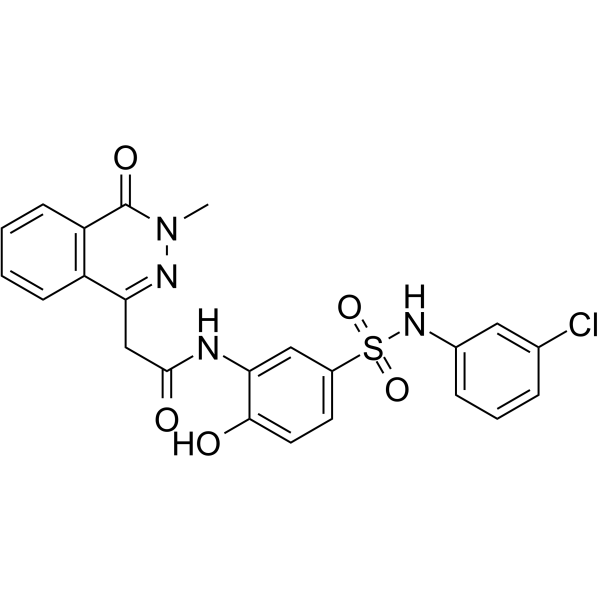 0 ImagesArt. -Nr.: HY-103076CAS. Nr.: 1016456-76-0EZ-482, a novel ligand of apolipoprotein (apoE), binds to sites on apoE in the C-terminal domain with Kds of 5-10 μM for apoE3 and apoE4. EZ-482 binds to apoE4 by a unique N-terminal allosteric effect. EZ482 has the potential for Alzheimer’s diseas.
-
PH-002
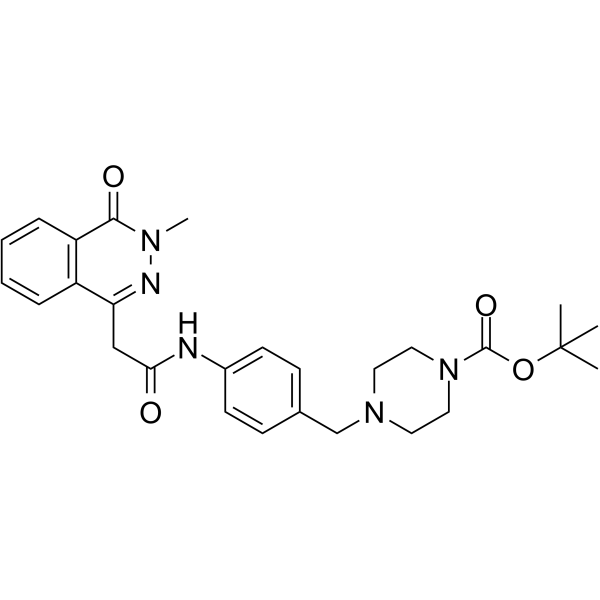 0 ImagesPH-002 is an inhibitor of apolipoprotein (apo) E4 intramolecular domain interaction in neuronal cells that could rescue impairments of mitochondrial motility and neurite outgrowth.
-
MyomP1 peptide
 0 ImagesArt. -Nr.: HY-P12363MyomP1 peptide is a functionalized modification group targeting apolipoprotein E (ApoE). MyomP1 peptide restricts the adsorption of ApoE on lipid nanoparticles, reduces ApoE-mediated hepatic uptake, and confers liver detargeting. MyomP1 peptide attenuates innate immune activation by reducing the expression of inflammatory markers and decreasing macrophage recruitment at the injection site. MyomP1 peptide is useful for research on rare muscle diseases.
-
COG112
 0 ImagesArt. -Nr.: HY-P11502CAS. Nr.: 1314623-74-9COG112 is an antennapedia-linked apoE-mimetic peptide. COG112 attenuates induction of NO production, inhibits CXC chemokines KC and MIP-2. COG112 reduces nuclear translocation of NF-κB. COG112 inhibits phosphorylation of IκB-α and prevents the degradation of IκB-α. COG112 inhibits the inflammatory response to Citrobacter rodentium .



