



Glycochenodeoxycholic acid
Based on 9 publication(s) in Google Scholar
Glycochenodeoxycholic acid (Chenodeoxycholylglycine) is a relatively toxic bile salt generated in the liver from chenodeoxycholic acid and glycine. Glycochenodeoxycholic acid inhibits Autophagosome formation and impairs lysosomal function by inhibiting lysosomal proteolysis and increasing lysosomal pH in human normal liver cells, leading to the Apoptosis of human hepatocyte cells. Glycochenodeoxycholic acid induces stemness and chemoresistance via activating STAT3 signaling pathway in hepatocellular carcinoma cells (HCC). Glycochenodeoxycholic acid is promising for research in the field of cholestasis desease, hepatocellular carcinoma and primary sclerosing cholangitis (PSC).
For research use only. We do not sell to patients.
- Purity : 99.96%
- CAS No.: 640-79-9
- Formula: C26H43NO5
- Molecular Weight:449.62
-
Storage:Powder -20°C, 3 years , 4°C, 2 years ; In solvent -80°C, 2 years , -20°C, 1 year

To place orders, for customer services and technical support, please contact: MedChemExpress USA
Tel: 609-228-6898 E-mail: [email protected] [email protected]


-
 Biological Activity
-
Chemical Information
-
Solvent & Solubility
- Protocols
- Purity & Documentation
- References
-
 Help & FAQs


-
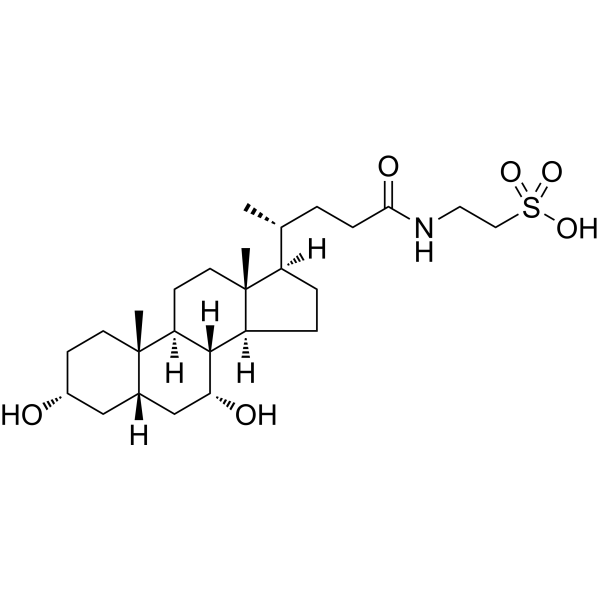
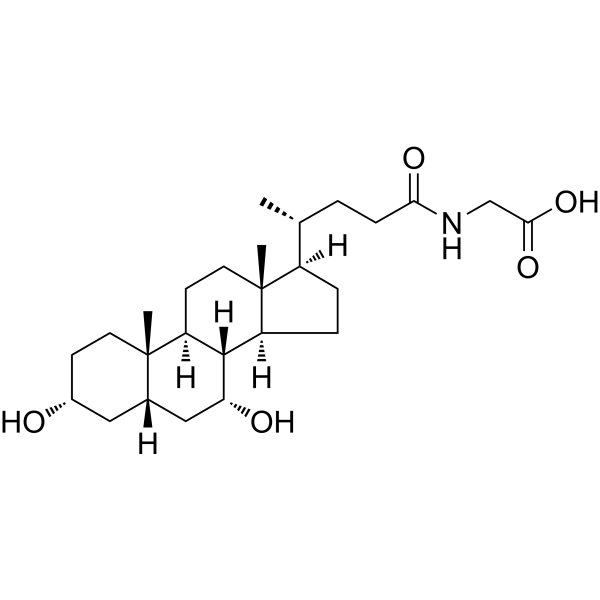
HY-N2027
Taurochenodeoxycholic acidEndogenous Metabolite -
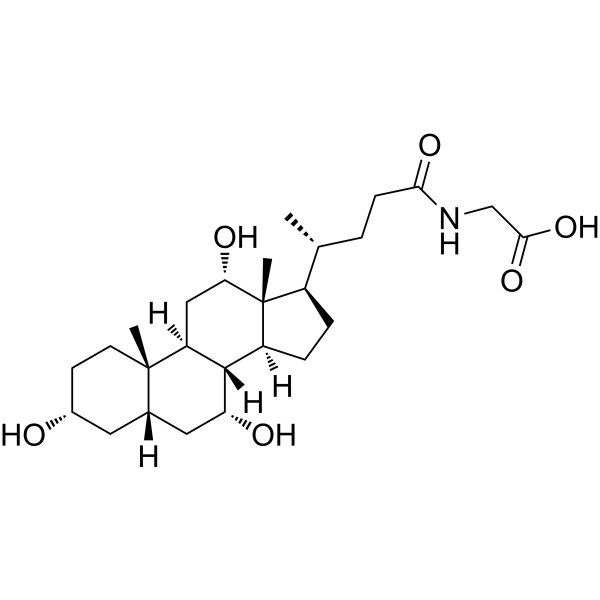
HY-N1423
Glycocholic acidBile Acid Derivative -
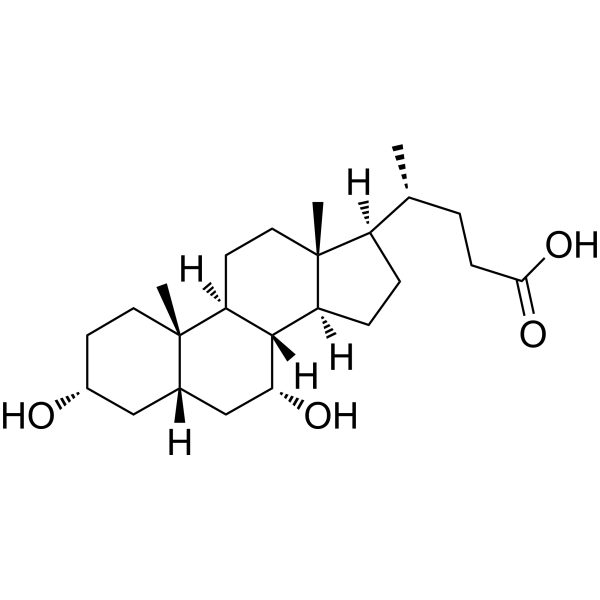
HY-76847
Chenodeoxycholic AcidEndogenous Metabolite -
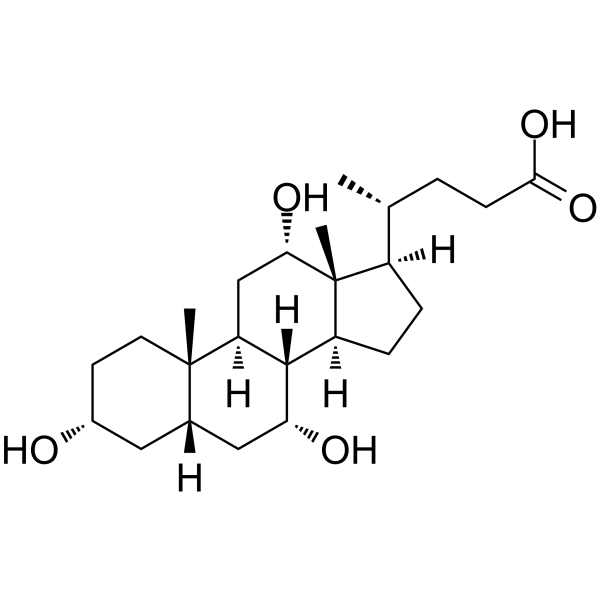
HY-N0324
Cholic acidEndogenous Metabolite -
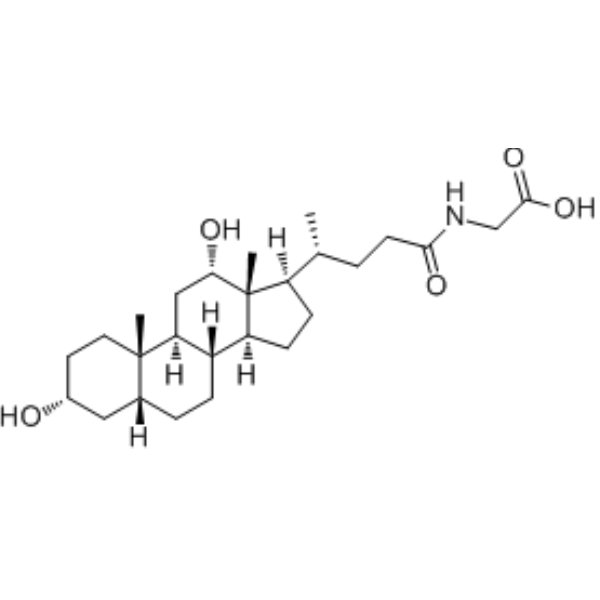
HY-125731
Glycodeoxycholic acidEndogenous Metabolite -
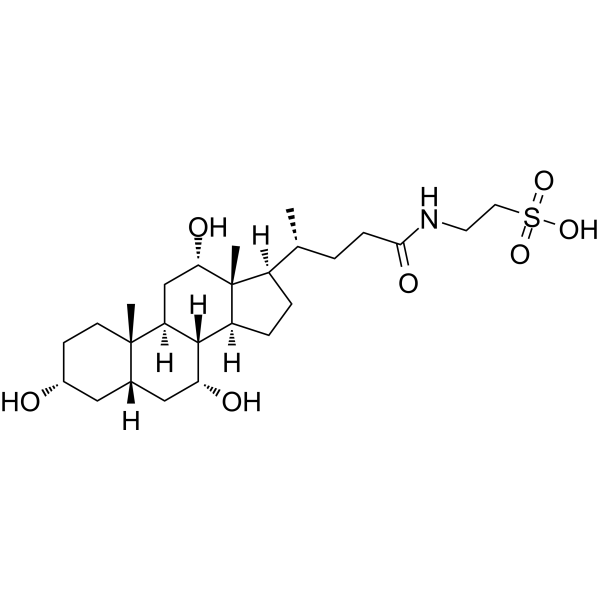
HY-B1788
Taurocholic acidImmunoregulation Agent -
HY-B0172
Lithocholic acidAutophagy Inducer -
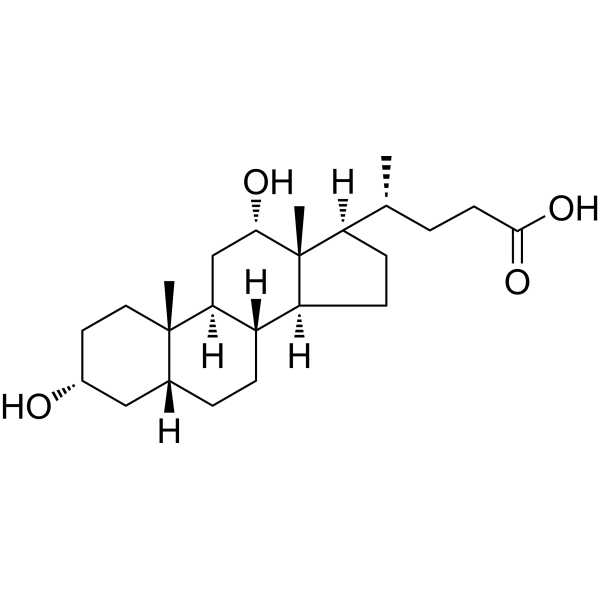
HY-N0593
Deoxycholic acidBile Acid Receptor Activator -
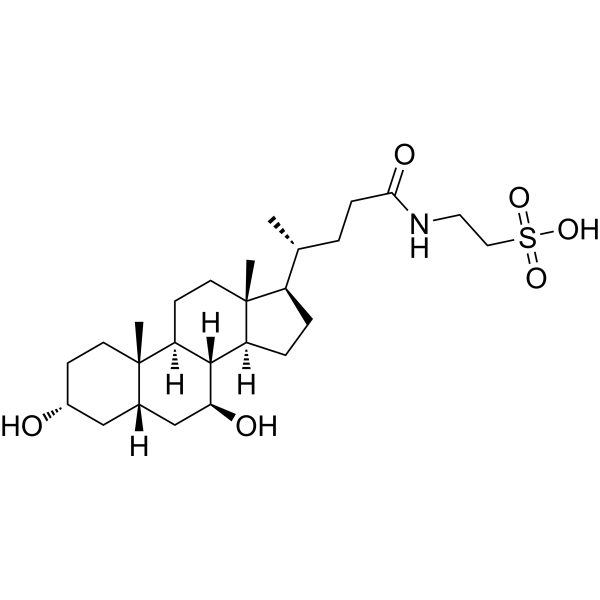
HY-19696
TauroursodeoxycholateEndoplasmic Reticulum Stress Inhibitor -
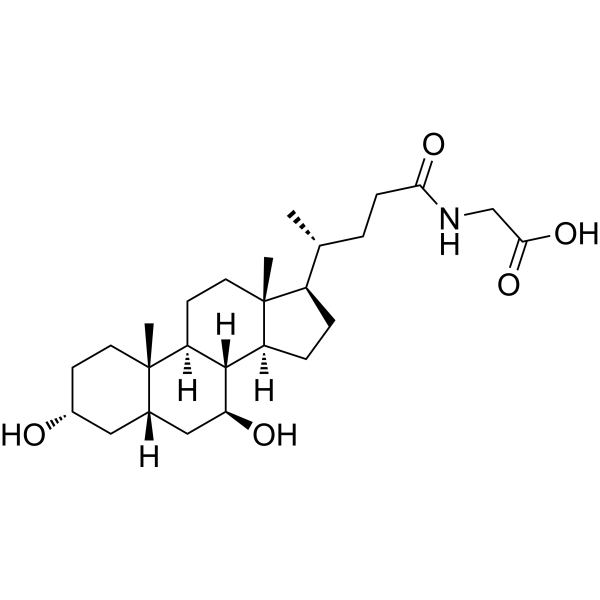
HY-N1424
Glycoursodeoxycholic acidEndogenous Metabolite -
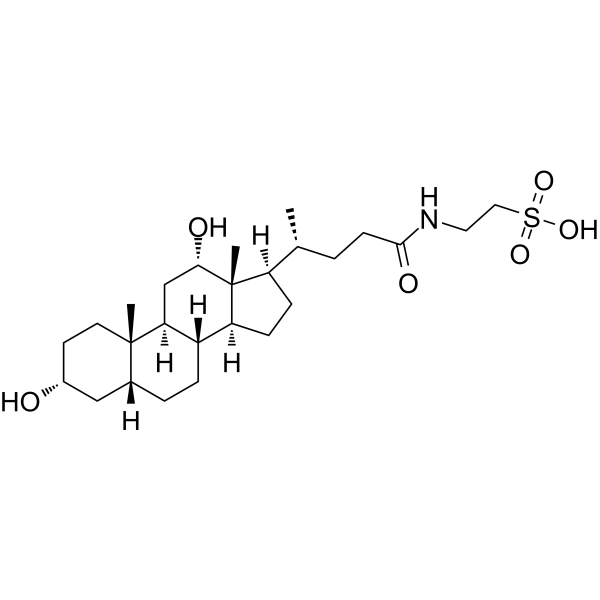
HY-B1899
Taurodeoxycholic acidAnti-inflammatory Agent -

HY-N2334R
Glycochenodeoxycholic acid (Standard)Endogenous Metabolite
Publications Citing Use of MedChemExpress (MCE) Glycochenodeoxycholic acid
More- Adv Sci (Weinh). 2025 Mar;12(12):e2411719. [Abstract]
- ACS Appl Mater Interfaces. 2026 Jun 3;18(21):29739-29755. [Abstract]
- Hepatol Int. 2024 Jun;18(3):1040-1052. [Abstract]
- J Agric Food Chem. 2026 Jun 26. [Abstract]
- Food Funct. 2026 Jun 22. [Abstract]
- Biomolecules. 2025 Jun 28;15(7):943. [Abstract]
- Discov Oncol. 2023 Jan 11;14(1):4. [Abstract]
- bioRxiv. 2026 May 5:2026.04.30.721772. [Abstract]
- SSRN. 2022 Jan 26.
 Customer Validation & Images

-
RT-PCR
-
RT-PCR
All Endogenous Metabolite Isoforms
MoreAll Caspase Isoforms
More

Biological Activity
Description
IC50 & Target
|
Microbial Metabolite |
Human Endogenous Metabolite |
Cellular Effect
|
Cell Line

|
Type | Value | Description | References |
|---|---|---|---|---|
| CHO | EC50 |
3.88 μM
Compound: 4b, glyco
|
Agonist activity at human TGR5 expressed in CHO cells by luciferase assay
Agonist activity at human TGR5 expressed in CHO cells by luciferase assay
|
[PMID: 18307294] |
| HET-1A | CC50 |
729 μM
Compound: 3, TCDCA
|
Cytotoxicity against human HET-1A cells assessed as cell viability after 24 hrs by MTT assay
Cytotoxicity against human HET-1A cells assessed as cell viability after 24 hrs by MTT assay
|
[PMID: 20713311] |
In Vitro
Glycochenodeoxycholic acid (0-100 μM, 6 h) significantly increases the amount of dead cells and decreases in LC3, ATG5 and BECN1 expression in human normal liver cells, leading to Autophagosome formation inhibition[1].
Glycochenodeoxycholic acid (5–500 μM, 24 h) exerts no induction or reduction of TGF-β mRNA expression in KMBC cells and LX-2 cells[2].
Glycochenodeoxycholic acid (200 μM, 24 h and 48 h) enhances stemness and chemoresistance of hepatocellular carcinoma cells (HCC) by activating the STAT3 signaling pathway, suppressing the expression of apoptotic genes (Bcl10, Caspase 3, Caspase 4, Tp53, BAD) and increasing the expression of anti-apoptotic genes (Bcl2, Bcl-xl and IL10)[4].
MedChemExpress (MCE) has not independently confirmed the accuracy of these methods. They are for reference only.
-
Cell Line:Human normal liver cells
-
Concentration:0-100 μM
-
Incubation Time:6 h
-
Result:Decreased the TFE3 levels in a dose-dependent manner in human normal liver cells.
-
Cell Line:Huh7 and LM3 cell lines
-
Concentration:200 μM
-
Incubation Time:24 h and 48 h
-
Result:Suppressed the expression of apoptotic genes (Bcl10, Caspase 3, Caspase 4, Tp53, BAD) and increased the expression of anti-apoptotic genes (Bcl2, Bcl-xl and Il10) in Huh7 and LM3 cell lines. Increased the cell viability and promoted chemoresistance treated with 5-FU (HY-90006) (120 µg/mL) and cisplatinin (10 µg/mL) in Huh7 and LM3 cell lines.
-
Cell Line:L02 cells
-
Concentration:100 μM
-
Incubation Time:6 h
-
Result:Significantly reduced GFP-LC3 puncta and decreased microtubule-associated protein 1 light chain 3 (LC3), autophagy related 5 (ATG5) and beclin 1 (BECN1) expression in L02 cells.
-
Cell Line:KMBC cells
-
Concentration:5–500 μM
-
Incubation Time:24 h
-
Result:Unaltered TGF-β mRNA expression in KMBC cells and LX-2 cells.


Chemical Information
-
CAS No. 640-79-9
-
Appearance Solid
-
Molecular Weight 449.62
-
Formula C26H43NO5
-
Color White to off-white
-
SMILES
C[C@@]12[C@](CC[C@]2([H])[C@H](C)CCC(NCC(O)=O)=O)([H])[C@@]3([H])[C@]([C@@]4([C@](C[C@H](O)CC4)([H])C[C@H]3O)C)([H])CC1
-
Synonyms
Chenodeoxycholylglycine
-
Structure Classification
-
Initial Source
-
Shipping
Room temperature in continental US; may vary elsewhere.
-
Storage
Powder -20°C 3 years 4°C 2 years In solvent -80°C 2 years -20°C 1 year


Publications (9)
-
Journal Impact Factor
-
Most Recent
-
Adv Sci (Weinh)
Targeting FDFT1 Reduces Cholesterol and Bile Acid Production and Delays Hepatocellular Carcinoma Progression Through the HNF4A/ALDOB/AKT1 Axis. [Abstract]2025 Mar;12(12):e2411719. PMID: 39899681
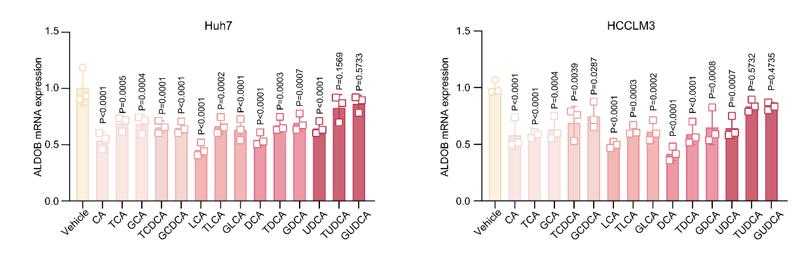
Glycochenodeoxycholic acid purchased from MedChemExpress. Usage Cited in: Adv Sci (Weinh). 2025 Mar;12(12):e2411719. [Abstract]
The mRNA levels of ALDOB in Huh7 or HCCLM3 cells treated with various bile acids (100 μM, 24 h). All data are presented as mean ± SD. Data were analyzed by one-way ANOVA with Bonferroni multiple-comparison correction. CA, cholic acid; TCA, taurocholic acid; GCA, glycocholic acid; TCDCA, taurochenodeoxycholic acid; GCDCA, glycochenodeoxycholic acid; LCA, lithocholic acid; TLCA, taurolithocholic acid; GLCA, glycolithocholic acid; DCA, deoxycholic acid; TDCA, taurodeoxycholic acid; GDCA, glycodeoxycholic acid; UDCA, ursodeoxycholic acid; TUDCA, tauroursodeoxycholic acid; GUDCA, glycoursodeoxycholic acid.
-
ACS Appl Mater Interfaces
Glutathione-Chitosan Modified Methyl Eugenol Liposomes Promote Spinal Cord Injury Repair by Alleviating Neuroinflammation. [Abstract]2026 Jun 3;18(21):29739-29755. PMID: 42176032 -
Hepatol Int
Bile acids induce liver fibrosis through the NLRP3 inflammasome pathway and the mechanism of FXR inhibition of NLRP3 activation. [Abstract]2024 Jun;18(3):1040-1052. PMID: 38172440 -
J Agric Food Chem
Protein-Free Diet Aggravates Food Allergy Response via the Consumption of Glycochenodeoxycholic Acid in a Murine Model. [Abstract]2026 Jun 26. PMID: 42360286 -
Food Funct
Association between daidzein metabolism to equol and fecal bile acid profiles in young women. [Abstract]2026 Jun 22. PMID: 42329218 -
Biomolecules
Significant Reduction of Chenodeoxycholic Acid and Glycochenodeoxycholic Acid in the Elderly with Severe COVID-19. [Abstract]2025 Jun 28;15(7):943. PMID: 40723815
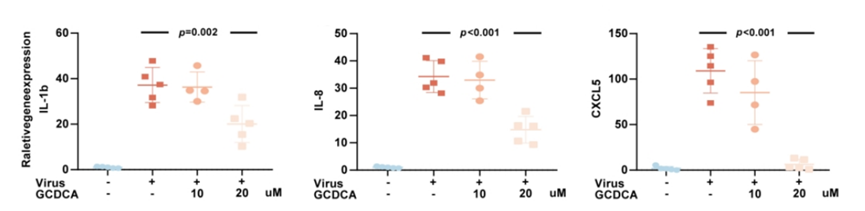
Glycochenodeoxycholic acid purchased from MedChemExpress. Usage Cited in: Biomolecules. 2025 Jun 28;15(7):943. [Abstract]
SARS-CoV-2-stimulated THP-1 cells were treated with 10 μM or 20 μM Glycochenodeoxycholic acid (GCDCA) for 24 h. The intracellular mRNA expression levels of IL-1β, IL-8, and CXCL5 were measured by RT–qPCR.
-
Discov Oncol
Sphingosine 1-phosphate receptor 2 promotes the onset and progression of non-alcoholic fatty liver disease-related hepatocellular carcinoma through the PI3K/AKT/mTOR pathway. [Abstract]2023 Jan 11;14(1):4. PMID: 36631680 -
bioRxiv
2026 May 5:2026.04.30.721772. PMID: 42146479 -


Solvent & Solubility
In Vitro:
DMSO : 100 mg/mL (222.41 mM; Need ultrasonic; Hygroscopic DMSO has a significant impact on the solubility of product, please use newly opened DMSO)
Methanol : 100 mg/mL (222.41 mM; Need ultrasonic)
Please refer to the solubility information to select the appropriate solvent. Once prepared, please aliquot and store the solution to prevent product inactivation from repeated freeze-thaw cycles.
Storage method and period of stock solution: -80°C, 2 years; -20°C, 1 year. When stored at -80°C, please use it within 2 years. When stored at -20°C, please use it within 1 year.
Please refer to the solubility information to select the appropriate solvent. Once prepared, please aliquot and store the solution to prevent product inactivation from repeated freeze-thaw cycles.
Storage method and period of stock solution: -80°C, 2 years; -20°C, 1 year. When stored at -80°C, please use it within 2 years. When stored at -20°C, please use it within 1 year.
Concentration (start) × Volume (start) = Concentration (final) × Volume (final)
In Vivo:
Select the appropriate dissolution method based on your experimental animal and administration route.
- For the following dissolution methods, please ensure to first prepare a clear stock solution using an In Vitro approach and then sequentially add co-solvents:
- To ensure reliable experimental results, the clarified stock solution can be appropriately stored based on storage conditions. As for the working solution for In Vivo experiments, it is recommended to prepare freshly and use it on the same day.
- The percentages shown for the solvents indicate their volumetric ratio in the final prepared solution. If precipitation or phase separation occurs during preparation, heat and/or sonication can be used to aid dissolution.
Add each solvent one by one: 10% DMSO 40% PEG300 5% Tween-80 45% Saline
Solubility: ≥ 2.5 mg/mL (5.56 mM); Clear solution
This protocol yields a clear solution of ≥ 2.5 mg/mL (saturation unknown).
Taking 1 mL working solution as an example, add 100 μL DMSO stock solution (25.0 mg/mL) to 400 μL PEG300, and mix evenly; then add 50 μL Tween-80 and mix evenly; then add 450 μL Saline to adjust the volume to 1 mL.
Preparation of Saline: Dissolve 0.9 g sodium chloride in ddH₂O and dilute to 100 mL to obtain a clear Saline solution.
Add each solvent one by one: 10% DMSO 90% (20% SBE-β-CD in Saline)
Solubility: ≥ 2.5 mg/mL (5.56 mM); Clear solution
This protocol yields a clear solution of ≥ 2.5 mg/mL (saturation unknown).
Taking 1 mL working solution as an example, add 100 μL DMSO stock solution (25.0 mg/mL) to 900 μL 20% SBE-β-CD in Saline, and mix evenly.
Preparation of 20% SBE-β-CD in Saline (4°C, storage for one week): 2 g SBE-β-CD powder is dissolved in 10 mL Saline, completely dissolve until clear.
In Vivo Dissolution Calculator
Please enter the basic information of animal experiments:
-
-
-
-
Recommended: Prepare an additional quantity of animals to account for potential losses during experiments.
Please enter your animal formula composition:
-
%DMSO +
Recommended: Keep the proportion of DMSO in working solution below 2% if your animal is weak.
-
%+
-
+%Tween-80 + +
-
%Saline +
The co-solvents required include: DMSO, . All of co-solvents are available by MedChemExpress (MCE). , Tween 80. All of co-solvents are available by MedChemExpress (MCE).
Working solution concentration: 0.22 mg/mL
Method for preparing stock solution: mg drug dissolved in μL DMSO. Stock solution concentration: mg/mL.
1. Take μL DMSO stock solution;
2. Add μL .
μL , mix evenly;
3. Then add μL Tween 80, mix evenly;
4. Then add μL
Please ensure that the stock solution in the first step is dissolved to a clear state, and add co-solvents in sequence. You can use ultrasonic heating (ultrasonic cleaner, recommended frequency 20-40 kHz), vortexing, etc. to assist dissolution.


Purity & Documentation
-
Data Sheet (278 KB)
-
SDS (394 KB)
- English - EN (394 KB)
- Français - FR (394 KB)
- Deutsch - DE (394 KB)
- Norwegian - NO (394 KB)
- Español - ES (394 KB)
- Swedish - SV (394 KB)
- Italian - IT (394 KB)
- Korean - KR (394 KB)
- Portuguese - PT (394 KB)
-
Handling Instructions (2659 KB)
References
[1]. Lan W, et al. Glycochenodeoxycholic acid impairs transcription factor E3 -dependent autophagy-lysosome machinery by disrupting reactive oxygen species homeostasis in L02 cells[J]. Toxicol Lett. 2020 Oct 1;331:11-21. [Content Brief]
[2]. Wang A, et al. Glycochenodeoxycholic Acid Does Not Increase Transforming Growth Factor-Beta Expression in Bile Duct Epithelial Cells or Collagen Synthesis in Myofibroblasts[J]. J Clin Exp Hepatol. 2017 Dec;7(4):316-320. [Content Brief]
[3]. Gonzalez B, et al. Glycochenodeoxycholic acid (GCDC) induced hepatocyte apoptosis is associated with early modulation of intracellular PKC activity. Mol Cell Biochem. 2000 Apr;207(1-2):19-27. [Content Brief]
[4]. Shi C, et al. Glycochenodeoxycholic acid induces stemness and chemoresistance via the STAT3 signaling pathway in hepatocellular carcinoma cells[J]. Aging (Albany NY). 2020 Aug 3;12(15):15546-15555. [Content Brief]


Complete Stock Solution Preparation Table
Please refer to the solubility information to select the appropriate solvent. Once prepared, please aliquot and store the solution to prevent product inactivation from repeated freeze-thaw cycles.
Storage method and period of stock solution: -80°C, 2 years; -20°C, 1 year. When stored at -80°C, please use it within 2 years. When stored at -20°C, please use it within 1 year.
| Optional Solvent | Concentration Solvent Mass | 1 mg | 5 mg | 10 mg | 25 mg |
|---|---|---|---|---|---|
| DMSO / Methanol | 1 mM | 2.2241 mL | 11.1205 mL | 22.2410 mL | 55.6025 mL |
| 5 mM | 0.4448 mL | 2.2241 mL | 4.4482 mL | 11.1205 mL | |
| 10 mM | 0.2224 mL | 1.1121 mL | 2.2241 mL | 5.5603 mL | |
| 15 mM | 0.1483 mL | 0.7414 mL | 1.4827 mL | 3.7068 mL | |
| 20 mM | 0.1112 mL | 0.5560 mL | 1.1121 mL | 2.7801 mL | |
| 25 mM | 0.0890 mL | 0.4448 mL | 0.8896 mL | 2.2241 mL | |
| 30 mM | 0.0741 mL | 0.3707 mL | 0.7414 mL | 1.8534 mL | |
| 40 mM | 0.0556 mL | 0.2780 mL | 0.5560 mL | 1.3901 mL | |
| 50 mM | 0.0445 mL | 0.2224 mL | 0.4448 mL | 1.1121 mL | |
| 60 mM | 0.0371 mL | 0.1853 mL | 0.3707 mL | 0.9267 mL | |
| 80 mM | 0.0278 mL | 0.1390 mL | 0.2780 mL | 0.6950 mL | |
| 100 mM | 0.0222 mL | 0.1112 mL | 0.2224 mL | 0.5560 mL |


Glycochenodeoxycholic acid Related Classifications
HY-N2334 Related Classifications
 Powered by Bioz